Leading The Broader Organizational Ecosystem

In some reading I was doing this morning I came across a quote often attributed to Robert H. Schuller: “The solutions to yesterday’s problems often create tomorrow’s obstacles.”
This statement emphasizes the idea that while we may find solutions to current issues, those solutions can lead to unforeseen complications in the future. It serves as a reminder that decision-making requires careful consideration of long-term consequences, not just immediate fixes. Often, what seems like a solution might introduce new challenges that weren’t initially apparent.
I often think about this like dominos. I’ve even been known to carry dominos in my pocket to meetings so I can make the metaphor even more real. You can’t knock one down without it impacting the others. Check out Leadership Dominoes for more of my thoughts and experience on this topic.
Reflecting on this also reminded me the importance of foresight in leadership. Effective leaders must look beyond immediate solutions and consider the long-term implications of our decisions. Here are some thoughts on how to do this:
- Strategic Thinking: As leaders, we should adopt a strategic mindset, anticipating potential future challenges and opportunities. This involves assessing how current decisions might affect the organization, and even society in general, down the line.
- Holistic Approach: It’s crucial for us to consider the broader organizational ecosystem and how various elements interact. This is that domino effect I mentioned earlier. A short-term fix in one area might create problems in another, leading to unforeseen complications.
- Change Management: We must be prepared to manage change effectively. Implementing new initiatives or policies often requires careful planning and consideration of how they will impact employees, stakeholders, and overall organizational culture.
- Risk Assessment: Decision-making should involve a thorough analysis of risks and benefits. As leaders we need to evaluate possible outcomes and prepare for contingencies that might arise from their choices.
- Continuous Learning: Leadership involves learning from our past experiences. Understanding how previous decisions led to unforeseen complications can help us make better choices in the future.
Overall, this concept underscores the need for us to be proactive, thoughtful, and mindful of both immediate needs and long-term consequences in our decision-making processes.
Sweet Leadership

I love the story of Gandhi and the boy who wanted to stop eating sugar because it highlights several important lessons about leadership, guidance, and personal growth. In the tale, a mother brings her son to Gandhi, asking for his help because the boy is unable to resist eating sugar. Gandhi listens to their plea and tells the mother to come back in two weeks with the boy.
When they return Gandhi simply tells the boy to stop eating sugar. The mother is confused and asks why he didn’t say that two weeks earlier. Gandhi explains that he couldn’t tell the boy to stop eating sugar because he himself was still consuming it at that time. Some say this story is myth. Whether myth or not, the significance of this story lies in the following points:
- Leading by Example: Gandhi emphasizes the importance of leading by example. Before advising others on a behavior change, he wanted to embody the change himself. It’s hard to advise on something you have not done yourself.
- Patience and Timing: The delay reflects that sometimes guidance comes only when one is fully prepared to offer it, reinforcing the idea of personal readiness and authenticity. We need to consider Gandhi’s example here of making sure the advice we give is well thought out and actionable.
- Empowerment: Instead of imposing rules, Gandhi empowers the boy to make a choice, fostering a sense of agency and self-control.
- Understanding Human Nature: The story illustrates the complexity of human desires and behaviors, suggesting that changes in habits often require more than simple directives; they require understanding and compassion.
This poignant story serves as a reminder of the values of integrity, patience, and empathetic leadership. This is such a sweet story! Gandhi could truly practice empathic concern because he had actually experienced what it felt like to give up sugar.
Leading By Example Not Command
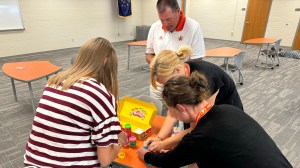
Ever worked somewhere where what your leading said, or espoused to, and what they did were not the same? I have and it makes for a pretty dysfunctional organization with a toxic environment. I’m reading a great book right now by Lee Bolman and the late Terrence Deal, Reframing Organizations: Artistry, Choice, and Leadership, 7th Edition. Bolman and Deal suggested that leading by example is more effective than merely giving orders when it comes to fostering team cohesion. “Example not command holds a team together” implies that team members are more likely to be motivated and engaged when they see their leaders embodying the values, work ethic, and behaviors expected of them.
When leaders model the behavior they want to see, it creates a culture of trust and collaboration. Team members feel inspired to emulate these actions rather than feeling compelled to follow commands out of obligation.
Leading a school effectively involves modeling values and behaviors that foster a positive learning environment for both students and staff. Here are some ways this principle can be applied in an education setting:
- Setting an Example: School leaders, including principals and administrators, should demonstrate the core values of integrity, respect, and responsibility. For instance by addressing issues openly and fairly, they show students and teachers the importance of honesty and transparency. I experienced an example of this recently when I was facilitating a new teacher academy session and all administrators were there taking part in the activities right along with the new teachers.
- Promoting Collaboration: When leaders actively participate in collaborative efforts—like team meetings or community events—it encourages teachers and staff to engage similarly. This can help to break down silos and create a more cohesive school culture.
- Encouraging Continuous Learning: Leaders can foster a growth mindset by seeking professional development opportunities themselves. When teachers see their leaders investing in their own learning, they are more likely to pursue growth in their practices as well.
- Supporting Student Engagement: By being present in classrooms and actively participating in school activities, leaders can demonstrate the importance of student engagement. This encourages teachers to prioritize student involvement in their lessons. This presence is so important and establishes the leader as a leader of learning.
- Fostering Open Communication: Leaders who practice open dialogue and actively solicit feedback create an atmosphere where everyone feels valued and heard. This sets a tone for respectful communication throughout the school community.
- Recognizing Achievements: Highlighting both student and staff accomplishments reinforces the importance of hard work and dedication. Celebrating successes, big and small, motivates everyone to strive for excellence.
- Building Relationships: Taking the time to build strong relationships with both staff and students nurtures a sense of belonging and community. Leaders who are approachable and caring set a standard for interpersonal interactions.
I would love for you to share examples and explore further in other contexts. Please leave your comments.
The Devil’s Advocate

Encouraging team members to challenge each other’s ideas is essential for fostering a culture of innovation and critical thinking. This week, Head Tutor, Anne McCarthy, in the leadership program I am in right now at the University of Oxford Saïd Business School, gave us this prompt for reflection: “Reflecting on your own team is there enough challenge to be high performing?” In this context, challenge is referring to working together, challenging each other, and holding each other accountable. We all know that high-performing teams must have trust, cohesion, and psychological safety. Our teams must be a place where we can offer our divergent opinions and discuss those opinions openly.
To model this I love to offer Byron’s “wild and crazy ideas that may be stupid.” I am very comfortable offering these and being told they are crazy and stupid ideas. The reason I am comfortable is that the discussion usually ends up with parts of the idea being used, or someone smarter than me making the idea better. Establishing a culture where team members feel safe to express their opinions without fear of judgment is crucial for high performing teams to exist. Encouraging open dialogue and making it clear that constructive criticism is valued is paramount.
We must promote a mindset of curiosity by encouraging team members to ask questions about each other’s ideas. This can lead to deeper discussions and better solutions. Also, encouraging team projects where collaboration is key. When working closely together, team members are more likely to engage with and challenge each other’s ideas organically.
As a leader or facilitator, I demonstrate and model how to challenge ideas constructively or be challenged. Showing appreciation for differing viewpoints and responding positively to challenges is important for team effectiveness. As I stated earlier, I like having my ideas challenged because they always end up better.
To model this further, I like to implement techniques like brainstorming sessions, devil’s advocate exercises, or the “What if?” scenario planning. I have found these structured methods can help team members feel more comfortable critiquing ideas.
We must welcome our ideas being thoughtfully challenged. And we must create the ecosystem that allows for challenge in our teams. Better outcomes and higher performing teams await us if we do.
The Power Of The Question
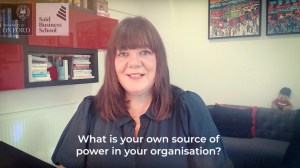
I have always been an asker of questions. It is part of my curious nature. Several years ago this was reinforced when I became a citizen leader and policymaker as a member of the Indiana State Board of Education and met the now former CEO of the National Association of State Boards of Education, Robert Hull. Robert is now a very good friend of mine and he always says that one of our greatest powers as a leader is the power of the question. I have always believed this to be true.
If you read my blog you know I have been doing a post each week using the prompt from our Head Tutor, Anne McCarthy, in the leadership program I am in right now at the University of OxfordSaïd Business School. This week’s prompt was, “What is your own source of power in your organization?” My mind immediately went to the power of the question, my curiosity, and how questions help us to listen and learn.
So what makes the power of the question such an important tool in a leader’s toolbox? 🧰 Here are a few that come to mind:
- Encourages Critical Thinking: Asking questions prompts our team members to think critically and creatively. It encourages us to analyze situations, consider different perspectives, and come up with innovative solutions.
- Engagement: When we ask questions, it invites participation and involvement from everyone. Everyone deserves to have their thoughts and opinions valued.
- Builds Trust and Openness: Open-ended questions create a safe space for dialogue. This helps build trust within the team, as members are encouraged to share their ideas and concerns without fear of judgment.
- Facilitates Learning and Growth: Questions can lead to reflection and self-discovery. Just like the prompt from Anne was the inspiration for this post. By encouraging team members to ask and answer questions, leaders promote a culture of continuous learning and improvement.
- Clarifies Goals and Expectations: Through questioning, leaders can clarify objectives and expectations. Clarity is so important in organizations.
- Enhances Problem-Solving: By asking the right questions, leaders can help identify the root causes of problems and facilitate discussion around potential solutions, leading to more effective problem-solving.
- Encourages Accountability: Questions can prompt individuals to take ownership of their responsibilities.
Overall, leveraging the power of questions empowers leaders to create a more dynamic and adaptive team environment.
Every Leader Needs A Special Team

I loved the line by Captain Olivia Benson (Mariska Hargitay), protagonist in Law & Order: Special Victims Unit: “Every leader needs a special team.” This is so true. But how does a leader get this special team? The phrase points out that effective leadership is closely tied to the strength and uniqueness of the team surrounding the leader. Here are a few interpretations of this idea:
- Diversity of Skills: A special team comprises individuals with varied skills, backgrounds, and perspectives. This diversity allows for innovative problem-solving and broader viewpoints, which are essential for effective leadership.
- Support System: Leaders often face challenging decisions and responsibilities. Having a special team means having reliable support that can help share the load, provide feedback, and offer different insights that enhance decision-making.
- Trust and Collaboration: A strong team operates on trust and collaboration, where members feel valued and empowered. This dynamic encourages open communication and fosters a positive work environment, which is crucial for any leader’s success.
- Shared Vision: A special team is aligned with the leader’s vision and goals. When team members are passionate about the mission, they are more motivated and engaged, which ultimately supports the leader in achieving those goals.
- Adaptability and Resilience: In times of change or crisis, a special team can adapt and be resilient together. Strong teams can navigate challenges more effectively, providing stability for the leader.
Overall, the phrase emphasizes the importance of building a cohesive and capable team that complements and amplifies a leader’s effectiveness.
Alcibiades: A Study in Intergenerational Wisdom and Leadership

I am rereading On Grand Strategy by John Lewis Gaddis for the third time. I love this book! One of the things I love about this book is that it is so much more than strategy. Gaddis digs into the contexts and the leadership styles that drive the decisions. An example is the inclusion of this quote by Alcibiades: “neither youth nor old age can do anything . . . without the other.”Lewis wanted us to understand the deep interdependence between different stages of life. I have to believe that Alcibiades was emphasizing that youth and old age represent unique strengths and weaknesses, and that they are most effective when working together.

Alcibiades was a prominent Athenian statesman, general, and orator during the Peloponnesian War, which lasted from 431 to 404 BCE. He was not a perfect leader, but then again none of us are, and his life was marked by political intrigue, military campaigns, and shifting allegiances. The context in which Alcibiades expressed ideas on generational wisdom likely involves several factors:
- Political Turmoil: Athens was embroiled in a power struggle during the war, facing internal strife and external threats. Alcibiades himself was acutely aware of the complex dynamics of Athenian politics, which often pitted different generations against each other.
- Cultural Shift: Athens was experiencing a cultural renaissance at that time, with great advancements in philosophy, art, and democracy. Young thinkers and political leaders were emerging, creating a dynamic environment where traditional views were challenged.
- Military Campaigns: Alcibiades played a significant role in various military campaigns, such as the Sicilian Expedition. His experiences in warfare may have influenced his thoughts on collaboration and mentorship between the ages, emphasizing the need for both youthful vigor and seasoned wisdom in leadership.
- Philosophical Influences: As a student of Socrates, Alcibiades would have been influenced by philosophical discussions about virtue, knowledge, and the role of experience in shaping effective leadership.
In this context youth embodies vitality, energy, and new ideas, while old age brings experience, wisdom, and perspective Each phase can benefit from the attributes of the other; for example, young people can learn from the experiences of the elderly, while older individuals can gain fresh insights from the youth. This idea highlights the importance of collaboration and mentorship across generations.
Focusing On Real Work

“A primary task of leadership is to direct attention.” Daniel Goleman taught us this, when referring to The Focused Leader. Last week our Head Tutor, Anne McCarthy, in the leadership program I am in right now at the University of OxfordSaïd Business School, started posing great questions for us to journal. Since my blog is my journal I posted my thoughts. You can read last week’s question and entry in To The Unknown And Beyond. This week’s question was, “Are you choosing to spend your time on the work that really matters? What changes could you make to be more focused on real work?” These questions matter because as I circle back to Goleman’s teaching, our primary task is to direct attention, including our own.
As a founder of a professional service firm who is a one person orchestra, the two questions Anne posed are very interesting. My first reaction was “yes” because I touch everything. Then as I began to reflect on the great schools and organizations I get to work and partner with it is clear that the key to Anne’s question is “focus.” Goleman argued, “a failure to focus inward leaves you rudderless, a failure to focus on others renders you clueless, and a failure to focus outward may leave you blindsided.” I have always used this statement as a guide.
While balancing a focus on self, others, and the wider world is tricky, by focusing on these areas, we can create a balanced approach that prioritizes meaningful work while addressing the needs of ourselves, those we serve, and the larger community. Here are some things that come to mind that are in alignment with the curriculum of the leadership program I am currently in:
- Vision and Goals: We must create a clear vision that encompasses both our personal and collective aspirations. Set goals that resonate on multiple levels – individual, growth, team success, and community impact, which can unify efforts toward common objectives.
- Self-Awareness: We need to develop a strong understanding of our own values, strengths, and weaknesses. Regular reflection can help us stay aligned with our core purpose and make decisions that are authentic and impactful.
- Prioritizing Well-Being: Taking care of our own well-being while also supporting the well-being of those we serve. If we engage in practices that promote mental, emotional, and physical health, our ability to focus on the work that matters.
- Encouraging Collaboration: Promoting a culture of collaboration where our team members and partners feel valued and included. This enhances teamwork, sparks innovation, and enables a broader view of the challenges we face and opportunities, ultimately leading to better decision-making.
- Feedback Loops: Establishing regular processes for timely and actionable feedback from both team members and stakeholders. This creates an environment of transparency and continuous improvement, helping to align efforts with what matters most.
It is great to have this reminder and prompt to reflect on focusing on what matters and the real work.
 Byron's Babbles
leave a comment