The Moral of The Story

Another statement in Table for Two by Amor Towles gave me pause for thinking. In Finnegan it was said, “Every story has a moral, Doherty used to say, but most have more than two.” As I pondered this, I realized that while every story may have a lesson or moral to be learned, some stories may have multiple morals or lessons that can be taken away from them. This just highlights the complexity and depth of stories and the various ways in which they can be and understood. The moral(s) of the story enable us to visualize ideals. We need context as well as content. The best morals of stories are evocative and elicit emotion.

The leadership story of Abraham Lincoln is one such story with multiple morals. One moral that can be drawn from his leadership is perseverance in the face of adversity, as he overcame numerous challenges throughout his life. Another moral could be the importance of honesty and integrity, as Lincoln was known for his honesty and ethical behavior. Additionally, his ability to unite a divided nation serves as a moral of diplomacy and compromise in leadership.
Great stories convey multiple meanings and make complex ideas understandable. There is power in the story.
Cultivating Our Garden

I recently reread the novella Candide (1759) by Voltaire. To me, Voltaire was teaching us about the real world where there is crime, murder, war, pandemics, and stupid people, but also great people and great things happening. The last sentence in the book has Candide saying, “…but let us cultivate our garden.” I interpret that as a metaphor for focusing on personal responsibilities and living a simple, productive life. Candide suffered a great deal of misfortune, yet he still remained grateful for all he had. We need to spend our time working on all the tasks we excel at and our lives will improve considerably.
“All that is very well,” answered Candide, “but let us cultivate our garden.” ~ Voltaire, Candide, Conclusion
In the end, Candide realized that individuals should focus on tending to their own affairs and making best of their own circumstances, rather than getting caught up the chaos and negativity of the world around them. It can also be seen as a call to action for self-improvement and taking control of one’s own destiny. Tending our garden will keep us from being idle and enable us to hone and develop our skills.
Don’t Stop Saying It

I love it when people make profound statements that really make me think. The other day I listened to a person offer to help another individual. Then the person being offered help turned down the help. Afterward, the person offering help said, “I guess I shouldn’t have offered.” Another person present said, “Don’t ever let that stop you from saying it.” What a great reply – “Don’t ever let that stop you from saying it.” Others won’t always accept our help, but that should not stop us from offering.
A leader who continues to offer help and advice, even if it is not always accepted, shows perseverance and determination. It demonstrates their commitment to their team or community and their belief in the importance of offering support. It also shows that they care about the well-being and success of those around them, regardless of whether their advice is always taken. Ultimately, it reflects their leadership qualities and dedication to making a positive impact.
The Concatenation Of Events

In rereading Voltaire’s Candide recently I was reminded of how every event in our life becomes a part of our future in some way. Voltaire emphasized the importance of understanding that everything happens for a reason and that each event in our lives ultimately leads us to our current moment He believed in the concept of fate and that we must learn from our past experiences to shape our future.
“’There is a concatenation of events in this best of all possible worlds: for if you had not been kicked out of a magnificent castle for love of Miss Cunegonde: if you had not been put into the Inquisition: if you had not walked over America: if you had not stabbed the Baron: if you had not lost all your sheep from the fine country of El Dorado: you would not be here eating preserved citrons and pistachio-nuts.’
‘All that is very well,’ answered Candide, ‘but let us cultivate our garden.’” ~ Pangloss & Candide
In a post on Medium, Naman Jain told us that, “Experiences are invaluable.” One belief of mine, however, is that experience is not a function of a number. E.g., years experience. The value of experience is not a direct function of age or of time in a role. The factors for me are what have we learned from our experiences and how are we using what we have learned to help others. Jain also told us our past experiences are valuable because:
- Personal Growth: Our past experiences, especially the challenging ones, contribute to our personal growth. They teach us valuable lessons and help us develop resilience and strength.
- Identity Formation: Our experiences shape our identity. They influence our beliefs, values, and attitudes, defining who we are as individuals.
- Decision Making: Our past experiences influence our decision-making process. They provide us with a reference point and guide us in making future decisions.
- Empathy: Our experiences, particularly those involving emotional pain or struggle, can foster empathy. They allow us to understand and relate to others’ experiences.
Are you using your experiences to shape the present and future of both yourself and others?
Creating The Right Environment
I was reminded how important it is to create an environment and program where everyone can be supported as a professional. We must create a culture that encourages continuous learning and growth, where employees feel empowered to take on new challenges and develop new skills.
It is important for a leader to provide an environment and that supports all professionals because it creates a positive and productive work culture. When everyone feels supported and valued, they are more motivated to contribute their best work. This leads to higher job satisfaction, improved teamwork, and ultimately better results for the organization.
Additionally, supporting professional growth and development helps individuals reach their full potential, which benefits both the employee and the organization as a whole. By investing in the growth and development of those we serve, we are ultimately investing in the success of our organizations.
Let The Work, Work

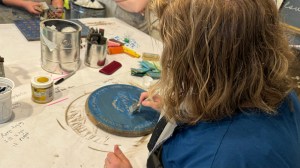
This past weekend during the “DIY Lasting Leadership” workshop of the Hamilton Heights School Corporation Teacher Leader Academy 3.0 Finale Summit we used the butcher paper on the tables to record leadership thoughts as we built our individualized projects. I always appreciate Hamilton Heights Middle School Principal, Bret Bailey being a part of the Finale with us. As his table participants were working, they discussed how there were steps and “layers” to the project and at times we have to let the “paint dry” and “let the work, work.” I loved this statement and we proceeded to have a discussion about it.

When a leader says “Let the work, work,” they may be emphasizing the importance of trusting in the process and allowing tasks to be completed without unnecessary interference. Also, we sometimes start new initiatives, but don’t let them play out to know if they are successful or not. This was also a reminder to take charge of our own professional development as we navigate the challenges of transitioning from an individual contributor to a leader.

Additionally, sometimes we have to manage the conditions that drive team performance, but other times leadership means “letting the paint dry” and stepping back and allowing team members to do their jobs without micromanaging or getting overly involved. It implies having faith in the abilities of the team and letting them work independently to achieve their goals. “Letting the work, work” also reminds us, as leaders, we must coach colleagues and share feedback in ways that enable them to develop and deliver.
Remaining Significant and Inspiring Others

I continue to get a great deal of thought inspiration from reading Amor Towles’ great book, Table for Two. The latest point Eve made when speaking of Charlie was, “He was shifting from the life of doing to the life of remembering.” This really made me think about how we need to stay significant as we go through the different phases of life and reinvent ourselves. As a person who really never wants to retire I think about this a lot. In fact, I have blogged about this before in Significance: Impacting Outside Yourself. I am now in my seventh decade and I do a lot of remembering and using past experiences to inform new challenges. I DO NOT, however, want to stop doing. I just believe that “doing” looks different at different phases in our life. As we age and transition from a life of doing to a life of remembering, it’s important for leaders to focus on sharing their wisdom and knowledge with others.
One way to remain significant is through coaching and mentoring younger generations, writing books or articles, giving speeches, blogging, or even starting a podcast or YouTube channel to share their experiences and lessons learned. By staying engaged with the world and continuing to make a positive impact, leaders can remain significant and continue to inspire others.
Celebrating Things Yet To Be Done

I’ve got to admit, I am not a very big fan of lists, but I do make and use them. Particularly “to do” lists, so I don’t forget things I need to do. I did find it inspiring, however, when in Table for Two by Amor Towles’ Eve said, “A list is a celebration of things not yet done.” That was a great perspective. Really, we should see our to-do lists as being like a compass, helping us navigate through the sea of tasks.
Instead of focusing on what we haven’t done yet, we should see our list as a roadmap of exciting opportunities and experiences to look forward to. It can be a celebration of potential growth, learning, and new achievements waiting to be accomplished. Embracing the unknown can bring a sense of anticipation and motivation to accomplish new goals and dreams. Let’s celebrate all the great things we have yet to do.
Our Need For A Niche

This week during my continued reading of Amor Towles’ latest and incredible book, Table for Two, I came across a discussion of “niches.” Eve makes the comment, “You can’t beat a man who has a niche.” This really is true that we all need a niche. Having a niche is so important because it allows us to focus on our unique strengths and interests, which can lead to greater fulfillment and success. By specializing in a particular area, we can stand out from the crowd, build expertise, and make a meaningful impact in our chosen field. It also helps to differentiate ourselves from others and attract specific opportunities that align with our skills and passions.
Finding our niche can be a process of self-discovery and exploration. Our niches may/will change over time. It is part of our evolving and growth over time. We need to consider our unique perspectives, passions, and our expertise. For myself, I call these passion bubbles. Ultimately, finding our niche is about aligning our skills and passions with a unique market need or opportunity. It may take time and exploration, but the effort can lead to a fulfilling and significant career.
Opportunity To See More Opportunities 

One student said, “This program and the teachers give us the opportunity to see more opportunities!” When I heard this student on the Student Advisory Committee of the Vision Corner Learning Center in Union City, Indiana say this, I wanted to jump up and cheer. Randolph Eastern School Corporation is giving students the opportunity to see more opportunities – is that not what education is all about. It means that when a student is open to new experiences, perspectives, and possibilities, they are more likely to recognize and take advantage of opportunities that come their way. Then, teachers encouraging and creating space for the students to be curious, adaptable, and proactive, enable the students to expand their horizons and make the most out of their educational journey and future career prospects. This all goes hand in hand with and is part of students learning to learn.
We can best provide opportunities for students by creating a positive and inclusive learning environment that encourages curiosity, critical thinking, and creativity. They can incorporate hands-on activities, real-world examples, and group projects to allow students to explore different perspectives and enhance their problem-solving skills. Additionally, teachers can provide mentorship, guidance, and support to help students navigate challenges and seize opportunities for growth and development. Ultimately, fostering a collaborative and engaging educational atmosphere can empower students to maximize their potential and discover new possibilities for success.
 Byron's Babbles
leave a comment