No One Is Ordinary
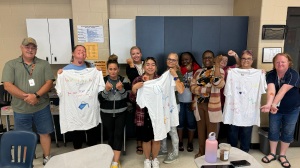
Today I was reminded of the importance in recognizing and valuing the unique strengths and contributions of each individual we serve. I had the honor of working with teachers today for the Charlotte County Public Schools’ Summer Professional Development Summit Conference at Lemon Bay High School in Englewood, Florida. I have had the honor of partnering with Charlotte County Public Schools for several years and absolutely love their teachers. They are always so engaged and very willing to share their expertise. I was reminded of C. S. Lewis’ teaching that, “there are no ordinary people…” The teachers I worked with today are not ordinary, they are extraordinary.
While working through sessions entitled “Self Care for Educators & Creating Healthy Boundaries” and “Let’s Reach Every Student!” it was very evident these teachers want to be the very best for the students they serve. By acknowledging that no one is ordinary, leaders can create a more inclusive and supportive work environment where every team member feels appreciated and empowered to make a difference. Ultimately this leads to greater collaboration, innovation, and success for the organization.
“there are no ordinary people…” ~ C. S. Lewis

Lewis wanted us to remember that every individual has value and significance, regardless of their circumstances or perceived importance. He believed that each person has the potential to make a difference in the world and should be treated with respect and dignity. It’s a reminder to not underestimate the impact that each individual can have on the world around them.
Notice Anything?

In the season finale of Elsbeth last night, Mateo Hart (André De Shields) told Elsbeth Tascioni (Carrie Preston), “If someone notices something about you, pay attention, and use it.” He was referring to talents he wanted her to develop that he had noticed about her. This was a great point and highlights a valuable opportunity for self-reflection and growth, as others may notice things about us that we may not see ourselves. I love it when people tell me the things they notice. Whether positive or negative I can then use the noticed “something.” Also, no matter whether a positive or negative observation, it’s important to take note of it and consider how it may impact you.
By “using it”, we take the observation or feedback and use it to make positive changes in our life or behavior. It could be acknowledging a strength we didn’t realize we had, or working on improving a weakness that was pointed out to us. It’s all about self-improvement and personal growth.
Watercolor Leadership
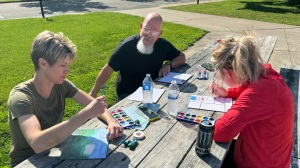
Painting with watercolors can help us reflect on our personal and development. By creating art, we can express our emotions, thoughts, and experiences in a visual form, no matter our talent or level of skill, allowing us to explore and understand ourselves on a deeper level. Today, I used watercolor painting for a professional development retreat with Wabash River Career and Technical Education (WRCTE) teachers. We were at the beautiful Turkey Run State Park in Marshall, Indiana. I told them to find a spot anywhere in the park and paint a picture that represents the great aspects of their year getting students ready for their next steps.
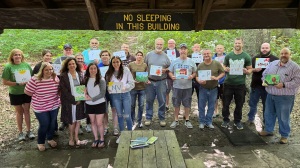
The process of watercolor painting can be meditative and calming, providing a space for self-reflection and introspection. So, by engaging in this creative activity, the teachers gained insights into their own journey of growth and development. When we were sharing out, one of the participants shared he had painted the Turkey Run Inn because it was a challenge that made him reflect on his own journey growing as a teacher this past year. Every teacher’s description of their painting was very inspiring.

Painting with watercolors can be compared to leadership in the sense that both require creativity, vision, and the ability to adapt to changing circumstances. Just as we must carefully choose our colors, brushes, and techniques to create a beautiful masterpiece, a leader must make strategic decisions, inspire others, and navigate challenges to achieve success. Both activities also require patience, practice, and the willingness to learn from mistakes. Overall, painting with watercolors and leadership both involve bringing a unique vision to life through skillful execution and thoughtful guidance.
Soul Seasoning Leadership
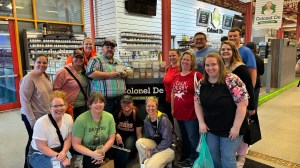
A couple of weeks ago we did a leadership development activity where participants bought a small amount of spice that best represented their leadership journey. Later, we used the spices to make sauces for chicken tenders, but that’s a story for another day. As a group of participants was searching through all the spices I asked them to pick one they thought best described me. I was pretty excited about the one they picked because it probably would not have been one I would have picked, but I loved their explanation. They picked, Soul Seasoning. These participants said it was their choice because when gather for their Teacher Leader Academy sessions I always season their souls.

Wow, “seasoned their souls.” I hadn’t really ever thought about that before. It had never entered my mind that I was seasoning their souls. More importantly, what did that mean exactly, to season their souls? So I asked. They explained that I inspired, uplifted, and nurtured their inner being. Plus they said I am helping them discover their true potential, guiding them towards personal growth and self-discovery and enriching their life with positivity and fulfillment. I particularly liked that positivity piece! Essentially, it is about enriching spirit and helping them become the best of themselves.

Soul Seasoning could be a metaphor for our adding depth, flavor, and richness to leadership. Just as seasoning enhances the taste of food, Soul Seasoning in leadership could represent adding authenticity, empathy, and purpose to one’s leadership style. It could symbolize bringing out the best in oneself and others, creating a more meaningful and fulfilling leadership experience. What’s your spice?
Don’t Just Live, Be Alive!

We, as leaders need to understand the message that it’s not just about existing, but about truly living and making a meaningful impact during our time on this earth and in leadership. In the song, I Was Alive, the great band, Beartooth, tells us, “’Cause I’ll know I didn’t just live; When I die, I’ll know I didn’t just live; I was alive, I’ll know I didn’t just live; I was alive.” These lyrics from Beartooth should serve as a reminder for us to truly live in the present moment and make the most out of every experience. We don’t want to have regrets of the things not tried. Being alive means being connected to our surroundings, emotions, and experiences, while just living may indicate a more passive or detached approach to life. I don’t know about you, but I don’t want to be passive with my life.

The importance of being fully engaged and active in our roles should be emphasized, rather than simply going through the. Leaders can take the message from this song that it’s not just about existing, but fully embracing and engaging in the present moment, actively participating in life experiences and making the most out of every opportunity. We also need to consider how we can help others to do the same. Our goal should be for everyone, in the end, be able to say, “I was alive.”
Motivated By Our Scars

You all know I love great rock bands that produce art where the emotion of the writer is brought out and then the narrative gives the listener a way to connect the song to themselves. The band Starset is one such band. Plus, if you like innovation with the use electronics, stories, and orchestral parts, you will love this band. In the song Trials by the rock band Starset, the lyrics “These trials make us who we are, who we are, we are; We’re motivated by the scars that we’re made of” suggest that facing challenges and difficult experiences shape and define who we are as individuals. In 2019, in a Billboard interview by Tina Benitez-Eves, Vocalist Dustin Bates said, “The first goal of every song I write is to either convey an emotion I’m having or elicit an emotion in someone else on a human level,” explained Bates. “Then the second layer is the narrative.” We all have literal and figurative scars and I really like this thought of being motivated by them.

We do not want to let the trials, tribulations, and scars define us. Instead we need let them motivate us to change, adjust course, or make us better. The scars and wounds we carry from trials can serve as motivation to keep moving forward and growing stronger. It reflects the idea that overcoming adversity can ultimately lead to personal growth and resilience.
Leading Extraordinary and Memorable Customer Experiences
I am reading my good friend, Dr. Joseph Michelli’s latest book, Customer Magic – The Macquarie Way: How to Reimagine Customer Experience to Transform Your Business right now. It is awesome! This book is truly where leadership meets the customer experience. Leadership really is about the customer experience. I became a better leader and educator when I started reading Michelli’s books and got to know him. By the way: I’ve read all his books. This book has one thing in common with all the others – it is taking me to another level.
I just wrote a blog post this past weekend about having favorite places to go in Finding New Favorites. What makes favorites? The customer experience! What makes the customer experience? The people!
As Dr. Michelli asks:
- Do you consistently deliver extraordinary customer experiences?
- Do you consistently deliver memorable customer experiences?

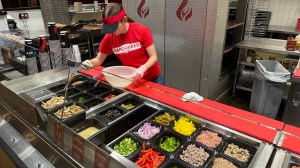
No matter what we do, we need to be able to answer “Yes” to these questions. Once I figured that out, I became a better leader. Tonight I am on the road working with schools in southern Indiana. While staying in Jeffersonville, Indiana I have a favorite place that I like to get dinner that is right next to my hotel, Rapid Fired Pizza. Why do I go there? Addison! All day I was hoping Addison would be there to make my garden salad. She is super friendly, remembers what I like and adds extra cucumber and green onions, because they are my favorite. No matter how busy they are, she always takes her time to get it right. Yes, Rapid Fired Pizza has great products, but the customer experience that Addison provides has made this a favorite. Addison has, what is called in the book, the “service gene.”
THE WORD SPREAD
“Pizza lovers told their friends about us. Growing by popular demand, you’ll now find us serving amazing pizza in 25 towns and cities across the US.” ~ Rapid Fired Pizza

I recommend Rapid Fired to everyone. Here’s how I answer The Ultimate Question: I am “extremely likely” to recommend Rapid Fired Pizza to a friend or colleague. It is recommended in Michelli’s book that this is the only Net Promoter Score (NPS) question we need to ask. If you want to know more, and I hope you do – read Customer Magic – The Macquarie Way: How to Reimagine Customer Experience to Transform Your Business. Michelli told us, “Some 34 years and 12 books later, leaders clearly understand that customer experiences create brand differentiation, repeat business and positive word-of-mouth” (p. 89). Addison certainly understands this and is certainly differentiating Rapid Fire Pizza, gained me as a repeat customer, and has me for a recommendation.
Finding New Favorites

This weekend marked the end of an era for me. Last year my son graduated from Murray State University and then yesterday his girlfriend graduated from Murray State as well. We were in Murray, Kentucky for the festivities this past weekend and it gave me a chance to reflect on the last five years. We have come to love the Murray area and have several favorite places we like to visit. We went to several of them this past weekend, including:
- Mister B’s
- Bad Bob’s Barbeque
- Hitching Post & Old Country Store
- Land Between the Lakes
- Elk & Bison Prairie
- Off The Hoof
- Pattie’s 1880’s Settlement
- Murray Donuts

Hard to believe I’ve developed so many favorite during the past five years. And that’s not even all of them. There just wasn’t time for all of them on this trip. As we prepared to head home yesterday, I started to get bummed that I would not have a reason to be back in Murray to go to my favorites. Then I began to think about new adventures that still lie ahead in my son’s new hometown of Owensboro, Kentucky. In the past year we have begun to explore those. There are so many new places to go and see, like Windy Hollow Restaurant (see feature photo).
This reflection highlighted our need to be forced out of our comfortable patterns from time to time. Finding new favorite places thrusts us into unfamiliar situations. Going new places, experiencing new cultures, trying food off new menus stimulates or brain in new ways, pushing us to think differently. This encourages us to have more creative thinking. So, instead of letting myself get bummed about life changing and moving on, I am getting excited about all the new adventures ahead.
I am now more excited than ever for new and unchartered territories in both my personal life and professional life that will offer richer and even more unique experiences. Join me in embracing the making of new favorites. These new favorites will create new stories, perspectives, and wisdom that will offer invaluable insights and inspiration. What are your new favorites?
Our World Is Not A Mirage

I just finished reading Table for Two by Amor Towles and of course there was one more thing said in this awesome book that caused me to reflect. In the conclusion, Evelyn said, “Because, If we don’t stare down the things that make us want to look away, then the world is just a mirage.” This is one of those statements that really makes you think. It’s all about mirror neurons. These mirror neurons in our brain are what enable us to have comprehension of empathy and give compassion. They also make it possible for us to figuratively feel someone’s pain, so that also triggers a looking away response. So, the reality is, there are things that make us want to look away.
“We carry each other’s pain. We learn together, or we do not learn.” ~ Nora Bateson in Small Arcs of Larger Circles
As I reflect on the phrase, “Because, If we don’t stare down the things that make us want to look away, then the world is just a mirage,” I interpret it as emphasizing the importance of facing difficult and uncomfortable truths or challenges head on in order to truly understand and navigate the complexities of the world. So many times we are guilty of looking away and believing someone else will take care of it or the issue doesn’t affect us. Avoiding or ignoring uncomfortable realities, however, only leads to a distorted and superficial perception of reality, like a mirage that disappears upon closer inspection. The mirage is such a powerful metaphor here.

“Before all else we are of the ecosystems. ‘I’ will be different tomorrow. So will you, all of you, us, they.” ~ Nora Bateson in Small Arcs of Larger Circles
We are also reminded that effective leaders must have the courage and willingness to confront difficult issues head-on rather than turning a blind eye, in order make informed decisions and drive positive change. There will always be flaws in the world around us. One thing is for sure; the world is not a mirage. Our personal actions have an impact on everyone else and visa versa. We must not turn a blind eye, but stare down the flaws and look for solutions.
Sometimes The Door Opens Twice

“Sometimes the door opens twice.” This phrase was said by Litsky in Table for Two by Amor Towles and got me thinking about the phrase we’ve all heard that my mom used to tell me: “When one door closes another one opens.” This phrase, when my mom said it, was not cliché. She really believed it and guess what? I believe it too. New opportunities do arise after failed dreams. Sometimes we create those opportunities, others sometimes intervene on our behalf, and other times we are in the right place at the right time.
“Luck is what happens when preparation meets opportunity.” ~ Roman philosopher Seneca

I loved the phrase, “Sometimes the door opens twice” because we are so locked in to the mindset that opportunity knocks but once. We actually say it this way: “opportunity seldom knocks twice.” Many times we are offered an opportunity a second time or given a second chance. We can put ourselves in a position to have the door open twice. The second time the door opens may mean it is a good opportunity and that you should seriously consider it. A door opening for the second time may also signal the opportunity is important and that you should not let it pass you by.
The only way to know is a door is right for you is to go through it. A door might open a second time so we can continue to work on a dream. Other times the open door might be leading to something that you never considered before. Let’s all make sure we are looking for open doors.
 Byron's Babbles
leave a comment