Generation Metaverse
I love learning and I have to say that last week almost put me in overload. It was so great to be back in person, chair, and speak for the SMART Factory League 2022 Summit. Hanging out with really smart and innovative industry leaders from around the world is, well, intoxicating! It is incredible to learn about both new things I’ve never heard of or things I’ve been exposed to, but don’t know much about. One such, related to the latter is the metaverse and generation metaverse. We learned that dollars are going to be shared between live and digital. It is gong to be a blending. the metaverse is virtual-reality space in which users can interact with a computer-generated environment and other users.
The metaverse is virtual-reality space in which users can interact with a computer-generated environment and other users. Gen Z, millennials, and Gen X consumers expect to spend between four and five hours a day in the metaverse in the next five years. The metaverse mainly involves gaming right now, but will include immersive shopping, followed by telehealth appointments, education, travel, and socializing in virtual reality (VR) or using augmented reality (AR) will be the most interesting metaverse activities for consumers in the next five years
Moving away from two-dimensional laptops and smartphones to the three-dimensional immersive world of glasses and goggles is one that I hadn’t spent a lot of time thinking about, but has tremendous possibility. We can move from screens to landscapes, layers, and objects.
Local Is Everywhere

The global pandemic has served as a catalyst to e-commerce (a 39% increase happened last year) and local delivery being here to stay. It is now common practice to build shopping carts into local business websites. This enables us to significantly expand the number of neighbors we get to serve with care, compassion, and a commitment to making these very good times. This past week at the SMART Factory League 2022 Summit, Joachim Hensch reminded us that “local is everywhere.” To further make the point he reminded us that “Coca Cola is everywhere.” Think about it; because of geolocalization, we can connect in ways never possible before. All we have to do is type in, “___________ near me.” Or, I can order whatever I need, to be delivered wherever I need it. Think about all these ways we have to be everywhere:
- In-person (is now kind of old school)
- Curbside pickup and messaging
- Home delivery messaging
- Text messaging
- Direct Messaging
- Live Chat 💬
- Email 📧
- Review responses
- Review requests
- Phone 📱
- On-hold phone messaging
- Virtual meetings
- Website forms
- Surveying
- Social media platforms
- Post-transactional landing page messaging
- Call-to-action texting 💬
If we are truly going to operate in a “local is everywhere” mindset then we also need to think “glocalization.” A glocalized product or service is one that is developed and distributed globally but is also adjusted to accommodate the user or consumer in a local market. Cars, for example, need to meet certain regulatory standards or have the steering wheel placed in the correct side for that country. Also, more importantly, cultural adaptations need to be made. In other words, a global product or service, something everyone needs and can get use out of, may be tailored to conform to local laws, customs, or consumer preferences.
Finally, we need to adopt the core value of everything we do being meant to connect people and increase the quality of life in ALL local communities. Our governments need to protect economic and human diversity and we need to do community building by making our towns and cities really fine places to live with accessible goods and services for everybody.
Flirting With Technology
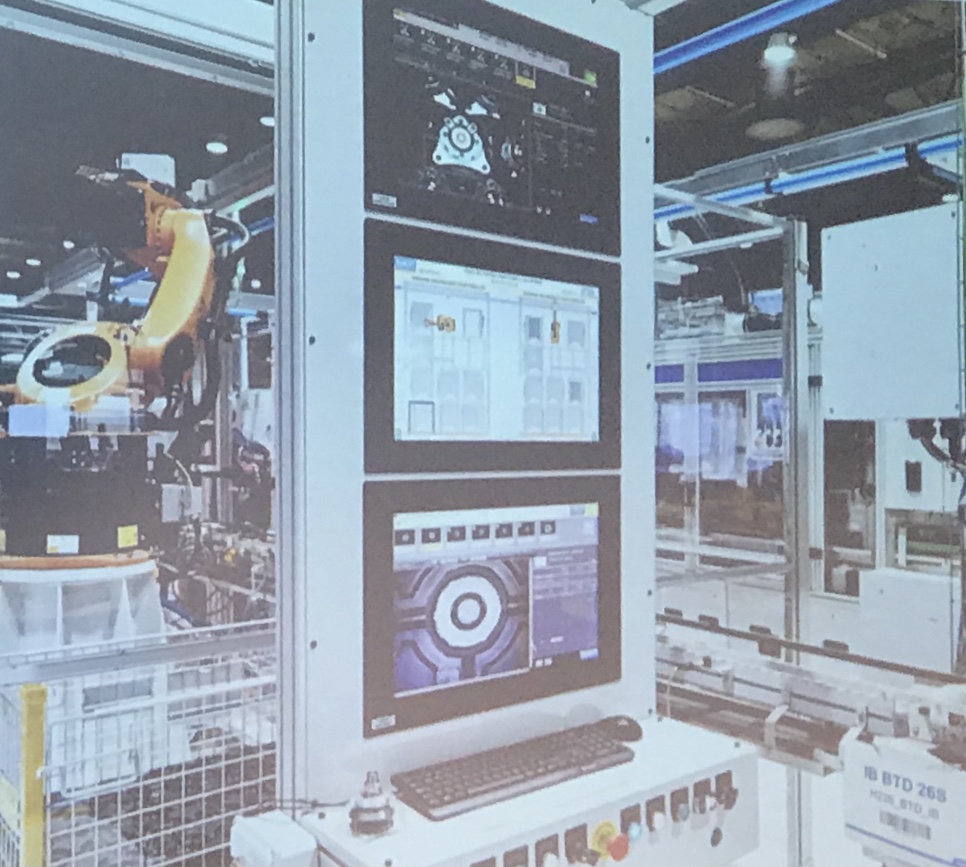
I’ve already done several posts reflecting on my learning from the SMART Factory League 2022 Summit, but I just spent a couple of hours during my flight home studying my notes. That study yielded another seven topics for reflection, further study, and a blog post being written. Something that we discuss this week while in Hamburg, Germany was the fact that we are always flirting with technology. There is always some new device, application, updated application, or increase capability for us to “flirt” with. I loved that way of putting it – “flirting.” Because flirting is not committing. Interestingly, the manufacturing industry and education have the same issue here: we flirt too much without making sure what we are flirting with meets our needs, is usable by our stakeholders, or even adds more burden than value. Therefore, we discussed that when flirting with technology there must be a great deal of experimentation.
This flirtation cannot be a speed date! I see this so many times, where someone in a school likes a particular technology, so that becomes the next thing. Probably the biggest areas I hear this in education are with learning management systems. I hear things like “I’m not sure who picked this, but it really isn’t that useful.” We talked a lot about the stakeholder gaps while discussing change management this week. Clearly there are stakeholder gaps in my example here. I get the fact that there needed to be some quick decisions made during the heat of the global pandemic, but we mustn’t forget the experimentation component to flirting with technology.

This experimentation must include using a model like the Vantage Point Model©. The experimentation must include stakeholder representation from the organization related to philosophy, culture, policy, strategy, tactics, logistics, and tasks. I teach this model in all leadership development work I do. I truly believe and have witnessed it to be true that if all seven stakeholder groups are represented, change has a great chance of success. Additionally, I have seen failure, particularly in the area of technology, when the stakeholders involved with tactics, logistics, or tasks are not included in the experimentation.
The list of seemingly necessary IT capabilities continues to grow, and IT spending continues to consume an increasing percentage of their budgets. No one person, committee, or department should be left to make, often by default, the choices that determine the impact of IT on your organization’s business strategy. Beware of chasing elusive benefits (eg. Information to anyone, anytime, anywhere). Choose goals for technology/digitization that match the strategy of your organization. You cannot do it all at once – do it in sprints. We need to consider how our technology can help give us a centralized global perspective, but also maintain individualization on a regional and local level. Involving all stakeholders is again important to the experimentation here.
Bottom-line: Flirting With Technology = Great Deal of Experimentation.
SMART Global Reflections

I love traveling internationally and connecting with people from all over the world. As I fly the last leg of my trip home this evening I am reflecting on how blessed I was to be in Hamburg, Germany 🇩🇪 for the SMART Factory League 2022 Summit. Industry and manufacturing leaders from around the world came together to discuss current issues and promising practices. It was so great to be with Anna Beklemisheva, from Greece 🇬🇷, who is the GIA event manager. The last time I saw Anna in person was in Berlin back in 2018, pre global pandemic. I love working with Anna and will always make myself available to chair and speak at events for her. Every time I am with Anna I learn so much.
It was great to see individuals in person that I had connected with back in 2018. One big difference that we all noted in the discussions from 2018 to 2022 were how people centric the discussions have become. It seems to be a global issue with no industry exempt from having a talent shortage. They were kidding me that in 2018 I kept wanting to talk education and talent with only limited interest. Now in 2022, every speaker and every panel discussion ended up discussing the workforce. And, I loved it when they all agreed that we must be thinking about talent development down into the younger ages/grades of education. This is a passion of mine. We need to be thinking exposure, exploration, and experience much earlier.
It is so critical to have these global interactions and learn from each other. One leader from Poland 🇵🇱 discussed that we are setting ourselves up for failure if we believe that schools and teachers can keep up with changes in technology and other industrial advances to be able to teach effectively. He believes industry needs to step up and provide teachers. I have been advocating for years now that we need to be thinking about do we best put people who have actually done the things they are teaching in front of our scholars. We already do this in many of our career and technical education programs and I believe this is a way to increase our teaching in a relevant context and putting great teachers in front of students every minute of the day. Keep in mind that if we are creative about this a person might only teach one hour a day and be in their industry career the other part of the day. Or it could be someone who has retired from business or industry. This would take some logistical work and partnering between industries and schools, but I believe it could be done.
I am coming home excited that the world is thinking about how we become more people centric. We need to do a better job of talent mapping and development for our young scholars as well as our current employees.
Leading Like Oktoberfest
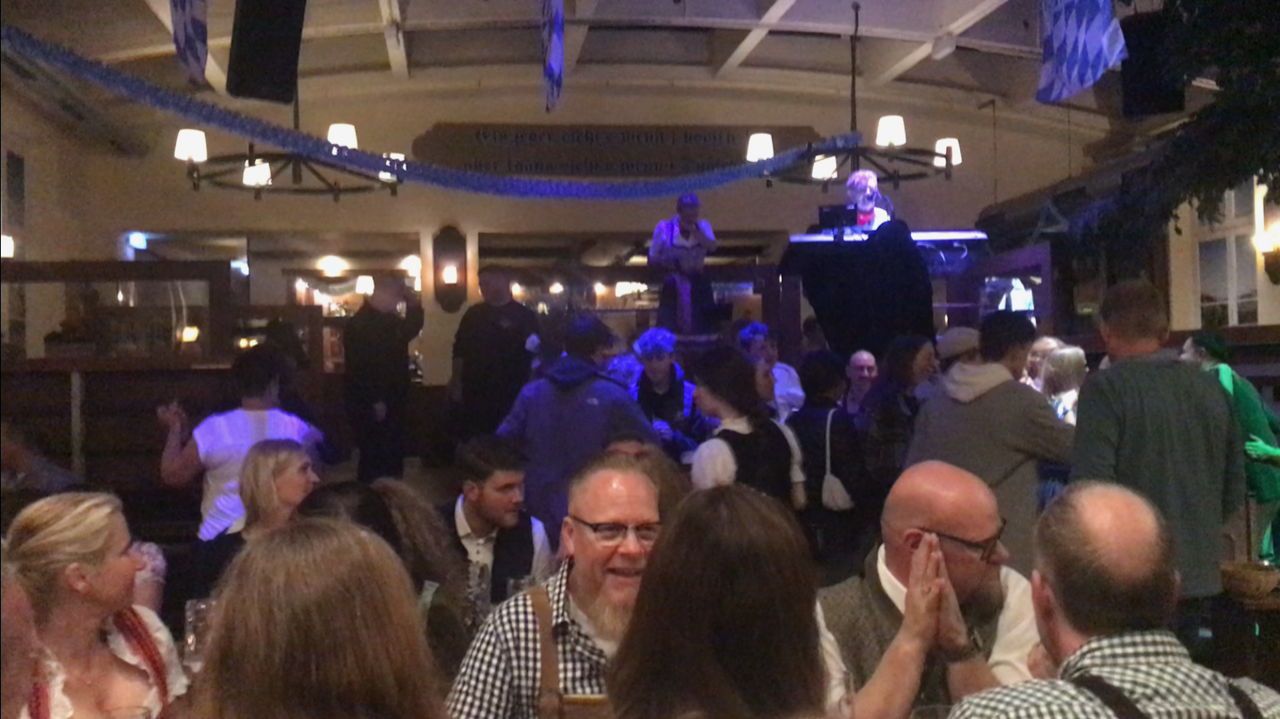
I had the opportunity this week to experience Oktoberfest in Hamburg, Germany. While the official festival is held in Munich, Bavaria, Germany, one of the official breweries from Munich and also located in Hamburg, Die Hofbräu Wirtshäuser, has the entire Oktoberfest experience. Of course, since I was in Hamburg for the SMART Factory League 2022 Summit, I had to take part. In fact I got about 21 of us from the Summit to go one evening. The celebration takes place from late September to the first weekend in October. The Munich Oktoberfest began in 1810 as a wedding party thrown by King Joseph Maximilian of Bavaria to celebrate his marriage to Princess Theresa of Saxony. Over 200 years later King Joseph Maximilian’s party has become a celebration with over 6 million people attending from across the world.
So, what did I learn from Oktoberfest? Oktoberfest is an event that includes music, food and beer. Entrepreneurs and business owners that are hoping to attract customers and clients should remember that putting on a “show” and entertaining and providing your target audience with what they want and need helps. In Die Hofbräu Wirtshäuse many classic sing-alongs such as ‘Sweet Home Alabama’, ‘Sweet Caroline’, or ‘Take me Home, Country Roads’ rotated their way through the set list. But one song played several times while were in attendance is only a single line long, repeated twice and sung in German: ‘Ein Prosit, Ein Prosit der Gemuetlichkeit.’ The song means they are raising a toast (Ein Prosit) to the Gemuetlichkeit, which normally means something like an intimate, cozy feeling. But, what I found around me were people who were experiencing happiness, and tradition to enjoying your beer, and being with friends.
I was lucky to have a true Bavarian with me for my experience. He made sure I had Leberkaessemmel, a Bavarian meat loaf served on a bread roll, Schweinshaxe, a roasted pork knuckle, Münchner Weißwurstand, a white sausage, Schnitzel (thin slice of breaded meat), and Hendl which is a rotisserie chicken. Let’s circle back to Gemütlichkeit (German pronunciation: [ɡəˈmyːtlɪçkaɪt]), which as stated earlier means a situation that induces a cheerful mood, peace of mind, with connotation of belonging and social acceptance, coziness and unhurry. Gemütlichkeit encapsulates a feeling of inclusion and leaving your troubles at the door. What if we could create this environment for all those we serve? The beauty of Oktoberfest is that it is a themed event. By hanging out at Oktoberfest we got to know each other on a deeper level and these relationships carried over into the summit discussions. It’s all about community building. I am glad I had the opportunity to experience the phenomenon of Oktoberfest!
 Byron's Babbles
leave a comment