Leading Like A Hinge

I spent this week coaching teachers as the school year got started for many of the schools I work with. One of the teachers I coach told his students that he loved it when I was in the school because I was like the hinges on a door. “Without hinges the door is useless. You can have fancy doorknobs and windows, but the hinges make the door functional. Hinges attach a door to its frame, and are the pivot point for opening and closing the door.” I do hope I am helping teachers connect with their students and am serving as a hinge for the door to open for them to become highly effective facilitators of learning for their students.
Upon further reflection I was reminded of something retired Admiral James Stavridis, author of Sailing True North: Ten Admirals and the Voyage of Character, said: “Leadership is how we influence others. It is like a big door that swings. But that big door of leadership swings on the small hinge of character.” I hope that I bring a great degree of character to my leadership and that I inspire others to do the same.
I want to provide those I coach with the tools, guidance, support, and feedback they need to thrive in their teaching career. I want to be the hinge that opens the door to their success.
Fear Is A Funny Thing
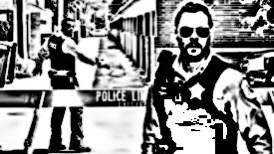
I have blogged about the show Chicago PD before in You Be You & I’ll Be Me. I really like the show and it is easy to get immersed in it. The other night I saw Season 7 Episode 4: “Infection Part 3” and at the end of the episode a voice came on and dramatically said the following:
“Fear is a funny thing. Some of the time, it brings out the worst in people. But fear also brings out our very best. We certainly saw that today. Their love, loyalty, care, and kindness, their support, generosity, and appreciation. And for a certain few among us, fear brings out something different, their choice to be heroic. To stand steady, to hold onto each other, to find a way to hold onto hope, and to lean on each other like family.”
~ Goodwin, Chicago PD Season 7 Episode 4: “Infection Part 3”
There is a whole lot to unpack in that oration. I’m going to let you do that for yourself. When I think back to times I was in the midst of fear, I realize it was not the event itself that caused sleepless nights, the distractedness, or sick feeling, it was the lead up to it. It was the ‘what ifs’ that stirred up the fear gremlins into a frenzy. Fear is a funny thing! We really need to stay in practice; find that something to do for the first time, always be learning, or be daunted by some new and exciting challenge. Fear is a funny thing!
The Power Of Fictional Lives
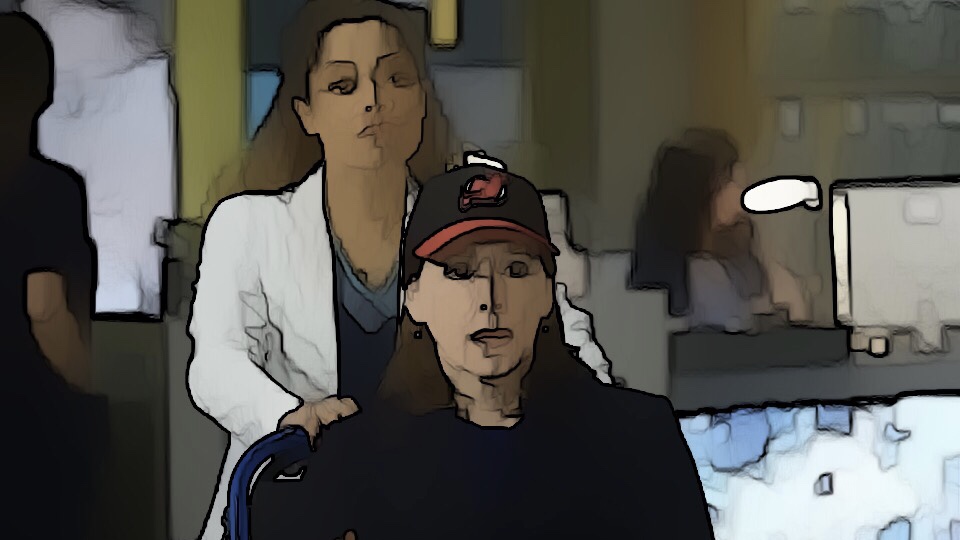
I came in late last night from playing farmer, my favorite thing, and while dinner was being warmed up I noticed that The Good Doctor (Season 4 Episode 17) was on television. This was not a show I had ever watched before, some people we had over said it was a great show. I must say I thoroughly enjoyed it. A line in the show jumped out at me after one of the characters in the show realized that an inspiring story that had really helped her rally and succeed in high was a fictional story and not about a real person. The person who told her this said, “Fictional lives can save real lives.” This, then begged the question of whether fictional characters can change our lives. We spend a lot of time of our lives immersed in novels, movies, plays, TV series or any other form of fiction.
Many psychologists believe that fictional characters can and do influence us in real life. As I sit here and think about it, I am reminded of the leadership lesson I do involving super heroes as the through line. I also thought about the deep thought and introspection that fictional characters have enacted in myself while reading those great novels over the past year or two. The experience of gaining access to the interiority of the characters’ minds can broaden our perspective and enable our being more accepting of diversity. Because we can learn everything everything about the fictional character (something we can never do with a real person), we become so engrossed with the characters that our own personalities, thinking, and actions get affected.
Here’s the deal: the imagining that takes place when we are reading a novel or watching our favorite show creates understanding. We can learn so much through vicarious experiences that we would never have otherwise known. I believe this is why so many of my blog posts are inspired by television shows (like this one) or lines in novels. Imagination thrives off of imagination. This imagination can help us notice things we wouldn’t otherwise notice.
Building A Balanced Portfolio

It was a great lesson this week in Mindset Mondays with DTK by David Taylor-Klaus (DTK). Chapter 49 was entitled, “Know Your Currencies.” DTK told us money isn’t the metric. DTK argued that money is not currency, but tool used to fund what we truly value. Our values, he contends, are our currency. This reminded me of something my dad always said: “A nice house doesn’t make a home.” We’ve all seen it; the people with gazillion dollar, gazillion square foot home, and the not-so-great family life. As my dad said, the nice house did not make it a great home. Clearly in this example the thing, house, was the valued currency.
I loved the question from DTK of, “Is what I am attending to now worth my attention?” We have so many currencies that are more valuable than money:
- Time
- Attention
- Learning
- Growth
- Self-care
- Connection
- (Feel free to fill in the blank)

Remember, money is a tool and just an indicator of what we value. Look at an organization’s budget and you see what it values. But we also need to be as intentional about how we use our time, energy, emotion, and attention.
The Road To Being Proactive
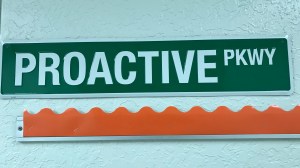
I ran across the “PROACTIVE PKWY” sign pictured in this post while at Sallie Jones Elementary School in Punta Gorda, Florida facilitating professional development workshops for Charlotte County Public Schools this week. I used the picture I took as one of my morning inspirational tweets. Then I began to think about how important it is for us to be proactive. I’ve spent the week working with teachers and I am reminded that great teachers make everything look random for their students, but nothing is random. The great teacher has been proactive and already anticipated what will/can happen. These great teachers are great leaders because they proactively respond to the strengths and weaknesses of their students and put them in a position to succeed.
To be proactive we must start with the end in mind. The end must be clearly defined. It is the role of the leader to push their team towards the end goal. And that end goal must be both motivating and inspiring enough to cause us to want to act. Proactiveness is not just a skill for leaders. The world of work is changing, and it is now essential that everyone begins to develop this skill. The proactive person recognizes the importance of varying viewpoints and are open to new ideas. Finally, proactive leaders approach a crisis with calm determination rather than chaotic panic. Are you a proactive leader?
Yes Is An Accelerant

I finished Great Circle, by Maggie Shipstead yesterday, but you are probably going see posts continuing to pop up that are inspired by this great book. Another great quote from the book that I put in my notes was “Yes is easier than no. Yes is an accelerant.” This is so true. Think about that last wild and crazy idea you had. Now, recall the feeling of excitement you had when you heard “yes” to making it so. Just the other day I pitched an idea to a potential client and the answer of “yes” came back with some great ideas of how to make it an even more impactful opportunity for those I would serve. The “yes” served as the gasoline (accelerant) to get me all fired up (pun intended) to get to work and put together some really cool stuff.

Using the accelerant of “yes” or “yes, and” can help make you and your people more engaged, effective, and efficient. A simple “yes” can also bring about an urgency to act. So don’t miss an opportunity for new, smarter, and more aggressive ideas that will take your organization to new heights. Finally, don’t forget to say yes to yourself.
The Place You Want To Go Exists!

“The place you want to go exists, you just have to find it.” I loved this line in Great Circle, by Maggie Shipstead. I believe this to be true. Sometimes, however, we need to identify where it is we want to go. We can do this through goals or just appreciating where we are. As I wrote this post I was in the air on my way to Tampa, Florida. From there I’ll be driving down to Punta Gorda. I will be working with teachers from Charlotte County Public Schools tomorrow. Doing professional development for teachers is something I want to do, so I have to go find the places that need my services. So, the line I quoted from the novel is holding true – the place I want to go exists.

Today, one of the places I want to go is the beach. There are lots of places to go so I will pick one. Then I need to take my walk and enjoy the place I am, not second guessing if another spot a couple of miles farther would be better. I must realize I have found the place I wanted to go and appreciate it. We would be well served to take this approach in many areas of our lives. Back in July of 2016 Simon Sinek tweeted, “A movement exists when people are inspired to move. To start a movement a leader must offer a vision, a direction of a place we want to go.” Many times we choose places to go, not because they are easy to get to, but because they are hard. Keep looking because the place you want to go really does exist.
The Whole Story
Another line in the great book I’m reading right now, Great Circle, by Maggie Shipstead had an impact on me this morning and caused me to reflect. The line was, “I didn’t need to know the whole story. No story is ever completely whole.” As a person who always says things like “That’s not my story to tell.” This reminded me that we don’t always know the whole story. In fact, rarely ever do we know the whole story; or need to know the whole story for that matter. I’ve actually blogged about this before in It’s Not My Story To Tell in a little different context. The problem seems to be that ,somehow, we learn to confuse complete with perfect. Complete comes to mean existing within a narrow scope of our human experience. It means having all of the light and none of the dark. Having flaws or struggles make us less than. Why do we do this? The more we hold on to these beliefs, whether about ourselves or others we serve, the more we are let down. We don’t feel successful, happy, or connected, and we sure aren’t confident. None of this hardness makes us stronger.

As I continued to reflect, I realized that we really aren’t completely ever whole because each continues to mold us into the sculpture we are becoming. The whole of us is not just the shiniest parts. We tend to only look at those parts, both in ourselves and others. Then, when we don’t find what we think should be there we consider ourselves and others incomplete. We make complete out to needing to find all the missing pieces and then becoming something. Instead, wholeness should have us being who we already are – realizing the story is never completely whole. Everything is part of our wholeness. Being whole means seeing perfection and imperfection, hurting and healing, fear and courage as one in the same. Remember, everyone does not need to see the whole story. Also, remember you don’t always need to know the whole story.
 Byron's Babbles
leave a comment