Be An Explorer, Not An Expert

I am so glad I read the book, Alien Thinking: The Unconventional Path To Breakthrough Ideas. This book helped me further hone the alien that has always been in me for wild and creative thinking and innovation. In the book, authors Cyril Bouquet, Jean-Louis Barsoux, and Michael Wade presented an incredible framework using ALIEN as an acronym. I highlighted the framework in What Will You Regret When You Are 80 Years Old? Another comment the authors made in the book that caused me to do further thinking was that we need to “Approach things not as an expert, but as an explorer.” I’ve always been a critic of so called experts and this was a warning of the problem of acting like an expert.
The problem of overconfidence and closed-mindedness in areas we believe we have expertise is all the more troubling because we so generally tend to credit ourselves and many times others with having more expertise than we really do. In Alien Thinking we were taught that discoverers know what they are looking for and then go out and find it, but explorers take chances by creating new things, and looking for what they don’t even know is there. The expert status can serve as blinders keeping us from exploring for the next way of doing what we are doing well now better or differently.
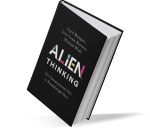
Those that know me well know that I love intersectional learning and learning from outside my own industry. Bouquet et al. argued there is great value in this as well. They posited that “Leaders thus need to think like explorers, become more adventurous and steal the essence of ideas from outside their industries…” Taking an expert frame of reference keeps us from looking for what is next. We need to be looking at industries outside our own and “stealing” ideas. I believe this is an issue particularly in education. There is not enough exploration happening in other industries to learn how to best educate. We can rely on our “outsider status” and being “adjacent outsiders” to learn and discover from others.
What Will You Regret When You Are 80 Years Old?

I finished the great book, Alien Thinking: The Unconventional Path To Breakthrough Ideas, this past week. In the book, authors Cyril Bouquet, Jean-Louis Barsoux, and Michael Wade presented an incredible framework for innovation and creativity. The framework is based on five strategies that do NOT need to be accomplished in any linear fashion:
- A – Attention – look with fresh eyes to observe problems that need to be solved, opportunities worth addressing, and solutions that can be dramatically improved or revised
- L – Levitation – step back from the creative process to gain perspective and enrich your understanding
- I – Imagination – recognize hard-to-see patterns and to connect seemingly disparate dots to imagine unorthodox combinations
- E – Experimentation – test ideas quickly and smartly, with the goal of improving – not just proving – your idea
- N – Navigation – deal with potentially hostile environments and adjust to the forces that can make or break your solution
At the end of the book, the authors helped the reader work through some important hindrances to innovation like human emotions and personality traits. I was struck by the discussion of “regret” that can easily derail even the most ALIEN of thinkers. In Alien Thinking we are taught that “When setting off on a journey of innovation or discovery, you will have to overcome your fears about what might happen.” These fears come in the form of “anticipatory regret” and “existential regret”. Having just founded my own business and making the decision to go out on my own, this discussion in the book really resonated with me.

In addition to overcoming fears of what might happen, most of us, when innovating or trail blazing, will have to deal with “anticipatory regret.” This is the regret we imagine ourselves feeling if the decision we make or don’t make ends up being a mistake. This is pretty powerful stuff. Science can help us with this, however, because the science says that we tend to regret actions not taken far more than we regret failed attempts.
This is where Bouquet et al. explained that “existential regret” can be used as a tool. Existential regret is the regret of how we will later feel if we don’t try; or play it safe. While doing some further studying in this I found the stories of Jeff Bezos when he was trying to decide if he would quit his great job to start what is now the Amazon empire. He used a framework he called “regret minimization.” He projected himself out to the age of 80 and imagined what he would regret. He found that he would deeply regret not having tried to make big on that thing called the internet. Now that is Alien Thinking. Now that is “levitation”- all the way to the age of 80.
We must learn to channel our fears and thoughts of regret to be a positive driver and help us work out the kinks in our wild and alien ideas. Using existential regret can help us sift through our own personal goals and core values to make a weighty call.
Do You Think I Know How To Be Happy?

You all know I love to watch a great episode of Frasier. There is so much to learn from the vane Dr. Frasier Crane, played by Kelsey Grammer. I walked in the house late last evening and was flipping through TV shows and had to stop when I saw an episode was on. Frasier had just been told by an ex-girlfriend that he did not know how to be happy. Well, you know Frasier, he became obsessed with that, and the idea of not being able to be happy became the throughline of the show. He even called his ex-wife, and psychiatrist, to ask, “Do you think I know how to be happy?” She told him he was the only one that could answer that.
What Frasier found was that in everything he did he formulated what the “perfect” version would be and then, as we know, nothing is ever perfect. At one point he was on a trip and the plane was delayed, his hotel room wasn’t right, and the restaurant where he finally sat down to eat was out of everything he wanted. Needless to say, Frasier went ballistic. We’ve all been there, right? Fill in the blank: we’ve planned the perfect weekend and then…__________________. Sometimes we have nothing to do with what happened, other times we do. In this case, none were Frazier’s fault. But, we sure know how to become miserable and make those around us miserable too.
In Frazier’s case I don’t think he was being a hedonist. It had more to do with perfection versus pleasure. How we choose to interact with our external world has a great impact upon how we feel inside. Research tells us that focusing on what’s important and not obsessing over minor annoyances can keep us in a happy place. It turns out those cliches “Don’t sweat the small stuff” and “You can only control what you can control” were right.
But, I also want to go back to the perfection thing. “Perfect” can be such a ferocious enemy of happiness and getting things done. Roy T. Bennett argued that “Perfectionism is the enemy of happiness. Embrace being perfectly imperfect. Learn from your mistakes and forgive yourself, you’ll be happier. We make mistakes because we are imperfect. Learn from your mistakes, forgive yourself, and keep moving forward.” Think about it, perfect is like a unicorn; super cool, but have you actually ever seen one? “Perfect” and the unicorn are both pretty elusive. So, in the meantime, I’ll enjoy the beauty of the horse, till the real unicorn comes along. Get the point?
This made me think about the teaching of Jack Canfield. I remembered him talking about how we humans let perfection get in the way of happiness. Again, this could be the perfect vacation, the perfect presentation, the perfect event, the perfect first impression, and the list goes on and on. Canfield taught us that many times we let our perfects, or “ideals” come from others. Think about it; how many things look just like the brochure portrays? Someone else’s ideals shouldn’t affect your own happiness. Instead, Canfield told us that in order to achieve happiness, you should create focused goals for yourself. Furthermore, never forget that our social circles, coworkers, or relatives should not decide what is right for us or what makes us happy, only you can decide.
20 Seconds Of Bravery

“What if it is about creating your vision, developing your plan, and taking one bold step after another, just twenty seconds of bravery at a time?” (p. 313) I had to begin my post on Chapter 45, “Boldness & Bravery” in Mindset Mondays with DTKby David Taylor-Klaus (DTK), with this quote from DTK. Having just launched my new business last week, Leadery Global, I needed this little pep talk to get my week started. I am “…step[ping] boldly into what’s present, and danc[ing] with whatever’s on the field” (p. 312). Choosing to be bold is what DTK was talking about in this chapter. He also reminded us, however, to be responsive, not reactive – no knee-jerk reactions.

Now, back to my favorite part of the chapter – 20 seconds of bravery. DTK is referring to a movie his wife, Elaine, saw claiming that it only takes 20 seconds of true bravery to overcome obstacles. If you think about those things we put off instead of doing what Brian Tracy called “Eating The Frog,” it makes sense. The more we avoid something, the more it controls our life. Just as first responders run toward the danger, we need to face our fears instead of being controlled by them. All it takes is 20 seconds!
What can you choose to be bold for 20 seconds of bravery about today? It may just change the entire trajectory of your life!
Testing Everything & Conceiving Different Outcomes

While this post will probably pose a controversial idea to those “Scientific Method” purists, my post is meant more to be thought provoking. As a person who taught the Scientific Method to agriculture science students for years, I understand why hypotheses have been a part of the method since the 17th century. But, some, okay a lot, of things have changed and advanced since the 17th century. In the great book Alien Thinking: The Unconventional Path To Breakthrough Ideas, authors Cyril Bouquet, Jean-Louis Barsoux, and Michael Wade argued that the use of hypotheses are, in many cases, no longer necessary given the immediate and real-time abilities for data analysis we now have in a digital world. Think about all the things we used to have to wait long periods of time to get data back on, that are now immediate.

This made so much sense when we think about confirmation bias, the tendency to process information by looking for, or interpreting, information that is consistent with one’s existing beliefs. If we make no assumptions and just let the data go where it goes, would that not be better – and more accurate? Granted, I have not completely thought through all this. The way we would traditionally set up the hypothesis test is to formulate two hypothesis statements, one that describes the researchers prediction and one that describes all the other possible outcomes with respect to the hypothesized relationship. With the aid of artificial intelligence, augmented reality, digital twinning, and many other digital capabilities could we find relationships, or lack there of, that we would have never thought of in a world using the alternative and null hypothesis? The point to remember here about stating hypotheses is that a prediction (guess) is formulated (directional or not), and then a second hypothesis is formulated that is mutually exclusive of the first and incorporates all possible alternative outcomes for that case. When the study analysis is completed, the idea is that we will choose between the two hypotheses.

Bouquet, et al. posited that “The Alien experimenter doesn’t need to formulate a hypothesis – just come up with an experiment and then measure the results.” This will better allow us, they went on to say, “…conceive different outcomes, as well as the ability to measure and learn from them.” So maybe, just maybe, it is time to rethink the long tradition called the hypothetical-deductive model, and begin a new tradition of Alien Thinking.
Ability In Abundance

Abundance is really an ecological term. It speaks to the representation of a particular species in an ecosystem. In basic terms, the number of individuals found in a sample. This is then figured by a ratio called relative species abundance. As a person who tries not to use superlatives when working with people, I love the thought of abundance. Think about it, I can tell an individual or several individuals they have an abundance of ability in a group without making someone feel the lesser. If I say something like, “Julie, your just the best” everyone else in the room is suddenly not the best. But, I watch this happen in meetings all the time.
I just founded my own company, Leadery Global. The name came from the word Leadery which was created during a leadership workshop (click here to read about that) I was doing. We noted that those who showed, and acted, with an abundance of courage were said to show “bravery.” So, we decided that those who show abundance in the practicing of leadership should be referred to as acting with “leadery.” Note, it still has gets the dreaded red dashed line under it, but that’s what’s cool and creative in my world – making up a word!
I came across the phrase, “ability in abundance” this week and love it. When I think about those who show leadery, I ponder what that abundance is. Granted that abundance won’t be the same for everyone, but I do believe there are some common traits. These traits include:
- standing up for what is right,
- taking the first step forward,
- making sacrifices,
- always acting with integrity,
- preserving,
- developing and helping others grow,
- fulfillment of duties, and
- giving others hope.
I’m sure you could add other traits to to the list one needs in abundance to practice leadery, but that is a pretty good start. I believe there is potential abundance in every person. It is our responsibility to help develop those abilities. In our own organizational ecosystems let’s begin to increase the “relative ability abundance.”
Your True Nature

Many of you will remember the great show Frasier, starring Kelsey Grammer as psychiatrist Dr. Frasier Crane. There was always so much going on in each episode and many times the plot revolved around the extreme vanity of Frasier and his brother Dr. Niles Crane, played by David Hyde Pierce. One of my favorite parts of the show was the animated title screen at the beginning. It would show the title, Frasier, with a sketch of the Seattle skyline. There would always be some animation as simple as the blinking red light on top of the Space Needle, to a helicopter, to a lightning bolt, or the Seattle Monorail (my favorite). I’ve got to admit, sometimes I turn to the beginning of the show just to see that title screen come on. Click here to see a compilation of all the animated title screens.
Anyway, last night I was watching and Frasier said to Niles, “You can never deny your true nature.” This is so correct. We can’t fake it. It will hinder us from becoming all we can be and ruin our relationships with others. So, why do we all, at some time or another, stand in the way of our own happiness by denying who we are and inhibit our own freedoms? What we can learn from Frasier is that fear, vanity, ambition, stubbornness, and money all play a part. We ultimately deny our true selves because of things that are inconsequential in the long run. Think about this, too: when you deny your true nature, you are not only denying yourself, but you are also denying others the opportunity to know the true “you.” How sad is that?

As a result we present the world with a diluted version of ourselves, kind of like the markers you grab to write on the white board that are dried and out of ink and only make faint and muted tones instead of the rich vibrancy of a brand new marker. Or, perhaps the version we offer to others is altogether a farce. We end up showing the world what we think they will accept because that is easier than the thought of rejection we might face if they see our true nature.
Each one of us was born with the propensity for things that we cannot escape. We can’t be someone we are not. So, we need to be the best me “me” we can be. Don’t deny who you are out of a stubborn notion of who you wish to be, or perhaps who you think you should be. Each of us has special gifts, so let’s let our best selves begin to unfold and take flight.
Authentic & Genuine

During some leadership development & workshop presenting training I’ve been doing the last couple of days I’ve been discussing the need to be authentic and genuine. A participant asked if being authentic and being genuine are the same thing. Sometimes they get used interchangeably, but I like to use them with”and” because I believe they are two separate and important qualities.
“Authentic” refers to how we are being ourself. It is a reference to self-expression. In other words, how we express ourself reflects how we really are inside, what we are thinking, feeling, perceiving and believing. Being authentic means we externalize the same things as our inner world of thoughts.
Being “genuine” means we are exactly what we appear to be. This is about not faking it or being imitation. When our emotions are real and not pretended, we are genuine. This is about how we relate to others and interacting in a caring way. Being genuine is also about caring for others.
When being authentic and genuine we will show our vulnerabilities and imperfections. It’s about being present in the moment. We will also share our true thoughts, beliefs, and opinions with the world.
 Byron's Babbles
1 comment