Power To Do
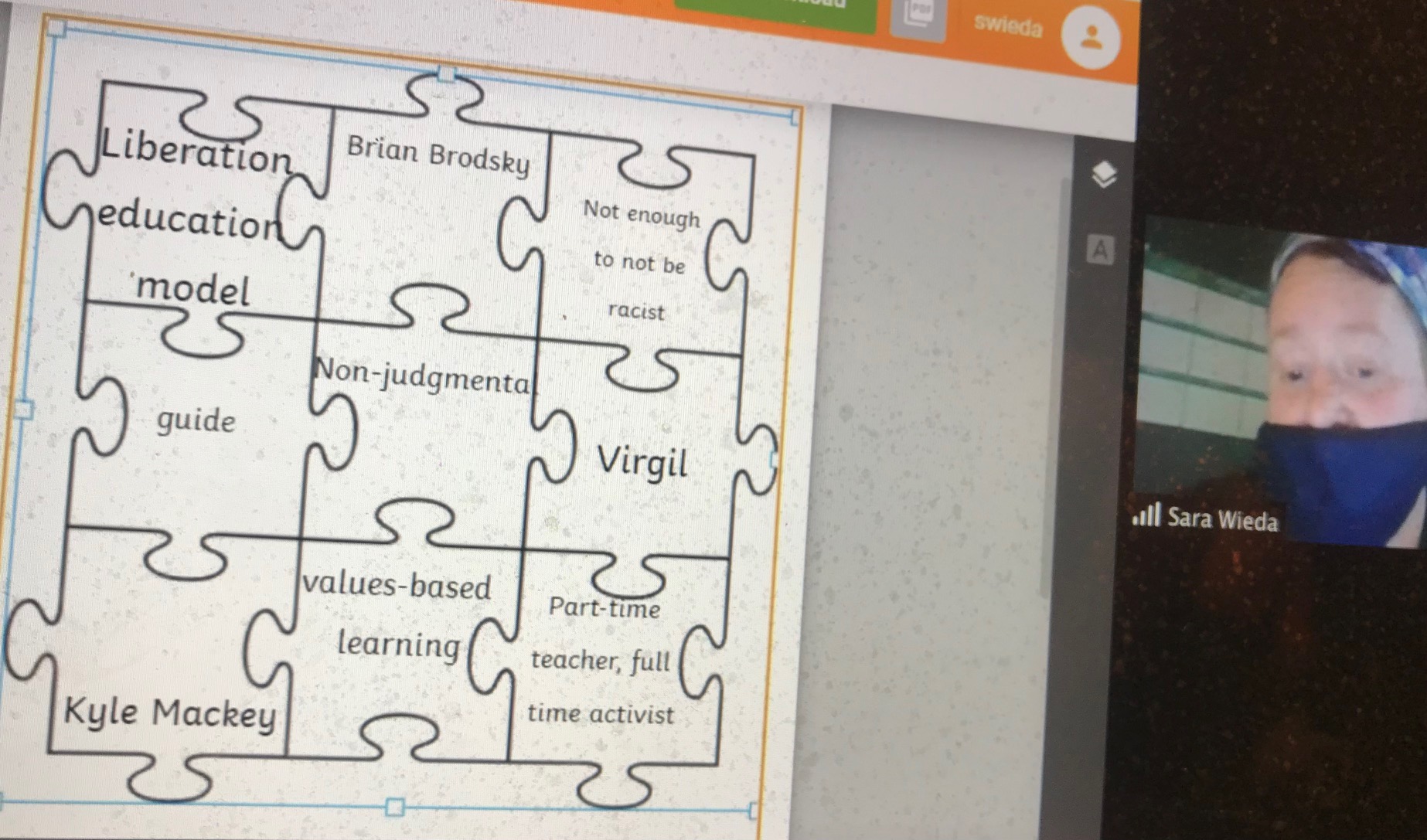
Last week while in a very deep discussion during a 3D Leadership session we were talking about leadership and power. We were discussing the five forms of power from French and Raven (1959). Here are those five forms of power:

First of all, the group talked about how great it is that we continue to move from forms of power to levels of what John Maxwell called 5 Levels of Leadership. The group acknowledged how negative most of the five levels of power are, but that those powers exist, how they can be used for positive, and how we should use them for creating positive environments. One of the positive forms of power is “referent.” I have blogged about this power before in The Majestic Leader. Also, here are Maxwell’s 5 Levels of Leadership:

Then someone made a brilliant statement: “The five forms of power have such a limited scope.” I asked what she meant, and she said, “Those are all about ‘power over’ and we should be thing about ‘power to do’.” Again, another brilliant statement! “Power to do!” Now that’s a power we need to develop – Self empowerment.
Therefore, as leaders it’s important to inspire empowerment in others. After all, when people feel powerful, it boosts their self-confidence, which further enhances their work and performance. Inspiring others is often the mark of a great leader, but how do you do that effectively? Being an inspiring leader was the theme of this gathering. To truly empower others we must empower ourselves to be inspirational leaders. How do we do that? Here’s what our teacher leaders said:
- Show up – Inspirational leaders understand the significance of just being there. I actually heard from teachers in this gathering that they wished that the school leaders would just come visit there schools and more importantly, their classrooms. You can’t take care of your peeps if you aren’t with your people and that means going to street level and getting shoulder to shoulder.
- Be present – This is different than showing up; we must really be present by having open ears and listening, asking the right questions, and having humility.
- Withitness – Great leaders position themselves so they can see everything. This is also about being actively engaged.
As leaders of learning we have a key role to play in delivering quality learning. In order to do this it is important to understand the purpose and impact of our role and the impact we have on others. In the case of education, the task of leadership is to make visible the how, why and where of learning. It achieves this by conversations and demonstrations around pupil learning, professional learning and learnings which transcend the boundaries of the school. The challenge for leadership is to nurture the dialogue, to make transparent ways in learning interconnects and infuses behavior. It promotes a continuing restless inquiry into what works best, when, where, for whom and with what outcome. Its vision is of the intelligent school and its practice intersects with the wider world of learning.
Never forget, the way we see leadership, learning and the quality of our schools, businesses, or organizations is ultimately a product of how we see and think about ourselves. Remember, we have the “power to do.”
Safety Nets Instead Of Safety Barriers

Funny that David Taylor-Klaus (DTK) talked of becoming a grown-up with our fully formed prefrontal cortex, giving us more rational and limiting beliefs. Funny because I had someone (who I have worked with and have a great relationship with), in a loving way, describe me as having the mindset of an eighth grader this past week. Well, I resemble that remark. Grown-up, I am not; and proud of it.
DTK described some of his childhood “rope-in-the-tree” swinging antics that landed him with a broken nose and shattered wrist. His last statement about the story was, “Sadly, my parents forbade any future effort to test my theory.” Probably no one else reading DTK’s book would highlight that sentence but me. But, there is such a fine line between protecting us, which his parents were very well, and beginning to limit our beliefs with, so called, “rationale thinking.”
This is a pretty extreme example, but as an educational leader I think about this a lot. What’s the correct balance of risk-taking and over-protection? What might DTK have learned if after he healed, he had retested his rope swinging theory again? I am not suggesting that we put our children, or ourselves for that matter in harms way, but I am a believer that we cannot live risk-free. What if Thomas Edison had quit risking failure after electric light bulb prototype 9,999?

For me, it’s about the “what if?” I would rather admit failure than having to explain “what if?” DTK in Chapter 6 of Mindset Mondays With DTK told us we must not let ourselves become victims. We have clear choices and clear steps to make a shift in believing in ourselves. We need an “I can” mindset giving us a belief that we are strong and capable. DTK told us, “Who we believe we are matters.” It is so important that we allow for risk with our children and all we serve. Again, I am not advocating putting anyone in harms way, but finding a way to be a safety net. That metaphorical, or maybe even real one, looks like allowing for risk, but allowing for failure so that learning can happen.
To take those risks it is very important that we make sure that we, our children, and those we serve hear “I can” instead of “I can’t.” We need to be safety nets and not safety barriers.
Approaching The World With A Sense Of Childlike Wonder
The Creative Mindset: Mastering the Six Skills That Empower Innovation by Jeff Degraff
My rating: 5 of 5 stars
Sometimes I believe we need to eliminate the word “innovation” from our vocabulary because we inhibit deep innovation by skipping the more important “being creative.” This book reminds us and guides us through practical and everyday creativity. We are also reminded that achieving a creative mindset is possible for everyone and what we need to do is simple – approach the world with a sense of childlike wonder.
I’m not going to talk about all six skills covered in the book, because I want you to read it, but as a person who leads and works by metaphors and analogies I found the guide of the skill “Associate – Connecting Ideas With Analogies” extremely helpful. By using the associating techniques of direct analogies, personal analogies, symbolic analogies, and fantasy analogies we can reverse analogies, use idea bridges, and use adaptive reasoning to tap into our creative mindset.
This then leads to the other skill that provided a great deal of personal growth for me: “Translate: Creating Stories From Ideas.” We are reminded in this part of the book that for us to translate creativity to innovations we must have all key stakeholders as a part of the process. A case study is used to describe how just leaving one stakeholder outbid the project caused a wildly creative and successful innovation to fail.
If you want to become a leader with a fully honed creative mindset who enables that same creative mindset in those you serve, you must read this book. Your first step to accelerating down the runway of your creativity taking off is to make this book a part of your personal growth plan.
View all my reviews
Hidden In Common Firewood

“There is a legend of an artist who long sought for a piece of sandalwood, out of which to carve a Madonna. He was about to give up in despair, leaving the vision of his life unrealized, when in a dream he was bidden to carve his Madonna from a block of oak wood which was destined for the fire. He obeyed and produced a masterpiece from a log of common firewood. Many of us lose great opportunities in life by waiting to find sandalwood for our carvings, when they really lie hidden in the common logs that we burn.” ~ Orison Swett Marden
During my morning study time I came across this passage from Orison Swett Marden. There is a lot to unpack in this short paragraph. Then I thought about the value of this as a prompt. So, instead rambling on with my thoughts, I’m going to employ a best practice from my friend and great author, Bob Tiede: ask you all a question. What lesson do you take away from this Orison Swett Marden passage that you want others to think about and act on?Please add your answer as a comment to this post.
Executing The Micros

If you’ve not heard Alex Rodriguez (A-Rod) do the play-by-play of a Major League Baseball (MLB) baseball game on ESPN, you need to. He is awesome. And, you’re in luck because the MLB Playoffs are still going on. During game one of the NL Wildcard Series between the Atlanta Braves and Cincinnati Reds, A-Rod made the comment, “It’s about executing the micros, not the macros.” This was in references to a couple of things:
- We need to execute the fundamentals
- We cannot focus on the big outcome and forget the process
The case in point was that in game one there seemed to be a focus on trying to knock the ball out of the park instead of just putting the ball in play. In game one an RBI (run batted in) would have been much more valuable than a home run. Proof in point was the game winning RBI by the Brave’s Freddie Freeman. A-Rod also pointed out that bunting in a couple of scenarios would have moved players into scoring position.
Baseball, just like most of our every day work, is about making progress. Enormous success happens when progress becomes the biggest goal. It’s about improving and executing the micros. Ordinary teams, organizations, and focus on the macro outcome, geniuses and champions focus on the process. In other words, throw out the phrase, “Don’t sweat the small stuff.” It’s time to sweat the small stuff.
Baseball is such a great way of teaching this. Atlanta’s Freddie Freeman ended the longest scoreless duel in postseason history with an RBI single in the 13th inning to beat Cincinnati 1-0 in the opener of their NL Wild Card Series. An RBI single is a micro compared to a home run; it’s just putting the ball in play. It also took having a player in scoring position. A-Rod’s point, I believe, was we need to be doing all the things necessary for progress. Someone needed to get on base, get moved to second or third base, then a ball put in play.
How about you, are you executing the micros?
 Byron's Babbles
leave a comment