Spreading The Wealth

Over the weekend a teacher leader asked me how her principal should be deciding which teachers should get development opportunities and be empowered. I said, “That’s easy; all of them should be getting those opportunities.” As I learned from Kim Scott, author of Radical Candor, everyone has potential. Everyone should have empowerment and opportunities for development. Really, our teacher leaders should all have individualized development plans. Therefore, everyone should be in development mode and be empowered to lead from where they are. Everyone is a leader, so leadership should happen whenever and from wherever it is needed. We need to be very careful to not fall in the trap of “earned empowerment.” In other words only empowering the chosen ones who someone thinks has earned it. This might yield empowering and developing 10% at best. I blogged about this in Earned Empowerment is Dangerous.

Then tonight I was reminded how important it is to have the whole team empowered and ready for action. In the first quarter of the New Orleans Saints big 38-3 win over the Tampa Bay Buccaneers, quarterback Drew Brees had thrown completed passes to nine different receivers. At the end of the first half he had thrown completions to 12 different receivers. That is a big deal. Think about how much more successful the Saints are with that many empowered targets.
So, we probably better take a page from the Saints playbook and empower and develop everyone. Think about it; if we are able to empower all of our people with projects and responsibilities, aren’t we really expanding the capacity of our organization. Really, mass empowerment equals capacity building. This in turn means leadership development of our teams. It also allows us to tap into all of our resources and expertise, which can lead to achieving amazing results.

Great leadership is shifting from telling everyone what to do, to empowering and developing everyone to be ready to come up with the best and brightest ideas and solutions that have ever been thought of before. This will give you a receiver core for big wins like Drew Brees and the Saints.
Leaders Weaving The Web
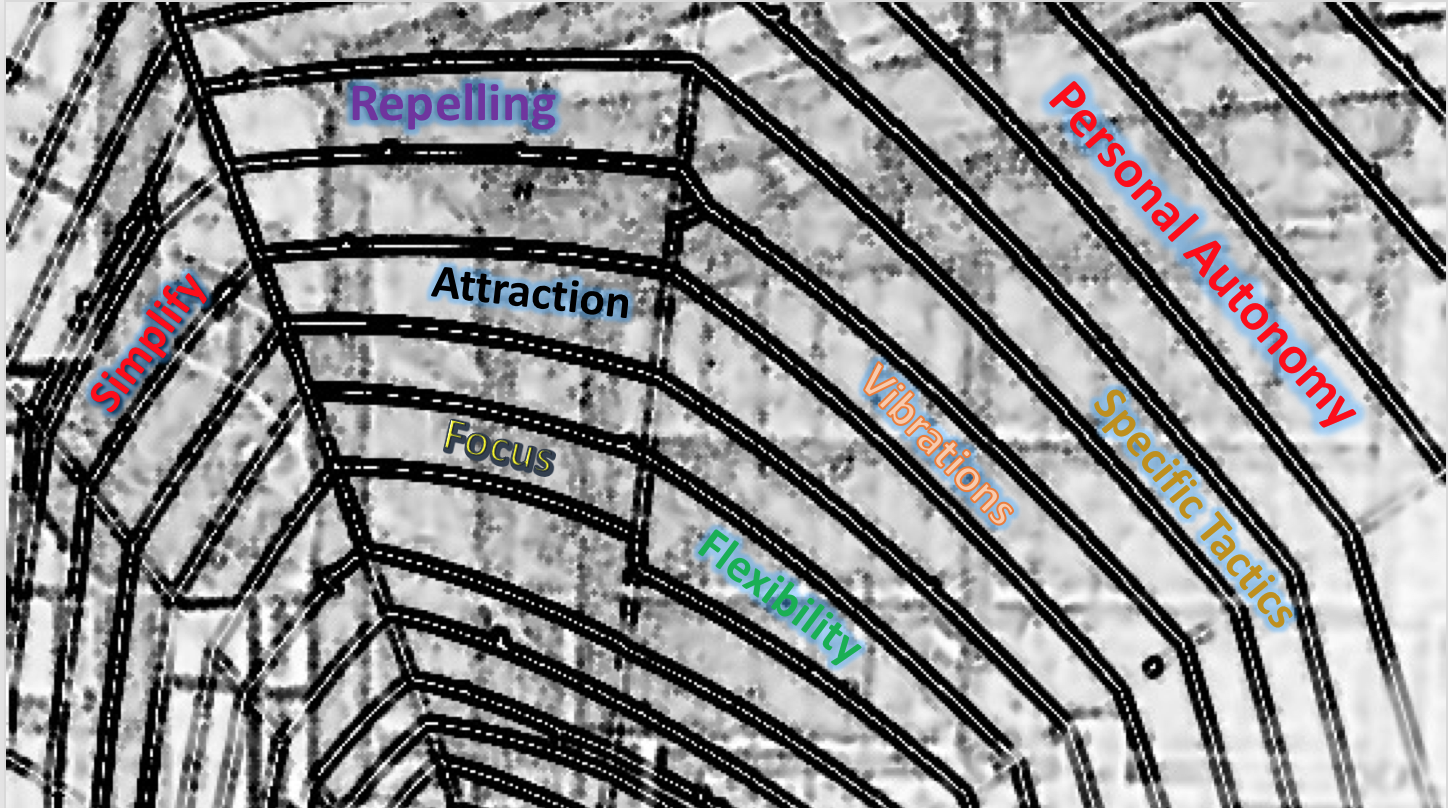
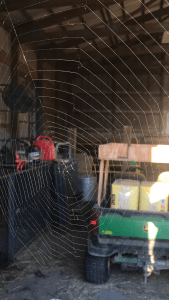
This morning when I went out to do the morning feeding I saw a very beautiful spider web as I went in the barn. It was so awesomely constructed I had to take a picture and then I got the inspiration to use it in a 3D Leadership Gathering I was facilitating for our Florida participants today. I had them relate the spider web to their leadership development during the last 240 days of the Global Pandemic. A great way to describe leadership is to compare the construction and function of a spider web. Just like each strand of web is carefully woven in just the right places for a spider to capture what’s necessary for it to survive, an effective leader also weaves attributes that attract and nurture those the leader serves. Each strand of that web is a specific tactic the leader can use to engage and influence.
We discussed the vibrations that happen when something touches or gets caught in the web. These vibrations go quickly through an organization so communications should be chosen carefully. A leader should have a meaningful feel of what is going on at the ground in the organization, and that he or she should want to be in touch with the whole organization through effective representatives, reports, liaisons, collegiality, and partnerships within the organization. Leaders should constantly work towards enabling their organizations to become intricately woven groups of people in harmonious partnership.
We Voted!

Today was a very special day. First off, it was Election Day; a very special day for our democratic society. It was even more special because my son, Heath, chose to come home from college to vote in person. It was his first National election he was eligible to vote in. He wanted us to go as a family. Of course, I was excited to have him home and I was proud he wanted to go together to vote. From a young age Heath always went in to vote with me before we went on to school and then would proudly wear his “I Voted” sticker into school. He was such a cool kindergartner!
This got me to thinking about how much our children learn about civic responsibility from their parents and other adult role models. Heath has always seen me take the ballot seriously and we even discussed the school board and judge candidates. I’m proud that Heath understands his role and civic responsibility in the local, college, state, national, and world communities he lives and belongs.
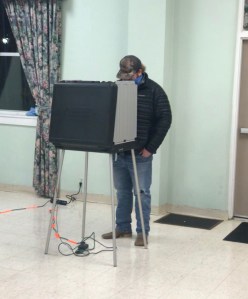
In doing a little studying on the topic I learned that, “Civic engagement during adolescence predicts adult volunteering and voting. Furthermore, civic engagement during adolescence can promote positive developmental outcomes, particularly for marginalized and at-risk youth” (Middaugh, Clark, & Ballard, 2017, Pediatrics, 140). This really got me thinking about the civics experiences we need to be giving our children and students. They need to be given opportunities for civic engagement. These need to be project-based so the students are actually engaged in real world community experiences.
Bottom-line: parents who involve kids in elections raise civic leaders! By involving our children and our students in civic engagement and exposing them to the voting process teaches them real-life lessons in democracy, and it helps show our communities and country that families matter and have a powerful voice.
Leading With Artisanship

It’s funny to me how reading something can make me think of something that I haven’t thought about, at least consciously, for a while. When reading Lesson 10, “Surrender Overthinking” in Mindset Mondays with DTK by David Taylor-Klaus (DTK), I came across this statement:
“I don’t have a fantasy of being an artist…not in terms of painting, or sculpture, or any of the expressive arts. I do want to be an artist in how I serve people, and the work that I do in the world. If I’m overthinking, my art is compromised and my creative energy is spent spinning my wheels, or ‘catastrophizing forward’.”
~ David Taylor-Klause, 2020, Mindset Mondays with DTK, p. 98.

This got me to thinking about the work of Patricia Pitcher. Her work of studying leaders was very influential and I consider her to have been very influential on my leadership development. Her books The Drama of Leadership: Artists, Craftmen, and Technocrats and the Power Struggle That Shapes Organizations and Societies (1997) and Artists, Craftsmen, and Technocrats: The Dreams, Realities, and Illusions of Leadership (1997, 2nd edition) easily make my top five list of influential books. These books make the top of the list because they helped me understand myself as an artistic leader and be comfortable with that. Pitcher saw the artistic leader as an inspiring and visionary risk-taker, guided by an intuitive sense of the future. Now, unlike DTK who has no interest in being an expressive artist, I really want to be a rock star, but I just don’t have any talent. I do find great inspiration from studying rock bands, the inspiration for songs, and the innovative ideas they come up with.
“I am trying to think out a short story. I’ve got the closing sentence of it all arranged and it is good and strong, but I haven’t got any of the rest of the story yet.”
~ Mark Twain
The technocrat, the category which many leaders fit, is the nemesis of the artist. They are organized box checkers who use the term “teamwork” a lot, but operate with a “my way or the doorway” and “paint-by-numbers” mentality. The technocrat will be fearful of making imaginative decision and before any ideas can be thought through is already trying to fit the ideas in a box and understand how to manage it. Boy am I glad I did not end up a technocrat – I dream too much and I’ve got too much imagination for that. As an artist I do tend to overthink things, but usually not looking for problems. This was the point of DTK’s Lesson 10; we should not focus too much on what could go wrong. We need to anticipate obstacles and opportunities, but not let them hinder moving forward.
I learned from Pitcher that as an artist I will, at times, have vague, indefinable, long-term visions that get clarified by action and remaining open to new insights. Artists know where they are going, but sometimes it’s vague and more a trip that destination. This to me would be one way to keep from overthinking things – focus on the journey more than the destination. It’s why I choose to inspire with metaphors rather than with detailed descriptions of the future. Think about this:
“I claim that the visions of the visionary [artist] leader are no different in form or origin than those of an artist. If you ask a great painter what he or she’s going to paint next, it’s a rare one who will have a detailed answer and if he or she does, I doubt he or she satisfies the definition of great.“
~ Patricia Pitcher, 1997, The Drama of Leadership, kindle location 196 of 2456.

Research tells us that the best artists stay radically open as they work on a canvas; there is a continuous interaction between a vague vision and the concrete act of painting. In my conversations with the artists and song writers in rock bands I have found the same thing. For example, a riff gets written and suddenly an entire song is born. It’s why we artist leaders live for the metaphor. I am always looking for intersectional creativity – the intersection of different fields, ideas, people, and cultures. DTK told us to “Take this moment to consider that there are endless possibilities, opportunities, and forces working on your behalf” (p. 98). We need, as Pitcher taught us, to let our intuitive sense of the future take over. So as we take to our leadership canvas, let’s open our minds to creativity, ideas, and opportunities, but not overthink all that could go wrong.
Listen and Look, Look and Listen

After the New Orleans Saints overtime win over the Chicago Bears tonight I was flipping through the channels (I know that term ages me) and came across an old episode of Columbo. I love that old show. Lt. Columbo, played by the late Peter Falk, is a police detective who is a little quirky, always has a cigar, makes you think he’s not too smart, but is super attentive. In the episode I turned to, he said “we don’t usually have much to go on except to listen and look and look and listen.” This struck me as the essence of what we all need to be doing. Columbo makes the guilty parties believe he is inept, but then teases out all the clues to solve the crime and prove guilt. Lt. Columbo makes an observation about some inconsistency. The seemingly trivial, it turns out to be the detail will tie together the entire investigation and establish the culpability.
Columbo brought a sense of curiosity and was sensitive to inconsistencies and incongruities. So, if we think about the term “look” we find that it means to direct your eyes in a certain direction. Then, “listen” means to pay attention to someone or something in order to hear what is being said, or sometimes what is not being said. “Listen” and “look” are actions usually thought of when we are paying attention.
We need to be more like Lt. Columbo and pay attention by listening and looking to focus our minds on someone or something that is happening.
Out Of All People

While doing some heavy tweeting during the World Series, I came across Bible verses on Major League Baseball Players’ Twitter landings. I would then quiz myself to see if I remembered the verse and look it up when I didn’t. I did a lot of looking up. When I was tweeting out to Brett Phillips after that great Tampa Bay Rays win in Game4, I noticed he had Isaiah 41:10 listed. This Bible verse shows up a lot for athletes. It goes, “Don’t panic. I’m with you. There’s no need to fear for I’m your God. I’ll give you strength. I’ll help you. I’ll hold you steady, keep a firm grip on you” (Isaiah 41:10 | MSG).
Basically, God is telling the children of Israel, of which we are a part, that he has our backs. If God talked like me, the verse would sound like this: “Chill, I’ve got your back,” or “Dude, you’ve got this.” Then, a couple of days ago I noticed on a great Twitter connection of mine, Alain Dizon, that verse 9 was added to the Twitter landing with Isaiah 41:10. So, I looked up verse 9, which says, “I pulled you in from all over the world, called you in from every dark corner of the earth, Telling you, ‘You’re my servant, serving on my side. I’ve picked you. I haven’t dropped you’” (Isaiah 41:9 | MSG). This verse is profound – we are all picked; we’re certainly not going to get dropped from the picture. This verse might be a bigger deal than verse 10.
In other words, out of all people, God has a calling for each of us – a mission – a reason to live and something to accomplish. He has chosen you and me, and not cast us away. Each of us has an individual purpose in life and God will help us accomplish it. We should never be afraid it’s too late to accomplish our purpose, of physical challenges, or any other obstacles. God won’t leave us hanging. We have no reason to be afraid that we can’t live up to expectations and live with purpose. Whatever the challenge, God will offer his help, and his hand. Verse 10 then ties the whole thing together and brings to mind the strong image of God as our good, best, and perfect friend. He will take our hand to help us through the challenges that we face.
So, what’s your individual purpose in life? Out of all people, it is up to you to carry out that life’s mission and purpose. We all need you!
An Invitation
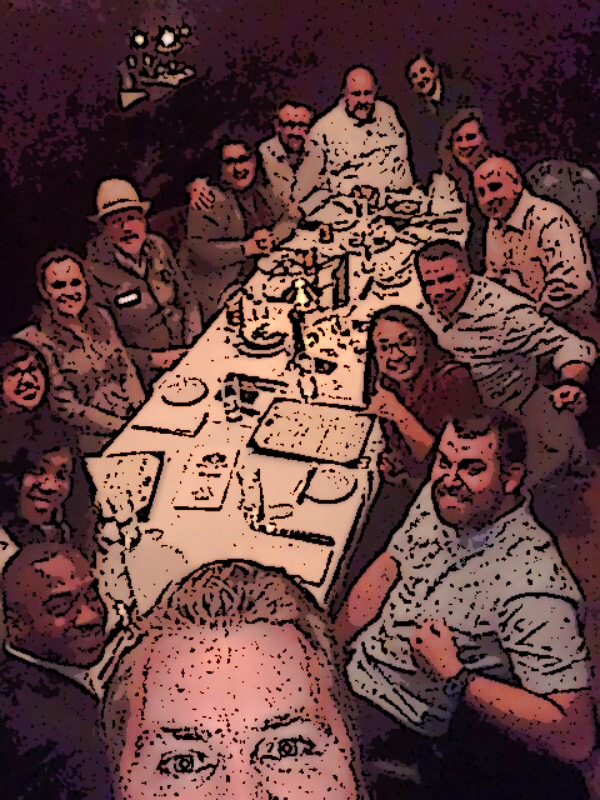
“It is such an honor to be part of a community of citizen leaders who seek conversations by showing up through invitation rather than mandate, and the diverse gifts of each person are acknowledged and valued. Together we will answer the question, ‘What can we create together?’ so students of all backgrounds and circumstances are prepared to succeed in school, work, and life.”
~ My remarks on October 22, 2020 when accepting the gavel as Chair of the National Association State Boards of Education Board (NASBE) of Directors
The remarks above come from the personal core values I have developed from being a student of Peter Block. Peter Block’s name is synonymous with “Community” and he literally wrote the book on it: Community: The Structure of Belonging. I first became acquainted with Peter through my great friend Mike Fleisch. Mike kept telling me that everything I believed in was aligned with Block’s values as well. Mike told me I just had to read the book, Community, and that I would learn so much from Peter Block. So, I began reading and studying, and have since had the chance to visit with Peter Block a couple of times. The bottom line is that everything we do is as part of a community whether it is an organization, neighborhood, city, country, or world that works for all. We need to take our membership in these organization, truly belong, and then be accountable for the leadership of making communities great to be part of.
So, my post here deals with an organization, the National Association of State Boards of Education (NASBE) – let’s call the organization a community. A week ago I took the helm as Chair of the Board of Directors and I reflected back on how I really came to be so involved and belong in this organization. It all happened because of one of the most powerful tools that Peter Block says we have in a community in the power of the invitation. The question becomes “Whom do we choose to invite into the room?” In our case as an organization made of state boards of education and their members, that’s who we want to invite, right?
“If the artist is one who captures the nuance of experience, then this is whom each of us must become.” ~ Peter Block
(Block, 2008, p. 9)
That is where my story begins. Shortly after being appointed to the Indiana State Board of Education back in 2015, fellow board member, Gordon Hendry, personally invited me to attend the NASBE New Member Institute. Peter Block would remind us how powerful the invite is “because at the moment of inviting, hospitality is created in the world” (Block, 2008, p. 117). Gordon told me about NASBE and how valuable the organization would be to my development as a board member and how awesome the New Member Institute is. Here’s the deal: any new state member can go to New Member Institute. But, here’s the big deal: Gordon Hendry had asked me to attend and raved about how great it was. How could I refuse? I couldn’t abdicate my responsibility to the communal structure. I registered and I attended. I didn’t just attend, however, I became a part of the fabric of NASBE and was woven into the fabric of a collective community of great citizen leaders from all over the United States, including Guam.
This transformation from thread to fabric happened because another group from Delaware (without consulting me, I might add) nominated me during the Institute to serve as the New Member Representative to the Board of Directors. First of all, how cool is that? Quite an honor coming from my new east coast friends. Secondly, how cool is it that an organization has a new member sit on their board? What a way to truly get to know customer needs, right? Anyway, the members from Delaware nominated me and a day later somehow I was elected to serve on the Board of Directors (and there were even three other candidates). The rest is history or history that is still being written. I served two years as New Member Representative, then two years as Secretary-Treasurer, then a year as Chair-Elect, will serve this year as Chair, and then next year my final year on the Board will be as Past-Chair.
Again, what a ride that is still running. Here’s my point in all this: none of this would have happened without the invitation from Gordon Hendry to be at the “table” and then the Delaware delegation further weaving me into the social fabric by nominating (a form of invitation) me as a New Member Representative on the Board. Peter Block taught us that, “To build community, we seek conversations where people show up by invitation rather that mandate, and experience an intimate and authentic relatedness” (Block, 2008, p. 93). We need to have diversity of thinking, dissent encouraged and valued, and the gifts of everyone valued.
Our NASBE community is an asset-based community that is continually evolving because of the tremendous aptitude of our members. Together we continue to advance education equity and excellence for students of all races, genders, and circumstances by answering the question, “What can we create together?”
What do you have going on, and who do you need to invite? Go ahead and bring some more hospitality to the world!
Temporary, Quick, or Permanent
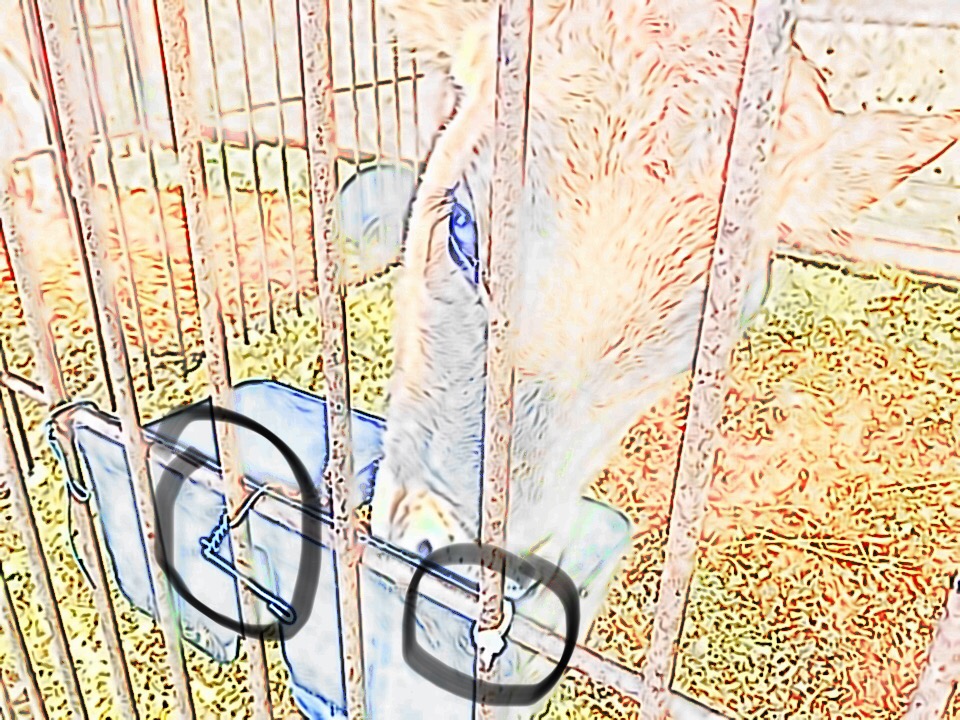
I am writing this post not exactly knowing where it will end up. I’m not sure if I will end with an opinion, advice, or just a collection of thoughts. This post, like many, was inspired in the barn this morning before the sun came up and in an hour before most even think about getting up – it’s such inspirational time for me. A lot of people spend their morning mindfulness time on a yoga mat or in a gym; mine is spent in the barn. I wouldn’t have it any other way. This morning when I got to the barn a feeder that hangs on a gate for one of our baby calves had come loose. It had come loose because I had done a quick fix the other night just using a plastic zip tie. I remembered thinking at the time, “this is not going to last very long, but I don’t feel like getting the wire out and fixing it that way.” In full transparency, I wanted to get inside and watch Game 4 of the World Series.
Well, this morning the plastic ties were broke and I was faced with fixing again. So, I got the wire out and did it “right.” This got me to thinking, “what constitutes right?” Think about all the “fix” decisions that are made whether by company, school, government, community, et cetera. Think about the names we assign “fixes”: makeshift, stopgap, salvage, life hack, workaround, and so on. Call them what you want, but almost every day we need to come up with temporary fixes and move on. I would not necessarily call this a bad thing.
Take for instance if I have one more round in a field mowing hay and something breaks on the mower-conditioner. I might be able to make a temporary fix (using wire or duct tape, of course!) and then make the permanent fix later. Not a bad thing – the job got done. Or, let’s use a school example. The internet goes down during a lesson. The creative teacher has any number of plan B’s that can come into play – learning goes on and the tech people make the fix (notice I did not say permanent fix – it doesn’t seem that problem can every be permanently fixed 😉). Additionally, sometimes there is no solution even developed yet, so a temporary fix must do.
Example of temporary fix to think about: Donut spare tires are not made for extended service, but they will get you home or to a tire store for repair or replacement of the tire you have put the donut on in place of. An innovation because it takes up very little space in your car.
The stopgaps of the temporary fix do allow for time when devising fixes or developing a whole new product. Workarounds show those we serve that we do truly understand there is a need for a solution. The one thing I have experienced first hand here, however, is that companies should not over-promise, particularly related to timeline. Do not tell the customer what they want to hear – be honest and conservative on the timeline. The old saying “under promise and over deliver” applies here.
The other thing I will note here that warrants a new paragraph is that sometimes admitting that there is not a solution available is refreshing. Sometimes there is a solution available from another provider. I do know it is very refreshing to have a vendor say, “We can’t do that, but here is someone who can.” Guess what? I will probably be back with the vendor who tells me that at some point.
Some time a quick fix is needed, if nothing else, to make the customer happy in the moment. Think about about my zip tie fix; I knew it was not permanent and that it would not last, but it got me through a moment that I was not wanting to spend a lot of time repairing something. We are such creatures of instant gratification and sometimes the quick fix just seems to be the way to go.
Lastly, there are many instances that temporary and quick fixes that were very creative, have turned into innovations. Some would argue that most individual attempts to innovate are makeshift, quick fixes. I even recently saw the term “improvised quick fix” used. As a farm kid I know that farmers have been doing this for years. In fact, really paying attention to quick or temporary fixes needed, might be the best way to monitor customer needs for new innovation.
No doubt we should always be looking toward the permanent solution, but we don’t want to forget to really put thought into our temporary and quick fixes. They have value as well. In fact we might just be devising the next great breakthrough idea.
Do Not Look Outside Yourself

Too often we wait on others to do for us, our communities, or the world what we should be doing for ourselves. In other words we need to step up and be the leaders that we have, for so long, been hoping for. Our choices do not, and have never just affected ourselves. I am reminded of what I have heard Gene Simmons say of what drove him during the founding years of KISS; he wanted KISS to be the band he’d never seen. Mission accomplished! We need to become the leader we’ve been hoping for.

In chapter nine this week, entitled “Take the Lead“ in Mindset Mondays with DTK, the Hopi Elder’s Prophecy was referenced. DTK quoted the Hopi elders, “we are the one we’ve been waiting for.” This caught my attention because I spent some time in the late ‘80s learning about the Hopi in Arizona. The Hopi are a Native American tribe located in northeast Arizona. They are believed to have one of the oldest living cultures in the world. They are referred to as “the oldest of people” by other Native American nations. It was incredible to visit and learn in the Hopi lands.
A Hopi Elder’s Prophecy
“You have been telling the people that this is the Eleventh Hour, now you must go back and tell the people that this is the Hour. And there are things to be considered . . .
Where are you living?
What are you doing?
What are your relationships?
Are you in right relation?
Where is your water?
Know your garden.
It is time to speak your Truth.
Create your community.
Be good to each other.
And do not look outside yourself for the leader.”Then he clasped his hands together, smiled, and said, “This could be a good time!”
“There is a river flowing now very fast. It is so great and swift that there are those who will be afraid. They will try to hold on to the shore. They will feel they are torn apart and will suffer greatly.
“Know the river has its destination. The elders say we must let go of the shore, push off into the middle of the river, keep our eyes open, and our heads above water. And I say, see who is in there with you and celebrate. At this time in history, we are to take nothing personally, Least of all ourselves. For the moment that we do, our spiritual growth and journey comes to a halt.
“The time for the lone wolf is over. Gather yourselves! Banish the word struggle from your attitude and your vocabulary. All that we do now must be done in a sacred manner and in celebration.
“We are the ones we’ve been waiting for.”
Hopi Elders’ Prophecy, June 8, 2000
I’m glad I took the time to look up the Hopi Elder’s Prophecy and read and study it in its entirety because I found another stanza that jumped out at me: “And do not look outside yourself for the leader.” This is a call to be the leaders that we have, for so long, been hoping for. Our choices affect so many more than just ourselves. True leaders lead from inspiration and purpose. We need to seek guidance from within, rather than from without. And share with others in the spirit of servant leadership. As DTK told us, “Leadership starts with you. It’s time to take the lead in your own development” (p. 93). If we are to do this we must take DTK’s advice and lead ourselves first so we can grow to then lead others. We can become the one’s we’ve been waiting for.
Knowing The Water

Yesterday I assumed the role of Chair of the National Association of State Boards of Education (NASBE) Board of Directors. The day before, in a meeting, I was introduced with the byline that in 24 hours I would be taking the helm. I’m not sure why, but I shivered a little at this. I even said, “I’m not sure what to think about that.” Then, our NASBE Northeastern Area Director, Dr. Audrey Noble (Delaware State Board of Education member) who is an avid boater/sailor said, “You’ll be fine. The key to success at helm is about knowing the water, and you know it well.” She had made a powerful statement there and had said a lot.
Later, as I reflected on that interaction, I remembered an awesome story that came out of World War II. And, of course, the story involves the great leader and 34th President of the United States, Dwight D. Eisenhower. The story goes that he went to the tent where his soldiers were mapping out a location for the troops to cross a river. Eisenhower pointed at a spot on the map and said, “We will cross here.” One of his troops said, “We cannot cross there, Sir.” Eisenhower asked why not. They told him they were not sure how deep the water was. Eisenhower pointed to his dampened pants leg and said, “It is this deep.” Clearly, he “knew the water.” Eisenhower had taken the time to actually get his feet wet and know where he was sending his troops.

Leadership by example and working shoulder to shoulder with those you serve continue to be the most successful forms of leadership. These concepts can take many different forms, but is expressed well with the phrase that is on a picture that hangs in my den, “Walk The Talk.” Walking the talk is one of my core values. It really speaks to the fact that our character is our legacy. If we say we believe or will act in a certain way, then our actions should prove that. I blogged about this in Walk the Talk!
A helmsman relies on his knowledge of the water he is in, visual references, GPS, other technological tools, and a rudder angle indicator to steer a steady course. Leading in an organization is no different. One must “know the water.”
 Byron's Babbles
3 comments