Imaginative Play Zones

Albert Einstein famously said, “To stimulate creativity, one must develop the childlike inclination for play.” And even Pablo Picasso said, “Every child is an artist. The problem is how to remain an artist once we grow up.” If children are more creative than adults, it’s not because they have a superior imagination. They just don’t suffer from self-doubt and fear to the extent that adults do. In this respect, at least, we could all afford to be more like children. We don’t question kids being more creative than adults; we all intuitively just know it’s true and we view it as a natural state for children.
So why do kids have the aptitude for creativity? Play! And, remember they have not yet developed, or been taught the self doubt and fear part to the extent we adults have, either. In studying the work of Dr. Stephanie Carlson, an expert on childhood brain development at the University of Minnesota, she taught us that kids spend as much as 2/3 of their time in non-reality— in imaginative play. This is why when I am providing development for adults I always try to spend some time channeling their inner child. Adults want to, and effectively, learn like kids. We want the play, time for imagination, and a safe place for trying new things.
As I worked with teachers this past week we discussed creating psychologically safe places for our students to learn and try new things (the things we are teaching are new). But, we must also not forget our adults – we need a psychologically safe place as well. How about we create imaginative play zones?
Building New Instincts

I am reading another great book right now, Great Circle, by Maggie Shipstead.This amazing novel tells the story of a trailblazing female pilot named Marian Graves and the woman, Hadley Baxter, who played her in a film decades later. It spans time and space while sharing the stories of two courageous women. Marian wants to be a pilot in the early 20th century, a time when women couldn’t even vote much less work in paying jobs where they defied gravity and risked crashing into mountains. It is incredible how Shipstead has layered this book. I am about a quarter of the way through it and I found myself Googling characters to just check and make sure these really were fictitious characters. But, that’s the beauty of a novel; we get to know everything about each character (person) as they become alive for us. Unlike real life, where there are always hidden or unrevealed aspects.
In the book, when Marian went up for her first flying lesson, her instructor asked her if she knew what to do if the plane stalled. He was surprised she knew the answer: point the nose down to gain some speed before pulling up. The instructor was impressed she knew this because it goes against instinct to point the nose down in a loss of power – we want to try to get higher. Marian’s instructor, during this part of the conversation said, “Don’t always follow your instinct but build new instincts.” I loved this statement and it is so true. Sometimes, not all the time, we must fight our instincts and even go against our instincts. Granted, however, the question of “should we question our instinct or go with it?” is not that easy.
Our instincts are not really that random. They are based on the brain’s rapid appraisal and comparison of our current situation with memories of previous situations. So when a decision feels intuitive, it might in fact be based on years of experience. Because of our cognitive biases, however, we can be led toward the wrong answer. Many times we tend to be over-optimistic; we prefer simple solutions; we notice and remember information that confirms what we already think; Additionally, we have this uncontrollable urge to continue down paths that we have already been down, are the tradition and safe path, or have already invested time and money in. This could keep us from doing a little trailblazing of our own.
So next time your instinct is sending you in one direction it’s worth assessing the situation and asking, “What are the arguments for the options of building a new instinct?
I Was Needed!

I love that a lot of what I do is helping teachers get better at their craft. Teaching is such a beautiful cross of science and art. Leonardo da Vinci would be having great fun if he were around helping us improve our teaching for learning today. He believed science and art were very tightly connected. This week I have had the honor and pleasure of facilitating professional development for teachers at Nashville Collegiate Prep and Knowledge Academies in Nashville, Tennessee. I have truly been inspired by this group of professionals. Every day I am excited to get the day of learning with them started.
“Change the audience, change the meaning.”
Leonardo da Vinci
On Wednesday I did a session entitled “Engagement Strategies: Teachers As Facilitators, Knowledge Navigators, and Co-Learners. At the beginning of this session I do an activity that begins with the prompt question, “What do you want students to say at the
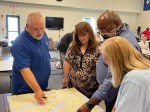
end of the week about your facilitation?” The groups got five minutes to write everything that came to mind on Post-it® notes. This is part of a larger activity and participants get to share out after each part. I love walking around and looking as they are writing. There were literally hundreds of sticky notes being made, and I was inspired by all of them. But, one caught my eye and required my attention (the featured photo of this post).
On one of the Post-it® notes of Jamie Martineau, Kindergarten teacher at Nashville Collegiate Prep she had written four bullet points:
- I was part of something
- I was important or needed
- I am a part of this class
- We did it
I was blown away by the thought of every student feeling this way. After getting to know Jamie this week, I have no doubt that her students will feel that way. Going through school is where many of students begin learning to be part of something bigger than themselves. It’s during this time in our classes that we can help make our students feel valued as individuals. The developing personalities of our students need a strong and secure environment in order to flourish in academia. Let’s face it; our students learn more and behave better when they receive high levels of understanding, caring and genuineness.
We cannot underestimate the importance of cultivating a classroom culture in which students feel valued, respected, heard, and an important part of something. One way we can build this solid foundation for learning is to listen to our students. Fostering conversations about real world and relevant issues, topics, and problems ensures that our classrooms become places of academic inquiry and collaboration founded on a sense of fairness and mutual respect.
If a student considers their teacher to be caring and accepting, they’re more likely to adopt the academic and social values of their teacher. This, in turn, influences how students feel about their school work and how much (or how little) they value it. Here are some tips on how to make sure our students belong and are part of something:
- prioritising high-quality teacher-student relationships
- creating a supportive and caring learning environment
- showing interest in students
- trying to understand students’ point of view
- respectful and fair treatment
- fostering positive peer relationships and mutual respect among classmates to establish a sense of community
- positive classroom management
- Giving students a voice
We all want to belong. ALL of our students deserve to be an important and needed part of our school communities. We can do it!
Flip On Your Awareness

“Because once we are aware, we are also at choice” (p. 323 in Chapter 47, Find The Magic, of Mindset Mondays with DTK by David Taylor-Klaus – DTK). In other words, once we are aware of all the possibilities and our own desires we must choose to do the work and create the conditions for luck, magic, and success to unfold” (p. 324). This is why I love immersing myself in intersectional learning. By interacting and learning from those outside the world I know I am able to become aware of what is on the horizon. Without flipping this switch on it would be just like really trying to chase the horizon – it’s out there, and you can move toward it, but you never get there.

DTK told us that this awareness becomes dot, or real place, on the horizon. Once we have this awareness, we must work hard to create the conditions for that which we choose to accomplish happen. That requires belief and action. How about you? Are you ready to flip the switch on to your awareness?
Bringing Nuance To Our Language

L. David Marquet taught us that Leadership Is Language. He argued there is power in what we say as well as what we don’t say. Additionally, how we allow others to join the collaborative conversation matters. I’ve been continuing to learn about how language matters and how we are evolving and adapting while reading Because Internet: Understanding The New Rules Of Language by Gretchen McCullough. McCulloch pointed out, “While English students can generally just about understand the 400-year-old plays of Shakespeare, Geoffrey Chaucer’s The Canterbury Tales, written 600 years ago, is almost indecipherable without university-level language courses. The foundations are there, but it’s an entirely new structure” (Because Internet Summary and Review). Proof that we can’t stop the language evolution.
When I was receiving my k-16 education, and into the first two decades of my professional career, the rules of language were handed down from figures of authority. These were my teachers, professors, peer review, and mentors. With the internet and especially social media sources, society (all of us) have been crafting a new language and forms of expression. This blog post is a perfect example. I can reach thousands of you without needing to make it past the scrutiny of an editor. Granted there are pluses and deltas to all this but I like people being able to speak more informally and organically.

I’m not sure I would qualify as a linguist, like McCulloch, but I do find it interesting how people communicate differently. For example, this past month, while facilitating Teacher Ambassador training for the National FFA Organization, we used the question of what one calls the apparatus pushed around a grocery store collecting the items for purchase – grocery cart or buggy? This becomes an interesting, sometimes heated, and comical discussion. Regardless of where we land on the topic, where we live or came from matters. What I found was that more from the south call it a buggy. Think about the “pop” versus “soda” versus “coke” question as another example.
It turns out we are also deeply influenced by groups we have weak ties with, like those on the web. Think about it, as McCullough points out, the internet is a bundle of weak ties, with social networks, live programming, forums, blogs, and chat rooms all facilitating contact with people outside your core networks. Twitter, my favorite, is a primary driver of linguistic change because it encourages you to follow people you don’t already know. And…I can reach out to, speak to, and listen to people I could never meet in person or “real life.”
Now we have “Lol,” invented by Wayne Pearson in a chatroom in the 1980s, originally indicating laughter. Now, “lol” had evolved, becoming part of our language to signify appreciation of a joke, to defuse an awkward situation or to indicate irony. Also emojis have become an indispensable part of our language. Our predominate communication by writing (texting) removes the body from language, many of our communicative tools are lost. Emoji helps us to fill this void. If you’re a person who talks with your hands and facial expressions, you love emojis. Emojis give us the power to flip someone off (🖕), wave (👋), wish luck (🤞) and roll our eyes (🙄). Emojis give us colorful and fun representations of our physical world. They bring nuance to our language, and a bit of flair to our messages.
Starbucks has capitalized on the term, sociologist Ray Oldenburg, coined in 1989, “third place.” Our “first place” is home and our “second place” is work. He argued we all needed a social place as our “third place.” Oldenburg believed these third places were crucial to our social and emotional well-being, civic engagement and the democratic process. Bars, lodges, coffee shops, clubs, circles, card groups, et cetera, all fill the bill. But, Oldenburg had no way of knowing that social media would become a third place to. Social media is shaping how we communicate and what language we use.
I wonder… will kids be able to understand our language 400 or 600 years from now?
Becoming Great Editors Of Ourselves

I am loving the book, Becoming Leonardo: An Exploded View Of The Life Of Leonardo da Vinci by Mike Lankford. I have always tried to get my hands on everything available to read on Leonardo da Vinci. He was such a complex individual and there are so many lessons to learn from continually studying his life and how he worked. This book is greatly adding to the lessons and life of da Vinci. One of the things that really jumped out at me this morning was how much, as a true lifelong learner, da Vinci was constantly self-editing. He knew how to step away, take something apart to get a different view of how it worked, look at things in, literally, different light, or even when in a different mood. We would do well to take some lessons from da Vinci’s playbook. I loved this from the author:
“All art is channeled energy, be it music, painting, sculpture, or literature. Leonardo’s time-consuming methods were a way of gathering and re-gathering energy throughout the project. At best, most people start off with a burst and then dribble away by the end. This must have happened to Leonardo as well early on, but as a close self-observer he learned from it. He learned to leave and come back, to look with different eyes, different moods, different times of the day—all these things allowed him to see better and to better understand. He became a great editor of himself” (pp. 127-128).
Lankford, M. (2017). Becoming Leonardo: An Exploded View Of The Life Of Leonardo da Vinci. Brooklyn, NY: Melvin House Publishing.
I love the statement, “He became a great editor of himself.” This is a skill anyone in any career, or life in general, should work to hone. I love the definition on Wikipedia of editing: “The editing process can involve correction, condensation, organization, and many other modifications performed with an intention of producing a correct, consistent, accurate and complete piece of work” (Mamishev, Alexander, Williams, Sean, Technical Writing for Teams: The STREAM Tools Handbook, Institute of Electrical and Electronics Engineers, John Wiley & Sons. Inc., Hoboken, 2009, p. 128). I like that it is called a process. We all need to work at becoming a self-observer, become reflective and take an introspective look at ourselves and our work product. As Lankford told us, “He [Leonardo] learned to leave and come back, to look with different eyes, different moods, different times of the day—all these things allowed him to see better and to better understand” (p. 128). We need to seek to see better and better understand.
Living Full-Out


There was a lot to digest in the four pages of Chapter 46, “Don’t Wait to Live” in Mindset Mondays with DTKby David Taylor-Klaus (DTK). If I was forced to rank the weekly chapter lessons thus far, this would be one of my favorites. DTK told us that “People regretted dying with their songs still inside them” (p. 318). He went on to say, “…the only thing keeping us from living full-out is stuff we make up” (p. 319). I’m hoping both of those comments make you ponder and reflect as much as they did me. The ideas of happiness and regret are things I blog about often and discuss in leadership development workshops. In fact, I just dug into “anticipatory regret” and “existential regret” in What Will You Regret When You Are 80 Years Old? And, one of my favorite posts on happiness is Finding Happiness Right Where We Are.
After I read chapter 46 yesterday, I was reading about and watching video of Richard Branson taking his ride into suborbital space aboard a rocket he helped fund. He was the first to do this. On LinkedIn he said, “There are no words to describe the feeling. This is space travel. This is a dream turned reality.” As a student of the ultimate role model dreamer and innovator, Richard Branson, I am pretty sure the only song that will be left in him when he dies is whatever wild and crazy idea(s) he is working on at the time. I’m pretty sure there will be no regrets – except maybe to have done even more. He is the role model for showing us how to turn dreams into reality. This first fully crewed flight of Virgin Galactic’s VSS Unity space plane was a major milestone in the commercial space industry.
Yesterday, I tweeted, “Congratulations @richardbranson and @virgingalactic! Thanks for always modeling being a trailblazer for us.” This flight was such a huge example of “living full-out.” The stuff we do on a daily basis may not be as huge as going to outer space, but just as important to those we serve and ourselves. I’ll close with this drop the mic moment and quote from Branson while in outer space that says it all, “I was once a child with a dream looking up to the stars. Now I’m an adult in a spaceship looking down to our beautiful Earth. To the next generation of dreamers: if we can do this, just imagine what you can do.” 🎤
Be An Explorer, Not An Expert

I am so glad I read the book, Alien Thinking: The Unconventional Path To Breakthrough Ideas. This book helped me further hone the alien that has always been in me for wild and creative thinking and innovation. In the book, authors Cyril Bouquet, Jean-Louis Barsoux, and Michael Wade presented an incredible framework using ALIEN as an acronym. I highlighted the framework in What Will You Regret When You Are 80 Years Old? Another comment the authors made in the book that caused me to do further thinking was that we need to “Approach things not as an expert, but as an explorer.” I’ve always been a critic of so called experts and this was a warning of the problem of acting like an expert.
The problem of overconfidence and closed-mindedness in areas we believe we have expertise is all the more troubling because we so generally tend to credit ourselves and many times others with having more expertise than we really do. In Alien Thinking we were taught that discoverers know what they are looking for and then go out and find it, but explorers take chances by creating new things, and looking for what they don’t even know is there. The expert status can serve as blinders keeping us from exploring for the next way of doing what we are doing well now better or differently.
Those that know me well know that I love intersectional learning and learning from outside my own industry. Bouquet et al. argued there is great value in this as well. They posited that “Leaders thus need to think like explorers, become more adventurous and steal the essence of ideas from outside their industries…” Taking an expert frame of reference keeps us from looking for what is next. We need to be looking at industries outside our own and “stealing” ideas. I believe this is an issue particularly in education. There is not enough exploration happening in other industries to learn how to best educate. We can rely on our “outsider status” and being “adjacent outsiders” to learn and discover from others.
What Will You Regret When You Are 80 Years Old?

I finished the great book, Alien Thinking: The Unconventional Path To Breakthrough Ideas, this past week. In the book, authors Cyril Bouquet, Jean-Louis Barsoux, and Michael Wade presented an incredible framework for innovation and creativity. The framework is based on five strategies that do NOT need to be accomplished in any linear fashion:
- A – Attention – look with fresh eyes to observe problems that need to be solved, opportunities worth addressing, and solutions that can be dramatically improved or revised
- L – Levitation – step back from the creative process to gain perspective and enrich your understanding
- I – Imagination – recognize hard-to-see patterns and to connect seemingly disparate dots to imagine unorthodox combinations
- E – Experimentation – test ideas quickly and smartly, with the goal of improving – not just proving – your idea
- N – Navigation – deal with potentially hostile environments and adjust to the forces that can make or break your solution
At the end of the book, the authors helped the reader work through some important hindrances to innovation like human emotions and personality traits. I was struck by the discussion of “regret” that can easily derail even the most ALIEN of thinkers. In Alien Thinking we are taught that “When setting off on a journey of innovation or discovery, you will have to overcome your fears about what might happen.” These fears come in the form of “anticipatory regret” and “existential regret”. Having just founded my own business and making the decision to go out on my own, this discussion in the book really resonated with me.

In addition to overcoming fears of what might happen, most of us, when innovating or trail blazing, will have to deal with “anticipatory regret.” This is the regret we imagine ourselves feeling if the decision we make or don’t make ends up being a mistake. This is pretty powerful stuff. Science can help us with this, however, because the science says that we tend to regret actions not taken far more than we regret failed attempts.
This is where Bouquet et al. explained that “existential regret” can be used as a tool. Existential regret is the regret of how we will later feel if we don’t try; or play it safe. While doing some further studying in this I found the stories of Jeff Bezos when he was trying to decide if he would quit his great job to start what is now the Amazon empire. He used a framework he called “regret minimization.” He projected himself out to the age of 80 and imagined what he would regret. He found that he would deeply regret not having tried to make big on that thing called the internet. Now that is Alien Thinking. Now that is “levitation”- all the way to the age of 80.
We must learn to channel our fears and thoughts of regret to be a positive driver and help us work out the kinks in our wild and alien ideas. Using existential regret can help us sift through our own personal goals and core values to make a weighty call.
Do You Think I Know How To Be Happy?

You all know I love to watch a great episode of Frasier. There is so much to learn from the vane Dr. Frasier Crane, played by Kelsey Grammer. I walked in the house late last evening and was flipping through TV shows and had to stop when I saw an episode was on. Frasier had just been told by an ex-girlfriend that he did not know how to be happy. Well, you know Frasier, he became obsessed with that, and the idea of not being able to be happy became the throughline of the show. He even called his ex-wife, and psychiatrist, to ask, “Do you think I know how to be happy?” She told him he was the only one that could answer that.
What Frasier found was that in everything he did he formulated what the “perfect” version would be and then, as we know, nothing is ever perfect. At one point he was on a trip and the plane was delayed, his hotel room wasn’t right, and the restaurant where he finally sat down to eat was out of everything he wanted. Needless to say, Frasier went ballistic. We’ve all been there, right? Fill in the blank: we’ve planned the perfect weekend and then…__________________. Sometimes we have nothing to do with what happened, other times we do. In this case, none were Frazier’s fault. But, we sure know how to become miserable and make those around us miserable too.
In Frazier’s case I don’t think he was being a hedonist. It had more to do with perfection versus pleasure. How we choose to interact with our external world has a great impact upon how we feel inside. Research tells us that focusing on what’s important and not obsessing over minor annoyances can keep us in a happy place. It turns out those cliches “Don’t sweat the small stuff” and “You can only control what you can control” were right.
But, I also want to go back to the perfection thing. “Perfect” can be such a ferocious enemy of happiness and getting things done. Roy T. Bennett argued that “Perfectionism is the enemy of happiness. Embrace being perfectly imperfect. Learn from your mistakes and forgive yourself, you’ll be happier. We make mistakes because we are imperfect. Learn from your mistakes, forgive yourself, and keep moving forward.” Think about it, perfect is like a unicorn; super cool, but have you actually ever seen one? “Perfect” and the unicorn are both pretty elusive. So, in the meantime, I’ll enjoy the beauty of the horse, till the real unicorn comes along. Get the point?
This made me think about the teaching of Jack Canfield. I remembered him talking about how we humans let perfection get in the way of happiness. Again, this could be the perfect vacation, the perfect presentation, the perfect event, the perfect first impression, and the list goes on and on. Canfield taught us that many times we let our perfects, or “ideals” come from others. Think about it; how many things look just like the brochure portrays? Someone else’s ideals shouldn’t affect your own happiness. Instead, Canfield told us that in order to achieve happiness, you should create focused goals for yourself. Furthermore, never forget that our social circles, coworkers, or relatives should not decide what is right for us or what makes us happy, only you can decide.
 Byron's Babbles
leave a comment