Overrated Advice
It’s one thing to give advice to someone else, dispensing thoughtful words of wisdom. But have you ever noticed that when you try applying those same suggestions to your own life and it often falls apart. I was reminded of this when I heard someone yesterday say, “Taking your own advice is highly overrated.” Really it is all about vantage point. It’s much easier to identify the most rational option, on the other hand, when you’ve got an outsider’s vantage point. From your own perspective it is hard to be your own coach because you’re too close to your own problems, and so your emotions are more likely to cloud your judgement.
It’s not easy to step outside of our minds and see ourselves objectively. To see our own abilities and to know that we’re just as strong as anyone else out there. When we don’t take our own advice and encouragement, however, we become a hypocrite. In as much as we look to others to set an example, they also look at us to do the same for them. Let’s also not forget that on some issues we have a tendency to prefer their own opinions, irrespective of their merit, and the fact that careful listening is hard, time-consuming work. Maybe the best example we can set is to always seek sound coaching, counsel, and advice from others.
Teams Gather
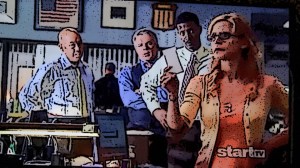
Lately they’ve been playing episodes of The Closer on television. In the show, Brenda Johnson (Kyra Sedgwick) moved to Los Angeles from Atlanta to head up a squad that handled sensitive, high-profile homicides. She had an interesting personality and clashed with some colleagues, but her skills as a CIA-trained interrogator prove invaluable in obtaining confessions. The real key to the squad’s success, however, is the team. Interestingly, I’ve been doing some training on teams this week. Things like team makeup, improving teamwork, building a better team, and leading teams.
Brenda’s team of six is an interesting blend. They all have unique strengths and personalities – the perfect way to make a team. The other thing I think is cool is how when the team is out in the field or in the office and someone speaks up about something they’ve found, everyone gets up and gathers around. At that point everyone is offering ideas and asking questions. It’s a pretty amazing thing to watch that happen on the show. Brenda was fantastic at utilizing the strengths of the team. My only criticism would be that the show never showed there being any development of the team. Utilizing strengths are important but we don’t want to let our teams get stale or stagnant by failing to create opportunities for them to learn new, different things. So, let’s gather around.
Aggressively Doing Nothing

There has been a lot written about “doing nothing” in lots of different contexts. There are those times on a Sunday afternoon when you just want to do nothing. There are those times where you can’t decide, so you do nothing (which some would say is doing something). The problem is we usually associate doing nothing with irresponsibility. In the novel Project Hail Mary by Andy Weir I was reminded that doing nothing and reflecting can be important to solving problems. When Dr. Ryland Grace is recovering from amnesia he stops every so often and reflects back on things from the past when something in the present jogs his memory. At one point in the novel he says, “I’m doing something by aggressively doing nothing.” This really got me thinking about what it would be to aggressively do nothing.
Research tells us that when we allow ourselves periods of uninterrupted, freely associated thought then personal growth, insight and creativity are more likely to emerge. This can be critical for us to seek the unfamiliar. Our subconscious kicks in and we become more creative. This can help us to solve problems we are facing. It might feel weird to do nothing, but might just be a way of investing in our own well-being. Hyper-busyness seems to be equated to success, but do we give up our ability to be significant (the difference we make), or really make a difference? Now I am not suggesting we all start aggressively doing nothing all the time or quit making decisions, but am suggesting we can use it as a tool to recharge or take a step back to get another perspective.
The Beginning
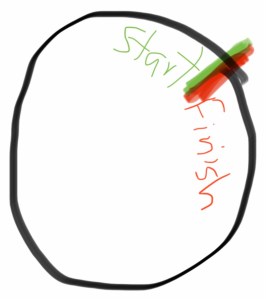
My dad used to always tell me, “Nothing ever ends, it’s always the beginning of something else.” I’m not sure what has caused me to think about this, but as with most everything he said, he was right. The end of one thing leads to the beginning of another. Think about it: the beginning of a new thing comes from the completion of the prior thing. In fact, many find it hard to start something new until they have finished with something else first.
I believe my dad wanted me to look at life from a little different point of view. Maybe a little more circular instead of the linear perspective we normally take. His point was that life changes, things begin, then eventually end. So, we can celebrate an ending, continue to dwell on it, agonize over it, or we can ask ourself what new beginning awaits us?
Approximately Right To Exactly Right

It’s funny; we all have that word when we are learning to talk that our parents told the story about. Mine was calling candles at Christmas time “nandles.” By my birthday I had perfected my speaking and called them candles on my birthday cake. For my son it was “corn on the bob” instead of “corn on the cob.” The point of the story is that we both eventually got it right. As an educator, I’ve always understood the power of praising progress and growth to proficiency. Somehow, though, many leaders forget this with adults.
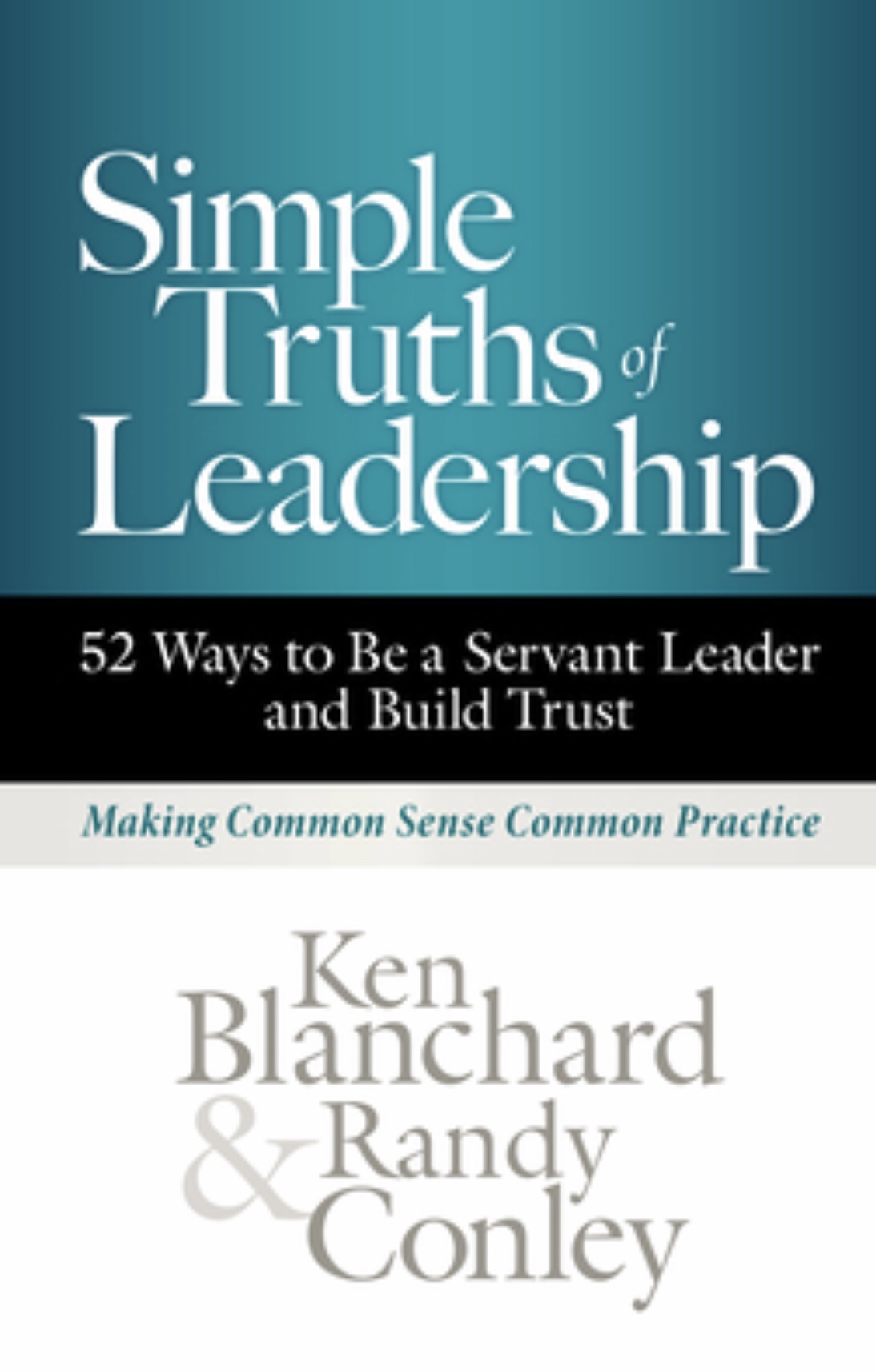
This week in Simple Truth #6, “Praise Progress!”, in Simple Truths of Leadership: 52 Ways To Be A Servant Leader and Build Trust, Making Common Sense Common Practice we are told by Ken Blanchard and Randy Conley that “Good performance is a moving target, not a final destination” (p. 21). Their point is that if we are serving correctly as a leader we will be coaching, developing, and cheerleading along the way – not just waiting to see if there is success or failure. As we’re told by Ken and Randy, “Exactly right behavior is made up of a series of approximately right behaviors” (p. 21). Nandles became candles and corn on the bob became corn on the cob. What was your word you had approximately right?
What’s The Point?

You guessed it! I am blogging about another quote in the great fiction novel Project Hail Mary by Andy Weir. Here it is: “What’s the point of even having a world if you’re not going to pass it on to the next generation.” Dr. Ryland Grace in Project Hail Mary. Now, I know I am opening up a touchy, okay highly contentious, topic here, but being a farm kid, as have all involved in the agriculture industry, I have always been very concerned with keeping our planet healthy. We have been a part of conservation efforts, precision agriculture to reduce the use of chemicals, practices which use less trips thus reducing emissions, and a host of other things. For me, this is good stewardship! I don’t need to belong to a group either believing in or not believing in global warming to love the earth. We all need to be good stewards of the planet. Period.

Personally, I believe that is what should be driving the conversation – good stewardship. This brought me back to some learning from Amanda Ripley and her book High Conflict: Why We Get Trapped and How We Get Out. She taught us that we need to recognize what each other cares about most. This was called being “hearable” in the book. “Hearable” means what our audience cares about most. For me doing my part in making sure we have a world to pass on to the next generation is about stewardship and care of our planet. We need to be scientifically thinking about how we become adaptive to increasingly variable weather. Farmers and agriculturalists have been professional adapters forever. We’re really good at responding to the challenge of adapting to difficult situations.

Ripley also taught us that “Each of us has an infinite number of identities, arranged in a hierarchy that changes all the time. We belong to groups we consciously recognize as well as ones we don’t” (High Conflict, p. 107) She went on to tell us that “Group identities are complicated, shifting, and powerful forces” (High Conflict, pg. 108). What I took from this is many times we let our group affiliations take us to high conflict. So, for me I don’t really belong to a camp. But then again I guess I do because of being a farmer – that puts me in a group that I will defend. Ugh! I just want to do my part for good stewardship and will have a difficult conversation with anyone about that and study what the science tells us.
I guess what I really want is good conflict not high conflict. In healthy conflict, Ripley told us “…there is movement. Questions get asked. Curiosity exists. There can be yelling, too. But healthy conflict leads to somewhere” (High Conflict, p. 107). We must find ways to not become enraged because we lose access to the part of the brain that generates curiosity and wonder. High Conflict described our ability to “expand the definition of us and work across differences to navigate conflicts” (High Conflict, p. 29). Can you tell you really need to read the book?
So, how about we all just be willing to have the tough conversations? So, how about we talk about ideas of how best to leave a better world for the next generations?
Making Abnormal Normal

“Human beings have a remarkable ability to accept the abnormal and make it normal.” Dr. Ryland Grace in Project Hail Mary by Andy Weir. I loved that line in this great book as it caused me to pause my reading and reflect on how true this really is and how much this has been tested over the past three years. One thing that sets us humans apart from other mammals is our need to look toward the future to define our lives. This is what enables us to survive and deal with crisis and navigate transitions and changes. It has been interesting to follow Dr. Graces’ travel alone (I’ll let you read this great novel to understand why he is alone) on a suicide mission to save the world. He certainly is still looking toward the future to further define his life.
The global pandemic has certainly put us to the test. It is hard to look toward the future for a definition when it just looks like more of the same. But the best leaders I am witnessing now are able to look toward the future and see the new definition. Let’s face it, the way we work has changed, the way we educate has changed, and the way we do just about everything has changed. It is what many are now referring to as the “new normal.” Again, we have taken the abnormal and made it normal. As I write this post I am on an airplane wearing a mask. It is now normal for me as a person who flies somewhere almost every week to wear a mask for hours at a time and think nothing of it.
“…an abnormal reaction to an abnormal situation is normal behavior.”
Viktor Frankl in Man’s Search for Meaning
We’ve now been honing in on crisis management as an essential leadership skill. I’ve even been asked to customize some trainings to include leading in a crisis. As I have reflected on what I have read in Project Hail Mary so far I wonder if part of leading in a crisis is finding the best ways to accept the abnormal and make it normal. You can agree or disagree, and I would actually love to hear your thoughts, but some of the coolest things that have come from the pandemic have been just that – accepting the abnormal and making it normal. If you’re saying, “Give me an example.” Here are a few:
- Working from anywhere
- Learning from anywhere
- Flexibility in the workplace
- Keeping a better pulse on the context in which employees are living and working
- Businesses, organizations, and schools have learned how to think differently
- Technology has been embraced in new ways (eg. virtual doctor and dental visits)
I don’t know about you, but I am really glad some to those abnormal things have become normal. I certainly wish it had not taken the abnormality of the pandemic, but we did not get to make that choice. We need to continue to sharpen and use our ability to accept the abnormal and make it normal.
A Better Question

“Then I thought of a better question.” Dr. Ryland Grace said this in the incredible novel that I am reading right now, Project Hail Mary by Andy Weir. I’m not going to give much more context (because you really need to read the book) than to say he was working on an experiment and to get to the solution he needed a better question, not an answer. This is so true! Answers actually stop learning while questions start it, contextualizing what we don’t know. I love how Weir portrays Dr. Grace as knowing he needs to step it up and come up with better questions. We all need to do this in all we do.

The more we listen, the better our questions become and the more we learn. We need to be like Dr. Grace and not just ask questions, but really work at coming up with better questions. Stopping and thinking of a better question than the first one(s) might just save us from spending too much time and energy trying to solve the first iteration of a challenge with the first answer to the first question we have. That’s both limiting and counterproductive. Taking a moment to think if there is a better question might keep us in learning mode rather than judgment mode. If we’re asking a question, we’re not rushing in to provide the answer, give the solution, or take on the challenge.
When we think of a better question we need to be curious and dig a little deeper. We also need to remember and ask why?, what if?, and how? And one more thing. Did I mention that Dr. Ryland was alone? Well I am now. And…he was telling himself to think of a better question. Research has shown that even asking and answering your own questions helps you learn. To understand and remember. I love this research! I talk to myself and answer all the time. Research has also shown that asking conceptual questions helps us learn better that detail questions. Those of us in education need to remember this for our young scholars.
So, let’s not forget that asking questions is the key to learning. Let’s all keep thinking of a better question.
Reference
Bugg, J., & McDaniel, M. (2012). Selective benefits of question self-generation and answering for remembering expository text. Journal of Educational Psychology, 104 (4), 922-931 DOI: 10.1037/a0028661
Seagull Management
This week’s Simple Truth #5, The Key To Developing People Is To Catch Them Doing Something Right, in Simple Truths of Leadership: 52 Ways To Be A Servant Leader and Build Trust, Making Common Sense Common Practice by Ken Blanchard and Randy Conley really resonated with me. Last week I had made the comment that right now everyone seems to be looking over their shoulder waiting for someone to catch them doing something wrong, saying something wrong, or making some kind of mistake. My experience with those kind of cultures of fear of making mistakes is that we are going to, you guessed it, make mistakes. So, how do we change this? It is actually pretty easy, shift to “…catching people doing things right and praising them” (Blanchard & Conley, 2022, p. 19). They tell us it really is common sense.
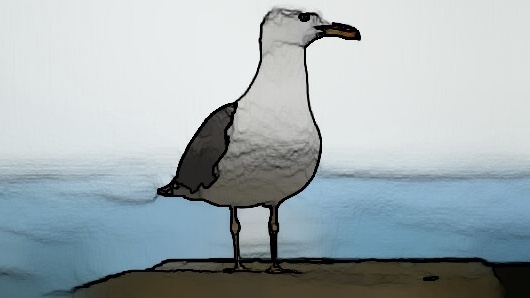
“Seagull management, where managers set goals with people and then disappear until something else goes wrong. Then they fly in, make a lot of noise, dump on everybody, and fly out.”
Blanchard & Conley, 2022. Simple Truths of Leadership. p. 19.
But really, how do you change that? I loved the term Blanchard used to describe how we are missing the mark. He called it “seagull management.” I am sure after many of you read the quote above defining seagull management you were saying, “Yes! I have totally experienced this.” It may be that person that only texts, calls, or emails when something is wrong or it is perceived we’ve made a mistake. I’ll also relate this to society in general right now to the people who only post mistakes or quote people on social media who have misspoke (not really intending to say what they said). Again, my experience has been that when we are in environments like that we tend to make more mistakes.
We are all going to make mistakes. Remember, the only people who don’t are the ones not doing anything (sometimes the seagulls). So, let’s use the common sense practices from Blanchard and Conley and catch people doing great things, praise them and “Make it clear you have confidence in them and support their future success” (p. 19). Key word there is “support.”
Does It Need To Be Said?
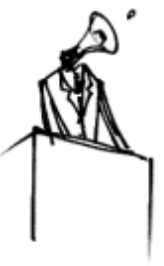
Last week I finished reading the great book High Conflict: Why We Get Trapped and How We Get Out by Amanda Ripley. I had the chance to hear Amanda speak at the ExcelinEd 2021 National Summit On Education back in November. She is an incredible speaker and an incredible teacher about conflict. I immediately put her book on my to read list. I highlighted and took a great deal of notes while reading and jotted down ideas for blog posts for reflection. So, watch for more posts like this one. During a leadership workshop I was facilitating this past week, a theme emerged with participants wanting to be heard and wanting to get better at hearing others. This made me think of one of the parts of the book where Gary Friedman (conflict mediator, author, and former trial lawyer), one of the case study subjects of the book, shared that a way he used to come out of high conflict was to ask himself three questions (p. 201):
- Does it need to be said?
- Does it need to be said by me?
- Does it need to be said by me right now?
It was stated that it was surprising how often the answer was “No.” These are simple questions, but very powerful. Ever since I read that first question I have been asking it a lot. And, guess what? The answer is “no” more than “yes.” This has helped me in two ways. First, it keeps me from saying those spur of the moment and reactionary things that come off as being snarky; sparking high conflict. It has also helped me focus more on what others are saying and really understanding them. I also believe there are many people who need to use this protocol of questions before tweeting. I can think of a few right now who need to be asking, “Does it need to be tweeted?” If you follow my rules for tweeting of light, bright, and polite you won’t need to worry about this, however.
Next time your in a meeting, discussion, writing an email, writing a letter, or writing a speech, first ask yourself, “Does it need to be said?”
 Byron's Babbles
leave a comment