More Found Than Lost

I loved the line, “Perhaps I was feeling more found than lost” in in Book 3 of Threads West An American Saga: Uncompahgre: Where Water Turns Rock Red by Reid Lance Rosenthal. The context was really the fact that the character, who was part of an 1855 wagon train westward, was feeling more found than lost because of being in such beautiful country, with newfound friends, and so much opportunity. And, feeling lost is many times a step toward feeling found. Also, all these characters left their familiar homes, friends, and families and were now with strangers in a very strange land. I heard it said once that sometimes we are never more found than when we are the most lost.

The members of the wagon train had become a very tight knit network offering vital connections between people who came to rely on one another. This network offered real, substantial support around a common vision. Unlike most our social networks of today. Another lesson we can learn from these emigrants is every one was aware of why they were doing what they were doing, I believe we learn from this how important it is for us to have a shared purpose and a network offering support.
Flattening The Bumps

Today, I had a person thank me for “flattening out the bumps for them along the way.” I appreciated the “thank you” and began to reflect on the bumps. Had I really done that much? She thought so. Then I got to thinking; it wasn’t about the bumps, it was about someone being there to flatten them out. Everyone needs someone to flatten out the bumps. Are you that person for someone?
Going The Distance

“It seems I’ve come a great distance but yet have still not arrived.” Rebecca said this as they were looking down the valley at Cherry Creek (what would become Denver, Colorado) in Book 3 of Threads West An American Saga: Uncompahgre: Where Water Turns Rock Red by Reid Lance Rosenthal. Considering she had started in England; taken a ship to New York; a train to St. Louis; and the a wagon train to Cherry Creek, she really had traveled a great distance, but there was still so much to explore, do, and experience. Sound familiar?
“We shall not cease from exploration And the end of all our exploring Will be to arrive where we started And know the place for the first time.” ~ from Little Gidding by T.S. Eliot

The quote above from T.S. Eliot says a lot. I believe all the characters in the great Threads West novel series that headed west knew themselves and where they came from better, the further they explored. Only after extensive exploration and experiences, in other words, living, do we fully understand the beauty or all that we gained from where we grew up and the people that have been part of our lives. We cannot see who we are and where we are until we go through the process. The process of searching for something outside of ourselves reveals the truth within ourselves. All the characters in this book, like us, are searching for something, and in the process all are finding themselves. What we should all aspire to do is to continually question, to seek, to “not cease from exploration,” and ultimately, the result of our quest will be to see our original experiences and encounters in new and enlightened ways, to see now what we could not see then (whether due to lack of maturity, contemplation or experience) and to have a full understanding of our experience’s meaning.
Eventually

“What happens when eventually comes too late?” ~ Nathan “Nate” Ford (Timothy Hutton) on Leverage. Those lines jumped out at me and really made me think. This should probably be one of this milestone/benchmark questions we should be constantly asking ourselves. I know we are at that time of year where everyone talks about New Year’s resolutions. Not me. But let’s contemplate the old adage that it is ‘never too late.’ While I believe that, I also believe we can wait too long. Sometimes I believe we, myself included, use ‘eventually’ and ‘it’s never too late’ as a crutch, or excuse, to not start something. This really is an avoidance to starting something we might really want or need to do. Think about these things: starting a business, going back to college, getting a doctor’s checkup, calling an old friend, or insert your own here, ____________. Now, look back at that list. Can eventually come too late? Can it really be too late? It sure can! By the time we finally do these things or get started we might just find ourselves in a difficult position and have to fight an uphill battle to get the things done or even stay alive.
“Sadly,
sometimes it’s too late.
And that’s the thing about time,
we cannot get it back.” ~ Kiana Azizian
Notice I made the title of this post ‘Eventually.’ I did not want ‘Eventually Is Too Late’ or ‘Eventually Is Never Too Late.’ Both could be right, but I want us on this New Year’s Eve to keep ‘eventually’ at the forefront of our thinking for 2023. While our calendar timeline is linear, our life’s timeline is not. We do not have complete control over when we are going to achieve something or when something will surprise us. Our lives are extremely unpredictable. Something might happen earlier than we think, it might happen later than you think, or it might not happen at all. So, as you think about that next eventually, remember life can be really long and really short and ask yourself, “What happens when eventually comes too late?”
Less Team & More Living Organism

Yesterday I was doing some work that I wanted a little noise in the background for so I turned on an old episode of </Scorpion>. The show was about four geniuses teamed up with a government handler and a mother of a young genius son, who solved issues globally. At the end of the episode, of which a theme of teamwork had emerged, it was said, “Maybe we should think less of ourselves as a team and more as an organism [that is living and adapting].” Many times teams operate under the old industrial model like machines. And…machines break down and are unable to adapt. By contrast, living organisms are masters at adaptation. Many times when we think of adaptation, we thing of Charles Darwin. One of the observations of Darwin that Ernst Mayr (1982, 2001) made was that, “Individuals in a population are not identical, they vary in many characteristics.” Adaptation comes from the Latin word adaptus, which means to become fitted, to join, and to adjust.
Here’s why teams need to think, act, and be led more like living organisms than machines:
- Organisms can adapt to their environment.
- Organisms respond to changes in their environment and continue to be relevant in a changing environment.
- Organisms function by keeping homeostasis, or equilibrium, between its many independent actors.
- Organisms grow and develop.
Now, go back and replace ‘organism’ with ‘great team’ and you’ll get the point of the post. Wait. I’ll do it for you:
- Great teams can adapt to their environment.
- Great teams respond to changes in their environment and continue to be relevant in a changing environment.
- Great teams function by keeping homeostasis, or equilibrium, between its many independent actors.
- Great teams grow and develop, both as individual team members and a whole team.
Get it? As great teams adapt and their members grow and develop, bonds of trust are formed and relationships are built. I’m grateful for the living organism metaphor for a team provided by </Scorpion>.
Learning Vs Being Right
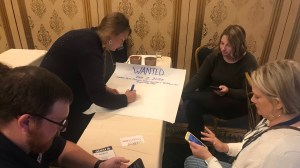
We live, work, and play in such complex institutional and cultural environments today. Therefore, we must be adaptive individual learners, as well as, learning organizations. Mary Catherine Bateson taught us that openness to learning and changing is more important than what one knows at any given point. Openness to learning and willingness to adjust are important qualities. Learning is more important and being right. Learning is a perspective as much as it is a practice. We need to be nurture and encourage an attitude of learning. We must seek out ideas, information, and approaches so we can learn from others, including those whose views diverge from ours.
There are really three pieces to great leadership:
- Curiosity
- Growth Mindset
- Openness
If we go back to the teaching of Bateson, we find openness as an essential trait. If we have an appreciation of diverse perspectives and a willingness to try new things, we can better navigate daily challenges and discover novel solutions. Openness allows ideas to merge and develop by valuing diversity of thinking. Unfortunately, school taught us (and is still doing this) that we need to always be right. But, that binary way of thinking keeps us from considering that there might be a right answer, especially when we are on uncharted ground.
Forgiveness Is Not Earned

Well, here we are, the 52nd week of the year and the final reflective post from the great book, Simple Truths of Leadership: 52 Ways To Be A Servant Leader and Build Trust, Making Common Sense Common Practice, by Ken Blanchard and Randy Conley. I love books that are broken into 52 lessons like this one. Every year I pick a book like this one where I can read a weekly passage, reflect, and then dedicate writing a blog post each week. If your looking for a great book to inspire you in 2023, this could be that one. Simple Truth #52 was “Forgiveness Is Letting Go Of All Hope For A Better Past. We need to practice forgiveness because, as Collins said, “You can’t revise history to make it better” (p. 133). When we forgive we are doing an action of faith.
Gandhi taught us that forgiveness is the attribute of the strong. We must remember that forgiveness is a gift and gifts are not earned, they are given. Collins told us, “Forgiveness can’t be earned by the offender; it can only be given by the offended” (p. 133). The most courageous act of leadership is to forgo the temptation to take revenge on those on the other side of an issue or who have wronged us in some way. Bottom-line is that those we serve are human. The thing about us humans is that we all have personal issues, frailties and struggles, we inevitably do lots of things that make others unhappy. So, let’s put empathy into action and show compassion and forgive.
Christmas Playfulness

How are you doing with your playfulness? On this Christmas morning I am thinking about how we learn through our bodies. The somatic side of learning if you will. Watching kids play with toys on Christmas is amazing. Wait a minute; watching adults play with their kid’s toys on Christmas is amazing. With play we get participation and full engagement. Play inspires curiosity. Curiosity in turn opens the door for exploration, experimentation, and more learning. What if we intentionally focused on learning, leading, and living through play? For adults and children alike, play makes use of all our different senses – visual, auditory, and kinesthetic. Our bodies store so much of our information and when we become active, our learning becomes sticky.
I love to use playing as a part of the leadership development work I do. Play fosters our curiosity and strengthens our childlike spirit to transform the way we show up as a conscious leader. Play reduces resistance and pushback because people are relaxed. When we let our guard down, all learning happens more easily. Playing also brings low-stress social interaction. Playing is how we connect. Play stimulates our imagination, helping us adapt and solve problems. Play gives us an opportunity to refresh, rejuvenate, and revitalize. When was the last time you played?
Belonging

‘Belonging’ is something I’ve been contemplating a lot lately. And, tradition has a lot to do with belonging. In fact this past week the WD-40 Company posted on LinkedIn: “92% of tribe members recently shared that as a part of WD-40 Company, they strongly experience a sense of belonging. Now that’s something to be proud of! Want to join us? Visit our careers page today!” I commented, “Belonging is such an important part of a community. Thanks, WD-40 Company, for being a great role model and example of this for all of us!” Then this morning, Christmas Eve, my son Heath, reminded me how important traditions are to belonging. Today is also Heath’s birthday and he wanted to make sure we went out and fed the cattle together because we always do that together on his birthday. He had also secured some Florida Ruby Red grapefruit because we always have them on Christmas Eve and Christmas mornings.

Having Heath reminding me of those traditions brought about great feelings of belonging. Traditions provide a sense of stability and help us connect with our roots. “Tradiare”, a Latin word meaning “to hand over, to transmit” is where tradition gets its roots. It is a practice or ritual that is passed down from generation to generation. Those traditions then become memories. So keep building belonging, traditions, and memories.
The Sanest Insane Thing

As she was making her way westward on the the wagon train in April of 1855, one of the characters in Book 2 of Threads West An American Saga: Maps of Fate by the award winning historical fiction author Reid Lance Rosenthal made the comment that this was “the sanest insane thing I’ve ever done.” The characters in this book went west for many different reasons, but all carried a dream of creating a better life for themselves and their families in this new, undeveloped territory. I love the paradox of sanity and insanity that Rosenthal created here. Though the emigrant characters of the book may have been prepared for the trip physically by bringing the supplies necessary and hiring qualified wagon masters, few were prepared psychologically for the intensity of the pioneer experience. This could be said for many of our experience. Were we prepared for the intensity of the experience?
“You have to forget about what other people say, when you’re supposed to die, or when you’re supposed to be loving. You have to forget about all these things. You have to go on and be crazy. Craziness is like heaven.” ~ Jimi Hendrix
That’s why I love the quote above from Jimi Hendrix. Sometimes we just have to do the crazy. Over the last couple of weeks I have been to holiday gatherings with people from my past work of being a principal of a school we took over. Every person I have encountered has discussed the intensity of that experience. It was crazy insane to leave a great teaching position at a great school to be a principal of a failing school, but it really was heaven. Every student deserves a great school and we made that possible for students on the south side of Indianapolis. In the process, I became part of the family of one the greatest group of teachers and staff members in the world. One of the things that always gets brought up when visiting with those family members is just how much fun we had. It was crazy insane at times, but it was also heaven.
In A First-Rate Madness, author and psychiatrist Nassir Ghaemi, used the provocative thesis: “For abnormal challenges, abnormal leaders are needed.” I love this. I am not suggesting any of us had mental illness or disorders. Ghaemi argued, however, that “[w]e should accept, even celebrate” the possibility that our decision-makers have dealt with mental illnesses — disorders which, he wrote, tend to promote the qualities of “realism, resilience, empathy and creativity.” As Hendrix said, we have to forget what people say and “go on and be crazy.”
 Byron's Babbles
leave a comment