Leading With Collective Aspirations

I had the honor of watching the sunrise and having breakfast at the top of Dubai’s iconic Burj Khalifa yesterday morning. It was absolutely breathtaking. Plus getting to learn about the dream and building of the Burj Khalifa was amazing. The Burj Khalifa is such a great story because it represents human innovation, engineering marvel, and the ability to push boundaries. It is the tallest building in the world, standing at a height of 828 meters (2,716 feet) with 163 floors. The construction of the Burj Khalifa was massive undertaking that required cutting-edge technology, advanced engineering techniques, and a highly skilled workforce.
I loved the words and meaning in the “I am Burj Khalifa” poem. This is projected on one of the walls as visitors enter. These words really describe great leadership. See what you think:
“I am the power that lifts the world’s head proudly skywards, surpassing limits and expectations.
Rising gracefully from the desert and honouring the city with a new glow. I am an extraordinary union of engineering and art, with every detail carefully considered and beautifully crafted.
I am the life force of collective aspirations and the aesthetic union of many cultures. I stimulate dreams, stir emotions and awaken creativity.
I am the magnet that attracts the wide-eyed tourist, eagerly catching their postcard moment, the centre for the world’s finest shopping, dining and entertainment and home for the world’s elite.
I am the heart of the city and its people; the marker that defines Emaar’s ambition and Dubai’s shining dream. More than just a moment in time, I define moments for future generations.
I am Burj Khalifa.”

The building’s design was inspired by traditional Islamic architecture, with a distinctive spiral shape that resembles a desert flower. The construction process involved overcoming numerous challenges, such as extreme temperatures, strong winds, and the need for a strong foundation to support the immense height.

The Burj Khalifa has become an iconic symbol of Dubai and showcases the city’s ambition and progress. It has attracted millions of visitors from around the world who come to admire its beauty and experience its breathtaking views from the observation deck. The building also houses luxury residences, hotels, offices, and entertainment facilities, making it a versatile and dynamic structure.
Overall, the Burj Khalifa represents human ingenuity, architectural excellence, and the ability to achieve the seemingly impossible. Its story inspires people to dream big and strive for greatness.
Leading By Symposium

While doing research for a book I’m writing I came across The Symposium by Plato. The research I am doing was related to “love” in the sense that I am a big proponent of leaders loving those they serve. And, since I believe everyone is a leader; we should all love everyone. I’m trying to articulate how to do that as a leader in the work I am doing. Anyway, The Symposium is Plato dialoging the speeches taking place at an ancient Athenian feast. Oh, to go back to 380B.C. and take part in that symposium. It was the whole idea of the symposium that prompted my post this morning. The symposium allowed nuanced and super-exploratory environments for deep intellectual discussion. Really, this is the format I strive to create with each of my leadership development gatherings.
What if all our discussions were like those of Socrates and Plato?
Leaders (all of us) can learn from having symposiums like Plato and Socrates in several ways. Firstly, symposiums provide a platform for open and intellectual discussions, allowing leaders to explore different perspectives and gain new insights. This can lead to more informed decision-making and the development of innovative solutions to complex problems.
Additionally, I love creating a safe place for the exchange of ideas among gathering participants. Leaders can benefit from engaging in dialogue with others who have diverse backgrounds and expertise, as this can challenge our own assumptions and broaden our understanding of various issues.
Furthermore, symposiums in their truest form, foster a collaborative and inclusive environment, where everyone’s opinions are respected and valued. This encourages teamwork and encourages leaders to listen to different viewpoints, promoting effective communication and fostering a sense of unity among participants.
Can’t you just imagine Phaedrus, Pausanias, Aristophanes, and Socrates, who all gave speeches at that Athenian feast, sharing their philosophies on love? Imagine that opportunity for leaders to network and build relationships with other influential individuals in their field. This can lead to valuable connections and collaborations that can enhance their leadership abilities and create opportunities for growth and development. It gives me goosebumps!
What is striking to me is how relevant all the dialogues still are today in one way or another. Are you hosting symposiums like Plato and Socrates that can help leaders expand their knowledge, improve their decision-making skills, foster collaboration, and build meaningful relationships within their communities?
A Honey Of A Deal For Being Interested In Learning

I remember being told that being interested makes us interesting. I believe this applies to being curious as well. Yesterday, I spent time at the Savannah Bee Company learning about honeybees, beekeeping, education, stewardship, and love. It was a reminder of just how curious and interested I get about a great number of subjects. Some have even called me eclectic. Guilty! Being interested in something can make us more interesting When we have a genuine passion for a subject or topic, it shows in our conversations and interactions with others. It can make us more engaging and knowledgeable, and can also spark curiosity and interest in those around you.

Yesterday, working with honeybees, I was reminded why I am such a believer in using real world and relevant contexts for learning. The Bee Cause Project introduces children to the science of bees and giving them a hands-on connection between these magnificent pollinators and their own lives. Founder and CEO, Ted Dennard is committed to the mission of building the buzz for integrating bees into education. By incorporating honeybee-related activities into STEAM (science, technology, engineering, agriculture/arts, and math) education, students not only learn important scientific principles but also develop skills in critical thinking, problem-solving, and data analysis. Additionally, they gain an appreciation for the natural world and a sense of responsibility towards sustainable practices.
It was exciting to take a deeper dive into learning about the, ecology, life cycle of bees, their and environmental behavior, and science. I was able to observe the bee’s hive and students in schools who are a part of The Bee Cause Project can also observe their own beehive and the bee’s role in pollination. And, by the way, produce a pretty sweet (honey) product in the process of learning. A relevant context at its best.
And, I can’t leave out the importance of Agriculture: honeybees are essential for pollinating crops, making them crucial to agriculture. By learning about beekeeping, students gain insight into agricultural practices and the importance of sustainable food production.
Being interested in STEAM subjects, for example, can lead to fascinating discussions and opportunities to share ideas and knowledge with others. So, integrating honeybee-related activities into the curriculum, is a great way educators can help students develop an interest in STEAM subjects while also promoting environmental awareness and sustainable practices. So, yes, being interested can definitely make you more interesting.
Social Courtesy Part 2

Yesterday, inspired by Dr. Joseph Michelli’s great video “What If More People Returned Their Grocery Carts?”, I wrote Social Courtesy. In that post I promised a part two today, so here it is. As I watched two ships passing this morning I was reminded not to be like those characterized by Henry Wadsworth Longfellow. We need enhanced relationships that are more than just speaking in passing. We need deep conversations and actions, like returning our carts, that lead to us caring for one another. Everything we do affects everyone else in some way.
“Ships that pass in the night, and speak each other in passing, only a signal shown, and a distant voice in the darkness; So on the ocean of life, we pass and speak one another, only a look and a voice, then darkness again and a silence.” ~ Henry Wadsworth Longfellow
Practicing social courtesy can greatly improve our interactions and the overall well-being of society. When we treat others with respect, kindness, and consideration, it creates a positive and harmonious environment. Here are some reasons why the world would be a better place if we all practiced social courtesy:
- Enhanced Relationships: Social courtesy promotes better communication and understanding between individuals. It fosters empathy, patience, and active listening, which are essential for building strong and meaningful relationships.
- Reduced Conflict: By practicing social courtesy, we can minimize misunderstandings, conflicts, and unnecessary arguments. It helps us navigate differences and disagreements with grace and understanding, leading to more peaceful resolutions.
- Improved Mental Health: Social courtesy contributes to improved mental well-being for both ourselves and others. Treating others with kindness and empathy creates a supportive and positive atmosphere, reducing stress and promoting a sense of belonging.
- Increased Cooperation: When people practice social courtesy, it encourages cooperation and teamwork. By valuing the opinions and ideas of others, we foster an inclusive environment where collaboration and innovation can flourish.
- Positive Impact on Society: Social courtesy sets a positive example for others to follow. It creates a ripple effect, inspiring kindness, compassion, and good manners in others. Small acts of courtesy can have a big impact on creating a more inclusive and caring society.
- Respectful Diversity: Practicing social courtesy allows us to appreciate and celebrate the diversity of cultures, backgrounds, and perspectives. By fostering an inclusive environment, we can learn from each other, grow together, and create a more harmonious global community.
In summary, embracing social courtesy promotes healthy and positive interactions, reduces conflict, improves mental well-being, encourages cooperation, creates a positive impact on society, and cultivates respect for diversity. Together, these factors contribute to making the world a better and more empathetic place to live.
Social Courtesy

My friend and great customer experience expert (and you all know I do not use the term “expert” lightly), Dr. Joseph Michelli, recently did a video “What If More People Returned Their Grocery Carts?” You need to watch it – it is great and will make you think. By the way, I do that and the businesses always seem pleasantly surprised when I bring the cart back in. My wife always grabs a cart in the parking lot when she is going into the store. I am spending my morning study time contemplating about “social courtesy”. The term “social courtesy” has been used for a long time to refer to the practice of showing politeness, respect, and consideration towards others in social situations. In my most recent course work with The University of Oxford Saïd Business School on leading Professional Service Firms we spent quite a bit of time contemplating the customer experience, so this was top of mind to me. I am working very hard to keep that customer experience top of mind, always. I’ve gathered some reflections here this morning and will have a part two tomorrow.
Practicing social courtesy improves the customer experience in several ways. Firstly, it creates a positive and welcoming atmosphere, making customers feel valued and appreciated. This can lead to increased customer satisfaction and loyalty.
Secondly, social courtesy helps to build trust and rapport between customers and businesses. When customers feel respected and treated well, they are more likely to trust the company and its products or services.
Additionally, practicing social courtesy can help resolve conflicts or issues in a more constructive manner. By approaching situations with empathy, understanding, and clear communication, both parties can work towards finding a mutually beneficial resolution.
Overall, social courtesy plays a crucial role in creating a pleasant and enjoyable customer experience, fostering positive relationships, and promoting a harmonious environment for all involved. In other words, if we all worked harder at it the world just might be a better place. Thanks Joseph for the reminder.
Being A Positive Provocateur

By definition to provoke is to take action aimed at eliciting a response. Today, as I advertised yesterday in Leading With Provocations, I am writing about being a provocateur. The provocation elicits a response because it disturbs the current state of where it is being directed. This in turn challenges the status quo. If we really want to change something in any notable, enduring, or meaningful way provocation is a necessary part of the process.
As a leader, being a positive provocateur involves challenging the status quo and inspiring innovation within our teams, communities, or organizations. Here are a few ways to use this approach effectively:
- Foster a culture of creativity: Encourage team members to think outside the box and embrace new ideas. Create a safe space where we all feel comfortable sharing our thoughts and taking risks. This creative culture must also be a psychologically safe place as well.
- Ask thought-provoking questions: Pose challenging questions that stimulate critical thinking and generate discussion. This can help uncover hidden assumptions and lead to innovative solutions.
- Provide support and guidance: While pushing for change, make sure to offer the necessary resources, mentorship, and guidance to help teams implement their ideas effectively. We must authentically show those we serve that we believe in their potential.
- Embrace diverse perspectives: Actively seek input from individuals with different backgrounds, experiences, and expertise. This diversity can fuel creativity and bring fresh insights to the table.
- Communicate openly and transparently: Regularly share updates on the progress of initiatives sparked by provocative ideas. Be transparent about the reasoning behind decisions and involve everyone in the decision-making process whenever possible.
Remember, being a positive provocateur means pushing boundaries while also championing and empowering all of those around us. By striking the right balance, you can inspire breakthrough ideas and foster a culture of innovation.
Leading With Provocations

Yesterday, I had a person describe some of my comments during a meeting as “provocations.” My comments were related to my desire to eliminate credits in education and work toward knowing what transferable skills students had mastered. Then instead of being locked/tied to courses we would be linked by the skills students were learning in their relevant contexts. If that makes me a “provocateur”- guilty! By the way; tomorrow I will post about being a provocateur. I had to think for a moment about what a provocation was. A provocation is a statement, action, or idea that is intended to provoke or stimulate new thoughts, discussions, or actions. It can be positive or negative, depending on the context and intent behind it. In a positive sense, a provocation can be a thought-provoking question, a challenging perspective, or an innovative idea that encourages people to think differently and come up with creative solutions. It can push boundaries, generate excitement, and inspire breakthroughs.
Yes, provocations can be valuable when coming from a visionary leader. A visionary leader often challenges the status quo and pushes boundaries to drive innovation and change. By provoking their team or organization, they encourage creativity, critical thinking, and new perspectives that can lead to breakthrough ideas and solutions. However, it is important for a visionary leader to balance their provocations with support, guidance, and open communication to ensure that their team feels empowered and motivated rather than demoralized or overwhelmed.
Conversely, I do recognize that a provocation used negatively can be a deliberate attempt to upset, anger, or disturb someone. It can create tension, conflict, and negative emotions. This type of provocation is often not productive and can hinder progress or damage relationships. These provocations are what I call being “snarky.” Never helpful. Not saying I don’t have to fight being snarky at times – I think we all do.
As a leader or team member, it’s important to use provocations in a positive and constructive way. Encouraging healthy debates, encouraging thinking outside the box, and empowering others to challenge the status quo can lead to innovation and growth. However, it’s crucial to consider the impact and intent behind your provocations to ensure they are beneficial rather than harmful.
Leading With Adaptability

The past couple of days have reminded me how the beach constantly changes with tides and weather conditions. Just 24 hours can make a huge difference – from sunny and 70 degrees to 50 degrees with high force and gale force wind warnings. This has reminded me that leaders must learn to be adaptable and flexible, quickly adjusting to unexpected situations or changes within their team or organization. This adaptability can help them navigate challenges and seize opportunities effectively.

At the same time the sound of waves crashing against the shore reminds us of the slow and steady nature of progress. Leaders can cultivate patience by understanding that meaningful change takes time and consistent effort. We can learn to trust the process, staying focused and persistent in our pursuit of long-term goals.
Leading Like That Beautiful Bean Company

After a week of working with schools in Tennessee this past week I had the chance to visit an iconic agricultural food manufacturer yesterday. I spent time in Chestnut Hill, Tennessee with the great people of Bush Brothers & Company – home of Bush’s® Best. Now, I have to admit I was most intrigued to learn more about the dog mascot ‘Duke’ than anything else, but who isn’t? To touch on that, it all started in 1996 when Jay Bush became spokesperson and he turned to his dog for emotional support. It was decided that Jay would tell Duke the family secret recipe for Bush’s® Best. Story has it he actually whispered it in the dog’s ear. I was also told that Duke was not fond of acting, so a dog actor, named Sam, was hired and ‘Duke’ was born. I’m sure there is a lot more to the story, but what a stroke of marketing and branding genius.

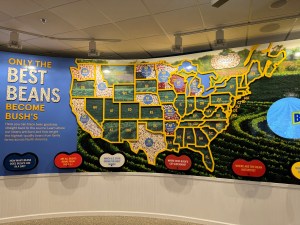


Speaking of genius – in the company’s incredible Bush’s® Visitor Center, General Store and Museum I was able to stand on the scale and find out how much I weighed in beans. 255,600! By the way – You should put this on your list of places to visit. Check out the picture here of the “Only The Best Beans Become Bush’s” exhibit. This was only one of many great educational displays.
“PLUS THERE’S LOTS OF
SWAG WITH MY MUG ON IT.” ~ Duke
Now, back to some of the leadership takeaways from spending the morning with these fine folks. Bush Brothers & Company a special place to work. Firstly, the company has a rich history and strong family values. It was founded in 1908 by A.J. Bush, and today it is still family-owned and operated. This sense of heritage and tradition creates a unique and welcoming atmosphere for employees.
Additionally, Bush Brothers & Company is committed to fostering a positive work environment. They prioritize employee satisfaction and invest in their development through training programs and growth opportunities. The company also offers competitive compensation and benefits packages to attract and retain top talent. I loved that they have even built their manufacturing facilities with windows for bringing in sunlight. We know this is a promising practice, but not everyone does it. Things like this are what I call loving your employees.
“Roll that beautiful bean footage!” ~ Jay Bush
Furthermore, the company is dedicated to giving back to the community. They have various initiatives and partnerships in place to support local communities and charitable organizations. This commitment to social responsibility can create a sense of pride among employees, knowing that they are part of a company that makes a positive impact.
Overall, the combination of a strong family culture, employee-focused policies, and community involvement makes Bush Brothers & Company a special and rewarding place to work. I know I am just barely scratching the surface, but there is so much more to this company than meets the eye. The great part is that none of it is a secret, except the family recipe. I tried, but no one would tell me!
Having A Revolution

In the epilogue of Miracles, C. S. Lewis introduced us to G. K. Chesterton. Chesterton was greatly applauded in his day, and lived as a celebrity. Now he is somewhat veiled in obscurity, but I am coming to greatly appreciate him as I read Orthodoxy. C. S. Lewis was certainly influenced by Chesterton.
Here is a quote from Orthodoxy that Lewis referenced in the epilogue of Miracles:
“But all conservatism is based upon the idea that if you leave things alone you leave them as they are. But you do not. If you leave a thing alone you leave it to a torrent of change. If you leave a white post alone it will soon be a black post. If you particularly want it to be white you must be always painting it again; that is, you must be always having a revolution. Briefly, if you want the old white post you must have a new white post.”
G. K. Chesterton, Orthodoxy, p. 122.

G.K. Chesterton was suggesting that conservatism is grounded the belief that if we refrain from making changes, things will remain unchanged. However, this is not accurate because even by leaving something untouched, it will inevitably undergo change over time. The analogy of a white post turning black indicates that if you desire something to stay the same, constant effort and adaptation are required. In other words, to preserve the original state of something, one must continually work towards maintaining it. This can be compared to having a revolution, as it signifies a complete renewal or transformation in order to preserve what is cherished.
On the white post, the paint will fade away. We must change by continuing to paint. Think about it, there may be better paint with new chemistry to last longer. Even though the post is still white, a revolutionary change has been made. And, if we don’t regularly paint, the post will rot away. The truth that the post is white has not changed, but the fresh coat of paint allows the post the attention it deserves.
Similarly, when applied to other scenarios like technology, organizations, or even personal development, a revolution can involve identifying the root causes of decay and implementing radical changes to revitalize and reinvent the object or system. This might involve adopting new technologies, reorganizing processes, or embracing a new mindset. We really need to keep this in mind when considering education. I hear so many people say that things can’t keep changing, but I am not sure how no change would be possible. We must have continual restoration, renewal, and improvement – revolution.
In essence, a revolution seeks to break free from the constraints of the past and embrace a new paradigm that not only restores the original purpose but also enhances it. It requires active participation, continuous effort, and adaptation to ensure that the transformation is successful and sustainable in the long run.
 Byron's Babbles
leave a comment