Share the Financials – the $100 Tool
 This is a guest post from Kris Boesch originally published on www.choosepeople.com/blog
Share the Financials – the $100 Tool
Be open with your team about the flow of money. Sharing tells employees they’re important. Commitment grows and confusion declines.
Every year in an all-company meeting I would share our financials with the team using the $100 Tool (described below). It was amazing to see the light bulbs go on. Their entire awareness and attitude would shift. They would come up to me for weeks after this meeting with ideas on how to make and save the company money. They now realized why it was so important to take care of the trucks (cost of truck repairs) and to charge customers for boxes (high margin product) and not to forget moving blankets at the customer’s home ($13/each – easily four hours worth of profit.)
Some organizations are worried about sharing their financials, either because they’re struggling or very successful. Sharing financials when you’re in trouble is the only way engage your employees’ support. It helps them understand the urgency in your voice. Your employees aren’t stupid. They know if something’s off. Sharing the financials puts fears to rest because rather than grappling with the unknown, they can see what you see and participate in generating money making and saving solutions.
If you’re on the flip side and very successful and fear employees will want a bigger piece of the pie, communicate your growth plan and the need for cash to fund investments in equipment, technology, personnel or assets. Rather than envisioning all the extra money going into your pocket, they see it as a shared savings account. If you’re not looking to grow, make sure your people are well compensated and appreciated. This may also be a good time to share the risks and rewards of owning a business.
Use the $100 Tool to share your financials in a tangible, accurate, concrete way.
- Get one hundred one dollar bills.
- On a flip chart or white board break down by percentage your high-level income streams:$43 – local moves, $37 – national moves, $12 – storage, $5 – boxes, $3 – insurance. On another page or board break down by percentage your high-level expenses (fuel, truck repairs, truck maintenance, furniture repairs, regulatory fees, marketing and networking, utilities, insurance, rent, payroll – including workers compensation, payroll taxes, and benefits.
- Speak about how your organization makes money. Share which verticals, products and services are the most and least profitable. Explain why you choose to keep those that are less profitable — (loss leader, bread and butter, competitive edge.
- Then speak about expenses. As you detail each expense, hand out the dollar bills to individual employees. Saying for example:
You are my landlord you receive $4 for rent.
You are my accountant you receive $2.
You are my utilities you receive $5. - Speak to employee payroll, payroll taxes, work comp and benefits last. Employees are always wowed by the comparatively large piece of the pie that is directly theirs.
- Then show them, with the dollars left in your hand, how much profit is left. Explain this profit is taxed, leaving a net profit and how that money has to be used to pay off debt as well as to reinvest in the company to spur growth. Explain how it is this money – the money that’s left over – that funds raises, better benefits, new uniforms, additional staff, or new equipment.
- Help them understand which numbers they can impact and which ones they can’t. You want them to leave knowing how they individually can help the organization make and save money.
- Depending on your team, it can also be valuable to explain the difference between profit and cash available. You may want to share the role of revenue to profit. Clarify that without profit, revenue is wheel spinning. Small increases in revenue beyond goal can cause exponential increases in profit due to the relatively static nature of overhead costs.
Owners tend to wonder how to represent their compensation when sharing financials. In the process I recommend above, simply roll your compensation into payroll. By being open with your team, you can begin to create a culture of honesty.
*****
Kris Boesch is the CEO and founder of Choose People, a company that transforms company cultures, increases employee happiness and boosts the bottom line. Her new book, Culture Works, and accompanying workbook are available now on her website and will be available on Amazon around May 15.
Learning From An Education Reformer

Here is my review of the great book:
Letters to a Young Education Reformer by Frederick M Hess
My rating: 5 of 5 stars
This book has so much great information and thought leadership, that one recommendation/review cannot do it justice, but I’ll try. From the beginning of the book, Dr. Hess teaches us that passion can distort our perception of reality. We are taught in the book to draw wisdom from our own experiences and failures and the experiences and bad judgement of others.
Furthermore, this book eloquently argues we need to learn from both those whom we agree and those we don’t. We do not want our passion to close the door to a fruitful discussion. This book also drives home the fact that reform is not about having good ideas, but about how to make ideas actually work. For this, Dr. Hess teaches us that the how of education reform is more important than the what. We are reminded that we all want the same end (what is best for children), but we many times disagree on the means.
We are reminded in the book that American schooling was never designed to do what we are asking it to do today. While this book is specifically about education reform, anyone involved in the reform of anything in business or society today would be well served to read this book. As reformers, the author holds us accountable by positing that those making decisions need to be held responsible for making them work.
Six Kinds Of Procrastinators, And How To Help Them Deliver

Originally published on the Lead Change Instigator Blog
Six Kinds Of Procrastinators, And How To Help Them Deliver
By Nate Regier
In college, I used to put off studying, often until the night before the exam. Why? You might be surprised. Not because I was worried. Not because I was lazy. Not because I didn’t like studying. Not even because I had more interesting things to do. Nope. I did it because it didn’t get exciting enough until time was running out. Call me crazy, but I did my best work under the gun.
Observe several people procrastinate and they may look similar on the surface. They put off making decisions or completing important tasks, and that’s a problem. It delays progress, holds others up, and increases the chance of mistakes. Why do people do this?
It may be easy to jump to the conclusion that procrastinators are lazy or lack discipline. Very often nothing could be further from the truth.
Procrastination is strongly influenced by personality type. Why should you care? Because knowing this can help you understand your own procrastination tendencies and have a better idea what to do about it. As a friend, parent, leader, mentor, or coach you’ll be better equipped to help others in the most constructive ways.
In no particular order, here are six kinds of procrastinators along with tips for how to help them deliver on time.
 Type #1: Pleasers
Pleasers procrastinate for fear of conflict, disapproval or rejection. If they run out of time, maybe you’ll feel sorry for them and give them a break.
How to help the Pleaser: Reassure these people that you care about them regardless of the decision they make or the outcome of their efforts. Affirm that even if they make a mistake, mistakes are opportunities to learn and grow and you will be with them through it all. When conflict-avoidant Pleasers know they are unconditionally supported and OK they are more confident to move forward, even with difficult decisions and actions.
Type #2: Perfection-Seekers
Perfection-Seekers procrastinate until there is more data or more evidence. These people suffer from analysis paralysis and fear the loss of control that comes with making a decision or taking action.
How to help the Perfection-Seeker: Affirm these people’s thinking ability and problem-solving skills. Help them weigh pros and cons, anticipate consequences, and develop a “Plan B.” Ultimately, Perfection-Seekers need support to face the sadness and loss of control that comes with making decisions. Encourage and support them to let go and move on when more information will not help them feel any more secure.
Type #3: Responsibility Avoiders
Responsibility-Avoiders procrastinate to avoid taking ownership or having to live up to expectations. If they run out of time, it’s not their fault.
How to help the Responsibility-Avoider: Above all, avoid judging or preaching about responsibility. They key is to balance a “chill” attitude with clarity around what you want them to do. Let them know you’ll accept them unconditionally regardless of the outcome and affirm their creativity in finding their own way from point A to B.
Type #4: Thrill Seekers
Thrill-Seekers procrastinate until the stakes are high enough to make it exciting. That was me in college! If they run out of time, they’ll try to pin it on someone else.
How to help a Thrill-Seeker: Play to their strengths – make it thrilling. If you want them to meet a deadline, make it exciting by issuing a dare or prize. Challenge them to “pull it off,” make it a special assignment that only they can do. I once had a Thrill-Seeker working for me in training support. When I tried to plan ahead with her, it ended up in procrastination. I learned to wait until the last minute to give her assignments and it worked like a charm.
Type #5: Hostage Takers
Hostage-Takers procrastinate on giving approval or being satisfied. They confuse high standards with unrealistic expectations and hold others hostage with their chronic discontent. Pleasers and Perfection-Seekers are particularly vulnerable to the Hostage-Taker’s traps.
How to help a Hostage-Taker: Recognize that beneath it all is a noble desire for excellence and high-quality. Hostage-Takers are natural protectors and want to help others be more perfect. Replace this negative energy by affirming their convictions and dedication to quality. Ask proactive questions about their standards and expectations, and invite their opinions along the way.
Type #6: Passive-Avoiders
Passive-Avoiders procrastinate because they don’t feel potent enough to make an independent decision.
How to help a Passive-Avoider: Avoid questioning their intentions or commitment. They are externally motivated and greatly appreciate clear direction. They are more responsive than responsible, more directable than self-directed. Use clear, concise commands to find out what they have on their plate, and then direct them towards clear action steps.
***************************************************************************************
About Dr. Nate Regier
Dr. Nate Regier is the co-founding owner and chief executive officer of Next Element, a global advisory firm specializing in building cultures of compassionate accountability. A former practicing psychologist, Regier is an expert in social-emotional intelligence and leadership, positive conflict, mind-body-spirit health, neuropsychology, group dynamics, interpersonal and leadership communication, executive assessment and coaching, organizational development, team building and change management. An international adviser, he is a certified Leading Out of Drama master trainer, Process Communication Model® certifying master trainer and co-developer of Next Element’s Leading Out of Drama® training and coaching. Nate has published two books: Beyond Drama and his latest work, Conflict without Casualties.
Centenarian JROTC Leadership!
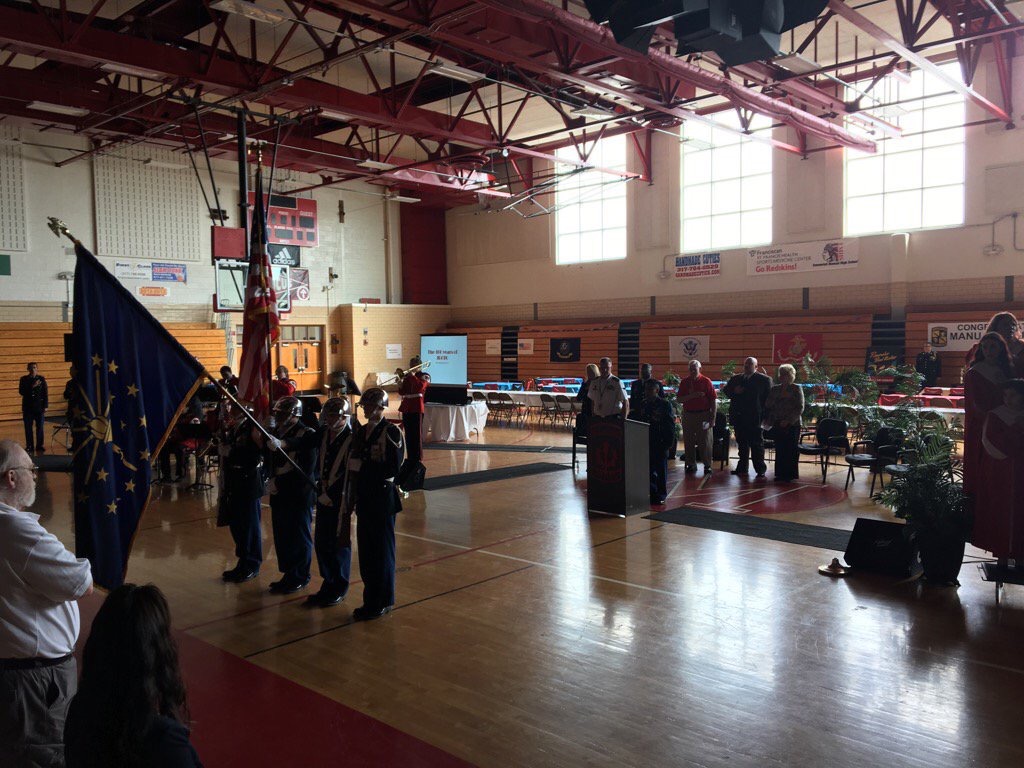 Last night I had the honor of speaking at the annual Manual Military Appreciation Day celebration. This great annual event was started by the Army JROTC program when I was principal of Emmerich Manual High School. This event also served as the 💯Year Anniversary Celebration of the Army JROTC program at Manual. It was incredible to be invited to this event and reconnect with alumni, teachers, staff, and former students.
I was reminded just how much I love this school. It was also a reminder of what can be accomplished when a team comes together, truly puts students first, and works hard while having fun toward a common vision. This school had been rated one of the worst, had been an “F” school, as rated by the state for seven years. We were able to turn the school around and take it off the “F” list. Make no mistake, the Army JROTC program was crucial to the success of this school. The JROTC instructors Colonel Duxbury and Sargent Carter are highly effective teachers and are responsible for making sure the program has continued to thrive, improve, and grow.
Emmerich Manual High School is an awesome school with great teachers and incredible students. This school is an important part of Indianapolis’ south side community.
In my speech, I discussed why the 💯Year Anniversary of JROTC was such a big deal. I also told the story of my friend David Marquet, author of the book, Turn the Ship Around! I believe JROTC is a program where students learn and practice character, citizenship, and leadership at the highest level.
Prepare Thoroughly Before You Begin
 Prepare Thoroughly Before You Begin
By Brian Tracy
The following post is an excerpt from chapter 9 of Eat That Frog.
A word about frogs… It has been said that if the first thing you do each morning is to eat a live frog, you can go through the day with the satisfaction of knowing that that is probably the worst thing that is going to happen to you all day long. Your “frog” is your biggest, most important task, the one you are most likely to procrastinate on if you don’t do something about it. It is also the one task that can have the greatest positive impact on your life and results at the moment.
Prepare Thoroughly Before You Begin
One of the best ways for you to overcome procrastination and get more things done faster is to have everything you need at hand before you begin. When you are fully prepared, you are like a cocked gun or an archer with an arrow pulled back taut in the bow. You will be amazed at what you achieve in the months and years ahead. You just need one small mental push to get started on your highest-value tasks.
This is like getting everything ready to prepare a complete meal. You set all the ingredients out on the counter in front of you and then begin putting the meal together, one step at a time.
Begin by clearing off your desk or workspace so that you have only one task in front of you. If necessary, put everything else on the floor or on a table behind you.
Gather all the information, reports, details, papers, and work materials that you will require to complete the job. Have them at hand so you can reach them without getting up or moving around. Be sure that you have all the writing materials, log-in information, access codes, e-mail addresses, and everything else you need to start working and continue working until the job is done.
Set up your work area so that it is comfortable, attractive, and conducive to working for long periods. Especially, make sure that you have a comfortable chair that supports your back and allows your feet to rest flat on the floor.
The most productive people take the time to create a work area where they enjoy spending time. The cleaner and neater you organize your work area before you begin, the easier it will be for you to get started and keep going.
When everything is laid out neatly and in sequence, you will feel much more like getting on with the job.
It is amazing how many books never get written, how many degrees never get completed, how many life-changing tasks never get started because people fail to take the first step of preparing everything in advance.
Once you have completed your preparations, it is essential that you launch immediately toward your goals. Get started. Do the first thing, whatever it is.
My personal rule is “Get it 80 percent right and then correct it later.” Run it up the flagpole and see if anyone salutes. Don’t expect perfection the first time or even the first few times. Be prepared to fail over and over before you get it right.
Wayne Gretzky, the great hockey player, once said, “You miss 100 percent of the shots you don’t take.” Once you have completed your preparations, have the courage to take the first action, and everything else will follow from that. The way you develop the courage you need is to act as if you already had the courage and behave accordingly.
When you sit down with everything in front of you, ready to go, assume the body language of high performance. Sit up straight; sit forward and away from the back of the chair. Carry yourself as though you were an efficient, effective, high-performing personality. Then, pick up the first item and say to yourself, “Let’s get to work!” and plunge in. And once you’ve started, keep going until the job is finished.
****************************************************************************************
Brian Tracy is one of the top business speakers in the world today. He has designed and presented seminars for more than 1,000 large companies and more than 10,000 small and medium- sized enterprises in 75 countries on the subjects of Leadership, Management, Professional Selling, Business Model Reinvention, and Profit Improvement. He has addressed more than 5,000,000 people in more than 5,000 talks and presentations worldwide. He currently speaks to 250,000 people per year. His fast-moving, entertaining video-based training programs are taught in 38 countries.
Brian is a bestselling author. In addition to Eat That Frog, Brian has written more than 80 books that have been translated into 42 languages, including Kiss That Frog!, Find Your Balance Point, Goals!, Flight Plan, Maximum Achievement, No Excuses!, Advanced Selling Strategies, and How the Best Leaders Lead. He is happily married, with four children and five grandchildren. He is the president of Brian Tracy International and lives in Solana Beach, California. He can be reached at briantracy@briantracy.com.
Leading Like A Thunderbird!
 On our way home from The Gulf on our spring break with my family we saw the B-2 Spirit Stealth Bomber flying over Maxwell Airforce Base in Montgomery, Alabama. This was an awesome sight of power and technological superiority. We then saw the US Air Force Thunderbirds. We were memorized by the many formations, maneuvers, and acrobatics. This was all part of the Maxwell Air Show & Open House held April 8-9, 2017. We were fortunate enough to be traveling through at just the right time.
The pilots of America’s military demonstration team, the US Air Force Thunderbirds, are some of the world’s best, performing death-defying tricks in fighter jets. While the individual skills of each pilot is admirable, what sets the pilots of the Thunderbirds apart is their ability to work as a synchronized team.
 I did a little research and found the mission of the Thunderbirds. Officially, the Thunderbirds are known as the U.S. Air Force Air Demonstration Squadron. The squadron’s mission is to plan and present precision aerial maneuvers to exhibit the capabilities of modern, high-performance aircraft and the high degree of professional skill required to operate those aircraft. Within this broad mission, the team has five primary objectives:
- Support Air Force recruiting and retention programs
- Reinforce public confidence in the Air Force and to demonstrate to the public theprofessional competence of Air Force members
- Strengthen morale and esprit de corps among Air Force members
- Support Air Force community relations and people-to-people programs
- Represent the United States and its armed forces to foreign nations and project international goodwill
The Lockheed Martin F-16 Fighting Falcon represents the full range of capabilities possessed by the Air Force’s tactical fighters. This highly-maneuverable multi-role fighter has proved to be one of the world’s best precision tactical bombers and air-to-air combat aircraft. The only modifications needed to prepare aircraft for air demonstrations are a smoke-generating system and painting in Thunderbird colors. The Thunderbirds are actually part of our combat force. This squadron must be ready for actual missions at a moments notice.
As I watched the precision of the maneuvers, I was awestruck by how this team of pilots could fly just one or two foot away from each other at MACH 2 speeds. It was amazing! Then I thought about how this was the ultimate example of leading teams and team cohesion. This team of pilots must be both familiar with each other and trust each other. Trust is about reliability and doing the right thing. Trust is a characteristic that builds respect and loyalty, as well as a supportive and safe work environment. I can only imagining the practice that it takes to build the familiarity and to fly as Thunderbird or be a part of the team on the ground.
Even though most of us do not have the thrill and danger of travel inches apart in aircraft going at MACH speeds, all leaders and teams must study fear, understand it, and be prepared to cope with it. I say it all the time – we must have some fear and be uncomfortable in order to grow professionally. Like fear, courage takes many forms, from a stoic courage born of reasoned calculation to a fierce courage born of heightened emotion. Experience under fire generally increases courage, as can realistic training by lessening the mystique of what we are doing.
So, just as I imagine all the practice and real-life maneuvering that goes into the Thunderbirds work, we must all strive to learn in the real time/real world context of what we do. Strong leadership which earns the respect and trust of team limits the effects of fear. Leaders should develop unit cohesion and the self-confidence of individuals within the team. In this environment a team member’s unwillingness to violate the respect and trust of his peers will overcome personal fear. This is why we must help our team members to be comfortable with being uncomfortable and get out of their comfort zone to learn new maneuvers and give great performance. Are you leading like the Thunderbirds?
Thanks For Not Being An Expert

My Awesome Delta Flight Attendant!
I wrote the following post yesterday during a day of flight delays trying to get to Pensacola, Florida to ultimately hook up with my family. Literally, I wrote the post in the cover of the book I am reading by Frederick (Rick) M. Hess, Letters to a Young Education Reformer. This post came to mind as I was reading the chapter entitled, “Why You Shouldn’t Put Too Much Faith In Experts.” Here’s what I wrote in the cover of the book:
Thanks For Not Being An Expert
I was inspired to write this post, honestly, by my flight attendant. She kept me up to date on what was going on during a day riddled with delays and cancellations. I had started the process in the afternoon yesterday when my flight to Atlanta was cancelled. I then started the process at 6:30 this morning and had been cancelled and delayed again until 12 noon when we finally got on the plane. I now did not think I was going to make my connection in Atlanta to get picked up by my wife and son in Pensacola, Florida. It might not have been quite as big a deal except for the fact that my son, Heath, and I were scheduled to go bow fishing tonight.
For the trip I had brought along my friend, Rick Hess’s new book, Letters to a Young Education Reformer. It is an awesome book and while sitting on a delayed plane I read the chapter “Why You Shouldn’t Put Too Much Faith In Experts.” As a guy that does not really believe in using experts, subject matter experts (SMEs), or consultants, I loved this chapter. Really, it’s not that experts are bad, but we just shouldn’t rely on their word as the final word. As Rick says, “I’ve found that experts often forget that their expertise represents just a tiny sliver of the world, and thus overestimate how much they know and what it can tell us. And that can cause problems” (p. 32).
My flight attendant let me know that my connecting flight had been delayed in Atlanta. She was not sure why we were not taking off, but she would see if she could find out and would keep me posted. Keep in mind, I was about the only friendly person on the plane. With so many flight cancellations and delays from the rash of storms across the south and eastern seaboard, everyone was struggling to get where they needed to be. The airlines were struggling to get pilots and flight crews where they needed to be.

First Draft of This Post Written In The Cover of Letters to a Young Education Reformer
Here’s the deal; my great flight attendant did not try to be an expert, nor did she even want to be an expert. She was a great example of what I believe we should all strive to do – not give blind guesses or speculate. She certainly had flown enough to be considered an expert, but she did not try to baffle me with expertise or make assumptions based on past experiences like this one. Instead she impressed me by leading with clarity, not certainty! She used the tools and information available to keep me informed of my circumstances. As the expert flight attendant, she did the precise task, using her available information and training to keep me informed of what was going on. When I got to Atlanta she let me know we were at Terminal F, Gate 1 and that I needed to go to Terminal C, Gate 41. She also assured me I was going to make it because my connector flight had been delayed and I now had 1 hour and 10 minutes to make it on the plane. Just like with airline industry schedules, in education we don’t always have a lot of certainty as to what will work, we just need to strive for clarity. 
Remember, the experts get it wrong all the time. The reality that when people become emotionally invested in their predictions, they cannot see straight—no matter how experienced or educated or smart they are. They become blind to other view points or the actual facts of the situation. All too many times experts begin speculating on past experiences and not the situation at hand. In his new book, “Stop Guessing: The 9 Behaviors of Great Problem Solvers,” Nat Greene calls this the “Expert Curse of Knowledge.” Experts think they know things and then don’t look at all the options. Experts should never be put in a position where their opinion means more than yours.
Are you acting too much like an expert or spending too much time listening and following experts?
Dig In & Stop Guessing

by Nat Greene (Goodreads Author)
Decision Making vs Problem Solving — and Why the Difference Matters
 Decision Making vs Problem Solving — and Why the Difference Matters
By Scott Whitbread and Nat Greene
Decision-making and problem-solving are two very different techniques for conquering different challenges that businesses face. Choosing the right one in the right situation can mean the difference between business success and failure. However, businesses frequently use decision-making techniques when they should be using a problem-solving approach. This leaves important problems unsolved and value locked away.
The Difference Between-Decision Making and Problem-Solving
Both decision making and problem solving involve using information to inform an action. However, this is where their similarities end.
Decision-making involves choosing between different courses of action. The process of decision-making is clear: each option is evaluated based on a set of parameters or criteria. But the outcome is not as clear: the outcome from the decision only becomes clear when a decision is made.
Problem-solving involves finding a root cause among many possible root causes, whether or not the true root cause has emerged as a possibility in anyone’s mind. The outcome is clear: the problem should be solved in order to bring a business process back to optimal performance. But the process is not clear: what is causing the problem is not yet known, and the problem solver must explore the process without yet knowing their destination. They do not know their destination until they have discovered the root cause.
A detective is a problem-solver. Their role is to unequivocally determine who committed the crime, and thus exonerate all other suspects, and thus their objective is clear. Their journey is not clear: they may never find the criminal.
A judge is a decision-maker. Their journey is clear: they look at evidence, circumstances, and precedent in order to arrive at a judgment for a convicted criminal. But their purpose is not always clear: they face competing goals, including justly punishing the criminal, giving satisfaction to the victims, appeasing the public, setting an example for others, and not over-burdening the prison system.
In business, a problem to solve may be the explosion of the SpaceX rocket on September 1, 2016, which required detective work in order to identify the root cause. Product quality problems, talent retention problems, and customer service problems all fit this mold.
In business, decisions may include where to build a new facility and at how much capacity, what product to launch, who to hire, or what security system to use. All of these decisions are choosing between alternatives that are already apparent.
As in the case of a crime, decision-making frequently enters at the end of a problem-solving effort. Once the root cause to a problem is found, the business may need to decide between different possible solutions in order to maximize the value of the actions it takes. Before solving a problem, a business will choose which problem to devote resources to solving.
Why it Matters
When businesses correctly identify a challenge as a decision or a problem, they are able to apply the correct technique to overcome the challenge. But frequently a business will treat a problem as a decision, use the wrong approach, and fail to solve the problem.
One large chemical upgrader facility experienced frequent outages due to failing process pumps. These pumps cost millions of dollars apiece, and the outages were costing the business tens of millions per year. The pump seals were wearing down after a few months, causing the process chemical to leak. As pumps were replaced with spares, the business worked with its vendor to choose between potential upgrades for the pumps: harder seals, larger seals, or different geometries. They treated their problem like a decision to make, and despite multiple upgrades, they continued to experience outages.
When they pivoted to a problem-solving approach, and acted more like detectives, they closely observed the failures themselves, and found the presence of small, hard foreign grains. These grains caused excess friction and wore the seals down. Further problem-solving found the source of these grains–the “culprit”–and they were able to solve the problem.
How to Choose the Right Technique
A decision is the result of choosing among several alternative possibilities. You will see a decision in front of you when the business is attempting to take a step, and the next action requires identifying and evaluating the values and needs of the business in order to select an option that maximizes these.
A problem is an ongoing, intermittent, or one-time failure of a process or system to perform at an acceptable level. If a process produces errors or unacceptable products or outcomes, does not run as quickly or efficiently as it should, or poses a negative risk for a business during operation, you are experiencing a problem and should use a problem solving technique.
Choosing the right technique for your challenge requires understanding what kind of challenge lies before your business. Learning to recognize and differentiate between these kinds of challenges will help you pick the right approach, and successfully overcome the challenge.
**************************************************************************************
Nathaniel Greene is the co-founder and current CEO of Stroud International, and author of Stop Guessing: The 9 Behaviors of Great Problem-Solvers. Nat has a Masters of Engineering from Oxford University and studied design, manufacturing and management at Cambridge University, in addition to executive education coursework in Harvard Business School’s Owner/President Management program.
A Whisper In The Wind
 The pigs are running the farm. So begins the story of Farmer Able. Everyone on his farm — people and animals alike — are downright downtrodden by him. He’s overbearing and compulsively obsessed with profits and productivity. He’s a typical top-down, power-based manager, forever tallying production numbers in his well-worn ledgers. But the more he pushes the hoofs and horns and humans, the more they dig in their heels. That is until one day when he hears a mysterious wind that whispers: “It’s not all about me.” Can he turn things around and begin attending to the needs of those on his farm, thus improving their attitudes and productivity?
The following is an excerpt from chapter 9 of Farmer Able.
A Whisper In The Wind
 In this oily, oaty shack, the farmer would lay out his bulky ledgers. He meticulously transferred numbers from the little book in his bib overalls’ pocket to the hefty registers. The farmer found strange comfort in the ruled pages as he ground his pencil ever sharper and wrote out the pluses and mostly minuses of his accounts. He stored the ledgers, marked year-by-year, in file cabinets that stood like metal testaments to his many failures. His less-thans and could-have-beens were committed to ink and paper and encased in steel.
This simple little exercise of keeping his accounts was exhausting. Every entry took a heavy toll. The good farmer spent so much time worrying over the numbers that the only thing that was adding up was his anxiety. His overworked mind—not to mention the day-to-day grind to get all his jobs done—would regularly cause an overstressed stomach. Farmer Able had developed a persistent bellyache.
As Farmer Able stared at the penciled numbers, trying to avoid the acid in his stomach, he noticed something quite strange. The old barn siding, which had become weathered over the years, always had a creaky sound to it. However on this night, the spring wind that blew outside conspired to create an odd whine and wail as it forced itself up against the old boards.
Moan went the wind, then groan went the boards at an even higher pitch as the gusts accelerated. The effect was like breath across the reeds of a harmonica. Adding to the sound was a singsongy whistle.
The farmer put down his pencil. He just had to fix that irritating sound, so he went outside and stumbled along the shed trying to locate the shaky boards. However, he could find nothing that fixed the spot of the strange reverberation.
With one particularly strong gust of southern wind, his attention was turned to an even more unusual creak. It came from the old walnut tree standing as it had for some 80 years in the lot just outside the granary. The moan and groan were even more pronounced in the tree as the branches moved in the wind. It had a distinctive tone to it that the farmer hadn’t heard before. The sound went beyond a rustle or even a swoosh.
Adding to this display was a light dance on the tree itself. The full moon that shone down that night lit up the old walnut with a curious luminescence. The branches were silvery and appeared to glow.
Farmer Able thought “What the dickens?” as old leaves left over from autumn swirled at his feet. There appeared to be something stirring, a conspiring of sorts between wind and light and tree. As he stared dumbfounded, the sounds took on even more definition. From creak and moan . . . to oooh-weee-oooh to aaaa-ble.
Did the wind just say his name?
And then—sweet molly moonlight!—Farmer Able heard a most distinct English word: It’s.
The word faded with the wind. The farmer wiggled a finger in his ear. Surely he wasn’t hearing what he was hearing. He was about to leave, when suddenly the wind gathered itself again, and through the branches came words with even more particularity: It’s . . . not . . .
Accompanying the words was that unmistakable twinkling from moon to branches. The sounds of the words were in rhythm with the pulse of that light. The articulation came from the wind, across the tree, and then it resonated on the creaky boards of the granary. He was hearing it coming and going, inside and out.
It’s . . . not . . . about …
The wind sound trailed off like it was taking a breath. Then summoning itself again, a gust built up.
It’s . . . not . . . about . . . me.
The reverb echoed off the granary: . . . about . . . me . . . me . . . me. The wispy resonance faded into the night.
Suddenly the wind stopped dead. All was still. Farmer Able just stood there in the silence. Mysteriously, he could still hear the words inside.
*****
Art Barter believes everyone can be great, because everyone can serve. To teach about the power of servant leadership, Art started in his own backyard by rebuilding the culture of the manufacturing company he bought, Datron World Communications. Art took Datron’s traditional power-led model and turned it upside down and the result was the international radio manufacturer grew from a $10 million company to a $200 million company in six years. Fueled by his passion for servant leadership, Art created the Servant Leadership Institute (SLI).
To learn more about Art and his new Servant Leadership Journal, as well as his book on servant leadership, Farmer Able: A Fable About Servant Leadership Transforming Organizations And People From The Inside Out, endorsed by Stephen M.R. Covey, Ken Blanchard , and John C. Maxwell , visit www.servantleadershipinstitute.com .
 Byron's Babbles
leave a comment