It’s All Superlatives
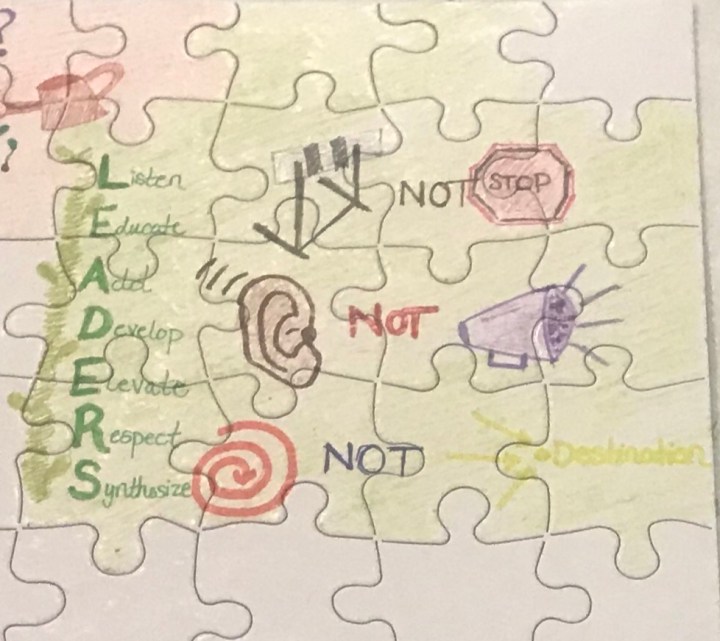 Have you noticed that we talk a lot in superlatives? Almost to the point that the superlatives don’t mean much. Or, we even use them incorrectly by saying something to one individual in a group we are in like, “You’re the best!” We have just told everyone else they are not the best. Using superlatives has become an important part of negotiating and making a case, but have we done this at the expense of good?
Are we beginning to see “good” as anything very good at all? Sometimes it seems that “premium” has become our new “basic.” It’s our starting point, so “good” becomes “less-than.” It is amazing what adding “est” to the end of a word can do. On the user side of superlatives, we can take advantage of the stronger meaning. But, as a leader we have to watch getting hoodwinked. In other words, have we, in many cases, made an objective comparison impossible?
As I understand it, there are web advertising platforms that won’t allow the use of superlatives unless there has been a third party evaluator confirm that something is the “world’s best” or “extremest.” These providers don’t want advertisers making claims that are demonstrably false. The Merriam-Webster Dictionary tells us that superlative means “surpassing all others – supreme.” Leaders need to care about and practice the quality, specificity, and power of our language.
If we use superlatives too much, we wash out the meaning. If we make every commonplace event out to be extraordinary, we actually make everything sound the same. So, we need to be careful that “awesome” continues to mean awe inspiring and “best” keeps its superlative meaning and doesn’t just become “good.”
Is It Fun Being You?
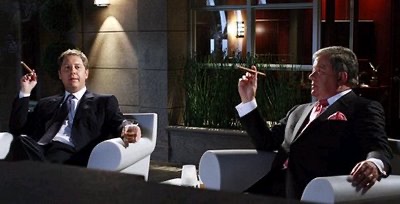 I didn’t really set out to do a blog series on thoughts following Boston Legal episodes, but it seems I am doing that because this will be my third such post. I’m telling you, those end of episode scenes of Denny Crane and Alan Shore sitting on the balcony discussing their lives, politics, cases, and their day are riveting and very thought provoking. My other two posts are: Are We Best Friends?; and Do You Have An Inexhaustible Ability To Just Live? The scene I am blogging about here was at the end of Episode 7 in Season 2.
Denny Crane says, “It’s fun being me. Is it fun being you?” Alan replies, “Most of the time actually.” To this, Denny reacts, “Then what else is there?” With a nod, Alan says, “Indeed.” I had never really contemplated the question of whether it was fun to be me before. My answer is, yes!And, indeed, there really isn’t anything else.
“Be who you are and say what you feel BECAUSE those who mind don’t matter and those who matter DON’T MIND!” ~ Dr. Seuss
It really comes down to being who you are. I came across the cool sweatshirt pictured below with the saying Such Fun Being Me on it. The Miranda Shop is selling the sweatshirts and I love their description of the sweatshirt: “This is one of my most loved of the new products. It gives me no greater pleasure than to think that people are able to become more and more happy and free in their own skin, loving and accepting themselves to freely be who they are.” That pretty much says it all, don’t you think?
 I guess it is all about having purpose and passion in how we are living our life. And, I think those of us who can honestly answer that it is fun being us, would say we still approach life much like a child. So, what does that mean?
To truly be happy, I believe we must get in touch with our inner child. Children are always happy in the moment. They are their true natures; they’ve not been taught they have to fit in (socialized) yet. Watch a child and you will see how free they are and how little they care what other people think of them. Children are pure love and light. Unfortunately, we play roles to fit into our society and then we end up suppressing our true nature out of fear of what others think. Remember, when you find yourself feeling judged, this is the socialized you, not the real you. Maybe that’s why it’s fun to be me; I can still run a toy tractor across the floor making the best tractor sounds ever!
Become freer; play, have fun, and enjoy the moment. It’s fun being me. Is it fun being you?
Do You Have An Inexhaustible Ability To Just Live?
 Yesterday I blogged about a scene from an episode of Boston Legal that really caused me to think and reflect. You can read about it in Are We Best Friends. Please allow me to post about another balcony interaction of Denny Crane and Alan Shore at the end of another episode.
After asking Alan Shore what he had had for lunch, and telling him he had a steak sandwich with onion rings, Denny Crane said, “Alan, you know, one thing you sometimes forget is, no matter how hard your day, no matter how hard your choices, how complex your ethical decisions, you always get to choose what you have for lunch.” Alan Shore replied, “Daily, I’m amazed at your inexhaustible ability to just live.” Replying, Denny Crane said, “It’s either that or die.” This hit me like a ton of bricks. I believe I have an inexhaustible ability to just live, but just exactly what is that and can we, as leaders, help develop this in others?
Of course this prompted a study for me. What I found was, nothing. So, how do we develop or continue to have an inexhaustible ability to just live? I was actually reminded of a bible verse (John 10:10) where Jesus tells us we are supposed to have an abundant life. Realizing there is a difference here when using the word abundant, I began to think about what really allows us just to live. It turns out that picking what we want for lunch is a perfect example.
 It is about what Lolly Daskal taught in the great book, The Leadership Gap: What Gets Between You And Your Greatness. Daskal posited that focusing on using can, want, and will instead of could, should, and must empowers us to live in terms of our own goals and motivations – just like picking what we want for lunch. Think about it: when asked about lunch, we say, “I want…”
Typically, when we choose what we want for lunch it is very authentic. We, or at least I can speak for myself, have no problem having the courage to proclaim what we want for lunch. Why not live and lead on our own terms in other areas of our life as well? Daskal also taught us to have a kinder dialogue with ourselves and focus on leading from within. Could it be as easy as working toward can, want, and will? I think so!
Finally, I believe an inexhaustible ability to just live means to go after what you want without worrying about what others will think. It means continually reaching out for newer, richer, deeper, life changing experiences. So let’s go push the boundaries of ourselves mentally, spiritually, and intellectually for personal growth and the betterment of the world at large. Also, step back and just enjoy the ride that is the journey of our life.
Do you have an inexhaustible ability to just live?
Are We Best Friends?
 Do any of you remember the show Boston Legal? It was one of my favorites. The comedy-drama ran for five seasons from 2004-2008. The show focuses on the personal lives of the upscale lawyers and their cases of the law firm Crane, Poole, and Schmidt. Recently, when our cable was out and we could get no channels, my son and I were on the phone and he said, “Dad you know we have a SMART TV so you can watch episodes of some of your old time shows.” I have to admit that I didn’t know that. Then he explained how to get to the shows and that this is what leads to people doing what is called “bingeing.” I also have to admit, I did it – binge watched Boston Legal. It was great and there were so many things said in the show that made me think. So, of course I had to blog about it!
At the end of each episode there is always Denny Crane (William Shatner) and Alan Shore (James Spader) sitting on the balcony in cool white chairs, which are called Bubble Club Chairs – that you can buy, by the way, drinking bourbon and smoking cigars. The talk is funny, but very deep and meaningful. In Season 2, Episode 8 Denny says to Alan, “What I give to you, I do with no one else (speaking of their time on the balcony each night and ultimately about their friendship). I like to think that what you give to me you do with nobody else. Now that may sound silly to you. But, here’s what I think is silly, the idea that jealousy or fidelity is reserved for romance.” Alan replied, “…But gosh what I get from you Denny. People walk around today calling everyone their best friend. The term doesn’t have any real meaning anymore. Mere acquaintances are lavished with hugs and kisses upon a second or at most third meeting, birthday cards get passed around offices so everybody can scribble a snippet of sentimentality for a colleague they barely met, and everyone just loves everyone. As a result when you tell somebody you love them today, it isn’t much heard. I love you Denny, you are my best friend. I can’t imagine going through life without you as my best friend. I’m not going to kiss you however.” Like I said, some funniness to it, but also very deep.
What does it mean to be a friend, a best friend, or to love, I mean really love, someone today? Do those terms, as Alan Shore lamented, really have any meaning any more? I’m not sure they do. In fact the balcony seen at the end of this episode has caused me to really reflect on my own definitions of love and friends. I’ll bet you were recently passed a card and asked to sign it and you may have thought to yourself, “I really don’t know this person.” I’m not saying that giving birthday cards is bad, but have we become a society of trivializing friendship and love?
So, I ask the question that Alan asked; does the term “best friend” have any real meaning any more? I believe to be a best friend is a privilege not to be bestowed on everyone. Showing another human being that you care about them and that their happiness and presence in your life is important to you on a regular basis is, though it may seem obvious, is a fairly big commitment in practice.
Remember how much easier it was to have a best friend in high school or college? You were with them every day. I find it difficult to be a good friend. Life seems to have a way of inserting itself and does a pretty good job of prying us apart. I think of all the times I’ve said, “We’re going to get together.” But, then never do. I’m a little, actually a lot, envious of Denny and Alan being able to sit on the balcony every evening at the end of the work day and philosophize. The lesson that can be learned from studying the characters of Denny and Alan is that being a best friend involves compromise, trust, and a mutual growth that allows certain friends to last through the good, the bad, and the ugly.
Really, friendship is a peculiar type of love. There is no real binding commitment to the opposite person other than what you are willing to put into the relationship. I really do think the term “friend” doesn’t have as much real meaning anymore. How many times have you had someone start a conversation with, “As a friend, you need to know…”? Many times there is not the friendship to be making the observation. That’s why, as the person on the receiving end, it upsets us. Again, we learn from Denny and Alan that a true “best friendship” allows us to:
- Love you for you
- Listen to understand
- Be accepting
- Be genuine
- Appreciate the humor
Do you know and appreciate the value of your best friend?
JROTC – Leadership Training For Stars
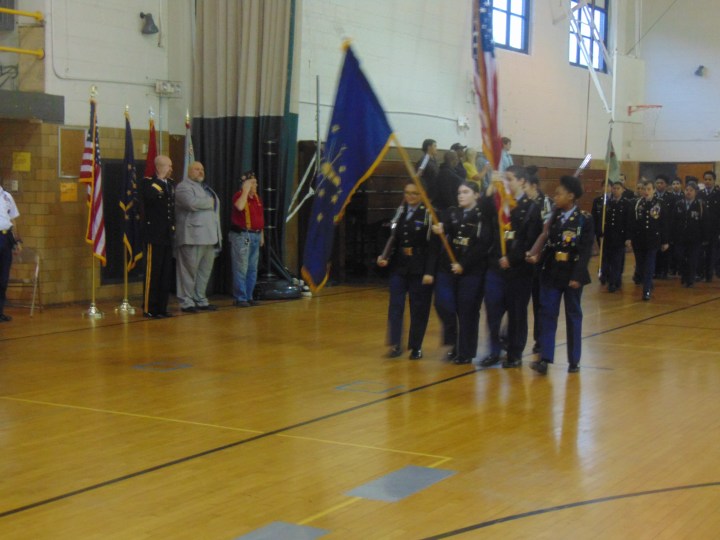 This morning I had the opportunity to be at the Review Stand with Major General (retired), Bill Wells, at Thomas Carr Howe Community High School in Indianapolis, Indiana. We were observing the cadets of the T.C. Howe Junior Reserve Officer Training Corps (JROTC) program do a Pass and Review. It was very inspirational to be a part of this alongside a Two Star General. General Wells did a great job speaking to the students. He told them that JROTC teaches students to be leaders, whether they go into the military or not. Regardless, General Wells, urged the students to use the opportunity to become self-disciplined, respectful, and responsible. These skills lead to success not only in high school but in college and adult life too.
Having now worked in two schools with JROTC Programs, I am a huge fan. In fact, I always introduce JROTC as the flagship program of the school. Every high school would be serving their students well to have a JROTC program. Don’t get me wrong, I am not saying that every student should be in JROTC, but the world would be a better place if every student at least had the opportunity if she/he so desired to take part. Additionally, research nationally shows that JROTC students tend to have better attendance, higher graduation rates, and higher grade point averages than their contemporaries. Having worked with students involved with JROTC in two urban school settings, I can attest this is true.
 For those JROTC students that join the military, they can enter at a higher rank. That can mean higher pay. Also, if the student goes to college they can enter at a higher rank as well. The program also stresses integrity and personal accountability – traits that students will need to compete in a diverse and global workforce. JROTC also enables students to become good citizens. I believe JROTC teaches civics by actually “doing”. Just as our country is “government of the people, by the people, for the people,” JROTC is run by the students for the students – of course with the leadership of great instructors like Senior Army Instructor Lieutenant Colonel (retired) Clayton Edens, and Master Sergeant (retired) John Boone, who also model all these desired traits for our students.
The list goes on and on of the skills that are developed and honed of JROTC members. Here are a few others that come to mind:
- Learning how to think logically and critically
- Effective communication – both written and oral communication
- Learn the value of teamwork and how to be an effective team member
- Working cooperatively with others
- Community involvement and volunteerism
- Study skills, goal setting, and focus
These skills help people thrive not only in the military but in many of today’s in-demand jobs. Employers look for these skills in employees. JROTC makes school work be like real life. It might seem as if I am biased toward this program; you would be right. I have seen first hand the great things that can happen for students involved in this program. So glad I had the good fortune to take part in such an inspiring JROTC activity today and have this opportunity to reflect on the incredible value that JROTC brings to students.
Contrarian Thinker
 One day, this past week, I was introduced to a group I was speaking to as a “Contrarian Thinker.” Honestly, I wasn’t exactly sure what that was. After doing a little research, however, I found that this was probably a pretty accurate description. Contrarian thinkers are trailblazers. ✔️Check. They are polarizing visionaries who are just as likely to be called crazy before brilliant. ✔️Check. Contrarian thinkers have the foresight to see hidden opportunities and seize them when the right moment presents itself. I would like to think I do this, but I’m not so arrogant to say check on this one.
Never forget, the risks of going against the crowd are greater, but so are the rewards. The rewards of innovating, curiosity, and an imagination gone wild are always worth the effort. An important fact for a contrarian thinker to remember is that no one will be expecting you or your ideas to succeed, which is one of the reasons you will.
Then, last night as I was flipping through the channels (are they still called channels on the tv?) I stopped on Shark Tank long enough to hear Mark Cuban described by one of the other Sharks as a contrarian thinker. So, off I went to learn more about his storied history.
While reading 9 Critical Turning Points That Shaped Mark Cuban’s Extraordinary Career by Drake Baer, I found that Mark Cuban is a contrarian thinker. One of my favorite quotes from Mark Cuban in the article is, “The ‘sprint’ doesn’t have a finish line. There’s never a point where you can say, ‘We’ve made it.'”
 The more I studied this topic, however, I really found that many contrarian thinkers always find an opposing view. I don’t think that is me at all. Nor do I believe that would be very productive. A more productive view would be one of “independent thinker.” My takeaway to share with you is that rather than always being swayed by consensus view, or consistently being a contrarian, we should strive to be independent thinkers. I always strive, and would encourage you to as well, look at different perspectives, and sometimes find a unique angle.
Remember, if you think the same way as everyone else, it is very difficult to outperform them.
The Majestic Leader
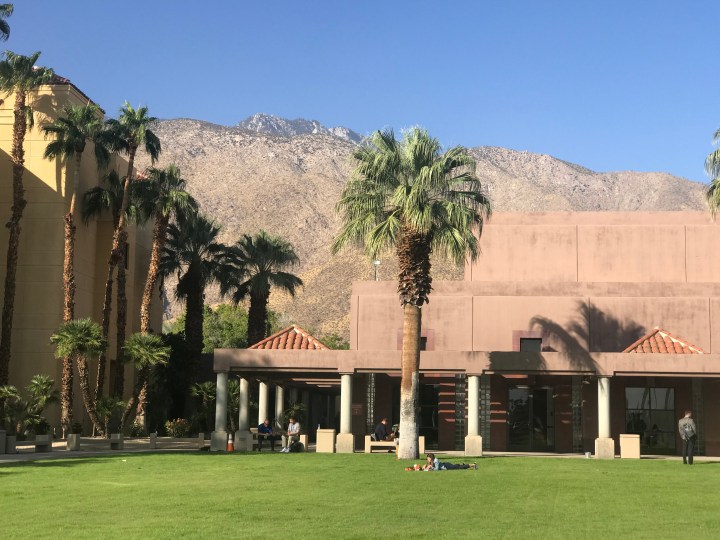
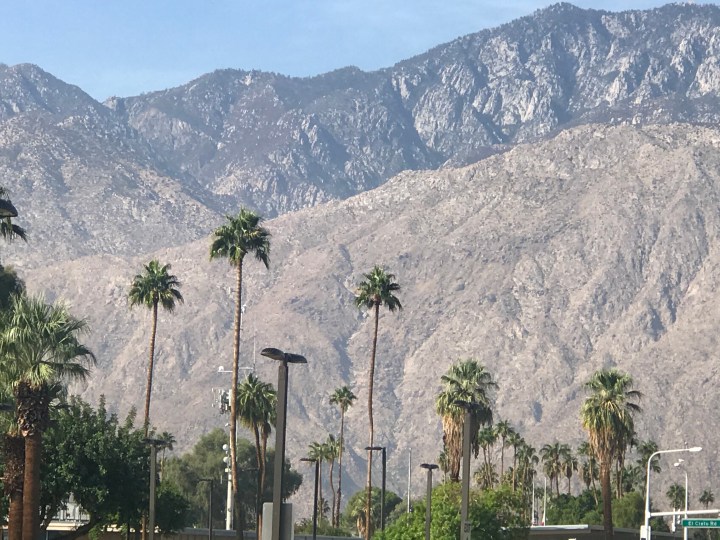 I had the opportunity to spend this week in Palm Springs, California for Aurora Institute’s annual symposium. The theme of this year’s symposium was Shining A Light On The Future Of Learning. Palm Springs is such a beautiful place located in the Coachella Valley. Palm Springs is completely surrounded by mountains; the San Bernardino Mountains to the north, the Santa Rosa Mountains to the south, by the San Jacinto Mountains to the west, and by the Little San Bernardino Mountains to the east.
These mountains are the cause for this post. I was visiting with a friend from the state of Washington about how the mountains were different than other mountains. She described them as being “majestic”. That seemed like an appropriate adjective, but I needed to think a little about just what majestic meant. It is an adjective meaning, having or showing impressive beauty or display great dignity. Also, majestic befits a great ruler and being simply far superior to everyday stuff. I was now fully on board with the mountains surrounding Palm Springs being described as majestic.
Then I got to thinking about majestic people I know. There are those with majestic beauty and those who are majestic leaders – those that display great dignity. I then reflected on what gave them that beauty. For me it is their referent power. Referent power is one of the most potent and majestic sources of power for a leader there is. It is a form of reverence gained from having tremendous interpersonal relationship skills. Referent power has become much more important as we move from command and control organizational environments to more collaborative and flattened hierarchical environments of influence.
Leaders with high referent power influence because of the follower’s admiration, respect, and identification with her or him. Think about this description when looking at the picture I took of the San Jacinto Mountains while I was in Palm Springs shown here: 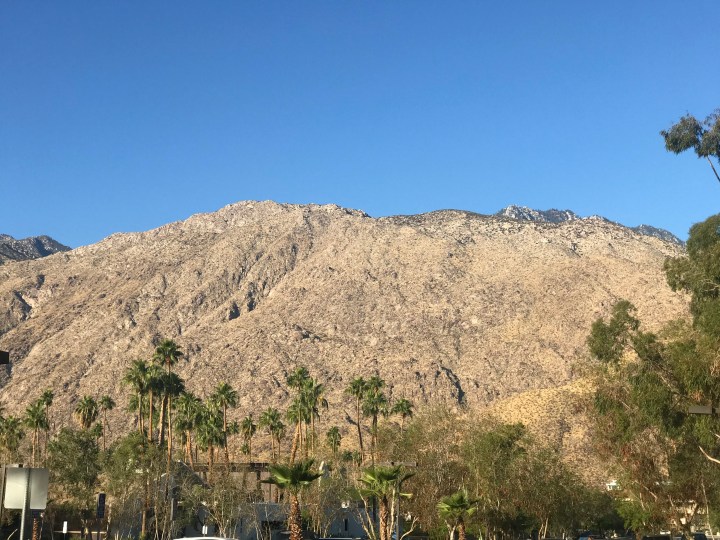 These majestic mountains are a pretty appropriate metaphor for a majestic leader, don’t you think? I couldn’t let the metaphor end there, however. I then got to thinking about how if we, as leaders, get this influence right, the view is beautiful. This made me think of the awesome picture I got from the top of Mount San Jacinto at 8,516 feet shown here:
 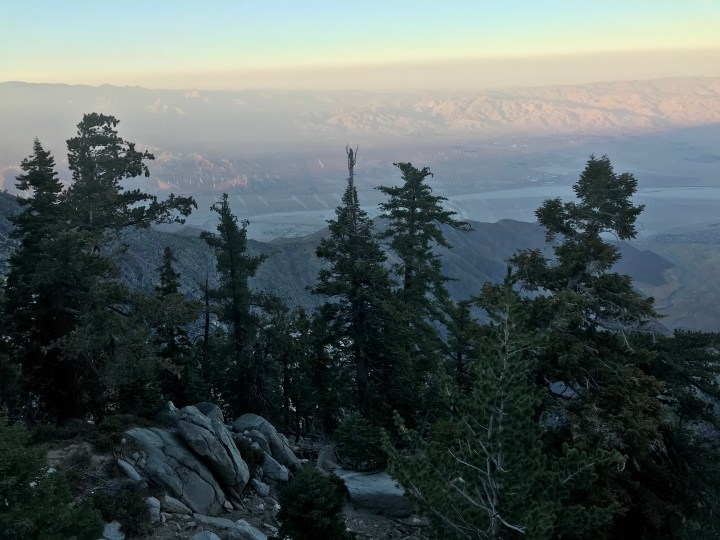 Getting leadership right is such a beautiful and majestic thing for both the influenced and influencer.
Obstacles Vs. Barriers
 Today at the 2019 iNACOL Symposium I got to thinking about the terms obstacles and barriers because a speaker mentioned we need to recognize they are not the same. Many times these terms are used interchangeably. As leaders, however, we need to look at these mutually exclusively. An obstacle is something that impedes or stands in the way of progress. Barriers are structures that block/bar passage.
In other words:
- if it slows you down it is an obstacle.
- if it impedes or stops you, it is a barrier.
Think about this: most of the difficult situations and circumstances we are presented in life are difficult because they present us with a difficult choice. We need to notice where we, or our organizations get stopped. Then distinguish whether you are confronted by an obstacle or barrier.
As long as you have options, your difficult circumstance is an obstacle; regardless of whether you use the options or not. Obstacles, most generally, require a change. Sometimes this involves a change we ourselves need to make. These can be tough changes. In the future we need to begin to notice where we get stopped and start taking time to distinguish whether we are being confronted by an obstacle or a barrier.
Toy Story 4 Leadership
 Don’t laugh, but as I flew across our awesome country yesterday to Palm Springs, California for the 2019 iNACOL (now named the Aurora Institute) Symposium, I was excited to get to watch Toy Story 4. I’m a fan of Toy Story; not just because they are great movies, but also because of the Pixar story and the lessons in the movies. I was certainly not disappointed by the gang of toys getting back together with the addition of new toys. There were so many great connections to the leadership lessons I facilitate in our 3D Leadership program. I even took notes on a napkin.
 There were six big standout lessons in the movie:
1. From Forky I was reminded that we need to understand our value and the value others bring to our teams and organizations.
It is so important we know and understand our strengths. Then, it is crucial we have people working to their strengths. Too many times we move people and change roles, sometimes in an attempt to promote, without any regard to whether it is the “right” role based on strengths. Remember, you bring value. Forky needed to realize he was a toy even though not in the traditional sense. He brought value to Bonnie. Let’s not forget, she created Forky.
2. Great leaders are not always seen. Woody was helping Bonnie through her first day of school without her even knowing it. Without being seen Woody got her crayons for her and got her the materials to make Forky. He was helping her, being a servant leader, without her knowing it.
It’s easy to think leaders must be front and center and seen. Leaders don’t have to be seen, though. Leaders can do great work from the background. Great leaders gently guide people without them knowing you were there or were leading them.
3. The toys practiced adaptive leadership. Throughout the entire show, strategy was agile and constantly changing. Interestingly, all the toys led from where they were. Several times during the movie I heard toys say, “I have an idea, let’s do this.” The other toys would then team up and carry it out.
4. Buzz Lightyear led from where he was. Buzz had not really been a leader in the other three Toy Story movies, but he had to step up in this one because Woody wasn’t present. Buzz stepped up and filled the leadership void.
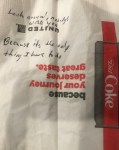
5. At one point in the film, Bo Peep exclaimed to Woody, “Look around, nobody’s with you.” We must remember that leadership is influence and if no one is with us when we turn around we are not having an influence.
6. At one point Woody said, “Because it’s the only thing I have to do.” Woody was resisting transition into another role, or in other words, he was resisting change. Know times of transition are not easy. Yet, to grow, there will always be transitions. Change is a good thing. Don’t let the pain of transitions stop them from happening.
 There are so many more lessons in Toy Story 4 to be dissected, but those are my big takeaways for now. If you have watched the film, I would love to hear your takeaways. Let’s keep leading to “infinity and beyond”!
The Tigress of Forli
 The Tigress of Forlì: Renaissance Italy’s Most Courageous and Notorious Countess, Caterina Riario Sforza de Medici by Elizabeth Lev
My rating: 5 of 5 stars
This was an incredible and gripping read. Caterina Riario Sforza de’ Medici was, as are all great leaders, controversial. Caterina was bold, brave and a benevolent leader; she was clever and skilled in diplomacy and dynamic on the battlefield. Elizabeth Lev does a masterful and vivid job of bringing to life for the reader the life of this leader who was celebrated and admired, but also reviled and feared. This book caused me to reflect deeply about the dispositions a leader must possess and the ability to adapt (adaptive leadership) that great leaders must develop.
One area that Lev spent time on was the fact that Caterina was a benevolent leader. In other words, making sure the needs of her people and of the greater community were cared for. It’s about, as I wrote about in, Benevolent Leadership, creating greater opportunities for our communities, states, nations, and the world. It’s really about creating different possibilities in the world. It’s about, as Caterina taught us, developing a sustainable future for the world and everyone living in it.
Lev gives us a bird’s eye view into this great leader who won and lost it all. It also prompts reflection into our own leadership actions and maneuvering.
~Dr. Byron L. Ernest
 Byron's Babbles
leave a comment