Recognizing Our Perceptual Boundaries

Our minds are incredible meaning- makers. We can’t help it, it just works. Our brains want to make sense out of everything. Our mind works off of our experiences and what we have learned. Humans have a perceptual control system. We act in ways that keep our perceptions of the world within acceptable boundaries that we set. Think about it. You don’t have to look at the thermostat to know if your heat or air conditioning is set at the correct temperature or working – the perceptual boundary you have set for yourself does it for you. I use that example because we all have different perceptual boundaries. Don’t believe me? Think about the last time you had an argument over where to set the thermostat – one of you was too cold and the other too hot – it was more about each person’s perceptual boundary, not the actual temperature number.

I already did one post (Setting Our Consciousness To Engage) inspired by the great book Slow Time Between the Stars by John Scalzi. Now, this post is inspired by the only character in the book, an AI being, आशा Āśā. आशा Āśā said, “I can set my perceptual boundary at any level I want. I could every day count the stars that I have the ability to distinguish, and the photons I receive from each, tally them, and set them in a database for future consideration. But that’s expensive. Energy is hard to come by between the stars. There are choices to be made on how to expend it and why” (Scalzi, p.17). We humans don’t quite have that ability, but our minds are receivers, and our brains pick up what we program them to pick up. In some cases we need to program it to pick up more, in others maybe less.
“What you see and what you hear depends a great deal on where you are standing. It also depends on what sort of person you are.” ~ C.S. Lewis
Perceptual boundary refers to the limits of our perception or understanding of a certain situation or concept. It is important to recognize our own perceptual boundaries in order to be open to new perspectives and ideas. By being aware of these boundaries, we can expand our knowledge and improve our decision-making process.
Pushing Our Strengths

As always with a book by one of my favorite authors, Amor Towles there were several phrases that made me go into deep thought mode. One, in the great book, You Have Arrived At Your Destination was, “Pushing our personalities uphill” (Towles, p. 21). This was referring to struggling or exerting a lot of effort change or improve one’s own personality traits behaviors. It suggested that it may be difficult or challenging to make personal changes, but the effort is worth it the long run. Sometimes our context changes or we need to make a change in context.

Another phrase in that same book that gave me pause was “But our strengths don’t serve us well in every circumstance at every phase of our lives. As we grow and enter new contexts, our longer-term strengths can suddenly hamper our worldly progress” (Towles, p. 20). This phrase highlights the importance of being adaptable and open to change. Our strengths may not always be beneficial in every situation, and as we grow and experience new phases of life, we must be willing to reassess and potentially adjust our approach. It emphasizes the need to constantly learn and evolve in order to continue progressing in our personal and professional lives.
Our strengths can sometimes hinder us if we rely on them too and are not willing to adapt or learn new skills. This can lead to stagnation and missed opportunities for growth. To avoid this hinderance, it’s important to regularly reassess our strengths and weaknesses, be open to feedback and constructive criticism, and continue learning and developing new skills. Being flexible and willing to step out of our comfort zone can also help prevent our strengths from becoming obstacles in our personal and professional lives.
Triple Power of Real-World Experiences, Representation, and Invitation in Student Learning

I was asked to write the November’s Monthly Thoughts for the National FFA Teacher Ambassador Monthly Newsletter. I loved being asked to do this. I chose to write about three students who inspired me during the National FFA Convention this year. This content is important enough that I wanted to share this inspiration with all my followers. There is an increasing recognition of the importance of providing students with real-world experiences, diverse role models, and inviting learning environments. The three students I am highlighting here reminded me of the immense power these elements hold in shaping young minds, fostering personal growth, and enhancing educational outcomes.

Real-World Experiences
Real-world experiences bridge the gap between theoretical knowledge and practical application.
By engaging in hands-on activities and solving real-world problems/issues, students develop
critical thinking skills, problem-solving abilities, and a deeper understanding of complex
concepts. Ava Oentrich, Junction City FFA, Kansas, did an incredible job articulating this to
administrators during our School Administrator Program.

Representation
The power of representation cannot be overstated. When students see teachers who look like
them and come from similar backgrounds, it fosters a sense of belonging and inspires them to
believe in their own potential. Diverse educators serve as powerful role models, breaking
stereotypes and encouraging students to pursue their dreams without limitations. During the
second day of the School Administrator Program Lauren Easter from Virginia shared the
importance of having teachers she could look at, learn from, and realize that she could be just
like them.

The Power of Invitation
Seventh grader and daughter of Ambra Tennery, Brinley Tennery, reminded me of the power of
the invitation when on the first day of convention she invited me to sit and have lunch with her.
You can read all about this experience in The Power Of The Invitation.
Why This Matters
The power of real-world experiences, representation, and an inviting educational environment cannot be underestimated. These factors ignite a passion for learning, enhance academic achievement, and contribute to the holistic development of students. As educators and society as a whole, it is crucial that we prioritize these elements to ensure every student has the opportunity to reach their full potential.
Curiosity and Creative Conflict

I was reminded in one of my teacher leader gatherings a couple of weeks ago how important making space for curiosity is in education. One of the teachers made a scratch art stating, “The cure for boredom is curiosity” (See featured photo)! I would add to this that we need to also be teaching and modeling how to have creative conflict. Right now in the University of Oxford class I am taking we are learning how important encouraging and navigating creative conflict is to professional service firms, like mine. Therefore we should be helping our students understand creative conflict for their leadership development. It would be highly beneficial for their personal and professional growth. It helps our students develop important skills such as critical thinking, problem-solving, effective communication, and collaboration.
To teach creative conflict effectively, educators can follow these guidelines:
- Create a safe and inclusive learning environment: open and respectful dialogue where the students are in a psychologically safe space.
- Model and teach active listening: Help students to listen to understand by starting with empathy.
- Foster a growth mindset: Conflict is an opportunity for growth and learning. Conflict provides the chance for exploring different viewpoints and find innovative solutions.
- Practice constructive communication strategies: Provide the ethos where students can express their opinions clearly and respectfully, using “I” statements. Focusing on the issues or problem instead of attacking individuals must also be modeled and practiced.
- Provide opportunities for group work and collaboration. This will provide students with real-world practice resolving conflicts creatively.
- Help students develop self-awareness in order to become more open-minded and adaptable.
- Develop space for discussions and debates of real-world issues and problems: Students need to explore diverse perspectives and challenge their own beliefs.
- Model creative conflict for students.
Let’s all help our young people to foster creative conflict by promoting healthy and respectful disagreements that lead to innovation and growth, rather than destructive arguments. Think how much better the world would be if we were all better at this!
Studying What Is Enjoyable

This morning I moved into The Kilns in Oxford, England for the week as a Scholar In Residence for the C. S. Lewis Foundation. The Director of the C. S. Lewis Study Centre invited another scholar and I to have tea this afternoon. It was an incredible conversation, and my fellow scholar is working on her Masters Degree and when we were discussing how she chose her degrees she stated that she chose a subject that was enjoyable for her to study. At a time when it seems that all decisions are based on obtaining a high paying job in the future, it was actually quite refreshing to hear her standing by what she loves and enjoys. This is why I am such a champion of high quality fundamental experiences for students to explore and find those areas of interest that will be enjoyable for them. This also will enable the student to find their purpose.
“The only way to do great work is to love what you do.” ~ Steve Jobs
So, I ask the question: Should a person pick a degree of study based on what they love or what will land them a dream job? That ultimately depends on the individual and their priorities. Some prioritize pursuing their passions and choosing a degree based on what they love, while others prioritize finding a degree that will lead to a stable or fulfilling career. It’s important to consider both factors and find a balance. As I mentioned earlier, it is helpful to explore and research different career paths related to interests to see if there are viable options available. Additionally, speaking with professionals in a field of interest can provide valuable insights into the job market and potential opportunities. Ultimately, it’s about finding a path that aligns with a person’s interests, passions, purpose, and long-term goals.
Seagull Management

This week’s Simple Truth #5, The Key To Developing People Is To Catch Them Doing Something Right, in Simple Truths of Leadership: 52 Ways To Be A Servant Leader and Build Trust, Making Common Sense Common Practice by Ken Blanchard and Randy Conley really resonated with me. Last week I had made the comment that right now everyone seems to be looking over their shoulder waiting for someone to catch them doing something wrong, saying something wrong, or making some kind of mistake. My experience with those kind of cultures of fear of making mistakes is that we are going to, you guessed it, make mistakes. So, how do we change this? It is actually pretty easy, shift to “…catching people doing things right and praising them” (Blanchard & Conley, 2022, p. 19). They tell us it really is common sense.
“Seagull management, where managers set goals with people and then disappear until something else goes wrong. Then they fly in, make a lot of noise, dump on everybody, and fly out.”
Blanchard & Conley, 2022. Simple Truths of Leadership. p. 19.
But really, how do you change that? I loved the term Blanchard used to describe how we are missing the mark. He called it “seagull management.” I am sure after many of you read the quote above defining seagull management you were saying, “Yes! I have totally experienced this.” It may be that person that only texts, calls, or emails when something is wrong or it is perceived we’ve made a mistake. I’ll also relate this to society in general right now to the people who only post mistakes or quote people on social media who have misspoke (not really intending to say what they said). Again, my experience has been that when we are in environments like that we tend to make more mistakes.
We are all going to make mistakes. Remember, the only people who don’t are the ones not doing anything (sometimes the seagulls). So, let’s use the common sense practices from Blanchard and Conley and catch people doing great things, praise them and “Make it clear you have confidence in them and support their future success” (p. 19). Key word there is “support.”
Digging Up The Past To Get Past This
Last night I facilitated an incredible gathering of up and coming educational leaders from Georgia, North and South Carolina, and Tennessee. The title is the evening was “Do You Really Want It?” I got the inspiration for this session from my friends in the band Nothing More. A couple of years ago I had the chance to spend some time in their tour bus with them visiting and talking about inspiration behind a couple of songs. They have an incredible song “Do You Really Want It?” that I use to prompt deep thought and reflection for discussion concerning change, diversity, and overcoming our American demons (a term introduced in the song). Last night’s discussion did not disappoint.

Every time I facilitate this discussion one stanza always comes up. “You gotta dig up the past to get past this.” I have been contemplating this a lot lately with all that is going on in the world. We must study the past and that sometimes involves digging up the past. But, we must get better at doing that in a productive way that allows us to actually learn from that past. I’ve been reading a lot on this and am reading Why Don’t We Learn From History by military historian B. H. Liddell Hart right now.

In the book we are told that when we’re able to learn from history, we can literally change the world. Otto von Bismarck “famously claimed that only fools learn from their own experiences. Truly visionary leaders – according to Bismarck – draw inspiration and insight from the experiences of others.” That is why we must study all leaders, even those in the background and behind the scenes, to learn from the good and the bad.
“History is the record of man’s steps and slips. It provides us with the opportunity to profit by the stumbles and tumbles of our forerunners.”
B. H. Liddell Hart
Every person needs to be studying history in order to broaden our understanding of the world. “Sure, an 80-year-old may have decades of life lessons to guide her actions, but a student of history will have hundreds or thousands of years’ worth of data to draw upon.” Hart taught us that, “Historians must pursue the truth even when it is uncomfortable.” I loved that Hart discussed that the context that the events of the past took place, the context of any documents created, and any biases must be taken into account when studying history.

We have an obligation to study history and it is critical that we provide history and civics lessons that students can apply as they become citizen leaders. In another great book I’m reading right now by Matt Haig, How To Stop Time: A Novel, Tom Hazard answered the question of how he would bring history alive for students by saying, “There was no easier question in the world. ‘History isn’t something you need to bring to life. History already is alive. We are history. History isn’t politicians or kings and queens. History is everyone. It is everything. It’s that coffee. You could explain much of the whole history of capitalism and empire and slavery just by talking about coffee. The amount of blood and misery that has taken place for us to sit here and sip coffee out of paper cups is incredible.’” This is so true and thus we must make history and civics relevant for our students. We must be infusing real world issues and problems into the instruction, so our students can apply and adapt learning.
Because our youth are our future citizen leaders, we have an obligation to make the fountain of wisdom unattainable through mere personal experience that studying history provides. Let’s all do our part to study and teach history so we have the hundreds or thousands of years’ worth of data to draw upon.
The Possibilities Are Endless

I just had to do a followup post on my sandcastle post from this morning, Build Great Things Anyway. I have continued to think about how sandcastles have endless possibilities. Kids don’t go out with a set plan, architectural drawing, or blueprint; they just create. Scale isn’t even worried about in most cases. This thought reminded me of Peter Block teaching me that, as a leader or community member, when creating and ideating you don’t want to move to quickly to scaling. This can kill great ideas. The sandcastle teacher I encountered never tells kids that something can’t go somewhere she wants to put it, he can’t make it look that way. That’s why sandcastles are so beautiful.
Many times the process is more important than the product. This is very true when making sandcastles. We make the awesome structures in and out of sand with the understanding that when the tide comes in, or if it rains overnight, or even if left, the castle will wash away, or erode away in the wind, and the sand will again become part of the beach. Kids, even at a young age, get that it is about the process and activity of building the sandcastle.
I wonder if we should take a cue from the kids on the beach. In a world that requires us to work as a community to solve complex issues, develop new ideas, and be creative we need to be cognizant of the process. If we want everyone to be engaged we need to remember the process of building sandcastles on the beach.
Belief Is The Price Of Admission
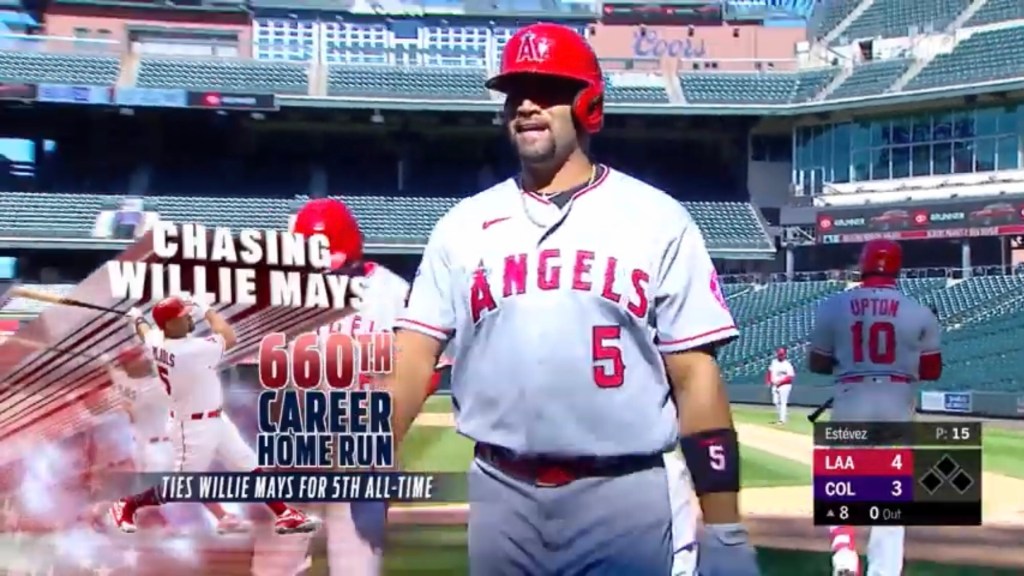
I love baseball. Something exciting happens every day and this past week was a great week for the game of baseball. Albert Pujols hit is 660th career home run this past Sunday, September 13th. This tied him with Willie Mays. That same day, Alec Mills threw a no-hitter for the Chicago Cubs. That was the first of his career. Monday, in Lesson 3 of the great book Mindset Mondays With DTK, by David Taylor-Klaus, which contains 52 weekly chapters designed to be done on Mondays, the lesson was entitled “Believe in the Impossible.” The lesson was about Roger Bannister breaking the four-minute mile in 1954. Everyone told him the four-minute mark could not be broken, but this did not stop him. He believed it could be done and that he was the person to do it. Bannister even broke the traditional way of training (how it’s always been done) and came up with his own, unconventional, way of training.
“Just because they say it’s impossible doesn’t mean you can’t do it.” ~ Roger Bannister
This made me think about professional baseball players and how impossible being good enough to break records or pitch no-hitters must feel at times. After hitting his 660th home run Pujols said, “To be able to have my name in the sentence with Willie Mays is unbelievable,” Pujols said. “I’m really humbled.” But really, Albert Pujols does believe he can do it. He tells us, “There is no time to fool around when you practice. Every drill must have a purpose. I try to never get away from that, habits are important.” This tells us, just as David Taylor-Klaus pointed out, that our belief in our ability to do something matters greatly. If we don’t believe something is possible, nothing else really matters.
I’m a really smart player. If you tell me something, I get it quickly. If there is something wrong with my hitting, tell me what’s wrong and I’ll pick it up right away. That’s the best thing I have going for me, my ability to listen to a coach and fix what I’m doing wrong. ~ Albert Pujols
Baseball, perhaps more than any other sport, is about heroes. Albert Pujols certainly has a hero’s story. That hero’s story starts like every other baseball hero story; with the player believing in himself – really believing in himself. This is why all of us imagine ourselves as pro baseball players, but only a few actually make it happen. It is important for us to recognize our ability to achieve goals. How we view ourselves, how we measure our value, how we assess our potential, and how we determine our worth all combine to create the life we will live. Are you paying the price for admission? Belief.
Why Are You On This Planet?
 Burnout to Breakthrough: Building Resilience to Refuel, Recharge, and Reclaim What Matters by Eileen McDargh
My rating: 5 of 5 stars
Anyone who has ever read a book review from me, or spent much time with me knows that I’m not real big on a bunch of words that mean nothing without any actions. I knew this book was going to give actionable advice that was going to be immediately applicable and usable when she used the subtitle “Throw Out The Dictionary” in chapter four. Eileen McDargh reminded us in this book that we are human beings. Everything we experience (good/bad, stress, events, et cetera) changes us forever. Recognizing this fact of being forever changed is key to letting events either knock us down or us being able to grow through them.
One of the great models (…and I love models) that McDargh gave us in the book was the “CAT scan.” It is her acronym for CHECK what claims your time, ASSESS why and how; Is it of value?; and, TAKE action (what can you amend, avoid, alter, or accept). This is so insightful and gives us strategies and tools to take control of how we live a life filled with purpose and meaning. McDargh taught us that your legacy is more important that our eulogy. She asked the questions of us in the book, “What will people say when they hear your name?” and “Why are you on this planet?” Those are pretty powerful things for us to think about. If our “why” is crystal clear and we are steadfast to that “why” we will have the energy to work tirelessly, without burnout, toward completing our role in society.
This is one of those books that everyone should read no matter role you are playing in society. Today, as I write this review, we are in Day 150 of the Global COVID-19 Pandemic and I believe this book is an incredible guide as we are “building resilience to refuel, recharge, and reclaim what matters.
 Byron's Babbles
leave a comment