To Visit New Worlds We Need To Change Our Minds

I am just about finished with The Life Impossible by Matt Haig and with every page I continue to be inspired and transported to new ways of thinking. In my most recent reading, the lines, “You see, if you want to visit a new world you don’t need a spacecraft. All you need to do is change your mind… And my mind was absolutely changed” jumped out at me.
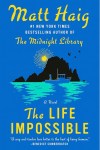
In those lines Haig has the character, Grace Winters, conveying the idea that profound change and exploration don’t always require physical journeys or external tools. Instead, he emphasized the power of mindset and perspective. By changing the way we think about our experiences and challenges, we can open ourselves up to new possibilities and understandings. This reflects a broader theme in his work about mental health, resilience, and the importance of looking at life through different lenses to find joy and meaning, even in difficult times. It encourages readers to realize that personal transformation can lead to a new way of experiencing the world around them.
This theme of visiting new worlds also reminded me of an analogy C. S. Lewis used in a paper entitled “De Audiendis Poetis” (1966). He compared travelling to a foreign country and reading old books. Lewis argued “There are more ways than one of reading old books… There are two ways of enjoying the past, as there are two ways of enjoying a foreign country. One man carries his Englishry abroad with him and brings it home unchanged. Wherever he goes he consorts with the other English tourists. By a good hotel he means one that is like an English hotel. He complains of the bad tea where he might have had excellent coffee… In the same way there is a man who carries his modernity with him through all his reading of past literatures and preserves it intact…” He continued, “But there is another sort of travelling and another sort of reading. You can eat the local food and drink the local wines, you can share the foreign life, you can begin to see the foreign country as it looks, not to the tourist, but to its inhabitants. You can come home modified, thinking and feeling as you did not think and feel before. So with the old literature. You can go beyond the first impression that a poem makes on your modern sensibility. By study of things outside the poem, by comparing it with other poems, by steeping yourself in the vanished period, you can then re-enter the poem with eyes more like those of the natives; now perhaps seeing that the associations you gave to the old words were false, that the real implications were different from what you supposed…” (Lewis, 1966, pp. 1-4).
As you read, Lewis discussed two types of foreign travelers: those who visit a place and absorb its culture and nuances, and those who remain detached and merely observe from the outside. This concept can be related to Matt Haig’s discussions about traveling and experiencing life.
In this way, I believe both Lewis and Haig suggested that genuine transformation, whether through travel or life experiences, comes from full engagement. Just as a meaningful journey is marked by understanding and immersion, rather than mere observation, so too can our lives be enriched by embracing change and finding meaning in moments of difficulty.
Reference
“De Audiendis Poetis” in C.S. Lewis, Studies in Medieval and Renaissance Literature (Cambridge University Press, 1966), pp. 1-4.
Taking The Straightest Route

“Sometimes, if you want to get somewhere, you have to take the straightest route.” I really liked this line in The Life Impossible by Matt Haig. It points out that many times we need to take things on directly and not look for a different, less direct route. The thing I love about this statement is that it can be a metaphor for roadblocks in relationships, or literal in that we sometimes should not take detours.

We can spend a lifetime avoiding metaphorical roadblocks rather than addressing our strains in relationships with others directly and working to clear misunderstandings, and repair injured feelings. Ever noticed that once we take the direct “straightest” route we usually feel better and the situation gets resolved? Now I realize this is not true every time, but letting those feelings fester is not healthy. This is the metaphorical equivalent of driving an hour out of the way to avoid a 10 minute traffic delay.
If we consider the quote from a life’s journey perspective then we must take into account the focus of the trip. We always say we must be present and enjoy the journey, but are there times when we should straighten out the route. There are not necessarily wrong ways to make life’s journey, but there are certainly different ways to go about it. The quote from The Life Impossible points out that sometimes we can take the longer more scenic routes but sometimes we will need to buckle down and take the straightest and most direct route. Again, I’m grateful for this quote because it has made me contemplate about those times where I avoided the straight route using life’s journey as an excuse. We at least need to consider the straight route, no matter how difficult.
So let’s make sure as we think about getting from the starting point to the destination, whether with those we serve, whether in our life’s journey, or a real physical destination we don’t leave out the option of the straightest route.
Living In Our Own Context

Clearly as I write my third post about it, I really love Matt Haig’s great novel The Life Impossible. There is so much in there to unpack. In the book there are so many things happening in Grace Winters’ life to make us reflect on our own. As it says in the book, “Every single person on this planet is a context and the circumstances of that context can never be seen fully. We are all mysteries, even to ourselves.” This is really one of the reasons I love reading fiction; we are able to see all the circumstances and contexts when we need to for full understanding. We rarely get that in real life real time. But that’s what makes it life. We need to embrace the mystery. This great novel has caused me to reflect deeply on this.

The Life Impossible does such an incredible job exploring the complexities of existence and the human experience. Another quote in my reading yesterday, “The willingness to be confused is a prerequisite to a good life” spoke to the idea that embracing uncertainty and confusion can lead to personal growth and fulfillment. Throughout this entire book, Haig dove into themes such as the nature of reality, the importance of vulnerability, and the journey of self-discovery. He emphasized that life is often messy and chaotic, and instead of seeking absolute clarity, it’s more beneficial to accept that confusion can coexist with joy and meaning. This perspective encourages readers to navigate life’s challenges with an open mind and heart, fostering resilience and deeper understanding.
Loved By Being Understood & Appreciated

A leadership topic I have spent a lot of time thinking about and researching is “love.” Love is one of the most important things leaders can give. We need to love the people we serve. C.S. Lewis described four types of love in his book The Four Loves: Affection, Friendship, Eros, and Charity. For a leader, the love that fits best is often charity (agape).
Charity is selfless, unconditional love that seeks the well-being of others. A leader demonstrating this type of love prioritizes the needs of the team, fosters inclusivity, and encourages personal and professional growth without expecting anything in return.
Additionally, elements of affection can also be important, as it builds a sense of belonging and creates a supportive environment. Ultimately, a combination of these loves can create a strong, empathetic leadership style that inspires trust and loyalty among team members.

I have also always liked Ashley Montague‘s definition of love: “Profound involvement in the well-being of others.” Today, however, I might have found an even better way to think about and practice love. In Matt Haig’s great novel The Life Impossible, Grace Winters said that, “There is no point in being loved if you are not understood…And once loved and understood to be appreciated.” This is so profound. With this statement, Haig, in my opinion, was having Grace emphasize that love alone is not enough; it must be accompanied by a deep understanding of one another’s experiences, feelings, and beliefs.
This idea suggested that true connection comes from being truly seen and heard by others. It highlighted the significance of empathy and recognition within relationships—whether they be romantic, familial, or platonic. Being loved feels hollow if there is no comprehension of one’s individuality, strengths, struggles, or joys. Furthermore, appreciation serves as a necessary affirmation of that understanding, reinforcing bonds and fostering a sense of belonging.
I had never thought about a leader’s love for those we serve in this light. Haig’s message invites readers to reflect on their own relationships and the essential components that contribute to meaningful connections and loving those we serve. Think about it; we all want to be loved by being understood and appreciated.
Navigating Life’s Challenges: A Journey of Reflection and Resilience

I am reading Matt Haig’s newest novel The Life Impossible right now. Matt is one of my favorite authors because his books always take me to the location(s) the book is set in. He creates a deep connection between the reader and the characters he writes about. Through immersive storytelling, Matt allows readers to experience different perspectives and emotions, essentially inviting us into the lives of his characters. This not only fosters empathy but also encourages reflection on our own lives and choices. In The Life Impossible we are introduced to Grace Winters, a 72 year old retired math teacher, who inherits a house on the Mediterranean Island, Ibiza (which I now want to go visit and explore!).
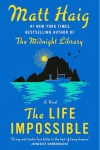
One of the lines in the book so far really caused me to stop and reflect: “All reading, in short, is telepathy and all reading is time travel. It connects us to everyone and everywhere and every time and every imagined dream.” This is such a beautiful line! In this quote, I believe Matt is expressing the idea that reading transcends both space and time. “Telepathy” suggests that when we read, we are able to access the thoughts and feelings of others, even if they lived in a different era or place. It creates a deep connection between the reader and the writer. This is what makes a novel so powerful. The author lets us know everything we need to know at just the right time. Matt Haig is truly an expert artist at this.
Similarly, “time travel” indicates that through stories, we can experience different lives, cultures, and historical periods. We engage with characters and their journeys as if we were there with them—living their dreams, fears, and experiences. Overall, Matt was emphasizing how reading enriches our understanding of humanity and expands our horizons, allowing us to connect with the past, present, and imagination in profound ways.
This book is certainly causing me to look forward in my own life. I am also reflecting on my life choices and the impact they have on myself and those around me. I am also reminded of the importance of being present and appreciating the small moments in life.
 Byron's Babbles
leave a comment