Achieving Your Leadership Potential
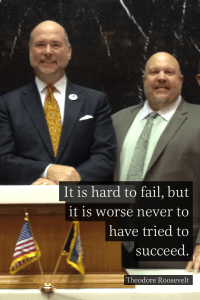
Speaker Bosma & I after an Education Kitchen Cabinet Meeting
“From a professional standpoint, tackling something new has the power to build your capacity for success and is a great discipline worth pursuing.” ~ John M. Manning
I try to model this stretching at every opportunity. I remember my doubters telling me I was making a grave career error when I was excited to take on the leadership of a state takeover school that had failed for seven years in a row. Yes, it was an extreme challenge. Yes, it was some of the hardest work I’ve ever done. Yes, there were many days of failing. But, it was the most rewarding and significant thing I have ever done. But, seeing the school come off the “F” was one of the most exciting things ever. But, watching the team of people coming together to change a culture was breathtaking. Here is a case where the buts prevail. I would not go back and change a thing, except all the mistakes I made in the process, of course.
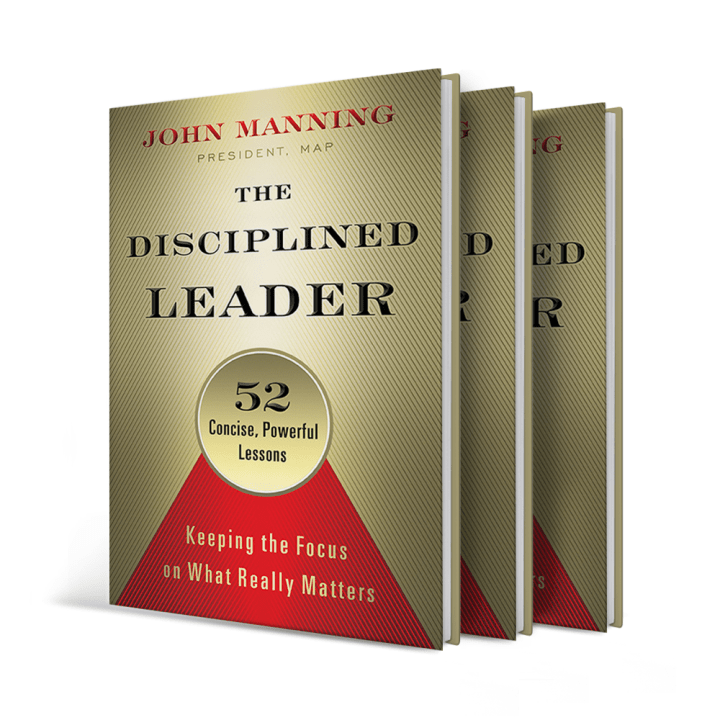 In actuality I followed Manning’s (2015) advice during this experience. I trusted in the power of my learning and viewed that learning as an opportunity to grow confidence. Most importantly, and I love the fact that Manning (2015) pointed this out, we made it fun. We built up what Manning (2015) called the “fun factor” every moment possible.
Another area that has been afforded me to take on responsibility in areas I want to develop is the opportunity to serve on the Indiana State Board of Education. It is an honor to serve as Speaker of the House Brian Bosma’s appointee. Being asked to serve the State of Indiana is certainly a responsibility I take very seriously and I view this commitment as something I want and need to do, not something I have to do. This opportunity gives me the chance to explore new horizons, create new relationships and pushes me out of my comfort zone. I truly want to learn new things.
I’ll close with a couple of questions to you: What do you want to learn that will push you out of your comfort zone? What experience should you take on that will give you the opportunity to explore new horizons?
Reference
Manning, J. (2015). The disciplined leader: 52 concise, powerful lessons. Oakland, CA: Barrett – Koehler Publishers, Inc.
Good Leader/Bad Leader
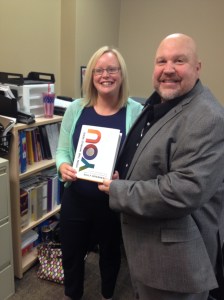
Presenting Dana Smith With Her Copy of “How The World Sees You” by Sally Hogshead

Good Leader/Bad Leader Graphic by Mike Fleisch
“I know from experience that most people are very intelligent – they have figured out how to make things work when it seemed impossible; they have invented ways to get around roadblocks and dumb policies; they have created their won networks to support them and help them learn. But rarely is this visible to the organization until and unless we invite people in to participate in solution-creation processes.” ~ Margaret J. Wheatley, in Finding Our Way: Leadership for an Uncertain Time (2007)
So, after spending the weekend reflecting on how to best share the awesome thoughts and share the knowledge developed by the Focused Leader Academy participants, I sent the following email to our Support Layer the following Monday morning:
Good morning!
I want to share with you the graphic of our first Focused Leader Academy Session last Friday. What I had meant to be a hook to get us started for the day turned into a three hour session. That was a good thing – it might of just been the most incredible session I had ever facilitated. I had called this hook, turned session, “Good Leadership/Bad Leadership.” The idea was to identify bad leadership and good leadership the participants had experienced. Teams of 4 identified bad leadership and then shared out the bad behaviors and then solutions. Then the teams shared out good leadership. It was, to say the least, an incredible learning experience. The attached is a visual of that discussion.
Leaders today face such rapidly escalating complexity, uncertainty, and volatility that to stay relevant we must accelerate our own development. We need to continue our own personal growth so we can navigate the whitewater of all that is education. Leaders set the agenda for the future. The Focused Leader Academy participants were, no doubt, using us as their context for this activity. I can assure you , no names were mentioned. Let’s face it – we exist, as the support layer, to support our teachers, students, and families – period. I then spent the weekend reflecting on the graphic personally. Then I decided this really needed to be shared with you all. If we are honest we will all find places where we are letting those we serve down. I used myself as an example to the group many times during this session. I was happy to be vulnerable because leadership is both a very public and private journey. It is private because it requires personal transformation. It is public because leaders have to learn out loud. So, I would like for you to use this graphic to prompt some reflection on your part and guide some personal improvement and growth. Don’t let yourself be tied to only what is on the graphic. If you think of other areas for improvement, let your mind and reflection travel there too. To that end I want you all to reflect on the graphic and develop the three most critical areas you believe that you need to work on in your leadership journey. I would then like for you to provide these reflections along with three goals for transformation to me by Friday, December 4th. These reflections and goals will only be seen by me. I would, however, challenge you to let yourself be vulnerable and tell those you serve you have reflected on the graphic and present areas you will be striving to improve on to them. This part is not required, but think about the power in doing that.
It would be very easy for us to resist discovering that we still have a great deal to learn. This activity is not for the faint of heart, but for us to obtain the significant culture and performance shifts necessary to for our school to succeed, we all need to do some reflection and transformation. I hope you will set aside some serious time for true reflection and meditation about the promises we make as leaders that we many times don’t even know we are making. These promises are profound and come with high and often unspoken stakes. Understanding and living up to these promises is what will define us as leaders.
Positively,
Byron
As you can see, I wanted this to become a powerful and very personal reflection on each person’s leadership journey. I then decided to take the process one step further and use this as part of our mid-year reflection and coaching. I am studying each person’s reflection and goals and am picking a book, individually selected for them, to read as part of the personal growth experience. The essential question I am asking is: As you read and study the book, think about your own Good Leader/Bad Leader refection and then answer why would I want you to read the book and what can you gain from reading the book? Along with the book I am also developing action steps for each individual in concert with their goals. You will see an example of this shortly.
I have to tell you, this has turned into a great process. In fact, so great that I have one of the reflections I would like to share with you, with Dana’s permission of course. Dana Smith is our Title I Grant Coordinator and does a terrific job and continues to grow exponentially in her leadership skills. Her reflection, as you will see, shows a great deal of thought and study:
Leadership Reflection
Since I have been involved in the field of education I have had the privilege of working alongside some amazing leaders. I have witnessed firsthand what attributes leaders possess that have a positive impact on the culture of the school and I have seen what attributes can negatively impact a school. In my experiences as an educator, I continue to learn and grow each day and figure out who I want to be as a leader and lead from where I’m at. As I continue to reflect on what kind of leader I want to be, I think about the attributes that one needs to possess in order to create a positive school culture. One characteristic that leaders must possess that I believe is an absolutely necessity is to have a sense of humor! My current role is the most challenging position that I’ve held since I’ve been an educator and continues to challenge me each and every day. This position has pushed me beyond my comfort zone many days and may have resulted in a few curse words (I have apologized to my office mate a couple of times!). There have been days where I have pooped my pants multiple times and had to invest in Depends–okay, this may be an exaggeration, but you get my drift! Being able to laugh on these days has been invaluable. Some days, you just need to take a break, take a breath, and laugh.
Another key attribute that good leaders must possess is the ability to establish relationships with others. I have invested time in establishing relationships with my fellow co-workers because I know that I need to have a support system that will lift my spirits on the days where I feel as if I’ve pooped my pants several times! I also want to be that person to lift others’ spirits. I feel that others associate me with being a person filled with energy and positivity. I want to continue to be that person that others associate with positivity and spread that positivity to others when they need it. I would say that this attribute of establishing relationships with others has become a priority to me throughout my educational career. I think that many times we can get so caught up in the work that we’re doing and we don’t take the time to establish relationships with others. This may sound simplistic, but I have learned that it’s okay to take breaks from what I’m doing to get to know others. What I have learned from others during conversations has been invaluable. We all have our gifts and I feel that one of my gifts is my positive nature. I need to use my gift and spread that positivity to others. The relationships that I have formed with my fellow co-workers, I wouldn’t trade for the world! I am a firm believer in that we have to gel as a leadership team and build relationships with one another in order to form solid relationships with staff and build mutual respect for one another. Positive relationships formed with the leadership team are key in contributing to the culture of the school.
As mentioned above, an extremely important attribute of a good leader is the ability to establish relationships. I have thought a great deal about how to establish relationships. The following includes some of my thoughts:
1. Develop trust with one another. Value opinions of others and listen to what others have to say. Staff should know that there are always going to be differing opinions, but they need to know that their voice has been heard.
2. Laugh with one another! Sometimes you just need to laugh!
3. Communicate, communicate, communicate! I have always prided myself with being a great communicator. In our world, communication is of the utmost importance! Staff need to feel that they can come to you with questions and that you will follow-through. Some questions are easier than others to answer and will take more time. If you are communicating with your staff appropriately, then this will nip many issues before they begin!
4. Work your a$$ off! I feel that I have always been a very dedicated and hard-working individual. When others see you/know that you are working hard, others respect that. I would do anything to support our team and individuals on our team! I think that others know this and respect this! This is key in establishing relationships!
One quality that is essential in good leaders is that a good leader must be passionate about their role, passion is contagious! In my early years as an educator, I had the privilege of attending an awards banquet at the end of the year. At the awards banquet, retirees were honored and gave speeches. It was amazing to me that after being involved in education for 40 + years, these teachers were still passionate. I vowed to myself that I would carry my passion for education with me throughout my career in education. I always remember why began in the field of education and why I want to remain in this field. As I mentioned above, I feel that others associate me with having a positive nature. I feel that I possess my positive nature because I am so passionate about what I do. I have the ability to put things into perspective and realize that things could always be worse. Passion for what you do will carry you through on challenging days!
3 Goal Areas
1. Something I need support with is building my confidence as a leader. I have always struggled with my confidence and I have always been very critical of myself. I think confidence is something that builds over time and that my confidence has grown considerably in my current role, but there is still growth that needs to occur. You always do a great job with providing me with encouragement and letting me know that you trust what I do, so please continue to do that.
(Confidence)
2. I feel that I communicate very well in writing because when I write I have time to think, reflect, process, and edit my thoughts. I feel that I need to work on articulating my thoughts better verbally, for example when I present. I have always struggled with speaking in a group setting because I feel this is an area where I am not naturally gifted. This really stems from the first area that I would like to work on, confidence.
(Verbal articulation)
3. I am an individual that doesn’t like conflict and I am definitely a people-pleaser. I need to work on speaking up when I don’t agree with something and understand that conflict doesn’t necessarily need to have negative connotations. Everyone will never agree with every decision that is made, and it’s okay to question why decisions are being made and offer thoughts/constructive criticism.
(Expressing thoughts/opinion)
4. I reflect on a daily basis on my drive home from work. I actually don’t mind my drive to and from school because it provides me with time to reflect on the day. I would like to work on getting my thoughts in writing and possibly starting a blog or utilize some sort of medium as a tool for reflection. I believe that good leaders constantly reflect and I need to be more purposeful and get my thoughts in writing when I reflect.
(Reflection)I feel that one reason I have been successful in my current role is because of your support. I couldn’t ask for a better mentor (I know you don’t like the word “boss”, so I thought mentor might be better!) to help me navigate through difficult situations and show me what it means to not just be a good leader, but to be a great leader. We share many of the same philosophies about education and also share a similar sense of humor. Thank goodness we share a similar sense of humor! I’m not inserting these thoughts because I’m trying to get “brownie points” or be a “brown-noser.” I think you know we well enough to know that is not my intent. I operate with the simple belief that if someone is doing something good, you tell them! I also think it’s important for you to know that you have been an integral part in my journey as a leader and an integral part in creating a positive culture and environment at Hoosier. I am truly thankful to work alongside you!
First of all, thanks Dana for allowing yourself to be vulnerable and letting me include your reflection in my blog. That shows great leadership in and of itself. How can a reflection like that not pump you up as a leader? After studying Dana’s reflection it became very clear what book I believed would be best for her. Because she wants to build confidence and know how to best handle conflict and other leadership situations, I believed Dana would value greatly from reading How The World Sees You: Discover Your Highest Value Through the Science of Fascination by Sally Hogshead. What Dana needs to grow is exactly what Sally teaches us through the reading and the Fascination Advantage® online assessment. I am including a picture of my archetype at-a -glance page of my report from when I went through the assessment and read the book.
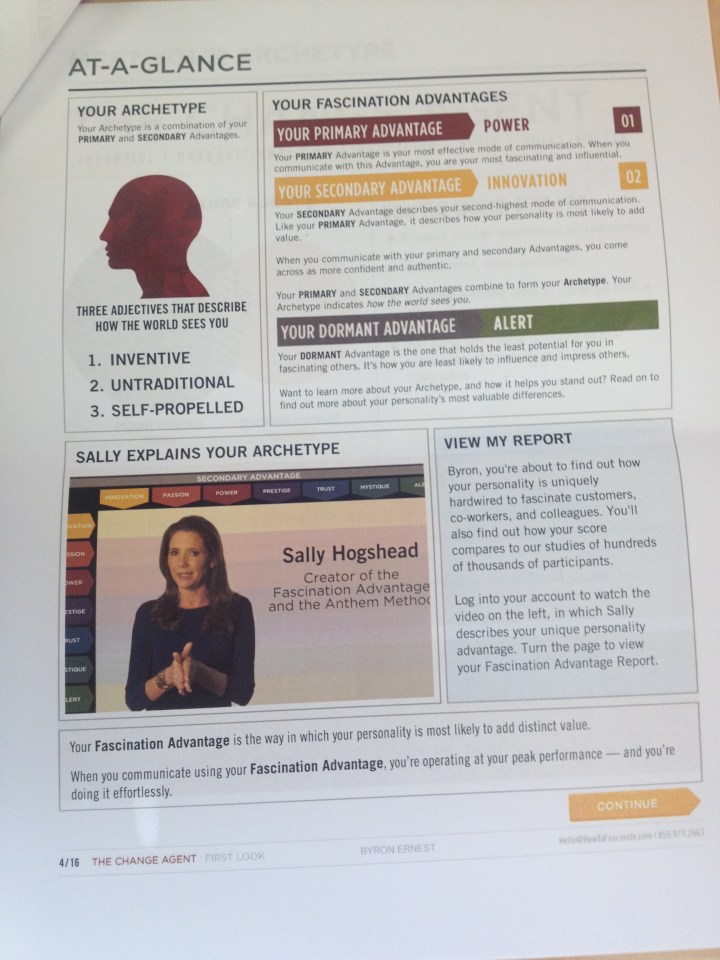
Presenting Dana Smith With Her Copy of “How The World Sees You” by Sally Hogshead
The other piece to the puzzle is that I have asked each of these leaders to share their thoughts about the Good Leader/Bad Leader discussion with the teams they serve. Additionally, I am planning a panel discussion of our Support Layer at our January Focused Leadership Academy session as a followup to all of the books read and action steps. It will be exciting for our teacher leaders to hear about the professional growth journeys of these support layer leaders. This has turned into a great professional development experience.
 The thing I am most excited about is that this process has given us an activity for mid-year discussions, professional development, coaching, and mentoring that is so much more valuable than the normal old sit down and talk sessions that prove to be of little value. I can’t wait to blog about our developments in January based on our panel discussion and others completing their books and action steps. Stay tuned, we have leaders under construction!
I would close with these two questions: Can you think of another book that would have been valuable to Dana? Do you have other ideas for making this an even more powerful professional growth experience?
Who’s In My Way? ME!
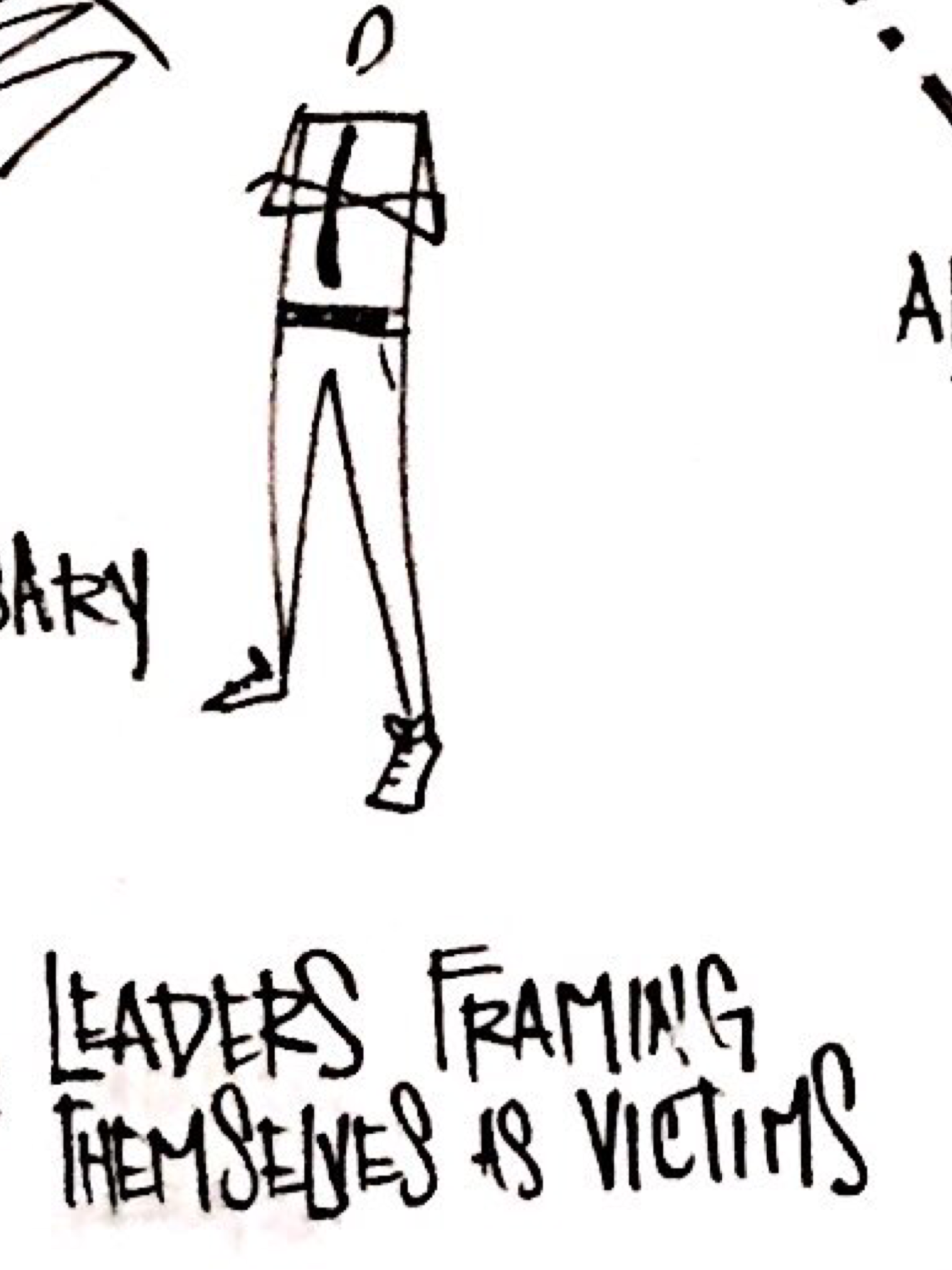
Lesson #9 was another great one in The Disciplined Leader by John M. Manning. If you have not gotten this book yet, you need to. If you get it you can follow allong with with the weekly posts about Manning’s (2015) lessons by our Hoosier Academies’ Focused Leader Academy participants. On Twitter we use the hashtag: #HoosierFLA. Amazingly, this week’s lesson went write along with a discussion topic from our last session. We called it “Leaders Framing Themselves as Victims.” Manning (2015) positions it as leaders needing to “Get Out of Your Way.”
“You are the master of your attitudes and the driver behind your habits.” ~ John M. Manning
This leadership topic really underscores the need for a new kind of leader in this century: the authentic leader. Our future leaders were very critical of leaders who always make everything be the fault of someone else or the reason she is ineffective. I believe this is another form of getting in your own way. It’s easy to fall in the trap of making ourselves out to be the victim. However, those we serve see right through it. Nevertheless, the victim stance is a powerful one. Some leaders fall into this trap because of how we are wired to view victims. The victim is always morally right, neither responsible nor accountable, and forever entitled to sympathy. Read that last sentence again. Do you want those you serve to believe that’s how you believe about yourself? I hope not!
One thing that really speaks to me, as a leader, is the idea of taking 100% responsibility for my own life. It is too easy to quickly assign blame and pull out all the excuses as to why something did or did not happen. Again, those we serve pick up on this immediately. Here’s what I’ve learned – We relinquish all power when we go there. Not owning up to our actions—this takes away our part in doing anything different. We simply remain stuck while we continue to complain and feel miserable in our status quo of negativity. But we first must take charge of ourselves and decide we are capable of doing, being, and acting differently. Assigning blame and making excuses keeps us victimized. We don’t have to do anything different because it’s not about us; it’s about someone or something else. We’re simply the recipient. We have to decide it’s up to us and not pass along our power to the blame and excuse game.
I also believe that becoming authentic is another key to getting out of your own way. Authentic leaders frame their stories in ways that allow them to see themselves not as passive observers but as individuals who learn from their own experiences and the reality she is in. Leaders who are authentic also work hard at developing self-awareness through persistent and often courageous self-exploration. Great leaders, as Manning (2015) points out, take responsibility in the area of personal growth. This is one of the most important leadership lessons – professional & personal growth must be just that, personal. We must own it ourselves. To get out of our own way, we must take responsibity for ourselves. It’s the first step to being authentic and disciplined. I have blogged about this before when I was teaching in a post titled, “Autonomy – Professional Growth Must Be Personal. Click here to read it. 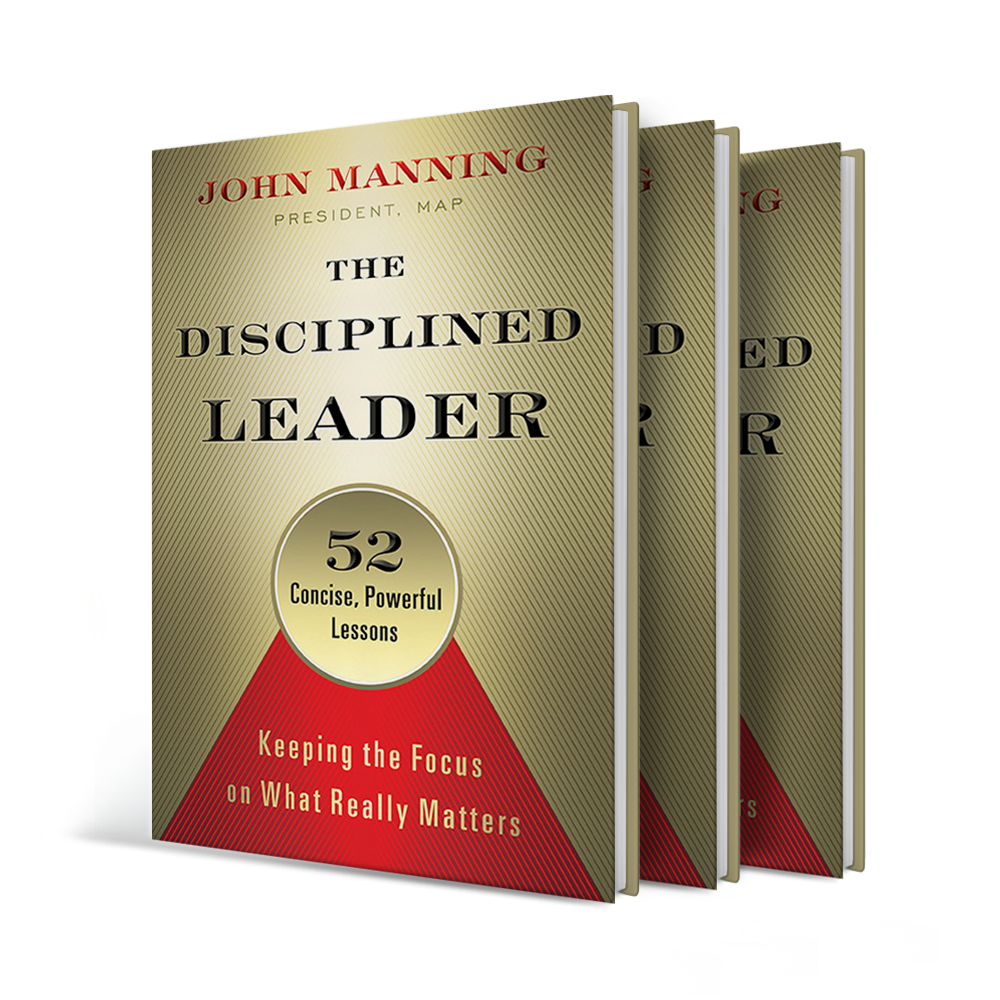
“If you don’t know what your barriers are, it’s impossible to figure out how to tear them down. So carve out the time to reflect on what’s blocking your potential. If you struggle figuring it out, get feedback from others you trust.” ~ John M. Manning
Manning discussed the need to get rid of the barriers that prevent us from getting out of our own way. I would pose this question to you in closing, as a way for you to begin to take responsibility for your own leadership journey: What are your top internal barriers to making changes? In other words, the behaviors that get in your way, such as losing focus, victimizing yourself, rationalizing, overreacting to criticism, and others.
Reference
Manning, J. (2015). The disciplined leader: 52 concise, powerful lessons. Oakland, CA: Barrett – Koehler Publishers, Inc.
Finding The Extraordinary You
“While understanding what makes you unique can give you a leadership edge, realizing what’s extraordinary about you is even better—those unique traits that are particularly special to you. Consistently work to emphasize, develop, or leverage these abilities and you’ll eventually carve out a clearer, greater leadership advantage.” ~ John M. Manning
This week’s lesson in The Disciplined Leader (Manning, 2015) reminded me so much of the work of Sally Hogshead’s work in How The World Sees You. She, like Manning, taught us that what makes us unique also gives us an edge. There is something extraordinary about each and every one of us. Hogshead argues we need to be more of who we are. This means using the archetypes that give us the biggest advantage. Manning (2015) posited if you want to change and grow, you need to believe this about yourself.
“Edge starts with self.” ~ Gene Simmons, KISS, in an interview with Jay Leno
Manning (2015) provided some great ways for us to develop our “edge.” Here are a few:
- Examine what you love to do – Greater understanding will give you the ability to align future activities to your passions, resulting in even more satisfaction.
- Determine your best skills – what skills you have that do make you effective and different. Your best skills are whatever you’ve learned to do really well in life.
- Know your true gifts.
Interestingly, we had a discussion about leadership mantras this past week during a Hoosier Academies Focused Leader Academy session. I asked the group if they were going to imitate me to someone else what would you do or say. They overwhelmingly and imidiately said three things: everything is great attitude, when asked how I’m doing I always say, “I couldn’t be any better” or “If I was any better…” and always saying “Make it so” to ideas. Of course, they were able to poke fun with some of my mannerisms, too. But, what we found was this was a pretty accurate way of identifying different leaders’ edge. A big part of my edge is my enthusiasm and positivity. I am attaching a graphic we did during this session.
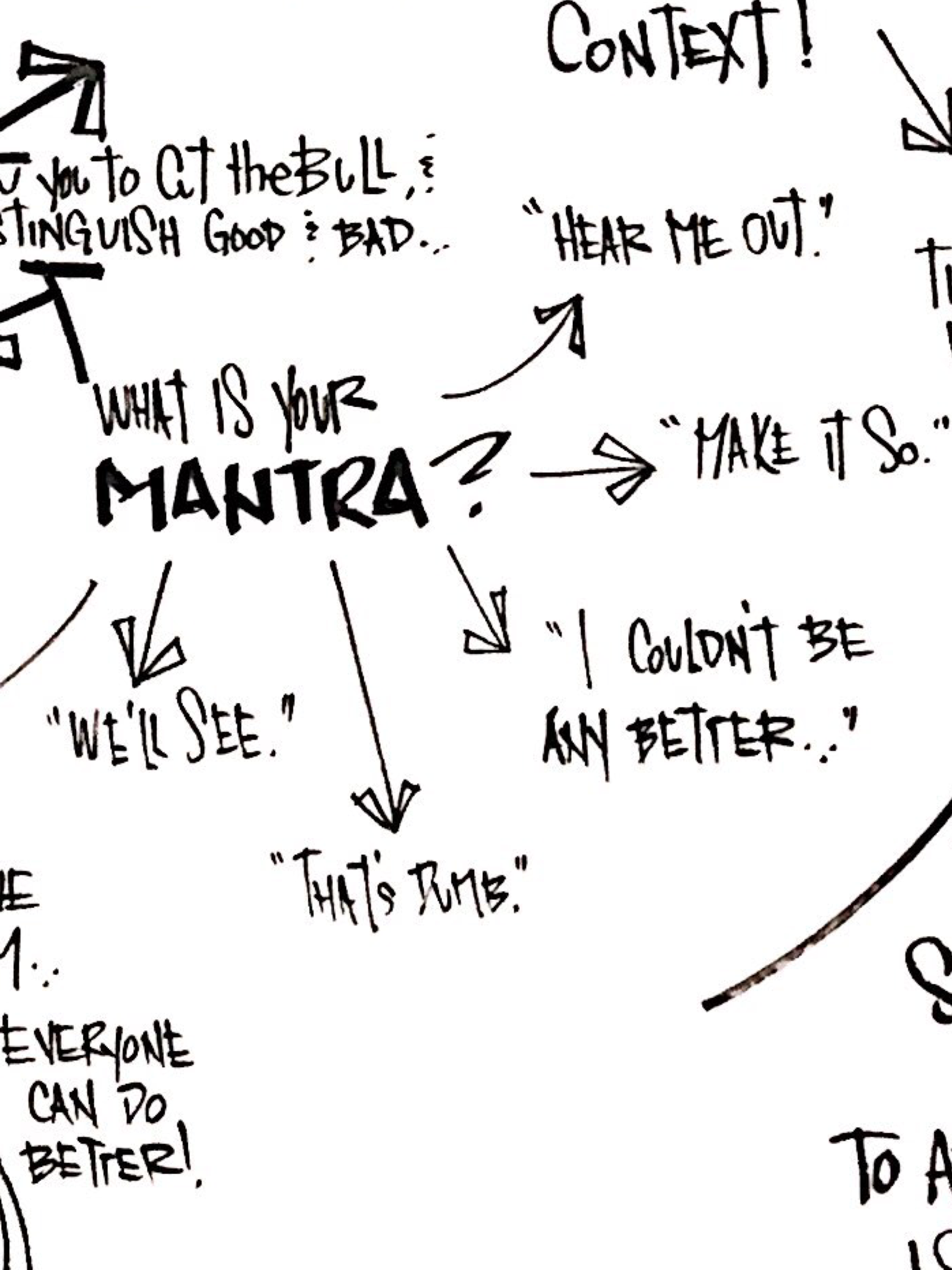
Graphic Facilitation by Mike Fleisch
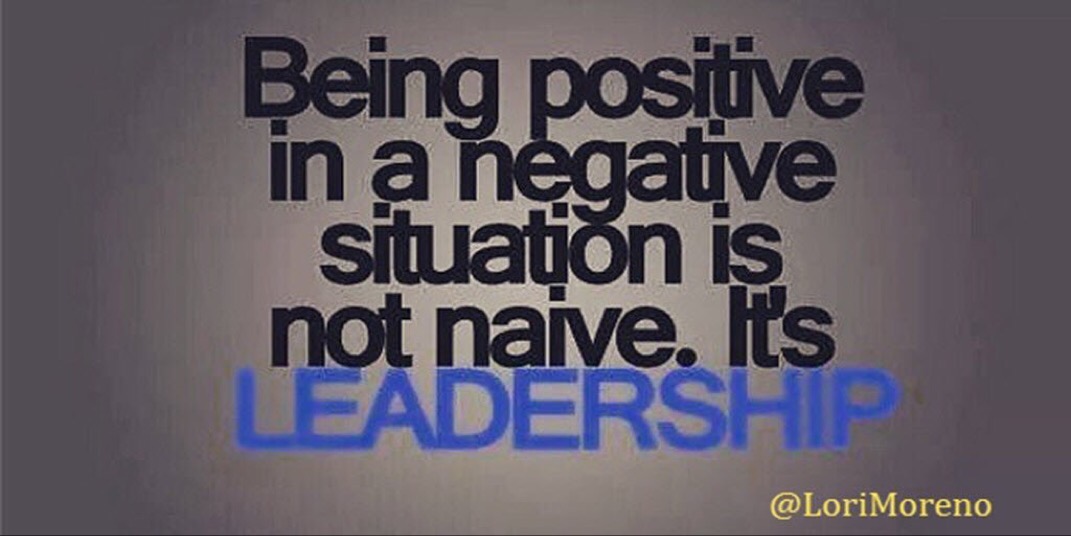
Manning (2015) reminded us we must stay true to the “real you.” My challenge to you in this post is to identify your edge and then develop your skills by using your gifts and passions. What would those on your team say is your leadership mantra?
Reference
Manning, J. (2015). The disciplined leader: 52 concise, powerful lessons. Oakland, CA: Barrett – Koehler Publishers, Inc.
Values Define Your Unique Leadership Identity
 Leaders know what they value. They also recognize the importance of ethical behavior. The best leaders exhibit both their core values and their ethics in their leadership style and actions. Your leadership ethics and values should be visible because you live them in your actions every single day. People know what to expect if leaders have identified and shared their core values, living the values daily – visibly will create trust. To say one sentiment and to do another will damage trust – possibly forever. As Manning (2015) pointed out in The Disciplined Leader it is not only important for leaders of lead according to their values, but the leaders core values must also align with the values of the organization they work for. Our unique leadership identity is made up of our core values. As a leader, choose the values and the ethics that are most important to you, the values and ethics you believe in and that define your character. Then live them visibly every day at work. Living your values is one of the most powerful tools available to you to help you lead and influence others. Don’t waste your best opportunity.
Bottom line, the role of leadership is to add value to other people and the true measure of leadership is influence, thus a great leader must have the ability to change the attitude or behavior of others. Therefore values must be aligned to key decision making. Organizations must also determined what the core values of that organization will be. We have really been working on this becoming a part of the DNA and culture of the schools I lead. This has to be so much more than just words on a paper. I was so proud this past week when I was meeting with some members of our team to make some decisions and one of them referenced our core value of putting students first. In fact, she said, “You know, this is a pretty easy decision if we truly want to put students first ahead of the adults this decision will affect.” She even pointed to our graphic we are using to represent our vision, mission, and core values. I thought, “Wow, it does not get any better than this! We are truly changing the culture and really using our core values, not just printing them on a page.” We all need to use this example to guide us to use our core values to proactively and consistently guide our personal and organizational decisions.
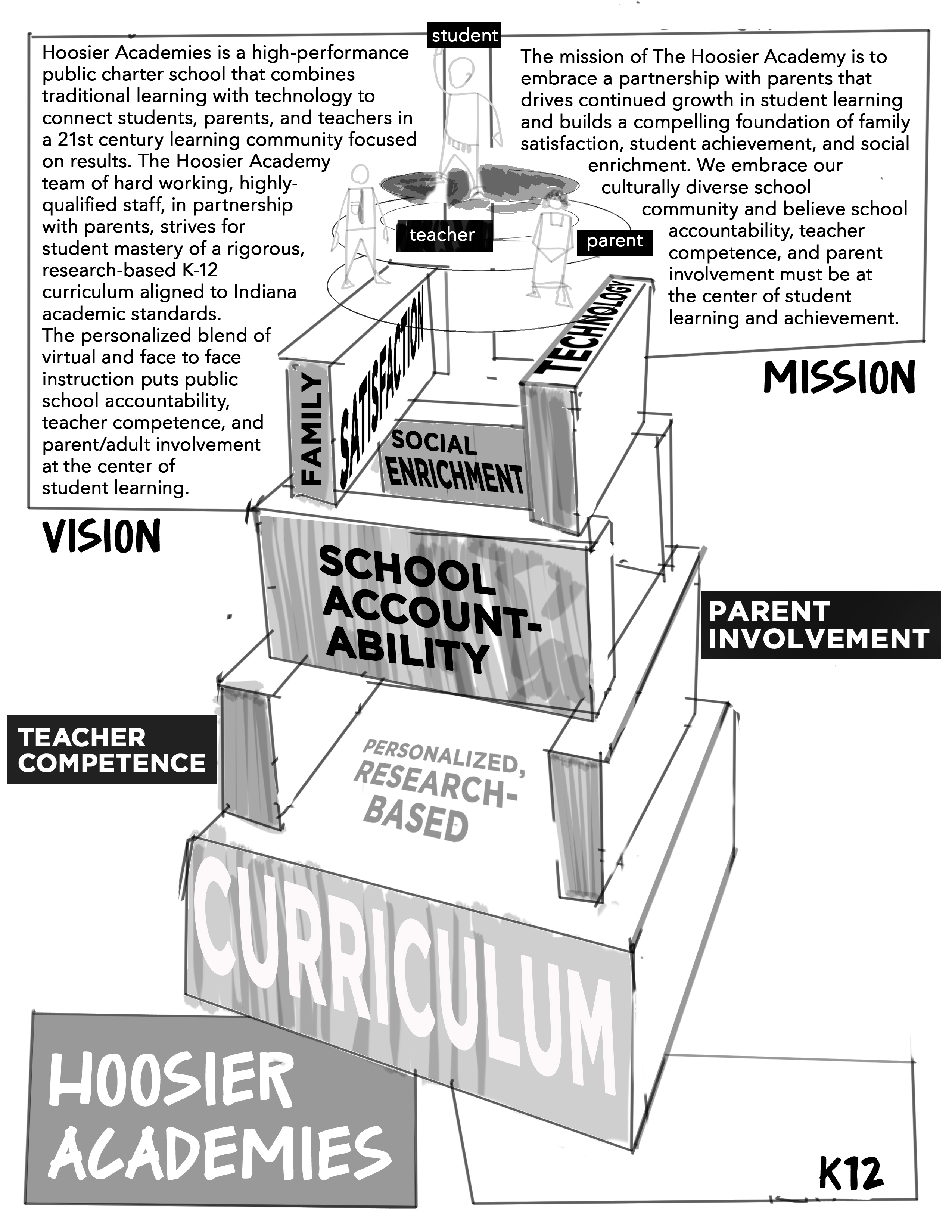
Students Are At The Top of Our Core Value Structure!
- Living the values
- Teaching the values
- Recognizing the values
- Hiring new people based on the values
- Reviewing people based on the values
- Letting people go based on values
In this week’s entry, Manning (2015) also reinforced points 5 & 6. Many CEOs don’t make it because their core values don’t match those of the organization they lead. My goal for the organization I lead is to clearly communicate and integrate our school’s core values with all the processes and operations of our school. This should result in higher employee engagement and making sound decisions based on our #1 core value of putting students first. This also plays into another important leadership point of making sure that all team members understand his or her role in carrying out the vision, mission, or strategic plan of the organization. Understanding, living, and making decisions based on the core values of the organization goes a long way to making this possible.
“Disciplined Leaders regularly reference their values in critical decision making and rely on them when they are stuck between “a rock and a hard place.” They use them to establish specific direction and get confirmation about those choices they’ve made.” ~ John M. Manning
For me, as a leader I must continue to developed my leadership style around my personality and values, and in the end, actions are consistent with what I truly believe. As Goethe said: “Things that matter most must never be at the mercy of things that matter least.”
References
Hyatt, M. (2012). Platform: Get noticed in a noisy world. Nashville, TN: Thomas Nelson.
Manning, J. (2015). The disciplined leader: 52 concise, powerful lessons. Oakland, CA: Barrett – Koehler Publishers, Inc.
 Byron's Babbles
1 comment