Cosmetic Leadership
 This week’s leadership lesson (#12) from John Parker Stewart in 52 Leadership Lessons: Timeless Stories For The Modern Leader used Aesop’s Fable “The Stag at the Pool” to teach us an important leadership lesson. For the sake of making this post more worthwhile here is the fable:
A stag saw his shadow reflected in the water, and greatly admired the size of his horns, but felt angry with himself for having such weak feet.
While he was thus contemplating himself, a Lion appeared at the pool.
The Stag betook himself to flight, and kept himself with ease at a safe distance from the Lion, until he entered a wood and became entangled with his horns.
The Lion quickly came up with him and caught him.
When too late he thus reproached himself:
“Woe is me! How have I deceived myself! These feet which would have saved me I despised, and I gloried in these antlers which have proved my destruction.”
This is a pretty powerful story when you think about it. So, what is the moral of this Aesop’s Fable? “What is most truly valuable is often underrated.” Stewart taught us not to get caught up in the “cosmetics” of life. He suggested we get to caught up in the visibly superior qualities. I believe we do this personally and in our roles as leaders. I call this “selling the sizzle instead of the steak.” We need to make sure we are doing the right things according to our strategies, vision, mission, and core values and not getting sidetracked with attractive “antlers” that will get us all tangle up in things that, on the surface, look cosmetically attractive.
“What is worth most is often valued least.” ~ John Parker Stewart
 When reflecting on this I think of the awesome new song just released by the great band Alter Bridge on their new album The Last Her0. coming out on October 7th. The song is Show Me A Leader. Click here to watch the video of the song. Trust me, I will be doing some separate blogging about the song and band in the near future, but for now I believe “The Stag at the Pool” story relates to the song. Here are the lyrics:
“Show Me A Leader”
Well they’re selling another messiah
Here tonight
But we’re all way too numb and divided
To buy itSinging
No no no
We are all too divided this time
No no noShow me a leader that won’t compromise
Show me a leader so hope never dies
We need a hero this time
No no noDisillusioned and tired of waiting
For the one
Whose intentions are pure unpersuaded
We can trustSinging
No no no
‘Cause a promise is never enough
No no noShow me a leader that won’t compromise
Show me a leader so hope never dies
We need a hero this timeI know, I know
I know if we’re to survive
We need to know this is not the end
How will we ever get by
It’s getting harder to fight out here on our ownShow me a leader that won’t compromise
Show me a leader so hope never dies
Show me a leader that knows what is right
Show me a leader so hope can survive
We need a hero this timeNo no no
We need a hero this time
Or we will never survive
No no no
We need a hero this time
Or we will never survive~ Alter Bridge
Whole System Leadership
 On a cool, clear December night in 1972, an Eastern Airlines L-1011 jumbo jet slammed into the Everglades 18 miles northwest of Miami. This crash is the focus of Lesson #10 in 52 Leadership Lessons: Timeless Stories For The Modern Leader by John Parker Stewart. A small $12 light bulb had gone out and preoccupied the crew of Flight 401. That triggered a series of Murphy`s Law-like consequences that ultimately killed 101 of the 176 people aboard. Now, almost 44 years later, the crash is still remembered for all its ironies, sadness and triumphs. After doing a little research I believe this crash still remains the worst aviation disaster in Florida history. The amazing part is still the fact that because the impact was cushioned by soft muck and Saw Grass, 75 people lived — some of them barely receiving a scratch.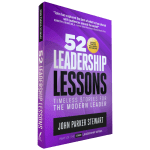
Flight 401 originated at New York’s John F. Kennedy Airport (JFK), with a destination of Miami (MIA). The flight was uneventful until the approach into Miami. While preparing for landing and lowering the landing gear, the flight crew was unable to determine that the nose landing gear was fully extended and locked in the extended position. The green indicator light which would normally illuminate upon locking of the nose landing gear did not come on. After that, what happened is the subject of this blog post. While messing around trying to get the light to work, the autopilot that was supposed to be keeping the plane at 2,000 feet was turned off. Because everyone was preoccupied with one facet of the plane only, the green indicator light, n0-one was paying attention to anything else. It was not until the plane was at 900 feet and descending quickly that anyone even thought to ask if the altitude was correct. It was too late, however.
This crash has been the subject of books and movies. The primary cause of this accident was not the aircraft, but the crew — the human factor. Yes, the light bulb was not working, but that was the only thing. Even though the crew members were dealing with the landing gear indicator light, they still should have noticed their surroundings and been monitoring the aircraft’s altitude. Research (Robson, 2008) tells us that as long as our stress levels are not to high we can notice things going on around us not related to the task at hand – in this case, working on the light bulb and noticing the altitude. Conversely, however, it is possible for cognitive tunneling to develop (Chou, Madhavan, & Funk, 1996). Cognitive tunneling (Chou, Madhavan, & Funk, 1996) happens when one thing we are doing is given all our attention while not watching anything else. Do you see the leadership connection here?
Cognitive tunneling (Chou, Madhavan, & Funk, 1996) can cause us all to focus on one task while missing the warning signs from other parts of the organization. As leaders this is dangerous, maybe not in the sense of Flight 401, but certainly in the success or failure of the organization. After this crash, the airline came up with what it calls Crew Resource Management (CRM). Basically, with CRM the captain is expected to continue to monitor all system while delegating specific indicators or fixing of challenges/problems to others. What does this mean? Someone is always flying the plane, or leading the organization.
The best historic example of CRM in action is US Airways Flight 1549 where Captain Chesley “Sully” Sullenberger successfully landed the disabled airplane he was leader of in the Hudson River. During that emergency landing Captain Sully flew the plane and gave First Officer Jeff Skiles the job of focusing on the reference handbook that included instructions for emergency situations. Two things that really jumped out to me while studying these events was the need for checks and balances in our organization. As leaders we need processes in place to make sure we have eyes on all facets of the organization enabling us to fly the plane without focusing on a single warning light.
“Always focus on the things that matter most.” ~ John Parker Stewart
Additionally, those we lead must have the professional development, education, and growth opportunities to handle the delegation of responsibilities. We can connect this back to a principle of intent-based leadership by which if our employees do not have the skills to handle what they are in charge of, chaos ensues. We need accountability measures that ensure our employees are able to handle the tasks and leadership they are responsible for.
References
CHOU, C., MADHAVAN, D., & FUNK, K. (1996). Studies of cockpit task management errors. International Journal of Aviation Psychology, 6(4), 307-320.
ROBSON, D. (2008). Human being pilot. Cheltenham, Australia: Aviation theory limited.
4 Things You Probably Hate about Millennials and Why You’re Probably Wrong
 Listen, the challenge of parenting, educating, training, mentoring, and guiding young people has been around for thousands of years. Consider this quote attributed to Socrates, almost 2,500 years ago:
“Our youth now love luxury. They have bad manners, contempt for authority; they show disrespect; they contradict their parents, chatter before company; gobble up their food and tyrannize their teachers.” ~ Socrates
“But my millennials are so much more annoying than we ever were.” Got it.
Remember, millennials look nothing like the previous generations, and that’s why they annoy you. It’s a lack of understanding of and between different generations. The point is millennials are probably everything and nothing we say about them.
- Entitled, lazy, and won’t do what they’re told? In a poll of 5,000 workers by Jennifer Deal of the Center for Creative Leadership and Alec Levenson of the University of Southern California, 41% of millennials agreed that “employees should do what their manager tells them, even when they can’t see the reason for it,” compared with 30% of baby boomers and 30 percent of Gen Xers.
- Aren’t competitive? The Economist cites research by CEB, a consulting firm that polls 90,000 American employees each quarter, that 59% of millennials say competition is what gets them up in the morning much more than the percentage of baby boomers or Gen Xers that say that about competition.
- Only communicate digitally? That study by Jennifer Deal and Alec Levenson showed that more than 90% of millennials surveyed want face-to-face feedback and career discussions.
- Jump ship and are not committed for the long term, or really any term? According to the US Bureau of Labor Statistics, the average worker stays at a job 4.4 years, and yes, according to the Future Workplace “Multiple Generations @ Work” survey of 1,189 employees and 150 managers, 91% of millennials expect to stay less than three. But beware of averages: Millennials may find it normal to job-hop faster than any previous generation, but when they find the right opportunity they actually are more loyal than the previous generation. The CEB study showed millennials put future career opportunity among their top five reasons for choosing a job, again ahead of other generations.
Simply put, when it comes to millennials, most of us have no idea what to believe or do. So we believe and assume the worst. Until we see this, the most powerful myths or assumptions that we have about millennials will continue to negatively impact our attitudes about, perceptions of, and relationships with them.
Get past the myths and realize that individual differences are more important than generational ones In the end, most millennials just want what we all should want: challenge, flexibility, purpose, engagement, collaboration, work-life balance, transparency, and authenticity.
They want bosses who care, set clear expectations, and are willing to coach—and who understand what they expect and need in the workplace. Are these things so unappealing or are they just not your story?
Don’t let generational differences be the problem. Lean in and consider millennials an opportunity to learn, connect, and kick more butt in your business using millennial power.
*****
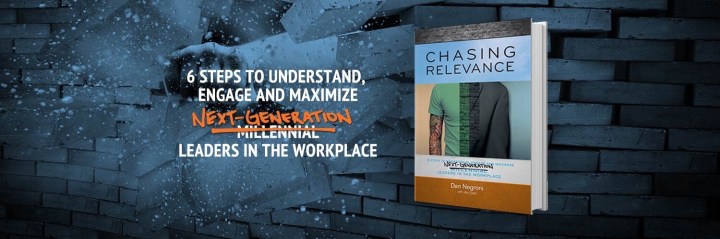
Need help understanding, engaging, and retaining your millennial workforce? Dan Negroni, Author, Speaker, Attorney, Kick butt business consultant, coach, and proud Dad of a few Millennials delivers actionable solutions. Different from all other millennial experts, Dan’s empowering business approach at launchbox, creates quick value and seamless connections with millennials and management each on their own terms. Using unique content and delivery methods that audiences respond to immediately he leverages results from the inside out. Allow millennials to be your secret weapon and maximize your commitment to them to innovate, create a culture of engagement and grow your businesses today. To start click here to grab your copy of Chasing Relevance: 6 Steps to Understand, Engage and Maximize Next Generation Leaders in the Workplace or call them at 858.314.9687 for a free Coaching Assessment.”
Getting Nowhere!
 I learned about a creature that I didn’t know much about in Lesson #9 of 52 Leadership Lessons: Timeless Stories For The Modern Leader by John Parker Stewart. The lesson used the analogy of the Processionary Caterpillar. You know how I love analogies and this one is a good one for what happens in all organizations at some time or another. These cool little creatures feed on pine needles. The interesting part is, though, that they travel like a train with their eyes half shut, head to tail fitted right against each other. So, wherever the first one goes (let’s call her the leader) the others go blindly. Are you getting the analogy here? According to the lesson, you can place them in a circle and it can take up to 10 hours for them to realize they are going nowhere. Again, are you catching the powerful analogy?
“Don’t become processionary. Question the status quo. Work smarter, not harder.” ~ John Parker Stewart
We all have become Processionary Caterpillars at some time or another. Either as the 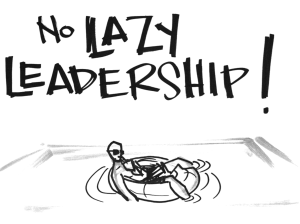 leader, or one of the followers. This is something I have called Lazy Leadership. You can read about it here. The big thing to keep in mind here is to avoid blindly, without question, performing tasks the “way it has always been done,” with no regard on how to improve or change for the betterment of the organization. I actually was discussing this last night at one of our family events after I had spoken to some of our teachers about ways to improve some processes. Our teachers are very talented and knowledgeable, and we need to continue to find ways to tap into that knowledge gained. We can then take that knowledge and improve as a learning organization.
If we find ourselves resembling the Processionary Caterpillar more than we would first think or want we need to make adjustments. If you fear that you share some of the style of the Processionary Caterpillar, here are some questions Stewart suggested to ask:
- Why are we doing this?
- Don’t answer with, “That’s the way we have always done it.”
- Don’t ever do something because, “We’ve always done it that way.”
We need to avoid mistaking activity for accomplishment. We do not want to act like the Processionary Caterpillar. We possess an intelligence that enables us to be different from all the lower forms of life. Be all you can be by learning from the pitiful Processionary Caterpillar. My takeaway is that we need to assume there is always a better way. That does not mean we redo everything, or we would never get anything done, but we do need to question the status quo. Remember, if better is possible then good is not enough.
The Leadership Tower: A Classic Jenga Model
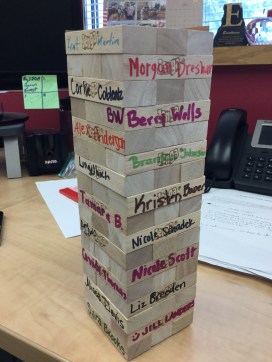 I recently got a very cool gift from a group of Hoosier Academies Network of School’s teachers. The teachers took Jenga® pieces, signed them, and then glued the tower together. This was such an appropriate and appreciated gift because of how much we use the Jenga® theme, and the fact that they built something to give to me. For those that know me well, know that I am a believer in creating models and building when do professional growth activities. In other words, I strive not to use technology and presentations. I was deeply moved by the gesture and have picked a special place in my office for this.
You all know what Jenga® is, right? That’s the game where you start with 54 wooden pieces stacked in 18 alternating rows creating a stable tower. Every move from that point on destabilizes the tower as pieces are removed from inside the structure to place them on top growing it taller and taller until it eventually topples. Many times when we play we just pull pieces till someone (the loser) makes the tower fall. As I looked at the tower I had been given, I thought about the powerful metaphor Jenga® is as a leadership model. I have blogged about it before in Jenga Masters Leadership. Click here to read the post. This time as I was viewing the tower I thought of a new aspect. I viewed the tower as a model of change and strategy decisions.

As a leader, are you building towards a cohesive vision for the future of your organization? Or, are you just pulling blocks out and placing on top of the tower, hoping the structure does not topple over?
Being A Multiplier
 Lesson #7 in 52 Leadership Lessons: Timeless Stories For The Modern Leader by John Parker Stewart was titled “Chains and Ribbons.” It was the story about how circuses used to restrain elephants by putting a chain on their leg attached to a stake at a very young age when the chain and stake would actually restrain them. An adult elephant could easily pull up the stake, but he has been conditioned that he can’t. In other words he had been conditioned to the restraint. This can happen to those we lead too. If we chain our people down, they get used to the restraint and then their innovation, creativity, collaboration, and self-motivation go away.
Employees who don’t self-start, make decisions on their own, give input, get feedback, and grow as people with purpose, eventually suffocate under micro-management and lose the will to contribute meaningfully. Top-down bosses are notorious for killing intrinsic motivation. Then, good employees are turned into order takers. These same employees then tend not to exercise one of the better traits that we want in those we lead – being a self-starter. Great leaders are present and in the moment. They don’t need to talk over others to get their point across.
Great leaders care less about flaunting their own IQs and more about fostering a culture of intelligence in their organizations. Under this type of empowering leadership these leaders become “multipliers.” Employees don’t just feel smarter, they become smarter. I believe in shifting the responsibility for thinking from myself to those I lead. As a multiplier I work at taking the time to understand the capabilities of each individual I lead so that I can connect employees with the right people, the right opportunities, and hyper personalize their personal growth. This enables an organization to build a virtuous cycle of attraction, growth, and opportunity.
Are you restraining those you lead? How can you empower your people to collaborate in a culture of excellence that encourages dissent, growth, innovation, and creativity? Go out and be a multiplier by explicitly giving people permission to think, speak, and act with reason.
My New Leadership Talent: Spinning Plates!
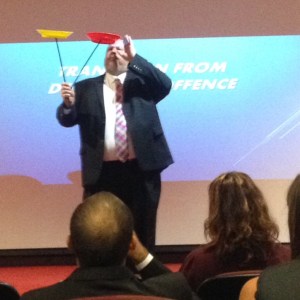 Coming to grips with the multiple parts to any organization is invaluable for leaders trying to keep their people and priorities in balance at a time when cultural and leadership change sometimes seems an existential imperative. Just as a circus performer deftly spins plates or bowls to keep them moving and upright, so must leaders constantly intervene to encourage the sorts of behavior that align an organization with its top priorities. Masters in this circus manipulation art can barely keep 100 plates spinning at a time. How many plates can any harried player-manager handle? Typically, less than a dozen.
Today, for the first time in my life I did a plate spinning act for our entire school staff. I had been using the metaphor for a few months now because of all of the things we have going on. In fact, I would many times just make a motion like I was spinning a plate. Therefore, I decided in my opening session that I would spin plates. For being my first time it went very well – I think. I even used the act introduce our newest administrators by passing them a poll with a spinning plate as an act of passing the torch, so to speak. The plates really represent all the facets, initiatives, paradoxes, parts of an organization a leader must be focused on. Spend to much time on one plate and the others fall. Left too long without attention, they run out of energy, start spinning out of control, and may come crashing to the floor. Personal development, coaching, performance management, addressing team dynamics, and reinforcing objectives are all forms of plate spinning. The leader must find the exact right balance.
Embracing the paradoxes can be uncomfortable. Yet the act of trying to reconcile these tensions helps leaders keep their eyes on all their spinning plates and identify when interventions are needed to keep the organization lined up with its top priorities. I believe approaching leadership much like plate spinning makes it possible to avoid the frustration of many leaders I’ve witnessed, who pick the extremes by either trying to stifle complex behavior by building powerful and rigid top-down structures, or by looser, more laissez-faire styles of management that expose the messy realities of human endeavor. Far more centered and high performing, in my experience, are those leaders who welcome the inconvenient contradictions of organizational life.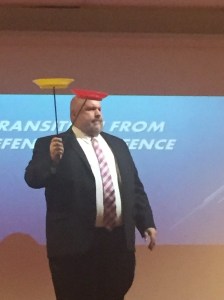
This is why I am such a believer in engagement and empowerment of everyone on the team. With an intent-based leadership philosophy where everyone is a leader, all individuals have a role in keeping the plates spinning. Empowerment is fundamentally an individualized equation, or what I call hyper-personalized. What might make one employee engaged might turn off the next person – we, as leaders, must be able to read these turn-ons and turn-offs. There are many variables that can impact any one person’s engagement, and the mix is individually unique. You can’t just become a better plate spinner. You have to find ways to keep the plates spinning on their own.
Indiana Assessment Vision
 Yesterday, we had our third legislative panel meeting studying alternatives to the ISTEP Program Test. This is part of our working toward the assessment plan under the Every Student Succeeds Act (ESSA) for Indiana. One of the things we worked on yesterday was the vision statement of the group. Using suggestions from panel members, the panel legislative staff came up with the following draft statement:
“Indiana looks to design an assessment system that is student-centered and provides meaningful and timely information to educators and parents on both a student’s on-grade proficiency level and growth toward Indiana’s College and Career Ready standards. The assessment needs to be viable, reliable, research-based, and meet the requirements of both state and federal law, while meeting the needs of all students across Indiana.”
Now, being the vision guru I am, I immediately realized it did not meet the 35 words or less rule of thumb. I did, however, quickly underline what I thought were the most important parts of the vision statement that our panel needed to do to meet the needs of our students, families, and schools (I have underlined above). Here are the points:
- student-centered
- meaningful
- timely
- information to educators and parents
- on-grade proficiency level and growth
I suggested we eliminate the last sentence, “The assessment needs to be viable, reliable, research-based, and meet the requirements of both state and federal law, while meeting the needs of all students across Indiana.” because I do not believe it is at all visionary to be valid, reliable, researched based and meeting the letter of the law. We have that obligation to Indiana and the federal government through ESSA. We don’t need a vision for that.
So, my proposed vision statement would be:
“Indiana looks to design an assessment system that is student-centered* and provides meaningful and timely information to educators and parents on both a student’s on-grade proficiency level and growth toward Indiana’s College and Career Ready standards.”
You will notice the * with student-centered. I believe we should have a definition for student-centered following the vision statement. For me, that definition could be:
*A Student-centered assessment system, which includes student performance, academic growth, and multiple measures, sets challenging items and tasks that are intended to encourage deep learning and create a sense of high expectations and mutual accountability.
Then, I believe it is even more important to develop a set of belief statements associated to this process. I took pieces from what individuals submitted as vision statements to make a list of possible belief statements. I really believe that many of what panel members submitted were belief statements, not vision statements. This was a good things because we should have belief statements guiding our work.
Here is the list I came up with:
- New assessment must be implemented with fidelity
- Timely results
- Empowers students, parents, educators, and administrators
- Includes college and career readiness metric
- Meets the needs of all students
- Cost effective
- Accurately assesses students’ learning and growth over time
- Takes less time away from instruction and learning
- Equity for all students in how they take the assessment (technology/modality)
So, put all together, here’s what my draft would look like:
“Indiana looks to design an assessment system that is student-centered* and provides meaningful and timely information to educators and parents on both a student’s on-grade proficiency level and growth toward Indiana’s College and Career Ready standards.”
*A Student-centered assessment system, which includes student performance, academic growth, and multiple measures, sets challenging items and tasks that are intended to encourage deep learning and create a sense of high expectations and mutual accountability.
Indiana’s new assessment system must:
- be implemented with fidelity.
- provide timely results.
- empower students, parents, educators, and administrators.
- include college and career readiness metric.
- meets the needs of all students.
- be cost effective.
- accurately assesses students’ learning and growth over time.
- take less time away from instruction and learning.
- provide equity for all students in how they take the assessment (technology/modality).
Because ESSA requires us to have a summative assessment in grades 3-8 and a high school component our conversation must shift from all the chatter about whether wanting to test or not or whether it is right to test. Really, that is irrelevant. What is important is that we make sure all of our stakeholders understand “why” assessment is happening and exactly how the data will be used. I believe we are on the right track to developing a vision and belief statements that can drive this work. I would love to hear feedback on additional belief statements or edits to make the belief statement suggestions better.
Leaders As Non-Conformists
 This morning I just started reading the incredible book, Originals: How Non-Conformists Move the World by Adam Grant. As a card carrying non-conformist I am really taking in all the stories and research in this book. It also goes right along Lesson #6 in 52 Leadership Lessons: Timeless Stories For The Modern Leader by John Parker Stewart. This lesson titled “Hooks and Loops” was about George de Mestral. Ok… be honest, do you know who he is? Or, what he is famous for? I didn’t until I read this lesson.
George loved to hike, but hated coming back with burrs stuck all over his clothes. He decided one day to study the burrs under a microscope and discovered that they were made up of little hooks that would, well, hook the fabric of your clothes. He was struck by the idea that he could create a hook and loop fastener out of fabric. Long story short, everyone thought he was crazy and even ridiculed him about his idea. He finally found a French fabric maker to help him manufacture a prototype. His original prototype did not hold up to continual use, but then after more research and trial he learned he could treat nylon with infrared light and it would hold up under use. He then combined the words “velvet” and “crochet” to, yep you guessed it, name the product we all use today – Velcro®.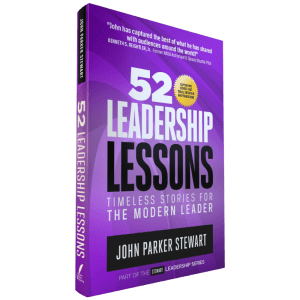
“The reasonable man adapts himself to the world; the unreasonable man persists in trying to adapt the world to himself. Therefore all progress depends on the unreasonable man.”
~ George Bernard Shaw
We are all faced with opportunities dressed up as problems or challenges. How we deal with those opportunities is up to us. I prefer to run toward those challenges and face them head on. Think about it – George de Mestral found a tremendous opportunity that literally changed the world in an annoyance during hiking.
“We are continuously faced with opportunities disguised as insolvable problems.”
~ John Parker Stewart
- What do our people need in order to resolve challenges?
- Who is the best qualified to help those we lead?
- What is our attitude toward new ideas that are non-conformist?
- What is our attitude when faced with opposition to our own ideas?
Letting Go Leadership
 As an organization grows, evolves, and develops, it needs a leader who knows how to give autonomy to different stakeholders who can be leaders more effectively in all areas. In other words, it needs a leader who can let go of needing to push all decisions out and do it all. I believe most leaders have a hard time letting go is because they believe that they can do it better. I also believe that many leaders have a narcissistic fear that somehow they won’t get credit for the successes of the organization or it won’t be exactly like she envisioned it. Guess what? It probably won’t be. It will probably be better. If you want to read a little more about this fear thing, click here to take a look at a post entitled “The Fearless Leader” by a great teacher leader, Ann Semon.
The best leaders, however, learn how to do it – let go. In fact, they often learn to love doing it once they start bringing in people who are even better than they are in key areas–people who know more than they do, and from whom they can learn. When that happens, it can push organizations forward to a whole new level. This strategy in a sense “unlocks” the entire organization to continue evolving in a much faster and healthier way.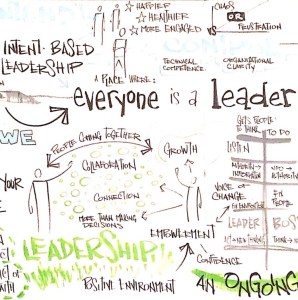
As part of letting-go, the best leaders learn to trust the people they’re bringing into the organization to become the future leaders. Leaders must be a part of building this trust by being actively involved in, and owning, the leadership development of those in the organization. Let me emphasize here – Development of the leadership pipeline is crucial here. This can only happen if you’re willing to give all in the organization ample control. Ask yourself these questions:
- “Do I really trust them to the point that I’ll let them make tough decisions?”
- “Do I trust them to learn?”
- “Do I trust them to grow?”
- “Do I trust them to experience their own failures?”
Can you answer yes to all these questions? If you can get to yes on all these it will be an incredibly powerful force for your organization. The culture you want to build is one that gives other leaders full autonomy without micromanagement. So let’s talk about this empowerment and autonomy…
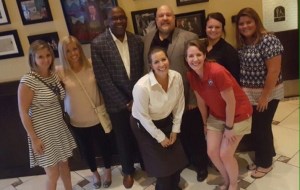
 I was fortunate to take a group of teachers and new principal to Harry and Izzy’s last night as a planning and team building. So, you know me, we don’t just talk about empowerment and intent based leadership, we practiced it. I wrote about what I like to do already this week in “Imagine A Place Where Everyone Is A Leader!” Click here to read the post. I literally would not let our group even look at the menu and told them we were going to empower our amazing waitress, Jen Becknell, to pick our meals for us. We gave her any boundaries, such as being pregnant, food allergies, et cetera. We even gave her permission to pick our drinks for us. Then, off Jenn went to put together one of the most incredible meals ever. I would love for Jenn to post a comment to this post as to what she chose and how she chose the dishes for us. Having done this now multiple times I am struck that I have never had a bad meal. We asked Jenn how she became so knowledgeable and she explained all the professional development Harry and Izzy’s had given her. Even things like going to their meat supplier in Chicago to understand the different types of aging processes in beef. This is a great example of Harry and Izzy’s giving Jenn the technical skill necessary to be fully empowered to be a great ambassador for the organization.
If you develop your leaders properly you will be able to trust the people who you hired to do their jobs with full autonomy, you may be surprised by how well it works out. Letting Go Leadership is nothing more than empowering your employees and teams to make their own decisions. As long as everyone has a shared vision and is committed to doing what’s best for the organization and those you serve, it can lead to bigger and better things. This certainly the environment I strive to create for every staff member in our school.
 Byron's Babbles
leave a comment