Don’t Be A Team You’re Not

This weekend, my son and I went to watch Murray State play in the NCAA Men’s Baseball College World Series in Omaha, Nebraska. What an incredible experience! The Racers got behind in the early innings. Then the Racers were trying to make up the deficit and my son made a great comment. He believed the team was trying to do too much at one time and he said, “Don’t be a team you’re not.”

Murray State had gotten to the college World Series by making contact and getting on base. They have speed and the tactical skills of the game. My son followed up with, “Just put it in play.” The long ball is always a good thing, but it Saturday’s case against UCLA they needed to be getting on base and moving runners.

I thought my son had made a fantastic observation! It highlighted the importance of authenticity and playing to your strengths. In a professional context, it reminds us to focus on what we do best rather than overextending ourselves or trying to imitate others. When we stay true to our core skills, values, and capabilities, we’re more likely to perform effectively and build genuine relationships—whether with colleagues on our own teams, clients, or customers. So, “don’t be a team you’re not” encourages us to embrace our unique qualities and trust in our team’s authentic strengths to achieve success.
What Is The Team You Are Supposed To Be?
Last night I watched the Indiana Pacers beat the Milwaukee Bucks 115-114. During the American Express Halftime Report on TNT, Shaquille O’Neal made a great comment directed at the Bucks: “Be the team you are supposed to be.” Shaquille’s message that he said he would give to the Bucks was to focus on their strengths, trust in their abilities, and work cohesively as a unit to achieve success. It’s about living up to the expectations that come with their individual player’s skills, talent, and hard work. The importance of each player playing to their potential and capabilities and then working cohesively as a team to achieve success.
Today, I am working with a team of educators at a Focused Leader Academy. I could not help but start the gathering with the prompt: “Last night, Shaquille O’Neal made a great comment directed at the Milwaukee Bucks: ‘Be the team you are supposed to be.’ In context of your team here at school, what would that comment mean to you?” Here are some of their responses:
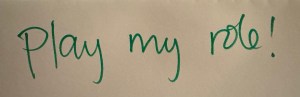
- Play my role
- Pull my weight and support others
- Student, teacher, administrator support team
- Lead by example
- Serve our stakeholders
- Communicate and collaborate
- Do my job the way it is supposed to be done
- Gifts and talents are identified
- Public perception and reputation based on what the best data suggests
- Collaboration inside / competition outside
- Expect what we inspect
As you can imagine this prompted a great discussion, but it came down to that O’Neal was encouraging every member of the team to do what they were put on the team to do. This emphasized my strong belief in well defined roles and responsibilities. And when those roles and responsibilities are well defined we are better equipped to move out of our own lane occasionally to help others.
Leading Fruitful Teams

This week I had the pleasure of working with our Focused Leader Academy at Silver Creek School Corporation. As with all the participants from the schools I do these academies, I love working with this group of aspiring leaders. They are always so creative and inspiring. At this past week’s gathering we started a two part series on building, working with, and leading teams. One of the activities was for participants, in teams of course, to make a representation of what a great team looks like using Play-Doh®️. As always, I was amazed! One team created an incredible bowl of mixed fruit – see the featured picture of this post. The team that created this visual metaphor told us that “A great team that is high functioning can be compared to a bowl of mixed fruit because each member brings their own unique strengths and qualities to the team, just like how different fruits bring different flavors and nutrients to the bowl. Together, they create a well-rounded and balanced team that is more effective and successful.” See why I love working with this group?

One person contributed that the different fruits that need to be peeled can be compared to some members of great teams who require extra support or assistance in order to fully contribute to the team. Just like how peeling the fruits reveals their true potential and enhances their flavor, providing the necessary support and guidance to certain team members can help them unlock their full potential and excel within the team. By recognizing and addressing the unique needs of each team member, the team can work together cohesively and achieve greater success. Never forget that some team members just need to be tapped on the shoulder and reminded how valuable they are and invited to take on the next big challenge, position, or project.
The different fruits in a mixed fruit bowl also represented the diversity in the makeup of a great team in several ways. Just like a team consists of individuals with different backgrounds, skills, and personalities, each fruit brings its own unique flavor, texture, and nutritional benefits to the mix. When combined harmoniously, the variety of fruits in a mixed fruit bowl creates a delightful and satisfying experience for those who enjoy it. Similarly, a diverse team can leverage the strengths and perspectives of its members to collaborate effectively and achieve outstanding results. Embracing diversity in a team can lead to innovation, creativity, and improved problem-solving abilities. Just as each fruit in a mixed fruit bowl plays a vital role in creating a delicious and balanced combination, each team member contributes their own expertise and perspective to the collective success of the team.
Less Team & More Living Organism

Yesterday I was doing some work that I wanted a little noise in the background for so I turned on an old episode of </Scorpion>. The show was about four geniuses teamed up with a government handler and a mother of a young genius son, who solved issues globally. At the end of the episode, of which a theme of teamwork had emerged, it was said, “Maybe we should think less of ourselves as a team and more as an organism [that is living and adapting].” Many times teams operate under the old industrial model like machines. And…machines break down and are unable to adapt. By contrast, living organisms are masters at adaptation. Many times when we think of adaptation, we thing of Charles Darwin. One of the observations of Darwin that Ernst Mayr (1982, 2001) made was that, “Individuals in a population are not identical, they vary in many characteristics.” Adaptation comes from the Latin word adaptus, which means to become fitted, to join, and to adjust.
Here’s why teams need to think, act, and be led more like living organisms than machines:
- Organisms can adapt to their environment.
- Organisms respond to changes in their environment and continue to be relevant in a changing environment.
- Organisms function by keeping homeostasis, or equilibrium, between its many independent actors.
- Organisms grow and develop.
Now, go back and replace ‘organism’ with ‘great team’ and you’ll get the point of the post. Wait. I’ll do it for you:
- Great teams can adapt to their environment.
- Great teams respond to changes in their environment and continue to be relevant in a changing environment.
- Great teams function by keeping homeostasis, or equilibrium, between its many independent actors.
- Great teams grow and develop, both as individual team members and a whole team.
Get it? As great teams adapt and their members grow and develop, bonds of trust are formed and relationships are built. I’m grateful for the living organism metaphor for a team provided by </Scorpion>.
 Byron's Babbles
leave a comment