The Power of Ping-Ponging Ideas: Enhancing Community Collaboration

Today, during a discussion in the final day of a weeklong training of National FFA Teacher Ambassadors, one of the Ambassadors shared she loved the ping-ponging of ideas we did during the sessions. I was so proud to hear this because I really believe our work gets better in community. There is such power in heuristic learning and sharing. When I think of community and collaboration, I’m reminded of C. S. Lewis’s Inklings who provided J. R. R. Tolkien with encouragement and Lewis the right story.
In any vibrant community, innovation and progress often stem from dynamic conversations and the free exchange of ideas. One particularly effective method to foster this exchange is ping-ponging ideas — a process where thoughts, suggestions, and feedback bounce back and forth among members, much like a lively game of table tennis.
What Is Ping-Ponging Ideas?
Ping-ponging ideas involves collaborative brainstorming where participants actively listen, respond, and build upon each other’s contributions. Instead of linear discussions, this approach encourages a rhythm of giving and receiving, allowing ideas to evolve organically through continuous dialogue.
Why Is It Valuable for Communities?
- Encourages Creativity and Innovation: When ideas are bounced around, they often spark new perspectives and creative solutions that might not emerge in solitary thinking or one-sided discussions.
- Builds Collective Ownership: Engaging everyone in the idea-generation process fosters a sense of ownership and commitment to the community’s initiatives, leading to increased participation and support.
- Strengthens Relationships: Regular exchange of ideas creates connections among members, building trust and understanding that can translate into stronger collaboration.
- Facilitates Inclusive Decision-Making: Ping-ponging ensures diverse voices are heard, helping the community make more well-rounded and inclusive decisions.
- Accelerates Problem-Solving: As ideas bounce around, potential issues are identified early, and innovative solutions are quickly developed through collective input.
How Does Effective Ping-Ponging in Our Communities Make Our Work Better?
- Create Safe Spaces: Encourage open-mindedness where all members feel comfortable sharing their thoughts without judgment.
- Use Structured Formats: Organize brainstorming sessions with clear prompts or questions to guide the idea exchange.
- Leverage Technology: Utilize online platforms that facilitate real-time discussion and idea-sharing, especially for remote or hybrid communities.
- Promote Active Listening: Remind participants to attentively consider each contribution before responding, ensuring meaningful exchanges.
- Follow Up: Keep the momentum by revisiting ideas, giving feedback, and implementing viable suggestions.
Ping-ponging ideas is more than just a metaphor; it’s a powerful technique that nurtures collaboration, sparks innovation, and deepens community bonds. By embracing this dynamic exchange, communities can grow stronger, more creative, and better equipped to face challenges together.
Experiences Over Experience

Today during a discussion with National FFA Teacher Ambassadors about who we influence and how we influence others, a teacher commented that sometimes she worried she lacked influence because others viewed her as not having enough years experience. This teacher is going into her third year of teaching and went on to say she has had a lot of experiences that others with more years of experience have not had. Did you catch the distinction here? I loved this and it is something I have always told teachers I’ve coached or mentored: Experiences trump experience!
While the number of years someone has spent in a field can give a general sense of their exposure, it doesn’t necessarily reflect the depth, quality, or relevance of their experiences. Considering the actual experiences of others allows us to understand their challenges, problem-solving approaches, and lessons learned in specific situations. This deeper insight helps us evaluate their true expertise and adapt their knowledge to our own circumstances more effectively. Ultimately, focusing on meaningful experiences fosters more genuine learning and growth than simply counting years.
My Experience as a Rapper and Leading with Authenticity: The Power of Mystique and Openness

This past week I tried something new at the request of some National FFA Organization National Teacher Ambassadors. Actually, I was being mentored by three Mentor Teacher Ambassadors. I rapped an introduction of Kasey Naylor from Texas and Emma Huber from Wisconsin for a workshop in San Antonio, Texas. Kim Clark, from Kansas, who was serving as the host of the workshop, was the one really spurring on my debut to the hip hop scene. Of course, when I pushed back a little (okay, a lot) they threw my own teaching in my face: “You’re always telling us to not be afraid to try something new and it is okay if it fails.” They were right, you know, I do advocate for that! It was time for me to practice what I preach. I rapped their intro. I called it a fail. They said it was good. They were just being nice! I was watching the crowd – it was an epic fail.
I did, however, try my hand at rapping again that evening for a National FFA Teacher Ambassador dinner with a little more success. This time I made sure that Kasey, Emma, and Kim were my “backing vocalists” (see the featured photo). And yes, before you ask, “backing vocalist” is a term. Their job was to build hype. I was not much better. Actually, I was still terrible. I’ve got to tell you, though, this whole rap and hip hop thing was causing me to do a lot of thinking.
I considered, like rap artistry, how having a touch of mystique can enhance a leader’s presence and appeal. Just like in rap lyrics, where artists often employ metaphor, storytelling, and layered meanings to convey deeper messages, we, as leaders, can benefit from a certain level of intrigue. This mystique can create curiosity and draw people in, making them want to learn more about our vision or approach.
Conversely, though, it is important for us to balance mystique with transparency. Too much distance can create disconnect, whereas a well-placed element of mystery can inspire and engage followers. Those that know me know I do like to build hype. Ultimately, it’s about finding the right mix that aligns with their authenticity and the message they want to communicate.
Rapping can indeed be seen as a leadership skill in several ways:
- Communication: Rappers must effectively convey their messages and emotions through words, which is a vital leadership quality. Even though we are obviously not conveying the same message or story, clear communication helps leaders articulate their vision and inspire their followers.
- Storytelling: Good rappers often tell compelling stories in their lyrics. Again, I recognize it might not be the kind of story I want to convey. Nevertheless, storytelling is a powerful tool for leaders to engage and motivate people, making complex ideas more relatable and memorable.
- Influence and Inspiration: Rappers can influence their listeners and culture at large. Similarly, leaders inspire their teams and communities to achieve goals and embrace change.
- Adaptability: The hip-hop landscape is constantly changing, and successful rappers must adapt their styles and messages accordingly. Effective leaders are also adaptable, responding to challenges and opportunities as they arise.
- Collaboration: Many rap artists collaborate with others, showcasing teamwork and partnership, which are crucial for strong leadership.
Moral of this story: don’t be afraid to try something new. Putting a story into rap form can be an interesting way to think about a topic or make an introduction. A couple of things I learned: 1. Just like any other public performance, a rap must be practiced; and 2. The rap needs to be developed using the voice (expressing your own passions and core values) of the one doing the rapping. One thing is for sure; you will get a laugh and a few roles of the eyes. And you will for sure be better than me at it!
Reflexivity And Curious George

Yesterday, I had the opportunity to do a workshop for our National FFA Teacher Ambassadors of the National FFA Organization at the National Association of Agricultural Educators’ Annual Convention that is a part of the Association for Career and Technical Education annual conference here in beautiful San Antonio, Texas. It has been a great week of learning, renewing friendships, and making new ones. For me it’s about always being curious. In fact, that is what our workshop was about: “Engagement Begins With Being Curious.”

Of course, there had to be a through-line using Curious George. Which also meant I had to get into character. Emoni White, Program Specialist, Educational Development on the National FFA team, even made sure I was able to truly be “the man in the yellow hat” and transformed herself into Curious George (see featured photo). It is great to work with people like Emoni who want to be curious and help me be curious about making sure we do great workshops and making sure the proper supplies are made available.
As I was listening to the reflections from our wonderful ambassadors yesterday, it made me reflect on what being curious is all about. It also made me think about reflexivity in leadership. Reflexivity, the unsettling comfortable viewpoints, is an important aspect of leadership. By challenging established norms and encouraging critical thinking, leaders can foster an environment where team members feel safe to voice diverse perspectives and question the status quo. This process may initially create discomfort, but it ultimately leads to deeper insights, innovation, and growth.
Leaders who embrace this discomfort contribute to a culture of continuous improvement and adaptability, which is essential in today’s rapidly changing world. They demonstrate that it’s okay to reassess beliefs and approaches, creating space for meaningful dialogue and collaboration among team members.
Curious George is a great example to illustrate reflexivity in a lighthearted way. The character of Curious George embodies a natural curiosity and an eagerness to explore the world around him. His adventures often lead him to situations where he needs to think on his feet, reassess his approach, and adapt to new challenges.
For leaders, this kind of mindset—much like that of Curious George—can encourage openness to learning from experiences, whether they lead to success or unexpected outcomes. Leaders who model curiosity and a willingness to learn from mistakes can foster a culture where team members feel safe to try new things, share their ideas, and engage in meaningful discussions about how to improve and innovate.
Reflexive leaders are often seen as more authentic and trustworthy. Their willingness to acknowledge mistakes and learn from them can strengthen their credibility and foster a sense of safety within the team. Finally, When leaders model reflexivity, they promote a culture of learning within their teams. Team members feel empowered to reflect on their own practices, leading to innovation and growth.
Building Relationships By Understanding and Appreciating

This past week I’ve had the incredible pleasure of being at the World Dairy Expo in Madison, Wisconsin. As you know we raise Jersey dairy show cows and so that is the place to be the first week of October. There will undoubtedly be posts about things I learned and my thoughts about applying what I learned to education, but for now I want to focus on something we (my wife was able to make the trip with me this year) did while in Wisconsin. One of the things I like to do is visit people I work with in the “real job” part of my life. I always say if I am within three hours of visiting someone I work with, I’m going.
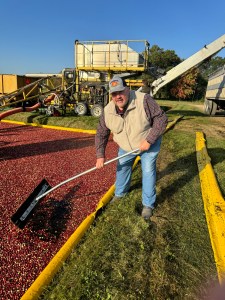
I stayed true to this yesterday. We went up to Tomah, Wisconsin to visit a National FFA Mentor Teacher Ambassador I have the honor of working with in the work I do with the National FFA Organization. We spent the day with Emma Huber who teaches agriculture at Portage Community School District. Emma’s family has a cranberry marsh (farm). Before yesterday, I knew nothing about cranberry production/harvesting. This was the weekend for harvesting the cranberries and my wife and I were able to spend the day taking part in all the operations associated with harvesting cranberries. It was actually quite the family affair, with family members coming from other states to take part. We also learned all about cranberry production. Needless to say, it was a glorious day, I learned A LOT, and we got to know Emma, her husband Josh, Emma’s mom, and the rest of the family and friends.
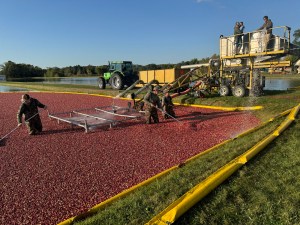
I love days like yesterday! As a curious learner and person who believes that relationships trump all – yesterday was truly was, as I said earlier, glorious. I have had the opportunity to visit several of the Teacher Ambassadors on their home turf or in their schools. This is important to me and one of my core values, “Listen, Hear, Learn, & strive to be better.” This is part of what I call “loving” those we serve. To be loved we must be understood and appreciated. I blogged about the line, “There is no point in being loved if you are not understood…And once loved and understood to be appreciated.” in The Life Impossible by Matt Haig in Living In Our Own Context.

Visiting those we serve in their home work or personal interest environments can offer substantial value to our relationships. In other words, getting to know them on a personal level. Here are some key benefits:
- Building Trust and Rapport: Meeting people in their own space fosters a deeper connection, showing that we care about them as individuals, not just as colleagues or clients.
- Understanding Context: Home visits provide insight into the circumstances and challenges that our teams or constituents face, enabling us to make more informed decisions and policies. We agriculture teachers understand better than anyone, as ag teachers make regular visits to students as part of their Supervised Agricultural Experience Program. It really is all about building the relationship.
- Gathering Feedback: Engaging directly with those we serve allows for open dialogue and immediate feedback, which can lead to better understanding of needs and expectations.
- Demonstrating Commitment: Our presence in our friends and colleagues’ environments signal that we are committed to supporting them and valuing their input.
- Identifying Opportunities: Being on-site allows us to observe firsthand areas for improvement, innovation, and potential collaboration that might not be visible from a distance.
- Inspiring and Motivating: Seeing how our efforts impact individuals’ lives can reignite our own passion for our work and inspire those we serve.
- Encouraging a Culture of Openness: It sets an example of transparency and approachability, encouraging others in the organization to follow suit.
As a rabid learner and relationship guy, these visits are an important strategy that deepen connections and enhance my effectiveness as a leader. Make no mistake; visiting these ambassadors is a “get to,” not a “have to.” I love it!!!
Reigniting Our Passion

Last evening while facilitating a kickoff of our National FFA Teacher Ambassador trainings, we had teachers discussing needing to regain the “spark” and a desire for networking. I’m excited about this because building relationships are key to keeping our “spark.” By meeting new people and building genuine relationships, you can find support, inspiration, and new ideas that can reignite our passion for our work. Additionally, networking/relationship building can give us access to valuable resources and connections that can help us be successful and regain our spark.
Another great thing about developing new friends is that sometimes they can become mentors to us. Having friends who are also mentors can be incredibly valuable. They know us personally and can provide honest feedback, guidance, and support that is tailored to our individual needs and goals. Plus, they are invested in our success and will often go above and beyond to help us achieve our objectives.
Listen More

This past week at the National FFA Convention here in Indianapolis, Indiana I had the opportunity to do teacher workshops with our National FFA Teacher Ambassadors. One of my roles is to help our ambassadors be the best presenters possible. After each workshop I did a reflection so that during next year’s ambassador trainings I can point out positive practices that really work during workshops. One such practice was done by Lindsey Lasater of Silex, Missouri. She is incredible at leading workshops. When leading discussions with workshop participants, Lindsey would write down each participants’ comments word for word on tear sheets. I used to do this in my classroom when teaching and now also use it when facilitating. I love this strategy. One, it helps the teacher/facilitator listen better, and two, it shows the student/participant that what they have to say is valued. And, a third plus is that it helps the other participants know what was added to the conversation.
In Simple Truth #43, “Since We Were Given Two Ears And One Mouth, We Should Listen More Than We Speak” in Simple Truths of Leadership: 52 Ways To Be A Servant Leader and Build Trust, Making Common Sense Common Practice, Ken Blanchard and Randy Conley we are reminded that good listeners are interested in what you are thinking and feeling. Some great ideas were being shared last week during Lindsey’s workshop and she honored and captured those thoughts by actively listening and writing them down. We are a good listener if we are focusing on the other person. Bad listeners focus on themselves. If we get the listening right, those we serve will share their best thoughts and ideas with us.
Become More Human & Less Machine


 One of the things that past years’ participants had recommended is that there be a book chosen to use along with all the other professional growth opportunities being provided. As an avid reader, FFA leadership deferred to me to pick the book. I was thrilled to get to do this! The theme of “making connections” rose to the top as a theme for the two week development. It is so great to have a theme developed organically from the participants. We even used the hashtag #FFAConnections on twitter. I did my due diligence thinking of books I had read and reviewing others, but a book that I had read in the past kept jumping to the top of the list: Back to Human: How Great Leaders Create Connection in the Age of Isolation by Dan Schwabel.
Dan Schawbel is a New York Times bestselling author and the Managing Partner of Workplace Intelligence, a research and advisory firm helping HR adapt to trends, drive performance and prepare for the future. He is the bestselling author of three career books: Back to Human, Promote Yourself and Me 2.0. Schawbel is also the host of the 5 Questions podcast, where he interviews world-class humans like two of my heroes Richard Branson and Condoleezza Rice; among others like Rachael Ray, Gary Vaynerchuk, and Jay Shetty. At the beginning of the book Dan said, “The point of Back to Human is to help you decide when and how to appropriately use technology to build better connections in your work life.” He also told us in the book that leaders can only be successful if we are able to create emotional connections to others – connections that allow empathy, performing acts of kindness, and avoid hurting others. Because these teachers would be making connections during the continued Global COVID-19 Pandemic (we are now in day 147), this topic was so relevant.
Because we were doing this growth opportunity virtually, I decided to take advantage and see if I could get a Zoom conversation with Dan Schawbel set up to discuss just how we could become more human and less machine. He was more than willing and we had a great conversation that we were then able to provide to our participants. Here is my conversation with Dan split into to two YouTube videos:
What an amazing conversation, don’t you think? Needless to say, our participants thought so. Our participants also loved reading the book. It is amazing to me how applicable a book that was released back in 2018 is even more applicable today than when it was released. This really is a book that I believe every human should read.
Dan was also so gracious in agreeing to answer all questions submitted by these highly engaged teachers. Here are there very thoughtful questions, and Dan’s answers:
1. How do you recommend balancing/setting boundaries when tuning out the noise of technology when so much of our work has to be completed using technology or communicate with our superiors? There is so much pressure to “look like you are working” that sometimes boundaries of not checking emails or not answering the phone after hours can make us “look bad.” When you’re working remotely, there is both external and internal pressure to work harder, longer, and deliver more value above and beyond what would be expected at the office. That’s why you have to self-manage, set expectations, and create boundaries with the people you work with. You need time away from technology or you’ll get burned out and sick from overwork and too much screen time. Block off time during the day on your calendar for walks, phone calls, reading a book, and other activities that pull you away from your screen.
2. What do you believe the long-term effects of the widespread remote working will be? The widespread effects of remote working will be more competition, yet more freedom for professionals globally. By working remotely, people have the freedom and flexibility to work when, where, and how they want. But, with remote work comes global competition because people don’t need to be at a corporate office to interview or work. For instance, if you live in Idaho you can work for a Silicon Valley technology company, which would have forced you to relocate in the past. If you are job searching in Silicon valley, now you have to compete with people who live everyone in the world including Idaho, which wasn’t your competition pre-covid.
3. Even though our students have grown up with technology, and are addicted to it, there was a lack of engagement during Distance Learning this year. Seeing that we are most likely going to have a hybrid type of classroom moving forward (distance learning and in class learning), how do we engage them in the distance/technology learning portion of that hybrid model? Can we trick their brains to make them feel like it is “cool?” I think the smartest thing teachers can do when it comes to teaching in a hybrid model is to experiment and then solicit feedback from the students. Find out what’s working and what isn’t by asking them directly and using the data you receive from virtual learning as an indicator of what changes need to be made. Make two buckets, one for virtual learning and one for in-person learning. As you experiment with your coursework, put activities into one of those buckets based on what’s working for you and the students.
4. In a world of instant gratification and praise being needed, like discussed in chapter 6, are we enabling this “addiction” by giving that praise and recognition? How do we find a balance between giving the recognition needed in order to build relationships with students, and enabling that mindset? I don’t think it’s wise to give recognition for the sake of it. I think you should be consciously awake that recognition is important to student engagement, but only do it if it makes sense and feels natural, otherwise, it could come off as being fake.
5. As teachers how can we start the new school year with better communication/connections during our new teacher inductions? During this spring I felt like I was chasing students around for attendance purchases. I recommend that you start the communication before the school year begins and when crafting the introductions be vulnerable with what you’ve been through during the pandemic, how it’s affected you, and emphasize the importance of teaching. This will help you connect emotionally to your students and also reinforce the importance of education.
6. If we practice over-communicating, how do we make sure the communication still appears authentic? You be authentic first, then over-communicate second. Come up with an important message and say it in multiple ways across multiple days or weeks.
7. How do we allow those who we are virtually meeting with trust us through what we are presenting or discussing versus being in a classroom or office setting? How do we keep their attention during that time? Trust needs to be earned overtime by being honest, dependable, competent and consistent, all of which you can display virtually but strengthen in person. Getting and keeping attention is hard virtually so you have to spend that much more energy making your teaching dynamic and interactive.
8. What long term effects do you think we will see from using zoom and the virtual communication on real in person communication in the future? Technology can be a bridge to more human interaction and trust, but I think we’re at a point where people are exhausted from it. I think the combination of technology and in-person interaction will be the prevailing hybrid in the aftermath of the pandemic.
9. I LOVE the idea about communicating once on Monday and once on Friday and I actually used this method with my students (optionally) this spring. There were incentives for them to come to my meetings though. I had a hard time making them mandatory because –I knew they had 6ish other teachers that could be expecting the same things or have different demands. What kind of system or pattern of meeting do you recommend when dealing with students in a situation like that vs. An office? Just a short meeting with each teacher -still Monday and Friday –or having like a whole grade meeting and then asynchronous meetings with individual teachers? When it doubt, put the options on the table potentially in survey form to find out what works best for them, then analyze the results and act on the most frequently chosen response as a trial. This way, you can justify your choices to the students if they ask.
10. Is it bad that I am enjoying the “break” of life with the outbreak of covid? No, we all need breaks especially during hard times.
11. What are some ways that educators can make our connections unique through virtual learning? By talking more about personal activities instead of just school work and by asking more questions instead of just lecturing.
12. The Monday/Friday video calls seems like an excellent idea! I resonate with ideal of having to “prove” your worth when working digitally. Our district has required time logs that have instilled a feeling that the district does not “trust” its teachers. How can school leaders balance expectations and trust? I think you have to run trials and then iterate because we are living through a historical time that hasn’t happened before. Everyone is experimenting to see what works and then running with the results.
13. I find it interesting that he said we are working more and harder when working digitally. Up to ten hours. Part of me felt like I was slacking just because I was working at home and I am not used to that. I also realize now that I was working more because I was checking email, Google Classroom, and other platforms ALL DAY! How will we get away from that if we are more digital next year? I’m not saying that we should be working up to 10 hours more, the data just shows remote workers have fewer boundaries between work and life so they end up working more during their life. It’s not healthy to overwork and burn out and can be counterproductive.
14. A recent impromptu poll I’ve done with my kids showed that the majority of them “cheater, or felt the urge to cheat” because of the lack of structure or supervision with FFA activities. In a period of isolation, besides meetings once a week, what are other possible strategies to promote structure in an online setting? You should equip students with their own structure and not expect them to do it for themselves. This can be done using technology like a calendar where they get alerts when they have to be in class or a homework assignment is due.
15. With so many varying backgrounds and interest levels with students/teachers, how can we keep our virtual/hybrid learning and communication relevant to those that we are communicating with? The video talked about zoom fatigue, but it seems to be something we must learn to live with. I understand communication is key to understand what your audience wants, but it’s much harder than a classroom to adjust virtually to appeal to a virtual audience. We have to adjust as we go because this is new territory for everyone, both students and teachers. Through our experience and by talking openly, and soliciting feedback from students, you should adjust your communication style. When class starts in-person again, people will naturally spend less time on Zoom since we use it by necessity right now.
16. How do you convince school leadership that beginning and ending the week together (as talked about in the video) can create a sense of community within a district? It comes down to a conversation about setting expectations, being on the same page and ensuring that there’s consistency in communication. The start and end of the week create the biggest impression.
17. How do we mimic small accountability groups with our school staff, classrooms, and FFA officer teams if we continue with virtual learning? Right now you can do Zoom breakout rooms in order to do that.
18. What are some tips and tricks for increasing digital engagement? Quizzes and facilitated discussions work really well. You want the students to participate much more than they normally would because you aren’t in a physical space.
19.How do we turn the digital/virtual/remote environment to where people will want to show up and engage? You pick the right platforms and then use the tools inside of that platform to engage students, allowing them to participate and connect with you and each other.
20.As an individual, how do you suggest employees who consumed with online learning disconnect from the digital world to create a healthier work/personal life balance? You give them time in their schedule for breaks and encourage them to take time off.
21. Are there specific ways/methods of engaging young people/students that are more effective than professionals? Use the platforms that they are currently using as a way to communicate with them and solicit interaction. For instance, Tik Tok is an iPhone app that students are using so you can use that same platform to think of creative ways to engage them.
As you can see Dan really does fulfill his role in society by making information and research universally applicable and digestible by the public. Back to Human and Dan himself really gave these teacher ambassadors useful and immediately actionable information for helping them be effective ambassadors for the National FFA Organization and agricultural education. They also will be better teachers for the students they serve because of the “back to human” experience. How about you? Do you want to become more human and less machine? I sure hope so!
 Byron's Babbles
leave a comment