The Interdependence of Resources and Objectives

Carl von Clausewitz, a Prussian military general and theorist, learned about the importance of aligning resources and methods with desired goals primarily through his experiences in military leadership and strategy during the Napoleonic Wars. He recognized that the complexities of war require a comprehensive understanding of both the objectives and the means available to achieve them.
Clausewitz and Napoleon were contemporaries in the sense that Clausewitz analyzed Napoleon’s military strategies, but they never directly faced each other in battle. Clausewitz served in the Prussian army during the Napoleonic Wars and was heavily influenced by Napoleon’s tactics.
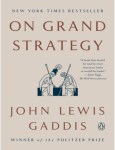
In On Grand Strategy, John Lewis Gaddis referenced Clausewitz’s famous work, On War, that emphasizes the concept of the “fog of war”—the uncertainty and unpredictability that can impact decision-making in military operations. He understood that successful military campaigns are not just about having superior force but also about understanding the political objectives behind the use of that force and the importance of adapting tactics and strategies accordingly.
Clausewitz said, “Means can never be considered in isolation from their purpose,” emphasizing the interdependence of resources (means) and the objectives (purpose) they aim to achieve in military strategy, but it can also be applied more broadly to other fields. Essentially, when planning or strategizing, we should always consider how our available resources align with and serve their ultimate goals.
In this context, Clausewitz argued for a flexible approach that considers not only the immediate tactical situation but also the broader strategic goals, drawing parallels to how resources and methods must align in other fields such as business and personal projects. If you’re interested, we can delve deeper into specific examples from his theories or explore how they apply to modern contexts.
In a more general sense, this principle suggests that whether in business, art, or personal projects, it’s crucial to align the resources and methods you choose with the goals you aim to achieve. This holistic approach can lead to more effective and innovative strategies.
Leaders Taking Off The Blinders

I love the book On Grand Strategy by John Lewis Gaddis and am rereading it for the forth or fifth time right now. Gaddis used such great analogies, metaphors, and historical leaders and events to drive home points. He used the analogy of horse blinders to illustrate how theory can sometimes limit our vision and understanding when it comes to strategic thinking. Just as horse blinders restrict a horse’s field of vision, focusing it on the path directly ahead, a rigid adherence to theory can prevent strategists from seeing the broader context or alternative possibilities. Actual practice and living the event is like taking off the blinders. It widens our view and gives us more perspective.
Gaddis argued that while theories provide frameworks that can guide decision-making, they must be flexible and adaptable to the complexities of real-world situations. In other words, unyielding focus on theoretical perspectives might lead to missed opportunities or misjudgments in practice. True grand strategy requires being open to new information and different viewpoints – taking off the blinders. This allows for a more comprehensive and effective approach to strategy.

While making this point, Gaddis also used a sketch artist analogy illustrating the importance of understanding the broader context in which strategic decisions are made. Just as a sketch artist must balance various elements—like proportion, perspective, and detail—to create a coherent image, strategists must integrate multiple factors, including capabilities, threats, and historical context, to inform their decisions.
This sketch artist analogy emphasized the need for a multifaceted approach, where analysts must interpret and synthesize information from different sources to develop a clearer picture of the strategic landscape. Both concepts highlight that a rigid or simplistic view can lead to misunderstandings and miscalculations, while a more dynamic and adaptive perspective allows for nuanced decision-making that better accounts for the complexities of real-world situations.
Just like multiple artists interpret the same scene differently based on their unique perspectives and experiences, leaders must also consider various viewpoints and approaches when analyzing complex situations. Individual interpretation can lead to innovative solutions and insights that might not emerge from a more uniform perspective.
Alcibiades: A Study in Intergenerational Wisdom and Leadership

I am rereading On Grand Strategy by John Lewis Gaddis for the third time. I love this book! One of the things I love about this book is that it is so much more than strategy. Gaddis digs into the contexts and the leadership styles that drive the decisions. An example is the inclusion of this quote by Alcibiades: “neither youth nor old age can do anything . . . without the other.”Lewis wanted us to understand the deep interdependence between different stages of life. I have to believe that Alcibiades was emphasizing that youth and old age represent unique strengths and weaknesses, and that they are most effective when working together.
Alcibiades was a prominent Athenian statesman, general, and orator during the Peloponnesian War, which lasted from 431 to 404 BCE. He was not a perfect leader, but then again none of us are, and his life was marked by political intrigue, military campaigns, and shifting allegiances. The context in which Alcibiades expressed ideas on generational wisdom likely involves several factors:
- Political Turmoil: Athens was embroiled in a power struggle during the war, facing internal strife and external threats. Alcibiades himself was acutely aware of the complex dynamics of Athenian politics, which often pitted different generations against each other.
- Cultural Shift: Athens was experiencing a cultural renaissance at that time, with great advancements in philosophy, art, and democracy. Young thinkers and political leaders were emerging, creating a dynamic environment where traditional views were challenged.
- Military Campaigns: Alcibiades played a significant role in various military campaigns, such as the Sicilian Expedition. His experiences in warfare may have influenced his thoughts on collaboration and mentorship between the ages, emphasizing the need for both youthful vigor and seasoned wisdom in leadership.
- Philosophical Influences: As a student of Socrates, Alcibiades would have been influenced by philosophical discussions about virtue, knowledge, and the role of experience in shaping effective leadership.
In this context youth embodies vitality, energy, and new ideas, while old age brings experience, wisdom, and perspective Each phase can benefit from the attributes of the other; for example, young people can learn from the experiences of the elderly, while older individuals can gain fresh insights from the youth. This idea highlights the importance of collaboration and mentorship across generations.
 Byron's Babbles
leave a comment