Targeting & Focusing Your Efforts
Think about creating tomorrow by focusing on the “right results” and “changes in trends” rather than on just the current trends affecting your organization. An important question to ask is, “What are the right results for your organization?” Maciariello (2014) posited in Week 8’s lesson that knowing your mission or purpose is essential in choosing from among all available opportunities those that have the highest probability of producing the right results.
I compare this “focusing” to that of sunlight through a magnifying glass to start paper or grass on fire. Peter Drucker said, “Concentrate on the smallest number of activities that will focus on the greatest productivity.” (Maciariello, 2014, p. 62) I have found this to be so true in turning schools around. This is one of the most important lessons I have learned from my postdoctoral professional development at Harvard University. We talk about having too many resources. I know that sounds really weird coming from an educational leader. Too many resources? Yes, if you have not asked yourself, “What am I (or our school or organization) willing to give up?” We should abandon, or not start at all, programs where even great success is unlikely to make a significant difference.

Maciariello (2014) argued that economic results require that staff efforts be concentrated upon the few activities that are capable of producing significant business results. This would be true for schools as well. Knowing who we serve and what makes us distinct allows us to concentrate our resources on a few major opportunities. This also means being prepared to eliminate past programs and best practices that are no longer productive or getting the results needed to move our organizations to the next level. “If leaders are unable to slough off yesterday, to abandon yesterday, they simply will not be able to create tomorrow.” (Maciariello, 2014, p. 63) Without targeting and focusing on the right things we will not be able to exploit our resources strategically for success.

Just like a flashlight focused on an object in the darkness, we must target ourselves on the areas where a little success will have the greatest impact. Don’t forget the key question here: What are the “right results” for our school or organization?
Reference
Maciariello, J. A. (2014). A year with Peter Drucker: 52 weeks of coaching for leadership effectiveness. New York, NY: HarperCollins Publishers.
Leading In Two Time Dimensions
 “A manager must, so to speak, keep his nose to the grindstone while lifting his eyes to the hill – quite an acrobatic feat” (Maciarello, 2014, p. 53) This quote by Peter Drucker in week seven’s lesson (Maciarello, 2014) really hit home to me as a school turnaround leader. Anyone who works with me or has been around me much knows that this leading is two time dimensions: balancing short-term results with long-term results, is one of the toughest parts of the leadership experience. In takeover and turnaround schools they really don’t give you much time to turn it around – and they shouldn’t. Our kids are too valuable. That being said, however, I have always said it is a real balancing act. What we need to do right now to get the transformational results needed short term are not always sustainable for the long term. I really am leading in two different time dimensions. These two time dimensions, short-term and long-term results, need to be used in concert when planning school transformation. Having led a team that took a school off the “F” list in just two years, I can honestly say this harmonization of long and short-term results was one of the pain points that kept me awake at night.
I guess it is why I have become such a student of strategic planning. This two dimensional leadership is really the essence of strategic planning – making resource allocation today that will affect the future (Maciarello, 2014). It requires deliberately allocating resources to projects that are directed toward securing the future of your organization. Yet, in my case, short-term results are necessary to take a school off the “F” list this year. So, short-term results are necessary, and this necessity may require making trade-offs between short-term and long-term results. You can read a couple of my posts on strategic planning by clicking on Strategy in Action and Top 50 Strategy in Action Indicators.
These trade-offs really cause there to be a need for two different missions, but the two missions must be compatible. There are always trade-offs between actions that serve the present and those that further long-term performance. The missions in these two time dimensions may be different but they must be compatible (Maciarello, 2014). A strategic plan and mission statement must reflect results in the short term as well as results in the long term. In my case, as a turnaround school leader, I must fix the problems of the past but the real job is to commit the organization’s resources to opportunities in the future. Sacrificing either dimension threatens the survival of the organization. The old medical proverb applies here, “It doesn’t help you much if the old woman, the sick woman, knows the surgery tomorrow would save her life, if she dies during the night.” But, it doesn’t help you very much either if she survives the night, and the doctor’s are not prepared for her life saving surgery tomorrow. Thus, the struggle of leading in two time dimensions continues.
 “Yesterday’s actions and decisions, no matter how courageous or wise they may have been, inevitably become today’s problems, crises, and stupidities.” ~ Peter Drucker
This quote by Drucker says it all. As leaders it is our job to help our teams commit today’s resources to the future. Two questions that Maciarello (2014, p. 55) posed are very good reflection points for my role as a turnaround leader:
1. Does your organization focus most of its time and effort on problems related to past decisions?
2. How can you free up some of your time and resources to focus on opportunities that serve the future of our unit?
What we do today really matters. We must keep our short-term and long-term strategies in balance. We must fix the problems of the past, but we must also commit the resources, strategically, to the opportunities of the future.
“Never start with tomorrow to reach eternity. Eternity is not being reached by small steps.” ~ John Donne

Reference
Maciariello, J. A. (2014). A year with Peter Drucker: 52 weeks of coaching for leadership effectiveness. New York, NY: HarperCollins Publishers.
Important, Not Urgent!
 Peter Drucker was the master of focusing his time on the important, not the urgent. He led a focused life doing what he felt he was called to do. Drucker knew how to work on the truly important issues and abandon all the rest (Maciariello, 2014). We have our own purpose in life that should include balance between work and pleasure. But there will always be a decision to make between the important and the urgent.
In advising leaders, Drucker believed in focusing on their processes of leadership, organization and management, including the development of people, building community, and planning for succession (Maciariello, 2014). A pretty good list of focal points if you ask me. Keeping this in mind it is important to remember: You are responsible for allocating your life.

In this week’s lesson I learned of Harry Hopkins, one of President Franklin Roosevelt’s top advisers during World War II. Because he was dying of stomach cancer toward the end of his service, he was forced learn how to do the important and not the urgent. He was able to cut out everything but truly important and vital matters. Churchill called him “Lord Heart of the Matter” and believed he accomplished more than anyone else in wartime Washington. I have added the book The Hopkins Touch: Harry Hopkins and the Forging of the Alliance to Defeat Hitler by David L. Roll to my bookshelf to read this year.
Drucker believed effective leaders do not start out with the question, “What do I want to accomplish?” They start out with the question, “What needs to be done?” He believed, “If there is any one secret of effectiveness, it is concentration.” We must learn in the midst of multiple demands, to give priority, and the necessary amount of time and focus, to the important rather than to the urgent (Maciariello, 2014).
Maciariello (2014) suggested forming a habit of pausing to distinguish the difference between the important and the urgent demands on your time. In order to determine the decisions and work that is important, you must answer the question, “What do I want to be remembered for?” The answer that you come up with will give your life focus and purpose.
I’ll leave you with a question to reflect on: How Have You Allocated Your Life?
Reference
Maciariello, J. A. (2014). A year with Peter Drucker: 52 weeks of coaching for leadership effectiveness. New York, NY: HarperCollins Publishers.
Idea Bee
We have all seen honey bees flitting from plant to plant spreading pollen and gaining much needed nectar for producing honey. As you read this post I also want you to imagine yourself as the leader going from person to person pollinating ideas – being an “Idea Bee.” One mouthful in three of the foods you eat directly or indirectly depends on pollination by honey bees. The value of honey bee pollination to U.S. agriculture is more than $14 billion annually, according to a Cornell University study. Crops from nuts to vegetables and as diverse as alfalfa, apple, cantaloupe, cranberry, pumpkin, and sunflower all require pollinating by honey bees. But the bees’ importance goes far beyond agriculture. They also pollinate more than 16 percent of the flowering plant species, ensuring that we’ll have blooms in our gardens. Of course, there is also the honey. More than $100 million worth of raw honey is produced each year in the United States.
The honey bees interdependence with plants makes them an excellent example of the type of symbiosis known as mutualism, an association between unlike organisms that is beneficial to both parties. We must develop this same type of symbiosis between our customers (in my case students), our different departments, our suppliers, or those we supply. The honey bee is very much like those of us in education; They are imbued with true creative intelligence because their purpose is to produce work that is noble and useful. No matter what organization we lead, should that not be our greater purpose?
Just as the value of the activity of honey bees is important to our agriculture industry and food supply there is also another important leadership lesson that can be taken from the bees. This is the thought that we, as leaders, should imitate the honey bees and go from team or team member to team or team member and pollinate ideas that will go toward the vision and mission of the organization. I call this being an “Idea Bee.” Then we must back away and just as the plant is then responsible for creating the seed, our teams must be responsible for taking the idea through to action. It is not enough just to plant the idea though. As the “Idea Bee” we must also make sure that all of the other team members understand their role in carrying out that part of the vision, mission, or strategy. We must also make sure that our team members have the resources necessary and the technical knowledge to carry out the ideas. Many leaders forget the very import capacity building act of making sure there is the technical knowledge necessary to do the job. It is a very important part of our leadership duties. Without competency there is chaos.
Experiments at Cornell University in the 1990s showed honey bee colonies had striking group-level adaptations that improved foraging efficiency of colonies, including special systems of communication, and feedback control. This research revealed that evolution of honey bees has produced adaptively organized entities at the group level. Think about it. This could could not have happened without there being “Idea Bees” in the hive to make this happen.
We must as leaders be the “Idea Bee” and make sure we are giving the support for the ideas to grow into flourishing organizational structure, processes, and products. We must also encourage all on our teams to become “Idea Bees” as well. Think about what your organization might look like if idea evolution were to produce adaptively organized entities at the group level.
“Deer In The Headlights”
 I have been to several great conferences lately and I realized something about some of the so called “experts” that present at the conferences. Now I have to be careful here because I was a speaker at all of these conference. But, I realized that in some cases the person doing the presenting has not had the experience of being the “deer in the headlights.” Usually this term is associated with being a bad thing, but I have come to realize that it really is a great thing. To really become an expert or great at leading in a certain area or circumstance you really have had to be the “deer in the headlights.”
Having successfully served as a principal for a takeover/turnaround school that broke the failing school cycle and came off the “F” list; I can say I truly was that “deer in the headlights.” I still remember that first day of the students coming in, the looks on their faces and saying, “what have I got myself into?” Then a week later after our first round of NWEA testing and seeing that only 19% of our students were on grade level, I was not only the “deer in the headlights,” but the deer smashed in the front grill of your car. Then we began to navigate and I fell in love with our students, as did the whole staff, and we turned the school around. That experience is truly at the top of my list for my career.
My experience under fire really honed me as an educational leader. I learned so many things that I could have never learned had I been in an “A” school. There were so many issues to navigate: students not on grade level, behavioral issues, staffing issues, students’ personal and family issues, operations issues, facility issues, extracurricular issues, teacher coaching, and many, many more. Don’t think for a minute that I believe myself to be an expert leader in all of those areas, but let me tell you I did have to lead the charge on all of these areas and I did learn and grow from it.
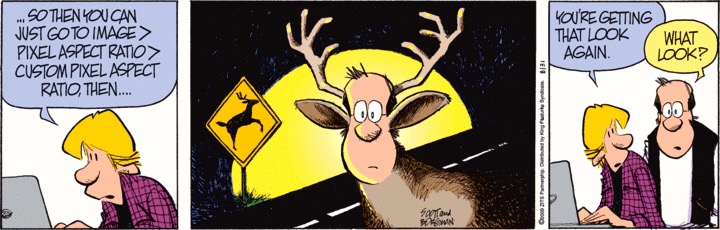 So, my point in this post to my blog is to not be afraid to be the “deer in the headlights.” Don’t be afraid to take on projects or career changes where you will be that “deer in the headlights.” I seem to have moments like that every day, but I am better and growing from it each and every day. I can think of many leaders who have become very status quo about their own professional growth and development. Really, those individuals are like old farm equipment sitting in the fence row rusting. Don’t let yourself become rusty.
I have been reading Water the Bamboo: Unleashing the Potential of Teams and Individuals by Greg Bell. I am so excited to be speaking at the same conference (NWEA Fusion East) this weekend in Charlotte, North Carolina. I can’t wait to have him autograph my book. In his book he suggests developing a personal mission statement. I did. It is: In my professional life, my vision is to always be the “deer in the headlights.” As Bell says, “To accomplish a great vision you will need laser-like focus.” Just imagine the learning I will be doing!
Eliminating Hoops & Hype in Education
 I have had an absolutely incredible first day at the 2014 National Quality Education Conference in Milwaukee, Wisconsin put on by the American Society for Quality and the ASQ Education Division. I was excited to speak on my research of connecting school work to real life, but was more excited to hear the other speakers. Additionally, as always, I learned a great deal from visiting with the other program participants. This post is a compilation of my learning from the first half of the day. You can also check out my tweets from the day by using the hashtag #ASQEd or following my tweets at @ByronErnest.

The day started with Lee Jenkins as the keynote speaker. Lee is education’s expert in continuous improvement. He started by talking about removing the hoops and hype from education. Hoops were described as waste in a school’s time, money, and enthusiasm (staff and students). Hype is a change with no way of know if we’ve improved. The secret to removing hype, according to Jenkins, is to have baseline data to know if an intervention is working or not. Much of Jenkins thoughts on this come from the book: The Toyota Way To Continuous Improvement by Jeffrey Liker.
It is very important that we take an attitude of wanting to be superior to our former selves. If you think about this from a school improvement standpoint it makes perfect sense. We have a starting point and just need to keep getting better from there. Our goal here needs to be to outperform the year before. The secret to this improvement is root cause analysis. When you dig into root causes you find things you never expected to find. When we know the root causes we are able to remove what Jenkins calls “Blamestorming.”
Think about that term “Blamestorming.” We have all done it. We can blame the legislature, political leaders, school leaders, lack of time, too many standards, standardized tests, lack of money, too much money, too many programs, et cetera. But, these are not really root causes. We must dig down deep and find the root causes. Think about this question: Was it the reading program we purchased that improved reading, or the fact that the program required that we triple the amount of time spent reading every day? Think about that. If the root cause was needing to triple the amount of time reading we could have done that without any new program cost, professional development cost, or all the other woes that come with implementing a new program. It is why programs and initiatives don’t work – teachers do! That’s me talking there; not Jenkins.
Remember, if we eliminate the hoops and hype we can optimize our systems for our students and employees and optimize the delivery of our curriculum.
One Man’s Trash…Leadership is Art!
 I am writing this post while in Calgary, Alberta, Canada for a conference. I am always amazed at how the littlest of events will inspire posts for my blog. Allow me to tell a story of another one of those times. With a little free time I was doing what I do best – explore and be curious. As I was exploring the streets of Calgary I came across an interesting sculpture of a horse outside Saltlik A Rare Steakhouse (I am eating there tonight). I have posted a few pictures of it in this post. It is actually a major work of art in my opinion. Basically, the artist took metal pieces of farm equipment and tools and welded them into this great representation of a horse. Really, it is amazing enough that I probably looked at it and analyzed for about an hour. Now, as a farm boy, let me tell you it is awesome!
When I first viewed it, in awe, I first thought of the old phrase, “One man’s trash is another man’s treasure,” because all of these tools and parts would really be of no value to anyone today, from an agricultural industry point of view. Yet, these worthless pieces of metal were looked at by the keen eye of an artist who saw value and placed the pieces together in perfect harmony to form this magnificent representation of a draft horse.
The longer I gazed at the beast and identified the parts of metal (my dad would have been proud) two other thoughts came to mind. Some leaders, and I consider myself one of these, are artists. We take what we have, what we can find, and what we can develop – whether time, treasures, talent in the form of people, or other resources, and mold those into something amazing. Some call this visionary, but I prefer artist. A visionary is not necessarily an artist. A visionary person can see direction and predict what needs to be done, but can’t always see how to put it all together. Take a close look at the horse and imagine all those pieces lying on the ground. A visionary might say, “let’s make something,” but the artist starts taking the pieces and welding them together while seeing the horse the whole time in her mind. The artist says, let’s make a horse,” and then proceeds to do it. I strive everyday to hone my skills as an artistic leader providing wowful educational leadership.
Another thought I had while looking at the iron equine was all the different pieces that were welded together are like all of the different individuals that make up our teams or organizations. Every piece of metal that makes up this horse had a specific role to play. If you look closely there is a tractor seat, part of a sickle, plow shear, cultivator points, leaf springs, and the list goes on and on. Again, every piece had a role. Sound familiar? This imagery hit me so hard and reminded me how important it is to make sure that every person in your business, organization, or school understands his or her specific role in carrying out the vision, mission, and action plan of the organization. This then empowers your team members to work effectively on high achievement of the key performance indicators (KPI) for your organization.
Next time you are working with your team, take a little time to imagine them all as pieces that come together to build the artwork of a successful organization! If you do that you are not just horsing around!!!
1,000 Vs. 30,000 Foot View

30,000′ View
I already wrote one post this week that was motivated by Rich Horwath’s book Elevate: The Three Disciplines of Advanced Strategic Thinking. Click here to read Competere. I also wrote another post View From 30,000 Feet that has thoughts on strategic thinking and leading strategically as well. While finishing reading the book for the second time I was on my way home from Washington D.C. It was nighttime and if I sit next to the window I love to look out and see if I can identify the cities we are flying over.
This time I was struck by how little detail you really can see at 30,000 feet (actually, according to the pilot were cruising at 32,000 feet). I have shared a picture I took out the window at this altitude with you in this post. Then, when we were getting ready to land I took another picture at what I guessed was around 1,000 feet. I have shared that picture in this post, too.

1,000
It was amazing to me the difference in detail that could be made out. This was one of the points that Horwath was trying to make in his book. He contended that the old adage of taking a 30,000 foot view is too high. You are too high up to see anything with any precision.
He likes to use the analogy of a helicopter at 1,000 feet. here, he argued, you can see with precision and clearly recognize what you are looking at. You can see houses, trees, flow of traffic, and trucks backing into docks. So, what did I learn from my experience looking out the plane window?
The 1,000 view enables me to see the whole picture with detail. this will enable me to lead in a way that strategy is developed first, so that great tactics (key initiatives) can be put in place. Think of it this way: as I write this I am on an airplane headed back to Washington D.C. The plane I am on is the tactic. While the plane is what is getting me to my destination; it would probably not be a very successful, or safe, flight without an accurate flight plan. This flight plan and allocation of the airplane to Washington DC is the strategy.
The airline was even able to be strategic and route us around a storm. The reallocation of extra fuel to send us around the storm made our flight safer, smoother, and more enjoyable. The only negative was it took about 8 minutes longer. A pretty good trade off in my book. If this example didn’t make for a great story, I don’t know what would.
From all this I have learned that I must get myself to the optimal height to see the detail needed, but yet still get the big picture. This really becomes a question of strategic insight. An insight is the combination of two or more pieces of information or data in a unique way that leads to the creation of new value. Strategic thinking, then, is the ability to generate insights that lead to competitive advantage.
Putting strategy in action we begin to think about why initiatives need to be pursued instead of just what is being done. This kind of thinking is so important in all industries, but is crucial in education. There are thousands of tactics available that are touted as the next tool for enabling the highest student achievement. But, we have to remember that without strategy we are flying blind, literally! Without a clear strategy and theory of action, we are just completing “to do” lists!
Great strategy enables us to be agile and allocate and reallocate resources to be successful!
 Byron's Babbles
3 comments