Why Pi?
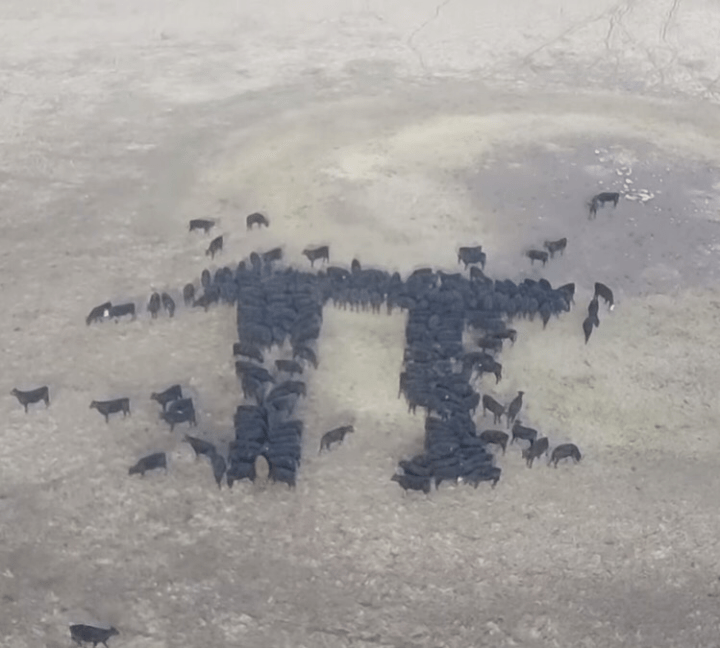 On this special Pi Day, 3.14.15, I thought it would be appropriate to ask the question I always love to ask, Why? Why Pi? Why Pi Day? Why all the fuss? No number is more famous than pi. But why, exactly?
Defined as the ratio of the circumference of a circle to its diameter, pi, or in symbol form, π, seems a simple enough concept. But it turns out to be an “irrational number,” meaning its exact value is inherently unknowable. Ancient mathematicians apparently found the concept of irrationality completely maddening. It struck them as an affront to the omniscience of God, for how could the Almighty know everything if numbers exist that are inherently unknowable? Pi (π) is the ratio of the circumference of a circle to its diameter. It doesn’t matter how big or small the circle is – the ratio stays the same. Properties like this that stay the same when you change other attributes are called constants.
The symbol pi has only been used in a mathematical sense since the mid-18th century. For those of you who weren’t in Greek life in college, π is the Greek symbol for the letter “p.” Oh, to go back to fraternity life!!! It was taken from the Greek word for “perimeter.”
Historically, Pi Day was started by Larry Shaw, a physicist who started celebrating Pi Day at the San Francisco Exploratorium in 1988. It was his idea to celebrate the day by eating pies and marching around circular spaces. In 2009 House Resolution 224 of the first session of the U.S. 111th Congress was passed, designating every March 14 as a day to encourage “schools and educators to observe the day with appropriate activities that teach students about Pi and engage them about the study of mathematics.” Wouldn’t Albert Einstein be proud?
Knowledge is limited. Imagination encircles the world. — Albert Einstein
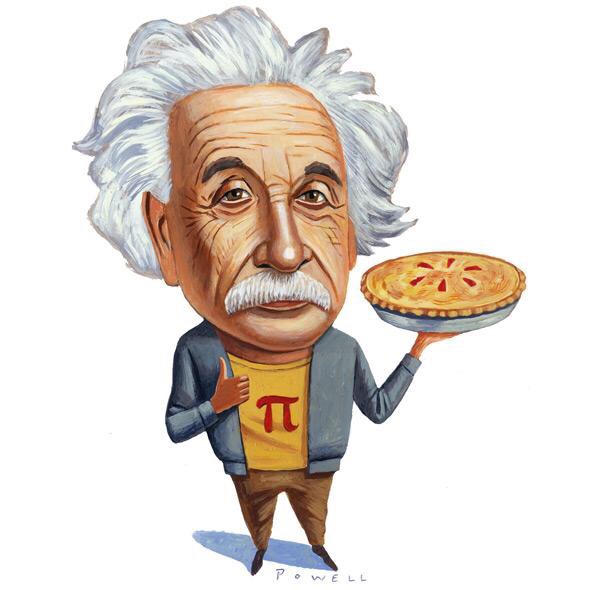
Speaking of Albert Einstein. March 14 is not only easy to remember, it has the added bonus of being the birthday of Albert Einstein, born in 1879 in Ulm, Germany. Happy 136th birthday, Albert! Einstein did not discover Pi, but he shares his birthday with Pi Day. Einstein’s life in science and mathematics started early, with him writing his first scientific paper when he was only a teenager. In 1905, Einstein published several influential works, tackling such topics as relativity and introducing his most famous equation on mass and energy E=mc2. And, in 1921, he earned the Nobel Prize in physics.
No one is really sure who should be credited with discovering Pi. The Babylonians estimated pi to be about 25/8 (3.125), while the Egyptians estimated it to be about 256/81 (roughly 3.16). The Ancient Greek mathematician Archimedes of Syracuse (287-212 BC) is largely considered to be the first to calculate an accurate estimation of the value of Pi. It is also interesting that an approximation of Pi is used in the Bible. The approximate ratio for Pi appears in the Bible in 1 Kings 7:23:
“And he made a molten sea, ten cubits from the one brim to the other: it was round all about, and his height was five cubits: and a line of thirty cubits did compass it round about.”
Gummi Bear University
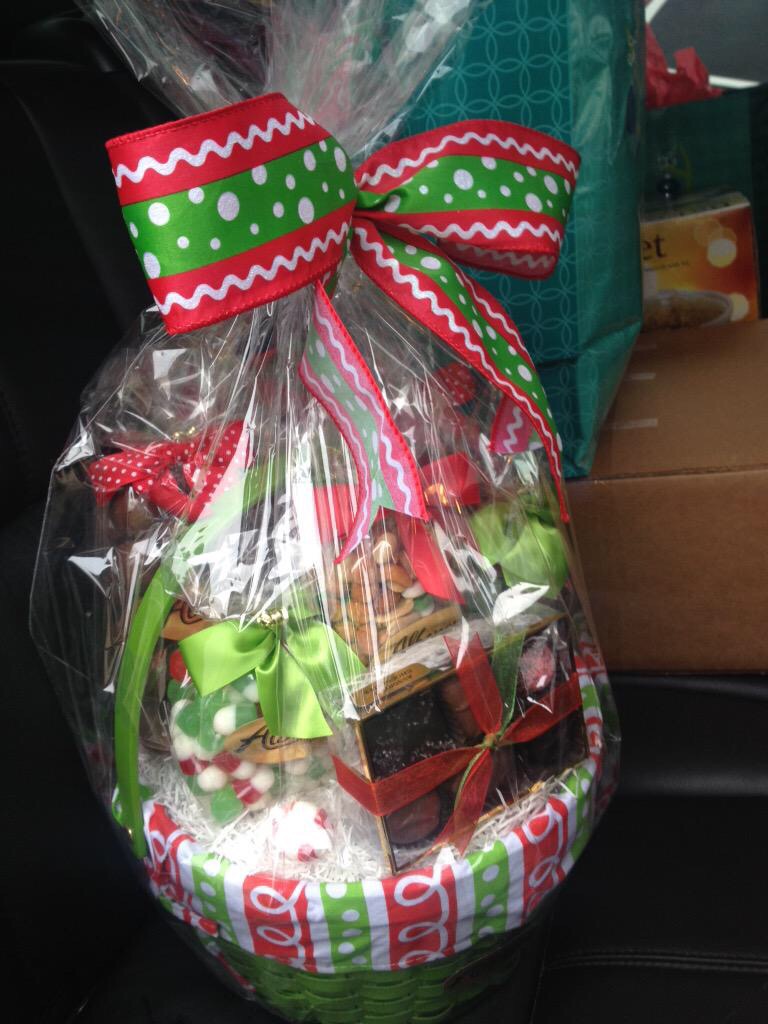
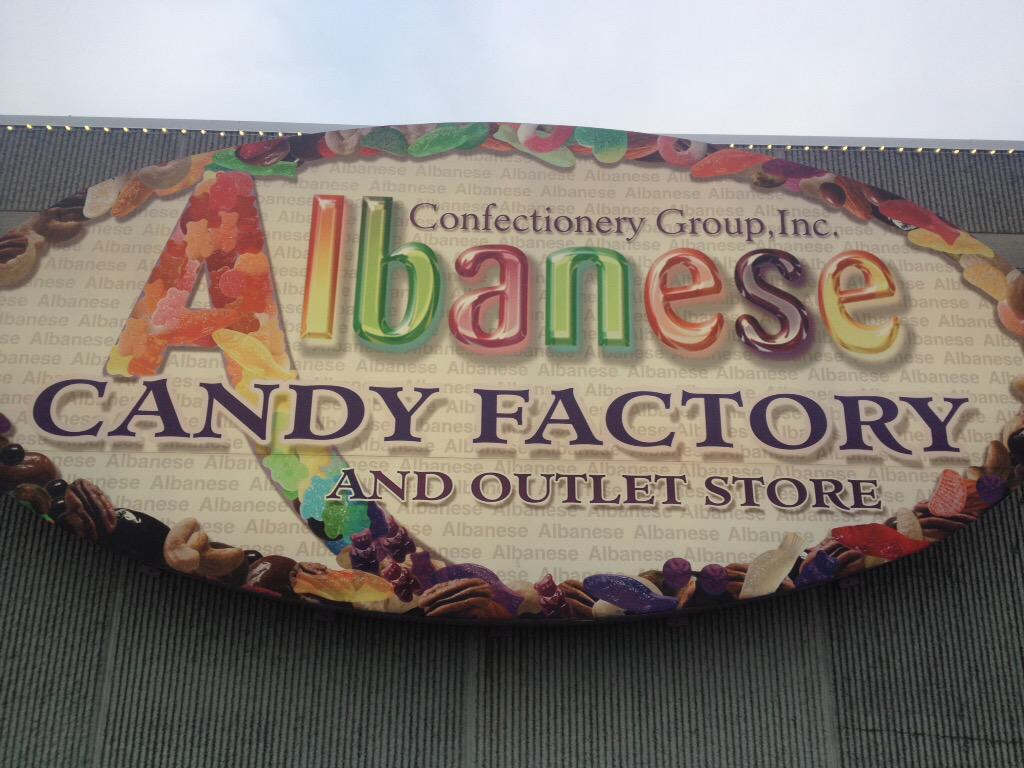
 Yesterday, on my way to northwest Indiana to deliver some Christmas gifts to some of our school families that had extra needs for the holidays I stopped at one of my favorite places to pick up some candy baskets to add to the gifts. Nothing says you care like a basket of chocolate and Gummi Bears from Albanese Candy Company in Merrillville, Indiana.
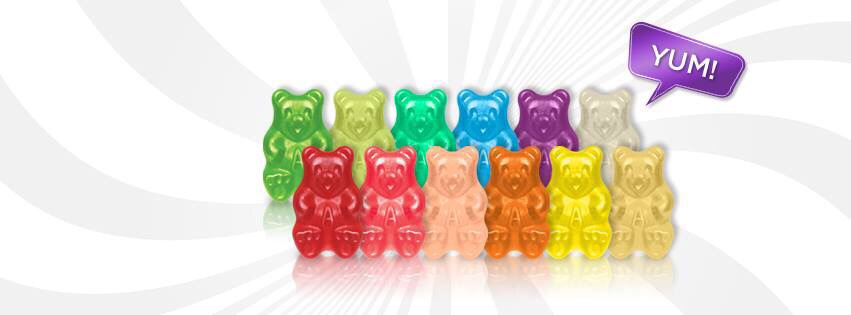
Of course I had to have a bag of Gummi Bears for me to munch on for the drive as well. As I was driving I got to thinking about how Gummi Bears are made. Actually, I got to thinking about how I did not how Gummi Bears are made. So, of course, my personal tutor, Google, helped out. Gummi Bears start as a liquidy solution of flavored gelatin and water. As you cool the solution and draw more water out of the Gummi Bears, they harden into the chewy texture you’re used to. Albanese Candy gets this mixture better than anyone because they have the best Gummi Bears in the world, no lie! Gelatin, is a chain-like molecule that can intertwine and form a solid-like matrix — that’s how Gummi Bears start as liquid, but solidify as water is removed. Can you tell I taught Food Science?
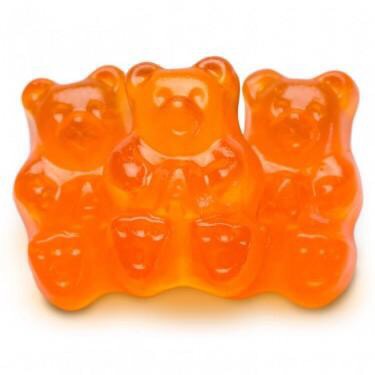
So, by now I’m a little disappointed that as a lifetime lover of Gummi Bears that I had never used them as a relevant connection to a chemistry lesson. Therefore, how about we take a look at how teachers might use the relevant context of Gummi Bears for a lab students can make a real world connection to?
One of the first labs you could do is to make two solutions: a gelatin solution and salt water. Both Gummi Bears and salt water are a mixture of things dissolved in water. When one material is dissolved in another, such as salt in water, the salt is known as the “solute” and the water is known as the “solvent”. With salt water, the solute is salt and the solvent is water. With Gummi Bears, the solute is gelatin, and the solvent is also water. Like Gummi Bears, salt water is a solution of water, but there is a lot less solute (by mass). Salt also cannot form interlocking chains like gelatin. That’s partially why salt water stays a liquid and the gelatin solution solidifies. However, because gelatin molecules are so much larger than salt ions, there may be many fewer (by number) gelatin molecules dissolved in the water. This size of molecules thus sets us up for some great lessons that students can see and experience in a real world context.
The reason numbers and size of molecules are important is because it turns out numbers of molecules play a big role in determining if your Gummi Bear will absorb water or not. This fact sets us up perfectly for a lab and a few great chemistry lessons. And, let’s face it, what student is not going to love doing labs where they get to work with Gummi Bears! So here is the scientific problem to start with: Why do Gummi Bears get bigger when placed in water, but not when placed in salt water?
If you put two solutions of water in contact with each other, water will tend to move from the solution with fewer molecules dissolved in it to the solution with more molecules in it. This is known as ‘osmosis.’ The force that pushes the water is called ‘osmotic pressure.’ With the Gummi Bear, if you put the Gummi Bear in a solution with very few molecules dissolved in it (like distilled water), the water will move into the Gummi Bear causing it to expand. If you put the Gummi Bear into a solution of water with many molecules of solute dissolved in it (more solute molecules than are in the Gummi Bear), then water will leave the Gummi Bear and move into the water. When water moves into the Gummi Bear, you can see the bear expand. However, since the Gummi Bear doesn’t shrink much when water leaves it, it appears the Gummi Bear stays the same.
Just to validate what I am telling you is true. I just did the lab. What is the old saying? “A picture is worth a thousand words.” Check out the picture of two of my blue raspberry Gummi Bears I experimented with (Note: No Gummi Bear was hurt during this experiment; but, many were eaten). Clearly, the Gummi Bear on the right is larger than the one on the left. This was after 30 minutes in distilled water.

So the last question to answer is if salt water has more solute molecules in it than the Gummi Bear (you know by your experiment that it does, but we can prove it with some math too). You can dissolve roughly 400g of salt (NaCl) in 1kg water at room temperature. That’s roughly 2/3 of a mole of salt molecules. Because a single molecule of gelatin weighs 10,000 times more than one of table salt, if you had the same mass of Gummi Bears as the salt solution (1 kg + 0.4 kg), or 1.4kg total, you would have only 1/25th of a mole. So the salt solution has around 10-20 times the number of molecules as the Gummi Bear. Because there are more solute molecules in the salt water, the water moves out of the Gummi Bear, and hence the Gummi Bear does not expand in salt water.
Isn’t science fun when we make it relevant and use a context we can relate to, like Gummi Bears? Think about this as you prepare lessons for second semester.
Hopefully, if you are a teacher you have found something here you can use, or it has helped you to think through how to make your lessons more real for your students. Finding ways to connect, extend, and challenge our students is the most exciting part of teaching in my opinion. The moe we can make the relevant contextual connections of school work to real life for our students, the greater the learning they will achieve.
 Byron's Babbles
leave a comment