Driving Decision Making
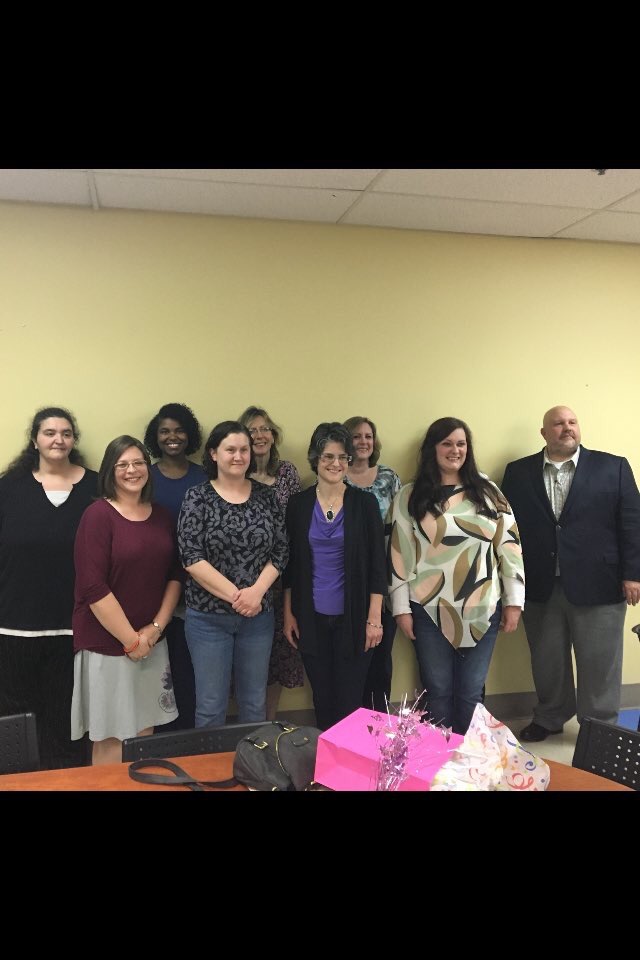 Last night we honored our Outstanding Learning Coaches (parents and family members who work with our students in an online environment) of the Year as nominated by our teachers. It was an honor for me to be there and speak with these great parents and give them a COW (Creator of Wow) Award in addition to the Outstanding Learning Coach Award. I told these parents that with our new vision of “Success for Every Student in Indiana” that we must continue to improve our family engagement. Learning Coaches are a crucial component to the family engagement at Hoosier Academies Network of Schools. I am so proud of the work that our Community Engagement Coordinator, Rachael Borrelli does to engage our families and support our Learning Coaches. She and the teachers are to be commended for implementing this Outstanding Learning Coach awards program.
As I listened to the tear jerking, literally, stories of why these families want their children in our school, I realized we must continue to improve living out our vision, mission, and core values. Every student has a story and a context. These stories are why school choice is so important and parents must have the ability and right to send their children to the school that is the best fit for the context in which they live. This all fit with Lesson #49 of The Disciplined Leader by John Manning (2015). In this lesson Manning (2015) taught us that we must keep customers in the cross hairs of decision making. I blogged about whether we should consider students and parents as customers or whether society is the customer of schools in Leaders Listen, but regardless we need to listen to our families and engage their needs.
If we keep the interest of our families in mind and engage them in the process of educating their sons and daughters it is powerful in improving the achievement and performance of children. As Manning stated, “It is leadership’s responsibility to be an advocate for customers, so focus on them whenever you conduct any business planning.” (Manning, 2015, Kindle Location 2535) As leaders we must always make sure that those we serve are being considered in the decision making process. We will obviously never be able to please everyone, but we must be able to connected the dots between our customer’s needs and our core values for carrying out the vision and mission of the organization.
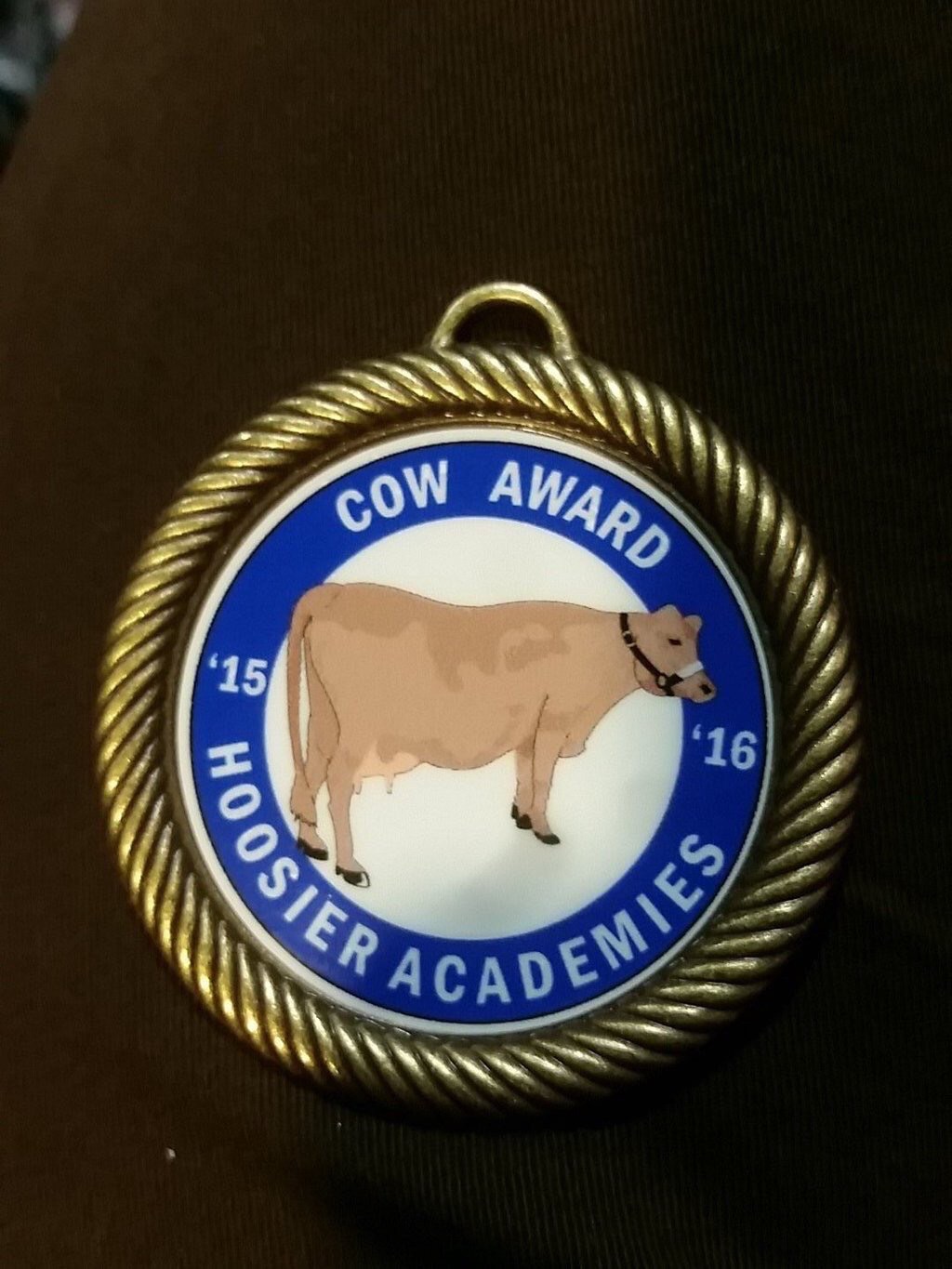
“You should also engage and align your employees to follow your lead when they’re making decisions, too. When those two strategies come together, you’ve got a winning formula for building customer loyalty.” ~ John Manning
It was so great to connect with a group of parents and students last night and it was even greater to witness our teachers interacting with those parents, families, and students. With our newly created vision, mission and core values I am confident we are continuing to improve our family engagement and decision making prowess. What does your organization need to do to improvement using customers in the decision making process?
Leading Learning
Charlotte Danielson Speaking to NASBE Members on April 4, 2016
This past week I had the opportunity to take another deep dive into the new Every Student Succeeds Act during the Legislative Conference of the National Association of State Boards of Education (NASBE). It was also great to not only listen to Charlotte Danielson of the Danielson Group, but I was also able to have a lengthy personal conversation with her about innovation in education, teacher evaluation, and teacher leadership. The thing that impresses me most about Charlotte is that she is always thinking continual improvement and innovation. She made a few comments that are appropriate as we consider leading learning. Let’s face it, students learning is the ultimate goal we need to be achieving in education. The phrases that Charlotte said that resonated with me were, “Learning is done by the learner,” and “Teaching is cognitive work.” As we lead learning I believe it is very important that we keep these two thoughts in mind.
The goal must be to shift the thinking on the student and how the instructional environment supports student thinking. Teaching is a constant work of improvement – a career that involves learning and rethinking our approaches daily. It’s a very interesting concept if we reconsider that we’re always developing our practice. If we are to be successful we must start with the student as the focus and lead the learning from there. The student must always be at the center – this is always critical to success in leading learning.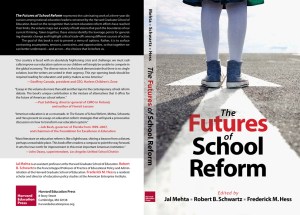
In my studies at Harvard University around leading learning, I have had some key takeaways that came from the idea that, “Learning might be best described as the process by which information becomes knowledge” (City, Elmore, & Lynch, 2012, Chapter 6, p. 153). This when put together with the thought that, “Knowledge…is information plus meaning, where meaning is acquired through experience or education” (Chapter 6, p. 153) frames a fertile environment for innovation in education. It allows us to take education outside the walls of the traditional schoolhouse. It allows school to be any modality where some combination of information, knowledge, and learning flows from some portal to the learner (City et al, Chapter 6, 2012). As a leader of learning I want to continue to use the lens of education as learning instead of school as a physical place of learning. (City et al, Chapter 6, 2012). These key takeaways came from studies of the book The Futures of School Reform (2012) edited by Mehta, Schwartz, and Hess.
As a state board of education member and someone that works in education leadership and policy development, I want to continue to make sure and educate fellow policymakers on the learning core and make sure we are leading learning and not just leading school as usual. I want to continue to improve leading learning from a policy side to help others understand how to make policy meet reality.
Big Opportunity Leadership
 On my flight home from Washington DC last night I had many things on my mind. One of which was the newly signed into law Every Student Succeeds Act, or ESSA as most people refer to it. ESSA was the reason I was in our Nation’s Capitol for the National Association of State Boards of Education (NASBE)Legislative Conference. We had the opportunity to work through what state boards’ role will be in the implementation of ESSA. I was reflecting on how much work there was to be done implementing this new and great bipartisan law that gives a great deal of power back to the states – Patrick Henry would be proud. Consensus has been reached to pass ESSA into law and now it is time for implementation. John Manning (2015) referred to this as execution in Lesson #40 of The Disciplined Leader. As I was reflecting, the pilot came on and said we had 327 miles left to Indianapolis. Because the Wright Brothers are my idols, I could not help but say a quick thank you to them for executing their plan for first flight. They took advantage of what John Kotter calls the “Big Opportunity.” Because of them, I am able to be home from Washington DC in a little over an hour. That is one big opportunity!
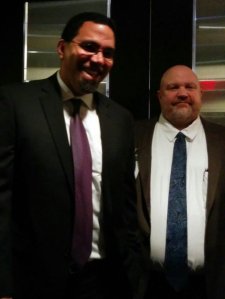
Secretary of Education John King & I
Manning (2015) discussed creating ownership in solutions. ESSA empowers many to take advantage of the big opportunities. I had the opportunity to be with our recently confirmed Secretary of Education John King, yesterday morning and we discussed the opportunities for state legislatures, state boards of education, schools, and many other stakeholders to work together for implementation of ESSA. This implementation really plays into John Kotter’s Dual Operating System approach to change. As we implement ESSA in Indiana I hope we will use the five premises from Kotter as our guide for taking advantage of the “Big Opportunity” – equity in education for all students. Secretary of Education King also left us with this very important thought, “Schools save lives!” Again, that is one big opportunity. These five guiding principles are:
- Having many change agents – by having state legislatures, state boards of education, state departments of education, and many other stakeholders involved in the collaborative implementation we should have innovation and creativity for coming up with the best practices for our students.
- Creating a “want to” not “have to” mindset – Now that the power has been placed in the state’s hands for implementation of ESSA, we must be excited and have a “get to” approach.
- Head and heart, not just head – This is easy when we are implementing law to serve our children.
- Leadership, not management – This is important for me as an Indiana State Board of Education member. I must do my part to provide the leadership to keep the strategy of ESSA implementation in tact.
- Many systems, one organization, lose the hierarchy – everyone must be a part of the “big opportunity.” Again, there must be collaboration from many different stakeholders.
 Manning (2015) taught us to “stay the course” and execute. What “big opportunities” do you have on the horizon for implementation?
The Vital Few of Leading My Team
 It is now time for my favorite activity that John Manning (2015) has readers do as part of reading the 52 lessons in The Disciplined Leader. The book is divided into three different parts and Manning (2015) instructs readers to pick their own three vital few from each part that he/she needs to work on. I really like that this is a part of the reading, as it provides a way to reflect on what has been learned in the reading and a chance to put the learning into my own real world context. In other words, the learning meets reality.
Click here to read my reflection and my vital three from Part I, The Responsibility To Lead Yourself. This post will be a reflection of Part II, The Responsibility To Lead Your Team. Part II included the following lessons:
- Choose the right words
- Put your game face on
- Be in the moment
- Focus on what is right, not who is right
- Don’t cross the line
- Treat everyone fairly
- Honor your commitments
- Don’t overuse the “I” word
- Surround yourself with great talent
- Hire who is right
- Empower employees
- Hold your team accountable
- Check up on daily goals
- Give effective performance feedback
- Spot opportunities to coach
- Demand more solutions
- Encourage disagreement
- Advocate for your team
- Recognize your employees
As you can see, Part II in The Disciplined Leader had some pretty heavy stuff. It took some studying and long reflecting to decide what my vital three would be. Since I had blogged about all 19 Part II topics, I also went back and studied all my posts. Here are my vital three:
- Empower employees
- Surround yourself with great talent
- Give effective performance feedback
Anyone who works with me or has spent very much time with me will probably not be surprised by these vital three. Empowerment and being surrounded with great talent is essential to the success of any organization. Performance feedback makes the top three because this is an initiative I just formed a task force of teachers to begin working on.
Empower Employees
This is a huge deal for me. I strive to create a “make it so” culture. Our team members are encouraged to be creative, innovative, and self starting. My desire is to have team members come to me with such great, thought out ideas that all I have to do is say, “Make it so!” What I have found is that the more I say “Make it so!” the more innovative and great ideas I get. This is such a powerful tool for employee engagement. We know that employees being engaged and and believing that what she is doing makes a difference is the number one item on the job satisfaction list.
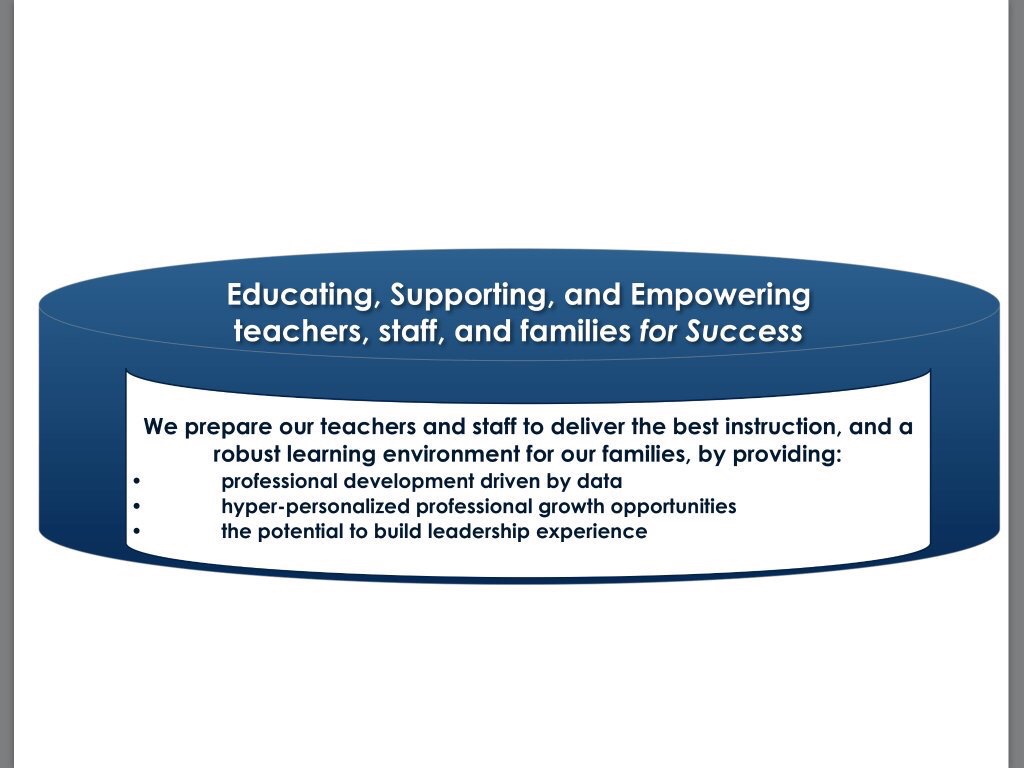
Just last night we had the perfect example of this: A team of teachers presented our new vision, mission, and set of core values to our school board. This was a project of our Focused Leader Academy and our teachers worked through whole rewrite process as well organizing a board retreat session and other stakeholder feedback sessions. The beauty of the process is that the teachers owned it. And, one of the byproducts was the learning and professional growth that went along with the project. Therefore I would add to Manning’s (2015) on empowerment and say that with empowerment also comes professional growth. In fact, empowerment and professional growth are one of our core values:

Surround Yourself With Great Talent
This is so easily said and much tougher done. I am somewhat of a subscriber to the theory that talent is overrated. Skills must be developed. None of the great athletes, musicians, or artists were born with skills and talent at the top of their games. We all have had to be bad at something to get good and go on to be great. Therefore, surrounding ourselves with great talent also means we have the responsibility to help our team members grow and develop. I call this hyper-personalized professional development. This takes work. This takes a lot of work to imbed in cultures where this has not been a part before. It is, however, crucial for a culture of excellence.
This also relates to empowering our team members. If we want to empower our team members to make decisions and have autonomy to get the work done, then we must provide the hyper-personalized professional development necessary to help them become the great leaders they can be and have the necessary skills to do their jobs at the highest level. It would be ludicrous to empower employees to the level of a “make it so” culture without also provide the necessary knowledge to do the job. This would be the definition of chaos. Therefore, a vital part of my role as a disciplined leader is to go after top talent and then do everything possible to provide for the utmost personal professional growth.
Give Effective Performance Feedback
This vital part of being a disciplined leader is so related to my other vital three in this part of the book because at the core of performance feedback is professional growth. Our teacher performance evaluation process and tool that I inherited leave a lot to be desired. The reason for the deficiencies is how it was developed – top down. Basically, it was a “here it is” development process. There is pretty compelling research that suggests that affected by the performance feedback process should be heavily involved in the development. Leadership needs to come from those affected by it.
My goal for the task force I mention earlier is to come up with an evaluation process that is much more formative than punitive. There must be more regular check-in conversation and not just the once or twice per year evaluations. We are doing our teachers a disservice if all our principals do is check up on teachers once or twice a year. I am looking forward to seeing the work that our teachers do this.
Now that you have had the chance to learn about my vital few, what would you choose as your vital few?
Matching School Work To Real Work

Andy’s Baling Equipment
Last week I had the annual pleasure of being at the county fair showing dairy cows with my son. The other great part of the week is being able to visit with friends and former students. One visit I look forward to every year is from former student, Andy Clark and his family. I had him in Fundamentals of Agriculture Science and Business and Welding Technology the first year I was at Lebanon starting the Agriculture Science program. Andy is a 2005 graduate of Lebanon High School. I love catching up with him each year and hearing about all of his successes, family, and latest learning.
I have to give a little background on Andy for context. He is, and was as a student, extremely intelligent. The challenge for Andy was that he did not find most of school relevant. He grew up on a farm and is now a partner in that family farm. Andy is one of the reasons I have done so much research on teaching science in the relevant context of agriculture. Andy’s mother and I had many a conversation about her concern for Andy graduating. That concern had nothing to do with ability, and all to with him not finding relevancy in school. He did not want to be there! He wanted to be home getting on with his life as an agribusinessman.
In contrast, Andy excelled in the classes I had him for. In fact, on a final presentation about welding, Andy said he and his partner could go into such detail he could take the whole 90 minute block class to do the demonstration. I told him if he could, and the content was great, I would give him an automatic “A.” Well, you guessed it, he got the “A!” He and his partner even bought Reese Cups to give out to classmates for correctly answered questions – now that’s student engagement. Interestingly, teachers would ask how I could get him involved and so engaged in class. It really didn’t have much to do with me, but more to do with the fact that school work in my classes matched real work in Andy’s world – Agriculture. Again, as I said earlier, Andy just wanted school to be over so he could get on with his life of farming.
Andy was not alone. Most students need the relevant connection of their real world, their school world, and their virtual world. Education exists in the larger context of society. When society changes – so too must education, if it is to remain viable. The latest movement to college and career readiness attempts to do just this. Although the phrase “college and career readiness” has become increasingly popular among federal, state, and local education agencies as well as a number of foundations and professional organizations, it can be challenging to define precisely. In today’s economy, a “career” is not just a job. A career provides a family sustaining wage and pathways to advancement and requires postsecondary training or education. A job may be obtained with only a high school diploma but offers no guarantee of advancement or mobility. Being ready for a career means that a high school graduate has the English and mathematics knowledge and skills needed to qualify for and succeed in the postsecondary job training and/or education necessary for their chosen career (i.e., technical/vocational program, community college, apprenticeship, or significant on-the-job training).
The point of this post is that Andy has gone on to become a successful businessman. Of course, readiness for college and careers depends on more than English and mathematics knowledge; to be successful after high school, all graduates must possess the knowledge, habits, and skills that can only come from a rigorous, rich, and well-rounded high school curriculum. I would also add work ethic and a commitment to lifelong learning to the list. I know that Andy works very hard every day. I also know Andy is committed to learning and professional growth. I was so proud last week to hear him say, “Knowledge is power.” Andy went on to say he was shocked at how much time he spent studying on his smartphone. He said, “I’ll sit down at night and start reading about something I want to study and the next thing I know it is 4:00 in the morning.” I just wish we would have done a better job tapping that learning behavior while Andy was in school. Once again proof that we must continue to connect school work to real work for optimal student engagement and career readiness.
Really, I wish we would just talk “student success” as opposed to just college and career readiness or any other terms that people want to add. Student success is a better way to look at it because the ultimate goal is to have our students learning to learn. We must recognize that youth will choose their own paths in life, with some young people charging forward on a traditional four- year college pathway and others moving equally quickly to pathways that are more technically or occupationally oriented. For a student to be successful, they must be able to learn, apply, and adapt in all subject areas. In order to engage the Andy Clark’s of our classrooms we must integrate higher-order thinking skills and real world problem solving into core subjects making learning more rigorous, relevant, and engaging. Both core subject knowledge and skills are necessary for readiness in college, work, and life. Preparing all students with content knowledge and essential skills will empower them to meet new global demands. Thus, setting our students up for SUCCESS.
Turmoil In Education: No One Right Way To Learn

Korean War Veteran Jerry McCandless Teaching Students From Michigan
Yesterday I had one of the most incredible experiences of my life. On Armed Services Day (May 16) I had the opportunity to serve our Veterans as a Guardian for our Honor Flight sponsored by The Honorable Order of Kentucky Colonels. Once I get sorted through all of my emotions from that experience I will write a post, but for today I am going to use the Veterans as the heroes of a post on education reform. The quote above was actually said by one of the students in the picture. The Veteran, my new friend and hero, Jerry (in the picture), did an incredible job of bringing history alive for these students from Michigan. I have to say he brought it alive for me, too! As a believer and researcher of real world context in education this really drove home the fact that students need to be able to make the connection of what they are learning to their real world context. In fact, it has really got my wheels turning as to how we might, more intentionally, on our Honor Flights connect students with our Veterans. What an untapped wealth of wisdom and knowledge for the students we serve.
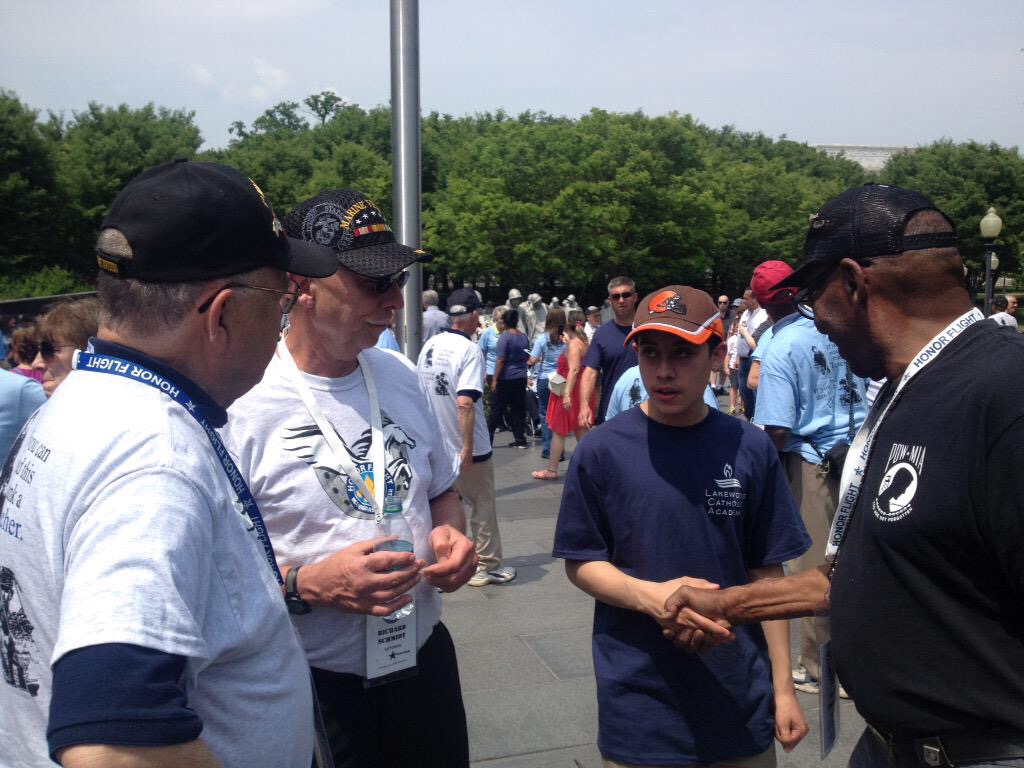
Veterans Jerry McCandless & Richard Schmidt Bringing History Alive For A Student
It was so ironic that this week’s lesson in Marciariello’s (2014) A Year With Peter Drucker was on education. Also, it is ironic that as I type this this post I am sitting in the airport waiting to board a plane for New Orleans for the American Federation for Children’s National Education Policy Summit where I am speaking on a panel on school choice and education reform. Drucker called for a systematic innovation in our schools (Maciariello, 2014). Drucker believed the heart of remediation was a “focus on strength.” He also believed we must stop “treating by patching.”
“Perhaps the time has come for an entrepreneur to start schools based on what we know about learning, rather than the old wives tales about it that have been handed down through the the ages.” ~ Peter Drucker
In September 2012 the Intelligence Unit of “The Economist“ had the United States ranked 17th out 39 countries plus Hong Kong, who was ranked third in Education Attainment, in Cognitive Skills (reading , math, and science) and Education Attainment (literacy and graduation). Bottom line: we have some work to do. “Literacy” traditionally means subject knowledge. In a knowledge society, however, people have to learn how to learn (Maciariello, 2014). The knowledge society also requires lifelong learning. For this we need a discipline of learning. We must also remember that reading is the basic skill needed for lifelong learning.
 Make sure we are aware that learning, to be most effective, should be individualized – otherwise it can be torture!
We must start with the question, “How does each of our students learn most effectively?” Then, and only then, can an individualized plan for lifelong learning be developed. The goal of teaching should be to find the student’s strengths and then focus them on achievement. Students have different patterns of learning – teachers must unlock these patterns. We need to lead our students to great achievement. We need to create a real world connection, excitement, and motivation just as our Veterans did for students yesterday in Washington D.C. This relevancy of context will go a long way in creating intrinsic motivation for the rigorous, disciplined, persistent work, and practice that learning requires. Education is a mentoring process.
Most schools and colleges are organized on the assumption that there is only one right way to learn. If we are going to be successful in truly reforming education we must differentiate the choices students have for schools. I believe in school choice, but we must actually have choices for our families, and then help them make those choices. If all schools are using exactly the same cookie cutter approach, is it really school choice? Another question to ponder in closing, “How do we create more opportunities for our students to glean from the incredible wisdom of our Veterans like Jerry McCandless and Richard Schmidt?
Reference
Maciariello, J. A. (2014). A year with Peter Drucker: 52 weeks of coaching for leadership effectiveness. New York, NY: HarperCollins Publishers.
Meaningful Measurement
 This week’s lesson from Peter Drucker started with a story from when Ronald Reagan gave a campaign appearance at Claremont College. He was telling about how different it was at the time in 1980, than when he went to college. When discussing all the entertainment and laborsaving devices and space exploration, he said: “My generation didn’t have these; we invented them. (Maciariello, 2014, p. 139).” Even today there will be fundamentally new concepts, new ways of seeing the world, new ways of relating as individuals, as organizations, and as countries that will need to be developed. This is why Peter Drucker believed that, even in 1992, we were in a “very dangerous, a very upsetting, and a very exciting period (Maciariello, 2014, p. 141).”
These upsetting, dangerous, and exciting times that Drucker refers to, and I still believe we are in, also leads to a great deal of uncertainty. Drucker talked about realizing that the things being measured for success are not meaningful anymore (Maciariello, 2014). This is where all industry and education are alike; we must have meaningful measurement of metrics that matter. This is exacerbated by the fact that we live in a “mixed mindset” society as opposed to a “growth mindset” society. We have such a fear of failure because have become so fixated on winners and losers as opposed to getting smarter. We need to use all our knowledge and insight from all sources, including the humanities, life sciences, physical sciences, economics, history, and social sciences to bring about effectiveness and results. According to Drucker (Maciariello, 2014), the knowledge society has contributed to income inequality and uncertainty (this whole idea of winners and losers).
 Education certainly is a prerequisite to competing and succeeding in our global economy today. This, in turn, creates exciting times for education. This is why I believe we must shift to a much more student-centered accountability that is framed on a growth mindset. In other words, we should weight student growth more heavily than proficiency. We should be measuring credits earned (as many students transfer from school to school already credit deficient), courses failed, attendance, and classroom engagement. We should also develop alternative accountability definitions that include mobility, date of enrollment, prior achievment, persistence and course failure. We should also include a growth measurement for high school students, which may require a pre-test in courses that have end-of-course assessements; although this is an additional assessment, a pre-test will provide actionable data that will lead to individualized instruction. I think you get the idea from this that I believe we must find out where the students are and then develop an action plan to get them there. This is very much a growth mindset approach to facilitating highly effective instruction and learning for the students we serve.
In closing, I would challenge you to take an introspective look at your organization, business, school, or governmental entity you lead and ask yourself, and your colleagues “Are we measuring the right things, do we have a growth versus fixed mindset, and how should we be measuring success?” Let me know your thoughts.
Reference
Maciariello, J. A. (2014). A year with Peter Drucker: 52 weeks of coaching for leadership effectiveness. New York, NY: HarperCollins Publishers.
Educating Outside The Walls
 I spent Monday and Tuesday of this week at the Indiana State House with a group of our teachers. Our mission was to demonstrate to our state legislators how virtual education really works. We set up in the House Committee rooms and had our teachers facilitate learning for our students from there. Many legislators came down and spent time with our teachers and we really appreciated the opportunity to share. At stake, right now, is a bill (HB 1001) that came out of the house calling for 100% funding for all schools. When the bill went to the Senate the amount was reduced back to the present level of funding of 90% for us, as a virtual charter school. I absolutely believe that our school, Hoosier Academies, should be funded at 100%. I believe all schools serving Indiana’s students should be funded equally at the 100% level.
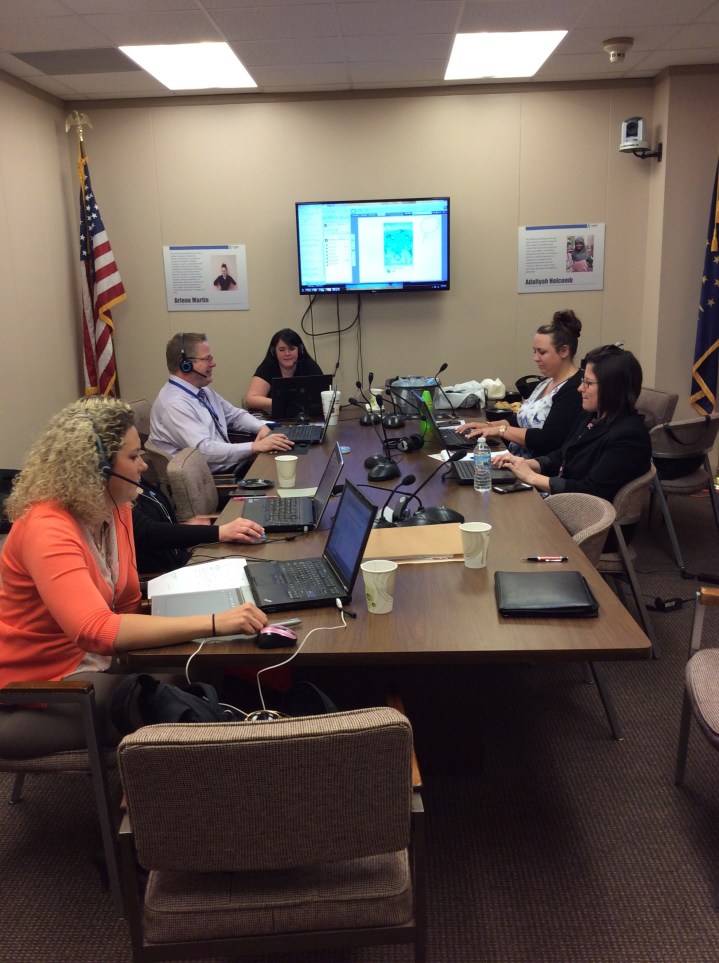
Hoosier Academies Teachers Teaching In Room 156A Of The State House
 Representative Dave Ober, from Albion, said it best this week in a tweet: “The education philosophy in Indiana is that money follows the child. We need to make that commitment clear.” I have blogged about leading with certainty and clarity before (click here to read), and I consider this leading with both certainty and clarity. I had the opportunity to visit with Representative Ober this week and he certainly understands what is at stake. He is displaying his commitment to ALL Indiana students. In my personal growth time this morning I was reading David McCullough’s Truman. McCullough stated that former President Harry S. Truman hated the words “progressive,” “liberal,” and “reform.” Truman wanted everything to be “Forward Moving.” To have our schools and education to be “forward moving” there needs to be 100% funding for all schools, regardless of type.
One of the issues about funding right now relates to virtual schools. Let’s dive into the virtual thing. Really, virtual education is very “forward moving,” as Truman would have said. I hope we can all agree that all students can learn and that all students learn differently. If that is the case, then why would we think that all students learn best in a building with walls and a roof? We need to think “outside the walls.” Having just spent time with my Smithsonian Institution friends in Washington D.C. this past week, I can tell you they embrace the fact that not all students will be visiting, or even have the means to be able to visit within the walls of their museums. In fact, the Smithsonian Institution wants you to take advantage of visiting virtually. Truly, the Smithsonian Institution is equal access to everyone. EVERYONE!
I’ll give you an example: The Wright Flyer, on display in the Smithsonian National Air and Space Museum, was scanned using a 3D laser, which produces a highly detailed and accurate image of the object. The 3D Wright Flyer exhibit is part of the Smithsonian Institution X 3D Collection, which provides a very detailed look at objects. The 3D Explorer allows visitors to rotate the objects on the screen and includes guided tours. The X 3D Collection provides access to many of the Smithsonian Institution’s 137 million objects of which only one percent is on display at any one time in the 19 museums, nine research centers, and the Smithsonian National Zoo. This is very “forward moving” and is in line with the Smithsonian Institution’s core mission – “The increase and diffusion of knowledge.” The Smithsonian Institution is certainly thinking “outside the walls” to provide extensive public outreach and educational programs.

Image Of The Wright Flyer From The X 3D Collection
Just like the Smithsonian Institution, we in the virtual education world, are serving as pioneers and trailblazers in online and blended education. We continue to learn how best to navigate innovative ways to deliver content and facilitate engaging lessons for students. Our “forward moving” and “outside the walls” approach includes a data-driven academic plan, increased professional development for our teachers, individualized learning plans for all students, strengthened family and stakeholder engagement, and a targeted credit recovery program.
A key to the success of any organization is understanding what makes it distinct. At Hoosier Academies we are distinct because we are carrying out, as called for in the state constitution, education equally open to all and by all suitable means. We know in our case what makes us unique is the fact that students served by Hoosier Academies are able to be fully online (statewide in all 92 counties) or have the option to go to our hybrid schools (face to face two days a week and online the other three) in Indianapolis. What also makes us distinct is that we have a 67% mobility rate. We must embrace the fact that in many cases we are a short term solution to many of our students. This mobility may be because of health issues, bullying, differentiated learning needs, or students who have special circumstances such as being an Olympic gymnast. For many students we are the only available choice in a state that embraces school choice. I believe we are beginning to make progress because we have begun to answer the question of what what makes us different and really owning it. This realization has only come about because of really asking and listening to the students and parents of the students we serve about what they believe we should be trying to accomplish for them. We have a long way to go, but are making progress.
This discovery has come about from stories, for example, of the family whose daughter has been with us through 6th, 7th, and 8th grade, because of being bullied at her local school, but, is going to try going back to her local high school next year. Another family, who I visited with recently in Gary, has their children enrolled in Hoosier Academies because they are scared to have the students walk to school. We also have students with medical conditions that do not allow them to be enrolled in a traditional setting and who are flourishing in our modality. Another story comes from our starting a National Honor Society this year and how the parents of a student with Down’s Syndrome who was inducted stated that there was no way their daughter could have ever been as successful, academically or socially, in a traditional setting. These stories are anecdotal and qualitative proof that Hoosier Academies is an interim solution for many families. We are a place for students to go for whatever length of time the parent believes is necessary. Furthermore, more than one-half of parents of high school students and one-third of elementary students will choose this option to catch their child up academically.
The internet has changed the way people accomplish so many things, including the education of their children. Thanks to technological advances, students aren’t limited to learning in a traditional classroom environment. Many parents are choosing virtual schooling as a viable educational choice that provides a range of benefits. Virtual schooling provides the same opportunities for children and teens, allowing them to use technology to learn and grow in the familiarity and comfort of their home environments. Online school programs may also provide students with more of the personal attention they need. Teachers are often better able to focus on each student’s unique needs and provide a more customized approach to learning. In a perfect world, no child would ever face bullying or other social struggles in school. In reality, however, many children deal regularly with bullies and troubling social interactions that make learning nearly impossible. Many students we serve also face classroom-learning challenges because of their own behavioral or emotional needs. Online learning modalities allow students to learn in a safe and secure environment that is free from the social and behavioral concerns typical of traditional classrooms.
Again, if we truly believe all students learn differently we need to embrace the fact that students will need individualized learning environments as well. Let us be “forward moving” in our continued improvement of all learning environments for tomorrow!
Responding With Mindfulness

Being mindful in our responses ensures integrity in our interactions and solutions to opportunities (what I call challenges and problems). Absence of mindfulness raises the likelihood of emotional reactions and unproductive arguments instead of thoughtful and effective responses. We need to gain control through attentiveness and awareness, centering ourselves to lead our solutions and conversations fruitfully, honestly, and fully. It is easy to be pulled into reacting, and it takes more effort to respond. However, with mindfulness practices, I believe exchanges can be more productive and greater integrity can be maintained.
As we maintain our mindfulness through inner calmness and strength, we listen to what is being said more intently, and we watch the way in which it is being said. Also, we truly can begin to look at the challenge as an opportunity. We become more aware as we formulate our response. Our raised attentiveness enables us to respond more thoughtfully and, if needed, begin to direct the exchange in a direction of collaboration or more productive areas of discussion. Our mindful and responsive solution can truly become a new adventure and great journey.
Let me tell you the story of my morning. I am in Washington D.C. with a group of our Hoosier Academy families. They really wanted to go to the Smithsonian National Zoo. Well, as a former Smithsonian Teacher Ambassador and Smithsonian Diffusion Award Winner, I was ready to do anything Smithsonian! We arranged for our charter bus to take us there in the morning. Then we were going to have the bus take us at noon to the Smithsonian Castle and Enid A. Haupt Garden to meet up with some of my Smithsonian friends for a research experience. On the way to the zoo, our staff person coordinating the trip got an email telling her that we could not use the bus at noon. Ok, I’m not going to lie, my first thought was to react, but then I practiced mindfulness. Keep in mind the zoo is 3.8 miles from the Smithsonian Castle. Not an easy walk for a group of 55. Also keep in mind that almost all in the group had never been to Washington D.C. – certainly, never been on the Metro!
As I took a moment to become mindful, however, I decided that with a Metro station two blocks from the zoo at Woodley Park, and then a short ride with one change from the Red Line to the Orange or Blue Line at Metro Center, it would be a cheap, $2.75 per person, experience and journey for our students and families. So, what did I do? While the group was exploring at the zoo, I went and purchased 55 Metro passes. What a great experience and adventure it was! Bottom line: we all got to Enid A. Haupt Garden on time for our program (see picture below)! I had students telling me it was the greatest thing they had done. All of our participants were glad to have had the experience. What a great lesson for our students to learn how to use mass transit. 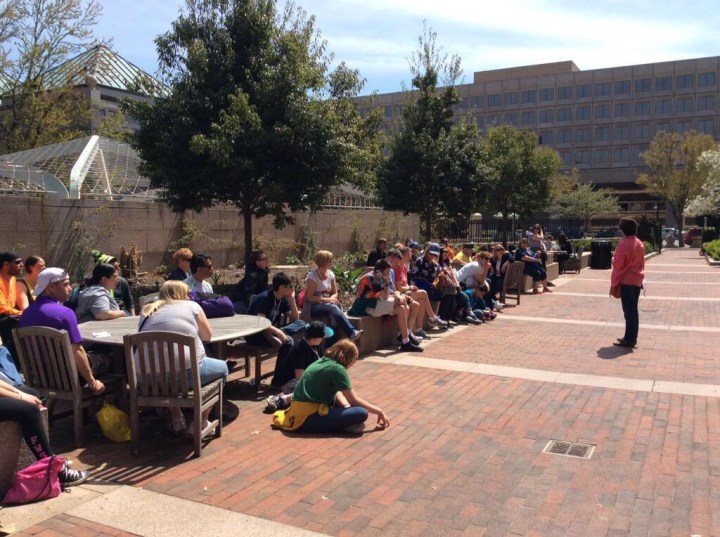 While there may only be a slight difference between the words react and respond. In practice, there seems to be a gulf of difference. When people react, it seems to be defensive and snap, poor decisions are made. By practicing mindfulness, however, responding is more thoughtful. Mindful responses contain reasoning. If mindfulness is being more centered within and aware of others, then this is a practice we need to embrace to prevent reacting and focus on responding. Being mindful in our responses ensures integrity in our interactions. It might even enable us, as leaders, to provide opportunities of great adventures for those we serve!
Stretching The Vessel of the Mind

It is hard to think about the brain and learning without reflecting on Albert Einstein. Reading Walter Isaacson’s book, Einstein, causes one to think about whether every individual has the ability to develop and use his or her brain in the way Einstein did. From an educator’sperspective I found it amazing that Einstein always believed that he had no special talent – he was just as he said, “passionately curious.” This points to the important fact that we have atremendous obligation to help our students develop and find their curiosity. Einstein posited the brain was wired and set up as it was, but we all have the ability to develop the mind (Isaacson,2008). This reinforces the belief that every student can learn. It is important for us to develop and create minds that question. Individuals with intuition and imagination are crucial to our future.
So, how do we develop a student mind that is curious, questions, and has imagination? If learning was as simple as pouring the pitcher of knowledge into the empty vessel of a student’s brain then all education would require was a person to speak didactically on a subject, and students would listen and gain the knowledge themselves. Unfortunately, learning takes a lot more than merely listening to an authority speak, regardless of his expertise and reliability.
There are two types of learning: informational and transformational. The first type (informational) is that which we use as a lower level form of learning. We are just gaining new information. During the learning process this informational learning is placed in short term, or what is also known as immediate memory. Immediate memory acts as a temporary site whereinput is briefly stored until the brain decides whether to erase the memory as unimportant or toprocess the memory. To use the metaphor of the pitcher of knowledge filling the empty vessel used earlier, informational learning will only fill our vessels so full.
We then need the second type of learning, transformational, in order to stretch our learning (Mezirow, 2000). The unique quality of human beings is our ability to think flexibly about new situations, comparing them intelligently to all past experiences, and then to do something that is uniquely appropriate, bringing about desired objectives (Taylor, 2007). When educators facilitate this type of learning the brain is stimulated to put the information learned into working memory where processing of the information begins. In order to engage the working memory the students must begin to work with and actively use the information learned. By engaging the working memory by using the learned knowledge the long term memory then creates meaning enabling the student to make sense of the material. Ron Ritchhart promotes thinking through the use of “thinking routines” (Ritchhart, Church, & Morrison, 2011). These routines then help teachers to establish a classroom culture that supports thinking (Ritchhart, 2014). Relating lessons to real-life situations, and being enthusiastic creates meaning for the students. We must know our learners’ backgrounds so that we can relate to the student’s past learning and allow the learner to understand and make sense of the material being presented.
Transformational learning provides us with new ways of thinking (Taylor, 2007). This can actually change the form of the metaphorical vessel of the mind. In fact this new stretch, and.extending of thinking actually gives more room in the vessel of the mind for greater and more magnificent thinking. Creating lessons using real-world contexts that the student can beenthusiastic about and make sense of immediately can do this. Think about the student who says to their teacher: ”I was confused before you started…now I am confused at a higher level.” This is not to say that educators should teach by confusing students, but students do need to be appropriately confused. In order to achieve this stretching of the vessel of the brain, teachers must facilitate learning is such a way as to use all parts of the students brain by including reading, writing, verbal processing and images in lessons and other modes of learning. Because the mind is tethered to what our bodies are doing and the senses being used, educators must be cognizant of making sure that our students’ bodies and brains are in sync.
Many educators believe it is important to teach students to think. These same educators teach thinking (reasoning skills and problem solving skills) skills, which are important, but if we want students to use these skills we will need to do more than just teach the skills. Research shows that motivation, values, cultural context, and alertness to opportunity are factors important to developing intellectual behaviors (Boix-Mansilla & Jackson, 2011). These factors make up thinking dispositions, which are important characteristics of good thinkers. To become educated and worthwhile citizens, our students must learn a wide range of skills. Brain research must continue to be linked to facilitation of learning. We must use what we know about the brain to effectively engage students so they are motivated, creative, and understand the relevance to their personal lives.
References
Boix-Mansilla, V., & Jackson, A. (2011). Educating for global competency: Preparing our youth to engage the world. New York: Asia Society.
Fischer, K, & Immordino-Yang, M.H. (2008). he Jossey-Bass reader on the brain and learning. San Francisco, CA: John Wiley & Sons.
Isaacson, W. (2008). instein: His life and universe. New York, NY: Simon & Schuster Paperbacks.
Mezirow, J. (2000). Learning as transformation: Critical perspectives on a theory in progress. San Francisco: Jossey Bass.
Ritchhart, R. (2014). Creating Cutlures of Thinking: The 8 forces we must master to truly transform our schools. San Francisco: Jossey-Bass.
Ritchhart, R., Church, M., & Morrison, K. (2011). Making thinking visible: How to promote engagement, understanding, and independence for all learners. San Francsico: Jossey-Bass.
Taylor, E. W. (2007). An update of transformative learning theory: a critical review of the empirical research (1999-2005). International Journal of Lifelong Education, 26 (2), 173-191.
 Byron's Babbles
1 comment