Emoji: To Use or Not to Use?
 So, here is the fifth of six guest posts from our Focused Leader Academy teacher leaders. If you take a look at the parts of a good blog post we created I believe you will see that Brenda Culbertson and Amanda Case have connected with readers by finding a great hook, have included visuals, and told a story that you, as the reader, can use. Take a minute and check our their view on Emojis.

Mike Fleisch Graph
Emoji: To Use or Not to Use?
Let’s eat, Grandma.
Let’s eat Grandma!

Just like punctuation, Emojis can change the meaning of a sentence. The meaning can be changed for the better or the worse. There is a strong benefit and hindrance to using emojis in written language. The hindrance is that emojis can be misinterpreted and the benefit is that emojis can aid in the tone of the intended message.
Hindrance
Emojis can be misinterpreted when something as simple as 😉 is used. This can be a symbol of an inside joke or a flirtation. The problem is the person on the receiving may take it the opposite way you wanted them to…creating a “pinch”. Should you have used the emoji in the first place?
Benefit
The most evident benefit is that the symbol can add to the tone of your message so that the receiver reads the message as you meant. For example, in a message that seems flat, a smiley face can add a tone of happiness. Can the emoji add an emphasis to your tone?
Emojis are here to stay regardless of whether you think they are a benefit or hindrance in your communication. You need to ask yourself, does the emoji help or hurt my message?
Brenda and Amanda
Emoji Exploji
 So pumped to be bringing you the fourth of six guest posts from teacher leader participants in our Focused Leader Academy. These posts are a result of a session on blogging. No powerpoints or lists of to-dos, just co-creation of a blog post by pairs of our teacher leaders. They even created the stickers pictured at the beginning of the posts with an Emoji maker. Remember, our essential question always is “What can we create together?” Enjoy this post from Kris Phillips and Berry Wells:
Emoji Exploji
Before, you had to worry about students dropping an “F bomb”. Just wait until you get an “Emoji Exploji” in your classroom! For better or for worse, emojis have exploded in our culture. Now we must choose to embrace or reject them. 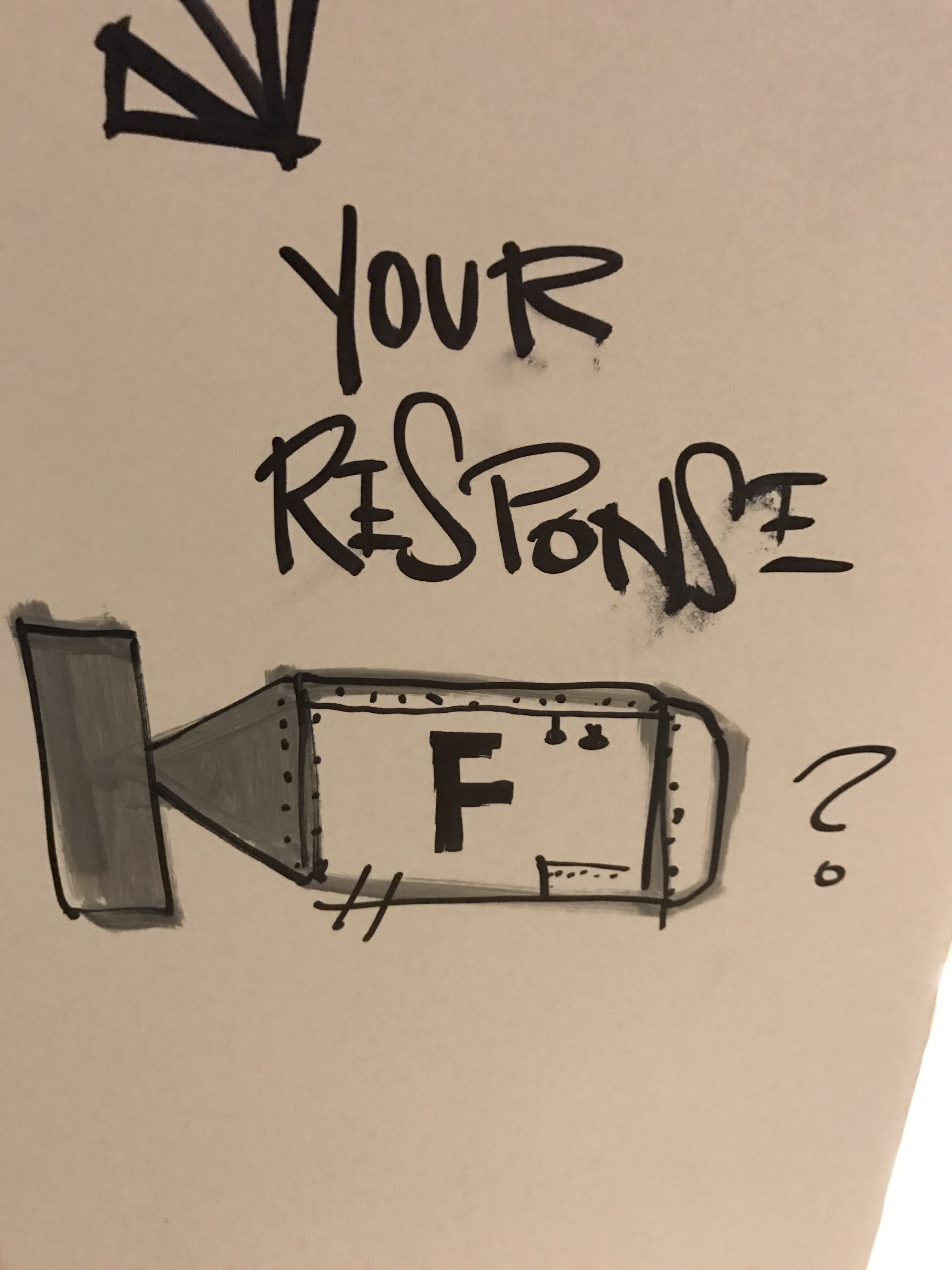
😀What are the benefits of emojis in the classroom?
• Engage students
• Popular
• Expressive
• Fast & Fun
• Easy pulse check
😕What are the drawbacks of emojis in the classroom?
• Overused
• Can be distracting
• Discourages language use
• Can be misinterpreted
• Can be inappropriate
• Can be offensive
Regardless of your personal opinion, emojis are a form of communication, and they are here to stay. The question is will you embrace society’s infatuation with this trend, or will you reject the idiocracy of the emoji exploji? The choice is yours. 😜
Top 7 Benefits of Emojis in the Classroom
 Here is the third of six guest posts submitted by our teacher leaders as part of our Focused Leader Academy this past weekend. Jena Davis and Liz Breeden decided to take the angle of how to use Emojis in the classroom. Blogging certainly takes some individuals outside of their comfort zone, including Jena and Liz. But, by working together and doing a fast creation using the “through line” of Emojis that we had been working with all day, they were able to author a great post. Here is Jena and Liz’s creation:

Smiley face! Frowny face! Heart! Emojis are everywhere. Do they help or hinder in the classroom? Used correctly, emojis can be beneficial in education. Emojis offer another method of communication between students and teachers.
1. Communication feeling or emotion: emojis can communicate feelings or emotions of students to teachers. Students who may not know the words to associate with their feelings may be able to communicate those feelings through the use of an emoji instead.
2. Visual: emojis are a graphic and visual representation of thoughts and feelings. Students are often visual learners and drawn to such representations.
3. Engaging: emojis are a way for students to engage with one another, or even with the teacher, in the classroom. Students can share thoughts and feelings with one another.
4. Check for Understanding: teachers can use an emoji to check for understanding or a student’s feeling or attitude about a particular topic.
5. Quick and Easy: emojis are a quick check and easy to use for both students and teachers.
6. Variety: there are a variety of emojis to choose from when making a selection. Students may be able to find and communicate something for which they don’t have the vocabulary to communicate.
7. Icebreaker: emojis can be used to ease the awkwardness of an uncomfortable moment or message.
How can YOU use emojis to communicate with YOUR students in a positive way?
Community Is The Culture
 This past week I had the opportunity with Mike Fleisch to do a design sprint (what others would call a workshop) on our school’s Focused Leader Academy. During our design sprint we built models together of what a community would look like where there is a serious commitment to developing leaders. I told the design sprint participants that I now described what we were doing as community building, not culture building. Culture emerges from the past values we develop together. I would rather us live in the context of the world we live in now and, more importantly, how do we want the world to be. With this worldview in mind, we wanted the group think about what a community of people in a school could create together.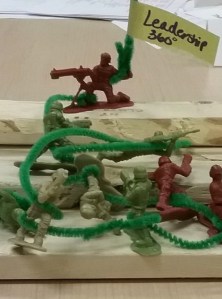
Daniel Goleman said “Executives who can effectively focus on others emerge as natural leaders regardless of organizational or social rank.” These leaders are the ones who find common ground, whose opinions carry the most weight, and with whom other people want to work.They emerge as natural leaders regardless of organizational or social rank. As leaders we need focus on others, which is the foundation of empathy and of an ability to build social relationships.
As a leader I believe it is important for me to be available to stakeholders so that I have the opportunity to meet others, engage in conversation, and share thoughts, ideas and concerns, and to build community and a sense of belonging. It has been my experience that those I serve have lots of wisdom, the ability to make connections, and to help come up with solutions. 
Peter Block said “We will never eliminate our need for great leaders and people on the stage; we just cannot afford to put all our experience and future in their hands.” To be a transformative leader we must create communities (a community can be our organization, school, or business too) that produce deeper relatedness across boundaries. Additionally we need to create new conversations that focus on the gifts and capacities of others.
“Leaders are held to three tasks: to shift the context within which people gather, name the debate through powerful questions, and listen rather than advocate, defend, or provide answers.” ~ Peter Block
I have now begun to talk in terms of community instead of culture. We need to begin to think of all the contexts we operate within are communities. Community then grows out of the possibilities of those in our communities. It is those citizens that build our communities. I have learned that the culture is the set of shared values that emerges from the history of experience and the story that is produced out of that. It is the past that gives us our identity and corrals our behavior in order to preserve that identity. Context is the way we see the world. Peter Block taught us to see the world, not remember the world. 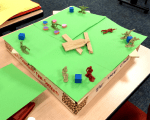
So, as we continue to improve the communities in which we live, work, and lead we need to continually ask the question “What can we create together?” This emerges from the social space we create when we are together.
I Count You Twice!
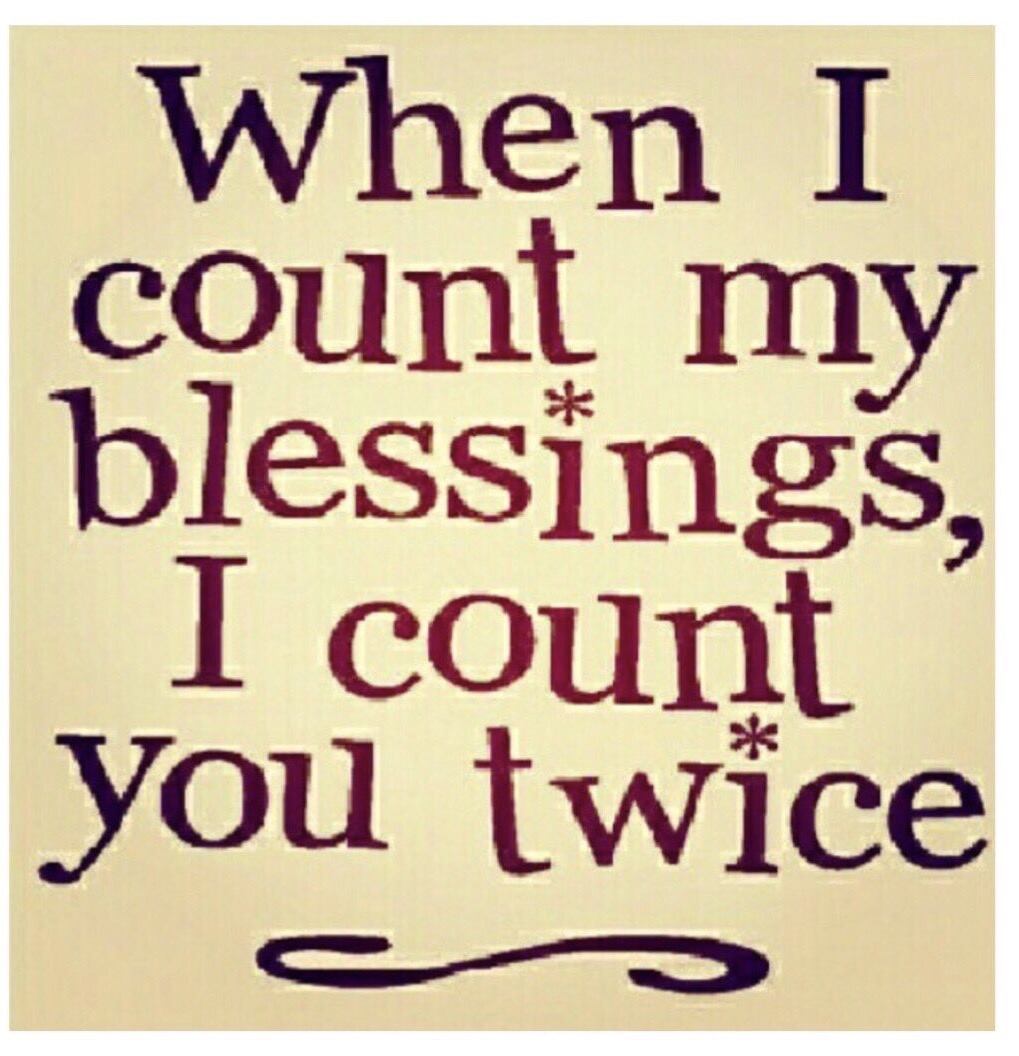 Today is Thanksgiving – a joyous and festive kickoff to the holiday season. Many of us have a lot to be thankful for, including family and friends, and I’m especially thankful that I’m able to serve as a leader making significant strides in education. I also very thankful for all those I work with, serve, or have associations with. I am particularly thankful for all teachers who put in on the line every day for our sons and daughters. Please know that when I count my blessings I count you twice!
During this holiday season, take time to reflect on what you are thankful for. While we have many improvements to make in our educational community, and always will, we have many things to be thankful for.
Education options are more flexible than ever. Not too many years ago, proximity and zip code was a crucial part of education. If you didn’t live near a school, you were unlikely to have any access to it. The ability to have choices had made all the difference for huge numbers of our children and adults.
Today, we are more connected to k-12 and postsecondary education than ever before. There are evening classes, online options for both secondary and traditional college programs, and certificate programs for people who want to learn a specific set of skills or continue their professional growth.
As I reflect this morning on my education, both past and present, I am thankful that I was taught to think critically, solve problems creatively, analyze and be open to the world around us, and most importantly how to learn. I believe it is important for us to remember that it is during our education we learn our sense of community. Within a school setting, a child quickly learns the importance of teamwork and cooperation. A school requires a joint effort to be safe and clean. That’s when our children learn first-hand that everyone can make a difference and everyone’s efforts are important.
I am also thankful schools don’t just teach our children academic curriculum. Schools are also helping our children develop into respectful global citizens. It is at school that our children are presented with life lessons they may not have learned at home.providing our children with lessons in acceptance. Our children are learning that not everyone speaks the same language, wears the same types of clothes, or eats the same types of foods at lunches. And that’s all okay. Our children are learning to take time to truly understand others and embrace who they are.
While our education system certainly has room for improvement across multiple factors, I believe we need to be thankful for all the great things happening in education.
Your Life’s Journey Is Your Education
 The Education of Henry Adams by Henry Adams
My rating: 4 of 5 stars
This book really caused me to do a great deal of reflection about education and my own education in particular. As a believer in lifelong learning, Adams assured me that investing in learning at any point in life is a sound investment. His teachings also made me reflect on the fact that living life is an education in and of itself. We need to make sure we are using the context in which we live and all the experiences to learn at the highest level. How do we do this? I believe we can learn from Adams that it is ok that we are ignorant at every new turn in life and that we need to begin learning from everyone and every experience we have. If I were to sum up the book in one statement it would be, “Your life’s journey is your education.”
In this book, Henry Adams is not talking about himself as much as he is of the education and the context in which he lived provided an education. Adams serves as the narrator in this book. At the writing he is in his late sixties and refers to himself in the third person. This is an interesting way to read an autobiography that I am not sure I like, but I got used to it. Sometimes his referring to himself in third person made it made it hard to follow, but in the context of making living life our education this was probably the right way to do it. In his “Preface,” he introduces the metaphor of a manikin, which represents Henry Adams. The various garments draped across the manikin represent his education. It was this metaphor and how all events proved learning that I formed the opinion that Adams believed in lifelong learning. He continually refers to his ignorance, which told me he was of a growth mindset long before the development of the “growth mindset” theory.
Adams tells his readers that any young man seeking education should expect no more from his teacher than the mastery of his tools. Leaning on the scientific approach that he develops in the education, he suggests that the student is merely a mass of energy. The education he seeks is a way to economize that energy. The training by the instructor is a manner of clearing obstacles from the path of the student. My take on Adams’ position is that a person’s life in its entirety is our education.
Adams wrote, “Probably no child, born in the year, held better cards than he.” Adams also told us that the world he lived was rapidly changing – as it does for all of us. It is a world of contrasts. It was this contrast that Adams used throughout the book to discuss his education. In the book Adams states that as yet he knows nothing. Even after graduating from Harvard, he did not believe his education had begun. My sense is he believed in learning by doing and being the person in the arena. Here are some of my favorite quotes from the book:
– The Ego has … become a manikin on which the toilet of education is to be draped in order to show the fit or misfit of the clothes. The object of study is the garment, not the figure.
– Nothing in education is so astonishing as the amount of ignorance it accumulates in the form of inert facts.
– The object of education for that mind should be the teaching itself how to react with vigor and economy. No doubt the world at large will always lag so far behind the active mind as to make a soft cushion of inertia to drop upon, as it did for Henry Adams; but education should try to lessen the obstacles, diminish the friction, invigorate the energy, and should train minds to react, not at haphazard, but by choice, on the lines of force that attract their world.
And… my favorite of all the quotes: “Man does not concern himself with understanding how discoveries can be used. He will let the discovery show him how.” I really believe this reinforces my theory that Adams believed that our life’s journey is our education. How would you write the autobiography of your education? What do you need to be doing in your context to have it read how you would like it to? This book will cause you to reflect.
~ Dr. Byron L. Ernest
I Get To Read!
 I realize that, ideally, a fondness for books starts at home, but reading can become a habit through opportunities to read self-chosen books at school. Consumed by the urgency to raise students’ reading scores, some policy makers and school officials have forgotten that children learn to read by reading. I support “balanced literacy” instruction, which includes independent reading. All students should be given access to books they want to read throughout their schooling, and I dream of the day all pre-readers would have an adult who would read aloud to them everyday. Through independent reading children gain a wealth of background knowledge about many different things, come to understand story and non-fiction structures, absorb the essentials of English grammar, and continuously expand their vocabularies. Many also remember visually how to spell words.
Interestingly, it is the adult/child relationship to reading that prompted this post. This past week my son needed to pick a book to read for his sophomore English class. Yep, you heard me right, he got to choose. First of all, I was excited by that! In my view students should get to choose what they read. If you want to hear my story of how I got turned on to being the rabid reader I am today click here to read “Reading Big Red.” Short of the long story – I hated reading until I got to pick my first book (not till middle school mind you). Now I read 70-80 books a year. So, I’m sure you can see why I was excited for Heath to get to pick a book he wanted to read – just typing here I just can’t see why people don’t get this concept – picking your own book makes it about the reader (student centered). Research has shown that letting children choose their own books could in fact make them better readers. When you think back to your own classroom experience, being assigned one book to read as a class was often a dreadful experience. Teachers would assign students to read a some classic and, instead of being enamored with this classic tale, students were often less than thrilled. That was me and has also been my son Heath’s experience, too.
 Back to the story – Heath came home all excited (think about this; he’s coming home from school excited!) about the book he had picked: Tough As They Come by Travis Mills. Heath proceeded to tell me all about the book and Travis Mills. Travis is a retired United States Army Staff Sergeant and what he calls a recalibrated warrior. He is now a motivational speaker, actor, author and an advocate for veterans and amputees. In his book, Tough as They Come, Travis shares his journey of serving our country. Despite losing portions of both arms and legs from an IED while on active duty in Afghanistan, Travis continues to overcome life’s challenges, breaking physical barriers and defying odds. Travis lives by his motto: “Never give up. Never quit.”
Think about what just happened here:
- My son chose a book
- My son wanted to read a book (Not to sound like Donald Trump, but this is HUGE!)
- My son had researched about a book and the author
- My son was going to get a role model and mentor, Travis Mills, through the power of reading
I thought this was the coolest day ever. I read to Heath when he was younger every night and then rubbed his back till he went to sleep (He would not want me to tell that, but these were some of the greatest moments as a dad), but now he was explaining a book he wanted to read to me. And… as if it could not get any better… Heath proceeded to say, “Let’s both download this book and read it together Dad. I think you’ll really like it.” I ask you you, “How does it get any better than that?” My sophomore in high school son wants to read a book with his dad! Well it does get better – Heath has agreed to write a guest blog post about the book for me! Watch for it soon.
Here’s the deal: giving students a choice has been linked with scholastic achievement. Some researchers believe that when students (especially boys) are free to choose what they want to read, they will read for pleasure. Reading for pleasure has been linked with scholastic achievement in school. Furthermore, students will read for pleasure and enjoy reading. When children can freely choose what they want to read, they will be reading for pleasure, not because there is an assignment due. A choice allows children to be enthusiastic about what they are reading, and in turn they will be engaged.
I realize there are books and other literary pieces we need to have our children reading, but I believe we need to give students control of their own reading. Allow them to make their own choices and they will explore more genres. Expose your students to books they love and you will see that they will not only read for pleasure, but enjoy what they are reading. I have always said we need to change the mindset from, “I have to read.” to “I get to read!” We can do this and student choice is one piece of it.
Think about this as a conversation starter and relationship builder with your children and students: “So, what are you reading right now?”
Generative Complexity
 Yesterday I blogged about Dynamic Complexity after reading in the book by Adam Kahane and is titled Solving Tough Problems: An Open Way of Talking, Listening, and Creating New Realities. Another type of complexity worth organizing our thoughts about is Generative Complexity. Kahane (2004) said, “Generative complexity requires that we talk not only about options that worked in the past, but also about ones that are emerging now” (p. 75). To me this is all about not getting caught up in thinking about how things have always been done, but about how no one has ever thought about doing them.
“We cannot develop creative solutions to complex human problems
unless we can see, hear, open up to, and include the humanity
of all the stakeholders and of ourselves. Creativity requires all
of our selves: our thoughts, feelings, personalities, histories,
desires, and spirits. It is not sufficient to listen rationally to inert
facts and ideas; we also have to listen to people in a way that
encourages them to realize their own potential and the potential
in their situation. This kind of listening is not sympathy, participating
in someone else’s feeling from alongside them. It is empathy,
participating from within them. This is the kind of listening
that enables us not only to consider alternative existing ideas but
to generate new ones.” ~ Adam Kahane
We need to remember that there are many interdependent parts of a complex system. Additionally, a complex systems world view highlights that interactions between parts of the system and the behavior of the system as a whole are critical. As leaders, we must learn to do a better job of seeking out, fostering, and sustaining generative relationships that yield new learning relevant for innovation.
When discussing leadership we tend to focus on leaders’ individual characteristics rather than on the dynamics of interactions between leaders, group members, and the context in complex organizational systems over time; and we certainly do not do enough toward our own professional growth as leaders, or those on our teams, to create conditions that allow their organizations to evolve (2006). We must also find ways to improve our own and organizations’ ability to learn continuously and implement learning in action as projects proceed.
References
Kahane, A. (2004). Solving tough problems: An open way of talking, listening, and creating new realities. San Francisco: Berrett-Koehler.
Surie, G. & Hazy, J.K. (2006). “Generative leadership: Nurturing innovation in complex systems.” E:CO Issue Vol. 8 No. 4 2006 pp. 13-26.
Significance, Influence, & Leadership
 It has been said that leadership is influence. This is so true, and I was reminded of this today. I had the honor of being part of a book launch and signing at one of our local Barnes and Noble stores today for author, . He wrote the book The Second Decade: Raising Kids to be Happy, Self-Sufficient Adults through Work (2016). I learned of the book through Indiana Speaker of the House, Brian Bosma. He sent me a copy of the book and asked that I read it and think about how this book could be used to influence others in helping to develop and educate our children. I was excited to get the book and, of course, immediately read it. Come on, the Speaker of the House sends you a book and asks you to read it, well, you read it! And…of course, I started tweeting about it. Next thing you know I’m tweeting back and forth with Speaker Bosma and, lo and behold I’m suddenly tweeting with Dr. Helveston. Then, I’m being invited to attend a book signing via twitter. I continue to be amazed by the power of twitter. Well, of course I am going to the book signing – one of my most valued collections is of my author signed books. So, now that I have set the stage let’s get to some content in this post.
It was such an honor to have Speaker Bosma introduce me to Dr. Helveston before the event started. Little did I know I was being introduced by a man, Speaker Bosma, who has had a great deal of influence on me (to read about that, click here) to another man, Dr. Helveston, who would influence me immensely in just the few minutes of visiting and listening to him speak at the event. One of the most powerful things he said to me was, “This research and book is a project I have started really late in my life and career.” With this statement he had me hooked as someone who absolutely knows how to be significant in life. As a believer that there is no such thing as retirement – only significance in the second half, I was certain I had met an icon of being significant, not just successful. This has been a topic of interest of mine for some time now. In fact I have blogged about it in “Significance: Impacting Outside Yourself.”
 As we talked, it was evident that Dr. Helveston wants to continue to have an influence on the world and particularly on our youth. He wants to find influential ways to have the ideas and framework brought forth in his book to really make a difference. Make no mistake, Dr. Helveston is a successful doctor, but I was truly in the presence of an influential and significant person and leader. There were individuals in attendance who were mentioned in the book and I could quickly see the influence this great man had on their lives. This very humble man clearly has had an influence on everyone he has come in contact with and is significant. Leaders, like Dr. Helveston, that strive to be significant seek to create the greatest impact and influence. These are the types of leaders that we value the most; inspired by their courage and resiliency, we seek to emulate them. Here I was in the presence of two such leaders – Dr. Helveston and Speaker Bosma. These are the leaders that can get the most out of very little, are grateful for the opportunity to lead, and always treat others like family. It was very evident from all the stories that every patient of Dr. Helveston became family. Speaker Bosma told the story of how they had met when he became the doctor of his son. Now, years later, there is still a very close relationship between Dr. Helveston and the Bosma family.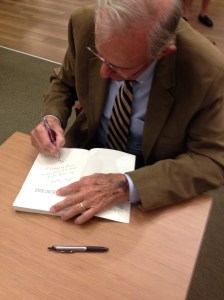
Great leaders are the most memorable, influential, and significant. They go about their day leveraging their distinction by leading in ways that come most naturally to them. This is so true, because I might not even had read the book had there not been a leader in my life that turned me on to reading. Had there not been a Mrs. Wilking in my life I might not have become the leader I have because I would not have had the learning from reading I have been afforded. You can learn of the birth of my love of reading by checking out “Reading Big Red.” Click here to read the post. Significant leaders are those who enjoy sharing their wisdom and secrets of success. Dr. Helveston has certainly done this in his book. Leadership is a process of influencing others. Dr. Helveston is without a doubt influencing others with the framework for developing our children suggested in this book.
The Second Decade: Raising Kids to be Happy, Self-Sufficient Adults through Work (2016) is an incredible book that really makes you think and want to take action. I wrote the following in both my Goodreads and Amazon five start review of the book:
“Everyone who is a parent, teacher, or in a position to influence children either directly or by policy should read this book! In this book, Dr. Helveston recognizes the need for what I will call internships – meaningful work. The five actions developed in this book of:
1. Plan ahead for a quality education pursued with an eye on the future;
2. Learn life lessons and useful skills from the work you perform and the people you meet;
3. Seek advice and inspiration from mentors throughout your life;
4. Recognized that nothing is accomplished without time and effort; and
5. Pursue honest and productive work
are well developed, researched, and referenced so the reading can use the book as a guide. This book can serve as a framework for anyone who believes as I do, that helping parents teach their children to gain academic skills through a quality education and acquire practical skills learned by working is an invaluable component to a lifetime of success. Again, this is the must read book of all who want success for all children.”
 Dr. Helveston posited in the book that there is an important activity that seems to be getting lost amid meaningless structure—holding down a job outside the home, for money. He argued that more than any other activity, work adds meaning to the knowledge learned in books and gives depth to the values instilled at home. I really agree with this and the research would concur. In fact, this is why I believe internships are so important in young people’s lives. This workplace development orientation requires inculcating good character traits within the young person, which will help them to carry out their professional responsibilities throughout the rest of their lives.
The idea of the “inclusive middle class” is one that really jumped out at me in the book. This really drove home why it is important for us to make sure we are carrying out and teaching our children the five actions listed above. Dr. Helveston said:
“But the future offers a two-way street. A position attained is never guaranteed. A person can attain more or accomplish less. Success can be in the form of financial security or with the attainment of other worthwhile goals. In either case, it takes effort to keep and possibly improve one’s place in society.” ~ Dr. Eugene Helveston (2016, p. 25)
Those who understand this will certainly have a leg up in society. We have an obligation to the children of the world to be providing them with the experiences to learn these facts. One way to formalize this would be to ramp up our internship programs both at the post-secondary level and in our high school programs. What better way to give our students the real life experiences necessary to help them be successful, happy, and functional citizens. Dr. Helveston’s book provides a guide and framework for educators, parents, and policymakers to help our children understand what opportunities are available to them and facilitate the journey to become their best selves.
Career Readiness for All?
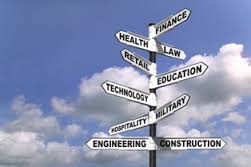 I had the privilege of meeting and hearing from Dr. Nancy Hoffman of Jobs for the Future yesterday at our fourth Panel to Study Alternatives to the ISTEP+ Program Test. Our objective of having Dr. Hoffman was to discuss how we assess career readiness under the Every Student Succeeds Act (ESSA). I really saw a great deal of the value in the information she was presenting to us and wanted to share. Here are some facts she started with:
- The unemployment rate among Hoosiers age 16 to 19 year old is about 15%.
- Missing out on jobs during the late tees can have negative effects throughout a person’s working life.
- A young person who doesn’t get work experience between 16 and 19 is missing a major developmental experience.
- The economy suffers because of the above bullet points.
I was also struck by the idea of disconnected youth: those who are not in school or working – “have lower wages and marriage rates, higher incarceration and unemployment rates, worse health, less job satisfaction, and eve less happiness as adults than people who did not experience youth disconnection. Just as early successes breed optimism, early setbacks plant the seeds of hopelessness.”
“It’s not just about young people: The economy needs prepared young people.” ~ Dr. Nancy Hoffman
- Far too many young people complete a postsecondary degree/credential.
- STEM fields hold promise; employers struggle to find skilled employees.
- High school is not working for far too many young people
- Careers increasingly require postsecondary education and work readiness skills and experience.
- Education workforce, and economic development are inextricably connected.
“In my utopia, all high school students would have a structured work experience – just as 70% of young people do in Switzerland.” ~ Dr. Nancy Hoffman
Indiana is ahead of most states in having a law requiring career readiness activities starting in elementary school. Indiana has a career readiness definition which includes all students. Additionally, Indiana has career exploration courses. We provide Career and Technical Education (CTE) dual enrollment and we have strong CTE results.
Here are some questions that states need to be asking and addressing:
- What is the state’s definition of career readiness?
- Does the state want to focus on all students or exclusively CTE students?
- Are college and career preparation the same or different?
- How should various options be valued and weighed?
 Byron's Babbles
leave a comment