What is Hell?

I am loving reading Rob Hart’s great book, The Medusa Protocol. I’ve already blogged about the book once in Perpetuating Our Own Myth. Rob had the protagonist, Mark, quote former UFC heavyweight champion Frank Mir, saying, “You know what the true definition of hell is? It’s when you die, you get to meet the person you could have been.” There is some debate over whether the quote was original to Mir or paraphrased from someone anonymous. Regardless, it’s a very thought provoking quote, particularly in the context of Rob’s novel.

This powerful quote reminds us that our choices and actions in life shape who we become, and that overlooking our potential can lead to regret. The quote suggests that true regret and hell are not just about suffering in the afterlife, but about confronting the person we could have been if we had made different decisions, pursued our passions, or lived more authentically. It encourages us to reflect on our current paths and motivate us to live intentionally so that we don’t face such regrets in the future.
Now, I am not a person that believes in spending much time getting trapped in regrets. It is helpful, however, to practice mindfulness and focus on the present moment. Accept that mistakes are part of growth and view them as learning opportunities rather than failures. Setting realistic goals and celebrating small achievements can also steer you toward a more positive outlook. Remember, each day is a new chance to make choices aligned with your values and passions.
Perpetuating Our Own Myth

I am reading Rob Hart’s great new book, The Medusa Protocol. This is the second book in the Assassins Anonymous series. I am a huge fan of Rob’s work and couldn’t wait to read this one. As always there are great lines and insights into the characters that really make me think. Yesterday while reading, one of the protagonists, Mark, said of another person that he was “Perpetuating his own myth.” This is something we all have done, or are doing and need to be careful of.

“Perpetuating our own myth” means continuing to believe or act as if a false idea or misconception is true, thereby reinforcing it over time. It’s like maintaining a story or belief about ourselves or a situation that isn’t entirely accurate, which can influence how we behave or how others perceive us. Sometimes, we do this unconsciously, and it can limit growth or distort reality. Recognizing and challenging these myths can help us foster a more honest understanding and promote personal or collective development.
Leading The Enormity & Simplicity Of Change
Of change, Machiavelli told us, “It must be be considered that there is nothing more difficult to carry out, not more doubtful of success, nor more dangerous to handle, than to initiate a new order of things.” Change is ever present, and is a source of value and risk. Recognizing that change is not easy allows us to prepare and strategize for the obstacles we may face.

We were introduced to another thought on change by Astrid. Astrid is a character in Rob Hart’s great book Assassin Anonymous and at the end of the book she said: “And the enormity of what it means to decide you want to change. Both the impossibility and the simplicity of it.” This thought captures the dual nature of change—how it can feel overwhelming and straightforward at the same time. On one hand, the enormity of deciding to change implies recognizing the challenges, fears, and uncertainties that come with stepping out of one’s comfort zone. It suggests that change often feels monumental, as it can require significant effort, sacrifice, and a willingness to confront difficult truths about oneself or one’s situation.
It’s important to view change as both a daunting journey and a straightforward choice. Balancing these two perspectives can help us navigate the process with greater resilience. Understanding that change begins with a decision can empower us. We don’t need a perfect plan; just taking that first step can be enough.
Do Not Let Eventually Turn Into Too Late

Yesterday when I was finishing reading Rob Hart’s great book, Assassins Anonymous, the protagonist, Mark, had a thought that gave me pause. Mark, who was the world’s best assassin and trying to get out of the business through Assassins Anonymous, was reflecting on the death of his sponsor, Kenji. Kenji was Mark’s rock and Mark was reflecting that he had not fully expressed his appreciation to Kenji. He pondered that, “Eventually turned into too late.” His regret of not telling Kenji all he wanted to highlights a sense of urgency and the consequences of inaction—what could have been addressed in time ended up being too late for effective resolution.

We need to remember that situations will progress to points where it becomes impossible to take the necessary actions or make the needed changes. This scene in the book reminded me that there are opportunities or windows of time that are available the important things we need to do, but as time goes on without action, those opportunities slip away. I want to make sure I don’t push things to eventually and then realize it’s too late.
Containers Of Memories
I sorted through notes this morning that I took while reading and came across this quote from the incredible book The Paradox Hotel by Rob Hart: “Time is a container. Places are containers.” In the context of the book my interpretation was that when we think of time and places we think of things from the past. In other words time and place contain memories. Those memories are very important to us and important to build. I blogged about this earlier in the week in Building Memories. Time and places really do become the containers for those memories.
As a member of the last of the baby boomers I am not a digital native, but a digital adoptee. One thing I love about my iPhone is the ability to take incredible pictures. No more carrying a bulky camera with flash bulbs and extra film (boy am I aging myself). Some call them the good ‘ole days. Me, not so much. I love it when my phone magically sends me a “memories show” with some related pictures from some past event or trip. Another container that takes me back to a time and place. I laugh when I see kids with there new pastel colored Polaroid cameras. Yes, I had one. And, yes they are cool. But, I am not carrying one and my phone is even more instant!
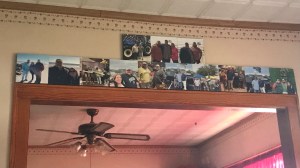
I have found an incredible new way to “contain” these memories. Have you heard of Mixtiles? Their call to action says it all: “Turn your photos into stunning wall art.” I was intrigued one evening when I saw their commercial and took them up on their buy 10 get 10 free, and a couple of days later (literally) had 30. I know I got carried away, but I’m giving 10 of those to my son. But, in full disclosure turned around and got a bunch more this week. The tiles are about eight inches by eight inches and a little under an inch thick. Here’s the best part, and I’m quoting from their website: “There’s a sticky strip on the back of them. You peel off the protective paper and stick them on the wall. Easy as pie! (We enjoy pie.)” So, no hooks or nails! Then, here’s the even better best part (I’m full of superlatives today). You can move them around: “Super easy – that’s what Mixtiles are made for! Just pop them off the wall and stick them in a different spot. Knock yourself out, you can do this a few dozen times!” Why am I telling you this? I love them and wanted to share.
I put a few of them above the woodwork of the entrance from our living room to the dining room. They are in plain view from our chairs in the living room. My wife and I catch ourselves gazing at them and then get to reminiscing about the times and places of the photos. These wonderful Mixtiles have become containers. I’m excited to put up more around the house. I should become a Mixtiles ambassador. I wonder if there is such a thing?
Anyway, we need to remember that time is a container and places are containers. While travel is a great disruptor for new memories, we don’t have to go anywhere new. It could be something inspiring we heard at a conference. I sometimes remember where I was sitting when someone told me something inspiring or important news. We must not forget that we play a role in filling the time and place containers of others. Let’s fill those containers with positive and inspiring memories.
Thinking About Love
What is love? Now there is a question. When I looked it up there are at least eight different kinds of love depending on what source you are studying. Lately, however, I have been obsessed with this idea of leaders, organizations, businesses, and now even governments, loving their people. We all want a community in which to “belong”. A community in which everyone can bring their best self to and leverage their talents each and every day. If we want people to be engaged, whether at work or civically, we must create communities of belonging. So how do we do that? By loving each other!

My thoughts on this were prompted by a line Rob Hart put in his great new book that I just finished, The Paradox Hotel. I’ve got pages of quotes from the book for further pondering, but here is the prompt for this post: “There are different kinds of love, nevertheless they are all still love.” Very true!
Maturana and Verden-Zöller (2008) asserted that, “We humans are loving animals that become ill when deprived of love” (p. 7). They went on to assert, “…that these many different expressions do not denote different forms, kinds, or levels of love as an emotion, but that they in fact connote only different relational dimensions of our living as loving animals” (Appendix 10). So, nevertheless, all the different kinds of love are still love. It seems we have let success, measured in monetary terms, expectations, or desires for what others do take over for our love. Because love is not blind acceptance we must be sincere in creating mutual respect. Love is about a coexistence where we do not put our own desires expectations or aims ahead of others and begin to manipulate. When we think about love in this way it really is about a feeling of belonging and making sure others have the opportunity to belong.
Clearly, love is a complex thing, but all the different kinds of love are still love. What goes around comes around. So let’s all show a little more love.
Reference The Origin of Humanness in the Biology of Love, Humberto Maturana Romesin and Gerda Verden-Zöller Edited by Pille Bunnell, Imprint Academic 2008.
 Byron's Babbles
leave a comment