What’s Possible When You Dream Big with Passion, Purpose, and Joy
 Originally published on the Flynn Heath Holt Blog by Diana Faison
When my younger daughter graduated from college. Her accomplishment got me thinking about how graduation is an opportunity to reflect on what’s possible.
As you reflect, I want you to explore big dreams and move forward with a sense of purpose. And I want you to seek joy along the way.
 EXPLORE BIG DREAMS
My daughter has big dreams to be the world’s best third grade teacher. Her passion and drive remind me of my early career. On my first day working at a small women’s college, I was passionate, legacy-driven, committed. The women I served were my top priority, and I wanted to make a difference in each of their lives.
Early on in that job, I met a high school senior with limited resources. I encouraged her to apply for a full scholarship. Over her four years with us, I watched her bloom and gain confidence. We still stay in touch, and she’s grown into a successful entrepreneur in her own right. I cannot help but feel we can all make a difference one conversation at a time. She had big dreams, and so did I; we supported each other.
MOVE FORWARD WITH A SENSE OF PURPOSE
You may feel a strong sense of purpose on day one of this new life adventure following graduation. I felt a calling early – I knew I was a born coach. I knew I was a teacher, an educator.
But it took me years to realize that my work was fulfilling my purpose to coach and lead high-talent, women leaders. I was able to get here now because I had key women and men who gave me a chance. The Academic VP at a woman’s college hired me. A mentor made me teach large university classes at a young age. Two female executives at a large financial institution gave me my first significant contract which launched my solo practice. Now, I am in partnership with three talented women leaders and we own a multimillion dollar company.
Embrace that person who believes in you and wants to show you the ropes; ask them questions; let them know what you’re “doing”. The dots will connect much faster, and your purpose will reveal itself to you sooner than you think.
SEEK JOY
In her recent commencement address at Berkeley, Facebook’s Sheryl Sandberg talked about joy as ever present; we forget about it because we are bombarded with negativity. So we must SEEK joy. Turn off anything that’s reminding you of the world’s problems or bad news. Yes, work gets hard and life throws mean curve balls. But, there are things for which we are grateful. Before I left for my freshman year of college, my childhood home burned to the ground. It was a devastating loss for our family. But my mother’s response shifted everything for us. “Well, now at least we can rebuild the house we dreamed about,” she said. I could have been trapped in that burning house, but I survived. We survived. I am forever grateful.
Seeking joy means seeking gratitude. I reflect each and every day and ask, “For what am I grateful?” My kids hated this ritual at the dinner table. But, today they would say it paid dividends. They are joyful adults exploring big dreams, moving forward with purpose, and making a difference.
The future is simple: It’s shaped by the magic that comes from your passion, purpose, and joy.
*****************************************
About Diana Faison:
Diana Faison is a partner at FHHL and worked with the firm as a consultant for over 10 years prior to her partnership. She began her career as a teacher of Leadership Development studies and a Dean in Student Affairs at Queens University and the University of North Carolina—Charlotte. Diana is a sought-after keynote speaker on business leadership topics such as political savvy, brand, personal power, authentic leadership, and well-being. She is also the co-author of The Influence Effect: A New Path to Power for Women Leaders.
Leading Through The Lens Of Opportunity
 This past week I had a leader I am working with on a project say to me, “I am having trouble looking at this project through three different lenses.” My immediate response was don’t look through three lenses; just the one you were made a part of this project for. There are others on this committee that can work through the other lenses. It really got me thinking about whether we, as leaders, should look at things through multiple lenses or only one.
The most effective leaders I know approach problems through the single lens of opportunity. I had an incredible mentor and friend early in my career that always called problems “opportunities.” That has stuck with me ever since. The best leaders are the best problem solvers. They have the patience to step back and see the problem at-hand through broadened observation; circular vision. These great leaders see around, beneath, and beyond the issue/problem (opportunity) itself. They see well-beyond the obvious and see opportunities.
I also believe it becomes crucial to become a convener and let the wisdom of the crowd/community take over. This creates an environment where everyone’s concerns, points of view, ideas, and solutions are freely expressed. This community structure welcomes efficient cross-functional collaboration and problem solving. This also eliminates silos and allows individuals lead through the lens of their expertise.
Great leaders seek out and convene lifters and high-potential leaders within the organization or community to reap the benefits of open-mindedness that leads to more innovation and initiative. We should invite people together and name the possibility about which we are convening. I also believe we must specify what is required of each and what lens they should look through should they choose to be a part of the opportunity.
Leading With Style
 In lesson #51 entitled “Fantastic Or Flop” in 52 Leadership Lessons: Timeless Stories For The Modern Leader by John Parker Stewart the story of 1968 Olympic record breaking gold medalist in the high jump, Dick Fosbury was told. The moral of the story was not the gold medal or breaking of a record; it was his unorthodox style. Everyone (including his coaches) wanted him to change his style. He would not because he knew his style was right and fit him. Now, his “Fosbury Flop” is the most accepted style for the high jump still today.
“Your style is your own. Don’t worry if it’s not traditional, if it is right for you.” ~ John Parker Stewart
This story really resonated with me as a guy who has a little different leadership style. Let’s face it, not everyone is ready to accept full on intent-based leadership or convening large numbers of stakeholders. But, as John Parker Stewart says:
“You’re style is your own. Don’t worry if it’s not traditional, if it is right for you. We must know ourselves and be true to ourselves.” ~ John Parker Stewart
 We must then use our talents, skills, and values to continually improve and hone our style of leadership. Sometimes we just need to take a moment to evaluate the way we lead, so we can define ways to improve or adapt to our organization’s changing needs. So much of what effective leaders do is nurture others. Wise leaders cultivate their staff members’ leadership skills, both to ensure support in carrying out and sustaining change and to establish a network of rising leaders to fill future positions. So, no matter what our style we need to make sure we are developing others. For me, the inclusion of others is such an important part of leading. Effective leaders know where they need to go, but they also know that they must invite others to assist in the journey. That journey is where we need to let our style shine through.
Tuning in to Your Life
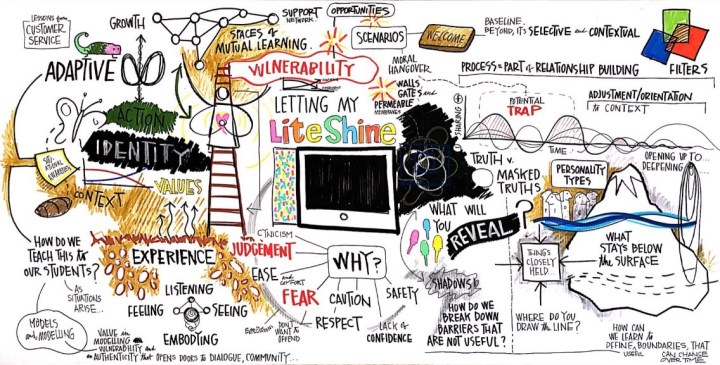 Super excited to have this guest post from Mark Nation. I just read his new book, Made for Amazing: An Instrumental Journey of Authentic Leadership Transformation. It is amazing!
 I met a woman who didn’t sing until she was forty because her kindergarten teacher told her before a performance, “Just move your mouth, dear.” How horribly tragic. The truth is, this woman had a wonderful voice, and it was clear she loved to sing. Who would have known she was silenced for decades, refusing to believe she possessed an incredible gift that was literally dying to be released?
Maybe you are one of those who say, “I have no musical ear,” or, “I can’t carry a tune,” because, like my friend, somewhere along the line you’ve come to mistrust the lyrical, melodic expression of yourself. To you, I would say, Stop! Listen to me! There is something critically important I need you to understand.
Not to believe in the music you came to play is not to believe in yourself.
You are not only musical, you are a musician, a melody-maker. Like all of us, you have a special song to sing; it’s the way you “do yourself,” the way you come across to others, the way you live your existence. Perhaps you have not realized it nor thought about it this way, but you are a vital part of a grand symphony, the harmonious expression of life.
Music is the beat of your life, the unique vibratory algorithm embedded in all you do and all you are. There is music in your voice, music in your face, music in your soul, in your thoughts, and in every throb of your heart. It can be a boisterous dance, a march, a sonata or even a lullaby. It’s not only okay for your music to change over time—it’s necessary, and beautiful. It’s you.
Everything you do expresses the one-of-a-kind melody that you bring to life.
Decide now to believe that you not only love music, but love making it. Explore this song of yourself. Take more pleasure in its expression, and follow the melody to see where it takes you. This is your journey, and your music. Therefore, you owe it yourself to develop your craft and take good care of the sounds you release into the world. We are all waiting for the song you bring, for we are your fans. Please don’t deprive us of those notes which only you can add to the harmony of life. Join in now.
**************************************************************************************
Mark Nation is a globally-recognized management expert, leadership consultant, executive coach, author, and speaker. He is personally driven to discover what makes individuals, teams, and organizations amazing—those elements which power the heart and soul of individuals and businesses worldwide. His new book, Made for Amazing: An Instrumental Journey of Authentic Leadership Transformation, helps people to identify and optimize their unique talents.
No Expiration Date On Success
 We hear or say the phrase, “It’s never too late” all the time, but do we really mean it? Or, do we just say it? Additionally, we talk about being life-long learners, but would we really still mean it at age 65? In Lesson #50 entitled “65 Years Young” in 52 Leadership Lessons: Timeless Stories For The Modern Leader by John Parker Stewart tells the story of Harland Sanders. We know him best as Colonel Sanders of Kentucky Fried Chicken.
“I’m still learning.” ~ Michelangelo at age 87
Let’s get to know the man behind the phrase “Finger Lickin’ Good” a little better. Colonel Harland Sanders was born on a farm outside the town of Henryville right here in my own great state of Indiana on September 9, 1890. The Colonel first prepared meals for truck drivers at an old family dining room table wheeled into the front of his Corbin, Kentucky, service station in 1930, fried chicken was not on the menu. After Duncan Hines put his restaurant that Sanders later open across the street from the service station, in his 1935 road-food guide, the colonel began to perfect his fried chicken secret recipe of 11 herbs and spices. This was in 1939 – he was age 49.
Then, in 1952 Pete Harman, who was a friend of Colonel Sanders who operated one of the largest restaurants in Salt Lake City, Utah, became the colonel’s first franchisee. Harman came up with the “Kentucky Fried Chicken” moniker and pioneered the restaurant’s famous bucket container. It wasn’t until Sanders was age 65 that he incorporated Kentucky Fried Chicken and began signing up new franchisees. He used is $105-a-month Social Security check to begin his franchise businesses. In 1964 at the age of 74 he sold Kentucky Fried Chicken and in 1968 at the age of 78 started another restaurant in Shelbyville, Kentucky. Wow, it really isn’t ever too late.
“There is no expiration date on our ability to succeed.” ~John Parker Stewart
Remember this: however old you are, there is an abundance of wonderful things waiting to happen for you. If you have the right attitude, you will not let them pass. Go out there and keep learning and succeeding!
Flaw-Tolerant Leadership
 This morning while feeding in one of our pastures I came across the most beautiful spider web. There was a dew on, which accentuated the detail and geometry of the web. It was so cool I took a picture and have included it in this post. I tweeted that the spider web either had a geometry or leadership lesson in it. Here is the leadership lesson.
 In researching spider webs just now I came across the research of Markus Buehler, an associate professor of civil and environmental engineering (CEE) at MIT. Buehler has analyzed the complex, hierarchical structure of spider silk and its amazing strength. His research shows that on a pound-for-pound basis, it’s stronger than steel.
Working with CEE graduate students Steven Cranford and Anna Tarakanova, and Nicola Pugno of the Politecnico di Torino in Italy Buehler found that a key component of spider silk that helps make webs robust is something previously considered a weakness: the way it can stretch and soften at first when pulled, and then stiffen again as the force of the pulling increases.
Additionally, these researchers found that spider webs typically only fail or get damaged in small areas. This makes it easy for the spiders to make repairs. If you’ve ever looked closely at a spider web, it still functions even with damage. This what Buehler described in this way: “It’s a very flaw-tolerant system.”
This made me think about leading in a flaw-tolerant way and creating a flaw-tolerant organization. We talk about encouraging taking risks and encouraging failing quickly, but have we made our organizations flaw-tolerant? We need to make sure we are set up like the spider web to have localized failure/damage without it being catastrophic.
We are beginning to accept the value of failure in the abstract. In other words we have learned, at least that corporate policies, processes, and practices. Conversely, it’s an entirely different matter at the personal level. Everyone hates to fail.
In order to create a flaw-tolerant system, more effective and interdependent upon the decisions made by each departmental leader. We need to be like the spider web and weave our teams together so we can sustain failure or small damage and be able to quickly make local repairs without missing a beat.
Is your organization flaw-tolerant?
3 Self Leadership Strategies to Reduce Stress at Work
 Guest post from Susan Fowler. Originally Published 5/25/17: https://leaderchat.org/2017/05/25/3-self-leadership-strategies-to-reduce-stress-at-work/
The fast-paced nature of today’s work environment can create stress and anxiety for workers at all levels in an organization—but especially those responsible for getting things out the door on a daily basis. Even the most organized and efficient among us can feel the strain.
Looking for some relief? Recent research confirms that a little proactive self leadership results in significantly less strain (and more energy) at the end of your workday.
See for yourself by giving one—or all three—of these strategies a try.
 Ask for FeedbackTomorrow morning, try a bold start to your day. Ask for feedback from your manager, colleagues, or staff members: “Would you be willing to share one piece of feedback, based on your experience or observation, that you think would help me do my job better today?”
Neuroscience provides evidence that asking for feedback sets up a more responsive brain condition. Requesting feedback delivers the information you need when you need it, but also results in less defensiveness—meaning you are more likely to hear what you need to hear and act on it.
So, when you learn something of value, act on it! Put what you’ve learned to use. Asking for feedback and then acting on it will demonstrate the willingness to learn and grow and the courage to be honest. What’s more, others will see it as a valuable example of proactive behavior.
Identify Solutions to Problems
Ask people what is getting in the way of their being more productive and many will half-jokingly point to their manager, an irritating coworker, or an unreasonable client. Instead of bemoaning your manager who “doesn’t get it,” why not be proactive and sell your solution? Follow these four steps:
1. State the problem or issue in one clear sentence, including the implications for you and others if the situation isn’t improved.
2. Generate three solutions with the pros and cons of each solution. One of the solutions should be the one that you believe will solve the problem based on your experience and insight. But as good as your idea may be, you need to generate two more. Three is the magic number.
3. Identify the decision makers and present to them your three solutions and the pros and cons for each—not revealing which one you think is best.
4. After presenting all three solutions, provide your recommendation for the solution you think is best, along with the rationale for why. Then, seek agreement.
This technique has been proven to create either the change you desire or a valuable learning moment. Either way, you experience less stress and more energy.
Be Proactive
Stop waiting to be given authority. Be proactive.
It’s been said authority is 20 percent given and 80 percent taken. If you have a solution to a nagging problem or an idea for improving efficiency on a particular task or project, don’t let yourself get frustrated by the permission process or the hoops you need to jump through to get things done. Instead, take action. Build a business case for giving you the authority to act.
In taking action you will experience a sense of competence and autonomy—two psychological needs required to thrive at work. And those who give you the authority will also benefit by empowering you to do more so that they can focus on other things that need their attention.
Practice a little self leadership each day to reduce your stress and fatigue. Ask for feedback, identify solutions, and be proactive starting tomorrow morning. You might find yourself able to devote more time to your health, family and friends, and all those dreams you’d pursue if you only had the energy!
*****************************************
ABOUT THE AUTHOR: Susan Fowler implores leaders to stop trying to motivate people. In her latest bestselling book, she explains Why Motivating People Doesn’t Work … And What Does: The New Science of Leading, Engaging, and Energizing. She is the author of by-lined articles, peer-reviewed research, and six books, including the newly revised bestselling Self Leadership and the One Minute Manager with Ken Blanchard. Tens of thousands of people worldwide have learned from her ideas through training programs, such as the Situational Self Leadership and Optimal Motivation product lines. For more information, visit SusanFowler.com.
Neuroscience Savvy Leadership Practices
 This guest post is an excerpt from The New Leadership Literacies (Johansen, 2017).
Neuroscience Savvy Leadership PracticesBy Bob Johansen
David Rock is the founder the Neuroleaderhip Institute in New York, the first research group that is integrating neuroscience and leadership principles. They are studying things like job performance.
They argue that many of the classic performance review systems trigger fight or flight mechanism in our brain and have exactly opposite effect from what we like to have. They draw upon neuroscience research and bridge to what they research means in a work environment.
David Rock’s book Your Brain at Work is a practical handbook for applying neuroscience lessons to specific daily work activities. Using detailed scenarios from days in the life of a young working couple, he makes the research practical. For example:
“I noticed a surprising pattern while putting this book together. I saw that there are five domains of social experience that your brain treats the same as survival issues. These domains form a model, which I call the SCARF model, which stands for Status, Certainty, Autonomy, Relatedness, and Fairness. The model describes the interpersonal primary rewards or threats that are important to the brain.”
The SCARF model suggests that, in order to be balanced and productive, our brains need to feel a sense of status, some certainty that provides grounding, autonomy to for self strength, balanced with a sense of relatedness to others, and finally a sense of fairness in the system. Without these brain balance basics, we feel sapped of energy.
*****************************************
About Bob Johansen:
Bob Johansen is a distinguished fellow with the Institute for the Future in Silicon Valley. For more than 30 years, Bob has helped organizations around the world prepare for and shape the future, including corporations such as P&G, Walmart, McKinsey, United Rentals, and Syngenta, as well as major universities and nonprofits.
The author or co-author of ten books, Bob is a frequent keynote speaker. His best-selling book Get There Early: Sensing the Future to Compete in the Present was selected as one of the top business books of 2007. His latest book is The New Leadership Literacies: Thriving in a Future of Extreme Disruption and Distributed Everything discusses five new leadership literacies—combinations of disciplines, practices, and worldviews—that will be needed to thrive in a VUCA world of increasing volatility, uncertainty, complexity, and ambiguity.
Wildly Adaptive
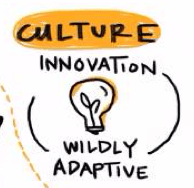 Today, during our first Harvard University Learning Innovation Lab (LILA) session of the year we discussed many of the commonalities of what is going on in the worlds of all the members of our consortium of leading researchers and practitioners in the field of organizational learning and change. Our theme for the year is “Emergence in Organizations.” During our discussion the phrase “wildly adaptive” really resonated with me. I have always been a person who believes in and strives to practice adaptive leadership, but the thought of being wildly adaptive struck a chord.
We need to remember that we do not have to be, or need to hold ourselves, or those organizations or individuals we lead to a certain niche or existing reality. As humans, we are designed with the ability to think through situations and conclude that the current reality is not sufficient. It is easy to be complacent and stay in a state if status quo for a long period of time. We need, however, to pay attention to the contexts and environments in which we lead for changes that should be triggering us to adapt or lead a wildly adaptive change. 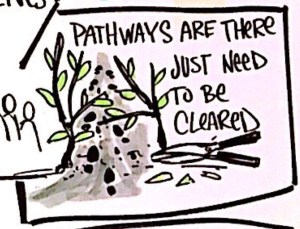
To master adaptive change we must help people to learn new ways, change behavior, achieve new understandings, and see the world through new filters. We and those we lead must do all of these things in a collective and collaborative way. This topic has caused me to reflect on a meeting on Graduation Pathways I chaired this week where the comment was made, “The pathways already exist we just need to find a way to make them work in a new graduation pathways structure.” This reminded me that we must not always look to make wholesale or technical changes but must also be adaptive.
Let’s remember to practice adaptive leadership with our initiatives as they are happening to understand how today’s turns in the road will affect tomorrow’s plans.
8 Tips for Riding the Mood Elevator
 This is a guest post from Larry Senn:
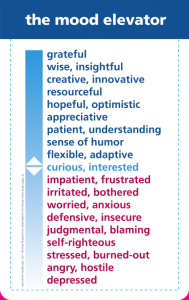
The Mood Elevator is an illustration of the human condition; it is our moment-to-moment experience of life. We all ride the Mood Elevator every day, take a moment and identify what floor you are on right now.
The Mood Elevator map is based on my own experience, as well as input from hundreds of groups and tens of thousands of people who have attended seminars that Senn Delaney, the culture shaping firm has put on over the past few decades.
Look at the top of the Mood Elevator and think of the times you’re more likely to be at those levels. It could be when you hug your children at the end of the day, it could be spending quality time with your significant other, or it could be when you accomplish something at work. We all, of course, would love to live on the higher levels but that’s just not realistic. As part of the human condition we will experience loss, stress, financial insecurity and other events that will cause us to drop down to depression, anger, and stress.
In my new book The Mood Elevator, I provide a variety of tips and tools that will help you better understand your human dashboard as well as help you navigate the daily up and down ride of the Mood Elevator.
Here are 8 tips to help you better ride The Mood Elevator:
- Know that to be human means you will ride the Mood Elevator and visit each and every floor. Don’t expect to live at the top of the Mood Elevator all of the time, cut yourself some slack when you drop down.
- Learn to recognize the feelings that accompany any unhealthy normal thinking or thought patterns, and make them a loud bell. When you start experiencing feelings like: impatience, anger, anxiety, excessive intensity, neediness, disconnection, and self-righteousness it’s a good indication that you’re sliding down the Mood Elevator. When you recognize this, you can take some corrective action to avoid an unhealthy normal.
- Use pattern interrupts to change your thinking and your feelings. Pattern interrupts are anything healthy tactics that can help you escape your spiraling negative thoughts. They can include exercise, calling a good friend, watching a funny YouTube video, or getting a good night sleep.
- Feed the thoughts you favor, not those that drop you to the lower floors on the Mood Elevator. If you find yourself reminiscing on a negative event in the past, or fixating on a mistake you made at work or might make at work in the future- recognize that your thoughts are going negative. You can identify your thoughts based on your feelings, if you’re feeling worried- it’s probably because you’re having worried thoughts. Use a pattern interrupt or think about something you are grateful for to break that train of thought.
- Take better care of yourself and remember to stretch and recover with exercise, sleep, and time off. We are more likely to catch colds if we are run down physically, and we are also more likely to catch bad moods when we are run down physically. Exercise has many mood boosting benefits and eating the right foods can help keep our energy levels up which improves our moods. Have you ever noticed how life can look so much better after a good night sleep? Getting at least 7 hours of sleep per night can drastically help us stay up the Mood Elevator.
- Maintain a gratitude perspective, count your blessings daily and be grateful for life itself. Even when life doesn’t look as good as we would like it to, there are always things to be grateful for. Those who choose to look at life with gratitude are happier than those who don’t. Try starting a gratitude practice by making a daily list of what you are grateful for.
- Remember that your thinking is unreliable in the lower mood states; delay important conversations and decisions; don’t act on your unreliable thinking, and don’t take your lower mood state out on other people.
- Have faith that when you are down the Mood Elevator; this too shall pass-just like the weather. The sun is always up there; the clouds can obscure it, but they will pass as will your low mood.
**************************************************************************************
About Dr. Larry Senn
Dr. Larry Senn pioneered the field of corporate culture and founded in 1978, Senn Delaney, the culture shaping unit of Heidrick & Struggles. A sought-after speaker, Senn has authored or co-authored several books, including two best-sellers. His newest is The Mood Elevator (August 2017), the follow up to his 2012 book, Up the Mood Elevator. You can learn more about Larry and his work at his website, www.themoodelevator.com.
 Byron's Babbles
leave a comment