Every Day We Are Making Memories


 What got me thinking was when Caro wrote about Lyndon reflecting on loving the times when he and his father would travel in the Ford Model T to and from the Statehouse in Austin, Texas. He shared that his father would bring a crust of bread (I am comparing that to bringing a loaf of bread) and a jar of homemade jam. When they got hungry or tired, they would stop and spread some jam on bread and eat. I got a visual of that great dad and lad time when reading this. I’ll bet those were some of the best meals of Lyndon’s life.
This made me remember and reflect back of some great travel times as a young (notice I didn’t say small, because I was never small) boy with my own father. Specifically, I remember our three hour trips south to Louisville, Kentucky for the National Farm Machinery Show. He and I would stop and get a loaf of bread and some cheese. We would always buy bulk cheese and have the person at the deli counter slice it real thin for us. I remember those cheese sandwiches being the best sandwiches I have ever had. I loved spending this time with my dad. We had such great conversations while eating those cheese sandwiches.
I have tried to do things like that with my son and spend quality one on one time with him. We actually talk about what our next dad and lad time will be. Now that he is away at college, that time becomes more and more precious. Hopefully, he will remember those moments with fondness and he will do the same for his children some day. Needless to say, dad and lad, dad and lass, mom and lad, mom and lass time is very special and important. In the case of Lyndon and Sam Johnson this was time that Lyndon was learning about politics. Caro wrote that if kids were playing and asked Lyndon to join in he would never join them if he was talking to his dad at the time.
So, why blog about this? For one it was great to reflect on great past moments with my dad. Secondly, it is a reminder to us all just how important the touch points with our kids are, however seemingly insignificant they are. At the time my dad was buying a loaf of bread and a hunk of cheese it was to save money and because there weren’t the places to stop and get food on the way to Louisville along I-65 that there are now. Amazingly, Louisville, Kentucky seemed like it was on the other side of the world. My, how small of world we have become! Don’t forget, make the most out of every moment you have with your children. These times are precious and are very important to their formative years. Always remember, every day we are making memories.
Empowerment Triggers The Approach System
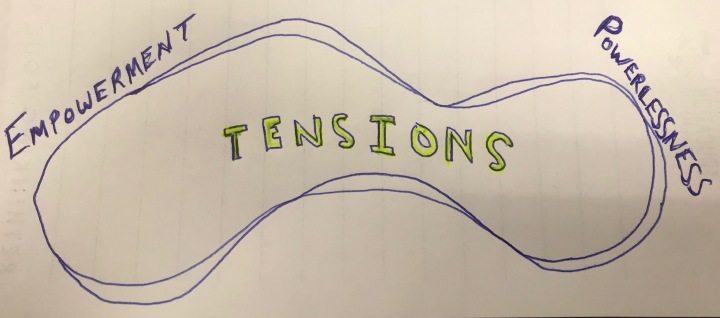 There has been a great deal written about student agency, student choice, and empowerment. In fact, just yesterday I was working with teachers on how to empower student in such a way to get to a self (student) managed classroom. Student agency and choice refer to learning by doing activities that are meaningful and relevant to learners, driven by their interests, chosen by the student, and often student (self) initiated. As a teacher, I loved giving students a stake in choosing from opportunities provided for them; or many times letting them come up with options. These opportunities might include giving the choice between doing a project, making a presentation, writing a paper, creating a product, or other activities. This ability to choose, or have agency, empowers the students, which leads to greater investment of interest and/or motivation.
 Like I said, I used student agency for years as a teacher and promote it as a major tenant of project based learning. It seems that this is really brain-based. Yesterday, I finished reading the great book Presence: Bringing Your Boldest Self To Your Biggest Challenges by Amy Cuddy. While this was not an education book, the principles of empowerment and powerlessness triggers that apply to our presence as a leader, also apply to the way we engage students.
In the book, Cuddy explained the approach and inhibition systems of the brain. This explanation came from the 2003 study of psychologist Dacher Keltner. The approach system is made up of regions in the brain that promote curiosity, being adventurous, and trying new things. The inhibition system, promotes cautious behavior. Too much of this causes us to see threats where others recognize opportunities. In other words, it stifles us. Think about these two systems both from a leadership standpoint and a student engagement perspective.
Keltner argued that empowerment triggers the approach system. In other words, if we believe we are empowered we are able to be more curious, adventurous, and willing to try new things. Doesn’t this sound like how we would like our students to be every moment of every day? Conversely, Keltner posited that powerlessness triggers the inhibition system. As was explained earlier, this causes cautiousness. Think about this from a leadership or educational perspective. When we empower others and give them autonomy this triggers our approach system, and contrarily when we take power and agency away and add constraints we trigger inhibition. Remember, power is the ability to change something. Do we not want our students and team members to be in a position to do this?
Bottom-line: the approach system will respond to rewards and opportunities and the inhibition system responds to constraints, threats, and punishments. Really if you think about this it is pretty simple. These two systems in our brain exert powerful influence over our actions, motivations, and emotions. How are you empowering? How are causing powerlessness? It could be as simple as giving student agency removing constraints, or not have having team members go through a bunch of compliance hoops of approval. Let’s keep these triggers in mind as we navigate 2020.
366 Page Best Selling Autobiography
 In the past few days there has been plenty said and written about New Year’s Resolutions. Why do people bother? I even saw (notice I didn’t say “read”) a blog with 15 steps to keeping your resolutions. Really! Why do we put ourselves through that process for failure.
If I was going to have a New Year’s Resolution, however, it would be to appreciate my friends every day and catch more fish. Pretty doable, I believe. And, unlike where we do things like get an accountability partner (which, by the way, just adds stress to someone else’s life) this resolution is fun for your friends. Who wouldn’t want to go to lunch and catch up, or go fishing?
In my morning motivational message, that I tweet and post on LinkedIn (notice it’s not an email I force people to deal with – it’s a choice for someone to go look at it) each day, I said, “Today is the first blank page of a 366 page autobiography. Make it a best seller.” I really believe if we approach every day as a page to a best seller we could write a pretty good book.
 Best selling and Pulitzer Prize author Robert Caro says, “I have to produce every day.” Caro has written massive volumes about Robert Moses, New York City shaper, and President Lyndon B. Johnson. He will tell you these books are not about the men, but about power – getting it, using it, becoming abscessed with it, and abusing it. I have read The Power Broker and it is awesome. I am planning to start the series on Lyndon Johnson this year.
 Many have asked Caro over the years about his work habits, and there have even been interviews. Therefore, even though he was not done with the last volume of his books on Lyndon B. Johnson, he took time to write Working. In this book, which is a great read by the way, he outlines how he goes about doing the work of writing these in-depth books on power. What stuck out to me was when he wrote that he writes 1,000 words per day. Then at the beginning of the next day he reviews and revises the writing of the previous day and writes another 1,000.
See where I’m going here? What a great metaphor on this New Years Day! We need to approach this New Leap Year as a blank pad to write 1,000 words per day for a 366 page best selling autobiography. Each day we can reflect on the previous day, but then get to work on the next 1,000 metaphorical words that are our life. So maybe, just maybe it’s this simple: produce every day.
 Byron's Babbles
1 comment