Belonging To Yourself
Isn’t it funny how something can happen that relates directly to something we are reading at the same time? This happened to me this week. A person in a training/development I was facilitating this week shared that she was reconnecting with herself and establishing a sense of self-ownership. Seeking our true identity is a process of self-discovery and self-awareness. It involves delving deep into ourself to understand our core values, beliefs, strengths, and weaknesses. By understanding who we truly are, we can make informed decisions aligned with our authentic selves, leading to a greater sense of personal autonomy and control.
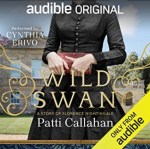
Then, this morning, as I was listening to the Audible Original Wild Swan: A Story of Florence Nightingale by Patti Callahan Henry, this same idea of self-discovery came up again. In the story, Florence Nightingale said, “I belonged to myself.” This really jumped out at me. To me, saying “I belonged to myself” means that one recognizes and asserts their autonomy and ownership over themselves. It suggests a strong sense of self-identity and the belief that one has the right to make decisions and choices for themselves, without external control or influence. It signifies a state of independence and self-possession, where one feels empowered and in control of their own life and destiny.
In the story, Nightingale believes her purpose goes beyond the Victorian societal expectations a daughter of an affluent family had at the time. In the story Nightingale said, “I’m hoping to come into possession of myself.” This, to me, suggested that she felt disconnected or lost in some way and was seeking a sense of self-ownership and control. We all need to find our true identity, establish our own core values and beliefs, or regain control over our life and actions. Essentially, it indicates a desire to discover and assert our individuality and personal autonomy. Sometimes we need to reinvent ourselves.
By seeking her true identity in the story, Nightingale allowed herself to establish healthy boundaries and assert herself in relationships and interactions. She truly came into possession of herself. When we are aware of our values, needs, and boundaries, we can communicate them effectively, set limits, and make decisions that prioritize our well-being. This empowerment contributes to a sense of control over our own lives, as we are no longer passive recipients of external circumstances but active participants who shape our own destiny. We too, like Nightingale, can have an extraordinary life of significance.
Making Everything Into An Adventure
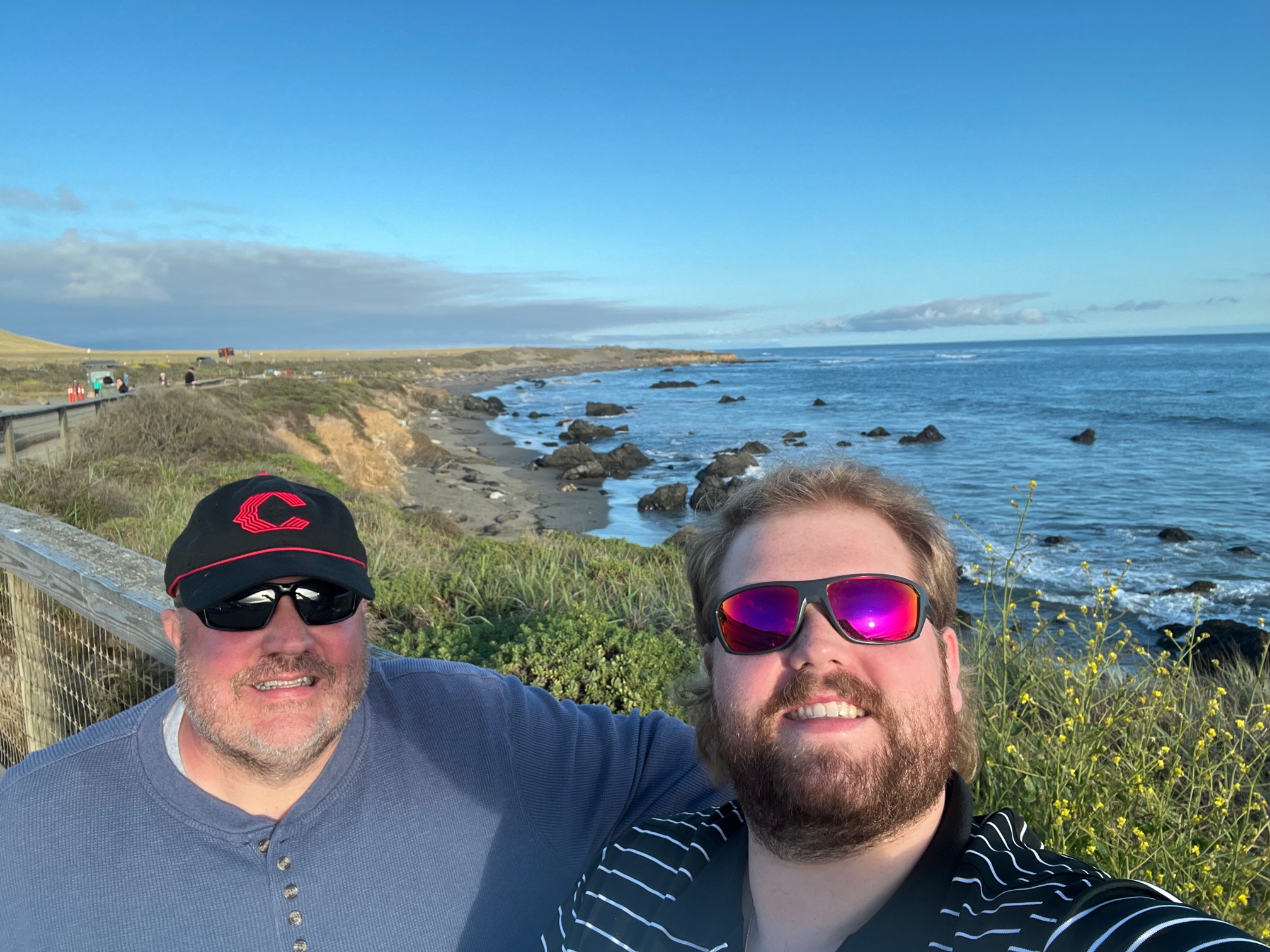
“That was the thing with Bridie, everything that was a market run or errand was not; it was an adventure.” I loved this line in The Secret Book of Flora Lea by Patti Callahan Henry Don’t you just love that person that makes everything into an adventure? Bridie Aberdeen was that person to Hazel and Flora. I really try to be that person. Even when driving my son home from school when he was younger we tried to make it into an adventure – like who could find the most John Deere tractors working in the field. It has often been said of me, “With Byron, everything is an event.” Guilty! And I am proud of it. This past week I had the opportunity to have my son travel with me to California to visit a very close friend and mentor with dementia. Everything we did on this trip was an adventure, from picking fresh avocados to fishing in the Pacific Ocean to doing wine tastings, and everything in between. The thing is that every single thing we did was an adventure. And, amazingly, with every adventure my friend remembered things from the past – places we had been together, things we had done, adventures we had taken 15-20 years ago. Also, my son had not been to Atascadero, California in several years and this trip brought back memories for him of things he had forgotten from being so young at the time. So many times we get so caught up in the day to day grind that we forget to enjoy the journey. If you think about it, it does not take any extra time to make all the things we do into adventures. Those adventures also build family and friendship bonds and memories that even dementia, in the case of my friend and mentor, could fully extinguish.
So, can everything be made into an adventure? I believe so. It’s really a mindset thing. The key is to find ways to infuse creativity, curiosity, and a willingness to take calculated risks into your daily life.
Leading With Stories
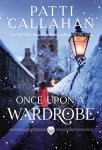
C.S. Lewis was a well-known author and scholar who believed that storytelling was a powerful tool for exploring ideas and conveying truth to readers. It was said in Once Upon A Wardrobe, by Patti Callahan Henry, “I believe the world is held together by stories.” In many ways the world is held together by stories. Stories help us make sense of our experiences, connect with others, and create meaning in our lives. It is brought out in Once Upon A Wardrobe, which Lewis was a character in, and in having read a great deal of Lewis’ work we can find he firmly believed in the power of imagination and creativity in storytelling, and believed that stories could be used to convey important spiritual and moral lessons to readers. He was the master of using allegory and symbolism to explore complex ideas in a way that was accessible to a wide audience. It was genius of Patti Callahan Henry to have George ask the question, “Where did Narnia come from?”. He was to referring to Lewis’ book, The Lion, The Witch, and The Wardrobe. Stories have the power to shape our understanding of the world around us.
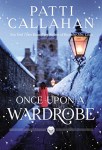
The ability to tell stories that inform enable us for understand ourselves better and convey to others what we value. These narratives shape entire societies as well as the cultures of our companies, organizations, and communities. Stories help us understand and interact with the world around us. One reason I love reading and hearing stories so much is that those stories can challenge my beliefs, broaden my perspectives, navigate difficult situations, find common ground with others, and build empathy and understanding.
Stories can take the form of conversations, literature, speeches, presentations, film, music, or oral traditions. As leaders, we have an obligation to sharpen our storytelling skills. As a teacher, I understood that effective lessons are couched in good stories. This is true in leadership as well. Stories really are how we process our lives and the world around us.
An Adventure Of Our Own Making

It can be a motivational or empowering sentiment, suggesting that we have the freedom and agency to pursue our dreams and explore new possibilities. I also loved the phrase from Padraig Cavender to Megs and George Devonshire, “It’s an adventure of our own making” in Once Upon A Wardrobe, by Patti Callahan Henry. Padraig made this comment as they were visiting castle ruins in Ireland. George, who was eight years old and dying of a heart condition, wanted to see this as his only Christmas present request. Padraig showed up at George and Megs’ house on Christmas Eve Eve (I love that Patti gave Christmas Eve an Eve in this novel) and told them to get their stuff and get ready to leave. Megs left their parents, who were not home, a note and off they went – on an adventure of their own making. I am doing some work for the Smithsonian this week in Washington D.C. and I got to thinking about how great of places all the Smithsonian units are for allowing us to make our own adventures. Especially for our students, having all these archives is incredible. And, with thousands and thousands of the archives on line now, ALL students can have an adventure in learning. I love adventures and we need to encourage our young people be adventuresome.
The phrase “It’s an adventure of our own making” implies a few other things to me, such as:
- that we have the power to create our own unique experiences in life.
- that we have control over our own destiny.
- that we can shape our lives through the choices we make and the actions we take.
We need to help young people to take healthy adventures by leading by example. We need to encourage others and ourselves to try new things. We can develop a sense of adventure while also prioritizing our well-being. We can navigate new experiences by setting goals, managing risks, and learning from any challenges we encounter.
Our Wandering Minds

Our imaginations allow us to be in multiple places at once, even if it’s just in our minds. So true! And, my mind has been transported to so many new and excited places because of the books I’ve been reading the past couple of weeks. This post is another one of several these past few days inspired by Patti Callahan Henry. Here, in the month of April, I have read three of this best-selling author’s books:
The latter two were written out of Patti Callahan Henry’s love of C.S. Lewis‘ writings. Her work is incredible! Patti has the ability transport us to the setting of the story. I am not just reading the story, I am there. I always come away inspired by her work and in a state of reflection about what I’ve learned. In fact, I just started reading Lewis’ fantasy novel, The Lion, The Witch, and The Wardrobe, which was the through line of Once Upon A Wardrobe. I read The Lion, The Witch, and The Wardrobe years ago, as a youngster, but I am reading it now in a totally new and exciting frame of mind. C.S. Lewis would be proud I am now old enough to read fairy tales again.
“Some day you will be old enough to start reading fairy tales again.” ~ C.S. Lewis
In Once Upon A Wardrobe, Padraig Cavender told Megs and George Devonshire that, “We are never just in one place at one time. Because of our imaginations we are in many places at any given time.” Meaning that our imagination allows us to be mentally present in many different places and situations at the same time, even though we are physically only in one place. Our minds can wander and imagine different scenarios, which helps us to be more creative and innovative in problem-solving and decision-making. Can you think of a time when you used your imagination to problem-solve or make decisions?
Imagining Narnia
Have you ever had an experience where your imagination helped you understand or appreciate something in a way that reason could could not? Megs and George Devonshire did in, Once Upon A Wardrobe, by Patti Callahan Henry. George wanted Megs to get C.S. Lewis to answer the question, “Where did Narnia come from?” George’s question refers to Lewis’ fantasy novel, The Lion, The Witch, and The Wardrobe. In one of Megs’ visits to The Kilns it was stated that, “Reason is how we get to the truth, but imagination is how we find meaning.” This phrase in the book suggests that reason is a useful tool for discovering the truth, but imagination is essential for finding deeper meaning and significance in our experiences. George reminded us in this great historical fiction work of Patti’s that Albert Einstein said, “Imagination is more important than knowledge. For knowledge is limited to all we now know and understand, while imagination embraces the entire world, and all there ever will be to know and understand.” Imagination can truly take us beyond what we know, or think we know, and help us see the wider world.
Mere facts and information may not be enough to fully understand and appreciate the world around us; we need to use our creative and imaginative faculties to uncover the more profound truths and connections that often lie beneath the surface. I love how Once Upon A Wardrobe and all of Patti Callahan Henry’s great historical fiction works models this so perfectly for us. She takes historical facts which always seem to have gaps or facts that are not known and she uses her extensive research to guide her imagination to making sense out of all of it. We always need to remember that our imagination can help us find meaning.
Every Human Interaction Is Eternally Important
I have spent this entire week working in schools with teacher leadership academies or facilitating strategic planning. Spending time with everyone in a school setting is incredible. I absolutely love the interactions I have now in the work I do, but I do miss the daily interaction with students I had in the classroom as a teacher. Yesterday, I was reminded of this by the phrase, “Megs, every human interaction Is eternally important.” This comment from C.S. Lewis to Megs Devonshire in the historical fiction novel, Once Upon A Wardrobe, by Patti Callahan Henry made me reflect on just how important every interaction really is; even if just a smile or simple hello. The word “every” is very important in this phrase. Those interactions can truly make or break someone. This phrase reminded me, and I hope it does you too, of the value and significance of human connection and the impact it can have on our lives and the lives of those around us.
When I was in the classroom as a teacher I would shake every scholar’s hand before they entered the classroom. This was an important ritual that was extremely important and meaningful to both my students and myself. This interaction allowed me to really know the student in the context of that moment. You can learn a lot about a person when you shake their hand. Particularly if you have a meaningful relationship with that person and interact with them every day. The phrase “every human interaction is eternally important” suggests that each interaction we have with others is significant and has a lasting impact. In Once Upon A Wardrobe, C.S. Lewis was emphasizing to Meg, the importance of our relationships and connections with others, and encourages us to approach each interaction with care and consideration. Focusing on building genuine connections and being present in the moment can lead to more fulfilling relationships and experiences.
Crawling Inside The Story
Here are a couple of questions for you to reflect on:
- Can you remember a book or story that you have heard or read that made you feel like you were actually a part of it?
- Have you ever been so engrossed in a book or listening to a story that you didn’t realize how much time had passed and ended up being late for something?
- Do you enjoy writing or telling stories? If so, what do you like to write about or tell stories about?
Great writing and storytelling have the ability to transport us to another world, allowing us to feel as if we are a part of the story itself. I am reading the incredible book, Once Upon A Wardrobe, by favorite author, Patti Callahan Henry. I am a huge fan of historical fiction and Patti is the absolute best. Through her vivid descriptions, relatable characters, and engaging plotlines, her exceptionally good writing captures my imagination and emotions, and makes me feel like I am experiencing the story firsthand.
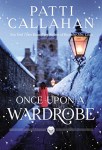
This is what makes us do what eight year old George Devonshire said he did when reading a great book: “crawl inside the story”. George, who is a character in Once Upon A Wardrobe, told his sister, Megs, this when she was reading to him. George told Megs it was like he was really there. That is what great storytelling does. In fact Megs misses her train back to college because she gets so engrossed reading The Lion, the Witch, and the Wardrobe by C.S. Lewis to George. George had read the book many times, but Megs had not. She became so engrossed in the book, she completely lost track of time. She had crawled inside the story.
Stories are important for our learning, understanding, influence as a leader, and finding answers – that is what Once Upon A Wardrobe is all about. A great story will explore universal themes and emotions that resonate with us on a personal level. Don’t forget; the best story is told with a clear and engaging plot, well-developed characters, vivid descriptions, and a compelling narrative tone. If you’ve not read one of Patti Callahan Henry’s many best sellers, you need to. You’ll be hooked and you’ll for sure experience crawling into a story for yourself.
Forgiving & Forgetting

Another phrase from the father, Gavin Donahue, to his daughter, Colleen, in the great novel I finished this past week, The Favorite Daughter by Patti Callahan Henry was, “You can’t separate forgiveness from forgetting.” Gavin was telling his daughter that in order to truly forgive someone or something, we must be able to forget the offense, or at least let go of the negative emotions associated with it. Much easier said than done. Right? Forgiveness requires us to move past the hurt and resentment, and we can’t do that if we’re constantly holding onto the memory of what happened. I’ve often said I am glad many in my past had amnesia when it came to my many shortcomings or disappointing actions. As a teacher forgetting had to come with forgiveness. Imagine if I would not of been able to let go of every little transgression of my students.
I must note, however, that this does not mean we should completely forget what happened, but rather learn from the experience and use it to grow and improve as individuals. Ultimately, forgiveness and forgetting go hand in hand, and it requires a level of acceptance and understanding to fully achieve both.
We Are Memories

You gotta love those “chicken or egg – which came first?” type questions. I loved one that was posed in The Favorite Daughter by Patti Callahan Henry. The question was “Do we make memories or do memories make us?” Pretty interesting to ponder, right? Unlike the chicken and the egg, I believe it is a bit of both. Our experiences and interactions with the world around us create memories which we then use to shape and understand our own identities. We also don’t want to forget that this memory building has a profound impact on those in our lives. Never forget that most of our memories are not built in isolation. We can all point to events in our lives that had some profound impact on us, or just stand out as one of those important or “favorite” moments in our lives. Usually, those memories involve family, friends, or even co-workers.
The question of memories is an ever-evolving cycle where we both make memories and are made by them. It is also important to remember, as was pointed out by the characters in The Favorite Daughter that our memories aren’t always accurate or reliable and can be influenced by various factors like emotions and biases. Which points to another great line in the book, “We are not a biography or list of facts, we are memories.” If you think about it, this is very true. Think of those who have meant the most to you or had the most impact on your life – you don’t remember them as a biography, but by memories you created together. We are the memories!
 Byron's Babbles
leave a comment