Leading As A Mentor

Last week I had a person who had sat in on some of my past leadership workshops, not as a participant but a passerby and got caught up in what we were doing, tell me he was now using what he learned from me on a daily basis as a leader. I was both honored and intrigued by this. So, I had to ask what he had learned. He told me he was inspired on my insistence that every leader needed to hold those they serve accountable while also inspiring both personal and professional growth. He said, “You taught me that every leader should serve as a mentor and role model to those they serve.” I do believe and teach that every leader should strive to be the best mentor possible.
Leaders should be mentors because they have the experience, knowledge, and perspective to guide others through their professional and personal growth. By serving as mentors, leaders can help develop the skills and confidence of their team members, fostering an environment of continuous learning. Organizations thrive when leaders develop other leaders, not just followers.
Mentorship also builds trust and strong relationships, which can improve collaboration and morale. Ultimately, when leaders invest in their team’s development, it creates a more engaged, capable, and motivated workforce that benefits the entire organization. Team members who feel guided, not just managed, are more loyal and engaged. Mentorship makes leadership complete and more human centered.
Mentorship is the key for leaders to develop other leaders!
The Power of Relationships: Lessons on Building Meaningful Connections
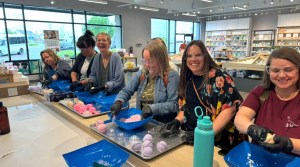
Last Friday I had a teacher leader who has been through one of my leadership development programs with me, share that she is now in a masters program and she realized while doing some reflecting during a course that she had never had a very effective coach, mentor, or facilitator of educational leadership or instructional effectiveness until me. Now, I must admit I blushed a little, tried to play it off, but was also very proud. Of course, all of you that know me know I could not resist asking a question. My question was simple: “Why do you think that is so?” Her answer was also very simple: “Our relationship!” She went on to say, “You take the time to really build relationships with everyone you work with. You know me and you know what I need.” Wow! That really made me proud because I do believe relationships are the key to everything.
In an ever-changing world, where change is constant and competition fierce, one timeless skill stands out as a cornerstone of being significant: relationship building. I want to use this post to emphasize the profound impact that genuine relationships have on personal growth, professional success, and community development.
Why Are Relationships So Important?
At their core, relationships are the foundation of trust, collaboration, and mutual respect. I teach that strong bonds created through authentic connection lead to greater influence, improved teamwork, and a more fulfilling life. Whether in leadership, teaching, business, or personal spheres, the ability to cultivate meaningful relationships is essential.
Key Principles from my Leadership Philosophy
- Authenticity and Integrity: This underscores the importance of being genuine. Authenticity fosters trust and encourages others to open up, creating a positive environment for growth and collaboration.
- Active Listening: This highlights that effective leaders and relationship-builders listen more than they speak. Truly understanding others’ perspectives enables stronger connections and better problem-solving.
- Empathy and Compassion: Empathy allows leaders to connect on a deeper level. I teach that demonstrating sincere concern for others’ well-being enhances loyalty and inspires collective efforts toward common goals.
- Consistency and Follow-through: Building trust requires consistent actions. I want to stress here that reliability and accountability reinforce relationships over time.
- Value Others: Recognizing and appreciating the strengths and contributions of others cultivate a sense of belonging and motivation.
The Impact of Strong Relationships
Investing in relationships yields dividends far beyond immediate gains. Strong connections can:
- Foster innovation through diverse perspectives
- Accelerate personal and professional development
- Enhance organizational culture and morale
- Enable communities to thrive collectively
In a world driven by rapid change and digital interactions, the human element remains vital. I hope my insights here will remind us that leadership and success are ultimately rooted in our ability to build and nurture meaningful relationships. By practicing authenticity, active listening, empathy, consistency, and appreciation, we can create bonds that uplift us all.
By valuing authentic relationships and leading with integrity, we not only elevate our own success but also cultivate vibrant, supportive communities where everyone can thrive. Let’s strive to lead with authenticity and a heartfelt respect for those we serve and work alongside.
Harnessing Being Receptive, Understanding, & Acting

Yesterday, when discussing a current project with a great leader I have had the opportunity to serve as a mentor for, she shared some positive feedback from a team member she serves. This leader and the team member were having a one-on-one meeting and the team member told her that, as a leader, she practiced three great qualities: being receptive, understanding, and acting. This leader then shared that she had learned those three qualities from me. She told me I had modeled those for her. I tell you this story not to brag but to reinforce the power of modeling the qualities we espouse.
Now, let’s talk about being receptive, understanding, and acting. These are exceptional leadership qualities because they foster trust, collaboration, and effective problem-solving. Receptiveness allows us to listen genuinely and consider diverse perspectives, leading to more informed decisions. This receptiveness may even involve us being open minded to new ideas or ideas contrary to our own.
Understanding helps us empathize with our teams and stakeholders, creating a supportive environment that encourages engagement and loyalty. I have also learned that understanding also leads to appreciation of where the other person is coming from. Appreciation is an important part of understanding that I believe many times gets left out.
Acting promptly on insights and feedback demonstrates decisiveness and commitment, inspiring confidence and driving positive change. Together, these three attributes build a strong, cohesive team and enable us to navigate challenges with empathy and agility.
Unofficial Teachers

Alister E. McGrath spoke of one of C.S. Lewis’ friend and mentors as having been one of the best unofficial teachers Lewis ever had in, C.S. Lewis: A Life: Eccentric Genius, Reluctant Profit. I love the title given to this friend and mentor of “unofficial teacher.” We have all had them. We need the wisest and best of unofficial teachers because they offer unique perspectives and knowledge that can greatly benefit individuals and society as a whole. Unofficial teachers often possess specialized expertise in specific fields or areas of interest, and they may have a deep understanding of topics that may not be covered in traditional educational settings.

These unofficial teachers can provide alternative viewpoints, challenge conventional wisdom, and offer innovative solutions to problems. They may have practical experience or real-world insights that can supplement formal education and provide valuable lessons.
Additionally, unofficial teachers can play a vital role in mentorship and personal growth. They may offer guidance, support, and inspiration to help individuals navigate their careers, develop important skills, and overcome challenges. The insights of an unofficial teacher can foster intellectual curiosity, critical thinking, and creativity in learners.
Therefore, seeking guidance from the wisest and best unofficial teachers can expand our knowledge, broaden our perspectives, and help us become well-rounded individuals capable of making meaningful contributions to society.
Don’t Be A Copycat

Yesterday, my son and I had the opportunity to fish in the Pacific Ocean out of Morro Bay, California. The views along the coastline going north out of Morro Bay were amazing. It was very cool to see Hearst Castle from the ocean. And the value added part was that I got to see my very first whale up close, live, and in person in the ocean. It was amazing to watch it blow when surfacing and it’s massive tail coming up out of the water. Oh, by the way we caught some beautiful fish, too (see picture).

While fishing, several boats would pull up close to us and our great guide, Shawn Stamback, made the comment that many of these were new captains that just crave being in charge and having power, but didn’t want to put in the time, hard work, and obtain and learn the technology to be a great leader in their craft. They were just copying where he went. Well, as a person who does leadership development for a living, you know I was all over that. Shawn even called the “copycats”.

We talk a lot about this idea of copying in developing leaders. We need those that are examples, mentors, and coaches in our lives. In fact that is why I am in California. I am visiting my long-time friend and mentor, Al DeRose. In fact I am sitting on his back porch while writing this post. He was one of the all time greatest Agriculture Educators and FFA Advisors and I have been learning from him.
I wouldn’t be where I am am today without this great man, Al, in my life! What we don’t want to do is copy them, though. We all have our own styles and need to development those unique styles. After six decades I am still growing and developing every day. While it is absolutely necessary to learn from other leaders and their successes, simply copying what they do may not, and probably won’t work for your unique situation.

Every organization and individual has different strengths, weaknesses, and challenges. It’s important to consider your own context and goals before making decisions or taking actions. Additionally, being innovative and trying new approaches can lead to breakthroughs and competitive advantages. So, don’t “copycat” but emulate and learn from the exceptional mentors in your life.
Reverse Mentorships Revisited

I’m not sure where I would be without the incredible mentoring I have had over the years from students, yes you heard me right, and those younger and less experienced than me. I was reminded of this during a discussion where a teacher with 20 years experience was thanking a second year teacher for all she had learned from him. This mentoring extended far beyond the typical reverse mentoring of sharing knowledge about technology. The mentoring that was discussed in this conversation was about mentor on various topics of teaching strategies and cultural relevance.
Cara Dune: Take care of this little one.
Greef Karga: Or maybe, it’ll take care of you.
From The Mandalorian – Season 1 Episode 8: ‘Chapter 8: ‘Redemption’ (1×08) | Produced by Lucasfilm
The cool part about this organic mentoring relationship was that is was not a one way street. There were opportunities to exchange ideas, and even inspire one another. The beauty is that we know there are skills gaps on both sides, and that each person can address their weaknesses with the help of the other’s strengths. What’s interesting about these reverse mentorships beyond the incredible exchange of skills, knowledge, and understanding, there are great relationships and friendships created. Check out my very first blog about this in Reverse Mentoring. Bridging generational and hierarchical gaps to improve communication are important things that can happen. So, if you want to foster a more inclusive culture that values the contributions of all employees, and increase engagement and collaboration multiple generations, encourage more reverse mentorships.
Building The Cocoon

Being the rock and roll band groupie that I am, it will come as no surprise that I am reading Peter Frampton’s book Do You Feel Like I Do? A Memoir. I’m only on page 59, but I can already tell there will be multiple blog posts prompted by this book. For one thing, Peter has written this book with a very conversational voice. As I’m reading it is like he is with me telling the story. Such a talented person. Another thing that has already jumped out at me is the fact that his dad was a teacher – and a great one. I already tweeted this quote from from the book where Peter was telling about his dad teaching David Bowie and him knowing Dave (as he called him) as a schoolmate: “My father’s passion was teaching art. He could see those students who had the eye and the excitement to learn when they walked into his classroom” (p. 24). As an educator I appreciate this compliment of his father and wish for every student to encounter teachers like Peter Frampton’s dad.

Then came this statement in the book: “Wherever I looked, I was in this cocoon of famous people, people who I admired” (p. 31). As I always say, “Language matters.” The word “cocoon” jumped out at me. Here, Frampton was using a powerful metaphor for describing being with and learning from members of The Rolling Stones, great producers, great engineers, and other music industry influencers. I loved the metaphor because I can actually see them insulating and protecting just as a cocoon does for the larvae.
As a student of rock bands, and wannabe with zero talent, I’m always amazed at how those in the music business can spot talent and then, to use Peter’s metaphor, build a cocoon around them and help them. It’s like group mentoring or a team apprenticeship. This is really the way we should be doing this. Because there were so many great and talented people providing multiple parts of Peter Frampton’s mentorship, blind spots were minimized and the biases of any single mentor were eliminated. A genius model we should be using for our students and ourselves.
Peter Frampton truly had systemic use of diverse mentors and session formats provided for him without there being a formal plan. His mentors saw the talent and then set out to build the cocoon that allowed the development to happen.
I can’t leave this post without one more quote that drives home Frampton’s point about how good the stars of the moment were to him: “I’m asking about touring and what they do and everything, so I’m learning how a successful band works. But just seeing this person who’s a Rolling Stone, who’s now my friend, and he’s friends with my parents and was this regular guy—so okay, I don’t have to be something other than who I am. It was kind of like an apprenticeship. I was learning as I went, and I’m getting these amazing opportunities along the way” (p. 33). You might want to read that quote again; there’s a lot there. I can just imagine him, wide eyed, asking relevant questions, and taking it all in as he forged his path to stardom. Who has been a part of your cocoon? Thank them! Who are you mentoring and building a cocoon around?
Lou Brock: Universally Admired
 So many things have directed my thoughts toward baseball ⚾️ this weekend. Yesterday was the 25th anniversary of Cal Ripken Jr.’s becoming Iron Man by playing in his 2,131st consecutive game (I blogged about it in Leading By Availability). Additionally, I’ve been sharing how I love having our family’s cutouts at Great American Ballpark supporting the Cincinnati Reds and the Reds Community Fund.
 Then came the sad news today that Hall of Famer Lou Brock had passed away. He was dubbed the “Steals King” and I always admired his ability to steal bases. Stealing bases is a great metaphor for leadership because to steal bases you can’t be afraid to fail, and you have to take your foot off base and go. Lou Brock was a stolen base specialist.
You can’t be afraid to make errors! You can’t be afraid to be naked before the crowd, because no one can ever master the game of baseball, or conquer it. You can only challenge it. ~ Lou Brock
In her great piece, HOFer Brock, Former Steals King, Dies at 81, Anne Rogers has quotes from many who described him as a mentor, great ambassador, driven, and universally admired. It was said he could light up a room when he entered.
Enough said! He taught us leadership when stealing bases and was universally admired. Thank you Lou, for the example you set. You will be missed.
 Byron's Babbles
leave a comment