Connecting Like Paul Revere

I am loving reading the great book The Ride: Paul Revere and the Night That Saved America by Kostya Kennedy right now. It is providing incredible Revolutionary War history, while at the same time providing a view into the human – Paul Revere. I’ve already blogged once inspired by the book in Leading Like Paul Revere. Why was Revere a successful revolutionary leader? Kennedy wrote, “Revere liked talking to people, he liked making his point known. He liked to feel that his words and actions had consequences, and he liked being an agent of change” (pp. 20)1-202). Let’s see here – if leadership is influence, then Revere had that part figured it.
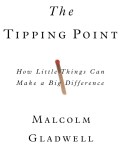
Kennedy references Malcolm Gladwell’s great book, The Tipping Point. Gladwell referred to Revere as being a “connector.” Kennedy explained that, “Of The most compelling of Gladwell’s conclusions—conclusions that he came to in part by drawing parallels to other instances of messages being conveyed by word of mouth—is that Revere succeeded in large part due to his social manner, the ease with which he interacted with other people” (p. 201). I call this being an aware communicator.

Kennedy brought out a great point about Revere, saying, “Revere not only knew many people along his route, Isaac Hall among them, he also had the demeanor to size up and engage a new person, Martin Herrick as an example, and press upon the person the news” (p. 201). Revere’s abilities allowed him to spread crucial information about the British approaching, bridging various communities and ensuring that others were informed and motivated to take action. His extensive network helped facilitate communication among disparate groups, emphasizing how vital interpersonal connections can be in mobilizing collective action and creating social movements.
Gladwell’s reference to Paul Revere as a “connector” illustrated his role in the American Revolution and the social dynamics that contributed to significant historical changes. Connectors are people who have a wide circle of acquaintances and are skilled at linking different social groups together.
Imagining In Your Mind’s Eye

I am sure this is going to be the first of many posts about the new book I am reading by one of my favorites, Malcolm Gladwell. The book is The Bomber Mafia and it is awesome! One of the topics that came out in the book was the idea of seeing things in your mind’s eye. Gladwell discussed that this is something that engineers do very well – seeing something in your mind that hasn’t even been created or creating an image in your mind of something you are not presently looking at or have never even seen. Being the husband of an engineer I can tell you this is a trait – her mind just seems to work differently at times. It turns out, however, we are all able to do this to a certain extent. I just had to dig in and learn more about this.

It has always been amazing to me how I can run into a former student and my mind maybe can’t come up with the name, but I can remember where she liked to sit in the classroom and see the classroom as if I am standing there 25 years ago. Then I sometimes imagine a completely redesigned classroom. Neuroscientists have shown that imagining an object activates some of the same brain regions as looking at that object. When we look out at the world around us we depend on light to bounce off objects and enter our eyes. This light is then converted it into electrical signals. These electrical signals travel to our brain where basic visual features, such as lines, angles, and previously seen patterns are processed. The electrical activity then goes to the front part of our brain where visual areas perform complex processing, and in a few hundred milliseconds of light entering the eye, a perception of the object is created in our brain. This is where the brain takes our previous memories and patterns to form the image.
The latest research suggests that when we imagine an object, the brain activates the entire representation of that object at once rather than building it up in the steps outlined above. The context for this learning in Gladwell’s great book was Carl Norden, a Swiss engineer, who developed the Norden Bombsight. Norden believed the device would lower the suffering and death toll from war by allowing pinpoint accuracy during bombing runs. He imagined the design for the device, that used 64 algorithms, in his mind’s eye. It even had an algorithm taking into account how much the earth would spin in the time it to a bomb to reach earth from 30,000 feet. Gladwell stated that you find paperwork descriptions or drawings. He did all his work in his head.
Gladwell pointed out that these great developments happen from someone becoming obsessed. What are you obsessed with?
 Byron's Babbles
leave a comment