The BEST Time to Look for a Job
 This guest post originally appeared on Dr. Dawn on Careers
The BEST Time to Look for a Job
By Dr. Dawn Graham
Of course, the best time to be looking for a job is always.
I don’t mean a full-on job search, but rather keeping yourself “job-change ready” just in case you need (or want) to make a shift. This way, you’re not starting at zero when you begin to look.
You don’t need to put in a lot of effort to keep yourself “job-change ready.” Here are a few tips:
• Listen. Opportunities are all around you – in your current company, at your friends’ companies, and even in the company five floors down from yours. When you tune into what’s happening at the happy hour gathering, talk to people in the elevator, or chat up your colleagues over lunch, you learn a ton about changes that will impact jobs. Stay curious and ask questions – you’ll be surprised at what you discover.
• Update. You likely have annual rituals – deep cleaning the freezer, doing your taxes, donating clothes to charity, etc. Make evaluating and updating your resume (and LinkedIn!) one of them. Review your achievements over the past year and use them to strengthen your brand. Consider what skills gaps you’d like to close in the coming year and seek out projects to gain that experience. People who are constantly on the move and involved get noticed when new opportunities arise.
• Strategize. Those people you know who always seem to land on their feet aren’t lucky. They have a plan for when things change. If you haven’t spent time thinking about companies that you’re interested in, roles you’d enjoy or projects you’d like to work on, now is the time. While no one can predict the future, continuously generating ideas, taking actions towards them, and keeping informed will ensure that you always have options available. Then, unexpected twists become opportunities versus setbacks.
 Job security only exists within you, not outside of you with an organization. Companies merge, policies shift, CEOs get replaced, departments downsize, and product growth bottoms out. Any of which can leave even the best performers on the unemployment line. This isn’t meant to instill a constant state of anxiety about work, but rather a reminder that employment in the US can be volatile, and your best defense is to always be job-change ready.
*******************************
Dr. Dawn Graham, PhD is one of the nation’s leading career coaches. She is the Career Director for the MBA Program for Executives at The Wharton School, where she counsels business leaders on making strategic career choices. A licensed psychologist and former corporate recruiter, she hosts SiriusXM Radio’s popular weekly call-in show Career Talk and is a regular contributor to Forbes.
Her latest book, Switchers: How Smart Professionals Change Careers – and Seize Successis written specifically for people thinking about changing career paths. Packed with psychological insights, practical exercises, and inspiring success stories, Switchers helps these individuals leap over obstacles and into a whole new field.
Ready, Set, Switch – Shape Up Your Social Media
 This guest post originally appeared on Forbes
Ready, Set, Switch – Shape Up Your Social Media
By Dr. Dawn Graham
If you’re a job seeker who isn’t on social media, you might as well not exist.
That’s a harsh statement, but in today’s technology-based world, there’s a basic expectation that you’re at least mildly engaged online, especially in the business world. Clients, employers, network contacts and even social acquaintances want to connect with you virtually.
So if you’ve been resisting social media, now is the time to get in the game, especially if you’re in a job search. You don’t need to go so far as to consult your teenager about the latest Apps, but there are a few foundational things that will help significantly.
First, the “why:”
• Working your network. Contacts and referrals continue to be the best source for finding new employment opportunities, and it’s pretty difficult to network if you’re not on LinkedIn when over 500,000,000 other people are. While you may be well-connected in your local geography, networking crosses global boundaries now, and the internet enables you to easily access that world. Don’t limit your reach.
• Information sharing. Over 90% of companies reported using social media in their recruiting and hiring in efforts. While LinkedIn was by far the top online site, Facebook and Twitter are gaining speed. Some recruiters use the tools to research candidates, while others use them as vehicles for posting openings and sharing updates. If you’re not following, you’re missing out. Additionally, the Society for Human Resource Management found that 35% of employers were less likely to interview candidates they could not find online.
• Getting recruited. Passive hiring is on the rise according to 2018 hiring trends, and it’s hard to be “found” if you’re not active online. To be competitive, you need to go beyond the basic profile. Your online presence needs to be intentional, showcasing your brand and demonstrating qualities that are attractive to your target audience. The Undercover Recruiter recently reported that passive candidates are 120% more likely to want to make a positive impact on their new organization. With pressure to find stellar talent, recruiters are recognizing this and prefer to find YOU. They can’t do that if your profile doesn’t exist or reflects who you were five years ago.
Now the “how:”
• Reconnaissance. Google yourself. Find out what comes up when you search for your name online. Is it a professional, updated LinkedIn profile at the top of the results list, or a DUI mug shot of someone who shares your name? Also, check your social media sites for questionable content and clean up photos or old posts that are not reflective of your professional brand. Even if your pages are “private,” chances are one of your contacts is connected to your new employer in some way. The world is getting smaller and that provocative photo at your friend’s wedding in Vegas may have been hilarious at the time, but not at all impressive to a potential employer. In fact, 55% of employers admitted to reconsidering a candidate after what they found online.
• Rebranding. Dust off your LinkedIn and ensure it reflects your current skills, interests, and accomplishments. Is it time for a new photo? Have you been remiss in connecting with new people you’ve met in the last few months (don’t forget the power of 2nd level contacts!). Is your profile linked to an old company you used to work for or do you include dates that make it easy to calculate your age when you’d rather not publicize it? You don’t need to, nor should you, include everything about yourself online. However, a few well-placed accomplishments and a descriptive summary will take you far. Bonus: A study by Jobvite showed that 65% of employers who noticed volunteer or charity work on prospective candidates profiles viewed them more favorably.
• Repurpose. Create a strategy to get active online to expand your brand professionally. Create a personal webpage, blog, or company page. If you’ve shied away from these strategies in the past, you might be surprised at how easy (and inexpensive) these things are today. If you’re not ready for that, follow influencers online whose work reflects your value and interests, and then repost their content with your network, sharing your insights. Also, check your daily notifications for anniversaries, birthdays or announcements about your network, which are easy ways to stay in touch. Create Google Alerts that do the heavy lifting for you by bringing relevant information directly to your inbox.
 If you still long for a life before texting and Twitter, you’re definitely not alone. However, these are the rules of engagement in today’s job search, so find a balance that works for you and get in the game. A job search is tough enough – why not tip the odds in your favor?
Happy Hunting!
*******************************
Dr. Dawn Graham, PhD is one of the nation’s leading career coaches. She is the Career Director for the MBA Program for Executives at The Wharton School, where she counsels business leaders on making strategic career choices. A licensed psychologist and former corporate recruiter, she hosts SiriusXM Radio’s popular weekly call-in show Career Talk and is a regular contributor to Forbes.
Her latest book, Switchers: How Smart Professionals Change Careers – and Seize Successis written specifically for people thinking about changing career paths. Packed with psychological insights, practical exercises, and inspiring success stories, Switchers helps these individuals leap over obstacles and into a whole new field.
A KISS of Stardom!
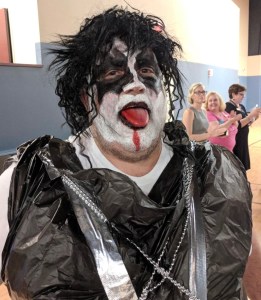
 This week I had the opportunity to do something that I had never done before. I became Gene Simmons as a part of a team in a Battle Of The Bands Lip Sync Contest. This was part of our Carolina Schools Big Potential Leadership Conference put on by Noble Education Initiative, Inc. What an experience. Although each of the group’s members is iconic, perhaps the most memorable of them all is front man Gene Simmons, who is famous for his demonic character that breathes fire, spits blood, and engages in all sorts of outrageous behavior on stage. Here’s the deal: when we hit the stage, after an hour and a half of getting in costume and having makeup put on, I became Gene Simmons. I even spit blood. And, I didn’t lip sync. I sang every word of “Rock And Roll All Night.” Then, I spit blood (we got the fake blood capsules at a party supply place and I put the all in my mouth – what a mess) and did “God Of Thunder.” The crowd was going wild – literally. I’ve got to tell you, I did not want it to end. It was addictive.
So, what did I learn?
 Shared Vision and Enthusiasm – Everyone, regardless of her or his age, knows KISS, the band. They are the band that would wear 6-inch heels, has blue/black hair, paints their faces, and one member, Gene Simmons, who would spit blood and blow fire. Amazingly, it’s hard to find anyone who doesn’t know that. Furthermore, when my colleagues and I started our rendition of “Rock and Roll All Night” it amazed me that everyone knew the words and sang along. It wasn’t just singing, though, it was singing with enthusiasm. We could tell, the song meant something to this group. Everyone was connecting in some way to it. As leaders, that is our job to make connections. Whether that means partnerships, or connecting everyone in the organization to a shared vision.
Engagement – I did a session yesterday morning on student engagement. While I was facilitating that session I was thinking about my rock band front man experience. My job both as a facilitator and front-man was to move, affect and engage an audience. This is also true in a classroom. We must move our students toward proficiency of skill, standards, and competencies, as well as affect change in their lives, while engaging them.
 The Band Is A Team – While I acted out the part of the demonic and crazed front man part of our our band, I realized it was the other three members of our band that made it all possible. Others in the band literally got my costume ready and did my makeup. They were supporting my antics on stage and supporting me acting crazy. The lesson here is that we can never be as good by ourselves as we can be as part of a team.
We All Need A Brand or To Be A Part of A Brand – The 2016 Gallup survey information tells us that we all want to be part of a successful brand or part of an organization that is doing good in the world. KISS holds all the records for record sales for any rock band ever – including Elvis and the Beatles. Their empire is worth over 1 billion dollars and there are over 3000 branded KISS products on the market today. KISS is a rock BRAND not a rock Band. What is your brand?
Have A No Limits Attitude and Approach To Life – There truly are no limits to what you can achieve. Success is a mind set. We all need to have a growth mindset. Either you think you can achieve it, or you don’t. Never let someone else tell you what you can and cannot achieve. Control those thoughts yourself.
 Upon reflection, I got chills thinking about a few things:
- Without KISS, I wouldn’t be who I am today.
- What would the world and I be like if there were no KISS?
- What band would have been my mentor to have a no-holds-barred attitude toward going after all my dreams?
- Who would have taught me it doesn’t matter what the critics are saying because you cannot please everyone; I learned, from KISS, to go after what I believe will create change in the world?
- Without Gene Simmons I don’t have the example of a humanitarian. Simmons received the MEND Humanitarian award, for his support of Mending Kids International, which provides surgical care to children in developing countries. During his acceptance speech he said, “I don’t have the right NOT to give back and neither do you. Some mother somewhere is crying her heart out because her child can’t have what we have in this country and we can change that.” Did you catch that? “I don’t have the right NOT to give back…” I heard you loud and clear, Gene!
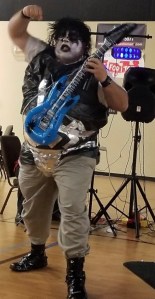
 As you can see, Gene Simmons and KISS has had quite an affect on me since the band began when I was 10 years old. I am so glad they have been a part of my life. I am also glad I had the opportunity this week to experience a very, very, very, very small part of what it feels like to be Gene Simmons on stage.
King For A Day!
 Those that know me well, know that something I love to do during meetings or interacting with others is to declare a participant(s) “King For A Day.” I love to do this because by saying, “If you were king for a day, what would you do?” I have fully empowered that person to tell me what she or he is thinking. Furthermore, I am going to get to hear one person’s creative ideas given in a way that also involves implementation. Some people kid me and say I am wanting to change our democracy to a monarchy; not at all. What I am really doing is giving a voice to those who have knowledge and skills in the area being discussed. Many times I will make multiple people “King For A Day.” Let me tell you, it is fun to do ad provides a very safe place to lay out plans and ideas.
Sometimes, when I have have ideas I will say, “If I could be king for a day…” People laugh, and it has become a trademark of mine during meetings, but it is a great chance and way to throw out an idea(s) for critical review. I truly want the criticism and critical review. I honestly want to understand why my idea might or might not work, or better yet, what might make it a great idea. I have some that even kid me and call me the “Emperor,” when I walk in the room,
Really, by making individuals “King For A Day” I am creating a very democratic environment. My reformist idol, Martin Luther, would be proud of me because I am actually giving others and all a voice. And…I am letting whoever is designated as “king” to fully develop and lay out an idea/plan. More importantly, this gives individuals the opportunity to oppose ideas that have been proposed. We need to give those in our gathered communities the opportunity to emphasize contrary and less popular opinions.
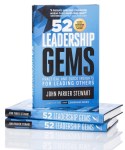 In Lesson #24, entitled “Assign Someone To Play The Fool” of the book, 52 Leadership Gems: Practical and Quick Insights For Leading Others by John Parker Stewart, I learned that it is also valuable to assign someone the role of being “the fool.” In the European middle ages the only person that could criticize the king was the “Court Jester,” or also called “The Fool.” In the King’s court, the Jester/Fool played the important role of providing the king with valuable insight. Opposing ideas are essential for innovation and wise decisions. We need to make sure we are creating environments where voices are openly heard from all sides. In other words allowing some “foolish” behavior.
I am going to start allowing someone to be the “Fool,” or maybe I better position it as “Court Jester,” for a day as well as assigning “Kings For A Day.” How about you? Do you rely on others for input? Do you express your views? Are you willing to let someone. be “King” or “Jester/Fool” for a day?
Learning By Playing Like Kittens
 Those of you who know me well, know that I really value my time in the barn in the morning. For some reason I can be working along giving bottles to babies, milking cows, or washing heifers, and at the same time, be thinking and reflecting on a lot of things. This morning I became entranced while watching a new litter of kittens romping and playing. They would go from one end of the barn to the other and then became totally into playing on a feed pallet we had leaned up against a grooming chute. They would climb, jump, and knock each other off. Such fun!
 I began to think about all the things learned while playing. I also thought about how important it is for us to make learning fun for both our student and adult learners. Here is what kittens learn from playing, according to iheartcats:
6 Life Skills Kittens Learn By Playing With Each Other
• #1 – How to hunt. Kitten play is full of stalking, chasing, and tackling to the ground. …
• #2 – Good social skills. In order to grow into social, emotionally-healthy cats, kittens need to be socialized. …
• #3 – Coordination. …
• #4 – Communication. …
• #5 – Confidence. …
• #6 – Boundaries.
 Most of these are skills we need all need to have. I have to tell you I witnessed a large group engaged in fun learning this past Friday. I had the opportunity to keynote an event. Click here to read about it. During my keynote, that was about the critical need for relevant learning, I had the over 200 participants put together toy glider planes I had put on the tables ahead of time. Everyone at each table became a team and the participants developed team names and then wrote the team name on the wing of their plane. Four containers had then been placed at the corners of the room and boundaries marked off. The participants were given time to put the planes together, practice, and then given one try at gliding the plane into the container.
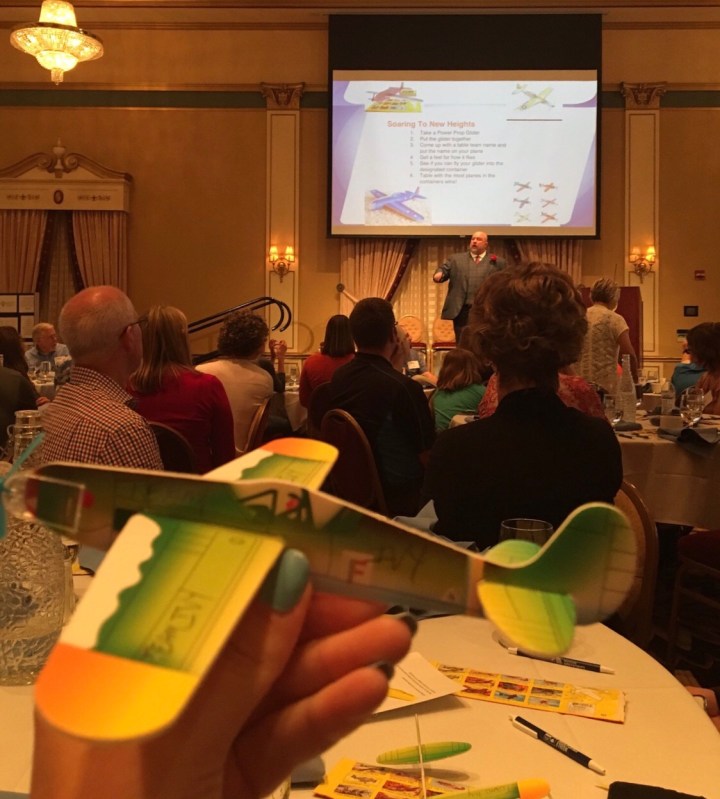 I have to tell you, every person was up and engaged. There were questions being asked, teams practicing, laughing, strategizing, and adults and students having fun. It was amazing! Check out this video tweet – it shows it all. Click here to watch. All the while, they were learning the importance of learning in a relevant and engaging way. And…let’s see here…they were learning social skills – team work, coordination, communication – giving advice and feedback to one another, confidence – rooting each other on, and boundaries.
 So, just as we know play is the cornerstone of the kitten’s learning process in the first few weeks and months of its life; I believe it is also the cornerstone of learning for our students and lifelong learning adults. It is by playing together that we humans and kittens will develop both physical and mental abilities. But play is more than that: it is also good, rollicking fun, which in turn increases both the kitten’s and our social skills, technical skills, and sociability.
The Critical Need for Relevant Learning
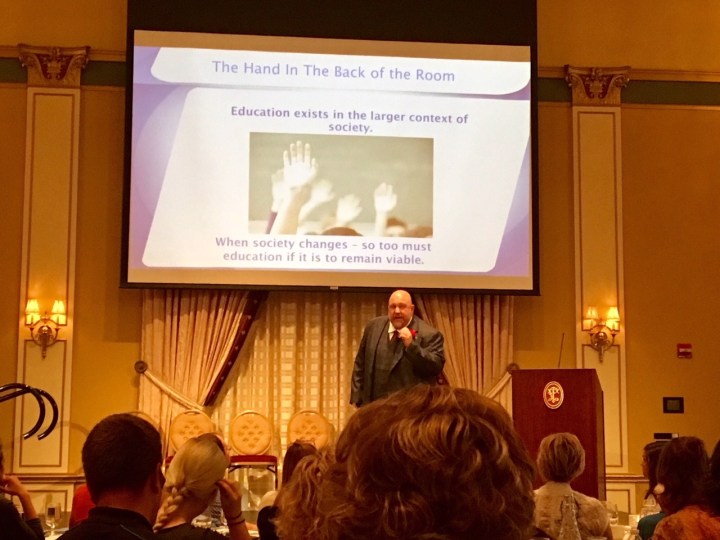 This past Friday I had the opportunity to attend and keynote a tremendous event put on by the Horizon Education Alliance. The event was called “Pathway Showcase” and was held in the Crystal Ballroom at the Lerner Theatre, which by the way is an awesome facility in Elkhart, Indiana. More than 200 local educators, business and state government leaders were there to see project based learning (PBL) projects that were created in partnerships between students, teachers, and business leaders. These projects were created in order to teach our students in a relevant context – a subject near and dear to my heart. There were more than 40 of these projects that took place this past year. I continue to be so impressed with the work of Horizon Education Alliance to bring the Elkhart County community together to collaborate for the betterment of education for our students.
During my keynote I talked about how we need to connect school work to real life. I told attendees that education exists in the larger context of society. Students need to know why they are learning what we are teaching and how the learning fits into his/her real world context. When society changes, so too must education, if it is to remain viable. We need to be teaching our students to use adaptation to analyze, synthesize, and evaluate to apply the learning to real world predictable and unpredictable situations. If we can achieve this level of relevant learning our students will be motivated and have the ability to creatively innovate and problem solve.
I was so inspired to spend time talking with the students, teachers, and industry leaders about their projects. What I found were students working in teams to experience and explore relevant, real-world problems, questions, issues, and challenges; then creating presentations and products to share what they have learned. What I found were engaged students who were great communicators and very passionate about the projects created for their learning.
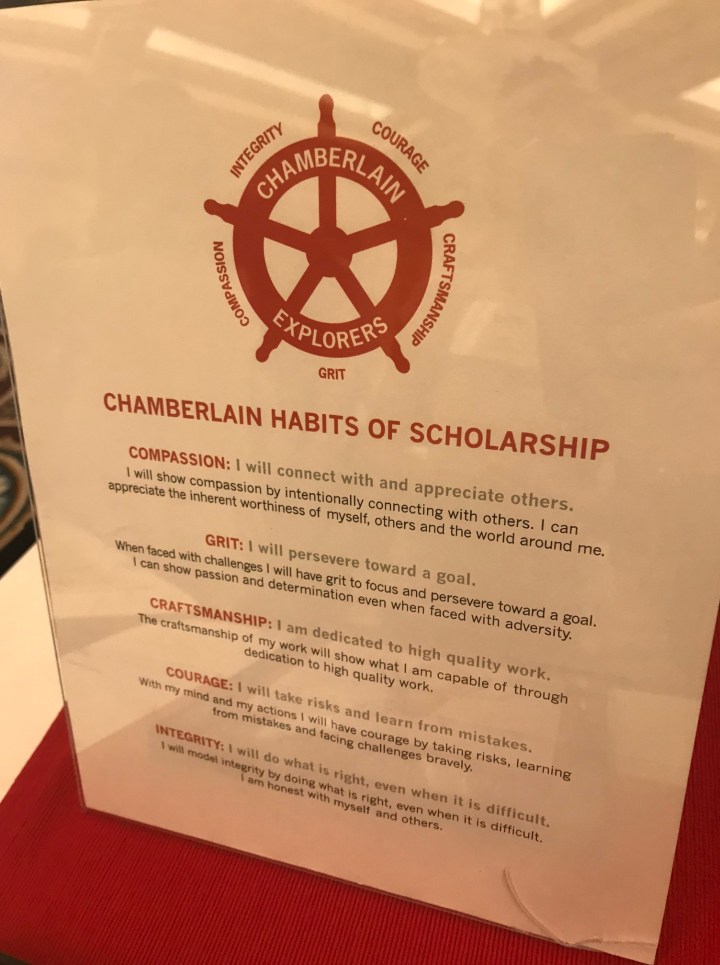
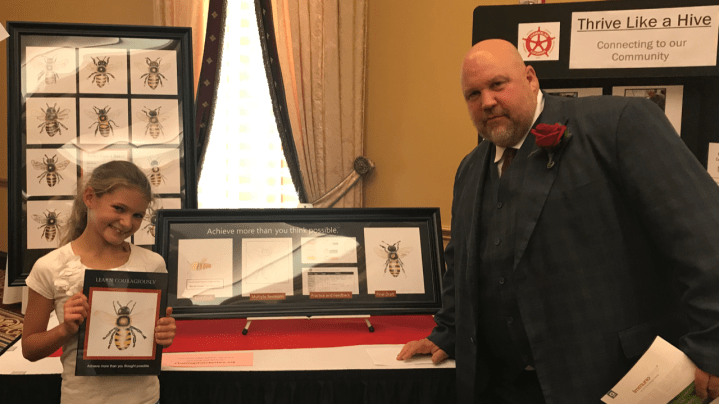 All the projects were awesome, but a couple really spoke to me. Chamberlain Elementary School students walked me through how they had learned to create by developing a first draft, multiple revisions, practicing and receiving feedback, and then finishing the final draft. These Chamberlain Explorers were learning to iterate. The students would not let me leave without sharing the Chamberlain Habits of Scholarship. See photo below for the habits:
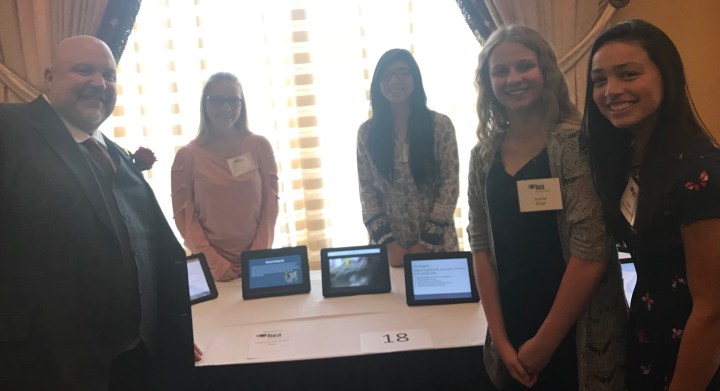
 I also had the opportunity to meet students from Elkhart Memorial High School who had been doing real world/real time research on soybean phytopathology with scientists from Agdia, Inc. As a former Agriculture Science teacher I could not have been prouder of these students. We cannot make it much more relevant for our students than having them do actual research on real problems with actual scientists. This adult interaction is also a very important part of facilitating relevant learning.
 At the end of the event I really got emotional and realized that the world is going to be o.k. as long as we continue to teach our students relevant skills in engaging ways. Here are my final thoughts on how to make learning relevant and meaningful for our students:
To learn collaboration – work in teams
To learn critical thinking – take on complex problems
To learn oral communication – present
To learn written communications – write
Thank you to all the schools in Elkhart County and to Horizon Education Alliance for inspiring me and what you are doing for students!
You Can’t Know It All So You Might As Well Be Curious!
 This guest post originally appeared on the Conversations Worth Having Blog
You Can’t Know It All So You Might As Well Be Curious!
By Cheri Torres
Adopt an attitude of curiosity about life. When we are genuinely curious, we naturally ask generative questions. Such questions:
• Make room for diverse and different perspectives. How do you see it?
• Surface new information and knowledge. How did they manage this process at your previous place of work?
• Stimulate creativity and innovation. What might be possible if we . . .?
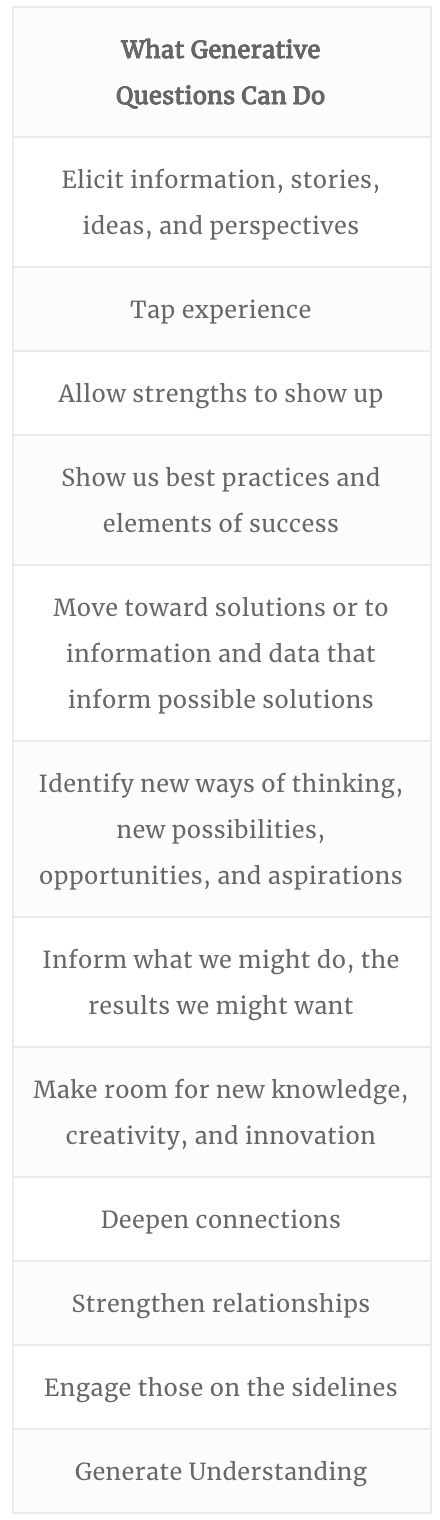
When dealing with any issue, even difficult issues, generative questions make unseen information visible and result in conversations that create trust, positive energy, and the transformative power to move the system forward in a desired direction. The result: new ways for solving complex problems and compelling images for collective action. Here is a table from our book, Conversations Worth Having.
Here’s an example that parents of teenagers will easily relate to. Monica, mother of a teenage boy, uses generative questions to change the conversational dynamic with her son. Monica had been in the midst of a recurring argument with her son, Aiden. She was tired of the same old interaction that never produced a way forward. Aiden wanted to borrow the car over the weekend to go ‘do things’ with his friends, and Monica didn’t like the idea of him joyriding with the possibility of getting into trouble. Their critical conversations had created a rift between them, which saddened Monica, but she didn’t know what else to do. Suddenly, in mid-conversation, it occurred to her she could use the practice she’s learned at work for shifting the tone and direction of a conversation. When Aiden started to reiterate the argument, Monica held up her hand, paused and said, “I really do understand why you want the car, and I hope you understand why I’m worried for your safety and well-being. So, how can we have a more productive conversation? How can we come to some agreement that allows you to get the car and me to feel comfortable that you’ll make good decisions, even if your friends are pressuring you?”
 Aiden was stopped in his tracks. This time it was his turn to pause, and then they began a brand new conversation that promised to be worthwhile . . . and it was. Monica’s question allowed Aiden to let his mom know he did understand. He shared that sometimes he was glad he hadn’t been allowed to have the car because of where his friends ended up. But other times, he’d missed out on experiences he wanted to have and at those times, he felt she was being over protective. Upon hearing that, she realized she hadn’t even considered that part of the stalemate might be her own refusal to let go. They eventually arrived at an agreement to start small and keep expanding car privileges as trust and confidence grew between them.
Monica shifted the conversation out of critical debate and into a conversation worth having by reframing the situation and asking a generative question. This simple action shifted the tone and direction of the conversation. It allowed both of them to step back, reflect for a moment, and be more open and honest, and this shifted the outcome of their interaction. [To read more stories like this, order Conversations Worth Having today.]
This is one of the most valuable practices you can develop for building strong relationships, expanding the potential of a group, surfacing possibilities in the face of challenges, and rapidly moving towards desired goals.
Generative questions often arise naturally when we frame a conversation around what we want but don’t currently have. For example, “I don’t have the money to buy a new car” to “I do have the money to buy a new car.” It’s as if the second statement primes our question generator automatically:
• “Where did the money come from?”
• “What did I do to earn, find, or save it?”
• “What miracle might occur to support that?”
• “I wonder how I could ask for a raise, it’s been six years, and they tell me I’m a real asset.” What if I frame it as an adjustment in pay?
• “What if I offered a workshop and had just enough people coming to pay for the car?”
Take the opportunity now to try this little miracle maker with your own problems or “don’t wants”. Flip it, and then let the generative questions flow. Let your curiosity and imagination help you turn the flip into your future reality. You can download the Executive Summary for an overview of the practices and principles.
*******************************
About Cheri Torres:
Cheri Torres, Ph.D. brings the practice of Appreciative Inquiry, design thinking, and an ecological worldview to communities and organizations striving for sustainable growth. Her work facilitates learning, innovation, and dynamic interpersonal relationships capable of achieving remarkable outcomes. Cheri has worked with diverse communities across the globe, from public schools and community organizations to corporations and government entities, to elevate their strengths and broaden their capacity for collaboration and collective intelligence. She has trained thousands of trainers and teachers in the use and practice of Appreciative Inquiry and Experiential Learning, with a particular focus on leadership development, teamwork, creativity, and sustainable collaboration.
She has authored or co-authored numerous books and articles, the newest of which is Conversations Worth Having: Using Appreciative Inquiry to Fuel Productive and Meaningful Engagement co-authored with Jackie Stavros.
What’s Your Leadership Mantra?
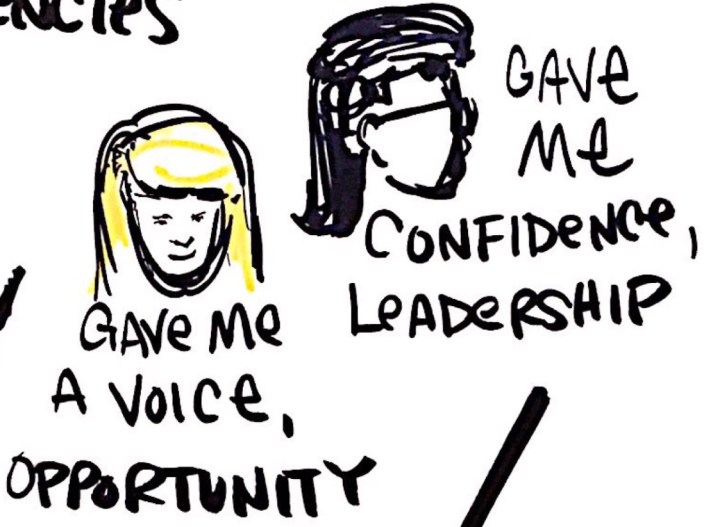
 The Oxford Dictionary gives us the late 18th century origin of the word “mantra” as: “Sanskrit, literally ‘a thought, thought behind speech or action’, from man- ‘think’, related to mind.” We all have mantras. When working with groups of up and coming leaders I describe it as how others see us or how we see ourselves. Sometimes I even introduce it as what others say about us when we are not there. Yesterday in our 3D Leadership training for North and South Carolina we did a reflection exercise where participants got to do a graphic representation of their mantra and leadership legacy. I was blown away by the great work they did. Honestly, they speak for themselves, so I am going to post them all as the content of this post. Here they are, enjoy:
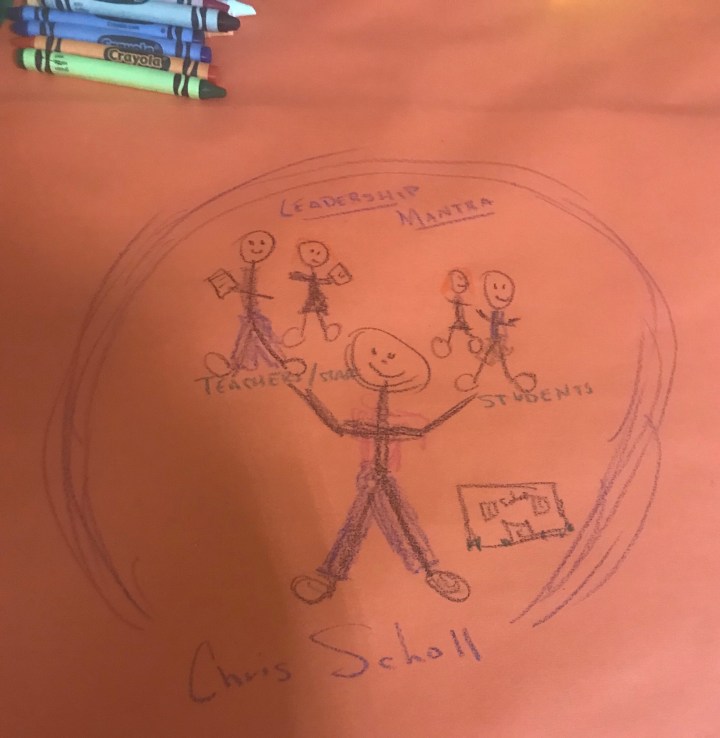
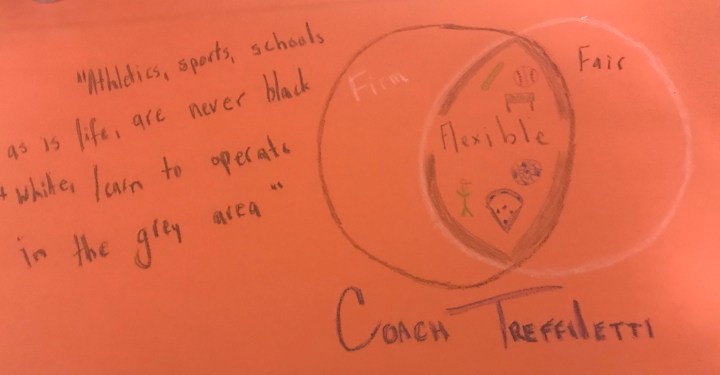
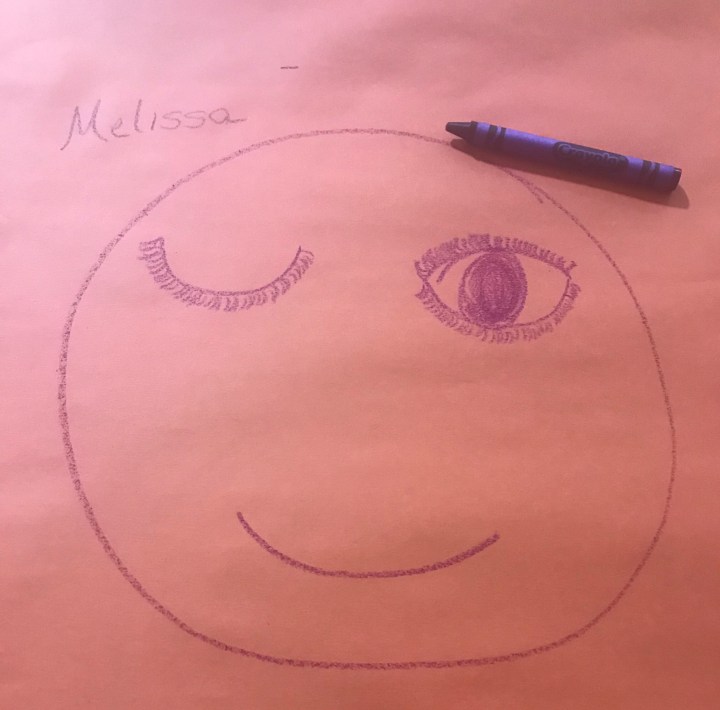
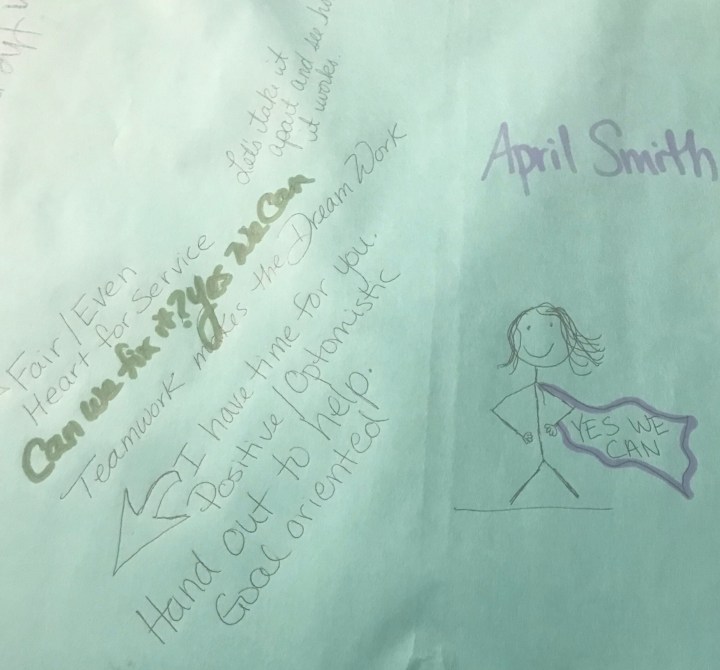

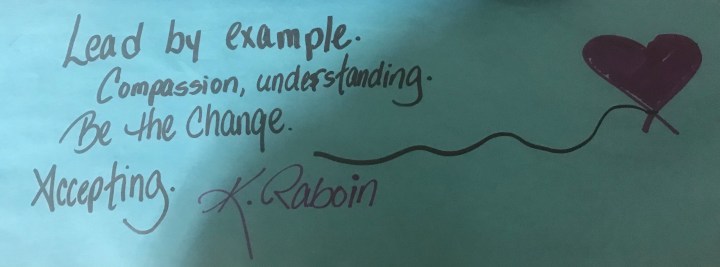
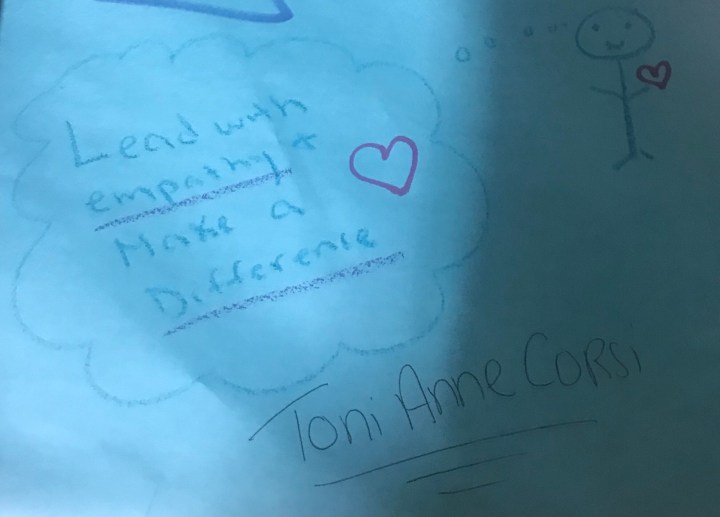
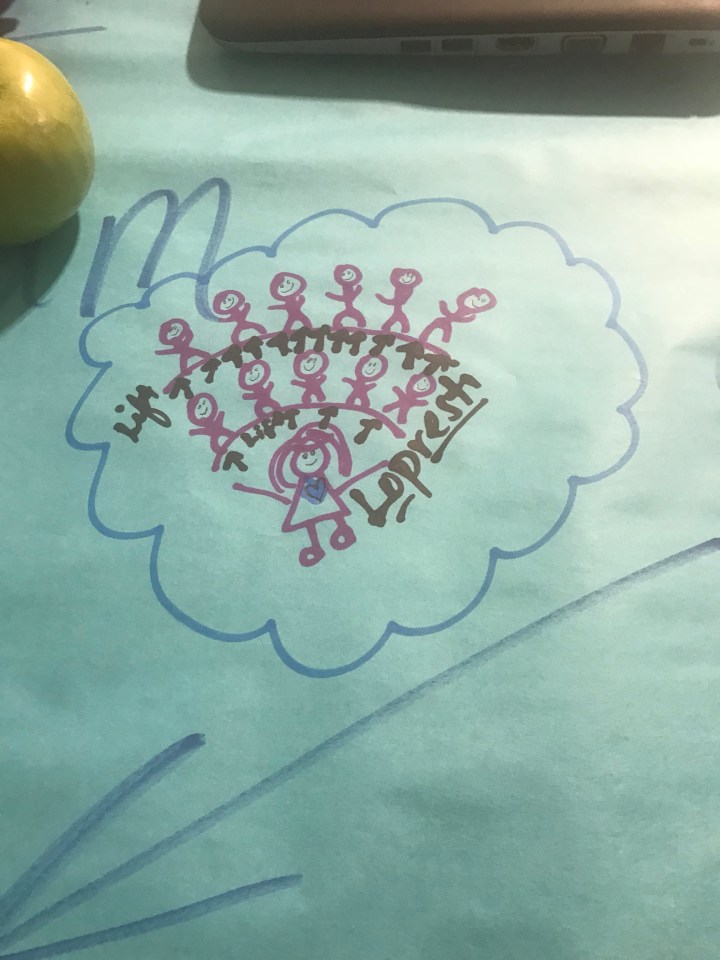
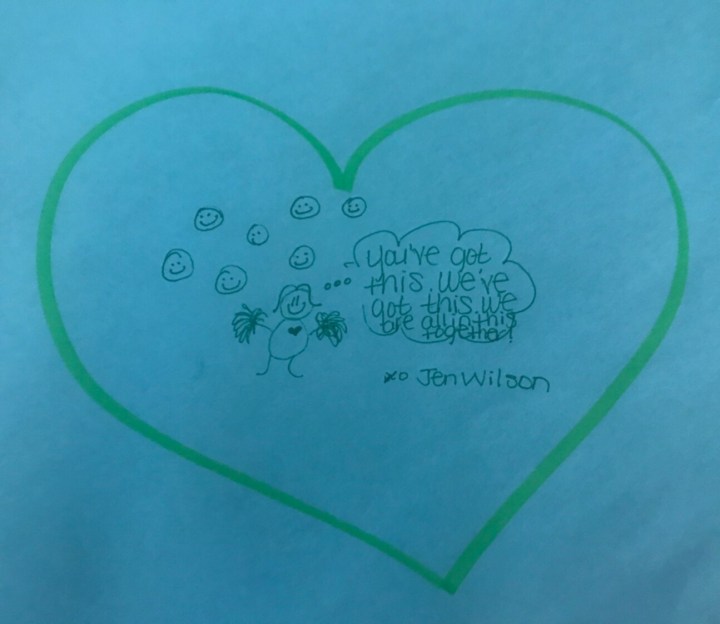
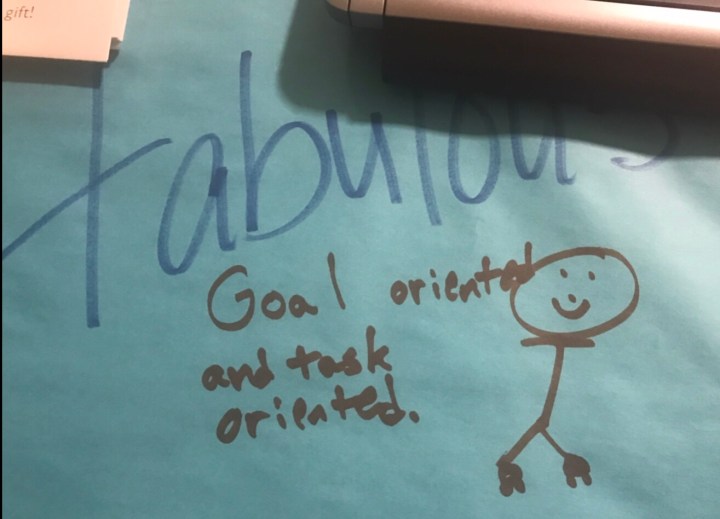
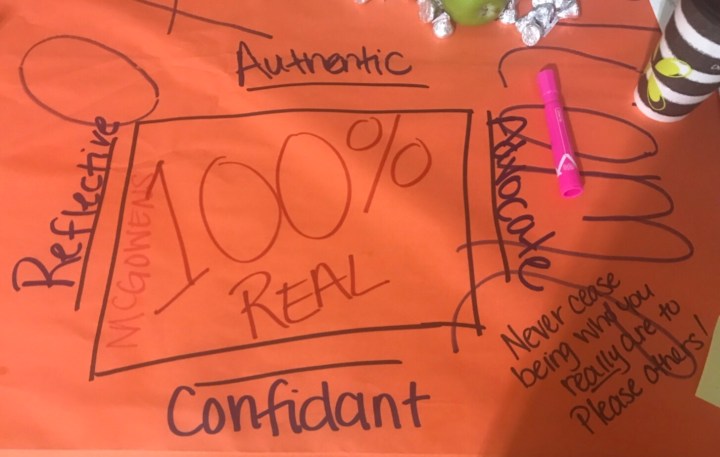
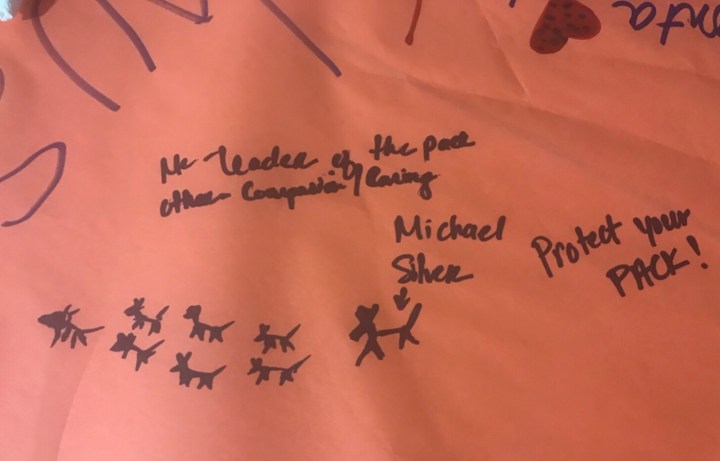
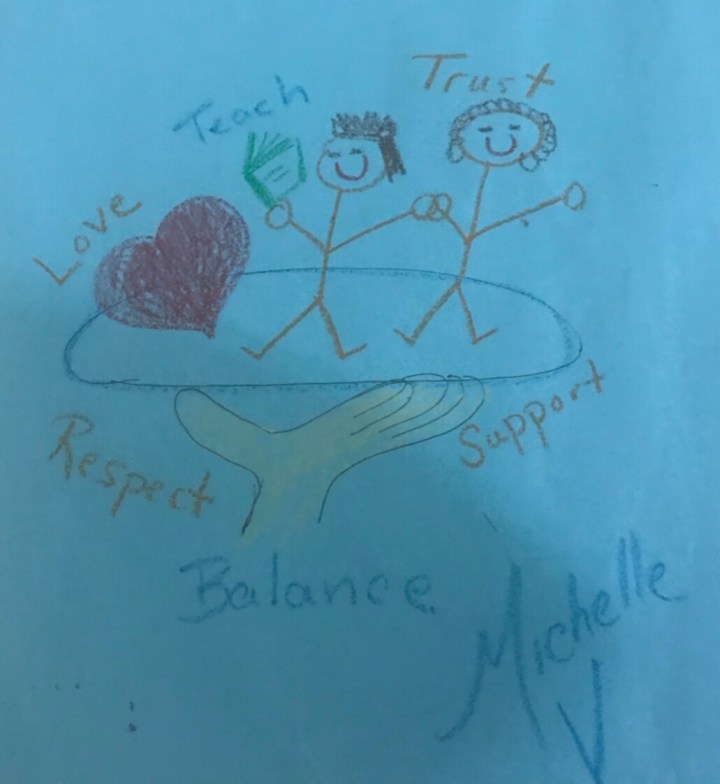

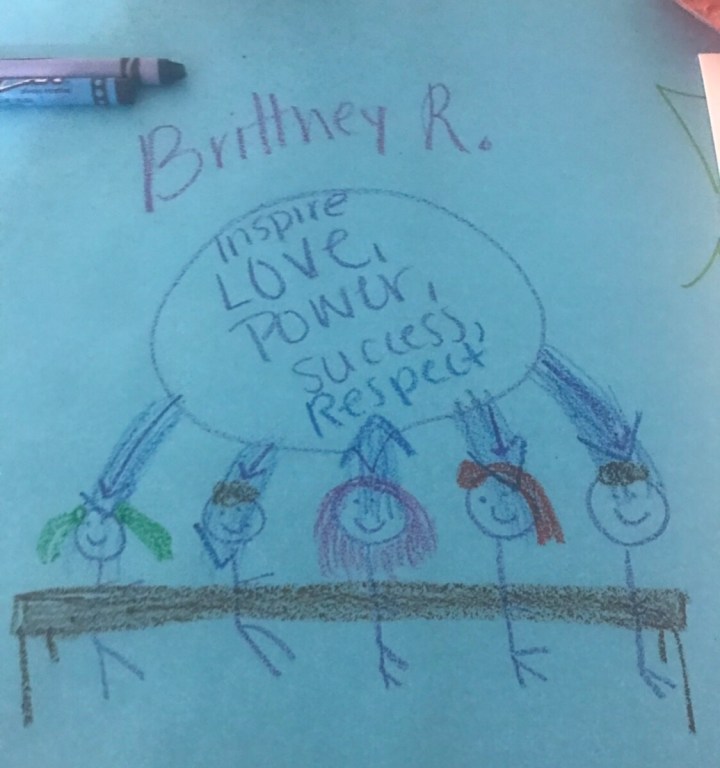
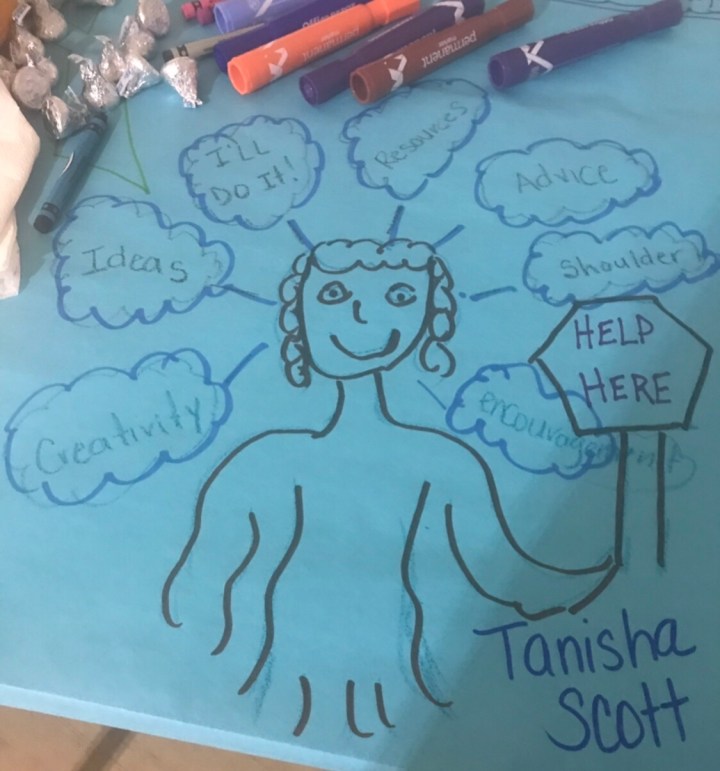
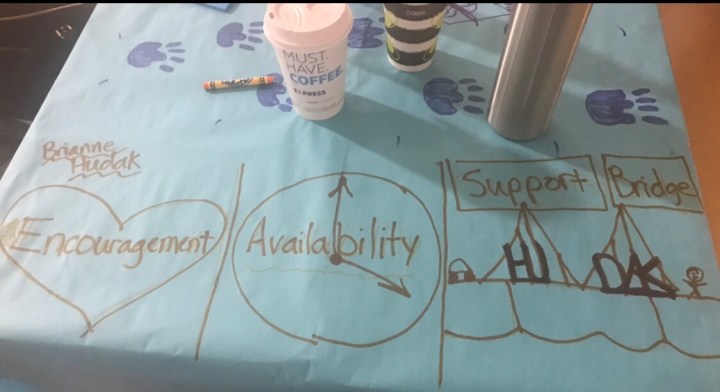
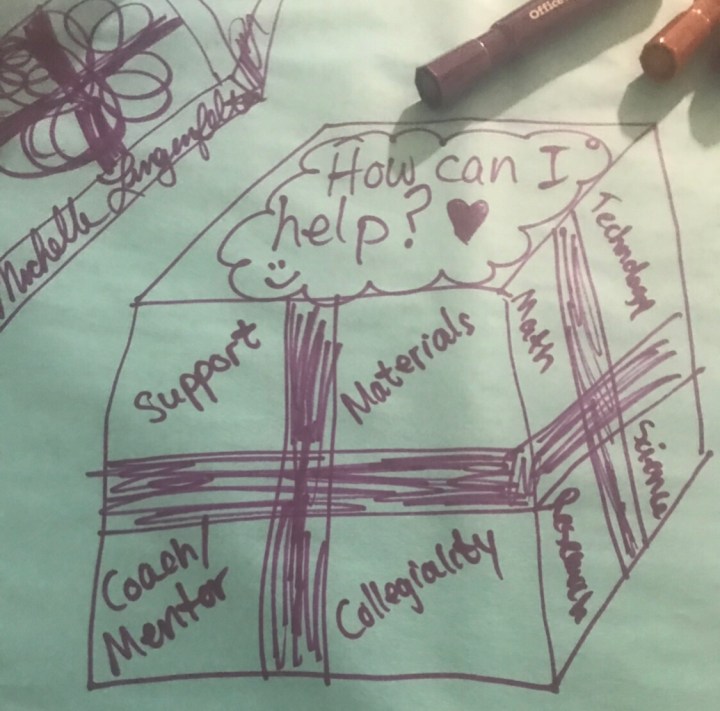

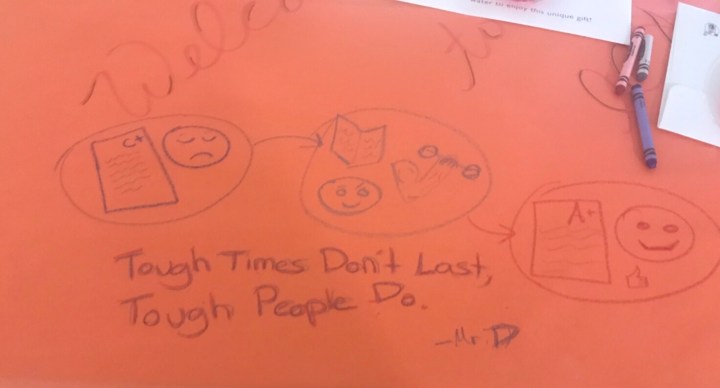
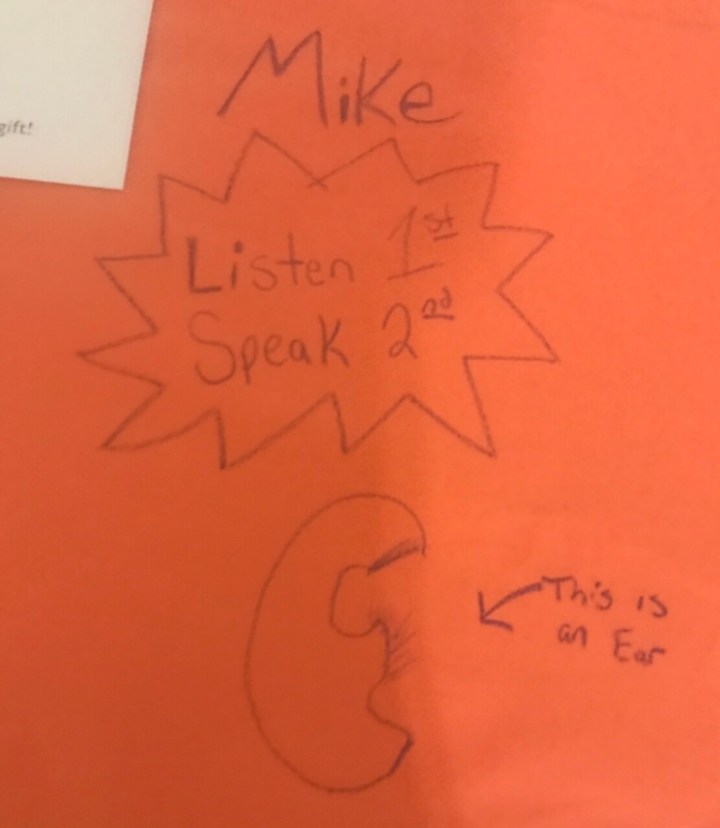
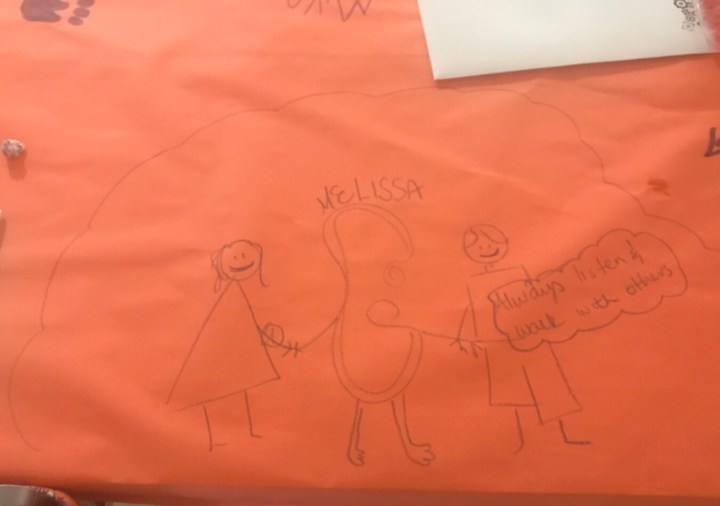


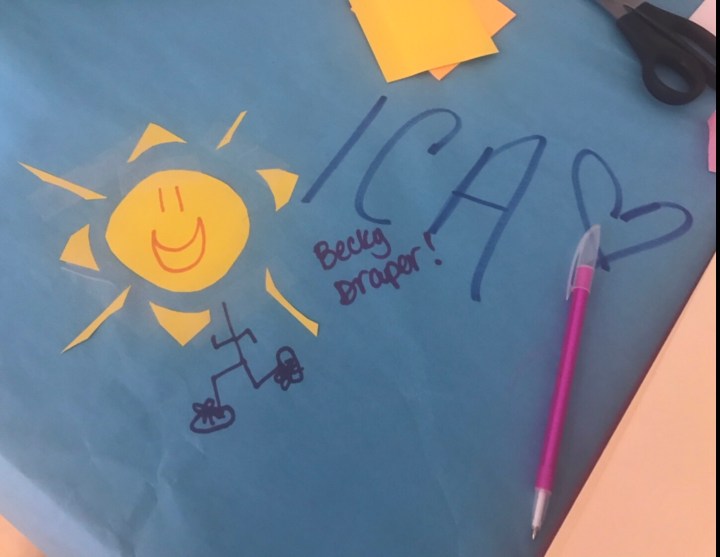
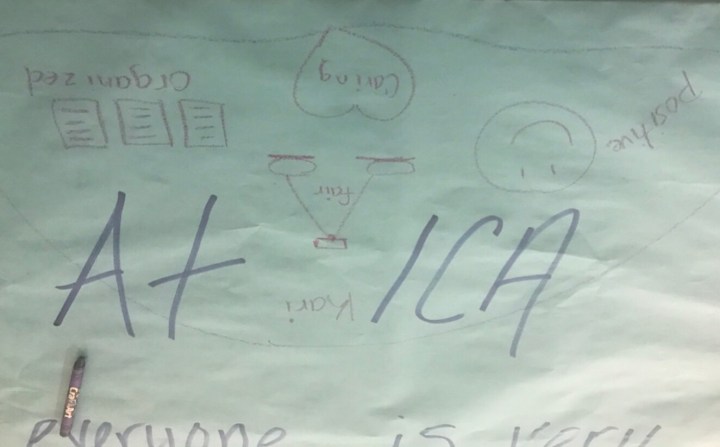
Hopefully you found these to be as inspiring as I did. So, if we think of mantra as something that is often repeated and expresses a particular strong belief or action, then we can be assured these up and coming leaders will be walking the walk. What’s your leadership mantra?
What Do You Want To Do With Your Life?
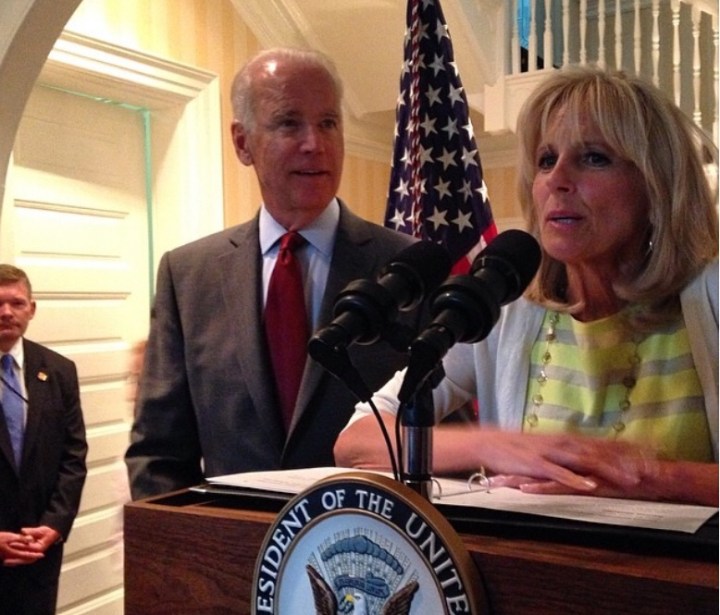
 Last week I finished reading an incredible book by our former Vice President Joe Biden. Ever since I had the opportunity to meet and spend time with him and his wife, Dr. Jill Biden, back in 2010, I was impressed. As Indiana Teacher of the Year, I spent an afternoon at the residence of Joe and Jill Biden. Number One Observatory Circle is the official residence of the Vice President of the United States. Located on the northeast grounds of the U.S. Naval Observatory in Washington, D.C., the house was built in 1893 for its superintendent. I just remember thinking how real and genuine the Vice President and Dr. Biden were. They cared about our country, our kids, and the world.
 In the book, Promise Me, Dad: A Year of Hope, Hardship, and Purpose. Vice President Biden opens up and allows himself to be vulnerable. The throughline of the book is about his son’s battle with brain cancer. Vice President Biden recounts in vivid, heart-wrenching detail what it was like for him and his family from the time his eldest son, Beau, a rising star in the Democratic Party, was diagnosed with brain cancer, to his death less than two years later and the aftermath. The Vice President spoke of his son being like him but better. He said, “Beau Biden, at age 45, was Joe Biden 2.0,” Biden writes. “He had all the best of me, but with the bugs and flaws engineered out.” What a great reflection to be able to have about one’s son.
The book was also an awesome recount of the history and what was going on in our country and the world at the time. The Vice President opened up about his weekly lunches with President Obama and the tremendous friendship that developed. Having spent time with the President on the same trip I met Vice President Biden I can understand how that friendship could happen. Both are guys that you would want to be friends with and hang out with.
Probably, the story that most resonated with me in the book was when President Obama, at lunch, asked the Vice President, “What do you want to do with the rest of your life?” This question really caused me to reflect. I believe that it caused Joe Biden to reflect as well. This wasn’t about success, being President of the United States, or some job; it was about being significant. I thought the Vice President summed it up nicely in the epilogue of the book when he said, “So how do I want to spend the rest of my life? I want to spend as much time with my family, and I want to help change the country and the world for the better. That duty does much more than give me purpose; it gives me something to hope for. It makes me nostalgic for the future.” How can we argue with duty giving us purpose and hope.
“Rules for happiness: something to do, someone to love, something to hope for.”~ Immanuel Kant
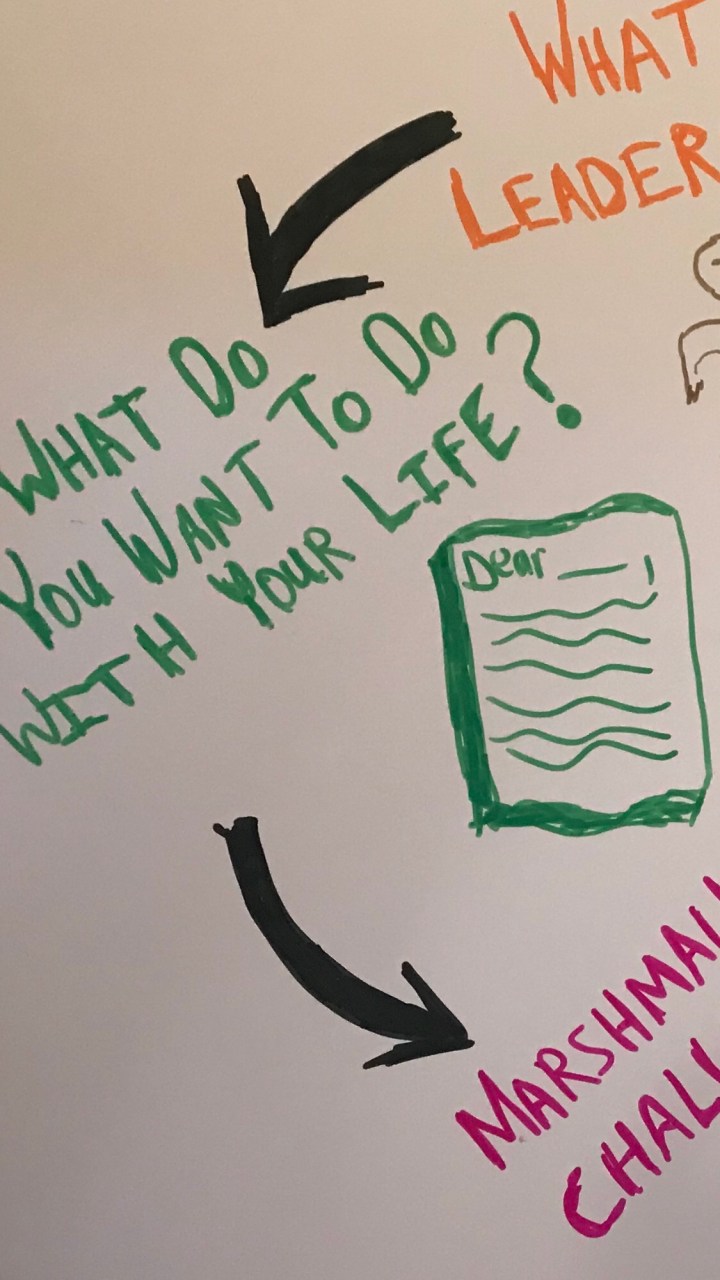
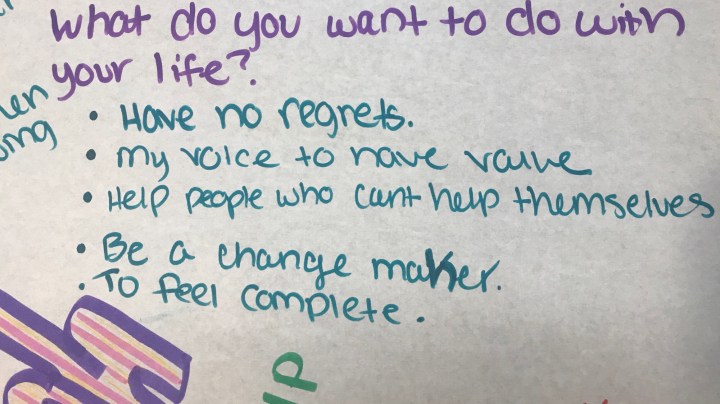
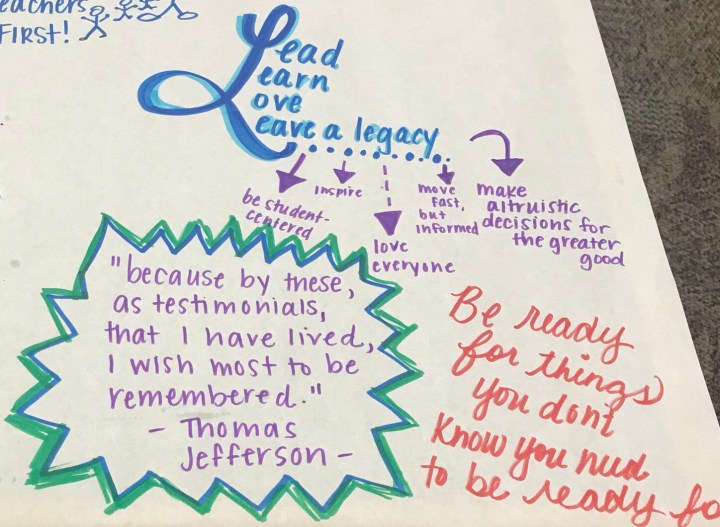
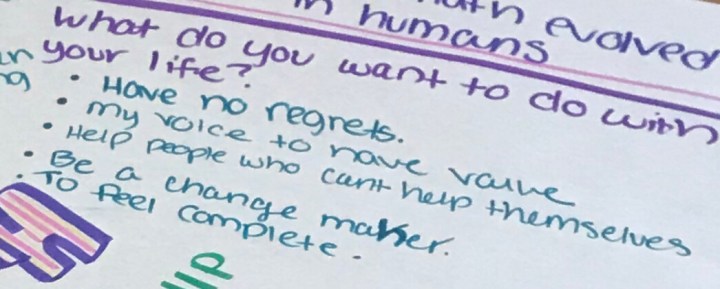
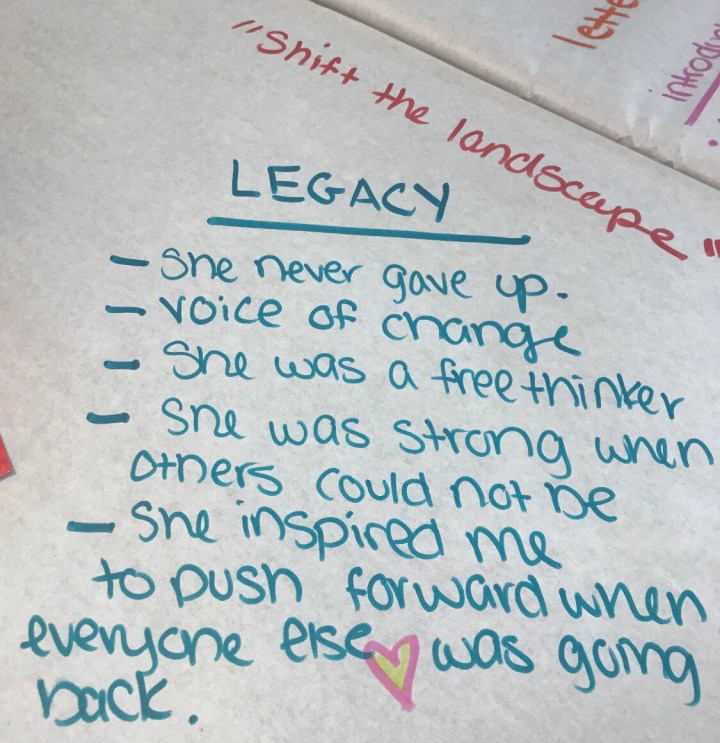
The question of “What do you want to do with the rest of your life?” caused such great reflection in me that I decided to use it as the inspiration for a session at our Indiana Cohort training of our Noble Education Initiative 3D Leadership Program. Participants were asked to think about the question, “What do you want to do with your life?” They were to list these things out and then determine what they would like their legacy to be.
This was the catalyst for an incredible discussion. The comment and part of the discussion that most excited me was when one of our very talented young aspiring leaders said, “You know, before you told us not to think in terms of jobs, promotions, or titles, that is where I was headed. This is the first time I’ve really thought in terms of being significant and having a purpose.” Mission accomplished! The graphic recordings each participant made on the tables during this session say it all. Here are a few samples:

So, I leave you with this thought: “What do you want to do with your life?”
Excited About Learning!
 Last week when I was in Germany and Switzerland, I made the comment a few times that adults want to learn in the same way that kids do. What prompted this was some of the learning we were doing while at some of the vocational and apprenticeship centers. As we were touring, there were a few times that I asked our guide (usually an apprenticeship student) if I could try the equipment. At one point I was able to run the robotic welder. This was important to me because I am a very hands on learner. I needed to experience what the students experience.
This is really an extension of Howard Gardner’s Theory Of Multiple Intellienges. That theory does cross over into adult learning as well. One thing I have learned from the Harvard research is that adults really want to learn the same way kids do. And, when I got involved in a hands on way (engaged) I got very excited. Then, when others got involved, they got excited too. I already blogged about building a model truck in the Benteler Industry 4.0 Learning Factory. Click here to read Learning 4.0.
It was important for me to do this post because we need to be reminded occasionally what are important elements to remember when facilitating learning, whether for kids or adults. The big difference for adults is making sure we know our audience and what they are there to learn. Here are five things that need to happen. We must make the learning:
- Immediately transferable to their everyday life
- Relevant to the learners current context
- Welcoming – safe place to ask questions
- Engaging – consider the way each person learns
- Respectful – understanding every person comes from a different context or knowledge level
Think about it, if all five of those items happen, there will be a good chance that learning will occur. At least a much better chance than if I come in and listen to you talk and point at a PowerPoint.
In other words, the material presented should have immediate usefulness to the learners. Therefore it should have a real world context for the learners and the material should be relevant to adult learners’ lives right now. The material learned should also be able to be used right now as well.
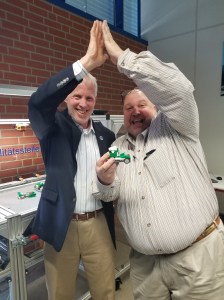
Two Very Excited Learners!
Furthermore, the learning environment should be welcoming so that all learners feel safe to participate. How the space is arranged is very important in adult learning and engagement. The learning needs to be facilitated in a way that engages the learners. Representative Bob Behning and I became partners and very engaged when we were allowed to build our own truck. We became curious and active participants in the learning. Really, an opportunity for learning was lost when all participants did not have the opportunity to be paired up and go through the whole 4.0 process. We were fortunate that one of the students realized how interested my partner and I were and bought in to us building a truck. The instructors also realized this and bought in. Fortunately, training for this Industry 4.0 training was presented in a respectful and safe manner, where learners have an opportunity to share their experiences. The learning environment needs to also be a place where it is ok to not have a great deal of knowledge about the topic. We need to remember that just like when teaching young students, adults in a group will all be at different places in terms of knowledge. When facilitating Learning we must recognize the unique background and experience of people.
As you can see it is very important to consider how adult learners just as we do our student learners. Really, as adults we want to learn just like children. Let’s strive to make sure we are creating learning environments that allow adults we work with be curious and engaged.
 Byron's Babbles
leave a comment