The Knowledge Organization: Acting On Information
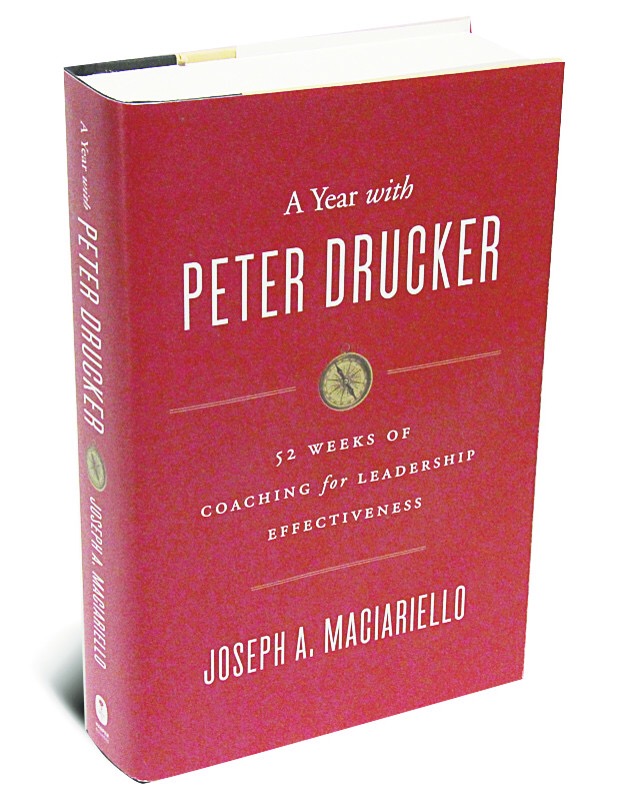
The “knowledge organization” is structured around information, not hierarchy. This week’s lesson from Maciariello (2014) really affirms the case for distributed leadership. Drucker believed that knowledge organizations were best made up of specialists who direct their own and the organizations work with the feedback of colleagues, customers, and headquarters (2014). Drucker called this an “information-based organization.” This means that the proper people in the organization must be able to transfer data into information.
This converting of data into information is a crucial step that many organizations leave out or don’t figure out how to do well. This is especially true in education. I think about all of the data we have, but it is only important if we can turnip into actionable information. Maciariello (2014) used Brad Stevens, former Butler University and present Boston Celtics, basketball coach as an example. He breaks down all of the available data and then looks for trends. For example, how many three point attempts per field goal attempt. Again, he is turning the data into information. It is then the coaches jobs to make sure the players understand the information. Then the players must act on the information. If the players do not understand the information, or don’t act on it then the data/information is worthless. This is the flow of information to information literacy to information responsibility.

I really like the idea presented this week of moving from data literacy to information literacy. This really involves the asking of two questions: What information does my organization need? And What information do I need? This really places the emphasis on creating useful information, not just showing a bunch of data. A major problem in education. So, for example, in education everyone always wants to look at growth data. I contend the more valuable information is the benchmark data of where the student is performing right now. Isn’t that what I really need (information), if I am a teacher, right now to create a plan to get that student where she needs to be academically. If we are doing that properly, the growth will take care of itself. Trust me, it works! Remember, you must convert raw data to true information.
True information is those data that are important to the solution of specific problems faced by the organization. The question is not “Are the data interesting?” but rather “Are the data important and useful for making decisions to solve problems and seize new opportunities?” This truly makes the conversion from data to information. Therefore we must focus data on the information needed for decision making.
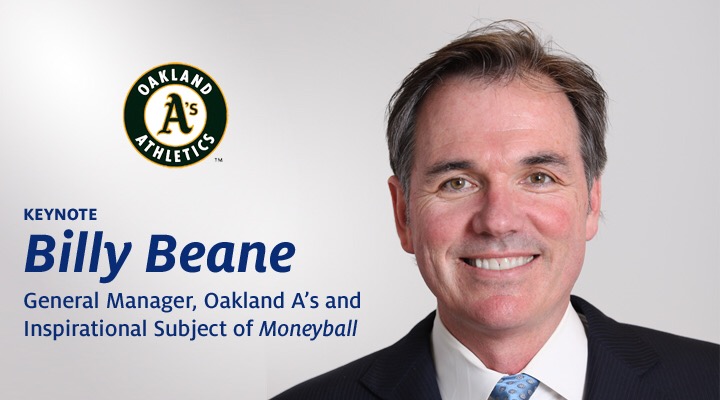
I also really like thinking about sabermetrics here, too. This was the precursor of Billy Beane’s Statcast, developed by Bill James. Billy Beane’s system took data generated by sabermetrics and turned it into useful information. His Statcast enabled him to assemble players so that their individual abilities were able to complement one another. This enabled them to “measure a player’s value in the context of the rest of the team (Macariello, 2014, p. 76).”
Eliminate data you do not need for decision making. Eliminate data that do not pertain to the information you need. Organize, analyze, and interpret the data you need so that they become true information.
Reference
Maciariello, J. A. (2014). A year with Peter Drucker: 52 weeks of coaching for leadership effectiveness. New York, NY: HarperCollins Publishers
Until Every Child Is Well

I was struck this week while at Harvard University by the story of Boston Children’s Hospital’s vision/mission: Until Every Child Is Well. Really, I guess it would be more of an anthem, as Sally Hogshead would call it. What an anthem it is, though! Think about how simple and abstract “Until Every Child Is Well” is. In my studies this week I was reminded how important it is to make sure that our vision, or anthem, is broad enough to enable us to change as the world changes. What a simple, yet powerful statement Boston Children’s Hospital has made. Who could argue with, “Until Every Child Is Well?”
If we were to write it the way Joseph Michelli taught me, using the word “Wowful,” it would be “Wowful Child Wellness.” Regardless, both statements allow for cutting edge theories of action and strategery. I was also reminded this week of the 1942 Harvard MBA graduate, John Fisher, who was the CEO of Muncie, Indiana company Ball Corporation (you probably know them for Ball Jars). He worked for the company starting in 1941 and was CEO from 1970 to 1981. After World War II the glass jar business was booming, but later Fisher purchased and developed an aerospace business. Everyone thought he was crazy, but it led to the development of the plastic water bottle. I’ll bet you would agree that was a pretty savvy move. When asked about the shift from glass at a Harvard reunion, he stated that their vision had nothing to do with just glass, it was, “we want to be the best container company.” Again, simple, broad, abstract, and agnostic. John Fisher had learned well from his Harvard MBA. He learned you must exploit your present capabilities, but you must at the same time explore. We must learn about the future quicker than anyone else.

So, since my personal wow statement is “Delivering Wowful Educational Leadership” and my anthem is “Energetic Change Agent,” I set out reflect on what these two statements should be for my school; given my learning this week. Remember the goal is to be simple, broad, abstract, and agnostic. Let’s define agnostic. The dictionary defines agnostic as: a person who holds the view that any ultimate reality is unknown and probably unknowable; broadly one who is not committed to believing in anything being for sure. Think about that for removing all barriers of thinking things will stay status quo or need to be done the same way.
Here’s what I came up with:
Delivering Wowful Learning
Until Every Child Graduates
I would welcome your feedback on these two statements. It would be great to here how you would change them. These statements allow us to change as the world changes to do what the Indiana State Constitution says in Section 8 where it states: Section 1. Knowledge and learning, general diffused throughout a community, being essential to the preservation of a free government; it should be the duty of the General Assembly to encourage, by all suitable means, moral, intellectual scientific, and agricultural improvement; and provide, by law, for a general and uniform system of Common Schools, wherein tuition shall without charge, and equally open to all. It is important to pay particular attention to the statement, “by all suitable means.” We have a constitutional obligation to make our delivery of knowledge and learning to our students distinct and effective. I love the statement, “by all suitable means.” That is simple, broad, and abstract.
Schools have growing alternatives for delivering education. Choices range from presentations and discussions in the classroom to online, blended, and hybrid courses. As facilitators of learning, teachers will increasingly turn the process of teaching and learning into a partnership, with students and teachers constantly learning from each other. Self- learning will be seen as a bonus— and encouraged. Also, think about the online world where the greatest minds are just a click away and readily available. This open access has tremendous possibilities for many of our US underserved populations as well as third world countries. Pretty exciting, don’t you think?
I encourage you to take some time and think about your school or organization vision, mission, and anthem. Does it allow you to be nimble and change as the world changes? Remember: Leaders need to be consistently inconsistent. We have to constantly explore who we are and what we do!
Targeting & Focusing Your Efforts
Think about creating tomorrow by focusing on the “right results” and “changes in trends” rather than on just the current trends affecting your organization. An important question to ask is, “What are the right results for your organization?” Maciariello (2014) posited in Week 8’s lesson that knowing your mission or purpose is essential in choosing from among all available opportunities those that have the highest probability of producing the right results.
I compare this “focusing” to that of sunlight through a magnifying glass to start paper or grass on fire. Peter Drucker said, “Concentrate on the smallest number of activities that will focus on the greatest productivity.” (Maciariello, 2014, p. 62) I have found this to be so true in turning schools around. This is one of the most important lessons I have learned from my postdoctoral professional development at Harvard University. We talk about having too many resources. I know that sounds really weird coming from an educational leader. Too many resources? Yes, if you have not asked yourself, “What am I (or our school or organization) willing to give up?” We should abandon, or not start at all, programs where even great success is unlikely to make a significant difference.

Maciariello (2014) argued that economic results require that staff efforts be concentrated upon the few activities that are capable of producing significant business results. This would be true for schools as well. Knowing who we serve and what makes us distinct allows us to concentrate our resources on a few major opportunities. This also means being prepared to eliminate past programs and best practices that are no longer productive or getting the results needed to move our organizations to the next level. “If leaders are unable to slough off yesterday, to abandon yesterday, they simply will not be able to create tomorrow.” (Maciariello, 2014, p. 63) Without targeting and focusing on the right things we will not be able to exploit our resources strategically for success.

Just like a flashlight focused on an object in the darkness, we must target ourselves on the areas where a little success will have the greatest impact. Don’t forget the key question here: What are the “right results” for our school or organization?
Reference
Maciariello, J. A. (2014). A year with Peter Drucker: 52 weeks of coaching for leadership effectiveness. New York, NY: HarperCollins Publishers.
Manipulation of Reality

“The problem is that 25 years after Photoshop launched, we’d much prefer manipulations of reality to reality itself.” This statement by Caitlin Dewey of The Washington Post in a very well written article entitled “How 25 years of Photoshop changed the way we see reality” really got me to thinking about whether this was true in all parts of our lives, not just photos and appearance. This great article was about a set of unretouched Beyoncé photos that appeared on a fan site called Beyoncé World on Wednesday morning. Within an hour the pictures were taken down, but fans were angry not that Beyoncé had been Photoshopped to breathtaking beauty, but that someone had shown her without manipulation.

So, have we really come to a time that we do prefer manipulation to reality? If so, what implications are there for leaders? The more I reflected the more I realized there are similarities between leading and manipulation. Both imply action and involve influencing people to do things. Furthermore, both ultimately benefit the person who is either doing the leading or the manipulation. Manipulation is what happens when we influence someone to do something and only we benefit from their actions. Think about it; there is really only one person that benefits from the Photoshopped pictures of Beyoncé – her. Leadership, in contrast, works to ensure that both parties benefit. For a relationship to be sustainable you need to be getting at least as much as you are giving from relationships (both personal and professional). While sounding selfish, I would argue that a relationship where one party gives without receiving much in return only breeds resentment over time. Again, this is what happens with manipulation.
As Dewey also stated in her article, “It’s worth remembering… that perfection and reality are not the same thing.” As leaders we must always make sure we are not creating distorted realities for our organizations and those we serve.
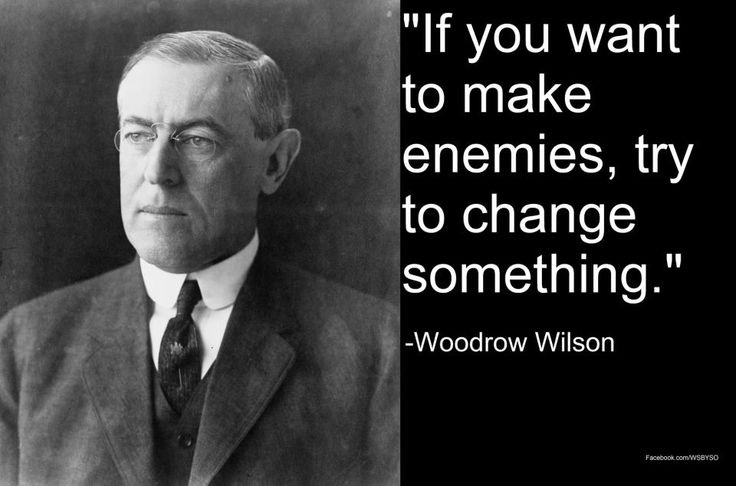
President’s Day With Woodrow Wilson
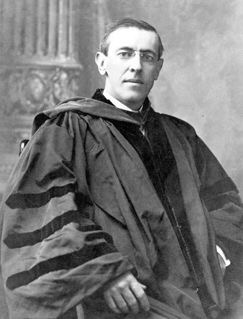 On this President’s Day I want to reflect on a president who I have always been very intrigued with. Our 28th President was a successful academic who took a different path to the White House than Presidents before and after. Woodrow Wilson attended college at what is now Princeton University, studied law at the University of Virginia, and earned a Ph.D. from Johns Hopkins University. Wilson is our only President to have a doctorate. He later taught at Princeton, and became president of the university in 1902. As a scholar he was the leading political scientist of his day. As an academic president, he transformed Princeton into a leading university. Wilson was President of Princeton from 1902-1910.
John Milton Cooper Jr. described Wilson this way in his book Woodrow Wilson: A Biography: “Boldness and thinking big marked Wilson all his life, and those qualities helped make him the only president who rose to the top in two professions entirely removed from public affairs.” Woodrow Wilson’s experience as a transformational leader at Princeton is what I believe prepared him for political office. He was “a dynamic reformer” as Governor of New Jersey from 1910-1912. As President of the United States he led the country into and through World War I.

Leaders like Woodrow Wilson advance the cause because they see what others do not and are willing to move toward that vision. As Wilson said, “I would rather fail in a cause that would ultimately succeed, than succeed in a cause that would ultimately fail.” Such work calls for boldness. Wilson also said, “Do not follow people who stand still.” As we come to the end of President’s Day, let’s think about these questions: Are you moving to transform your organization or cause social change? Where do you need to be more bold?
Leading In Two Time Dimensions
 “A manager must, so to speak, keep his nose to the grindstone while lifting his eyes to the hill – quite an acrobatic feat” (Maciarello, 2014, p. 53) This quote by Peter Drucker in week seven’s lesson (Maciarello, 2014) really hit home to me as a school turnaround leader. Anyone who works with me or has been around me much knows that this leading is two time dimensions: balancing short-term results with long-term results, is one of the toughest parts of the leadership experience. In takeover and turnaround schools they really don’t give you much time to turn it around – and they shouldn’t. Our kids are too valuable. That being said, however, I have always said it is a real balancing act. What we need to do right now to get the transformational results needed short term are not always sustainable for the long term. I really am leading in two different time dimensions. These two time dimensions, short-term and long-term results, need to be used in concert when planning school transformation. Having led a team that took a school off the “F” list in just two years, I can honestly say this harmonization of long and short-term results was one of the pain points that kept me awake at night.
I guess it is why I have become such a student of strategic planning. This two dimensional leadership is really the essence of strategic planning – making resource allocation today that will affect the future (Maciarello, 2014). It requires deliberately allocating resources to projects that are directed toward securing the future of your organization. Yet, in my case, short-term results are necessary to take a school off the “F” list this year. So, short-term results are necessary, and this necessity may require making trade-offs between short-term and long-term results. You can read a couple of my posts on strategic planning by clicking on Strategy in Action and Top 50 Strategy in Action Indicators.
These trade-offs really cause there to be a need for two different missions, but the two missions must be compatible. There are always trade-offs between actions that serve the present and those that further long-term performance. The missions in these two time dimensions may be different but they must be compatible (Maciarello, 2014). A strategic plan and mission statement must reflect results in the short term as well as results in the long term. In my case, as a turnaround school leader, I must fix the problems of the past but the real job is to commit the organization’s resources to opportunities in the future. Sacrificing either dimension threatens the survival of the organization. The old medical proverb applies here, “It doesn’t help you much if the old woman, the sick woman, knows the surgery tomorrow would save her life, if she dies during the night.” But, it doesn’t help you very much either if she survives the night, and the doctor’s are not prepared for her life saving surgery tomorrow. Thus, the struggle of leading in two time dimensions continues.
 “Yesterday’s actions and decisions, no matter how courageous or wise they may have been, inevitably become today’s problems, crises, and stupidities.” ~ Peter Drucker
This quote by Drucker says it all. As leaders it is our job to help our teams commit today’s resources to the future. Two questions that Maciarello (2014, p. 55) posed are very good reflection points for my role as a turnaround leader:
1. Does your organization focus most of its time and effort on problems related to past decisions?
2. How can you free up some of your time and resources to focus on opportunities that serve the future of our unit?
What we do today really matters. We must keep our short-term and long-term strategies in balance. We must fix the problems of the past, but we must also commit the resources, strategically, to the opportunities of the future.
“Never start with tomorrow to reach eternity. Eternity is not being reached by small steps.” ~ John Donne

Reference
Maciariello, J. A. (2014). A year with Peter Drucker: 52 weeks of coaching for leadership effectiveness. New York, NY: HarperCollins Publishers.
Unwavering Steadfastness & Loyalty

Leaders must be strong, don’t they? Also, leaders must demonstrate they are decisive, resolute, and have all the answers. Right?
Wrong? Leaders should strive for clarity, not necessarily certainty. It is extremely hard to operate today with 100% certainty all the time. Therefore, we should strive for clarity. I have blogged about this before. Click here to read my previous post, “Lead With Clarity, Not Certainty.”
Back to the earlier comments I led off with. Leaders should be allowed to change their minds and should not be afraid to consult others for help answering questions. If the team is developed correctly, leaders should be getting input from everyone. Many times the term “unwavering” is used to describe the decisiveness of a leader. I would rather use this term to describe the leaders unwavering loyalty and steadfastness to those she leads and the organization she serves.
Steadfastness is a disposition of choice to embrace and pursue a worthy goal or objective, despite obstacles. This steadfastness should not be confused with obstinance or not making changes when it is clear a change in direction is needed or necessary. Steadfastness is also a mark of moral maturity and courage. When challenged or facing obstacles and leadership storms we must use our counsels of wisdom.

Great leaders will step outside of their comfort zones. By exercising their flexibility, the leaders becomes stronger. He recognizes the rewards of the risk. Finally, steadfastness allows great leaders to act calmly in the face of disruption or catastrophe. The unwavering leader is resolved to see things through.
It behooves us, then, as leaders, to work at having the physical, mental, and emotional stamina to be an unwavering leader for those we serve.
Flat White Starbucks Experience
 “While not every leadership team can reward employees with stock options or health-care benefits for part-time employees, every business leader can treat those individuals with enough daily care and concern to inspire passion and creativity in their work.” This quote comes from Joseph Michelli’s great book The Starbucks Experience: 5 Principles for Turning Ordinary Into Extraordinary. I have read all of Dr. Michelli’s books and I suggest you do too! This morning I had this quote proven to me at my local Starbucks in Lebanon. I am a Starbucks lover both because I love the coffee and I love the experience every day. I have been an avid student of of Starbucks and the leadership examples this great organization gives us.
Now, back to the quote and my experience. Actually it was my baristas experience. My barista showed “daily care and concern to inspire passion and creativity.” I have to begin the story by backing up to the introduction of the Flat White. I had been a Latte’ drinker, but ever since my first Flat White it has become my drink of choice. Made properly it should have a white dot of milk and maybe a design in the top of it. Now, when going through the drive through and being handed the cup with a lid on it I have no way of knowing if it looks as beautiful as it is supposed too. I have been amazed, however, at the care the baristas take at making it properly as I peer through the window and watch. They truly care and are concerned that it comes out right, even though I won’t ever look. Recently, I thanked the barista as she handed me my Flat White out the window for taking care to make it right. She said, “It needs to be done right for it to taste the best for you.” That’s passion! And Starbucks knows how to build this care and passion in their team members.
 So here’s what happened at the Lebanon Starbucks today. I pulled up to the window to get my Flat White and the barista was taking a picture of my Flat White (see picture in post). Another team member took my Starbucks Gold Member Card to take my payment and said, “She thought it was the best finish she had ever created on a Flat White and needed to take a picture of it. I was so impressed and excited by this. To me this might be the greatest indicator of passion and attention to detail I have ever seen. Creating excellence to the extent that you want to take a picture. How many of you have ever had anyone at a drink or food establishment take a picture of what they created for you?
It was the best Flat White ever. I really don’t know if it was or if it was just great because my barista took a picture of her artwork. We should learn from this barista and strive to do work that is worthy of a picture. Michelli also quotes a Fortune magazine article where it says, “Starbucks story epitomizes ‘imagine that’ in every sense. When the company went public . . . it had just 165 stores clustered around Seattle and in neighboring states. . . . Skeptics ridiculed the idea of $3 coffee as a West Coast yuppie fad.” What if all of us could say our organizations “epitomized ‘imagine that’?” Let’s all commit trying to imagine greatness for our organizations and those we serve and make sure we take some pictures along the way.
Education: Exploiting Knowledge
 “Education will become the center of the knowledge society, and schooling its key institution.” This quote by Peter Drucker in May of 2004 has proven so true as we begin 2015. Week 4 of A Year With Peter Drucker: 52 Weeks of Coaching for Leadership Effectiveness by Joseph A. Maciariello (2014) deals with the idea that education is a key to economic development. As I was reading this week’s lesson I couldn’t help but remember what the late H. Dean Evans, former Indiana State Superintendent of Education, used to say about this related to taxes. I had the honor of working for Dr. Evans, and he would say: “The way to raise taxes is to provide great training and education and then everyone will have great jobs and be paying more taxes.” A pretty basic, but true concept. I realize, however, and he did too, that this is a very complex issue to solve.

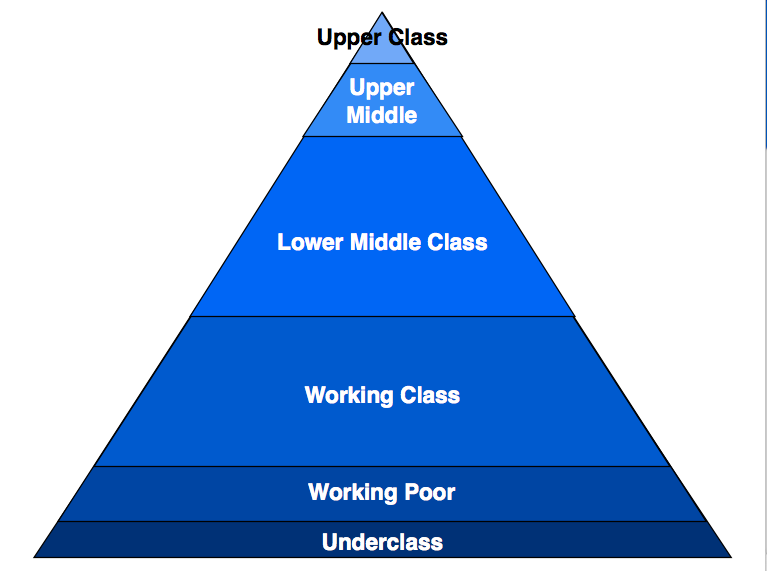
The lesson this week started with a story about E-Veritas Trading Network in Manila, Philippines. Bottom line is this company trained knowledge workers to develop an entire electronic trading system to deliver quality and safe food to their people at a low cost they could afford (Maciariello, 2014). In other words, they created human capital within people at the bottom of the economic and social pyramid so they could develop rapidly and escape poverty. There is evidence all over the world that through education and management training, those at the lower levels of the social and economic pyramid can be lifted up. People globally can be helped to be sheltered from corruption from being involved in small-scale local economic activity.
For another example we can look to South Korea. Within 25 years after the Korean War, Korea became a highly developed country. They did this by using the universities and colleges of the United States for management education of their people. Then when their students returned home all of that knowledge was shared and assimilated into their businesses and economy (Maciariello, 2014). Maciariello argued it is much more effective and efficient to provide resources for educating present and future leaders of a developing country than providing financial aid (Maciariello, 2014).
This concept is equally true domestically in our own country. It is no secret and is widely accepted that the practice of investing in employee development is the most beneficial practice an organization can partake in. This is why the habit of continuous learning is so important. We must be teaching our students how to learn, because the practice of continual learning will be very important to their generation. It is interesting to me how education and knowledge acquisition has really jumped to the forefront of American politics. This jump has even surpassed over the importance of property and capital acquisition that dominated the Age of Capitalism.
Two questions that need to be answered for learners of all ages, whether P-16 or adult professional, are: What mix of knowledge is required for everybody? and What is “quality” in learning and teaching? Can you imagine if we could come up with these answers in a way that everyone can agree on? Interesting, many businesses and organizations have. Maybe at the P-16 level there needs to be more autonomy to evaluate what quality looks like for the students served.
I was moved by this 1993 quote from Peter Drucker: “No country, industry, or company has any ‘natural’ advantage or disadvantage. The only advantage it can possess is the ability to exploit universally available knowledge (Maciariello, 2014, p. 32). Think about how much more universally available that knowledge is today than when Drucker wrote that. Have you and your organization made learning a lifelong habit? It is never too late to start. Don’t forget the two questions that must be answered for all learners in the previous paragraph and I would add a third: How do the individuals in your organization and you yourself learn? We all learn differently so make sure to differentiate for those differences. Have a great week!
Reference
Maciariello, J. A. (2014). A year with Peter Drucker: 52 weeks of coaching for leadership effectiveness. New York, NY: HarperCollins Publishers.
Dedication Attracts People
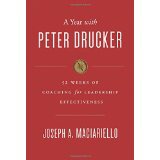 I must say that I looked forward to my dedicated study time this morning for reading the second week’s lesson in A Year With Peter Drucker: 52 Weeks of Coaching for Leadership Effectiveness. As you know from my first week’s post I dedicated myself to spending personal professional development time each week in doing a personal book study and then writing a post to this blog each week. Click here to read the first week’s post.
This week’s coaching lesson was very appropriate. The title of Week 2 is: “Questions to Ask Before Committing a Portion of Your Life to the Service of an Organization.” This was obviously important because I have had to do this in my life several times. But more importantly, it caused we to reflect on the importance of making sure the school corporation I lead can answer those questions correctly and is able to ensure everyone has a chance to achieve and make a meaningful contribution. These are two of the most important tasks an organization has to perform, according to Drucker (Maciariello, 2014). Interestingly, John C. Maxwell’s Minute With Maxwell word today was “Dedication.” Click here to watch the one minute video. Even though the teaching of Drucker this week was not on dedication, this spoke to me because I believe that our organizations must be dedicated to our team members’ achievement and ability to make meaningful contributions. The school system I lead right now needs to do a much better job of this and we are working very hard at this. I believe we need a leadership progression and training program. We should working side by side with those we lead to answer the questions: What should I contribute?; Where and how can I have results that make difference?; and, What should my contribution be? In Drucker’s view, these were questions that the person looking for a position should answer, but I believe we must help them answer these at all phases; from interviewing to job placement, to competency/leadership building.

The questions Drucker suggested a potential employee should ask of the organization are worth noting. I would also argue that these are questions that the organization, school, or business should be asking of itself as to whether they are providing (Maciariello, 2014). Here are the questions:
– Are you learning enough?
– Are you challenged enough?
– Does the organization make use of your strengths or what you can do?
– Does the organization make use of your strengths or what you can do?
– Does the organization constantly challenge and make you more ambitious in terms of contribution?
– Are you actually suffering from creative discontent?
Interestingly, Drucker talked about positive contentment and negative contentment. He argued that contentment was for six year olds. Thirty year olds should not be content because achieving great results should be hard to achieve and will be uncomfortable. At the same time, however, we must provide the environment where the results are meaningful. I love a quote in the book from Drucker because it is a school example where he says a team member should be saying: “We have that enormous job here in the new school… and we are recruiting faculty and so I spend all my weekends with prospective faculty people (Maciariello, 2014, p. 10).” This person is certainly challenged positively because they have responsibility to mobilize, challenge, and grow human resources. Let me tell you, from personal experience, taking over and turning around a school is anything but comfortable and is very hard work. But, it is extremely rewarding and, I believe, very fun work. It was very rewarding when a couple of people, one of them an Indiana State Board of Education member, said to me, “You should be very proud of providing the leadership for Emmerich Manual High School to be removed from the “F” list.” Let me tell you, I am, but I also always want to recognize the accomplishment took dedication from many more team members than me. There were many more who did much more heavy lifting than me and they were dedicated to the opportunity for achievement and making a meaningful contribution.
Another piece to this is very important. “Knowledge workers must take responsibility for managing themselves (Maciariello, 2014, p. 11).” Our team members, as well as ourselves, must take responsibility for developing ourselves. We need to seek feedback and feedback analysis. Concentration should be on areas of high skill and competence. It takes far more energy and farm more work to improve from mediocrity to first rate performance than it takes to improve from first rate performance to excellence.
Take a little time and reflect on where you are as an individual and where the organization you are a member of is in terms of dedication to every person having the opportunity to achieve and make a meaningful contribution. I know we have some work to do in this area. We have extremely talented individuals, but we need to make sure we are developing our bench strength, to use an athletic analogy, to have our future leaders ready to lead from within. REMEMBER: Opportunities do not come according to your schedule. Your job is to be prepared to recognize and seize opportunities as they come.
Reference
Maciariello, J. A. (2014). A year with Peter Drucker: 52 weeks of coaching for leadership effectiveness. New York, NY: HarperCollins Publishers.
 Byron's Babbles
leave a comment