Leading With Questions Like Father Brown

Having just finished G. K. Chesterton’s Heretics, I began reading his Father Brown Stories. I’m only two stories in and I am already completely enthralled. Chesterton described Father Brown this way: “Father Brown had the kind of head that cannot help asking questions.”From this description we can draw valuable lessons about curiosity in leadership.

We can be a curious leader, like Father Brown. We just need to demonstrate a genuine interest in understanding different perspectives, uncovering underlying issues, and exploring new ideas. This inquisitiveness can foster a culture of continuous learning, encourage openness, and builds trust within our organizations. By asking thoughtful questions and really listening to understand the answers we receive, we invite collaboration, empower others to share their insights, and identify opportunities for growth and improvement.
Let’s face it, curiosity fuels innovation and resilience. It helps leaders stay adaptable, make informed decisions, and connect more deeply with their team members. Emulating Father Brown’s inquisitiveness can lead to a more engaged, creative, and high-performing environment in our organizations.
Rock Stars & Superstars

As I was working with some aspiring leaders this past week I reminded them that the best leaders tailor their approach by building strong relationships with all team members, fostering a culture of trust, honest feedback, and personalized support. Effective leaders recognize that each team member has unique strengths, aspirations, and motivators. In one of my favorite books, Radical Candor, author Kim Scott emphasized that every person has potential and the importance of caring personally.
We need to support both “rock stars” and “superstars.” “Rock stars,” according to Scott, are those who consistently perform well and really love the positions and roles they have. These individuals are on gradual trajectories and leaders can provide targeted coaching, encouragement, and opportunities for development. Showing genuine care and offering actionable feedback helps them grow and feel valued.
Conversely, Kim Scott describes “superstars” as high achievers with exceptional talent and ambition that want to move into positions of greater responsibility and authority. Leaders should challenge superstars to stretch their capabilities further, align their goals with organizational objectives, and offer recognition. It’s also vital to ensure superstars don’t feel overwhelmed or undervalued, nurturing their engagement and loyalty.
Living With Fiery Possibilities

I am so loving that I picked G. K. Chesterton as my next Marion E. Wade Center author to read and study. I’ve already read Orthodoxy and am about to finish Heretics. Both of these books are outstanding and I have come to appreciate Chesterton’s unique style of writing. I must admit it is not easy ready for me. I have had to go back over passages multiple times to ponder what he was wanting the reader to learn from his content. One such passage was in Chapter XIV of Heretics when he was comparing life to a novel.
Chesterton told us, “People wonder why the novel is the most popular form of literature; people wonder why it is read more than books of science or books of metaphysics. The reason is very simple; it is merely that the novel is more true than they are” (p. 82). As a person who has come to learn a great deal from works of fiction, I believe Chesterton was arguing that novels tend to reflect human nature and real life more accurately than specialized scientific or philosophical texts.
By saying the novel is “more true,” Chesterton meant that it captures the complexities, contradictions, and subtleties of everyday human experience in a way that abstract theories or factual accounts might not fully do. Essentially, novels resonate with us because they mirror the genuine messiness and richness of life, making them highly relatable and understandable to our own messy and unpredictable lives.
Chesterton went on to say, “But in order that life should be a story or romance to us, it is necessary that a great part of it, at any rate, should be settled for us without our permission. If we wish life to be a system, this may be a nuisance; but if we wish it to be a drama, it is an essential.” He was reminding us that for life to feel meaningful and exciting, like a novel, some aspects of our lives need to be beyond our control. While having a predictable, orderly system might offer comfort, it can also make life feel dull or monotonous. We need to embrace the unpredictability and surprises, that are outside our influence. These unpredictable moments, while sometimes unwanted or inconvenient, turn our lives into a vibrant story.
While it is important and necessary to have goals and plans we need to remember some things are outside our control and impact our stationary life goals. Many look at their life and career as moving up a ladder. I have always said it really is more of a lattice. Imagine life without some surprises. While we will never know exactly what that would be like, I have to believe it would tend to feel tame and unfulfilling. Life would certainly lack the fiery possibilities that arise from facing the unknown or overcoming obstacles.
Leading With A Growing Reed

When leaders have specific goals to aim for, those serve as a guiding “fixed point,” helping everyone stay accountable and aligned. One of the things we discuss a lot in education is making sure we don’t keep moving those targets so leaders truly have fixed points. I loved the metaphor G. K. Chesterton used in Heretics. He said, “A man might measure heaven and earth with a reed, but not with a growing reed.” Think about how hard it would be to measure against a reed that is growing and changing. Impossible to get a true reading, right?
The paradox, however, in the image of a growing reed that is constantly changing and flexible is that it highlights the importance of adaptability in the face of shifting circumstances. While we must have clear targets that are constant a target to work against and valuable for accountability, there’s also a need to remain open-minded and ready to adjust when new information, opportunities, or challenges arise.
We can use this paradox to our advantage to remember to balance having clear objectives (to ensure accountability) with the agility and flexibility to adapt those targets as situations evolve. As leaders we need to remember we all work in dynamic environments.
Shaping Our Path Forward: Eden’s Symbolism for Embracing Change Without Losing Sight of Our Origins

I finished Orthodoxy by G. K. Chesterton last week and I’m still working through my notes for further pondering. I was intrigued by Chesterton’s assertion that his ideal as a Christian was fixed. He said, “My ideal at least is fixed; for it was fixed before the foundations of the world. My vision of perfection assuredly cannot be altered; for it is called Eden” (p. 125). This reminded me that In Christian theology, Eden represents the original paradise created by God—a perfect, divine environment where Adam and Eve lived in harmony with God, nature, and each other before the Fall. It symbolizes innocence, purity, and innocent obedience, as well as God’s initial intention for humanity to live in a state of perfect harmony and communion with Him. Eden also serves as a reminder of the loss of this innocence due to sin, prompting the Christian hope for redemption and the eventual restoration of that perfect relationship with God in Heaven.
Chesterton was asserting that his ideal or vision of perfection was eternal and unchanging, rooted in a divine or perfect state—specifically Eden. By stating that his ideal was fixed before the foundations of the world, he emphasized its timeless and unalterable nature. Eden, as a symbol of perfect harmony and innocence, represents this ultimate, unchangeable ideal that exists beyond human fluctuations or imperfections. Essentially, Chesterton was highlighting the permanence of true perfection and the enduring desire for that ideal, which remains constant regardless of worldly changes.
G.K. Chesterton’s quote, “You may alter the place to which you are going; but you cannot alter the place from which you have come” (p. 125), suggested that while our circumstances or destinations in life may change, our origins—our background, past experiences, and foundational beliefs—remain integral and influence who we are. It emphasizes that we can’t erase or ignore our roots, and that our journey forward is always rooted in where we’ve come from. This idea encourages humility and self-awareness, reminding us to acknowledge our history as we navigate new paths.
Embracing Humility: Unlocking Life’s Unexpected Gifts and Adventures

I am absolutely loving my study of G. K. Chesterton. In Heretics, that I am reading right now, he emphasized the profound impact that humility can have on individuals and their actions. Chesterton said, “It is the humble man who does the big things. It is the humble man who does the bold things. It is the humble man who has the sensational sights vouchsafed to him” (p. 28). He was highlighting that true greatness and significant achievements often come from those who are quietly humble, rather than boastful or seeking recognition. Chesterton wanted us to understand that humility allows us to focus on meaningful pursuits without the distractions of ego, enabling us to experience and accomplish remarkable things. He encouraged us to see value in modesty, as it can be a powerful force for genuine influence and extraordinary experiences.

At the end of the same paragraph where the quote above was taken from in Heretics, Chesterton asserts that “Adventures are to those to whom they are most unexpected — that is, most romantic. Adventures are to the shy: in this sense adventures are to the unadventurous” (p. 28). He was pointing out that true adventure often comes unexpectedly and can be especially meaningful for those who might not seek it out aggressively—nameless, shy, or unadventurous individuals. This idea ties closely to humility because it emphasizes openness and receptivity rather than arrogance or overconfidence.
This really hit home for me as a person who has never really had a life plan. Other’s I grew up with or am acquainted with now have elaborate plans with goals and benchmarks. I have never done that. I guess this speaks to the faith that Chesterton also speaks of that I believe God has a plan and I let that plan play out. That does not mean I do not have to still work hard and do my part, but I do get to let the adventure play out. I’ve never seen others’ perfect plans play out perfectly. So why not be a long-life learning, keep growing personally and professionally, and be ready for opportunity when it knocks?
When we approach life with humility, we’re more likely to recognize and embrace the surprises and opportunities that come our way, rather than forcing or controlling them. The humble person is open-minded and receptive, qualities that allow adventures—those unexpected, romantic moments—to find them naturally. In this sense, humility creates a mindset where life’s most meaningful experiences are understood as gifts rather than achievements, encouraging us to remain modest and receptive to the world’s surprises.
Embracing Constraints: How Limits Ignite Creativity and Deepen Artistic Expression

It is so exciting to be reading G. K. Chesterton, specifically Orthodoxy, right now. I love his use of examples, analogies, and metaphors. When discussing anarchism he argued that we are told to be creative artists without regard to any limits or laws. He refuted this saying, “But it is impossible to be an artist and not care for laws and limits. Art is limitation; the essence of every picture is the frame” (p. 44). Artists often thrive within certain boundaries—whether it’s the conventions of their chosen medium, societal expectations, or personal principles. These limits can serve as frameworks that inspire creativity, challenge artists to innovate within constraints, or help them communicate more effectively.
Chesterton’s quote highlights a profound insight into the nature of art: that limitation is not merely an obstacle but a fundamental component of creation. When he said, “the essence of every picture is the frame,” he emphasized that boundaries—like the frame surrounding a painting—shape and define the artwork, giving it structure and focus.
To illustrate what he meant, Chesterton gave us this example:
“If you draw a giraffe, you must draw him with a long neck. If, in your bold creative way, you hold yourself free to draw a giraffe with a short neck, you will really find that you are not free to draw a giraffe” (p. 44).
In this context, laws and limits serve as frameworks within which creativity can flourish. They help artists make deliberate choices about composition, form, and content, guiding their expression while still allowing room for innovation and transcendence. Without boundaries, art could become aimless or overwhelming, lacking coherence or impact.
Chesterton also left room for the idea that true artistic freedom often involves pushing against or transcending these limits. While the frame confines the artwork visually, the artist’s intention might involve breaking traditional boundaries, exploring new techniques, or challenging societal norms—all within or beyond existing limits. This tension between respecting constraints and daring to go beyond them fuels originality and emotional depth.
What Chesterton was suggesting is that limits are not inherently restrictive but are instead essential to all creative processes. They provide the structure necessary for meaningful expression, while the artist’s skill and imagination determine how to work within or surpass those boundaries to produce truly revolutionary art. This same idea of structure is true for us as leaders.
Whether an artist painting a picture or and artistic leader of an organization we need to push against restrictions to explore new ideas, challenge norms, and express our individuality. So, while laws and limits can guide and shape artistic expression, they don’t have to be strictly binding; sometimes, transcendence of boundaries leads to the most revolutionary art. Ultimately, whether we, as artists, should live by restrictions and limits depends on our intentions, style, and the message we wish to convey.
Leading As A Inquirer

At a leadership development gathering yesterday we discussed what it means for a leader to be an inquirer. To be an inquirer we must possess a curious and open-minded attitude, continuously seek to learn, understand different perspectives, and question assumptions.
Rather than simply barking orders or sticking rigidly to past methods, an inquisitive leader explores new ideas, listens actively to others, and is willing to challenge the status quo. This inquisitiveness fosters innovation, adaptability, and growth within our team or organization, inspiring others to think creatively and pursue constant improvement. Ultimately, an inquiring leader understands that true leadership involves ongoing learning and a willingness to explore beyond immediate answers.
What insights do you have about yourself as an inquirer? What are your strategies, assumptions, or habits?
Leading With Irrational Optimism

I am loving reading Orthodoxy by G. K. Chesterton right now. In my latest reading I was intrigued by his discussion of optimism. Chesterton said, “Rational optimism leads to stagnation: it is irrational optimism that leads to reform.” This was an interesting, and I believe accurate, view on change and how we make progress.
Let’s first look at rational optimism. This careful reasoning and an acceptance of the current order and rational assessment that things are generally okay, can sometimes result in complacency or stagnation. When we believe everything is fine because it makes logical sense, we might overlook the need for necessary change or improvement, leading to a static organization or society.
Conversely, irrational optimism, is characterized by a hopeful belief in the possibility of a better future, often transcending purely logical analysis. This kind of hope can inspire us to challenge the status quo, take risks, and pursue reforms, even when the reasons for doing so might not seem entirely justified from a purely rational standpoint.
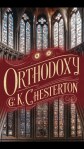
In Orthodoxy, Chesterton aptly emphasized that true progress often requires irrational hope, or belief that things can be better, even when reason alone might suggest otherwise. This passionate hope fuels reform and renewal, preventing organizations and societies from becoming overly rationalized and stagnant.
Chesterton championed the idea that genuine reform arises from hopeful, even somewhat irrational, faith in the possibility of change. As leaders, we must belief that improvement is achievable, sparking movement and innovation where mere rationality might lure us to settle for the status quo.
Living With Ambiguity And Mystery

This past Saturday, I began a study of G. K. Chesterton. I am beginning my study by rereading Chesterton’s Orthodoxy. As an English writer, philosopher, and critic, G. K. Chesterton was known for his wit, literary style, and insightful commentary on religion, culture, and society. He is best remembered for his works such as Father Brown detective stories and Orthodoxy, where he explores Christian faith and the mysteries of life with humor and depth. Chesterton is also a featured author of the Marion E. Wade Center at Wheaton College. While G. K. Chesterton and C. S. Lewis never met, Chesterton had a huge influence on Lewis. In fact, in Surprised by Joy Lewis recalled the impact of reading The Everlasting Man by Chesterton. Lewis said of Chesterton’s essays that they “made such an immediate conquest of” him.
In Orthodoxy, Chesterton wrote, “We need so to view the world as to combine an idea of wonder and an idea of welcome. We need to be happy in this wonderland without once being merely comfortable.” With this statement he was emphasizing the importance of approaching the world with a sense of awe and appreciation, while also remaining open and receptive—what he called “welcome.” He suggested that true engagement with life isn’t about seeking comfort or complacency but about maintaining a kind of joyful wonderment. I believe this is an important leadership lesson in all we do.
Chesterton was advocating for a perspective that balances admiration and curiosity (“wonder”) with warmth and hospitality (“welcome”). This approach allows us to be genuinely happy and engaged in the mysteries and complexities of life without becoming passive or overly secure in comfort. It encourages embracing the richness of existence, appreciating its marvels, and remaining open to new experiences and truths rather than retreating into familiarity or complacency.
A great example of all this is Chesterton’s exploration of the paradoxes inherent in faith. Chesterton described how embracing paradoxes—such as Christ being both divine and human—helps us to appreciate the richness and depth of reality. Rather than simplifying complex truths into neat formulas, he encouraged us to live with ambiguity and mystery, which keeps life vibrant and meaningful. This is what I call being comfortable with being uncomfortable. I still remember as a child trying to get my head wrapped around the Holy Trinity.
The view provided by Chesterton that an open-hearted acceptance of life’s complexities enriches our experience and keeps us engaged with the world, aligns well with the idea of embracing life’s marvels without becoming passive or overly secure in comfort.
 Byron's Babbles
leave a comment