Your Favorite Might Not Be The Same As My Favorite

I am in Washington D.C. 🇺🇸 this week and had the opportunity to go out to eat last evening with friends and colleagues from Georgia, Texas, and Utah. We went to one of my favorites, The Monocle Restaurant for dinner. This place has so much history, having been on Capitol Hill since 1960. There are signed pictures of political icons and dignitaries all over the walls and we even sat in The SCOTUS Booth.

When it came time to order I asked our server one of my favorite questions: “What is your favorite thing on the menu?” His answer was not like any I have gotten before and prompted me to think and write this post. He replied, “Remember, your favorite might not be the same as my favorite.” Wow! So true! This got me to thinking about what the big takeaways and learning moments would be from our server’s reply.

One big takeaway from this interaction could be the importance of individual preferences and subjective experiences. It reminds us that what one person likes may not be the same as what someone else likes, and that’s okay. It promotes open-mindedness and understanding of different perspectives. It also encourages us to explore and try new things, rather than sticking to what we already know and like.
Furthermore, knowing others’ favorites at a restaurant can definitely help us make selections for ourselves. If someone we know well recommends a dish that they love, chances are we may enjoy it as well. This can save us time and effort in trying to decide what to order. For me, personally, I like knowing others’ favorites so I don’t miss something.
This can be related to leadership decisions as knowing our team members’ favorites can also play a role in making choices that benefit the team as a whole. By understanding their preferences and strengths, we can assign tasks or projects that suit them best, leading to better outcomes and overall team satisfaction. It shows that we care about their individual needs can help build trust and loyalty within the team.
You Needed Someone

As I was flipping through television channels (wait, are they still called channels?) yesterday I came across an old episode of Chicago PD. Who doesn’t love some Leadership 101 from Hank Voight (Jason Beghe)? Whether you agree with the things the character does or how he gets things done, you would have to agree he is loyal and has the back of those he serves. He loves his people! In the episode I was watching he did just that for an assistant district attorney. When it was all over she asked Hank why he had helped her. He said, “I’ve seen a lot of good people break. You needed someone.” For me the huge part of the line is, “You needed someone.” Guess what he knew it and was there. Can you say you were there every time someone needed someone? I can’t! This reminded me to continue to be on the lookout for those in need. Also, to create an environment where it is okay to need help.
If you’ve watched Chicago PD you know that Sergeant Voight leads his team with love. What he does is listens and learns. Watch sometime and you will see that every time a team member comes with information he listens intently and uses what he learns. Each and every team members’ voice is heard.
Additionally, he shows empathy and compassion. Leaders who empathize know that both visible and invisible struggles exist and seek ways to understand them. Empathetic leaders consider the circumstances objectively, getting to the heart of the matter to create a more genuine picture. Bottom line is that loving and compassionate leaders understand that their work is not more important than the personal lives of those they serve.
A Story Without A Beginning That Will Never Have An End: Lessons From Phantastes

“Look at him! Look at him! He has begun a story without a beginning, and it will never have any end. He! he! he! Look at him!” This was said by the thistles about Anodos in Phantastes by George MacDonald. This really made me think about whether our stories really ever have a beginning or ending. And does the beginning or ending really matter. This can be interpreted in different ways depending on the context. Yes, this quote is in a faerie tale, but if you think about it there is no true beginning or ending to any of our stories. Just try it – for every beginning you choose, you can go back just a little further. This symbolizes the endless possibilities we have. This is curious to me because Anodos, whose name means either “pathless” or “upward path” in Ancient Greek flits from possibility to possibility in Phantastes. Anodos is in more of a series of episodes in the book than a single narrative. If you think about it, that is more in parallel with our own lives.

This caused me to dive in further on my study of MacDonald. He didn’t strive for us all to make the same meaning out of his writings and faerie tales. In The Fantastic Imagination, he told us, “A fairytale, like a butterfly or a bee, helps itself on all sides, sips at every wholesome flower, and spoils not one. The true fairytale is, to my mind, very like the sonata. We all know that a sonata means something; and where there is the faculty of talking with suitable vagueness, and choosing metaphor sufficiently loose, mind may approach mind, in the interpretation of a sonata, with the result of a more or less contenting consciousness of sympathy” (p. 12). In the same work MacDonald also explained that “A genuine work of art must mean many things; the truer its art, the more things it will mean” (p. 12.) That is the beauty of the great literary works – they can awaken different meanings for each of us. My meaning is just as right as yours.

I also really liked the metaphor of the butterfly or bee. We need to be like them and “sip from every wholesome flower,” taking advantage of every moment. We need to make sure we are not treating our moments as obstacles to overcome, but as precious moments to be sipped from, and “spoiling not one.” How many moments (flowers) do we miss because they don’t fit the plan, don’t fit the timeline, don’t fit with the so called beginning or end of a story?
“It is there not so much to convey a meaning as to wake a meaning.” ~ George MacDonald

Having just finished rereading The Chronicles of Narnia in published order, I really got to thinking about how C. S. Lewis did not start the story with the beginning of Narnia. That did not come till later. And in the end there really wasn’t an end. There is definitely symbolism there. This made me think of how we always get locked into thinking we need to live in some preset chronological order. Life really happens in more of a lattice-like way. For example, if predicting my own path, most would not have predicted the past two years of deep study of C. S. Lewis and being a Scholar in Residence at The Kilns. Had you told me three years ago I would be doing that I would have laughed. But because of the writing of author Patti Callahan Henry a “wholesome flower” was placed in my reach and another piece to my life’s lattice. Did it fit some “plan?” No. But I am sure glad I am adding this section to the lattice and “sipping from every wholesome flower” that has been made available. Don’t be afraid to jump of the horizontal and chronological timeline that we many times lock ourselves into. Sometimes we need to be more like Anodos and go where there is no path.
Exploring the Interconnectedness of Nature and Perception: A Deeper Look at Symbolism in Literature

I love exploring the layers of meaning in literature and pondering what lessons I can take away from them. I am reading George MacDonald’s Phantastes: A Faerie Romance for Men and Women right now. After spending last month at The Kilns outside Oxford England continuing my study of C. S. Lewis as a Scholar in Residence, I needed to spend some time digging in on the man who Lewis considered to be one of his biggest influences, both personally and in a literary sense. C. S. Lewis spoke of reading Phantastes and it changing his life. Just as one can tell the influence different artists have had on rock bands, I believe I can sense the influence MacDonald had on Lewis’s writing. One of the first things that has jumped out at me is the attention to detail and use of imagery and symbolism.

Let me give you an example from Chapter 2 in Phantastes: Anodos (the book’s central character) said, “And, stranger still, where this carpet, which I had myself designed to imitate a field of grass and daisies, bordered the course of the little stream, the grass-blades and daisies seemed to wave in a tiny breeze that followed the water’s flow; while under the rivulet they bent and swayed with every motion of the changeful current, as if they were about to dissolve with it, and, forsaking their fixed form, become fluent as the waters.” MacDonald’s attention to detail truly made the fixed forms fluent in my mind. The fact that MacDonald also sets it up that Anodose designed the carpet himself to resemble the field of flowers told us that Anodos had been seeking the life he was finding in this faerie tale.
“An almost perfect relationship with his father was the earthly root of all his wisdom. From his own father, he said, he first learned that Fatherhood must be at the core of the universe.” C. S. Lewis speaking of George MacDonald
I believe MacDonald was trying to convey a deeper message about the interconnectedness of nature and our perceptions of reality in that passage. The imagery of the grass and daisies appearing to move with the flow of the stream could symbolize how our beliefs and perceptions can influence our experiences and interactions with the world around us.
Our beliefs and perceptions are heavily influenced by our experiences and interactions with the world around us. These experiences shape our understanding of the world, impacting we interpret events, people, and situations. Our interactions with others also play a significant role in shaping our beliefs perceptions, as we learn from their perspectives and incorporate them into our own worldview. Ultimately, our beliefs and perceptions are constantly evolving as we continue to engage with the world around us.
Breaking Free from Limiting Beliefs: Lessons from The Last Battle

This morning I finished rereading the last book in The Chronicles of Narnia series. I read the series in publication order this time because I wanted more of the feel that C. S. Lewis had in writing the series. I know there are lots of opinions out there, with many of those opinions coming from those with greater literary acumen than my own, but I believe the best way to read the Chronicles are in publication order. The beauty of The Chronicles of Narnia, and all works of fiction for that matter, is the reader gets to know and understand all the characters by the end of the last chronicle. This is what I have come to love from reading fiction – we can ponder and reflect by knowing all about each character. Very rarely do we get everything in non-fiction. As you know, I read a lot of non-fiction, so this is not a lobby against non-fiction; just a nod for why I mix fiction into my reading. I love how fiction makes me think deeply.

In fact in the dedication of The Lion, The Witch, And The Wardrobe to his goddaughter Lucy Barfield, C.S. Lewis shared, “I wrote this story for you, but when I began it I had not realized that girls grow quicker than books. As a result you are already too old for fairy tales, and by the time it is printed and bound you will be older still. But some day you will be old enough to start reading fairy tales again…”
“To be concerned about being grown up, to admire the grown up because it is grown up, to blush at the suspicion of being childish; these things are the marks of childhood and adolescence…But to carry on into middle life or even into early manhood this concern about being grown up is a mark of really arrested development. When I was ten, I read fairy tales in secret and would have been ashamed if I had been found doing so. Now that I am fifty I read them openly. When I became a man I put away childish things, including the fear of childishness and the desire to be very grown up.” ~ 1952 essay “On Three Ways of Writing For Children” by C. S. Lewis

In a quote at the end of The Last Battle, by C.S. Lewis, says, “You see,” said Aslan. “They will not let us help them. They have chosen cunning instead of belief. Their prison is only in their own minds, yet they are in that prison; and so afraid of being taken in that they cannot be taken out” (p. 88-89). This quote is referring to the Calormenes who have chosen not to believe in Aslan and instead rely on their own cunning and deceit. Aslan is pointing out that their lack of belief and trust in something greater than themselves is what keeps them trapped in their own fears and limitations. By choosing to remain closed off to help and guidance, they are essentially imprisoning themselves in their own minds. It serves as a reminder that sometimes we need to have faith and trust in something beyond ourselves in order to break free from our own mental barriers. That something may be our community, family, friends, or our spiritual support.
We can prevent our minds from becoming the prison that Aslan describes in The Last Battle by practicing mindfulness and self-awareness. By being present in the moment acknowledging our thoughts and emotions without judgment, we can start to break free from thought patterns and limiting beliefs. It’s also important to seek support from others and be open to receiving help and guidance when needed. Remember, it’s okay to not have all the answers and to rely on others for support.
The Power of Diversity in Leadership: Fostering Innovation and Success

In my leadership development work we spend a lot of time on community building, the importance of belonging, and the importance of embracing the experiences of others. Gathering different experiences and expertise in leadership is crucial because it allows for a diverse range of perspectives and ideas to be considered when making decisions. This can lead to more creative problem-solving and better outcomes overall. This week, I finished the great book LIT: Life Ignition Tools: Use Nature’s Playbook To Energize Your Brain, Spark Ideas, and Ignite Action by Dr. Jeff Karp where these thoughts were reinforced.

In a world where it seems there are less and less right or wrong answers, but choosing the best out of several answers, the value of different perspectives is crucial. Having diversity of perspectives is crucial in today’s world because it allows for a range of ideas, solutions, and innovations to be considered. With the increasing complexity of global challenges, having diverse perspectives can help organizations and societies to come up with more creative and effective solutions.
Practically, this can be done by actively seeking out individuals with varying backgrounds, skills, and experiences to be part of your team or advisory board. Encouraging open communication and collaboration among team members can also help in leveraging their unique perspectives. Additionally, creating a culture that values diversity and inclusion can attract a wide range of talents and perspectives to your organization. Ultimately, embracing diversity in experiences and expertise can lead to more effective and successful leadership.
Leading Through the Storm: The Lighthouse Metaphor for Effective Leadership

Another lesson from C. S. Lewis jumped out at me this morning as I continued my rereading of Mere Christianity. Lewis said, “Christ told us to judge by results. A tree is known by its fruit; or, as we say, the proof of the pudding is in the eating. When we Christians behave badly, or fail to behave well, we are making Christianity unbelievable to the outside world” (p. 207). Yes, he was speaking about Christianity and the fact that people not acting in concordance with what they say keeps others from believing Christianity, but I believe there is a lesson for everyone here. Our actions and results matter! Leaders can apply this lesson by focusing on the outcomes of their actions and decisions. They should strive to lead by example and demonstrate the values they preach. By showing integrity, compassion, and responsibility in their leadership, they can earn trust and credibility from their followers and society as a whole. In other words, walking the talk.
Another metaphor that could be used is the idea of a lighthouse. Just as a lighthouse guides ships safely to shore in the midst of a storm, leaders should guide their followers through challenging times with wisdom, strength, and direction. The light from a lighthouse serves as a beacon of hope and stability, just as our actions and decisions can provide reassurance and guidance to those who look up to them.
Actually, we need to consider the lighthouse metaphor lacking today from a results standpoint. Just like leaders must continue to grow and develop in both technical and emotional intelligence, there have been advances making the use of lighthouses obsolete in some cases. If we want more accurate information to that of a few feet given by a light we would need a Global Positioning System (GPS) plotter with a heads-up display able to work in any light level or any weather conditions, and overlay navigation marks onto a real-world view. But let’s not forget that sometimes GPS systems may fail for certain reasons. So having a more analog system like lighthouses can serve as a backup.
The need for new navigation and GPS systems reflects the ever-evolving technological advancements help individuals navigate through complex situations with precision and efficiency. Similarly, leaders who embrace the latest tools and strategies are able to adapt to changing environments and lead their teams effectively in a fast-paced world.
On the other hand, the lighthouse represents a more traditional and reliable form of guidance that has stood the test of time. Old school leaders, like the lighthouse, rely on their experience, wisdom, and core values to provide steady and unwavering direction to their followers. While they may not always have the flashiest or most innovative approaches, their commitment to timeless principles ensures stability and trust in times of uncertainty. Bottom line is all of these examples go back to and reinforce the idea that we should be judged by our results.
The Intersection of Democracy and Happiness: Government’s Role in Promoting Well-Being
I am rereading Mere Christianity by C. S. Lewis right now and I came across a statement this morning that I really hadn’t pondered in all my earlier readings of the book. Lewis said, “…the State has a lot of different objects—military, political, economic, and what not. But in a way things are much simpler than that. The State exists simply to promote and to protect the ordinary happiness of human beings in this life. A husband and wife chatting over a fire, a couple of friends having a game of darts in a pub, a man reading a book in his own room or digging in his own garden—that is what the State is there for. And unless they are helping to increase and prolong and protect such moments, all the laws, parliaments, armies, courts, police, economics, etc., are simply a waste of time” (p. 199). The purpose of this post is not to get into a political debate, but just to remind us how simple it all really is.
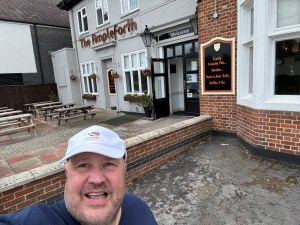
Having spent some time in an English pub where darts were being played, just a short walk from The Kilns (where C. S. Lewis lived and I was living for the week), earlier this past month I could completely relate to the happiness Lewis was describing. Lewis highlighted the idea that the purpose of the State (government) is to promote and protect the everyday happiness and well-being of its citizens in their personal lives. It emphasizes the importance of simple, meaningful moments of connection and enjoyment in our day-to-day activities. Sometimes we need to be reminded of this.
I believe the idea of promoting and protecting the everyday happiness and well-being of citizens aligns well with our principles here in my own country, the United States, of democracy. In a democratic society, the government is meant to serve the people and their rights and freedoms are upheld. This includes promoting the overall well-being and happiness of its citizens. Democracy emphasizes the importance of individual happiness and fulfillment within a society as a whole. This was a pretty good reminder for me as we enter the week of celebrating Independence Day.
Beware Of Externally Imposed Definitions Of Success

The word “success” is thrown around a lot today. When we discuss rethinking education, we discuss student success to the point it has become cliché. This is not do say we should not be considering success, but defining it is another beast entirely. Ten years ago when, as a superintendent, I was leading our schools through the strategic planning process, we adopted a definition of success. We adopted, and I still personally ascribe to the definition of Dr. Felice Kaufmann. She defined success as: “SUCCESS: Knowing what one wants in the world and knowing how to get it.” I love this because success is about each of us understanding what we want, not what is prescribed by someone else. Continuing my thoughts on education here I still believe we must help students find their own passions and interests and align those to values so they can define their own success. Then we facilitate going after that success.

I just finished the incredible book, Red Helicopter, by James Rhee. It really helped me sort out the concept of “success” even further. In the book Rhee explained that if we chase after externally imposed definitions of success, and you may find yourself feeling unfulfilled and disconnected rather than successful. This is genius! This idea of “externally imposed definitions of success” – think about how much we do this to ourselves, to others, and most importantly, our children.
James Rhee was cautioning against following society’s expectations of success without considering one’s own values and goals. He suggested that chasing after external definitions of success may lead to a feeling of emptiness and disconnection, rather than true fulfillment. It emphasizes the importance of staying true to oneself and finding personal fulfillment in one’s achievements. I believe we should consider that success looks different for all of us and it is not something we can graph with a straight line.
Watch What I Do

“Watch what I do. That’s your answer.” I loved this comment by Jack McCoy (Sam Waterston) in Law & Order Season 19 Episode 1 when he was asked by a reporter why the people of New York should elect him as District Attorney. He was saying loud and clear that actions speak louder than words. As leaders everyone is watching our every move. They are watching what we do and what we don’t do. This might disturb us, and it probably should disturb us, or at least remind us that our actions matter.
These actions can be big things as well as the little things. I had a great mentor tell me years ago that we need to be aware of all the little things that are communicating for us. How we show up every day matters. What we say, how we react, our facial expressions, how we text, how and when we email, or how we interact with others. You get the idea, EVERY action matters.
Just as Jack McCoy believed his actions and decisions spoke for themselves and should be enough to convince the people of New York to elect him as District Attorney, we need to be confident our abilities and actions. We mustn’t forget that what we do, say, and communicate every day is being watched. And rightly so!


leave a comment