Living In Our Own Context

Clearly as I write my third post about it, I really love Matt Haig’s great novel The Life Impossible. There is so much in there to unpack. In the book there are so many things happening in Grace Winters’ life to make us reflect on our own. As it says in the book, “Every single person on this planet is a context and the circumstances of that context can never be seen fully. We are all mysteries, even to ourselves.” This is really one of the reasons I love reading fiction; we are able to see all the circumstances and contexts when we need to for full understanding. We rarely get that in real life real time. But that’s what makes it life. We need to embrace the mystery. This great novel has caused me to reflect deeply on this.

The Life Impossible does such an incredible job exploring the complexities of existence and the human experience. Another quote in my reading yesterday, “The willingness to be confused is a prerequisite to a good life” spoke to the idea that embracing uncertainty and confusion can lead to personal growth and fulfillment. Throughout this entire book, Haig dove into themes such as the nature of reality, the importance of vulnerability, and the journey of self-discovery. He emphasized that life is often messy and chaotic, and instead of seeking absolute clarity, it’s more beneficial to accept that confusion can coexist with joy and meaning. This perspective encourages readers to navigate life’s challenges with an open mind and heart, fostering resilience and deeper understanding.
Loved By Being Understood & Appreciated

A leadership topic I have spent a lot of time thinking about and researching is “love.” Love is one of the most important things leaders can give. We need to love the people we serve. C.S. Lewis described four types of love in his book The Four Loves: Affection, Friendship, Eros, and Charity. For a leader, the love that fits best is often charity (agape).
Charity is selfless, unconditional love that seeks the well-being of others. A leader demonstrating this type of love prioritizes the needs of the team, fosters inclusivity, and encourages personal and professional growth without expecting anything in return.
Additionally, elements of affection can also be important, as it builds a sense of belonging and creates a supportive environment. Ultimately, a combination of these loves can create a strong, empathetic leadership style that inspires trust and loyalty among team members.

I have also always liked Ashley Montague‘s definition of love: “Profound involvement in the well-being of others.” Today, however, I might have found an even better way to think about and practice love. In Matt Haig’s great novel The Life Impossible, Grace Winters said that, “There is no point in being loved if you are not understood…And once loved and understood to be appreciated.” This is so profound. With this statement, Haig, in my opinion, was having Grace emphasize that love alone is not enough; it must be accompanied by a deep understanding of one another’s experiences, feelings, and beliefs.
This idea suggested that true connection comes from being truly seen and heard by others. It highlighted the significance of empathy and recognition within relationships—whether they be romantic, familial, or platonic. Being loved feels hollow if there is no comprehension of one’s individuality, strengths, struggles, or joys. Furthermore, appreciation serves as a necessary affirmation of that understanding, reinforcing bonds and fostering a sense of belonging.
I had never thought about a leader’s love for those we serve in this light. Haig’s message invites readers to reflect on their own relationships and the essential components that contribute to meaningful connections and loving those we serve. Think about it; we all want to be loved by being understood and appreciated.
Navigating Life’s Challenges: A Journey of Reflection and Resilience

I am reading Matt Haig’s newest novel The Life Impossible right now. Matt is one of my favorite authors because his books always take me to the location(s) the book is set in. He creates a deep connection between the reader and the characters he writes about. Through immersive storytelling, Matt allows readers to experience different perspectives and emotions, essentially inviting us into the lives of his characters. This not only fosters empathy but also encourages reflection on our own lives and choices. In The Life Impossible we are introduced to Grace Winters, a 72 year old retired math teacher, who inherits a house on the Mediterranean Island, Ibiza (which I now want to go visit and explore!).

One of the lines in the book so far really caused me to stop and reflect: “All reading, in short, is telepathy and all reading is time travel. It connects us to everyone and everywhere and every time and every imagined dream.” This is such a beautiful line! In this quote, I believe Matt is expressing the idea that reading transcends both space and time. “Telepathy” suggests that when we read, we are able to access the thoughts and feelings of others, even if they lived in a different era or place. It creates a deep connection between the reader and the writer. This is what makes a novel so powerful. The author lets us know everything we need to know at just the right time. Matt Haig is truly an expert artist at this.
Similarly, “time travel” indicates that through stories, we can experience different lives, cultures, and historical periods. We engage with characters and their journeys as if we were there with them—living their dreams, fears, and experiences. Overall, Matt was emphasizing how reading enriches our understanding of humanity and expands our horizons, allowing us to connect with the past, present, and imagination in profound ways.
This book is certainly causing me to look forward in my own life. I am also reflecting on my life choices and the impact they have on myself and those around me. I am also reminded of the importance of being present and appreciating the small moments in life.
The Interdependence of Resources and Objectives

Carl von Clausewitz, a Prussian military general and theorist, learned about the importance of aligning resources and methods with desired goals primarily through his experiences in military leadership and strategy during the Napoleonic Wars. He recognized that the complexities of war require a comprehensive understanding of both the objectives and the means available to achieve them.
Clausewitz and Napoleon were contemporaries in the sense that Clausewitz analyzed Napoleon’s military strategies, but they never directly faced each other in battle. Clausewitz served in the Prussian army during the Napoleonic Wars and was heavily influenced by Napoleon’s tactics.
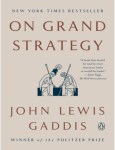
In On Grand Strategy, John Lewis Gaddis referenced Clausewitz’s famous work, On War, that emphasizes the concept of the “fog of war”—the uncertainty and unpredictability that can impact decision-making in military operations. He understood that successful military campaigns are not just about having superior force but also about understanding the political objectives behind the use of that force and the importance of adapting tactics and strategies accordingly.
Clausewitz said, “Means can never be considered in isolation from their purpose,” emphasizing the interdependence of resources (means) and the objectives (purpose) they aim to achieve in military strategy, but it can also be applied more broadly to other fields. Essentially, when planning or strategizing, we should always consider how our available resources align with and serve their ultimate goals.
In this context, Clausewitz argued for a flexible approach that considers not only the immediate tactical situation but also the broader strategic goals, drawing parallels to how resources and methods must align in other fields such as business and personal projects. If you’re interested, we can delve deeper into specific examples from his theories or explore how they apply to modern contexts.
In a more general sense, this principle suggests that whether in business, art, or personal projects, it’s crucial to align the resources and methods you choose with the goals you aim to achieve. This holistic approach can lead to more effective and innovative strategies.
Leaders Taking Off The Blinders

I love the book On Grand Strategy by John Lewis Gaddis and am rereading it for the forth or fifth time right now. Gaddis used such great analogies, metaphors, and historical leaders and events to drive home points. He used the analogy of horse blinders to illustrate how theory can sometimes limit our vision and understanding when it comes to strategic thinking. Just as horse blinders restrict a horse’s field of vision, focusing it on the path directly ahead, a rigid adherence to theory can prevent strategists from seeing the broader context or alternative possibilities. Actual practice and living the event is like taking off the blinders. It widens our view and gives us more perspective.
Gaddis argued that while theories provide frameworks that can guide decision-making, they must be flexible and adaptable to the complexities of real-world situations. In other words, unyielding focus on theoretical perspectives might lead to missed opportunities or misjudgments in practice. True grand strategy requires being open to new information and different viewpoints – taking off the blinders. This allows for a more comprehensive and effective approach to strategy.

While making this point, Gaddis also used a sketch artist analogy illustrating the importance of understanding the broader context in which strategic decisions are made. Just as a sketch artist must balance various elements—like proportion, perspective, and detail—to create a coherent image, strategists must integrate multiple factors, including capabilities, threats, and historical context, to inform their decisions.
This sketch artist analogy emphasized the need for a multifaceted approach, where analysts must interpret and synthesize information from different sources to develop a clearer picture of the strategic landscape. Both concepts highlight that a rigid or simplistic view can lead to misunderstandings and miscalculations, while a more dynamic and adaptive perspective allows for nuanced decision-making that better accounts for the complexities of real-world situations.
Just like multiple artists interpret the same scene differently based on their unique perspectives and experiences, leaders must also consider various viewpoints and approaches when analyzing complex situations. Individual interpretation can lead to innovative solutions and insights that might not emerge from a more uniform perspective.
The Complexity of Multiple and Competing Goals

I touched on one aspect of plurality in the recent post, You Do Not Want A Team of Clones. Today I want to touch on plurality from the angle of an organization pursuing more than one goal. This plurality has the organization with multiple and competing goals, that may include complex social or environmental concerns. Plurality can play a significant role in decision-making and prioritization. Here are a few key points on how plurality might manifest in this context:
- Diverse Goals: An organization might have multiple objectives that cater to different stakeholders, such as revenue growth, employee satisfaction, community engagement, and sustainability. Each of these goals may attract support from different groups within the organization.
- Balancing Interests: With a plurality of goals, it’s crucial to balance the interests of various stakeholders, both internal and external. This may involve trade-offs or compromises where certain goals are prioritized over others depending on the context or phase of the organization.
- Multi-Criteria Decision Making: Organizations often employ frameworks to evaluate multiple objectives simultaneously. Techniques like weighted scoring can help assess which goals align best with overall strategy and resource allocation.
- Encouraging Collaboration: Having multiple goals can foster collaboration across departments. Teams can leverage their strengths to work on initiatives that align with shared objectives, enhancing teamwork and innovation.
- Flexibility and Adaptability: Organizations that recognize and embrace plurality in their goals can be more responsive to changes in the environment. This adaptability can lead to better long-term outcomes, as goals can shift based on internal and external feedback.
- Clear Communication: For an organization with multiple goals and sometimes competing goals, clear communication is key. As leaders, we need to articulate how different objectives fit into the overall vision, ensuring everyone understands their role in pursuing these diverse aims.
Here are a few strategies for effectively managing plurality within our organization’s goals:
- Prioritization Framework: Develop a prioritization framework to help assess which goals are most critical at any given time. This can be based on factors such as impact, resources available, and alignment with overall mission.
- Collaborative Goal Setting: Involve team members from various departments in the goal-setting process. This can foster a sense of ownership and ensure that diverse perspectives are considered, leading to more holistic objectives.
- Regular Alignment Meetings: Schedule regular meetings to review progress on goals across different teams. This not only encourages accountability but also allows for adjustments based on internal and external feedback.
- Transparent KPIs: Establish clear key performance indicators (KPIs) for each goal and make them visible across the organization. This transparency helps everyone understand priorities and how their individual contributions fit into larger objectives.
- Flexible Planning: Create a flexible planning approach that allows for adjustments based on changing circumstances. This could involve quarterly reviews to refine goals and strategies as needed.
- Cross-Functional Teams: Form cross-functional teams to tackle specific goals that require input from various expertise areas. This can enhance collaboration and innovation while addressing complex challenges.
- Feedback Loops: Implement systems for continuous feedback, both internally (from employees) and externally (from customers/stakeholders). This can guide adjustments and improvements to current goals.
- Training and Development: Invest in training sessions to help employees develop skills necessary for achieving multiple goals. This could include training in project management, effective communication, or specific technical skills.
- Celebrate Wins: Recognize and celebrate achievements related to various goals, no matter how small. It is so important to build morale and inspire teams to continue working towards diverse objectives.
- Vision Reinforcement: Regularly communicate how each goal aligns with the organization’s overall vision. This can help maintain motivation and unity among teams.
How do you handle leading toward multiple goals that are sometimes competing?
Pride – The Unpopular Fault

This week I was prompted to reflect on C. S. Lewis’s profound insights about pride. In Mere Christianity he described pride as the “great sin” and emphasized that it is the root of all other sins. Lewis argued that pride distorts our perception of ourselves and others, leading to a false sense of superiority. Lewis also told us there is no fault that makes us more unpopular. He believed that true humility is recognizing our place in relation to others, which can help combat the destructive nature of pride.
In his view, pride often leads to isolation because it separates us from God and from each other, while humility fosters connection and community. Lewis said, “It is the comparison that makes you proud: the pleasure of being above the rest. Once the element of competition has gone, pride has gone” (p. 122). He viewed pride as a vice, with humility being its opposite.
Lewis argued that pride leads to every other vice. Interestingly what prompted my reflection on pride was the great metalcore band Deadlands. I heard Kasey Karlsen, the band’s lyricist and vocalist, explain the meaning behind there new song “Villain.” She said the song is about pride. It’s about responding to pride’s manipulative grip. The song explores how pride can influence an our actions and decisions, often blurring the line between heroism and villainy.
Characters in the song may grapple with their sense of self and how their pride impacts their relationships with others. This internal struggle can lead to moments of vulnerability and reflection, prompting listeners to consider how their own pride shapes their identities and choices. “Villain,” to me, encourages listeners to reflect on our own dualities and the societal narratives that shape our understanding of morality.
I love bands and songs that prompt me to ponder subjects deeply. It is my understanding that the band will be doing songs on the seven great sins. Can’t wait to hear their authentic artistry on the subject.
Leading By Being Accessible
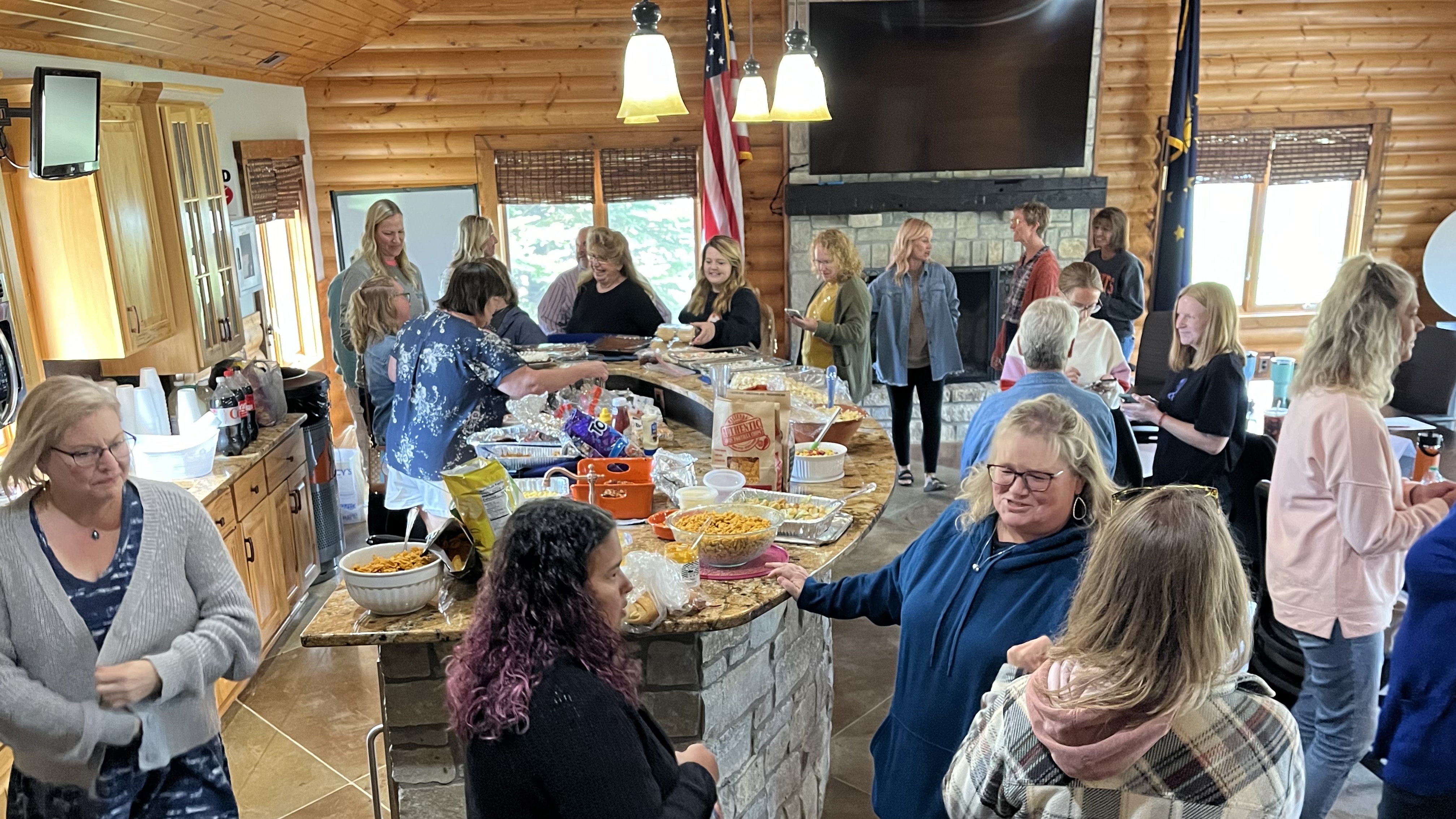
We had an incredible leadership development gathering of THE Leadership Academy Hamilton Heights School Corporation participants this past weekend. Included with this was a “family” reunion of sorts with participants from all four cohorts of the program. Needless to say, it was incredible and affirmed the principle of andragogy (method and practice of teaching adult learners) that adult learners want to learn in a cohort. I also employ heuristic learning practices that pull great vital things out of the learning. One of our incredible up and coming leaders and third year teacher, Audrey Summers, made a point that became the word of the day – AVAILABLE.
Her point was we talk a lot about being present and visible as leaders, but what we really need is leaders who are available and accessible. While being present and visible are crucial for leaders to connect with their teams, being available and accessible plays an even more vital role. She shared how important it had been in her first years of teaching for her department head and entire social studies team to be available to her. When leaders are available and accessible, they create an open environment where team members feel comfortable sharing ideas, concerns, and feedback. This openness fosters trust and collaboration, allowing everyone to contribute to the team’s success. Accessibility also helps leaders understand the needs of their team better, enabling them to provide support and guidance effectively.
It was amazing to learn from Audrey (what I call a reverse mentoring moment) about her views of being present. It so much more than just saying we have an open door policy. Ever noticed that most that say that really do not? It is about really being accessible and available to access us for questions, ideas, and concerns. Think about it. Sometimes all we need is to talk to someone. Leadership access is about creating an environment where communication flows freely and everyone is valued and heard. As leaders, we need to make a habit of making ourselves available and accessible to those we serve to see how they are doing, both professionally and personally. I shared with the group something that happened organically that we called Fireside Chats when I was principal of Emmerich Manual High School. It was one of my favorite parts of the day and made everyone accessible.
We all need to continually work at being accessible and look for those moments where we can encourage our team members to share thoughts, ideas, and learn what they are needing. What are your thoughts on how leaders can enhance their availability and accessibility?
You Do Not Want A Team Of Clones

One of the many challenges for leaders today in all the complexity is that of plurality. There is the plurality of having multiple and competing goals, that may include complex social or environmental concerns and the plurality of when employees are empowered to contribute and are equally respected amongst each other. In this post I will speak on organizations operating in plurality as those that actively embrace and manage diverse perspectives, and experiences among their members. This pluralistic approach can enhance decision-making, drive innovation, and improve employee satisfaction. Here’s how these concepts can relate to organizations:
- Inclusive Leadership: In a pluralistic organization, leaders are essential in fostering an environment where everyone is included and heard. By practicing inclusive leadership, we can effectively harness the immense power of diverse ideas and insights of those we serve, leading to more comprehensive solutions.
- Cultural Competency: Organizations that prioritize cultural competency ensure that their practices and policies reflect an understanding of different cultures and values. This helps to create an organization where team members can thrive, knowing that their unique backgrounds are respected and valued.
- Collaboration and Teamwork: With a diverse team, collaboration becomes even more vital. Encouraging teamwork among individuals from various backgrounds can lead to creative problem-solving and innovative ideas, benefiting the organization as a whole.
- Continuous Learning: Pluralistic organizations often promote a culture of continuous learning and adaptation. By embracing feedback and being open to new perspectives, we can evolve and respond more effectively to challenges and opportunities in the marketplace.
If you think about it, when we come together there is such power in diversity. Plurality is using those differences to make things better, and treating people according to their needs and respectfully even though we are all different.
Different Frames of Leadership

As you know, I am currently reading the great book by Lee Bolman and the late Terrence Deal, Reframing Organizations: Artistry, Choice, and Leadership, 7th Edition, as part of a leadership course I am taking right now at the Saïd Business School. Bolman and Deal describe leadership through various lenses, highlighting both positive and negative aspects. Their framework emphasizes that leadership is not inherently good or bad; rather, it depends on the context and the actions taken by the leader.

A good leader, according to their model and research presented, would be someone who effectively balances the different frames of leadership—structural, human resource, political, and symbolic. Such a leader would set clear goals, support their team, advocate for their needs, and inspire trust and commitment.
On the other hand, a bad leader might prioritize their own interests over the team’s, misuse power, or neglect the emotional and cultural needs of the group.
As a lover of metaphors, I loved the ones the authors used. One metaphor I really liked was of a leader being “a cross between Napoleon and the Pied Piper.” This was illustrating a particular blend of qualities that effective leaders might possess.
Napoleon represents strategic vision, assertiveness, and the ability to make bold decisions that drive results. His leadership style is often associated with strong command and an emphasis on achieving goals, even in the face of significant challenges.
On the other hand, the Pied Piper symbolizes charisma, charm, and the ability to inspire and rally people around a common cause. The Pied Piper’s influence comes from his ability to connect with others emotionally, bringing them together and guiding them toward a shared vision.
By combining these two archetypes, Bolman and Deal suggest that effective leaders must not only be strategic thinkers capable of making tough choices but also charismatic individuals who can foster loyalty and enthusiasm among their followers. This hybrid approach allows leaders to navigate complex organizational landscapes while motivating their teams to work collaboratively toward shared objectives.
But I know what you’re thinking! There is a paradox here. The story of the Pied Piper is often seen as a cautionary tale. While he initially helps the town of Hamelin by ridding it of rats, he ultimately takes the children away when the townspeople refuse to pay him for his services. This raises questions about trust, integrity, ethics, morality, and the consequences of leadership decisions.
This is why I believe Bolman and Deal suggested that the research shows leaders who use all the frames of structural, human resource, political, and symbolic leadership are most effective.
 Byron's Babbles
1 comment