Looking In The Mirror

Yesterday, I heard a person use the phrase, “I know a mirror when I see one,” after having a heated discussion with another individual. He was recognizing that the other person was digging in just as he was. I loved the metaphor of seeing ourselves in another person, whether it be faults or positive traits. So my question to ponder became: what can we learn from this? When we say “I know a mirror when I see one,” it suggests that we can recognize qualities in others that reflect our own traits, experiences, or emotions. This reflection can offer valuable insights into ourselves.
Interactions with others can prompt us to examine our own behaviors, motivations, and flaws. It encourages us to look inward and grow. Recognizing aspects of ourselves in others can motivate us to work on our weaknesses or celebrate our strengths. It can serve as a reminder of what we aspire to be.
Every person reflects different facets of the human experience. By acknowledging this, we can appreciate diversity and learn from the various ways people navigate life. Seeing ourselves in others fosters empathy. Understanding that someone else has gone through similar struggles or joys can create deeper connections and compassion.
Ultimately, this metaphor reinforces the idea that we are all interconnected. Our shared experiences can cultivate a sense of community and support. Seeing ourselves in the mirror of others is a powerful tool for personal development and fostering better relationships.
In Love With Justice, Part III

I left off yesterday at the end of “In Love With Justice, Part II” with my visits to the cemeteries in Lynchburg, Tennessee to honor the Green’s and Jack Daniel. After that I made the short drive up to Shelbyville, Tennessee to make my second visit, in as many weeks, to Nearest Green Distillery. I needed to complete my day that started at the Dan Call Farm (where it all began), eating lunch at Barrelhouse BBQ, touring Jack Daniel’s Distillery, visiting the two Lynchburg Cemeteries, and now the distillery Fawn Weaver co-founded. I want to remind you all my interest began back in 2019 when a mixologist used Uncle Nearest Tennessee Whiskey and first told me the story of Nearest Green. Fawn Weaver’s well written and incredible book, Love & Whiskey did the rest. I was hooked, and my madness love of learning took over.


Wow! As I reflect on the journey of those pictures I just shared with you; what a day. As I entered Nearest Green Distillery I was once again struck by the mill stone that was recovered on the Dan Call Farm. To stand next to this archive that Uncle Nearest and Jack Daniel had used side by side to grind the grains used to make whiskey was very sobering (pun intended).
Here was a distillery co-founded by two Black Americans, Fawn and Keith Weaver, to honor the legacy of an enslaved man who was now recognized as the first African American master distiller – Uncle Nearest Green. By establishing Nearest Green’s story and creating a business that honors his craftsmanship and innovation, the Weavers are fostering a greater understanding and appreciation for diversity in the spirits industry. Their efforts serve to educate the public about the rich heritage and ongoing impact of African Americans in whiskey production, making Nearest Green Distillery a symbol of empowerment and recognition in a traditionally homogenous field.

On the distillery tour we were taken into a hidden speakeasy, honoring Fawn’s parents, the temperance movement and the women’s suffrage movement. The floor boards have quotes from incredible black women like, Ida B. Wells (see photo). I loved this and had to find Ida’s quote because I have always loved and been inspired by her having said, “The way to right wrongs is to turn the light of truth upon them.” Can you imagine how wonderful the world would be if we all practiced this. Fawn Weaver modeled and continues to model this for us by what she has done to shine the light of truth on the story of Nearest Green. A story that wasn’t forgotten, but intentionally not told, and intentionally kept from being told.


All I can say is, go to Shelbyville, Tennessee and take the tour. For me it was the ultimate history lesson. In “In Love With Justice, Part I” I mentioned that I believe every high school student should read Fawn’s book. I’ve already taken some criticism over wanting students to read a book about whiskey. That’s okay, I’ll take that criticism because the book really isn’t about whiskey, it is about Uncle Nearest Green’s place and incredible contributions in our country’s history and Fawn Weaver’s love for Justice. Fawn, through her incredible leadership prowess, has modeled the Cardinal Virtue of Justice by practicing the traits of justice that I believe to be vulnerability, humility, integrity, and fairness. I wish every young person (particularly young women of color) could have Fawn Weaver as a mentor that looks just like them to help them understand anything is possible.
There is so much I’ve left out, that if you read Love & Whiskey, you will learn. There is so much more like financial support in the form of scholarships to Green family members and mentorship programs to aspiring Black distillers and entrepreneurs in the spirits industry, helping them to navigate the challenges of starting their own businesses. I’ll leave you this link to the great video, The Story of Nearest Green.
In Love With Justice, Part II

I ended yesterday’s post, “In Love With Justice, Part I”, at Barrelhouse BBQ having a Grilled Cheese Crack Jack. Then I was off to Jack Daniel’s Distillery for a tour. I wanted to see the results of Fawn Weaver’s leadership in telling the story of the relationship of Uncle Nearest and Jack Daniel. I was immediately greeted by a Nearest Green exhibit. Also there is a place on the Jack Daniel’s website dedicated to Nearest Green. Click here to check it out. I was so excited!
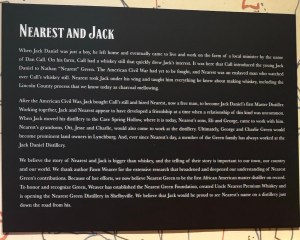
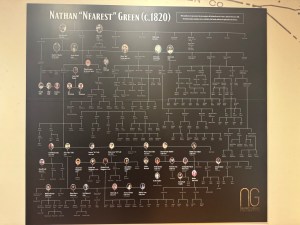
The exhibit had a Green family tree, incredible photos, and a great narrative of the Nearest and Jack story. Having read Love & Whiskey I knew this exhibit would have never happened without Fawn’s telling the story. As she says, “May all the stories find the light.” She has got to love the mention of her in the exhibit when it says, “Because of her efforts [Fawn Weaver], we [Jack Daniel’s] now believe Nearest Green to be the first African American master distiller on record.” What a great tribute to all the work Fawn had done for lifting the memory and shining a light on the memory of Uncle Nearest.
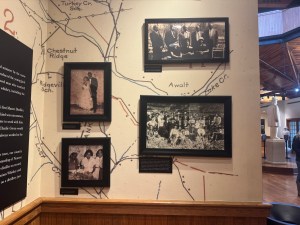
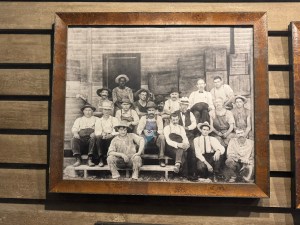

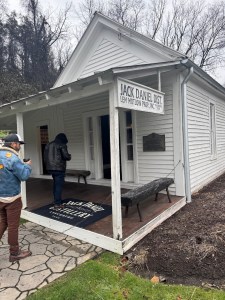
It was so exciting to see the cave where the “cave water” that is still used to make Jack Daniel’s products today. Also, we went into Jack’s original office and we were given more information about Nearest’s role in mentoring Jack while an enslaved purpose and being his master distiller. We were shown the photo of Jack with Nearest’s son George (see above), who worked for Jack after Nearest retired. The thing I want to point out is how Jack has George right beside him in the photograph. Fawn points out several times in the book how inclusive Jack was and recognized the contributions of all. You really need to read the book, because there is so much more. I was just excited to have a portion of the tour guides talk in Jack’s original office dedicated to the Green family.

After the tour, I had to stop by Jack Daniel’s grave. I did take a moment to sit in one of the benches they have at his grave. What I really wanted to do, however was find the memorial that Fawn had put in the “colored” cemetery the next hill over. I’m using the term “colored” to give the historical context in the same way Fawn does in the book. Fawn was not able to find the exact resting place of Uncle Nearest, but the Highview Cemetery seems a likely place and there are many Green family members buried there. She made a point of making sure it could be seen from Jack’s grave. And it could. As I stood there I was so ashamed that there was a time where there was a “white” cemetery and a “colored” cemetery. But there they were. Right there – two hilltop cemeteries right next to each other, but separated nonetheless. Again, I was experiencing history first hand and doing some heaving reflecting. Again, so thankful for Fawn Weaver helping shine light on all this and helping us navigate and do better.
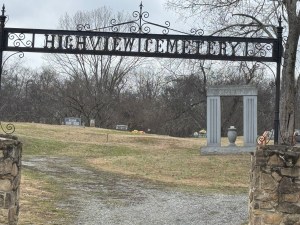

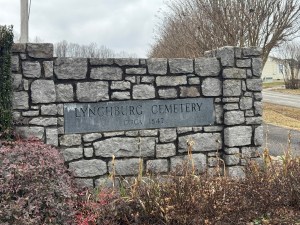
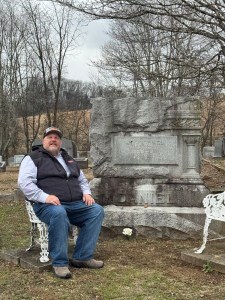
I’m not sure we can ever make up for all the atrocities of racism, but we must try. We must continue to seek justice. We must continue to be in love with justice. Most importantly, we need to grow and be better every day, right now. We can do that! I want to close Part II with the inscription on Nearest’s memorial: “Father. Husband. Mentor. The Best Whiskey Maker The World Never Knew.” We know you now, Uncle Nearest!
In Love With Justice, Part I

Dr. Martin Luther King, Jr. taught us that, “Life’s most persistent and urgent question is, ‘What are you doing for others?’” He also said we need leaders “…in love with justice.” Justice is a Cardinal Virtue and includes vulnerability, humility, integrity, and fairness. Every year when celebrating the life and legacy of Dr. Martin Luther King, Jr. I try to expand my learning and become more in love with justice. This year I was able to expand on a story I became very interested in during a visit to Washington D. C.
I was in the Capital to speak at a conference and got in early on the day before I spoke. For lunch I stopped in a bar. The mixologist was excited to recommend a cocktail made with a new Tennessee whiskey, Uncle Nearest he had learned about from the Nearest Green Distillery. He proceeded to tell me how Uncle Nearest Green had been a slave whose job was distilling whiskey on a farm just outside Lynchburg, Tennessee. I was all engaged in learning this story.

The mixologist then informed me that that Uncle Nearest had taught Jack Daniel to make whiskey and was his first master distiller. “What? Did I hear that right?” I said. Then asking, “Are you talking about THE Jack Daniel?” Yes! Wow, what was I hearing? I was hearing about a major contribution to the world of a slave and African American whose story had at the least not been told, and at the worst been aggressively suppressed from being told. This was the opposite of justice.
So I came home all inspired by this story, bought a bottle of Uncle Nearest Tennessee Whiskey and proceeded to telling the story to everyone I knew. I really wanted to tour Nearest Green Distillery and it was not until January 3rd of this year that I had that opportunity. I learned so much and received a copy of Fawn Weaver’s, co-founder of Nearest Green Distillery, book Love & Whiskey: The Remarkable True Story of Jack Daniel, His Master Distiller Nearest Green and the Improbable Rise of Uncle Nearest.

I was hooked. I could not put the incredible book down. I’m usually not too aggressive on recommending books, but you need to read this one. If you want to learn true history from our past this is a must read. Weaver had learned of Nearest Green when she read an article while in Singapore.
Fawn Weaver’s learning journey with Nearest Green began when she discovered that he was the first African American master distiller, who played a crucial role in the history of whiskey-making in America. Inspired by his story, Weaver felt compelled to honor his legacy and shed light on his contributions, which had long been overlooked. If this isn’t modeling justice for us all, I don’t know what is. I posted on social media yesterday that she is my new leadership idol! Wow, what I have learned from her.
This led her to create the Uncle Nearest Premium Whiskey brand, focusing not only on producing high-quality whiskey but also on telling the story of Nearest Green. Through her efforts, Weaver has not only revived his memory but has also launched initiatives aimed at promoting diversity and inclusion within the spirits industry, ensuring that Green’s legacy continues to inspire future generations.
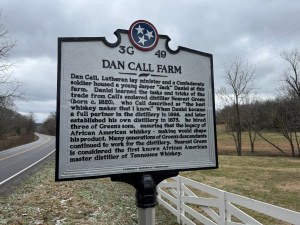
So having been inspired by all this, I decided to spend this weekend retracing some of Nearest Green’s steps. Yesterday morning I took a road farm trip out into the countryside outside Lynchburg, Tennessee and found the Dan Call Farm where Green was an enslaved whiskey distiller. It was here that Uncle Nearest taught Jack Daniel the trade and was his first master distiller. Check out the photo of the historic marker Weaver had placed at the farm after purchasing it. It is a beautiful place and it was very moving to be standing there.

Next, it was off to Barrelhouse BBQ in Lynchburg, Tennessee. I had to eat here because the owner, Chuck Baker, was instrumental in helping the Weavers build relationships and complete the research. And Fawn kept raving about how great the barbecue was it seems in the book she picked up food from there every day. Chuck Baker played a significant role in helping Fawn Weaver by providing her with local knowledge and support during her journey to honor Nearest Green’s legacy. Baker helped Weaver connect with the community and understand the historical significance of Nearest Green, which ultimately aided her efforts in reviving his story and establishing the Nearest Green Distillery. His enthusiasm for the project and commitment to sharing Nearest Green’s contributions to whiskey-making were invaluable to Weaver’s mission. Baker also helped establish a Barrelhouse BBQ at Nearest Green Distillery in Shelbyville, Tennessee.

Needless to say, my Grilled Cheese Crack Jack (pepper jack cheese and pulled pork on Texas Toast) was awesome. Check out their menu here ok. Just what I needed to make it through the rest of the day in Lynchburg and on to Shelbyville.
As you can see, there was a lot for me to take in. Therefore I making this a three part blog. I don’t want to overwhelm you, or myself in reflected on this. Needless to say, Dr. Martin Luther King, Jr. would be proud of the great leadership role model that Fawn Weaver is. She showed and continues to show us what it means to have a love for justice. I told my wife that every high school scholar needs to read her book – especially every female. Thanks Fawn for being a strong female leader role model! Tune in tomorrow for more on my learning expedition in “In Love With Justice, Part II.”
Leading Like Michelangelo
I finished reading The Reformed Pastor by Richard Baxter yesterday. I was reading this book as part of my C. S. Lewis research. Baxter was an influence on Lewis’s views on Christianity as well as the inspiration for the “Mere” part of Mere Christianity. I was fascinated by how evergreen Baxter’s work was for having been first published in 1656. I was also amazed at how Baxter used an easy to understand, concise, and relatable voice. He actually talked about how being easy to understand is an important leadership trait. While Baxter’s audience for this work were ministers, this is a very insightful book on leadership for all. One of the references he made toward the end of the book was that of Michelangelo’s meticulous approach to preparing his own materials for artwork. Baxter told us that Michelangelo made his own brushes with his own hands. In my research of this, I found varying accounts of whether this was true or not. Regardless of whether myth or fact, it is still a great metaphor.
Baxter used this example to illustrate the importance of dedication and hands-on involvement in one’s work. Baxter emphasized that Michelangelo took great care and pride in his craft, which reflects a deeper commitment to excellence. By personally crafting his tools, Michelangelo demonstrated a deep commitment to his art. Leaders can benefit from being personally invested in our projects and teams, which can inspire others and foster a culture of dedication. By being involved in the process, Michelangelo could fully understand the challenges and nuances of his artwork. If we take time to engage with those we serve we can build stronger relationships and identify areas for improvement more effectively.
Just as Michelangelo carefully selected and crafted his tools, we should pay close attention to the details of our work environment and processes. This can lead to better quality outcomes and a strong foundation for success. The process of creating his own tools reflects Michelangelo’s continual pursuit of mastery. We should encourage ongoing learning and development for ourselves as well as within our teams, empowering individuals to hone their skills and bring new ideas to the table. This was a huge part of the point of Baxter that we need to continue studying and learning and making sure we are teaching others.
This speaks to the whole point of Baxter writing The Reformed Pastor. He was driving home the fact that true leaders and ministers should take the time to cultivate their skills and be intimately involved in their tasks, much like Michelangelo did. This hands-on approach allows individuals to fully understand their work, connect with it on a personal level, and ultimately serve others more effectively. Baxter highlights that such dedication can inspire those around us and lead to more impactful leadership.
Leading In The Intertidal Zone

My fascination with Exploring Low Tides started earlier in the week on Tybee Island. I have learned that the land in the tidal range is called the intertidal zone. The intertidal zone here on Tybee has a great many tide pools. I also learned that this intertidal zone is home to some of the ocean’s richest biodiversity. Then within the intertidal zones there are other zones (eg. splash zone, low-tide zone, mid-tide zone, high tide zone, and others). Check out Cause and Effect: Tides to learn a whole lot more.

I became fascinated by the beach streams that are formed by the receding tide. Some of these tidal streams have a pretty strong current and in some parts of the world used to create energy. As I studied these streams on Tybee and realized they are formed a little different with each tide recession I pondered about the metaphor these beach streams created.
The formation of beach streams as water recedes from high tide can be seen as a metaphor for resilience and adaptation. Just as the shifting tides create new paths in the sand, individuals and teams can navigate through life’s challenges and discover new opportunities for growth.

When the water pulls back, it leaves behind streams that carve their own courses, illustrating how change often leads to unforeseen possibilities. This metaphor highlights the importance of being flexible and open-minded; just like the streams that adapt to the landscape, we too can redefine our paths and emerge stronger after setbacks.
Moreover, the ebb and flow of the tides can symbolize the cyclical nature of challenges and successes in leadership. As leaders experience high tides (moments of pressure and intensity) followed by retreats (periods of reflection and learning), we can cultivate a love of learning that allows them to innovate and lead effectively in the future.
Leading A Moonlit Journey

The other night I had the amazing view of the moon in my featured photo shining on the Atlantic Ocean. I was amazed by all the light the moon was providing to see by. Also, the mirror the ocean was providing to the moon was breathtaking. The moonlight glistening on the ocean serves as a powerful metaphor for leadership. Just as the moon illuminates the vast waters, guiding sailors towards their destination, a great leader provides clarity and inspiration to their team.
The reflection of the moon on the ocean’s surface symbolizes how a leader’s vision can radiate outwards, creating a ripple effect of motivation and purpose. Like the ocean, which embraces the moon’s glow, a successful team mirrors the values and direction set by their leader, working in harmony to navigate both calm seas and turbulent storms. Together, they create a beautiful partnership, reflecting their collective strength and shared aspirations.
Exploring In Low Tides

Yesterday, I had the opportunity to walk the entire east and south beaches of Tybee Island at the point of lowest tides. I have always been fascinated by the tides and when I am near an ocean I always get a tide chart. Yesterday as I was exploring I thought about low tide as a leadership metaphor! Most times we think of this low in the negative, but yesterday I was seeing so many cool landforms, sandbars, rocks, and ocean wildlife that can never be seen in high tide. This caused me to mentally explore how low tide represents moments of clarity and opportunity in leadership. During these times, leaders can uncover hidden potential and strengths within our teams that might be submerged during busier, “high tide” situations.

Here are some of the thoughts I had while walking on the beach:
- Visibility of Strengths: Just as sandbars and landforms become visible at low tide, we can see the unique talents and capabilities of our team members when they take a step back and lower the pressure. This visibility allows for better resource allocation and team alignment.
- Creating Space for Reflection: Low tide provides a moment for introspection and strategic thinking. Effective leaders use these times to reflect on successes and challenges, adjusting our approach to foster growth and resilience.
- Building Relationships: When the tide is low, there’s often a sense of calm that can foster deeper connections. Because relationships are so important, we should use low tide moments to engage in meaningful conversations, strengthening team bonds and understand individual motivations, needs, and goals.
- Navigating Challenges: Just as navigating rocky shorelines can be tricky at low tide, effective leaders must carefully assess the current landscape of their organization, identifying both obstacles and opportunities.
- Preparing for High Tide: We can use low tide to prepare for upcoming challenges or busy periods. By leveraging this time effectively, they ensure that our team is ready to respond to future demands.
- Skill Development: Using low tide as a time for training and skill-building allows team members to grow professionally. Leaders might organize workshops, online courses, or mentoring sessions, ensuring their teams have the skills needed for future challenges.

During low tide, leaders can take a step back and reassess how everything is going in the organization. Low tide really provides a time for reflection. We need to take the low tide moments and use them to our advantage.
Embracing Kindness: Lessons from C.S. Lewis on Navigating Disagreements

On Wednesday of this week I had the honor of collaborating with the National Association of State Boards of Education (NASBE) to facilitate a team building program for the Nebraska State Board of Education. This was a very engaged group of leaders and we had some incredible discussions. One of our norms for the day was to always assume positive intentions. We discussed how as individuals on a board we may have different ideologies and ideas, but that all ultimately wanted to improve education for all students. Education is so complex and we sometimes have different opinions on how to best get the work done.

These discussions reminded me of the work of C. S. Lewis in The Weight of Glory when he spoke of separating the person from the person’s opinion. In that essay, Lewis emphasized the importance of understanding and valuing individuals beyond their viewpoints or beliefs. He suggested that it is crucial to recognize the inherent dignity of each person, regardless of whether we agree with their opinions or not. This perspective encourages compassion and empathy in discussions and interactions.
I pondered what advice Lewis might give to the group I was working with related to making the separation of the person from the person’s opinions. Lewis understood the complexities of human nature and the challenges people face in separating individuals from their beliefs. He might have suggested that it is important to recognize the humanity in each person, even when their views differ significantly from our own. He could have emphasized the idea that everyone is on a personal journey shaped by their experiences, and that seeking to understand the reasons behind someone’s beliefs can foster empathy.
Lewis often highlighted the importance of love and compassion in his work, so he might have encouraged that individual to approach disagreements with a spirit of kindness, reminding them that no one is entirely defined by their opinions. Instead, he would likely advocate for engaging in thoughtful dialogue and striving to see the good in others, which could help bridge divides and promote understanding.
Leading With A Limited Palette of Colors

On Monday evening we had the chance to eat at a highly recommended place on Tybee Island, Fannie’s On The Beach. Awesome food, incredible people, and first rate service. The one thing they had that put the customer experience over the top was butcher paper on the table and crayons. Those that have been a part of my gatherings know I love using crayons and creating images. Of course, Monday night was no exception, I began coloring immediately. My subject was a tractor and baler baling hay. Because we use New Holland equipment on our farm I began designing a blue tractor. Then I realized I only had four colors in my cup – red, blue, yellow, and green.
After this realization I got up and walked to a couple of other tables to see if I could find a black crayon for the tires. I quickly realized that there were only the same four colors on every table – red, blue, yellow, and green. What to do? Improvise and create with the colors I had. Are you beginning to see the leadership lessons coming through? Bottom line: my art was a hit with everyone at Fannie’s. Here is my creation:

We can learn several valuable lessons from working with a limited palette of red, blue, yellow, and green crayons to create a picture:
- Resourcefulness: With only a few colors, we must think creatively and find ways to effectively use what we have. This mirrors the need to make the most out of limited resources in real-world scenarios.
- Collaboration: Just like blending colors can create new shades, leaders can discover the importance of collaboration. Working with others’ strengths can bring out more vibrant results than going it alone.
- Simplicity: Sometimes, limitations can drive simplicity in decision-making. Focusing on a few key elements allows leaders to prioritize our goals and strategies without becoming overwhelmed by options. I’ve got to tell you I believe my drawing was better because of the simplicity of only having four colors. This really made me reflect on the importance of both conciseness and limiting the number of options.
- Innovation: Constraints often inspire innovation. Leaders can learn to think outside the box and experiment with different combinations and techniques to achieve a desired outcome.
- Perspective: Using only a few colors can help us appreciate the beauty in simplicity and uniqueness. It teaches us to value diverse perspectives and approaches within our teams.
- Patience and Practice: Creating a beautiful picture with limited crayons may require trial and error, teaching leaders that mastery takes time and effort.
By embracing these lessons, we can enhance our own skills and foster creativity within our teams, even when faced with limitations.
 Byron's Babbles
1 comment