Gaps In Our Consistency
 At one of our most recent gatherings of 3D Leadership, a topic came up that the participants were calling “gaps in our consistency.” When I asked about these gaps they said they were the things that really kept them from being great teachers and the schools which they taught from being as great as they could be. One of the most important tools in effective schools is consistency. Research and practice have proved that school leaders and teachers must be consistent every day in carrying out their duties if they want to improve student performance and conduct. Here is what the teacher leaders said the gaps were:
- Being Reactionary
- Everything done short term/constant change
- Lack of training to make sure initiatives/processes could be implemented
- Relationships must be in place for there to be the trust for everything to be going well
- Besides the why, there needs to be the what and the how
- Teachers need to teach and not be auditors
Really, what any teacher wants is to be able to get to work and feel like what he/she is doing are the right things to be doing. What teachers don’t need are things constantly changing or different expectations or directions. These result in confusion. It is really about being on the same page and staying on the same page. Consistency really can be the protagonist or the villain of great accomplishment. There is a difference between being agile and continually changing focus, priorities, and behavior patterns.
One of the biggest problems that inconsistency brings on an organizational and personal level is a loss of trust. Judgement becomes not trusted, follow through on initiatives is not trusted, and trust that what is being implemented today will even be important as soon as tomorrow. The administration and staff must operate like a single coherent unit. If we are able to build this consistency in any organization we can build what researchers have called a “culture of consistency.” We need to recognize our gaps in consistency; delivering consistently can have a profound impact on our effectiveness.
Whether It’s Spinning Plates or Juggling Balls, We Can’t Afford To Drop Either For Our Kids!
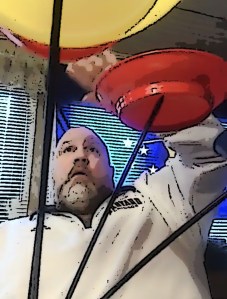 Remember, This Is a Marathon: We Want You To Still Be In The Race At The End Accept, Acknowledge, Ask, Adjunct Teaching, Advice
We need to take time to reflect on what it means to truly form a partnership between schools, teachers, and parents and consider how we can shift our practices in ways that will extend well beyond this crisis. I had the tremendous opportunity and honor to be a part of an event hosted by Kevin Eikenberry of The Kevin Eikenberry Group this past week. It was titled ‘Juggling Balls You Can’t Drop: How To Be Successful Parent, Employee, Teacher (And Spouse) Without Going Crazy. Kevin had asked me if this was an important and timely topic, and I very quickly responded with, “Absolutely!” Then it became important to pick a great teacher to be a part of the project that was doing an awesome job of supporting parents and students. Kevin left that job to me and I could not be prouder of who I picked. I had worked with Katty Pacheco, 2nd grade teacher at Renaissance Charter School at Boggy Creek in Florida, before on webinars for teachers and knew enough about the support she is providing parents right now in this time of remote learning to know she would be a great choice. And…she certainly proved me right. The parents on the Live With Kevin event really appreciated her comments and advice. It was such a great event. If you missed it, here is the link to watch the event and see materials provided from the event: Juggling Balls You Can’t Drop: How to be Successful Parent, Employee, Teacher (and Spouse) Without Going Crazy.
 I decided to do this post to share not only the link about, but to share out the thoughts I have developed prepping for the event. I’m coming up on a month of working from home and as long for many of the schools I work with being transitioned to remote learning. During these unprecedented times we all are doing the very best we can. I had the opportunity to present to the SMART Factory League global event last week too, and I will be posting my thoughts on things we need to be thinking about moving forward. One thing we need to keep in mind is what my friend and great author, Nora Bateson, said in Small Arcs of Larger Circles: Framing Through Other Patterns: “No one is qualified to talk about uncertainty. You cannot get a degree in it yet, to the best of my knowledge” (location 437/3376, Kindle Ed.). While learning virtually has incredible potential, the very piecemeal efforts are not a very good substitute for real classrooms, in most cases. The school closures across the country have real consequences for our students academically.
Schools are the cornerstones of most communities and play a role that goes far beyond academics. Our schools support the nutritional, social and emotional well-being, and other health considerations of our children. This situation has many parents overburdened trying to support their child’s education the best they can. There will be gaps in education and students behind as a result of this COVID-19 Pandemic, but we must work to learn from this experience and be ready when the call comes to re-enter our schools. All of our focus cannot just be on making sure every student has internet access, even though that is an important consideration.
Accept that you are our students’ most consistent teachers, and right now you are their only in-person teachers.
- Remember to differentiate, just like your child’s teacher would. Students who tend to be independent self-starters will thrive in a more unstructured environment. Without “wasting” time on commuting to school and having recess or dead time between class periods, they will likely become increasingly productive. Other children may require more guidance and outside motivators to continue to thrive academically.
Don’t change everything that you are doing (bring old routines to your new normal)
- Acknowledge that being a working parent from home is the most challenging
- Do not reinvent your schedule (at least to the extent you don’t have to)
- Create a daily and weekly calendar (include daily routines)
- Set boundaries and even assign roles for everyone
- This can include assigning childcare and “adjunct teaching” time for family members
- Schedule breaks in and some time for unstructured fun
- Virtual play-dates for kids and adults
- As an adult have something to look forward to at the end of the day (eg. Virtual happy hour, cooking the evening meal, family movie night, go for a drive or walk)
- Zoom (or whatever platform is being used) lunch for the kids. Suggest to your child’s teacher that students have a set lunch time and all the students sit down and eat with their cameras and mics open.
Don’t be afraid to ask
- We need to lean on our village now, more that ever (eg. Parents, kids, teachers, community members)
- Ask your teachers for resources, ask your teachers for a weekly schedule, ask your teachers for help
- Ask your teachers for a weekly “office hours” for parents to explain what will be happening that week or the next week and anything parents need to know to be successful adjunct teachers.
Your kids will give you good advice
- This is a chance to give kids a chance to be leaders of their own learning
- Ask what resources they like best
- Let your children be a part of developing the daily and weekly schedule
- Give your students agency and choice
Accept that things are not going to run 100% smoothly and we are not all going to be our 100% productive selves.
 Byron’s Book Recommendation:
The Power of Showing Up: How Parental Presence Shapes Who Our Kids Become and How Their Brains Get Wired by Daniel J. Siegel and Tina Payne Bryson
Resources:
Noble Education Initiative Learning Hub:https://www.nobleeducationinitiative.com/services/learning-hub
The Smithsonian Institution: https://www.si.edu/collections & https://www.si.edu/openaccess &
https://airandspace.si.edu/anywhere
Time For Kids: https://time.com/tfk-free/
Khan Academies Kids:https://learn.khanacademy.org/khan-academy-kids/
Educating Students To Improve The World
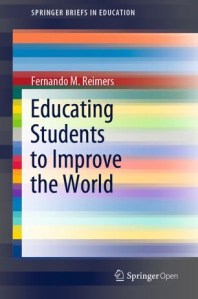 The book Educating Students to Improve the World, written by Harvard Professor Fernando M. Reimers, presents an inspiring and bold vision of how schools should be organized to cultivate a range of skills and dispositions that effectively educate students to make the world better. The book is unique in the breadth of the scholarship it integrates and in how it builds a sensible model to understand the process of educational change that honors the multidimensionality of the process. It is, at the same time, a very scholarly book, an erudite treaty of the field of global education, and a very practical book, a book that makes sense to those in the business of leading schools and school systems.
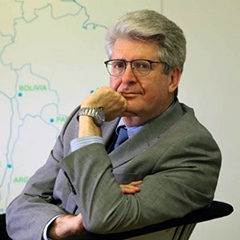
Professor Reimers
The idea that the book contains is simple, yet holds remarkable potential to transform education around the world. The big idea the book contains is that public education, as an institution of the Enlightenment, was meant to be global since its creation, but the obvious global nature of many of the challenges facing humanity requires that education becomes intentionally global. Professor Reimers argues in the book that formal education should be aligned with audacious and hopeful visions for a more inclusive world, such as those contained in the Universal Declaration of Human Rights or in the United Nations Sustainable Development Goals. Such alignment involves defining what kind of competencies would actually help students care about and have the skills to make a difference in advancing a more inclusive and sustainable world. With such clarity on the expected learning outcomes for students, the curriculum would then map backwards an instructional sequence to gradually support students in a rigorous process of development of such competencies.
But the merit of this book goes beyond articulating why education should help students develop a sense of purpose, aligned with ambitious purposes of building a better world, it then explains how structuring effective education programs requires that the process of change is advanced multidimensionally, reflecting a cultural, psychological, professional, institutional and political.
The ambitions of the book are considerable, to bridge an evident schism between the scholarship and practice of global education. The book is an intellectual tour de force tracing the history of global education to the very creation of public education systems, and integrating research reflecting a variety of disciplinary perspectives in support of a conceptual framework in service of more coherent and effective educational practice.
Enhancing the credibility of the ideas in the book is not just the fact that the book is well researched and crafted, but that it builds on a long practice of the author actually doing the very things this books recommends should be done to develop a relevant curriculum. Professor Reimers invented an approach to take bold goals, such as the United Nations Development Goals, and translate them into student learning outcomes, and then curriculum and pedagogy. It’s a simple and intuitive idea, but it had not been done before.
It is the combination of the powerful idea that education should be aligned with ambitious goals for inclusion and sustainability with a theoretical model of how to structure efforts to translate that idea into changed educational practices that makes this book unique. It is not surprising that since it was published, as an Open Access resource by Springer, a week ago, the book has already been downloaded 24,000 times.
The book can be downloaded here https://www.springer.com/gp/book/9789811538865
Advanced Consulting
 Advanced Consulting: Earning Trust at the Highest Level by William A. Pasmore
My rating: 5 of 5 stars
When it comes time to write my end of the year blog post about the top books I’ve read in the last year, this book will be in the top tier of that list. As a person who does leadership training and coaching/mentoring of leaders, I learned a great deal from spending time studying every page of the this insightful book. My copy of the book looks like what my mom always told me a Bible should look – used. I have the pages dog-eared, highlighted, notes in the margin, and the spine is all broken back, and this book will continued to get used in a reference capacity.
Advanced Consulting starts the reader off with a great story, as great leaders do. Then the reader is reminded that we should not always be looking for the most glaringly obvious things to fix, but the opportunities unaddressed that would slip up. This book drove home the fact that, “Every change is an experiment” (p. 111) and that “More pressure won’t produce progress, less pressure and more understanding may” (p. 109). This kind of candid and authentic information from Bill Pasmore helps us to understand why he argued there is no perfect knowledge in the real world. That is why this book is so timely right now in these uncertain times with the COVID-19 Pandemic. There are things, like this, that cannot be predicted, and this book gives us incite in how to help leaders to find ways to work interdependently to find solutions.
Lastly, as a curious person and leader, I loved the part of the book where Pasmore admitted, “I learn something I should have already known” (p.143) when accepting a new assignment with a new organization. He reminded us to be genuinely curious and humble. Whether you consult leaders or are a leader (remember, I believe everyone is a leader) you need to read and study the insights of this book.
Easter Isn’t Canceled

Baseball was not canceled during the Pandemic of 1918-1920
Today, I chronicle thoughts, here in my blog, on a new page in the book that is the story of my life. I have been doing some personal growth studying, with the help of the Woodrow Wilson Presidential Library and Museum, on the pandemic of 1918-1920. My motivation this morning is that I am always moved by the personal stories written by people experiencing an event first hand. The most interesting and compelling speak of what was happening, the mood of the country and those around them, and what he or she was feeling at the time. I’m going to attempt a little of that this morning. I also believe if we are not using this as an opportunity for our children and students to write an account of something that will be undoubtedly written about in textbooks, or whatever our kids’ grandchildren will be using, we have missed a chance to process and save the realness of our experiences real-time.
Queen Elizabeth II shared a video message yesterday that was quite moving. Click here to watch it. The genius of her message was how different parts of the message have and will inspire different people in different ways. For me it was when she said, “But Easter isn’t canceled; indeed, we need Easter as much as ever.” No doubt things will be different today for most of us. But, Easter isn’t canceled, and different doesn’t have to mean bad.
 One of my fondest memories growing up was of our Easter morning Easter egg hunt. We’d get up and go find the eggs hidden all over our very large yard that included barn lots. Interestingly, the one thing that I remember most vividly is the blue egg, and it was always a blue egg, put on top of an electric box on the back side of the house. I need to point out that these were real boiled eggs, usually a few duck eggs mixed in because we raised ducks, and my mom and sister colored them – I wasn’t much into coloring Easter eggs (that involved being inside and standing still – some things don’t change with age). My dad was so proud of that hiding spot on the electric box (not sure why). That became a special spot, however, because the first Easter we lived in that house my dad, after I spotted and claimed the egg, had to lift me up to get the egg. The next year I could reach it and every year after that that egg was mine, and my dad would always laugh and say, “You need me to help you get that one?” I’d say, “No!” We’d make eye contact and now having a son of my own I think I know what was going through his mind.
 Easter isn’t canceled because of the COVID-19 Pandemic and my son will have an Easter basket (yes even at age 19) this morning. We will go to church via Zoom and then have the traditional Easter brunch of “One Eyed Connelly’s (that is the family name for a piece of toasted bread with a hole cut in the center and an egg cooked in that hole), sausage links, and cinnamon rolls. I’m sure there will be Easter egg hunts with the nieces and nephews to be joined virtually on some electronic platform or another. And, how cool is it we have those platforms? We are connecting more, socially, than ever before. Physical distancing (as I am calling it because I hate the term social distancing) is not keeping us from socializing.
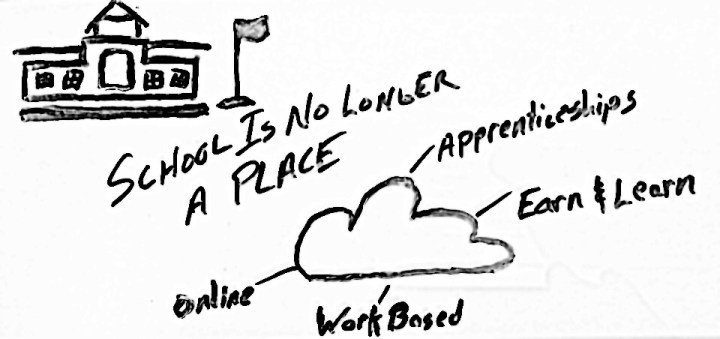 I went to my first virtual Happy Hour last week – very fun. Also, I popped into a teacher’s lunch bunch. She has all her students get their lunch and they all log into Zoom and eat together. Students get social time with their fellow students and teacher. Everyone turned their mic on and it sounded just like a traditional school lunchroom. I hope we use our pandemic experiences to get education in our country to a place where we could say, “School isn’t canceled.” I realize that is a tall order, but we need to contemplate what that would mean. We need to think about the fact school is no longer a place. We need to think about the why behind professional working parents being so frustrated with being adjunct teachers now. Continuing to educate, which I believe we need to be doing, cannot be about providing busy work and crappy worksheets. It needs to be about great content, accessible by all, and delivered in a way the student can easily access. Now becomes the time to decide what education will look like during the next pandemic, other crises, or just moving us into the next decade.
Today, however, Easter isn’t canceled. During the pandemic we are distanced, clouded by the threat of disease, but stubbornly persistent. Realizing this is usually a pastel colored and celebratory day, this might just be a season of clarity about what it means to be a person of faith.
My Revolving Rushmore
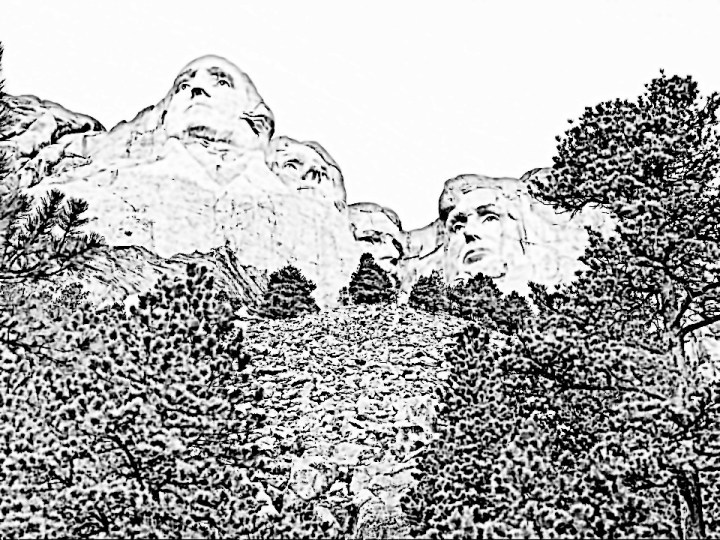 One of my favorite sessions that I do for 3D Leadership is called Setting Your Leadership Style. I start off by playing the awesome music video of the song by Alter Bridge, Show Me A Leader. Since we are having to do these on Zoom™ instead of in person here are some takeaways from the chat box and discussion:
- Do not compromise values
- Don’t compromise on beliefs
- We need great leaders so hope never dies
- There needs to be one clear message (clarity)
- The only thing to do is next right thing
- Can’t survive without strong leadership
- #FarmKidsRockToo (couldn’t leave this off – it was added for my benefit)
 Then comes one of my favorite activities that I call Rushmorean Leadership which was then followed up by an activity called Extending the Influence. The activity calls for teacher leaders to bring pictures to identify four great leaders to put on their own personal Mount Rushmore. Then they bring six additional pictures to extend the influence. Part of the share out was in small groups (the ability to do this on Zoom™ is incredibly intuitive and has lots of options to customize for the facilitator’s needs) and part was done by FlipGrid™.
One of the questions I always like to ask is if the participants’ Mount Rushmore would look the same a year from now or would have looked the same a year ago. There were varied answers to this ranging from yes to no and then everything in between, like maybe one or two different. Then a triad of things were said by participants that really struck me:
- We never know when we will meet the next person that will go on our Mount Rushmore.
- Who will be the next to influence us?
- My revolving Rushmore
This reminded me of the beginning monologue phrase in William Shakespeare’s As You Like It, “All the world’s a stage, And all the men and women merely players; They have their exits and their entrances; And one man in his time plays many parts, His acts being seven ages.” To me, this means that people come into our lives and we enter other peoples lives for a reason, a season, or a lifetime. When we treat every encounter as a chance to impact, influence, or inspire we bring purpose to our lives. Most people that enter our lives are seasonal and they’re with us for a reason. Once that reason is fulfilled life has a way of moving them on. We also need to remember, the influence the great impact that others that we have never met influence us. Think about the influence of the four Presidents on Mount Rushmore and the impact they have on us. Remember, you also are influencing someone you haven’t even met. Thus, we really do have a revolving Rushmore.
 So, why use Mount Rushmore as the through line for this activity? Mount Rushmore is not just big; it is about the ultimate bigness – a monument to monumentalism. Think about the bigness of the role that individuals that you would place on your personal Mount Rushmore have had. Borglum, the sculptor, was obsessed with the bigness of America: the heroic story of a handful of tiny East Coast colonies growing to becoming an entire continent. Think about the four Presidents that were chosen with that bigness and growth in mind. Jefferson wrote the Declaration of Independence and expanded the country’s size with the Louisiana Purchase. Teddy Roosevelt made sure the Panama Canal happened, thus connecting the United States globally.
When I think about the idea of our own revolving Rushmores, I remember the rush of emotions that I felt when seeing Mount Rushmore in person for the first time. That rush contained thoughts of patriotism as well as awe. The awe was about the scope of the project as well as the awe in our ability to create and our human weirdness. Why had we done this? Why does this monument that the sculpting began on in 1927, with a dedication by Calvin Coolidge exist? I believe it is because of the great value we place on those who have had influence on us. Think about the work on Mount Rushmore that spanned some 14 years. A lot happened in our country during that 14 years. Leaders came and went and world/country history changing events happened. There was the Great Depression, World War II, and three different Presidents. President Franklin Delano Roosevelt was there for the Jefferson dedication (there was a separate dedication as each face was finished). And, Mount Rushmore was finished one month and one week before the attack on Pearl Harbor.
Is that a lot of history, or what? The sculpting alone is a monument to our tenacity. The hardness of the granite is a monument to the very strong foundation built by the founders of our country. The granite is so strong and hard it is said to only erode one inch per 10,000 years. When you think about it, our country has had a revolving Rushmore of those that have been on our “stage” and made a huge difference. This is no different than our own lives and the people who have been major players, making entrances and exits, playing many parts. Those great people who enter our “stage” make us who we are and make up our own revolving Rushmore.
Being Perfectly Imperfect
 I am always amazed at the twists and turns our 3D Leadership gathering discussions take. It is amazing because there is always so much learning that takes place. Last week’s gathering which was virtual with individuals from Florida, Georgia, Tennessee, South Carolina, and North Carolina was no exception. I already blogged about one twist in learning we took in Leading Like Yoda. We also spent a great deal of time discussing how leaders are built by learning from their imperfections.
“Leaders are built by learning from their imperfections.” ~ 3D Leadership Participants on April 2, 2020
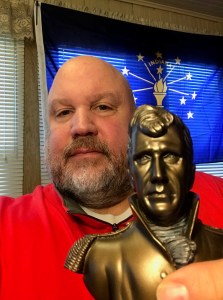
My Andrew Jackson Bronze
The question that prompted the discussion was about whether those leaders that most influenced us were perfect or did they have imperfections? The group immediately started responding with the fact that the leaders were imperfect and that recognizing those imperfections was the ultimate in transparency and authenticity. I even held up my bronze of Andrew Jackson and talked about all the great things he was and did as a leader, but there were so many things he did that were very wrong. He serves as a reminder of how we need to be humble and remember that all humans are imperfect and flawed creatures. I was moved that our discussion led us to talk about how it was those imperfections that attracted us to leaders. Particularly if those Rushmorean leaders were working hard to improve their imperfections.
“The long road to character begins with understanding that all humans are flawed creatures.” ~ David Brooks in The Road to Character
 Today we are even faced with the bigger issue that David Brooks argued in his great book The Road to Character: society has made a shift, from a focus on humility and reservedness to a focus on individual desire. I call this desire “ambition.” Many times ambition begins to rule our purpose. This becomes very dangerous and takes us from a moralistic world view to one of being self-centered. We must check our moral compass, according to Brooks, and strive to become/stay virtuous. The core of what makes a human “human” are displaying the traits of kindness, bravery, honesty, and devotion. Brooks argued that people, and I would argue our children/students, are beginning to obsess over themselves and live only for their own desires.
 One thing that we discussed in our 3D Leadership gathering that Brooks also discussed in The Road to Character was how many of us have shifted our lives to revolve around how we achieve, and no longer why. The effect is profound. Again, we can see well documented cases of this ambition taking over our purpose. I have blogged about a couple of such cases in When Purpose & Passion Turn Into Ambition and Passion At Ambition’s Command. But how do we change this? By embracing the flaws inherent in all of us. One of our participants called us “Perfectly Imperfect.” I loved that, and if we work off of that to learn from and correct or mistakes and failures every day, it would be a great start.
Doing things like being honest about our flaws can help us overcome self-centeredness and embrace deeper social values, like love and connection to others. As Yoda said, “Much to learn you still have.” If we are going to thrive and maybe be that next person on someone else’s personal Mount Rushmore then we must free ourselves from pride. We must embrace the assistance of others admit our own flaws. Through that we will become more authentic and transparent, thus being a better inspiration and role model for others; while being happier, more fulfilled, and worthy.
Leading Like Yoda
 Last night we created personal Mount Rushmores in our 3D Leadership gathering. I was surprised to have a new leader added to the list – Yoda. Of all the years I’ve been doing this, this is the first time a participant has put Yoda on their personal Mount Rushmore. Moreover, last night there were two people out of the group of 48 that picked Yoda to be on their personal Mount Rushmore.
So of course I had to dig into Yoda as a leader. In the Star Wars universe, Yoda might be the single most important hero. Yoda is wise and insightful and brings many leadership lessons to the forefront to help us all become better at serving those we lead. Of course, several Yoda quotes were thrown out in the course of the gathering, like:
- “Do or do not. There is no try.”
- “[Luke]: I can’t believe it. [Yoda]: That is why you fail.”
- “You must unlearn what you’ve learned.”
- “Much to learn you still have.”
- “Fear leads to anger. Anger leads to hate. Hate leads to suffering.”
One of the things I took away from some really great discussions was that we need to remember that thinking about the future is really important for finding direction, but don’t do it at the expense of what we are currently doing. We need to focus on the task at hand. Spend time in the moment. Be present. It will make us more efficient, and we’ll notice more.
Yoda often taught his pupils through action. We decided last night that leaders are built by learning from their imperfections. Yoda gives us an example of what one participant said she would like to be: “Fair, compassionate, and motivational.” Challenges will push and motivate us. In this time of uncertainty we must focus on continuing to learn so we can help the world triumph. As the group taught me last night, the only thing to do is the next right thing.
March Flowers 🌼
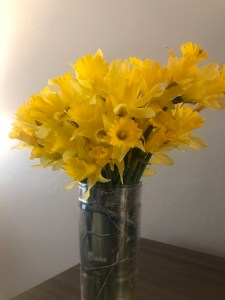 Sometimes we need to look no further than our children for inspiration in times of crisis. This was true this past weekend for me. As I read all of the different statements being put out this week by businesses and organizations, I couldn’t help but think that the simple things we are taught as children should guide every decision: the Golden Rule and what is best for others. Maybe just some good ole empathy and compassion.
We went down to help move my son home from Murray State University this past weekend. It was tough on him to be leaving a place he has grown to love and all his friends. He was visibly upset. There was definitely mental impact at play in him having to move home because of the coronavirus. Even during this trying time, he took time to pick a clump of March flowers (daffodils) for his mother (pictured here). We’d never heard them called March Flowers. Heath told us it was a Kentucky thing. He explained, “Spring is here, new life is blooming in spite of the coronavirus.” That’s my boy, finding some beauty and positivity during a time of crisis. That was a moment I will savor forever.
As I watch groups and businesses contemplate how to get the most out of their employees at this time of global crises I can’t help but think these so called leaders have missed the point. Right now we should be thinking about how best to care for those we serve, period. And, as someone who doesn’t sit around and pontificate about a virus I know nothing about, the best thing to do is have everyone staying at home. I’m surprised how many people have become experts overnight.
In the case of k-12 education we do need to be concerned for the learning of our children. We also need to provide parents with resources to help their students along with our teachers. We need to be cognizant of the mental impact that the crisis we are living through can have. Schools need to make sure resources for parents are available so they can reinforce social-emotional skills at home and know who to contact if they are concerned about an issue impacting learning online or just in day to day life.
Staying positive is the core ingredient in the recipe of successfully coping in a time of crisis. Now is the time to be proactive in creating small moments of happiness in our days. Positive emotions help us to undo the negative effects of stress.
Change Is A Coming!
 There is one thing for sure as I sit and write this post on this Sunday morning; change is a coming. My son is coming home from college till at least April 6th, and learning remotely and online (since I miss him being at home every day, I am excited for him to be home). The students at the schools I serve will be learning remotely. The teachers and school leaders I serve will be learning and creating best practices for remote and online student learning. Also, we must develop best practices for caring for the non-academic needs of our students (eg. food, social emotional, et cetera). I need to consider what limiting social contact means for mean personally. Additionally, I am positive that there will be things on the policy side of my life, as an Indiana State Board of Education member, that will have to be decided. So, as I said, times are changing. The coronavirus (COVID-19) pandemic is bringing change to all the world and all our lives.
As I contemplate all the constant and fluid change going on around me, I continue to remind myself that change is a never-ending process. Change is not a journey or a one-time event. Additionally, as a person who doesn’t like the term expert, or am not even sure there is such a thing, we need to remember that, right now, there are no experts – we’ve never been through this before. So, we have a bunch of people doing the best we can. The changes we are experiencing due to the coronavirus (COVID-19) pandemic need to be continuous and participatory. We must communicate and collaborate. This can’t become about who can tweet what they are doing the fastest to feed their own ambition. Or, who can blast someone else for what they haven’t done.
The problem with thinking of change as a journey is that travel is sequential. We move from one leg of the journey to the next. Change, in contrast, isn’t a series of steps; it is not a map you can follow. There is no Maps App for change, particularly not for coronavirus. As a lover of metaphors, let’s imagine pouring cream (I prefer coconut flavored) into a mug of coffee. Almost immediately as the liquids merge, there is a color change from black to brown to a light tan depending on how much cream we add. Change needs to look more like that. Instead of someone trying to come up with a well-executed plan on their own, it becomes what I call triageformational. Yes, triageformational is a term I coined. I first blogged about it in Triageformational Leadership: New Hybrid Definition of Triage and Transformational Leadership. I believe it applies more now, with our coronavirus situation, than ever before. Here is what I said in that blog post:
“Those that I believe that would make great triageformational leaders place a high value on fostering an environment or community of collaboration. This community is balanced, diverse, and equitable. These leaders build community and culture by truly living out their own core values and the organization’s core values. Just like doing triage in an emergency situation, these leaders are prioritizing what gets done next by matching core values to the situation. This in turn brings about transformation and service oriented leadership.”
We must change the way we change. We cannot have all change initiatives coming from on high. CEOs and other bureaucratic leaders who decree the values they created alone have already failed. Those values must be collaboratively developed. So, how should we change? Well, change must be continuous and participatory, and we must look for those who know more than ourselves.


leave a comment