Letting Go Leadership
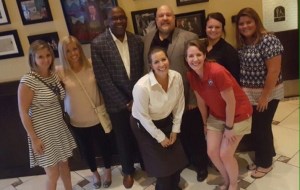 As an organization grows, evolves, and develops, it needs a leader who knows how to give autonomy to different stakeholders who can be leaders more effectively in all areas. In other words, it needs a leader who can let go of needing to push all decisions out and do it all. I believe most leaders have a hard time letting go is because they believe that they can do it better. I also believe that many leaders have a narcissistic fear that somehow they won’t get credit for the successes of the organization or it won’t be exactly like she envisioned it. Guess what? It probably won’t be. It will probably be better. If you want to read a little more about this fear thing, click here to take a look at a post entitled “The Fearless Leader” by a great teacher leader, Ann Semon.
The best leaders, however, learn how to do it – let go. In fact, they often learn to love doing it once they start bringing in people who are even better than they are in key areas–people who know more than they do, and from whom they can learn. When that happens, it can push organizations forward to a whole new level. This strategy in a sense “unlocks” the entire organization to continue evolving in a much faster and healthier way.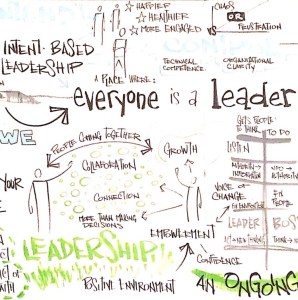
As part of letting-go, the best leaders learn to trust the people they’re bringing into the organization to become the future leaders. Leaders must be a part of building this trust by being actively involved in, and owning, the leadership development of those in the organization. Let me emphasize here – Development of the leadership pipeline is crucial here. This can only happen if you’re willing to give all in the organization ample control. Ask yourself these questions:
- “Do I really trust them to the point that I’ll let them make tough decisions?”
- “Do I trust them to learn?”
- “Do I trust them to grow?”
- “Do I trust them to experience their own failures?”
Can you answer yes to all these questions? If you can get to yes on all these it will be an incredibly powerful force for your organization. The culture you want to build is one that gives other leaders full autonomy without micromanagement. So let’s talk about this empowerment and autonomy…
 I was fortunate to take a group of teachers and new principal to Harry and Izzy’s last night as a planning and team building. So, you know me, we don’t just talk about empowerment and intent based leadership, we practiced it. I wrote about what I like to do already this week in “Imagine A Place Where Everyone Is A Leader!” Click here to read the post. I literally would not let our group even look at the menu and told them we were going to empower our amazing waitress, Jen Becknell, to pick our meals for us. We gave her any boundaries, such as being pregnant, food allergies, et cetera. We even gave her permission to pick our drinks for us. Then, off Jenn went to put together one of the most incredible meals ever. I would love for Jenn to post a comment to this post as to what she chose and how she chose the dishes for us. Having done this now multiple times I am struck that I have never had a bad meal. We asked Jenn how she became so knowledgeable and she explained all the professional development Harry and Izzy’s had given her. Even things like going to their meat supplier in Chicago to understand the different types of aging processes in beef. This is a great example of Harry and Izzy’s giving Jenn the technical skill necessary to be fully empowered to be a great ambassador for the organization.
If you develop your leaders properly you will be able to trust the people who you hired to do their jobs with full autonomy, you may be surprised by how well it works out. Letting Go Leadership is nothing more than empowering your employees and teams to make their own decisions. As long as everyone has a shared vision and is committed to doing what’s best for the organization and those you serve, it can lead to bigger and better things. This certainly the environment I strive to create for every staff member in our school.
Imagine A Place Where Everyone Is A Leader!
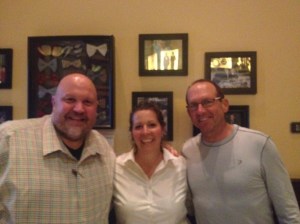
Greatest Waitress Ever Jenn Becknell With David Marquet and I!
Earlier in the week I had the incredible honor of having dinner with my friend and leadership “idol” David Marquet. David is the author of Turn The Ship Around and developer of Intent Based Leadership™. He is making a cross country bike ride with a group and had a rest layover in Indianapolis, so it enabled us to get together. In a later post I will probably talk more about our great conversation and all the insight I gained from this great man, but for now I want to tell you about our dinner and the insights we gained.
David has a great thing he likes to do when at a restaurant – let the waitress pick his entrée’s. I knew this so I suggested we do this for our meal. I was hoping he would agree even though we were at my very favorite restaurant and Indianapolis icon Harry and Izzy’s. David agreed immediately and gave our waitress, Jenn Becknell, his intro that he is a control freak and that part of his treatment is to let the waitress pick his meal. I have to set you straight though; David is not a control freak and is the inventor of Intent Based Leadership™. He is anything but a control freak. Anyway, he gave the waitress his one boundary and I told her that I really didn’t have any boundaries except maybe not being the fondest of chicken.

Harry & Izzy’s Shrimp Cocktail!
At first Jenn looked at us a little funny and was a little taken aback, but quickly warmed to the idea. We could then very quickly tell that she was going to have fun with this. I was so impressed with David because when asked about a drink he even told Jenn to pick his wine. Now that is Intent Based Leadership™ at its best. We had truly empowered Jenn to serve us and put the best foot forward for Harry and Izzy’s for my friend who was from Florida and eating there for the first time. Long story short, it was the best and most enjoyable meal I have ever had. We had no idea what Jenn would be bringing us and each time she came out with something different it was incredible. Keep in mind we didn’t even look at the menu. We started with the signature Shrimp Cocktail, of course. I am going to ask Jenn to add a comment to this blog and tell you what she brought us out to eat. The point is, however, that as David and I walked back to my truck we both commented that there was no way we would have picked as great a meal as Jenn did. Particularly, we would not have picked the bread pudding dessert that just put us in heaven to end the meal.
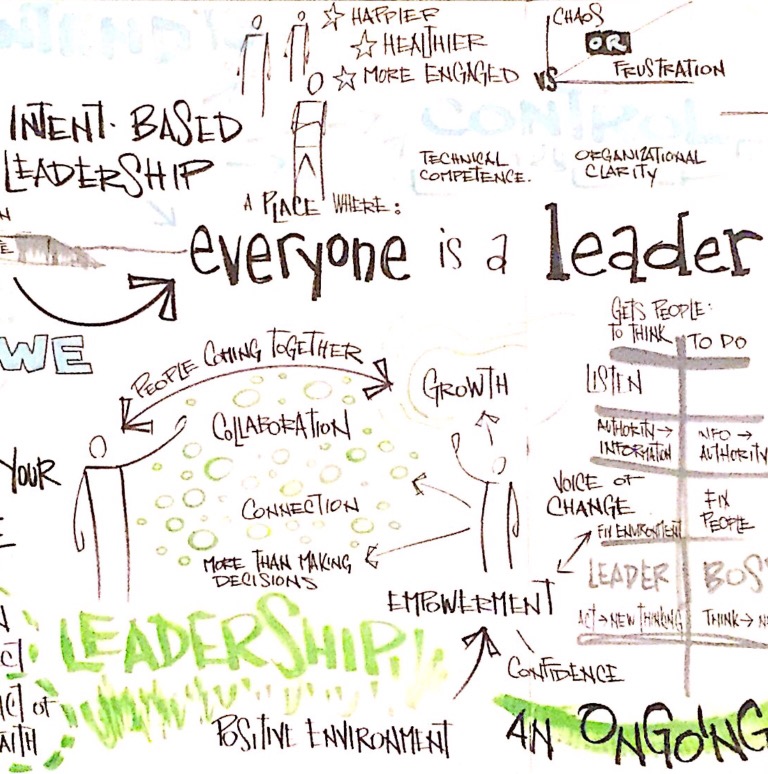
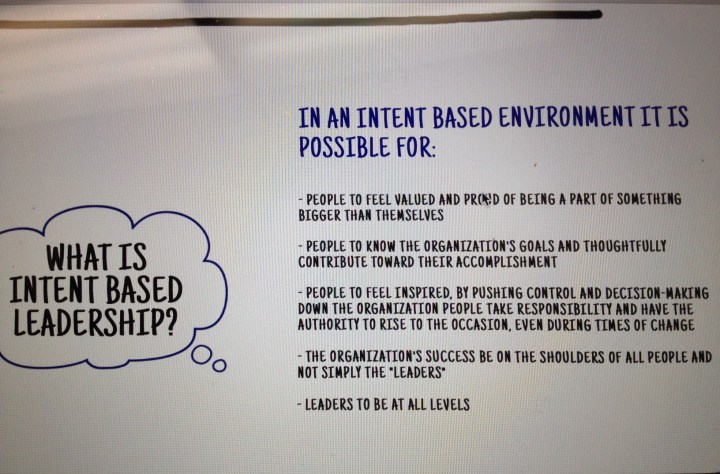 So what does it mean to practice intent based leadership? I have included a slide here from David Marquet’s website that gives all the important points of intent based leadership, but I believe there are two that really apply here for both Jenn Becknell and Harry and Izzy’s. First of all it is obvious that Jenn has been empowered to: “Feel inspired, by pushing control and decision-making down the organization people take responsibility and have the authority to rise to the occasion, even during times of change.” Jenn certainly rose to the occasion and was a tremendous ambassador for Harry and Izzy’s. Thus providing David and I the time of our lives. This was such powerful evidence as to why intent based leadership works.
Furthermore, Harry and Izzy’s are modeling that, “the organization’s success should be on the shoulders of all people and not simply the top “leaders” of the organization.” It is clear that this top Indianapolis restaurant has empowered their entire staff to “make it so” for customers. I can tell you a large portion of Harry and Izzy’s success is due to the great staff! Harry and Izzy’s is about great food, but is even more about the experience. Do your people feel valued and proud of the work they are doing for your organization?
Teacher Evaluation & Leading Learning
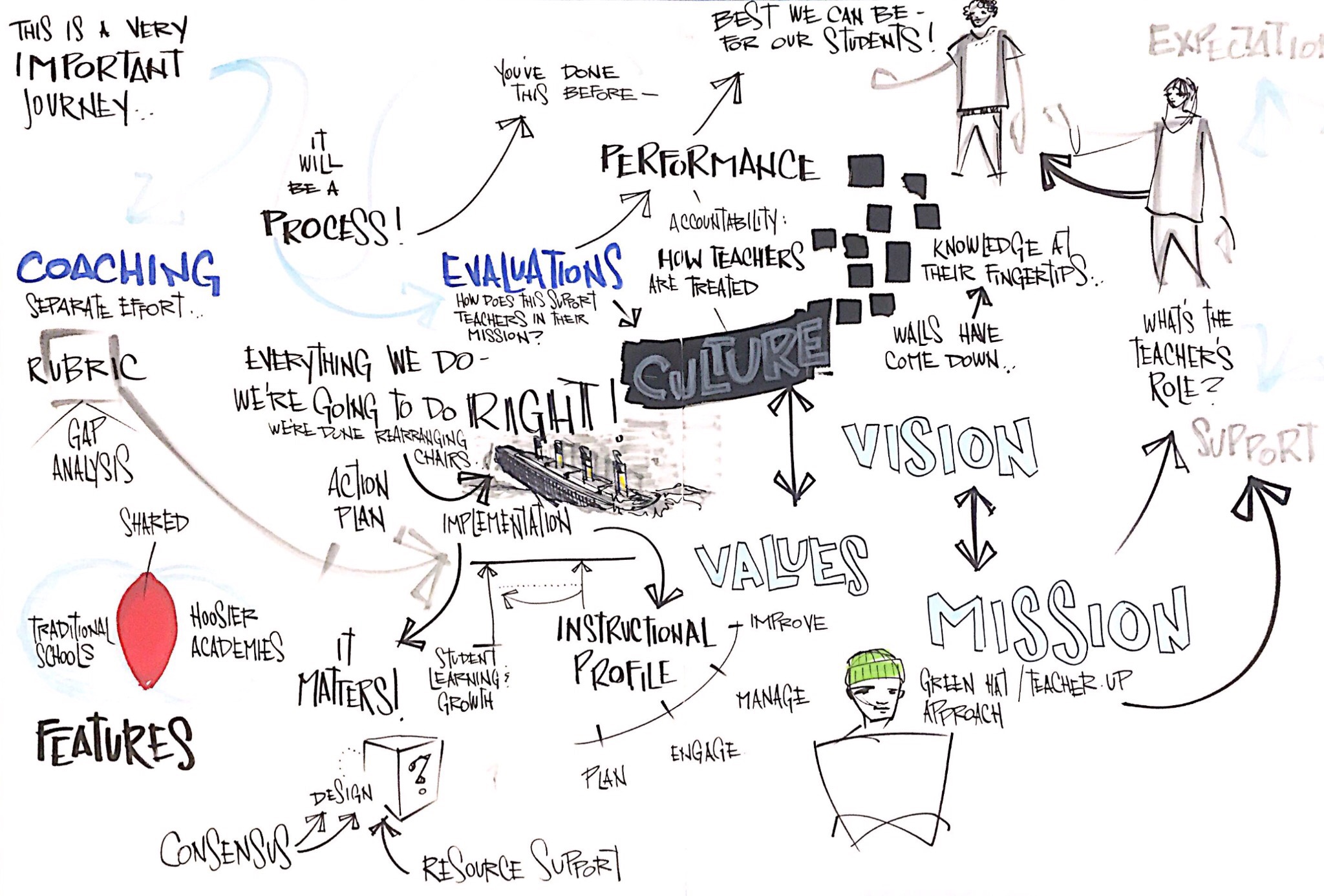 Evaluation of teacher performance plays a crucial role in educational personnel reform, student performance, and teacher leader development, so it has been an important yet difficult issue to tackle in educational reform. Before the reform efforts of 5-10 years ago, teacher performance evaluation was very teacher task oriented, neglecting contextual performance and student learning. I would call this managing teachers as opposed to leading learning. Previous evaluations of teachers failed to make strict distinction among the three dominant types of evaluation: capability, achievement, and effectiveness. I also believe these evaluations did not take into account the context of the school. These evaluations were a single action being done to teachers as opposed to a process or system created and carried out to support teachers in his or her role of carrying out the vision and mission of their school.
This post is not about how to create a teacher evaluation system, but about why it is so important that we have a great performance evaluation system to SUPPORT our teachers. I believe this is one of those areas where our teachers deserve to be made “first” so we can put our “students first.” Marzano tells us that great evaluation systems develop expertise with specificity. This is so important in enabling our teachers to carry out their role in providing highly effective student learning and growth as part of the learning profile of the school. Additionally, Danielson argues the full value of a high quality evaluation framework is not realized until it is used as the foundation for professional conversations among practitioners as they seek to enhance their skill in the complex task of teaching.
So, let’s talk about those conversations. We are completely overhauling our evaluation process/system for the Hoosier Academies Network of Schools. Leave it to say, there were many gaps in the process (or lack there of) and rubric I inherited. Those that know me very well know that my first step was to form, yes, you guessed it, a “task force.” Let’s touch on that for a moment – I believe task forces are a great way to build leaders. Our teacher evaluation task force is made up 3:1 of teacher leaders. What better way to get leaders ready than actually “doing” the work of leading? This is teacher engagement at its best! We just started our journey this past week with two days of intense conversations, gap analysis, and action planning around the complex task of teaching in our very different and complex context. This was very important to our beginning to develop what Danielson calls, “Developing a common understanding is critical to accuracy, teaching advancement, and the Framework’s impact on students’ core learning.” In my opening statement to our task force I explained this is a very important journey – we must support our teachers so they can be the best they can be for our students.
We are very fortunate to have partners in this journey. To ensure we get this right, we have become a part of the Indiana Teacher Appraisal and Support System (INTASS) project. The INTASS project offers states, districts, and schools support in designing, implementing, and monitoring their teacher evaluation systems. More importantly, by being part of the project we receive training for our teacher evaluators and support for teachers to engage in evaluation and professional growth opportunities. Here’s what I love about this – note it’s all about the teacher. Another great benefit is we get get to take this journey with two great educational leaders who I greatly respect, Dr. Sandi Cole and Dr. Hardy Murphy. I believe one of the most important points, among many great points, Dr. Cole got our teachers to understand last week was making the mindset shift that teacher evaluation is not something done “to” teachers, but done with teachers to provide professional growth and support for all of our teachers. Dr. Murphy drove home the fact that our performance evaluation system must enable our teachers to effectively carry out the vision and mission of the school.
The INTASS process rests on four basic elements of a quality evaluation plan:
- Clear, frequent, and transparent communication among a wide base of stakeholders
- Professional practice measures that are mutually agreed upon by stakeholders
- Multiple measures of student learning outcomes
- Fully aligned post-evaluation processes, including job-embedded professional growth and support for all educators.
My friend and author of Under New Management, Dr. David Burkus would argue that we need to change from the old systems of evaluation where there is one big formal annual evaluation to a more frequent, less formal process. Our friends at INTASS would agree and so do our teachers. Our teachers on the task force told us loud and clear that they wanted feedback often that was meaningful and actionable. Including teachers’ growth and development in more check-ins would allow administration and staff more time to talk about opportunities – novel idea! Teachers could also examine their current role and their desired career path and then receive advice on the knowledge, skills, and abilities they need to improve in their current role and to move closer to the future they envision for themselves and how that personal vision aligns with the school’s vision and mission. This is a contrast to the rearview-mirror perspective provided by most annual reviews, including our own that I would give an “F,” but we are fixing. These more frequent discussions about the teacher’s growth and development allows all to brainstorm on staff goals and how they align with the school’s strategy. These more frequent observations and conversations help teachers own their career and development plan and feel more empowered to grow. This growth will, in turn, enable effective leading of learning for our students.
Creating or Draining Energy?
 This post is an excerpt from the introduction to Leaders Ready Now: Accelerating Growth in a Faster World.
Instead of creating energy, your processes are draining it.
The fastest, most powerful learning experiences convert fear and uncertainty into pride and wisdom. Consider several examples:
- A young, inexperienced leader takes on an assignment to lead a team of people older and more experienced than she.
- An operations executive is suddenly given responsibility to run the IT function, which he knows nothing about.
- A new CEO faces a sudden market crisis that requires a major strategic and cultural shift in direction.
Big first-time challenges like these administer a shock, instantly bringing the leader to attention. It’s a jolt of uncertainty that carries a current of doubt; but with effort, discipline, and support, that doubt transforms into action and movement. Ultimately, if and when the challenge is conquered, a backward glance leaves the leader with confidence and insight that can be applied to the next challenge. It is in conquering difficult assignments such as these that leaders become ready to take on bigger leadership roles.
The challenge is scaling this concept beyond isolated, reactive incidents and creating a repeatable dynamic that causes entire cadres of leaders to become ready. For most organizations, scale becomes structure, but structure without energy kills acceleration. It’s not uncommon for management to roll out learning initiatives to groups of anywhere from 10 to 10,000 people, after which those new processes become burdened with guidelines, meetings, documentation, mandatory events, and progress checks. Participants—often the company’s busiest people—work diligently to make time for a process that has many moving parts but little connection to what they view as mission critical. Soon, what was built to generate the energy of growth dissolves into apathy and annoyance at processes that seem (and may well be) devoid of business importance.
It is not the process itself that is failing—it is the absence of energy to fuel it. Without energy, any processes you put in place will be unsustainable. How to rally the initiatives? By reexamining the architecture of your acceleration efforts and rewriting the rules of the game so that more is at stake, more is to gain, and all the players have a clearer understanding of their roles and how they will have an impact on success. You must be far more aggressive in the use and application of your existing approaches, setting bigger development targets for more people earlier in their careers.

*****
Matthew J. Paese, Ph.D., is Vice President of Succession and C-Suite Services for Development Dimensions International (DDI). Matt’s work has centered on the application of succession, assessment, and development approaches as they apply to boards, CEOs, senior management teams, and leaders across the pipeline. He consults, coaches, speaks, and conducts research around all those topics and more.
Audrey B. Smith, Ph.D., is Senior Vice President for Global Talent Diagnostics at DDI. Audrey’s customer-driven innovation and global consulting insights have helped shape DDI’s succession, selection, and development offerings, from the C-suite to the front line. She has been a key strategist and solution architect, encompassing technology-enabled virtual assessments and development aligned to current business challenges.
William C. Byham, Ph.D., is Executive Chairman of DDI. He cofounded the company in 1970 and has worked with hundreds of the world’s largest organizations on executive assessment, executive development, and succession management. Bill authored Zapp!® The Lightning of Empowerment, a groundbreaking book that has sold more than 3 million copies. He has coauthored 23 other books, including seminal works on the assessment center method.
The Leadership Journey
Unprecedented levels of complexity and unpredictability are part of our current world, particularly in education. If we are to continue to effectively lead organizations, transform schools, or assist others in creating positive change in their lives, or in the lives of others, we need adaptable and proven tools and practices to utilize now and well into the future. Leadership development, mentoring, and coaching provide the ability to be flexible and relevant no matter the situation and time – in other words adjusting to the current context in real-time. These leadership growth and development opportunities are valuable and effective methods for assisting others in discovering what they need to thrive to be happy, healthy and motivated.
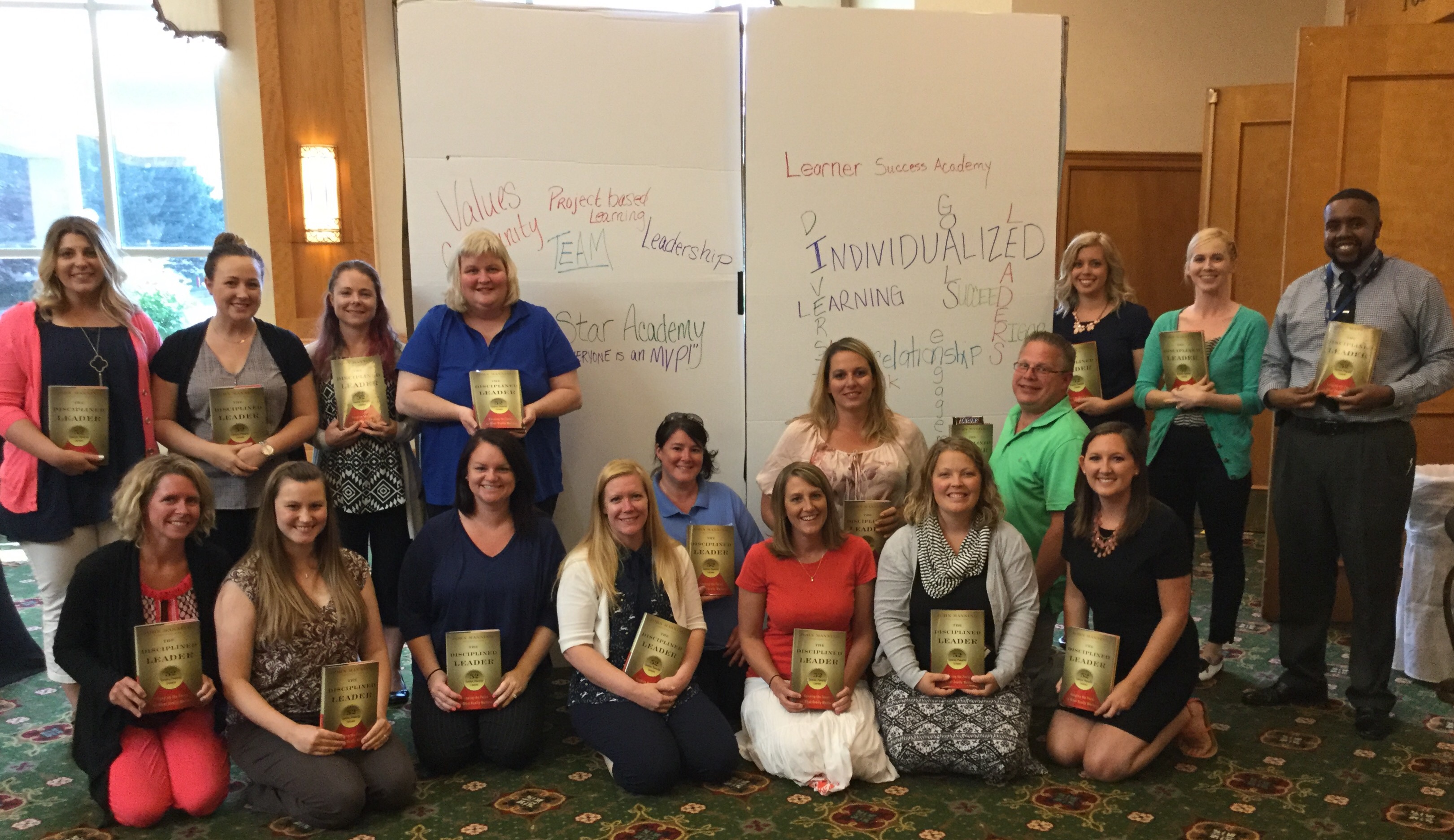
 Our Focused Leader Academy (FLA) at Hoosier Academies Network of Schools provides leadership skills the ability that are flexible and relevant no matter the situation and time. We want to inspire with valuable and effective methods for assisting our teacher leaders in discovering what they need to become focused and disciplined leaders. What we are attempting to do is enhance growth of the pre-frontal cortex of the brain, thus increasing the teacher leaders resilience, creativity and belief in self. If we do it right our developing leaders experience making decisions that honor their own values and true potential ultimately living the life they have only imagined. In turn this puts him/her in a position to change the lives of the students we serve.
 It was exciting to see a tweet from one our FLA participants, Ann Semon, after session yesterday. She said, “What an inspiring day with @ByronErnest today. Excited for the leadership journey. #HoosierFLA” I’m so glad Ann recognizes this is a journey. Then another tweet from Carlie Coblentz stated, “I’m excited to be going on this educational journey w/ these awesome teachers!” Again, I’m thrilled that Carlie recognizes this as a journey.
 I’m pretty pumped we are using John Manning’s (2015) The Disciplined Leader as our book for leadership blogging and guide of our vital few again. As Manning (2015) stated, “Your leadership path is like a present. Whether you chose the path intentionally or ended up on this journey by accident, you are receiving an opportunity that not everyone gets in life. However, with this gift of Disciplined Leadership comes a unique responsibility. We believe that responsibility is to ‘pay it forward,’ helping others grow by sharing your knowledge and wisdom” (Kindle Location 2692). My most rewarding moments, and times when I’ve felt most significant, have been about helping people in a meaningful way, particularly helping grow those I’ve worked alongside. I appreciate John Manning’s partnership in making this journey of creating disciplined leaders possible.
 Through our Focused Leader Academy, our teacher leaders are discover powerful leadership competencies, tools, and techniques to assist others in broadening their vision of self. They are learning methods for disbanding limiting beliefs, embracing expanding beliefs, recognizing barriers, stretching potential, shifting behavior, holding people accountable and much more. Our teacher leaders are experiencing rigorous training as well as energizing experiences that are broadening their perspectives and enhancing their creativity while working with fellow employees, peers, students, and families.
Leadership Farm Team Pipeline
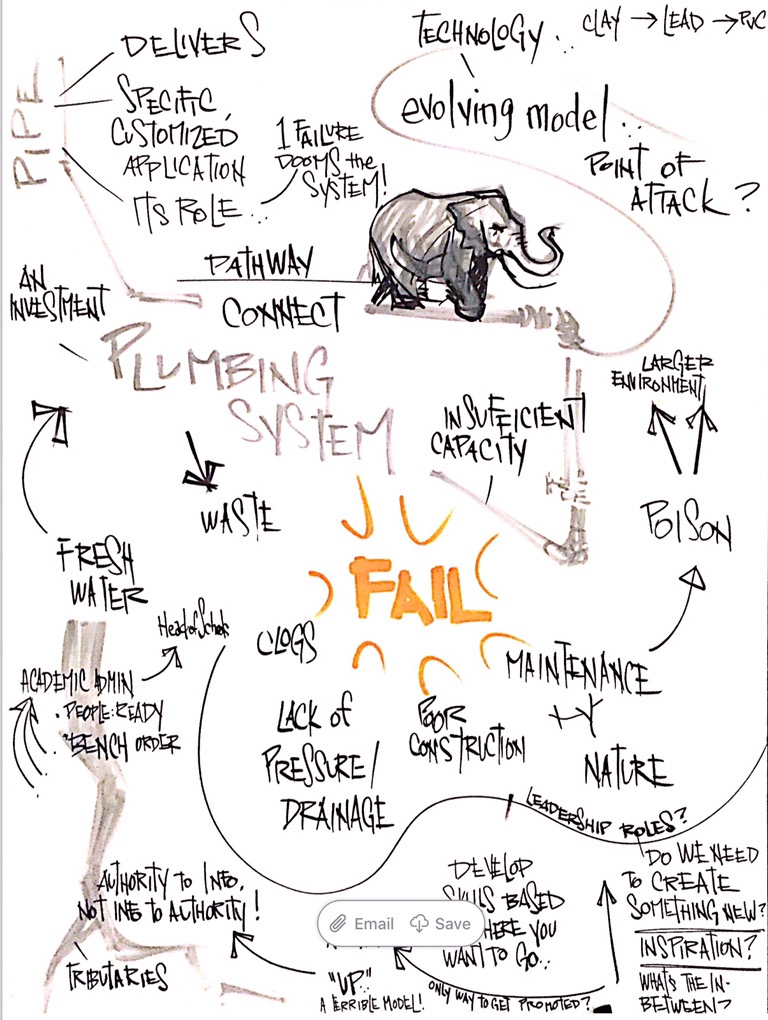
Our Graphic by Mike Fleisch from the Leadership Pipeline Content
Could there be any more vital leadership task to a school, organization, or business’s long-term health than the choice and cultivation of its future leaders? I don’t think so! But, while organizations maintain meticulous lists of candidates and create spreadsheets of those who could at a moment’s notice step into the shoes of a key leadership position, an alarming number of newly minted leaders fail spectacularly, ill prepared to do the jobs for which they supposedly have been prepared. Developing a deep and enduring bench strength can only be accomplished by approaching succession planning as more than the mechanical process of updating a spreadsheet. I believe the organizations, including schools that do this best combine two practices: succession planning and leadership development. This creates a long-term process for developing the talent roster across their organizations. You could compare this to a minor league baseball team’s function, including the vital and fundamental goal: getting the right skills in the right place.
Let’s explore this minor league example for a minute, because it is a good one. The major league club’s player development goals must co-exist happily, and profitably I might add, with the local owners and operators of a minor league club. It is also important to note there are also some areas of shared responsibility between the major and minor league teams’ responsibility for player development. The major league team determines which 24 players will be on the minor league team. Again, the major league team makes all the decisions about who comes, goes and gets moved up through the system. Major league clubs keep close watch on their farm teams, sending scouts and front-office staff to watch games and keep stats on players; all of which contributes to the future progression of the players. A pretty intense development pipeline, don’t you think? Here’s the key though: players are developing while, well, playing the game. Novel and intuitive idea, but how many leadership development programs are done by watching PowerPoints? We must treat our leadership pipelines like a minor league baseball program.
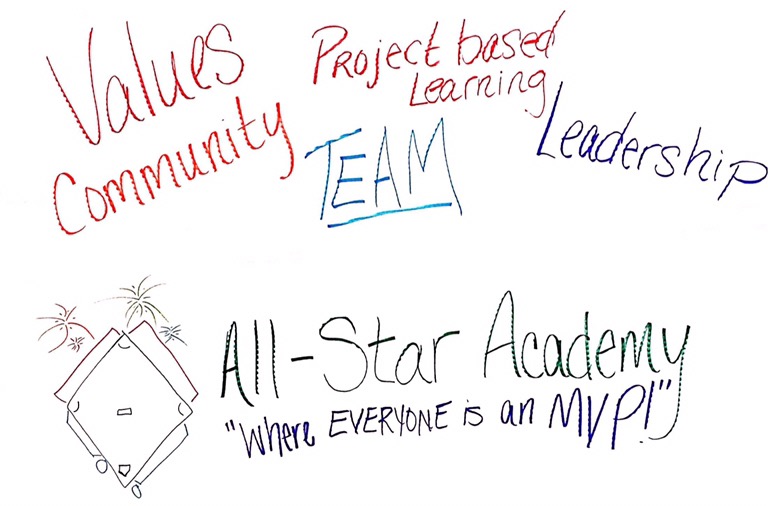
Focused Leader Academy Team Illustration From Yesterday’s Discussion
Let’s dive just a little deeper into this minor league pipeline approach. Nearly every baseball player in the MLB started in the minors. Players start low and work their way up the ladder of minor league levels (sometimes skipping a level or two) until they get to the Major Leagues. The rate at which players advance can be vastly different in each case. Each team of the MLB has their own network of minor league teams (sometimes called “farm teams” or “farm leagues”) which are used for player development. Players start low and work their way up the ladder of minor league levels (sometimes skipping a level or two) until they get to the Major Leagues. The point is, these players have very individualized plans (what I call hyper-personalized) to get their skills developed to major league quality. Again, and remember, this is while actually playing the game in a highly competitive market. There have been a handful of players to skip the minors and go straight to the big leagues, but this is very, very rare. Only 2 players in the last 15 years have done it (Mike Leake in 2010 and Xavier Nady in 2000).
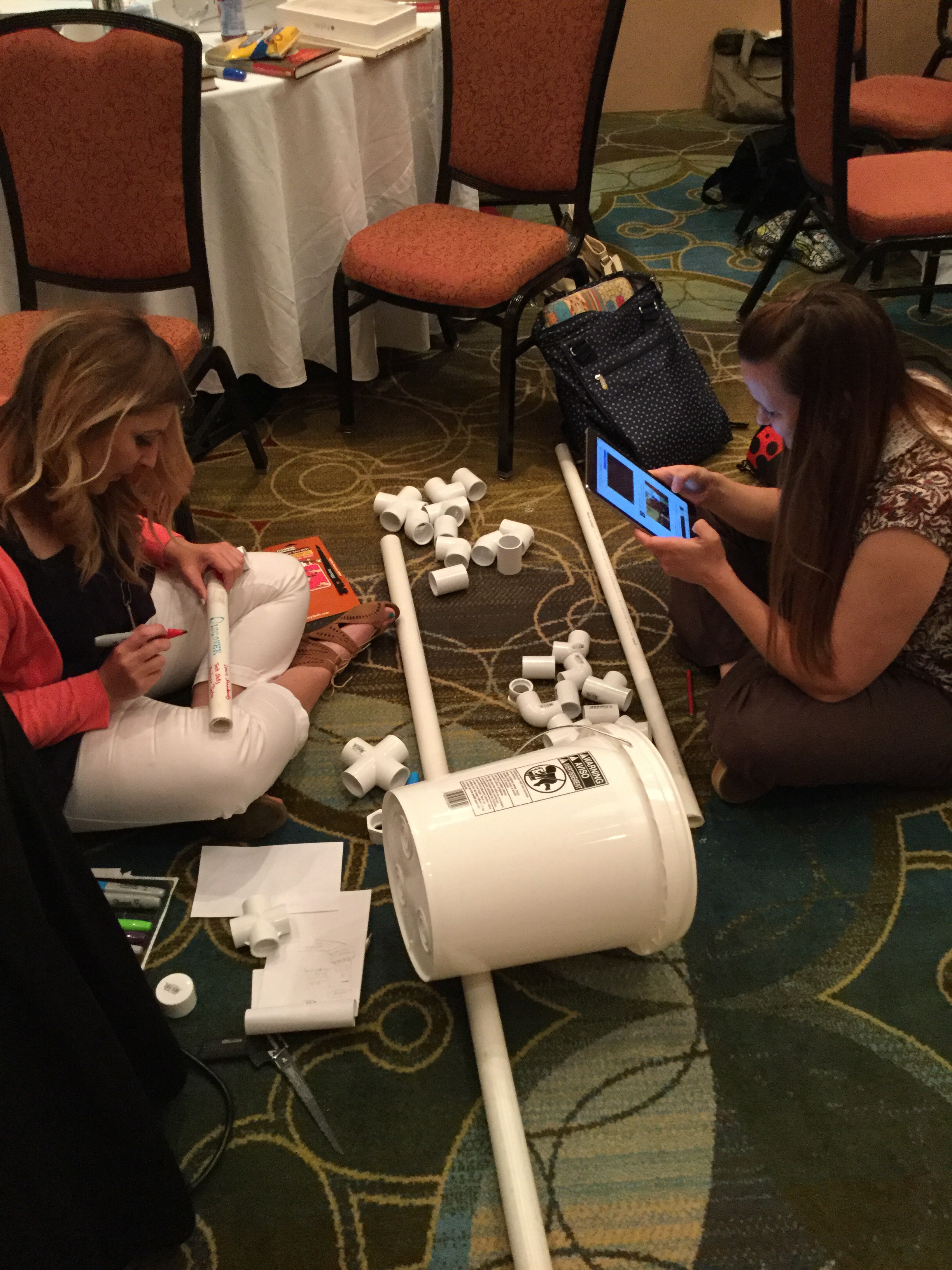
Focused Leader Academy Participants Designing & Building A Leadership Pipeline Model
Organizations, especially schools, need to learn from these minor league development “farms” and make sure they are growing their own in real time. We discussed this very point yesterday at our first session of our second cohort of our Focused Leader Academy. As you will recall, last year we started the Focused Leader Academy at the Hoosier Academies Network of Schools. This is an employee development and engagement program. The idea is that great minds and great motives still matter. Teachers with school leadership aspirations have the opportunity to become part of a cohort which will take part in monthly leadership training and be part of supervised leadership projects of the school. Cohort size is at least 15% of teacher leaders per year. The Vision is: Leadership will be born out of those who are affected by it. The Mission is: Leadership will appear anywhere and anytime it is needed. Our Theory of Action is: If we empower our teachers through leadership skill development…Then we will have teacher leaders ready to contribute to the success of Hoosier Academies Network of Schools and be an important part of our talent/leadership pipeline.
 We all know that leaders grow leaders. This why I have taken it as my personal charge to develop, grow, and improve our Focused Leader Academy. As Matthew Paese, Audrey Smith, and William Byham stated in their latest book that launches next week, Leaders Ready Now: Accelerating Growth in a Faster World, “Everything you need to accelerate the growth of leadership is already inside your organization(2016, p. v). I am such a believer in this statement. I always say that context matters – and it does. This is why I believe organization’s need to make this work their personal responsibilities, not hire someone else to do it. How in the world could someone else know what the needs are? To do this we must push less-experienced leaders into broader, more formidable assignments. The whole premise behind our Focused Leader Projects. Additionally, I love task forces because these can become, in my opinion, what Paese et al. call Acceleration Pools© (2016). These experiences enable us to get leaders ready with real time development and coaching in the same way the minor league baseball teams do it I described earlier. Task forces and projects also give us the ability to deploy future leaders to key assignments. In fact, we recently lost a person in a key role and instead of filling immediately we put four teacher leaders in the role as what have become affectionately known as BAs (Byron Appointees).
Appointing BAs really turned out to be an incredibly successful move. By conquering difficult assignments, these teacher leaders have become ready to take on bigger leadership roles. I now plan to make BAs a common part of what we do along with our task forces, Focused Leader Academy, and Focused Leader Projects. Paese et al. also taught us, “The challenge is scaling this concept beyond isolated, reactive incidents and creating a repeatable dynamic that causes entire cadres of leaders to become ready” (2016, p. vii). This is why I, as the leader of our network of schools must take responsibility for this.
Finally, for this accelerated growth (Paese, et al., 2016) we must create an environment where our developing leaders experience fear, excitement, anxiety, and experimentation. For rapid growth we must create real time, real work experiences of:
- Fear
- Excitement
- Worry
- Anticipation
- Terror
- Thrill
- Anxiety
- Experimentation
- Risk
- Possibility
These feelings then generate energy and accelerated learning (2016). Are you taking responsibility for your leadership pipeline farm team or leaving it to some off the shelf product or leaving it to some paid organization to do for you? I would suggest to you to take responsibility yourself and get the thrill and inspiration of this important leadership responsibility.
 Byron's Babbles
1 comment