Needing To Know Versus Wanting To Know Something Else

Loved this line from George MacDonald in his great book, Lilith, a Romance: “We are often unable to tell people what they NEED to know, because they WANT to know something else, and would therefore only misunderstand what we said.” Right before saying that, the raven said, “…you and I use the same words with different meanings.” These statements really hit home because they are so true. I know I have been on both sides of this equation.
First, we are reminded how much our words we use matter. It is also important that we establish a common meaning for the words we use. Our words matter. They matter a lot. I always say that language matters. Another comment from the raven was, “…it involves a constant struggle to say what cannot be said with even an approach to precision…” Sometimes it is just hard to find the right words. When we can find common meanings for our words, we can begin to truly understand each other. To get the point here, think back to a meeting when someone was speaking in the lingo of an industry you were not familiar with. Super frustrating, isn’t it?
Now back to the comment of “…unable to tell people what they NEED to know, because they WANT to know something else…” This is one of those places where we need to be open-minded and malleable. So many times we aren’t hearing what we need to hear because we are listening for something else. Additionally, we get so focused on something that we do not hear what we need to know. One way I combat this is to ask the question, “What do I need to know?” If I am really listening to understand when I ask that question, I put myself in a much better place to learn what I need to know.
Authenticity Matters

Authenticity is such an important leadership attribute that so often gets overlooked. Building trust requires honesty and sincerity—leaders who are authentic foster stronger connections and loyalty. The great band Set It Off has an awesome song about authenticity, “Rotten.” Here is what vocalist and songwriter for Set It Off, Cody Carson, had to say about the song:
“Our new song ’Rotten’ is about the lack of authenticity I see so often out in the world,” explains vocalist Cody Carson in a Livewire interview. “It’s about people manipulating others just because they want something from them. Then the exploiters get what they want via the synthetic sugar they’re pumping out, but eventually… it’s going to rot out their teeth and those people will see the truth.”
I love the lines in the song, “But your sugar is sweet ’til it rots all their teeth; So save the charade, and your candy-coated blade underneath.” I interpret this as a metaphor for the deceptive nature of appearances or superficial charm. Leaders should focus on genuine qualities rather than superficial sweetness, as false appearances can ultimately cause harm or erode trust. What seems appealing on the surface might have hidden consequences. Leaders need to look beyond surface-level charm to understand true intentions and impact. Offering false praise or superficial kindness might attract short-term favor, but it can damage relationships and credibility in the long run.
This song serves as a powerful reminder that superficial allure can be deceptive, and lasting leadership is rooted in authenticity and integrity.
Understanding Envy: The Deep Longing to Mirror Others’ Achievements and Qualities
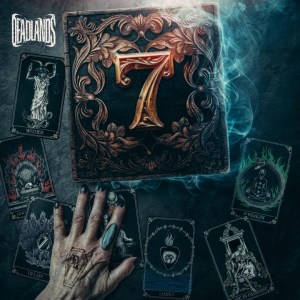
I must say as I begin this post about a sixth of the seven deadly sins that I am in absolute awe of the great band, Deadlands, taking this project on. The lyrics that Kasey Karlsen has written are amazing, spot on, and thought-provoking. As I listened over and over to their song about envy, “Kundalini”, I pondered and studied envy more deeply. I first pondered why envy is a deadly sin and not jealousy or self-interest.
Envy is considered a deadly sin because it involves a deep, resentful longing for what others have, often leading to destructive feelings and actions that can harm both oneself and others. It fuels bitterness, greed, and a desire to undermine or take away what belongs to someone else, ultimately corrupting the individual’s soul and relationships.
Jealousy, on the other hand, is usually seen as a more immediate emotional response—an uneasy feeling of insecurity or fear of losing something or someone. While it can also be harmful if left unchecked, jealousy is generally regarded as a temporary emotion rather than a persistent vice.
The key difference lies in their nature: envy involves a longing rooted in resentment and covetousness, making it a more dangerous and corrosive attitude, whereas jealousy is often a transient feeling that can be managed or understood.
In Deadland’s song, “Kundalini,” the line “I’m my own rival” suggests that our biggest challenge in combating envy is often ourselves. Instead of comparing ourselves to others and feeling envious, we can focus on personal growth and self-improvement. Recognizing that our primary competition is our own potential encourages us to set internal goals, celebrate our progress, and cultivate gratitude for what we have. By shifting the focus inward, we reduce the power of envy and foster a healthier, more confident mindset. Ultimately, being your own rival means striving to be better than your past self, rather than constantly measuring against others.
The lyrics “Don’t care if it’s blasphemy; I’ll take your legacy; Rip the scales from my face, put myself in your place” are a powerful expression of our envy and desire to transcend our limitations by directly experiencing what another has. These lines remind us of the deep yearning to embody or possess what belongs to someone else—whether their achievements, identity, power, or inner qualities—by any means necessary, even if it means crossing moral lines. It captures a sense of intense desire to bridge the gap between oneself and the admired individual, driven by envy and aspiration.
Beyond Lust: The Illusive Dream of Perfection and the Tragic Beauty of Chasing Illusions

I love C. S. Lewis’s description of lust in The Great Divorce where he said, “Lust is a poor, weak, whimpering, whispering thing compared with that richness and energy of desire which will arise when lust has been killed.” Generally, we think of lust primarily pertaining to an intense desire for sexual pleasure, whereas the other deadly sin of greed involves an insatiable craving for material wealth, and the deadly sin of envy is characterized by longing for what others possess. Each of these vices targets different aspects of human fulfillment—physical, material, or social—though they all stem from a similar underlying struggle with self-control and moderation.
I do believe lust goes beyond just sexual pleasure. An example of this can be found in Prince Caspian (The Chronicles of Narnia) where the Telmarines, who have overtaken Narnia, often display a lust for power and status, which could be seen as a form of luxuria, an overreach or excessive desire beyond reasonable bounds. Lewis’s focus in the story tends to emphasize virtues like humility, bravery, and faith instead of indulgence or lust. Lust encompasses a strong yearning for any pleasurable experience or material gain. In many contexts, lust can refer to an insatiable desire for wealth, power, or other worldly pleasures beyond what is necessary or moderate.
As I write this fifth post inspired by Deadlands’ great collection of songs dealing with the seven deadly sins I am pondering the lines, “Infatuated with the fantasy; A vital sign that I refuse to see.” These lines from Deadlands’ great song, “Limbo,” actually remind me of Daisy Buchanan, the central character in F. Scott Fitzgerald’s novel The Great Gatsby. Daisy is portrayed as a beautiful, charming, yet somewhat superficial woman who comes to symbolize elegance, wealth, and the elusive nature of the American Dream.
Daisy is beautiful and desirable but ultimately hollow and unfulfilled, reflecting the novel’s critique of the pursuit of happiness through material success. Similar to what Kasey Karlsen wrote and sings in “Limbo”, when she says “Taste of illusion that I can’t ignore,” Fitzgerald’s Daisy character highlights themes of illusion versus reality. Both the song and the novel explore how longing for an elusive perfection can compel individuals to pursue illusions at the expense of reality. This is lust at its worst.
Navigating the Undercurrent: Overcoming the Undertow of Challenging Emotions with Resilience

I had the chance this week to spend some quality tractor seat time making hay. You all know I love rock music and spent most of that time listening to Sirius XM Octane. I enjoy the group Twist It. Founding member and drummer, Sara Higgins; front-woman, Kayla Hallman; and guitarist, Logan Smith, are amazing artists that draw me in with thought-provoking lyrics and amazing music.
Their song “Undertow” caused me to reflect on how the metaphorical undertow affects us both on a personal and organizational level. Not only are undertows dangerous in our personal relationships, they can also be a part of our leading and influencing others.
The lyrics to this awesome song serve as a powerful metaphor for leadership, emphasizing the importance of resilience and staying committed to your vision without pulling others into difficult or negative situations—much like resisting the undertow. As leaders, it’s crucial for us to maintain our strength and example, guiding those we serve with integrity and stability, rather than dragging them into struggles or overwhelmed states. By embodying resilience ourselves, we inspire others to do the same and foster a supportive, steady environment.
The phrases, “I’m in over my head, I’m over my head; I won’t give in, I won’t let go; I’m so over your undertow; Won’t drag me down” really jumped out at me, both from the perspective of this happening to us personally but also us inflicting a metaphorical undertow on others. The lyrics highlight resilience, determination, and mental strength in the face of challenges. Even when feeling overwhelmed (“I’m in over my head”), maintaining resolve and not giving up (“I won’t give in, I won’t let go”) is crucial for overcoming difficult situations.
Recognizing the undertow, which is a metaphor for the pull of negativity or setback, and consciously choosing not to be dragged down demonstrates resilience. We need to develop mental toughness to stay focused and positive despite obstacles. Furthermore, the phrase The phrase “won’t let go” suggests setting healthy boundaries and maintaining control over our mindsets and boundaries, preventing external negativity from undermining our confidence.
Embracing resilience allows us to navigate the emotional undertow with strength and positivity. By understanding and managing our inner currents, we can inspire others and foster a more supportive environment around us.
What is Hell?

I am loving reading Rob Hart’s great book, The Medusa Protocol. I’ve already blogged about the book once in Perpetuating Our Own Myth. Rob had the protagonist, Mark, quote former UFC heavyweight champion Frank Mir, saying, “You know what the true definition of hell is? It’s when you die, you get to meet the person you could have been.” There is some debate over whether the quote was original to Mir or paraphrased from someone anonymous. Regardless, it’s a very thought provoking quote, particularly in the context of Rob’s novel.

This powerful quote reminds us that our choices and actions in life shape who we become, and that overlooking our potential can lead to regret. The quote suggests that true regret and hell are not just about suffering in the afterlife, but about confronting the person we could have been if we had made different decisions, pursued our passions, or lived more authentically. It encourages us to reflect on our current paths and motivate us to live intentionally so that we don’t face such regrets in the future.
Now, I am not a person that believes in spending much time getting trapped in regrets. It is helpful, however, to practice mindfulness and focus on the present moment. Accept that mistakes are part of growth and view them as learning opportunities rather than failures. Setting realistic goals and celebrating small achievements can also steer you toward a more positive outlook. Remember, each day is a new chance to make choices aligned with your values and passions.
Perpetuating Our Own Myth

I am reading Rob Hart’s great new book, The Medusa Protocol. This is the second book in the Assassins Anonymous series. I am a huge fan of Rob’s work and couldn’t wait to read this one. As always there are great lines and insights into the characters that really make me think. Yesterday while reading, one of the protagonists, Mark, said of another person that he was “Perpetuating his own myth.” This is something we all have done, or are doing and need to be careful of.

“Perpetuating our own myth” means continuing to believe or act as if a false idea or misconception is true, thereby reinforcing it over time. It’s like maintaining a story or belief about ourselves or a situation that isn’t entirely accurate, which can influence how we behave or how others perceive us. Sometimes, we do this unconsciously, and it can limit growth or distort reality. Recognizing and challenging these myths can help us foster a more honest understanding and promote personal or collective development.
Seeing Others and Letting Them See Us

In one of my Focused Leader Academy gatherings this past week we got into a deep discussion about being vulnerable and authenticity. These are two really important and many times overlooked leadership attributes. I am so fortunate to have had this modeled for me very early in my career as a teacher and teacher leader. I have also worked in organizations where these two attributes were not valued. Let me tell you, it is not healthy to be in an environment where asking for help or needing more information is viewed as a weakness. Asking questions is a superpower we possess. Remember, we need to create space for vulnerability in order to have a psychologically safe environment.
“Vulnerability is the birthplace of connection and the path to the feeling of worthiness. If it doesn’t feel vulnerable, the sharing is probably not constructive.” ~ Brené Brown
In our discussion we also talked about that in order to encourage vulnerability and authenticity we need to help those on our team be seen. Helping those on our team be seen means recognizing and appreciating their contributions, strengths, and efforts. It involves giving them acknowledgment, validation, and opportunities to showcase their skills. When we ensure team members feel valued and visible, it boosts morale, encourages collaboration, and fosters a positive environment where everyone feels motivated and respected. Essentially, it’s about amplifying their voices and successes so they feel recognized and empowered within the team.
An important concept here is that as leaders we need to see and understand others’ strengths and weaknesses and let them see us. I am a huge believer in understanding our strengths building on those. As a leader, understanding our team members’ strengths and weaknesses is crucial because it allows us to effectively support their growth, assign tasks that align with their abilities, and foster a productive and positive work environment. Recognizing their strengths enables is to leverage their talents for the team’s success, while understanding their weaknesses helps in providing targeted development or assistance.
Moreover, when we openly share our own strengths and areas for improvement, it builds trust and transparency within the team. It encourages honest communication, reduces barriers, and creates a culture where everyone feels comfortable sharing ideas and feedback. This mutual understanding and openness ultimately lead to higher engagement, collaboration, and overall success.
Breaking the Chains of Sloth: Building Momentum and Staying Disciplined for Long-Term Success

I have previously written three posts specific to three of the seven deadly sins, inspired by the creative music of Deadlands. Here they are:
Now I am digging in deeper about a fourth deadly sin inspired by Deadlands awesome song, “Wither”, that addresses the deadly sin of sloth. “Wither” might be one of my favorites on their new EP, SEVEN.
As a student of C. S. Lewis I love that Kasey Karlsen has chosen to do what we used to call a progressive rock, or also called prog rock, type thing with their EP, SEVEN. I loved the rock band Rush growing up who also did this type of elaborate story-telling, particularly with science fiction, with conceptual lyrics, and advanced composition techniques. C. S. Lewis was masterful at incorporating the seven deadly sins into his writing and now Kasey has mastered it as well.
Sloth, is one of the most interesting of the capital sins. It takes so many different forms. Dorothy L. Sayers, friend of C. S. Lewis and Marion E. Wade Center author, might have defined sloth the best saying:
“It is the sin which believes in nothing, cares for nothing, seeks to know nothing, interferes with nothing, enjoys nothing, loves nothing, hates nothing, finds purpose in nothing. lives for nothing, and only remains alive because there is nothing it would die for.” ~ Dorothy L. Sayers
Kasey Karlsen’s lyrics depict this definition very well. I interpret the line “I won’t indulge in your impotence” from Deadlands’ song “Wither” metaphorically. It suggests that Kasey refuses to accept or enable another’s weakness, helplessness, or inability to act. Essentially, it conveys a stance of accountability and resilience—rejecting excuses or passivity, and instead urging strength or resolve. The phrase might also imply a rejection of enabling someone’s shortcomings or failures, emphasizing that they must confront their struggles rather than be coddled or excused for them.
C.S. Lewis wrote about this form of sloth in his iconic book The Screwtape Letters, where he discussed sloth as one of the capital sins, emphasizing that it isn’t just laziness or physical tiredness, but also spiritual apathy or indifference towards one’s duty and growth – this same impotence as Kasey describes it. He explored how sloth can manifest as a reluctance to do good or make an effort in one’s spiritual life, often disguised as complacency or comfort with the status quo. Lewis considers sloth a subtle but serious obstacle to spiritual development, warning that it can lead to a sort of despair or loss of purpose if left unchecked.
Another line, “Indifference seals your chamber” suggests that apathy or lack of concern can trap or confine someone mentally, emotionally, or perhaps even physically. I interpret “Chamber” here as a personal space or inner world, and “seals” to imply closing it off or sealing it shut. Together, it conveys the idea that indifference—either from oneself or others—can create barriers, preventing growth, understanding, or change. It highlights how neglect or emotional detachment can imprison a person within their own feelings or circumstances.
This indifference is not the physical laziness form of sloth, but the gradual wearing away of devotion. Jill, in C. S. Lewis’s The Silver Chair (The Chronicles of Narnia), fails because of sloth. She fails to remember the four signs given to her by Aslan. Aslan told her:
But, first, remember, remember, remember the signs. Say them to yourself when you wake in the morning and when you lie down at night, and when you wake in the middle of the night. And whatever strange things may happen to you, let nothing turn your mind from following the signs. And secondly, I give you a warning. Here on the mountain I have spoken to you clearly: I will not often do so down in Narnia. Here on the mountain, the air is clear and your mind is clear; as you drop down into Narnia, the air will thicken. Take great care that it does not confuse your mind. And the signs which you have learned here will not look at all as you expect them to look, when you meet them there. That is why it is so important to know them by heart and pay no attention to appearances. Remember the signs and believe the signs. Nothing else matters. And now, daughter of Eve, farewell—” ~ Aslan to Jill in C. S. Lewis’s The Silver Chair (Chronicles of Narnia), p. 20
When arriving in Narnia, Jill gets caught up in all the happenings and very quickly loses sight of the importance of what she was to remember and do. Sound familiar? We all do it. All of us, like Jill, become weary with the daily grind. Jill, because of sloth, was failing to persevere, but Aslan helped her find her way.
Finally, Kasey’s line “You’ll pay the price of arrogance” masterfully connects to sloth in a very symbolic way. While arrogance is typically associated with pride and overconfidence, it often leads to complacency or a lack of action—traits linked to sloth. In the context of the song, Kasey, in my mind, has suggested that arrogance may cause someone to neglect their responsibilities or ignore warnings, ultimately resulting in negative consequences. It highlights how overconfidence or stubbornness can foster complacency, allowing problems to grow or worsen due to an unwillingness to act or change. Essentially, the song draws a parallel between arrogance and laziness or inertia, implying that such attitudes can be self-destructive if not checked.
Remember, overcoming sloth is about building momentum and maintaining discipline. Small consistent efforts often lead to significant long-term results.
Our Self-Inflicted Catacombs
The lyrics from Deadlands’ song “More” off their awesome EP, SEVEN, offer a powerful reflection on the destructive nature of the deadly sin of gluttony and excess. The line “Corrode your soul for something selfishly indulged” leaped out at me as Kasey Karlsen sang about pursuing fleeting pleasures or material gains at the expense of one’s integrity, health, or well-being. It also speaks to how gluttony can be spiritually corrosive. Kasey and CJ remind us that chasing superficial rewards, highs , and satisfaction most often lead to inner decay.
The subsequent line, “With all this time you are biding; Your digging deeper into self-inflicted catacombs,” emphasizes how prolonging such gluttonous pursuits can trap us in a metaphorical tomb of our own making. I love the metaphor of catacombs used in the song – it is genius! It highlights the danger of wasting time on self-indulgence rather than focusing on more meaningful, lasting values.
The catacomb metaphor in the song is a powerful symbol for exploring themes of introspection, hidden truths, and the depths of our subconscious. Just as catacombs are underground chambers that house skeletons, secrets, and remnants of the past, they invite us to delve beneath the surface of everyday life and confront aspects of ourselves that are often buried or overlooked.
Just as navigating through a labyrinthine catacomb can be challenging, understanding ourselves often involves traversing complex emotional landscapes, learning patience and resilience along the way. The darkness and mystery of a catacomb symbolize the parts of our psyche that are not immediately visible. Exploring these can lead to greater self-awareness, healing, and growth. By contemplating the metaphor of the catacomb, we learn the value of looking inward with honesty and curiosity, embracing the unknown within us, and seeking lasting fulfillment beyond superficial layers.
From these lines, we can learn the importance of self-awareness and moderation. Deadlands is encouraging us to consider whether our pursuits truly serve our well-being or if they are leading us away from genuine fulfillment. Ultimately, the song urges us to prioritize what nourishes our soul and growth over superficial gratifications that might cause long-term harm.
 Byron's Babbles
leave a comment