Being Significant Serving The Story And Audience
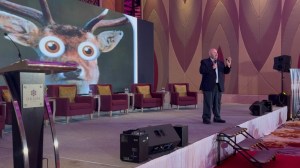
As I finished writing Finding Our Real Self, and continued to reflect on having been on the world stage this past week, I thought of Shakespeare’s immortal words from As You Like It, “All the world’s a stage, And all the men and women merely players; They have their exits and their entrances; And one man in his time plays many parts, His acts being seven ages.” This suggested that life is like a theatrical play where everyone has roles to perform, and we’re constantly acting out different parts in various circumstances. Also, coming off a week of making a bunch of new and incredible friends from around the world, it reminds us that we all have our exits and entries in others’ lives. This drives home the importance of one of the points in my opening keynote this week that it is more important that we are significant than successful. Significance is the role we have played in lifting others and making their lives better.
Connecting this to the idea of selfless leadership, we can think of leaders as actors on this grand stage who prioritize others over personal fame or ego. When we focus on the well-being of our communities, teams and organization’s goals, they perform their roles authentically and with genuine intention, much like skilled actors embodying their characters fully. This authenticity fosters trust and inspires others to bring their best selves to their roles, creating a more harmonious and meaningful ‘production’—or organizational culture.
In essence, just as actors in a play serve the story and audience, selfless leaders serve their teams and shared goals, understanding that their performance contributes to the larger story of the organization and community.
Finding Our Real Self
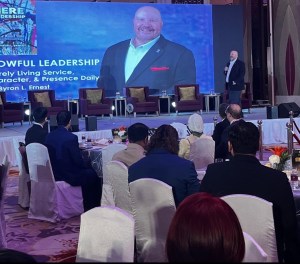
I have spent this week on the global stage, literally. For the 2026 FLUXX Asia Leadership Conference in Manila, Philippines I served as the opening keynote speaker, panel speaker, and received the Global Pioneer Award for Global Education Innovation. When I am in an environment like that with hundreds of great humans from all over the world (70+ countries), it really causes me to pay attention, seek to understand, and appreciate every unique individual. This week I have spent a great deal of time reflecting on principles from C. S. Lewis in Mere Christianity. I already posted “What Sort of Impression are You Making?” this week.

In Mere Christianity, Lewis also said, “Even in literature and art, no man who bothers about originality will ever be original: whereas if you simply try to tell the truth (without caring twopence how often it has been told before) you will, nine times out of ten, become original without ever having noticed it. The principle runs through all life from top to bottom. Give up yourself, and you will find your real self” (p. 226). From this, leaders can learn the importance of humility, selflessness, and authentic service. When we let go of ego, pride, or the desire for personal recognition, they create space to connect genuinely with others, build trust, and foster a collaborative environment.
This perspective encourages us to prioritize the well-being of those we serve and the collective goals over our personal agendas. By doing so, we often discover our true strengths, passions, and purpose, which leads to more genuine leadership. Ultimately, embracing selflessness not only helps us grow personally but also inspires others to do the same, leading to more meaningful and trusting relationships.
What Sort of Impression are You Making?
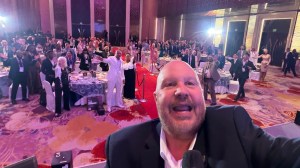
Yesterday, as I watched hundreds of individuals come together from all over the world for a global leadership conference in Manila Philippines, I was reminded of what C. S. Lewis said in Mere Leadership: “Even in social life, you will never make a good impression on other people until you stop thinking about what sort of impression you are making” (p. 226). It is interesting to watch those that are trying really hard to make a certain type of impression.
I want to be clear, that I am not talking about the different styles we all have in the way we dress. This obsession with impression goes beyond style, fashion, and culture. I am talking about the way we show up.
C.S. Lewis was suggesting that worrying excessively about how others perceive us can prevent genuine connections and authentic behavior. When we focus too much on creating a certain impression, we may become superficial or insincere, which ultimately hinders our ability to build trust and meaningful relationships. From this, we learn that authenticity is key; by being true to ourselves and not obsessing over impressions, we can foster more honest interactions, earn genuine respect, and develop better social bonds in our everyday lives.
Education 5.0: Empowering Minds for the Age of AI, Empathy, and Innovation
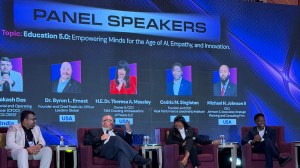
Yesterday I had the honor of serving on an international panel contemplating “Education 5.0: Empowering Minds for the Age of AI, Empathy, and Innovation.” It was an incredible discussion that was part of the 2026 FLUXX Asia Leadership Conference in Manila Philippines. I wanted to share some of the thoughts I contributed to the discussion yesterday.
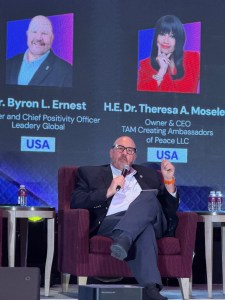
When asked about the biggest challenge in education I brought three points:
- We need to make sure students are developing the skills necessary to become worthwhile citizens in a global economy
- Our education entities need to become more systems thinking and have systems change leaders to carry out those changes
- As a global community we need to be learning promising practices from each other

Next, I was asked what critical human skills are at risk of being undervalued or underdeveloped because of the use of AI:
- Critical thinking/Problem solving
- Creativity/Curiosity
- Ethical reasoning
- Adaptability/Resilience
How do we strengthen the human connection for students?
- Students should work on real problems and issues
- Students should work with adults I mentioned my partnership with AgReliant Genetics when I was teaching where students were doing real research for the company and collaborating with the scientists
- We need to provide mentoring by adults for students
- Work-based learning opportunities
- Students present results/proposals
- Help students understand what it means to have ownership in their learning/education and then allow them to have that ownership
- Create space for students to have human to human contact and interaction
What are actions needed for proper use of AI?
- Provide support and professional development in the use of AI
- We need to incorporate AI, not make it an either/or thing
- Get diligent in helping students recognize fact from opinion/false information [Research from Programme for International Student Assessment (PISA) showed that only 9% of 15-year-olds can actually tell when facts are really facts and not just opinions]
Finally, I was asked to complete the following sentences (the italicized are what I contributed):
- AI will replace routine tasks, but never replace the human elements of love, creativity, curiosity, and empathy.
- The most underrated skill is emotional intelligence.
- The future of education is students taking ownership of their own learning and education.
Betting On Us

Today, I heard the phrase, “Convincing others to bet on you when you don’t fit the stereotype.” In the context it was used, it meant persuading or earning the trust of people to support or choose us, even though we may not conform to their typical expectations or conventional images of success. It involves showcasing your unique qualities, skills, or potential that challenge common stereotypes, and demonstrating that you are capable despite not fitting the usual mold.
Leaders can use this mindset by embracing authenticity and showcasing our unique strengths to inspire trust and confidence in our teams. Instead of conforming to traditional stereotypes of leadership, we can highlight qualities like empathy, creativity, adaptability, or resilience that set us apart. By doing so, we encourage others to see value in diverse approaches and perspectives, fostering an inclusive environment where creativity and curiosity thrive. Additionally, as leaders we can model confidence in our unconventional qualities, convincing others that success isn’t limited to stereotypical traits but is achieved through authenticity, dedication, and a willingness to challenge norms.
Embracing Bayanihan: Building Resilient and Engaged Workplace Communities

Today I had the opportunity to spend half the day exploring Manila Philippines. Filipino culture offers many valuable lessons, such as the importance of bayanihan (community spirit and helping one another), respect for elders (paggalang), resilience (katatagan), and maintaining strong family ties. These qualities foster unity, compassion, and adaptability—qualities that can greatly enrich our own communities and personal growth.
Bayanihan, the Filipino tradition of community helping each other, can be a powerful illustration for building strong organizations. Here’s how:
- Fostering Collaboration: Just like neighbors coming together to help move a house (which is how bayanihan was created), team members can support one another in achieving common goals, sharing skills and resources freely.
- Encouraging a Culture of Supports: When individuals see that their colleagues are willing to lend a hand, it cultivates trust and a sense of belonging, strengthening the overall community within the organization.
- Promoting Collective Responsibility: Bayanihan emphasizes shared effort over individual achievement. In organizations, this mindset encourages everyone to take ownership and contribute towards shared success.
- Building Resilience: During challenging times, a bayanihan spirit motivates teams to rally together, adapt, and overcome obstacles collectively, fostering resilience.
- Enhancing Engagement: Participating in collective efforts boosts morale and engagement, as people feel valued and integral to the community’s well-being.
By integrating the principles of bayanihan into organizational culture—such as teamwork, mutual support, and shared responsibility—we can create more cohesive, resilient, and motivated communities within our workplaces.
Things To Look Forward To Vs Things We Really Want To Do Vs Formal Goals

As I was flying over the Pacific Ocean to Manila Philippines tonight I was reflecting on how much I need things to look forward to. I believe we are all that way, as humans. I’ve not done any research on it, but I’m pretty sure our cows in the barn anticipate and look forward to me showing up in the barn to take care of them. This reflection really got me thinking about things to look forward to, versus things I really want to do, versus formal goals. I am by nature a very curious person and always finding something new to study. For example, while watching the flight tracker on my flight, which I love by the way, I became interested in Mount Fuji when it showed up on the map just a right turn away by air.
So now, I would say Mount Fuji is on my list of “things I really want to do.” Is it a formal goal? No. I believe this is what curiosity is all about. Here in a few minutes I will be stepping into a new world that I’ve never been – the Philippines. I can’t wait! I built tomorrow into my schedule to have the opportunity to explore and learn more about Manila and Filipino culture. Then, I am looking forward to the next day, when I get to do the opening keynote for the 2026 FLUXX Asia Leadership Conference, and meet individuals from 70 plus other countries. Had that been a formal goal? No. But I was curious when the opportunity came available and now I am really looking forward to the coming days in Manila.
So is there a distinction between things we look forward to, things we really want to do, and formal goals? If anything, I would have to admit that I am the person who allows life to happen and I try to be ready for the things I don’t know I need to be ready for. That is where curiosity, and learning, and doing have served me well and provided me the ability to be ready when opportunity knocked. I would say it is more about systems, structures and processes than goals.
Think about this: winners and losers have the same goals. It is the systems that are in place that make the winning teams. That’s why I believe being a curious learner, looking forward to what is next, having things we really want to do are so important.
Learning What We Do Not Know—About Other Worlds, About Ourself, & About Human Nature.

As I write this post I am on a plane headed for Manila Philippines for the 2026 FLUXX Asia Leadership Conference where I will be delivering the opening keynote. I am so excited to have the opportunity to interact with people from over 70 different countries. I am also super excited to immerse myself in the Filipino culture. As I thought about this I was reminded of C. S. Lewis’s essay, “De Audiendis Poetis”. In that paper he gave a genius analogy between traveling to a foreign country and reading old books. He gave really good advice about both. Here I’m going to focus on the traveling part.
I’ll use myself as the example here for Lewis’s analogy. If I were to be the one type of traveler Lewis described, I would have tried to find the most American hotel I could and when I arrive would look for all of the most American restaurants and stores. I would also seek to hang out with attendees from the United States. You probably know people who would do this – I hope you are not one of them. Boring! And not to mention a wasted trip for learning! Lewis argued that this traveler would come home unchanged. Again, what a wasted opportunity.
I always strive to be the other type of traveler Lewis described. I want to eat the local food, try the local wines, and share in the Filipino culture, plus learn about the cultures of the other attendees. Remember I’ve also got 70 other countries to learn about. By immersing myself, I can begin to see other foreign countries and cultures, not as a tourist, but how those countries look and feel to their citizens. By traveling in this way and with an open mind to learning other cultures, I can come home modified – thinking, understanding, and appreciating as I did not think, understand, and appreciate before. Hopefully I return home a better human being than when I departed.
Being Someone’s Wake Up Calling

I love Papa Roach’s song “Wake Up Calling.” As a lover of metaphors, the lyric in the song, “You’re my wake up calling” really jumps out at me. The lyric is a metaphorical way of saying that someone or something serves as a powerful reminder or motivation to wake up or become more aware. It suggests that the person or experience providing the wake up call has a significant impact prompting us to see things clearly, re-evaluate our life, or take action. It’s akin to an alarm clock that jolts us out of complacency or darkness, encouraging change, awareness, or a fresh start. I love how it reflects the idea of being stirred into consciousness or motivation by someone important.
This really got me thinking about those who have served as wake up calls for me. I’m also reflecting on who I need to be the wake up calling for.
As leaders, we can use this metaphor of being a wake-up call to inspire positive change in others. Think of it as intentionally creating moments or environments that prompt reflection, awareness, and action among your team or organization. Here are a few ways we can do that:
- Provide Constructive Feedback: Like an alarm clock, honest feedback can wake someone up to areas for growth they might not have recognized. Deliver it with kindness and clarity to motivate improvement.
- Share Inspiring Stories or Examples: Use stories of success, failure, or transformation to spark reflection and inspire new perspectives.
- Challenge the Status Quo: Encourage questioning existing practices to foster innovation and growth, much like pressing the snooze button on old habits.
- Create Opportunities for Reflection: Set aside time for teams to assess progress, goals, and values, helping them see what might be overlooked in daily routines.
- Model Self-Awareness and Growth: Demonstrate your own willingness to learn and adapt, motivating others to do the same.
By being intentional about serving as a wake-up call, we can help others realize their potential, overcome complacency, and embrace meaningful change—driving both individual and collective growth.
The More Challenging Path

As I drove to and home from Wisconsin in the last couple of days, I listened to Mere Christianity by C. S. Lewis. I have read the book many times and it was the inspiration for a great deal of my work in leadership development during my Scholar in Residence Program at The Kilns. One of the statements Lewis made in the book was, “For the longest way round is the shortest way home” (p. 87). While I had highlighted this sentence while reading the book other times, it struck me as more profound as I listened this time.

I believe Lewis was emphasizing that sometimes, taking a more indirect or challenging path—such as deep inner reflection, honest self-examination, and moral growth—actually leads us more efficiently to our true spiritual or moral destination. I also believe this is true for our professional growth as well. Just like personal growth, professional progress often involves overcoming setbacks and persistent effort. Embracing challenges as opportunities to learn helps us build resilience, enabling us to navigate workplace hurdles more effectively.
Rather than seeking instant solutions or shortcuts, embracing the full process of personal and professional development, with its struggles and setbacks, ultimately brings us closer to genuine understanding, virtue, and harmony with ourselves and others. It’s an encouragement to trust that enduring the journey, even if it seems lengthy or difficult at first, will lead us to where we truly want to be—the authentic “home” of our character or spiritual fulfillment.
 Byron's Babbles
leave a comment