Leading Like St Nicholas

Merry Christmas! Yesterday I was reading a great piece in History Facts entitled Was St. Nicholas a Real Person. It was a great article and reminded me how important myths and these sub-creations were to what has become part of our culture. I realize I have broached a topic that there are many different thoughts and beliefs about, when it comes to myths and Santa Claus, but hear me out. First, we know there was a real St. Nicholas of Myra that was born around 280 CE and died around 343 CE (that date is disputed). What we do know is that he was a benevolent man and that much of the mystical wonder of Santa Claus was probably myth being created using the example of the real St. Nicholas.
J. R. R. Tolkien believed that myths and fairy tales were essential forms of art because they tapped into deep truths about human experience and the nature of existence. He viewed them as “sub-creations,” meaning that they allowed authors to create their own worlds and realities, reflecting the divine creativity inherent in the act of creation itself. For Tolkien, these narratives served not only as entertainment but also as a means of exploring profound themes like heroism, sacrifice, and the struggle between good and evil. He believed that through these stories, we could better understand our own lives and moral choices, making them invaluable to the human experience.
These sub-creations allowed us to capture the traits of the real St. Nicholas, known for his generosity and kindness, particularly towards children and the less fortunate. Here are a few leadership lessons and themes we can learn St. Nicholas:
- Generosity and Kindness: St. Nicholas was known for his acts of giving without seeking recognition. He secretly provided dowries for poor girls to protect them from being sold into servitude, emphasizing the importance of helping those in need.
- Compassion for Children: He had a particular affinity for children, which is reflected in modern Christmas traditions that focus on gift-giving to kids. His legacy inspires the idea that the holiday season is a time for joy and generosity toward younger generations.
- Miracles and Charity: Stories of St. Nicholas performing miracles, such as reviving three children who had been killed, highlight his role as a protector. This theme of miraculous acts evolved into the magical aspects associated with Santa Claus today.
- Cultural Adaptation: The figure of St. Nicholas has been adapted and transformed through various cultures over centuries, leading to the creation of Santa Claus. His image became more jolly and festive, embodying the spirit of Christmas.
- Symbol of Hope: St. Nicholas represents hope and the spirit of giving, reminding us that even small acts of kindness can have a profound impact on others.
These lessons emphasize the values of love, compassion, and community that should be central to our everyday life and not just during the holiday season.
“Humans Were Made To Work Together”

Earlier today, in Leading By The Courage To See, I blogged about developing our courage by listening and seeing. This had been inspired by my reading in The Upside of Disruption: The Path To Leading and Thriving In The Unknown by Terence Mauri and the fourth book in The Five Towers series, The Yellow Tower, by J. B. Simmons. Still quoting out of the same paragraph as yesterday in The Yellow Tower, I want to tackle the line, “Humans were made to work together.” I believe this was emphasizing emphasizing the importance of collaboration and community in human life. It suggests that we thrive when we support and rely on one another, highlighting our social nature.

In The Upside of Disruption, Mauri also pointed out that the heart of successfully evolving and innovating is collaboration (humans working together). He stressed that great ideas rarely come from individuals isolated from everyone else. As John Hendrix says, “Our work gets better in community.” Just like C. S. Lewis and J. R. R. Tolkien needed each other and the rest of the Inklings, we need teams working together and collaborations to create new and exciting innovations.
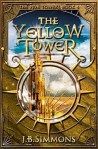
The lesson here is that teamwork, connections, partnerships, collaborations, and shared experiences enrich our lives, organizations, and communities. Working together leads to greater innovation, problem-solving, and a sense of belonging.
Genius Needs Community

I love it when books I am reading become interrelated without there being an intentional connection of my reading them at the same time. I had read the incredible book The Mythmakers: The Remarkable Fellowship of C.S. Lewis and J.R.R. Tolkien by award winning author, John Hendrix, while reading The Five Towers Series by J. B. Simmons. Interestingly, as is obvious by the title, The Mythmakers is about the relationship between C. S. Lewis and J. R. R. Tolkien and Simmons was heavily influenced by Lewis and Tolkien. Simmons was inspired by hearing The Chronicles of Narnia read to him as a child.

I had the opportunity to be with John Hendrix this week to hear the process behind the creation of his The Mythmakers graphic novel at the Marion E. Wade Center at Wheaton College. Which, by the way, Mythmakers is like nothing you’ve ever read before – it’s brilliant. One of the points Hendrix drove home at the end of his presentation was, “Our work gets better in community.” As he pointed out, without the fellowship of Lewis and Tolkien we don’t get to read about Narnia or Middle-earth. Hendrix stressed that we all need community and our own Inklings.
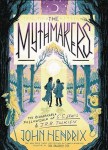
Then, the next day as I was reading in The Yellow Tower, by J. B. Simmons, Cipher (the protagonist) was told “Genius requires company to truly thrive. I’m sure you have figured out by now that your friends here are no coincidence.” This reemphasized the importance of collaboration and community in the creative process that Hendrix had explained the night before. Then I had the thought that it really was no coincidence that the unlikely friendship of Tolkien and Lewis happened. Think about the unlikely coincidental meeting of others in your own life.

Here are some key takeaways that I had from this idea of genius requiring company:
- Collaboration Enhances Innovation: Genius isn’t just an individual trait; it flourishes when ideas are exchanged and developed through interaction with others. This suggests that diverse perspectives can lead to greater creativity and breakthroughs.
- Support Systems: Genius needing company implied that even the most brilliant minds need support from peers, mentors, or a community to nurture ideas and refine talents. This highlighted the value of relationships and networks in personal and professional growth. I really want to for form my own Inklings!
- Shared Knowledge: Engaging with others allows for the sharing of knowledge and experiences, which can inspire and challenge us to think differently and expand our horizons.
- Encouragement and Motivation: Surrounding ourselves with creative and innovative individuals can provide the encouragement needed to pursue ambitious goals. This support can be crucial in overcoming obstacles and self-doubt.
- Collective Growth: Genius is portrayed as not just an isolated talent but part of a larger tapestry of human endeavor.
This all reinforces the idea that societal progress relies on collaborative efforts rather than individual brilliance alone. The world needs community!
Using Tolkien’s Leaf By Niggle As A Guide To Living With Significance

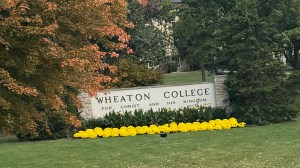
This past week I did research at The Marion E. Wade Center at Wheaton College for a book project related to my Scholar In Residence Program at The Kilns. I had the opportunity to sit down and visit with Dr. Jim Beitler, Director of the Wade Center, the Marion E. Wade Chair of Christian Thought, and a Professor of English at Wheaton College. I have gotten to know Dr. Beitler through the Wade Center’s Continuing Scholars Program. He is an amazing individual and I much appreciated his making himself available to me.

When we were done visiting I asked Dr. Beitler to pick something for me to read while here at the Wade Center this week. He almost immediately asked if I had read Leaf By Niggle by J. R. R. Tolkien. I said “No.” He gave me a brief description and later that day I read it. Wow! I really believe Dr. Beitler had gained enough background from our discussion and what I had sent him as background to the project I am working on that he knew I needed to read Leaf By Niggle. This short story was just what I needed to get in the right frame of mind for a few days of research, studying, and writing. Dr. Beitler had served as an Inkling for me. I hope at some point I can be an Inkling for him.
Before digging in any further, let’s examine Tolkien’s genius in picking Niggle for the protagonist’s name. According to Merriam-Webster “niggle” is a verb meaning “1. a. Trifle; b. to spend too much effort on minor details; 2. to find fault constantly in a petty way.” As a noun Merriam-Webster defines “niggle” as: “a trifling doubt, objection, or complaint.” Hopefully, you are not one that finds yourself “niggling” but I am sure we can all relate to falling into this trap at some point.
Leaf By Niggle by J.R.R. Tolkien impacted me with several profound lessons, primarily centered around the themes of purpose, creativity, and the nature of life. Here are some of my key takeaways:
- The Importance of Purpose: The story reflects on the journey of life and the importance of having a purpose. Niggle is an artist who feels compelled to create but is often sidetracked by trivial concerns. I was also reminded that we must control our passion. His journey emphasizes that having a focus and dedication to one’s work can bring fulfillment, even amidst distractions.
- Embracing Imperfection: Niggle’s struggles with completing his painting serve as a metaphor for the larger struggle of life. It highlights that perfection may be unattainable, and it’s important to embrace the process of creation rather than fixate solely on the outcome. The innovation Niggle was creating with his art was serving as a disruptor to society on a great level.
- Selflessness and Service: As Niggle is forced to help his neighbor, he learns the value of selflessness and caring for others. This transformation illustrates how acts of compassion can lead to personal growth and fulfillment.
- The Afterlife and Legacy: The conclusion of the story suggests a vision of the afterlife where one’s true contributions and efforts are recognized. It serves as a reminder that our actions and creations have lasting significance, and they may continue to grow and flourish beyond our immediate understanding.
This last point (#4) about legacy and lasting significance is an important one. I know I wish I would have learned much earlier in life that being significant is much more important than successful. Maybe there needs to be the success (money, accomplishments, position, awards), in order to be in a position of being respected, renowned, and listened to. But we must then know when to examine what we are becoming or have become to become significant in leaving our legacy.
We should not wait for the “journey,” in Niggles case, what I believe was a metaphor for purgatory, but a continual self examination of our lives and the legacy we are leaving. Socrates taught that, “An unexamined life is not worth living.” We need to realize that from the start we are creating significance and a legacy. I believe Tolkien was describing his own writing journey of The Lord of The Rings through Niggle in this story. In contrast to C. S. Lewis who could put his images to paper very quickly, Tolkien was much slower, agonizing over every detail, trying to make it perfect. Neither author, at the time, could have any idea of the legacy they would leave.
Overall, Leaf By Niggle invites reflection on the meaning of creativity, the value of kindness, and the impact we leave behind, encouraging readers to find balance in their pursuits while remaining open to the needs of others.
 Byron's Babbles
leave a comment