Are You A Begonia?
 I am reading a great, award winning, and Pulitzer Prize winning book right now. The book is The Education of Henry Adams by Henry Adams. This book has such great insight into our life, what Henry Adams calls our education. His theory was we spend our entire life being educated. One of the metaphors he used in the book was of people who were like Begonias. These are beautiful plants known for their brilliant flowers and fancy foliage. The begonia has both of these lovely features. You probably get the idea; he was describing people who are all show and no substance.
When raising Begonias you must place them where they can be in the light. Do you know people like this, that need to constantly be in in the limelight? Begonias like a lot of light so place them on windowsills that face east or west so that your plants get several hours of sunlight each day. I believe this is one of the reasons Henry Adams chose this powerful metaphor.
In doing a little studying on Begonias I also found that they became a staple of many bedding schemes, and in some cases, were quite over-used. Begonias became as disliked as euonymus is as a municipal shrub. Begonias became the lazy choice for parks and gardens up and down the country, often with the same old, tired varieties; either a mushy begonia semperflorens or the superb, but over-bright ‘Non-stop’ series! Sound like any people you know that are all talk and no action?
In my research, one botanist described using Begonias as having a desire for instant color and makeover effects … one-stop gardening – disposable, dramatic and needing no knowledge beyond which way up to stick the plant in the ground. Pretty good metaphor for all we do not want to be as a leader, don’t you think? Therefore we need to strive, as leaders, to not just be seen as bright flowers and foliage in delicate vases or as great explosions of leaf and flower, all brought indoors as theatre and decoration. But when they start to fade, they all go on to the compost heap.
I Get To Read!
 I realize that, ideally, a fondness for books starts at home, but reading can become a habit through opportunities to read self-chosen books at school. Consumed by the urgency to raise students’ reading scores, some policy makers and school officials have forgotten that children learn to read by reading. I support “balanced literacy” instruction, which includes independent reading. All students should be given access to books they want to read throughout their schooling, and I dream of the day all pre-readers would have an adult who would read aloud to them everyday. Through independent reading children gain a wealth of background knowledge about many different things, come to understand story and non-fiction structures, absorb the essentials of English grammar, and continuously expand their vocabularies. Many also remember visually how to spell words.
Interestingly, it is the adult/child relationship to reading that prompted this post. This past week my son needed to pick a book to read for his sophomore English class. Yep, you heard me right, he got to choose. First of all, I was excited by that! In my view students should get to choose what they read. If you want to hear my story of how I got turned on to being the rabid reader I am today click here to read “Reading Big Red.” Short of the long story – I hated reading until I got to pick my first book (not till middle school mind you). Now I read 70-80 books a year. So, I’m sure you can see why I was excited for Heath to get to pick a book he wanted to read – just typing here I just can’t see why people don’t get this concept – picking your own book makes it about the reader (student centered). Research has shown that letting children choose their own books could in fact make them better readers. When you think back to your own classroom experience, being assigned one book to read as a class was often a dreadful experience. Teachers would assign students to read a some classic and, instead of being enamored with this classic tale, students were often less than thrilled. That was me and has also been my son Heath’s experience, too.
 Back to the story – Heath came home all excited (think about this; he’s coming home from school excited!) about the book he had picked: Tough As They Come by Travis Mills. Heath proceeded to tell me all about the book and Travis Mills. Travis is a retired United States Army Staff Sergeant and what he calls a recalibrated warrior. He is now a motivational speaker, actor, author and an advocate for veterans and amputees. In his book, Tough as They Come, Travis shares his journey of serving our country. Despite losing portions of both arms and legs from an IED while on active duty in Afghanistan, Travis continues to overcome life’s challenges, breaking physical barriers and defying odds. Travis lives by his motto: “Never give up. Never quit.”
Think about what just happened here:
- My son chose a book
- My son wanted to read a book (Not to sound like Donald Trump, but this is HUGE!)
- My son had researched about a book and the author
- My son was going to get a role model and mentor, Travis Mills, through the power of reading
I thought this was the coolest day ever. I read to Heath when he was younger every night and then rubbed his back till he went to sleep (He would not want me to tell that, but these were some of the greatest moments as a dad), but now he was explaining a book he wanted to read to me. And… as if it could not get any better… Heath proceeded to say, “Let’s both download this book and read it together Dad. I think you’ll really like it.” I ask you you, “How does it get any better than that?” My sophomore in high school son wants to read a book with his dad! Well it does get better – Heath has agreed to write a guest blog post about the book for me! Watch for it soon.
Here’s the deal: giving students a choice has been linked with scholastic achievement. Some researchers believe that when students (especially boys) are free to choose what they want to read, they will read for pleasure. Reading for pleasure has been linked with scholastic achievement in school. Furthermore, students will read for pleasure and enjoy reading. When children can freely choose what they want to read, they will be reading for pleasure, not because there is an assignment due. A choice allows children to be enthusiastic about what they are reading, and in turn they will be engaged.
I realize there are books and other literary pieces we need to have our children reading, but I believe we need to give students control of their own reading. Allow them to make their own choices and they will explore more genres. Expose your students to books they love and you will see that they will not only read for pleasure, but enjoy what they are reading. I have always said we need to change the mindset from, “I have to read.” to “I get to read!” We can do this and student choice is one piece of it.
Think about this as a conversation starter and relationship builder with your children and students: “So, what are you reading right now?”
How Can We Reinvent Ourselves?
 I had the honor and pleasure of being given an Advance Copy of Indivisible: Coming Home To Deep Connection by Christine Marie Mason. I love being part of book launches for Weaving Influence. This book was absolutely awesome. In fact, my first tweet was that the book “rocked my world.” If you want to check out my tweets about the book go to @ByronErnest or use the hashtag #Indivisible. There were so many things that resonated with me as an educator and leader. Most notable were sections that discussed, “Where does our core worth come from?” or “If you want to see separation in action, go to a public school cafeteria.”
 At the end of the book Christine spends time discussing resilience. This quote has stuck with me: “A long arc of a lifetime of achievement requires resilience and tenacity.” She goes on to explain her epiphany of, “I used to think that the traumatic things that happened to us in life were a curse, but I was wrong. Now I see these experiences as preparing me to serve.” Christine also taught me in the book that “A bad experience can be a point of departure from which we bring service to others.” Here’s the deal: This book is authentic! Christine wrote this book from her own perspective as what I call “the deer in the headlights.” This book will cause you to do a lot of reflection on your own life and how you lead.
Here is an excerpt selected by Christine to offer you in this post:
“The Western worldview teaches that we are independent, individual beings. In this system, our worth comes primarily from what we produce. We are always being graded by others, and our worth and security are wrapped up in how well we conform to what they expect.
This is the perspective within which I, like many other Americans, was raised. But as I grew up, moving from childhood experiences to experiences that I chose for myself, I realized that these teachings felt fundamentally untrue. My direct experience was one of increasing interdependence and interconnection. Each person was infinitely more complex than I had ever imagined.
I decided to question how I had lost touch with myself and others, and how to live better in relationship with one other person—and beyond that, to how we, as a culture, had lost touch with our interdependence in the first place. I would undertake an experiment to answer these questions, and my methods would be a combination of research and lived experience. The broader questions were: can we “hack” our own evolution, and the evolution of the collective? In other words, can we get in there and speed it up? What if everything we had taken in unconsciously was up for discussion, and we didn’t accept any of it whole hog? If we give ourselves permission to question, alone and with others, we might design any manner of new ways to live.
If we go through our lives unconsciously, the neurons and atoms that make us up will continue to play out their repeating code. But if we become conscious, we can (to a certain extent) rewire ourselves, as well as the culture we live in. Every bit of information we have about how we work – historical, sociological or scientific – can help us with this rewiring.
I’ve found that approaching this inquiry with a heart of compassion toward the institutions under inquiry, rather than a mindset of attack and critique, helps a lot. All systems are exquisite adaptations. They are contextual and place bound; they arose naturally to meet the very real needs of the time in which they were created. But as time and circumstance changed, they overstayed their welcome, and ossified.
When there’s a problem with the dominant culture, and we have the enthusiasm for reconnection and redesign, and we also join that enthusiasm with loving rather than destructive intent, we are using the force of our intention to create systemic change. In doing so, we can honor and celebrate what we’ve learned so far, and give it an honorable retirement. Of course, this requires that the whole society be willing to look together and release what isn’t working—rather than hold on tight, as if they can’t handle the coming change.
This process of questioning and reinventing may be difficult, but the result is more than worth the effort. In my experience, those who are seeking more connection and continuous reinvention are happier. They are open. They know that it is the separation that is the lie; the union is the true thing. These are people who are at ease with each other, even in conflict. They are egalitarian and able to equally commune with all. They are the ones for whom there is always a couch to sleep on, a table to sit at, a band to jam with.
I wanted to know this in my bones, not only conceptually. I wanted to investigate how will we move fully into our own lives, evolve and grow, rethink our assumptions, float above our judgments, and redesign things that aren’t working. What could I learn about disconnection and connection? About choosing to be perpetrators or healers? Who was already successful in creating a more loving and interwoven world?” ~ Christine Marie Mason in Indivisible: Coming Home to Our Deep Connection
Thank you Christine for allowing me to publish this excerpt from your book for readers of my blog to enjoy and see just how great this book is. I certainly believe everyone could benefit from reading this book!
******
This post is an excerpt from Christine Marie Mason‘s new book, Indivisible: Coming Home to Our Deep Connection.
Christine has been a leader in the tech sector for 20 years, as the venture backed founder and CEO of several companies. She has always been a convener, bringing people together to have conversations around growth and change, and to spark action around new possibilities. She is the curator of 9 TEDxs, the convener of Naked Conversations and founder of LoveSpring. Her own deep journey exploring anger, violence and disconnection in the aftermath of her mother’s murder, early abandonment and general chaos have propelled her explorations into the interior life and capacity of the individual to heal and connect; her work as a victims’ right advocate for restorative justice and prison reform; and as an investigator into the neuroscience of human evolution and behavioral change.
Cosmetic Leadership
 This week’s leadership lesson (#12) from John Parker Stewart in 52 Leadership Lessons: Timeless Stories For The Modern Leader used Aesop’s Fable “The Stag at the Pool” to teach us an important leadership lesson. For the sake of making this post more worthwhile here is the fable:
A stag saw his shadow reflected in the water, and greatly admired the size of his horns, but felt angry with himself for having such weak feet.
While he was thus contemplating himself, a Lion appeared at the pool.
The Stag betook himself to flight, and kept himself with ease at a safe distance from the Lion, until he entered a wood and became entangled with his horns.
The Lion quickly came up with him and caught him.
When too late he thus reproached himself:
“Woe is me! How have I deceived myself! These feet which would have saved me I despised, and I gloried in these antlers which have proved my destruction.”
This is a pretty powerful story when you think about it. So, what is the moral of this Aesop’s Fable? “What is most truly valuable is often underrated.” Stewart taught us not to get caught up in the “cosmetics” of life. He suggested we get to caught up in the visibly superior qualities. I believe we do this personally and in our roles as leaders. I call this “selling the sizzle instead of the steak.” We need to make sure we are doing the right things according to our strategies, vision, mission, and core values and not getting sidetracked with attractive “antlers” that will get us all tangle up in things that, on the surface, look cosmetically attractive.
“What is worth most is often valued least.” ~ John Parker Stewart
 When reflecting on this I think of the awesome new song just released by the great band Alter Bridge on their new album The Last Her0. coming out on October 7th. The song is Show Me A Leader. Click here to watch the video of the song. Trust me, I will be doing some separate blogging about the song and band in the near future, but for now I believe “The Stag at the Pool” story relates to the song. Here are the lyrics:
“Show Me A Leader”
Well they’re selling another messiah
Here tonight
But we’re all way too numb and divided
To buy itSinging
No no no
We are all too divided this time
No no noShow me a leader that won’t compromise
Show me a leader so hope never dies
We need a hero this time
No no noDisillusioned and tired of waiting
For the one
Whose intentions are pure unpersuaded
We can trustSinging
No no no
‘Cause a promise is never enough
No no noShow me a leader that won’t compromise
Show me a leader so hope never dies
We need a hero this timeI know, I know
I know if we’re to survive
We need to know this is not the end
How will we ever get by
It’s getting harder to fight out here on our ownShow me a leader that won’t compromise
Show me a leader so hope never dies
Show me a leader that knows what is right
Show me a leader so hope can survive
We need a hero this timeNo no no
We need a hero this time
Or we will never survive
No no no
We need a hero this time
Or we will never survive~ Alter Bridge
Killer Whale Leadership
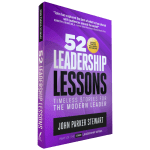
 I am so excited to be bringing you another post inspired by the great book 52 Leadership Lessons: Timeless Stories For The Modern Leader by John Parker Stewart. Lesson #5 was entitled “How To Train Your Killer Whale.” In this story, Stewart, told us how trainers of Killer Whales will spend up to three years training before even getting in the water with these incredible creatures weighing six tons and measuring in at 26 feet. The amazing part is, though, that once a trust is built the relationship between whale and trainer is a thing of beauty. Trainers get to know the whales and a relationship is built as they begin to work together. I believe this is a powerful metaphor to us as leaders. Trust is not something you can go to a workshop, learn, and suddenly have. In fact, I laugh when I see workshops advertising trust building and relationship building. You simply cannot do that in a workshop. Are you telling me that the person you really don’t know that well that catches you in the falling backward game that all of those workshops have you do will catch you when everything falls apart back at your organization? She may or may not, but I want the person I have formed the relationship with and built the trust to know she has my back. Additionally, I want her to know that I have her back.
“When there is mutual trust, there will be quality performance.” ~ John Parker Stewart
So, how do we build this trust with our people? I believe it is working shoulder to shoulder with those we lead. You can only build true trust in the context within which you work. Here is my list of how leaders build trust:
- Being competent. It is very important for everyone to see that we know what we are doing.
- Walking the Talk and Walking the Walk. Do we do what we say and say what we mean? Do we live our own and the organization’s core values?
- Be passionate about what we do.
- Be self aware and show behavioral integrity.
- Care about those you lead.
- Wanting the best for others, even to the point of recommending them for another job that might take them away from you.
- LISTEN!
- We must have perspective and understand the context of our people and organization.
- Manage direction and work, not people. Lead people.
- Say thank you and give credit where credit is due.
- See beyond self.
Effective leaders nurture and grow trust in many ways. How do you build trust with those you work with? Here’s what I’ve learned: leaders who build trust are magnets for the best talent, ideas, and contributions.
Our String History Timeline of Leadership

Chase Field – Phoenix, Arizona
I spent the past four days in Phoenix, Arizona with three of our teacher leaders working on a task force project for our school. My next post will have more about this, but there was a conversation last night during the Arizona Diamondbacks game that prompted this post. Our teacher leaders and I had the distinct honor of going to the Diamondbacks vs. Kansas City Royals game last night. We had awesome seats right behind home plate. By the way, the Diamondbacks won the game. Before the game we went to Alice Cooperstown – not really a part of the post, but I believe it was really cool to have been there! Everyone needs to go there at least once in their life.

Alice Cooperstown in Phoenix, Arizona
One of our teacher leaders, Jill Landers’, brother David Meek, who lives in Phoenix, was able to go to the game with us. David is an incredible guy and I consider myself privileged to have gotten to know him and have the chance to visit during the game. We talked, Arizona history, Barry Goldwater running for President, politics, favorite books, favorite authors (mine is David McCullough), the Wright Brothers, and the fact that Thomas Edison had a workshop in Indiana. In fact, Thomas Edison’s first invention happened in Indianapolis, Indiana. Who knew? Click here to read about Thomas Edison’s connection to Indianapolis, Indiana.
 Anyway, at one point David pointed up at the clock that is above the Jumbotron at Chase Field and said, “Imagine if there was a string stretching from us to that clock. Then imagine that the string is the timeline from the beginning of human existence. Now, recognize we are living in the last two inches of that timeline. Think about all the things we have seen invented and happen in that last two inches.” Wow, this was some pretty powerful imagery! We then reflected that you wouldn’t have to go much more than another inch to see the invention of the airplane. On December 17, 1903, Orville Wright piloted the first powered airplane 20 feet above a wind-swept beach in North Carolina. The flight lasted 12 seconds and covered 120 feet. Three more flights were made that day with Orville’s brother, Wilbur, piloting the record flight lasting 59 seconds over a distance of 852 feet. Wilbur had flown a glider in earlier tests Kitty Hawk, Oct. 10, 1902.
The brothers began their experimentation in flight in 1896 at their bicycle shop in Dayton, Ohio. They selected the beach at Kitty Hawk as their proving ground because of the constant wind that added lift to their craft. In 1902 they came to the beach with their glider and made more than 700 successful flights. I am still in awe of what these two men created and the leadership grit it took to successfully invent the design of the flying machine. Much of that design is still being used on the plane I am comfortably sitting in right now as I fly home from Arizona.

We Made It On The JumboTron
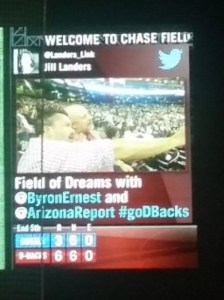
This caused a great deal of deep thought as we sat and discussed the past. Jill caught her brother and I in deep thought looking up at the clock and imagining the string and the last two inches we are occupying. In fact, Jill tweeted a picture of us to the Arizona Diamondbacks and it made it on the Jumbotron and has received several favorites and retweets. Jill and I had actually spoke earlier in the week about how things we were doing at our school, work we are doing in relation to the new Every Student Succeeds Act and other legislation in our state are historic. It is exciting to be working with talented teacher leaders, like Jill, who want to build their circle of influence and want to be significant. I want so bad for my legacy to be helping them to develop their leadership capacity and be significant to affect the future string timeline.
 As I write this post I am thinking about all of the great leaders who have gone before us, just in my lifetime. Much of the news in the United States in the year I was born (1963) was dominated by the actions of civil rights activists and those who opposed them. Our role in Vietnam was being defined, along with the costs of that involvement. It was the year the Beatles began their leadership role in beginning the rock and roll movement, and the year President John F. Kennedy visited West Berlin and delivered a famous speech. Push-button telephones were introduced, 1st class postage cost 5 cents, and the population of the world was 3.2 billion, less than half of what it is now. The final months of the year I was born, 1963, were punctuated by one of the most tragic events in American history, the assassination of President John F. Kennedy in Dallas, Texas. Here are a few other events that took place in that special year that I began my tight walk journey on that string David Meek and I were imagining stretching from our seats behind home plate to the clock above the Jumbotron at Chase Field:
Civil rights leader Reverend Martin Luther King, Jr. waved to supporters on the Mall in Washington, DC during the “March on Washington,” on August 28, 1963. King delivered his “I have a dream…” speech and said the march was “the greatest demonstration of freedom in the history of the United States.” He was a great leadership example to us all.
Astronaut Gordon Cooper took off in a Mercury Atlas 9 rocket from Launch Pad 14 at Cape Canaveral, Florida, on May 5, 1963. This was the final manned space mission of the U.S. Mercury program; the precursor to the Apollo program. Cooper successfully completed 22 Earth orbits before splashing down in the Pacific Ocean. Then, on July 20th, 1969, history was made when men walked on the Moon for the very first time. The result of almost a decade’s worth of preparation, billions of dollars of investment, strenuous technical development and endless training, the Moon Landing of the Apollo program was the high point of the Space Age and, arguably, one of the single greatest accomplishment ever made. Because they were the first men to walk on the Moon, Neil Armstrong and Edwin “Buzz” Aldrin are forever written in history.
Women were playing an important leadership role the year I was born, as 26-year-old Valentina Tereshkova, became the first woman to travel in space, on Vostok 6, on June 16, 1963
Here is a list of a few things invented just in the decade in which I was born:
- Acrylic paint
- Permanent-press fabric
- Astroturf
- Soft contact lenses
- NutraSweet
- Compact Disk
- Kevlar
- Electronic fuel injection
- First handheld calculator
- Computer mouse
- RAM (Random Access Memory)
- Arpanet (first internet)
- Artificial Heart
- ATM machine
- Bar-Code scanner
To look at more great inventions from your 0wn decade of birth, click here.
The metaphor of the timeline string stretched from our seats to the clock at the baseball game also caused me to reflect on how leadership styles have evolved over time, with a prominent shift from the autocratic, command and control leadership of the 20th Century to a more flattened and distributive style of collaborative leadership. I believe the definition of effective leadership has changed to one that includes the learning organization and the leader being a servant. These changes to leadership styles can be attributed to a combination of issues including a shift in people’s attitudes as well as advances in technology. There is an imperative for leaders of organizations, to plan ahead and adapt to the movement of evolving trends to ensure the best outcomes for their organizations. The move has shifted from authoritarian leaders who believe in top-down management, strict rules and exact orders, to a progression to what Peter Drucker called the knowledge society, with more individualized thinking and individual ownership over tasks. It was here that the participative and collaborative leadership styles of the learning organization settled in, and this style is now one of the most common leadership styles in contemporary society.
This flattened hierarchy also allows for teacher leaders to thrive and improve our schools and education system. It is with this philosophy that I brought our teacher leaders to Arizona. The task force was able to get advice from another school. We learned best practices and failures from our counterparts. This in turn provided a hyper-personalized professional development opportunity for our teachers as well. There is no workshop that could have provided the growth our teachers experience from the work they did these past four days. My hope and dream is that someday in the future others will be sitting in Chase Field, or some other Field of Dreams, and be discussing the string timeline stretched from their seats to some point like the clock on the wall. My hope and dream is that their discussion will include the example we were setting of hyper-personalized development of teacher leaders where everyone in the organization is able to provide leadership from where they are. Leadership should happen anywhere, by anyone, and at anytime it is needed.
The style of leadership I practice is where our team is central to the decision making process, and not the leader alone. Leaders need to feel at ease in regards to drawing on the knowledge of experienced followers. Today’s leaders speak in terms of “open” dialogue, “discourse,” and “collaboration,” and indeed if you ask the great leaders of today they will invariably point to their close collaborators and mentors as being part of the leadership.
What do you want your legacy to be on the string timeline of your leadership journey?
Extending Your Significance
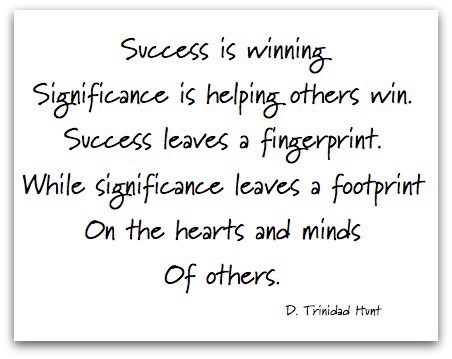 I think about and discuss a lot with team members about the idea of being significant versus successful. We tend to spend so much time striving for success; position, salary, deals, great education, degrees, et cetera that we forget about being significant. Significance is really about extending the reach of our leadership far beyond ourselves. I am working very hard at this point in my life to make everything I do about lifting others up and helping them reach the personal goals and peaks of their professions they are striving for. This in turn will create another generation of leaders to be significant for others. This would be a pretty ok legacy, don’t you think?
As I began Part III in The Disciplined Leader by John Manning (2015) I was reminded of how important it is for us to extend the reach of our leadership. Here are some great points made by Manning (2015) in the introduction to Part III:
- Leading your organization is about extending your leadership reach beyond yourself and your team to a degree that’s much further from you yet still critically connected to your organization’s center: you.
- We must grow our impact on the organization through key mindsets, strategic practices, and supportive habits you adopt, implement, and execute.
- There must be an alignment of values and people.
- We need to lead a culture of excellence creating an empowered organization of people who, led by you, believe in their organization enough to do their jobs well and build relationships with the customers who will support it.
- Significant leaders accelerate influence and expand their reach.
One way I have found to lift others is to, what I call, hyper-personalize their professional growth opportunities. Just as companies are paying more attention to customer profiles and interactions as they begin to chart out ideal buyer personas for future engagement allowing marketing teams to send out the right message at the right time to the right person, leading to more sales; we need to do the same with those we lead. We must focus on defining the individuals on our teams, their likes and dislikes, and most importantly their issues, challenges, areas in need of growth, and areas of desired,personal/professional growth. By understanding these intricate details, you can get an in-depth look at the individual, and also the factors that affect their personal and professional journey.
Are you playing a significant role in the development of those you serve?
COW Awards
 Imagine a room full of teachers “mooing” for their colleagues. That’s just what you get at Hoosier Academies Network of Schools, whether it is a face to face assembly or an online meeting. I have to admit I stole the idea from Zappos. They created COW (Creator of Wow) Awards for their employees. As an old ag teacher and farmer, I thought the idea was genius and instantly saw the possibilities. Now, I can’t attach the huge monetary value that Zappos has on their COW awards, but ours has become a just as coveted award. Think about it, wouldn’t you want to be considered a COW – Creator of Wow? Who wouldn’t?
Here’s how it works. This is an anonymous, peer nominated award. There is no limit to how many can receive the award each month and there is no limit as to how many times you can receive the award. The only qualification is that the nominator must write a justification for why the recipient should receive the award. Then each month we ceremoniously give out the awards by reading the COW nomination. What does the COW get? A COW medallion for their first COW, a trophy for the second COW, a bigger trophy for the third, and so on. This is becoming an important part of our culture. Our staff looks forward to the ceremony each month (sometimes we do it twice during the month because of the way the meetings fall) and, literally, there is “mooing” when the names and nomination justifications are read. It doesn’t get any better than that!
The COW Awards really do what John Manning (2015) suggests in Lesson #38 of The Disciplined Leader:
“Practice making your praise specific for your staff members. Give details about what was done right.” ~ John Manning (Kindle Locations 1997-1998)
Praise from COW Awards is very specific and comes from peers. The justifications have evolved into very specific descriptions of what the teacher has done to create wow. Let me share two examples of COW Award nominations (I have changed the names of the recipients):
I would like to recognize Angela for a COW Award for her FLA project. I have really enjoyed collaborating with other schools and teachers on best practices to increase attendance at class connects during our first session and on data (usage, collection, implementation) during our second session. It is so nice to collaborate not only within our school but across other K12 schools to continue to improve. We were able to share some of our ideas that they found helpful and they shared some great ideas with us as well. We now have a shared folder in google drive to continue that collaboration in between sessions and I look forward to our next meeting!
As you can see, it is a quick description of what was done. The best part, again, is that it comes from a peer. Also, I believe it is important for it to be anonymous. There should not be the feeling of obligation to thank or reciprocate the award from the recipient. Here is another example (again, I have changed the name of the recipient):
I would like to nominate Betty for a Cow Award. She initiated the African-American History event this month. Last night we held an online event to look at African-American history. The presentation she created was wonderful! It included a virtual Museum that was interactive, detailed, and very educational. The students were engaged and interacting the entire hour and a half. Today the students are invited to attend an event at Crispus Attucks to continue learning about the history. This was a huge event for Hoosier Academies Network of Schools to recognize African-American History month and due to her initiative, I’m sure it will become an annual favorite. I was proud to be a part of Hoosier last night. Thank you, Betty!
Manning (2015) reminds us that recognition is a strategy. While this is not our only recognition strategy it has become an important part of our culture of excellence. What are the best practices of your recognition strategy?
What’s In Your Culture?
 I finished a great book yesterday that has easily made it onto the list of greatest books I’ve read. The book was, It’s My Pleasure: The Impact of Extraordinary Talent and a Compelling Culture by Dee Ann Turner. Of course I was tweeting like mad while reading and was excited to have the author liking, favoriting, and replying to my tweets (@ByronErnest). In fact, I was getting lots of Twitter interaction from others on those tweets, too. You’ll notice Dee Ann Turner liked a tweet where I set a new goal for 2016 of having lunch with her at a Chick-fil-A. She liked and replied to the tweet; sure hope she’ll consider it.
 Then, I was real excited yesterday to receive a tweet from Andy Van Weele (@AndyVanWeele). He tweeted the question, “What was your big takeaway?” This is an awesome question because it is not plural, it’s singular. I, of course, tweeted back and told him to stay tuned for this post. As I began to think about this, I considered the 71 highlights I made while reading the book. I reread and studied each one. Then I realized no single one of these great thoughts shared by Dee Ann Turner was my big takeaway. My big
 takeaway was the fact that Dee Ann Turner was the product of the culture of excellence she taught us about in the book. Think about it; lots of people write books about culture and leadership. Here, however, is an author who has lived and become a product of an outstanding culture. In addition, is continuing to provide outstanding leadership to continue that legacy. This book isn’t about turning around or building an organization, it’s about what it’s like to be a product of an incredible culture of “It’s My Pleasure” and wanting to continue and further hone that culture of excellence. It is about it being an honor for Dee Ann Turner to be a “facilitator of opportunity” on behalf of Truett Cathy.
I must admit, I’m a little jealous of Dee Ann’s opportunity to learn and develop under the tutelage of S. Truett Cathy, the author of the phenomenal culture that is Chick-fil-A. As a leader of schools turning around, I spend most of my time on culture building, so I’m just so blown away by the thought of spending over 30 years growing in such a great culture. But, then I get chills thinking about this is the very reason I have accepted the calling to lead the schools I have; to give our students and staff the same culture that Dee Ann Turner grew, developed, and flourished in. Not an easy task, but clearly attainable!
 So, there’s my big takeaway: Dee Ann Turner was the product of the culture of excellence of Chick-fil-A. So, my question to the readers of this post is: “Would you want to be a product of the culture you have created?” Or, an even more compelling question is: “Would you want someone to write a book about the culture you are leading? If you waivered on your answer, or said no, you need to read It’s My Pleasure: The Impact of Extraordinary Talent and a Compelling Culture by Dee Ann Turner. Let’s all become “facilitators of opportunity.”

Leadership Heroin

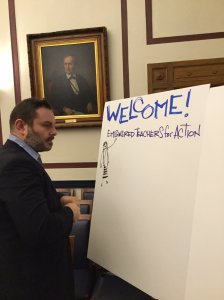
Empowered Teachers for Action with Speaker of the House Brian Bosma
Yesterday was one of those incredible days in the life of a school leader. In the morning I was able to spend time with several teachers from our own school as well as many others from around the state as part of a program developed by one of Hoosier Academies teacher leaders, Jill Landers, in conjunction with Tosha Salyers and the Institute for Quality Education called “Empowered Teachers for Action.” The program included five sessions, four of which were held the previous four Wednesday’s, with the goal of educating teachers on governance, policy, and how to become involved in the legislative process. The program was a total success and culminated yesterday at the Indiana Statehouse with a panel discussion with Indiana Senator Hershman and Indiana Representative Cook, a discussion about how legislation comes about, and finally a discussion with Speaker of the House Brian Bosma. It was AWESOME! I might add this was Jill’s Focused Leadership Project as part of her experience in our Focused Leader Academy (FLA).
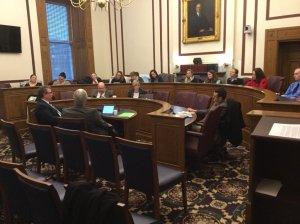
Discussion with Senator Hershman & Representative Tony Cook
As if that were not enough to make the day complete, we were then off to school for an afternoon session with our Focused Leader Academy where they were finishing up the development of our school’s new Vision, Mission, and Core Values. Last week, academy members led a school board retreat session getting board feedback and input. Now, the team was putting the finishing touches on everything. Earlier in the day there had been discussions about what a great experience and journey this has been for our teacher leaders. In fact, I would say our leaders have had an experience of truly building a vision, mission, and core values that very few top level CEOs have ever had. One of our FLA members, Alissa Davis, even said, “You know, I go through other organizations’ mission and vision statements and try to see if I can figure out what they do and stand for, and you know; many of them you can’t.” I have to give credit here to Mike Fleisch, who has been so much more than a graphic facilitator during our journey. He has been a partner, friend, and my jazz partner. We truly have become a jazz improvisation act. I’ll need to blog about this collaboration, but I’ll just say I would not be the leader I am today without the
Mike Fleisch
collaborative friendship/partnership, and jazz act, we have developed.
Those that know me won’t be surprised when I say that during our Focused Leader Academy session I get a little, o.k. a lot, excited and animated. How can you not, with a room full of great teacher leaders? Anyway, I had just said earlier in the day that I lived for these days. I was concerned yesterday,however, because there was a snowstorm coming in and I did not want to cancel or quit early (we did not have to). You know how sometimes when weather comes in how great it is when you get part of your day back when something is cancelled or ended early? Let me tell you, I do not ever wish that on these sessions.
During the afternoon session I got all excited when the group finally put the final draft status on the vision and mission and had defined student success (you’ll have to wait for these to be revealed). Then Jill Landers looked over at me and said, “this is your heroin.” Wow, pretty profound, right! Yes, she was correct – leadership and working with our staff is my heroin. Working with our teacher leaders in the area of leadership and professional growth is a drug for me. I get all hopped up just preparing and putting the sessions together. And, at the end of the day, I go through a little withdrawal. We all laughed when Jill made the comment, but she was right. I then shared a story I had heard about why so many rock stars have drug problems – it is because of the rush and high they get being on stage with all the people cheering and then there is not that high when they are not performing and they need something to give them that high. Drugs and alcohol become the medium. Well, let me assure you I do not need the medium in between, but I think we can all understand the situation.
Last night I got to thinking about having a drug addiction-like passion for leadership. Our second President, John Adams, was concerned about this passion for leadership. He posited that leaders become so passionate and addicted to the power of leadership they have the tendency to become tyrannical. He believed that an important task of leaders was both to incite and to control human passion, both in ourselves and those we lead. Make no mistake here, however, it is the passionate leaders we need in the world. It’s the passionate people that take the biggest risks, step up to the plate, and help make the biggest leaps forward within teams, companies, and organizations. People want to follow a passionate leader. Someone who cares about not only the cause for which he or she is working, but also the other people who are involved in the effort. Passion for the projects, for the company and for the people involved are key to successful leadership.
Finally, I guess it comes down to my attitude and mindset that makes working with our future leaders one of my leadership drugs (to continue with the metaphor). I’m driven by curiosity and the motivation to learn about the world around us. As leaders, we need to find ways to connect with the world around us. Curiosity and interest are both key qualities of the best leaders I know. What is your leadership heroin?
 Byron's Babbles
leave a comment