Leading By Converting Ideas Into Real Results

Yesterday I had the opportunity to “be present” and show support for a friend of mine that is a great leader and had taken a risk to try something new. Nick Townsend, who the Executive Chef for Ulen Country Club in Lebanon, Indiana, where I am a member, had an idea for having a Saturday afternoon car show. Instead of just talking about it he put his idea into action and did it – yesterday! Of course, he also had a mobile taco bar at the event (see photo of my taco bowl).
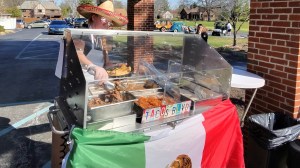
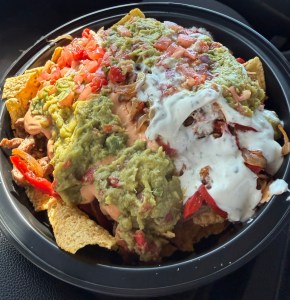
I remember first talking to Nick about his idea for the event and I remember thinking, “Boy, I hope he tries this.” There was no doubt, though, because Nick is a doer. As I walked around and visited with attendees I couldn’t help but think about how the term “innovation” has become so cliché. That term is used way more than it is ever be acted on. It has really become another buzz word. I would rather hear about and witness someone like Nick having an idea, taking the risk, and acting on it than just hear someone talking about innovating.

In some ways innovation gets suppressed by leadership and policy. I see it all the time; people are told we want to see innovation, but then are told, “Now, we want you to innovate, but don’t do…” or “Here are your rules for innovating” or “We want you to innovate, just not this way…” I’m pretty sure true innovation has no rules. To be clear I do not want us to quit innovating, but practice it with processes, action, asking, and idea generation instead of just talking about it. It is less about talking and more about doing. Innovate with actions. We need to let people act on their ideas. This will allow the conversion of ideas into real results.

I posted on social media yesterday that some important leadership attributes had been spotlighted at the event:
🔦My friend & Executive Chef Nick Townsend took the risk and put into action having a car show for the first time.
🔦I practiced showing up and “being present” for support.
🔦Taking a risk was a huge success and they are planning to do it every month now.
Acting on ideas ➕ Being Present ➕ Taking Risks 🟰 Leadership
Container Pioneer: How Innovative Leadership Shaped the Future of Global Trade

Yesterday I had the opportunity to learn first hand about the Port of Savannah and container ship transportation. I posted about that experience in The Modern Container Port. That experience caused me to dig in and learn more about how the whole container shipping industry evolved. I learned that Malcolm McLean was the innovative, systems change leader who invented and patented containerized shipping. Over 90% of global shipping now happens using the TEU (Twenty Foot Equivalent Container Units) containers. That invention and standardization was said to have improved shipping efficiency by 25%. Now that’s innovation!

McLean’s invention of the shipping container and the semi trailers the containers can be mounted on offers a powerful leadership lesson in innovation and systems leadership by exemplifying how vision, boldness, and systemic thinking can revolutionize an entire industry. Here are some key takeaways:
- Challenging the Status Quo: McLean identified inefficiencies in traditional break-bulk cargo handling and questioned existing practices. Great leaders aren’t afraid to challenge conventional methods and look for transformative solutions.
- Innovative Thinking for Large-Scale Impact: His idea to standardize cargo into containers was groundbreaking, demonstrating the importance of thinking big and considering how innovations can positively impact multiple facets of an industry.
- Commitment to Vision: McLean persisted despite initial resistance, showing that dedication and resilience are essential for turning innovative ideas into reality.
- Systemic Change and Leadership: His invention didn’t just improve efficiency; it redefined global trade logistics, illustrating how visionary leadership can effect widespread change through strategic innovation.
- Embracing Risk and Learning: McLean’s journey underscores the importance of taking calculated risks and being open to learning from failures, which are vital traits for innovative leaders.
Malcolm McLean’s story teaches us that effective leadership involves recognizing opportunities for innovation, daring to challenge existing paradigms, use systems thinking to disrupt markets, and having the perseverance to implement game-changing solutions that benefit industries and communities worldwide.
The Unforeseen Twists & Turns

I love collaboration and I believe some of the best examples of how to do this well lie with creative performing artists and writers. We are in a time where musicians collaborate on songs and perform together. These turn out to be incredible collective products. In my own world of having a professional service firm, I am always looking for potential collaborations or cross-branding opportunities. I am reading a collaboration of books conceived and curated by Blake Crouch. Blake brought together five other authors, Veronica Roth, N.K. Jemison, Amor Towles, Paul Tremblay, and Andy Weir, to write, along with himself, six books. In a note from the curator to the Forward collection, Blake Crouch tells us the three driving questions he posed to this collaboration of authors to write about. Here are the three questions (Crouch, 2019):
1. “How does anyone know at the moment of discovery where their work will ultimately lead?”
2. “Should we let that uncertainty stop forward momentum, or do we roll the dice and let the chips fall where they may?”
3. “How does it feel to change the world?”
Having just finished Towles’ You Have Arrived At Your Destination and Weir’s Randomize, I can already tell you this collaboration was a success. Those three questions Couch posed to the authors have continued to cause me to reflect however. Therefore, the reason for today’s post and probably a couple of other future posts. Pondering the question “How does anyone know at the moment of discovery where their work will ultimately lead?” helps us contemplate and begin to understand the uncertainty and fluidity of artistic creation, promotes openness and self-reflection, and encourages us to embrace the unknown in our innovative and creative journeys. We are reminded that, no matter how well we plan or strategize, there are always unforeseen twists and turns along the way.
Asking this question encourages us, as leaders, to embrace uncertainty and remain flexible in our approach – one of the big advantages of collaboration. It challenges us to let go of rigid expectations and instead focus on exploring new possibilities and adapting to changing circumstances. By acknowledging that the ultimate outcome of our work may be unknown, leaders can foster a culture of innovation, experimentation, and learning.
Moreover, asking this question promotes self-reflection and encourages leaders to question our assumptions and biases. It challenges us to critically evaluate our own work and consider alternative perspectives and approaches. This can lead to greater creativity, as well as a deeper understanding of ourself and the world.
Being An Energetic Change Agent
As an “Energetic Change Agent” I love enabling and creating opportunities for positive change. This does not mean that I don’t occasionally resist or become uncomfortable with change. We all do! A couple of things have happened in the past few months that prompted me thinking about doing this post. Then, this week the experience described in “I Am Mad That I Liked It” brought writing this post back to the top of the list.
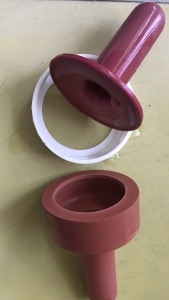
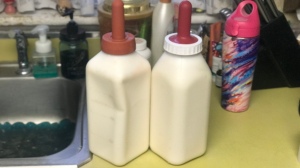
The first change that occurred is related to the bottles we use for baby calves. As you know we raise Jersey dairy show cattle. I’ve been using the same kind of bottle for years – two quart with snap-on calf nipple. Recently, the brand of bottle I use quit making the snap-on and went to a screw-on model. Check out the featured pictures and you’ll get the idea. I was really upset because I thought the snap-on model was easier to use and wash. Keep in mind, when you’re giving 10-12 bottles a day, easier makes a difference. But, after a lot of complaining and resisting it didn’t take long to realize I was wrong. The screw-on tops were easier to put on and easy to clean. Plus, there was a huge improvement in the venting. If you notice the bottle on the left is all dented and suck in. That is what happens with the snap-on bottles and we even had to stop and vent them while giving the bottle. That issue has been completely solved with the screw-on tops. Bottom-line: the screw-top bottles are better. We should have switched to them when they first came available, but no, I was sure I would not like them.

Then, another change happened that freaked me out. My dry-cleaner decided to retire and completely shut down the business. I am really picky about my shirts and like them folded and packaged – when you travel a lot like me it is easier to pack and store shirts (see picture). And believe it or not, they are not wrinkled when I take them out of the package. After much agonizing, I have found a new cleaners that I love. And while I loved my former cleaner, my new service provider has 24 hour drop off and pick-up, which is super convenient, check for missing buttons and replace if needed, and has an app for all communication. The change was good – why was I so resistant?
We are often resistant to change from one product or service to another due to several reasons. One reason is familiarity and comfort with the current product. We may be used to the people, features, functionality, and the overall customer experience. Switching to a new product or service requires us to learn and adapt to something different, which can be time-consuming and frustrating.
Additionally, there is the loyalty and attachment to a certain people, brand, and designs. We may have developed a sense of loyalty towards a particular brand, and switching to a new product or service means ending that loyalty. We might also fear that the new product may not live up to our expectations or provide the same level of satisfaction and benefits as the one we are currently using. This was certainly the case in both of my examples. Cost can also be a factor, but was not in my examples. My resistance to change came from a combination of factors like familiarity, loyalty, fear of the unknown, and laziness of not wanting to research and search for a new cleaners.
There are good reasons to try new products and services that do the same thing as the ones we are currently using:
- Innovation and advancements: New services and products often come with improved features, functionalities, and technology that may enhance our overall experience or make tasks easier and more efficient.
- Better performance: New products may offer superior performance, speed, reliability, or durability compared to older models. This was certainly the case with my calf bottle example.
- Cost-effectiveness: This was not a factor in my examples, but new products and services could be more cost-effective and energy-efficient, require fewer maintenance or repair costs, or offer better value for money.
- Enhanced compatibility, integration, and support: Switching to a new service or product might provide better compatibility with other devices, software, or systems, allowing for a smoother and more seamless experience. I now have an app to manage my dry cleaning.
- Different features and options: Exploring new services and products allows us to explore different features, customization options, or variations that may better suit our needs, preferences, or workflow.
Ultimately, embracing change and being open to new services and products can lead to better experiences, increased efficiency, cost savings, and access to the latest advancements in technology. I am not advocating to change just for the sake of change, but it is crucial to keep an eye out for the benefits that can occur listed above.
Living Full-Out

There was a lot to digest in the four pages of Chapter 46, “Don’t Wait to Live” in Mindset Mondays with DTKby David Taylor-Klaus (DTK). If I was forced to rank the weekly chapter lessons thus far, this would be one of my favorites. DTK told us that “People regretted dying with their songs still inside them” (p. 318). He went on to say, “…the only thing keeping us from living full-out is stuff we make up” (p. 319). I’m hoping both of those comments make you ponder and reflect as much as they did me. The ideas of happiness and regret are things I blog about often and discuss in leadership development workshops. In fact, I just dug into “anticipatory regret” and “existential regret” in What Will You Regret When You Are 80 Years Old? And, one of my favorite posts on happiness is Finding Happiness Right Where We Are.

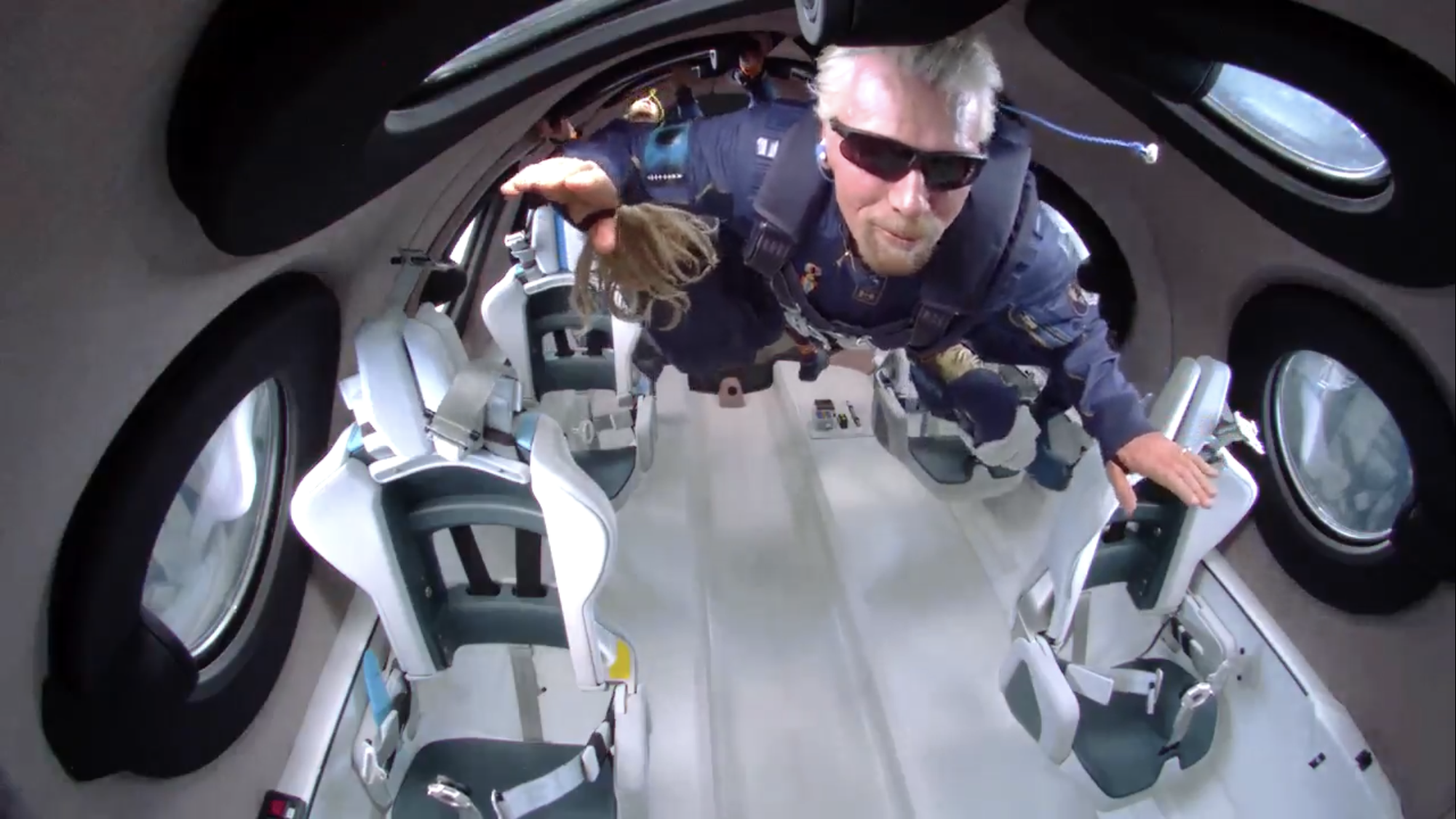
After I read chapter 46 yesterday, I was reading about and watching video of Richard Branson taking his ride into suborbital space aboard a rocket he helped fund. He was the first to do this. On LinkedIn he said, “There are no words to describe the feeling. This is space travel. This is a dream turned reality.” As a student of the ultimate role model dreamer and innovator, Richard Branson, I am pretty sure the only song that will be left in him when he dies is whatever wild and crazy idea(s) he is working on at the time. I’m pretty sure there will be no regrets – except maybe to have done even more. He is the role model for showing us how to turn dreams into reality. This first fully crewed flight of Virgin Galactic’s VSS Unity space plane was a major milestone in the commercial space industry.
Yesterday, I tweeted, “Congratulations @richardbranson and @virgingalactic! Thanks for always modeling being a trailblazer for us.” This flight was such a huge example of “living full-out.” The stuff we do on a daily basis may not be as huge as going to outer space, but just as important to those we serve and ourselves. I’ll close with this drop the mic moment and quote from Branson while in outer space that says it all, “I was once a child with a dream looking up to the stars. Now I’m an adult in a spaceship looking down to our beautiful Earth. To the next generation of dreamers: if we can do this, just imagine what you can do.” 🎤
What Will You Regret When You Are 80 Years Old?

I finished the great book, Alien Thinking: The Unconventional Path To Breakthrough Ideas, this past week. In the book, authors Cyril Bouquet, Jean-Louis Barsoux, and Michael Wade presented an incredible framework for innovation and creativity. The framework is based on five strategies that do NOT need to be accomplished in any linear fashion:
- A – Attention – look with fresh eyes to observe problems that need to be solved, opportunities worth addressing, and solutions that can be dramatically improved or revised
- L – Levitation – step back from the creative process to gain perspective and enrich your understanding
- I – Imagination – recognize hard-to-see patterns and to connect seemingly disparate dots to imagine unorthodox combinations
- E – Experimentation – test ideas quickly and smartly, with the goal of improving – not just proving – your idea
- N – Navigation – deal with potentially hostile environments and adjust to the forces that can make or break your solution
At the end of the book, the authors helped the reader work through some important hindrances to innovation like human emotions and personality traits. I was struck by the discussion of “regret” that can easily derail even the most ALIEN of thinkers. In Alien Thinking we are taught that “When setting off on a journey of innovation or discovery, you will have to overcome your fears about what might happen.” These fears come in the form of “anticipatory regret” and “existential regret”. Having just founded my own business and making the decision to go out on my own, this discussion in the book really resonated with me.

In addition to overcoming fears of what might happen, most of us, when innovating or trail blazing, will have to deal with “anticipatory regret.” This is the regret we imagine ourselves feeling if the decision we make or don’t make ends up being a mistake. This is pretty powerful stuff. Science can help us with this, however, because the science says that we tend to regret actions not taken far more than we regret failed attempts.
This is where Bouquet et al. explained that “existential regret” can be used as a tool. Existential regret is the regret of how we will later feel if we don’t try; or play it safe. While doing some further studying in this I found the stories of Jeff Bezos when he was trying to decide if he would quit his great job to start what is now the Amazon empire. He used a framework he called “regret minimization.” He projected himself out to the age of 80 and imagined what he would regret. He found that he would deeply regret not having tried to make big on that thing called the internet. Now that is Alien Thinking. Now that is “levitation”- all the way to the age of 80.
We must learn to channel our fears and thoughts of regret to be a positive driver and help us work out the kinks in our wild and alien ideas. Using existential regret can help us sift through our own personal goals and core values to make a weighty call.
Learning At The Intersection
This morning as a I was going through my notes of ideas for blog posts, another I made while reading Leadership Unchained: Defy Conventional Wisdom For Breakthrough Performance by Sara Canaday jumped out at me. I already blogged once from inspiration gained from this great book in Unconventionality, but the comment she made saying, “Innovation happens at the intersection of different perspectives” made me reflect on one of my own core values of learning forward from different perspectives. Innovative ideas are not just about adding another feature or an
adjacent market. If we want to keep breaking new ground we must make it a priority to seek out the intersection of multiple fields, disciplines, and cultures. This is a place, Sara argued, we can create in our organizations, teams, and mind. All those different perspectives are far more potent than any incremental extension of what you are already working on using a single perspective. This kind of thinking will lead us to someplace completely different.
“You must go where these very changes are occurring – at all the intersections of industries, cultures, fields and disciplines.”
~Frans Johansson
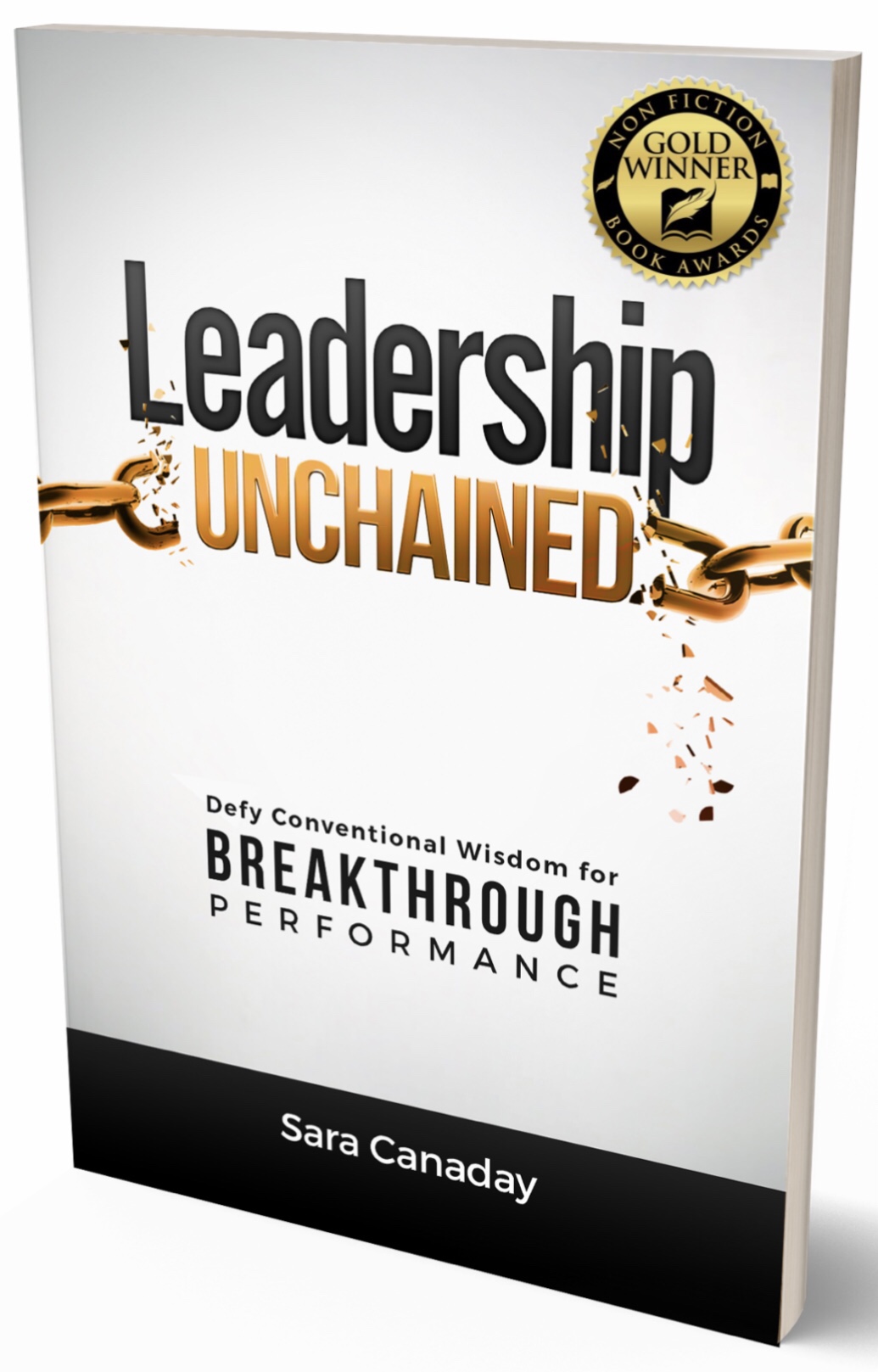
I love spending time with folks in other disciplines. Most of my reading is outside of the field I do most of my work in of education. I love intersectional learning. I want to learn about things I know nothing about and work with people in fields outside of my own and that will, in turn, stretch my learning and give me new ideas. At these intersections I am outside my comfort zone – or maybe I’m in a zone where I just love to learn. I believe we must surround ourselves with diverse cultures, upbringing, backgrounds, and abilities. Someone recently called me a multipotentialite. When I looked it up, because I had no idea what that was (see, I was learning something new), I saw things like “strong artistic curiosity” and “interest spanning multiple fields.” Guilty as charged! But, I really believe this wide interest and curiosity brings value to those I serve. I love it when I am in a planning meeting with a client and they say things like, “Byron, what are things you’ve seen out there that might apply to this, or might make this better?” Solving today’s complex and wicked issues needs a community of diverse thinkers. In a world where more specialization seems to be the conventional trend, I’m glad Sara Canaday reminded us that we need to defy that conventional wisdom and form communities of diverse thinkers.
The Ocean Awaits Us

“Even the upper end of the river believes in the ocean.” ~ William Stafford from his poem, Climbing Along The River.
Reading this line in this poem by William Stafford made me think back to standing at Point State Park in Pittsburgh which is situated in Pennsylvania where the Allegheny River and Monongahela River come together resulting in the formation of the Ohio River. The Ohio River is a tributary to the Mississippi River and drains into the Mississippi River at Cairo, Illinois. is I remember thinking how cool it was that the water I was looking at would be traveling 981 miles to the Mississippi River at Cairo and then another 954 miles until spilling into the Gulf of Mexico. No different than when I travel south from Indiana to the Gulf I expect it to be there.
Stafford was conveying the meaning that you should believe in something, even if you have no proof that it exists. As a human who has that “crazy gene” for coming up with wild and crazy ideas I’m good with this. Isn’t it, by the way, what the scientific process is all about: proving a hypothesis? Also, isn’t it great that we have a whole history of people who believed with no proof. Edison believed there could be an electric light bulb until he proved it could exist after more than 10,000 tries.
So, don’t be afraid to believe in your own ideas, or even crazy ideas, even if there is no proof they’ll work. There may just be an ocean of success on the other end. And, it might just be an idea to alter the world for the better forever.
Imagining The Unimaginable

Last night I had the pleasure of recording a professional growth video focused on student engagement with five National FFA Teacher Ambassadors from Missouri, Nevada, Tennessee, and West Virginia. The goal of our recording was to provide teachers from around the country with ideas on how to keep students engaged right now whether it be in the classroom or in FFA activities. The recording turned out awesome and I really got to thinking about how the teachers were excited about the fixes their FFA chapters had developed for keeping students/members engaged during the global pandemic. We are on day 254, by the way. And, I loved the fact that several times it was the students who came up with the solution or idea for engagement. Make no mistake, though, they are still looking for ideas for upping their engagement game.
We also discussed things that we want to continue post-pandemic, like having members who can’t attend an event in person, for whatever reason, be able to join virtually. We weren’t thinking in that mindset 254 days ago. Things like pandemics, wars, and other social crises often create new attitudes, needs, and behaviors, which need nurturing. I believe in the power of imagination and creativity. Right now there are very few things that are absolute and for sure. We live in a very complex and ever changing environment right now – the future never releases hard data.
What we were really saying in the video was that we must keep imagining every possible scenario. In other words, letting our imaginations go wild. We must be imagining the unimaginable. Think about it; what is happening right now during the pandemic to our society has no precedent, or data behind it. No matter what industry we are in right now we need to continue to be creative and use our imaginations to open the path forward.
There is a silver lining, however. As I pointed out, these five teachers gave us numerous ideas and opportunities the pandemic have made imaginable. All kinds of new ways of staying engaged and connected have been implemented that will continue after this pandemic has passed. Because we will probably never return to our familiar pre-pandemic realities, we need to keep imagining an even better future.
Do Ideas Cause Change Or Does Change Cause Ideas?

In the great book, The Upswing: How America Came Together A Century Ago and How We Can Do It Again, Robert D. Putnam and Shaylyn Romney Garrett posed the question of, “Do ideas cause change or does change cause ideas?” I am loving reading the research and work of Putnam and Garrett. I am only about 80% through the book and I love how he always points out when there cannot be any correlation, causality, or answers gained from leading or lagging indicators. I see this a lot in education; people want to jump immediately to causation. Putnam is a brilliant political scientist and Shaylyn has had a brilliant career as a change-maker and social entrepreneur. The two of them together have put together this award winning literary analysis of economic, education, civil rights, political, and other social trends for over a century. The book posits we have gone from an “I” to “We” and back to “I” society and gives us hope and ways to get back to we.
Change is defined as to simply make something or someone different, unlike the way it was before. Change can also be defined as moving from one thing to another. Synonyms for the word change consist of transform, alter, and modify. A lot of people have ideas about changing the world and making it a better place for people to live. This desire to change the world sounds very noble and heroic.

Now, back to the question prompting this post: do ideas cause change or does change cause ideas? I believe it is both. For example the idea of us carrying a source for listening to music in our pocket caused an entire chain of events (changes) leading ultimately to the SMART phone. Conversely, Coronavirus has hit the world in 2020. This has drastically changed our world from open and social to closed and locked down. This change has affected people’s lives, finances, relationships, and even their children. New ideas because of this change are being thought of every day.
Therefore, we need to keep being creative and having ideas about how to change the world. Additionally, we need to be paying attention to changes happening around us and let them prompt ideas for positive change.
 Byron's Babbles
leave a comment