Leading Without “Virtue Signaling”
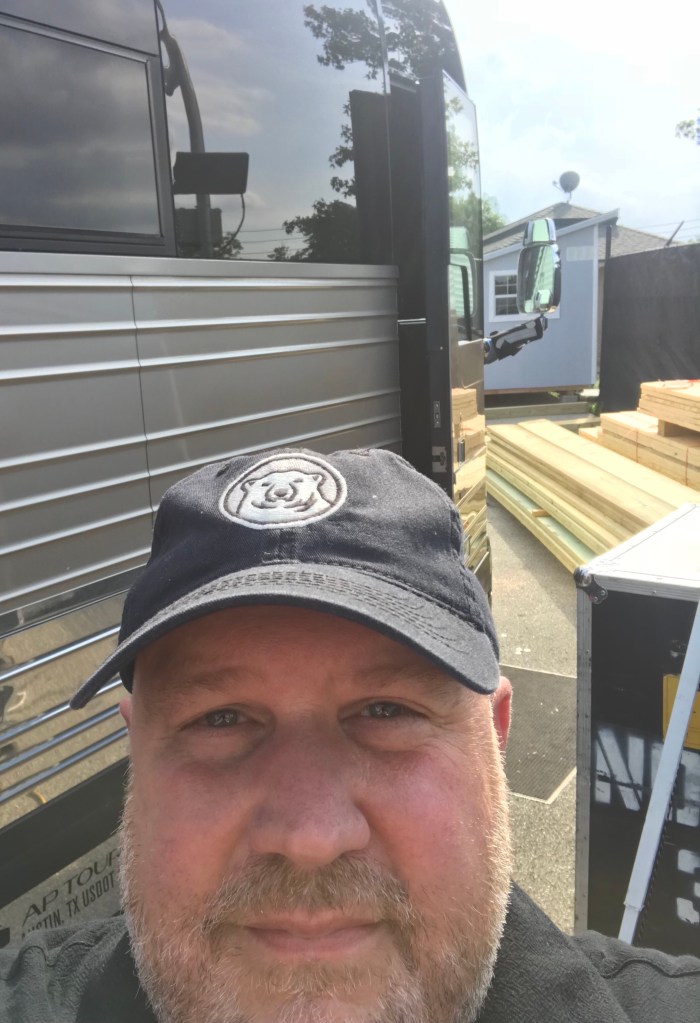
Getting Ready To Get On Nothing More’s Tour Bus
Yesterday, I had the rare opportunity to spend time on the tour bus of one of my favorite rock bands before their concert at Ruoff Home Mortgage Music Center. The band was Nothing More. Those that know me know I love rock music and still dream of being a rock star. Hey, if my idol, Gene Simmons can still be rockin’ it at age 69, no reason why I don’t still have time, right? Anyway, back to the subject of this post. I believe we all imagine what goes on in a rock band tour bus, but I’ve got to tell you I was amazed by the deep conversation we had. I gotta tell you the conversation yesterday is going to span several blog posts.
First of all, Johnny Hawkins, Mark Vollelunga, Daniel Oliver, and Ben Anderson, the band members of Nothing More, are four of the greatest guys you will ever meet. They are super friendly and very deep and philosophical thinkers. Need I say more for you to understand my gravitation toward them. So, I asked them if they would tell me a little more about one of their songs, DO YOU REALLY WANT IT?,” that I use to introduce a leadership training session I do. Little did I know the great conversation that was about to begin. As I said earlier, the conversation is going to turn into several blog posts, but this morning’s is going to be about something that Johnny Hawkins talked about that really made me pause and think; think about my own actions, as well as others.
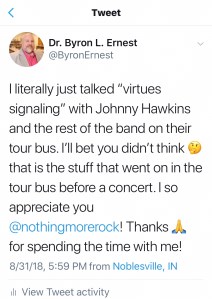 Johnny started talking about “virtue signaling.” If you would have told me we were going to talk “virtue signaling” on Nothing More’s tour bus before yesterday, I would have told you you were nuts. But, I gotta tell you, I really wanted to get back on the bus and ride to the next venue, and have one of those all night philosophical discussions. I loved Johnny’s visual description of “virtue signaling” when he took his fingers and made a circle ⭕️ symbolizing a button and held it to his chest. He talked about how this signaling is a camouflage. It’s noticeable how often virtue signalling consists of saying we hate things. Or, many times by saying we are for something, we are saying how much better we are than others. The emphasis on hate distracts from the fact we are really saying how good we are.
“Virtue signaling” is a habit we now have of indicating that one has virtue merely by expressing disgust or favor for certain political ideas, cultural happenings, or philosophical or religious beliefs. The phrase was coined by the British author, James Bartholomew. When we seize moments to throw a fit about what or who we hate, we many times are not really talking about the real issues or our philosophical differences with another person, we are just showing our vanity and try to signal to others how virtuous we are. As James Bartholomew said, “If you were frank and said, ‘I care about the environment more than most people do’ or ‘I care about the poor more than others’, your vanity and self-aggrandizement would be obvious. . . . Anger and outrage disguise your boastfulness.” In other words we are not talking anything of fact or substance. Johnny pointed out that we really need to take a step back and think about what we can do. This is much tougher than just saying we are going to solve world hunger, eliminate all racism, or make all schools great. Think about it. It is easy to say those things, but a much tougher conversation when we begin to think about what we are personally going to do.
We discussed how we talk about changing the world, but we really need to think about changing the things within the scope of what we can control or affect change. A big part of that is just changing and growing ourselves. That’s why I am so moved by the chorus in the lyrics of the song, DO YOU REALLY WANT IT? where it says, “Everybody wants to change the world, But one thing’s clear, No one ever wants to change themselves.” This is the chorus that I use for a major discussion among up and coming leaders. As you can see, this prompted an inspiring discussion that helped me grow as a person and leader that I have not even begun to scratch the surface on in this post. How about you? Do you really want it? What can you change? Are you willing to change yourself? Or will you “virtue signal” and blame others? Let’s take our “virtue buttons” of our chests and talk about substance and the issues not about the people and personalities.
Leadership Paw Prints
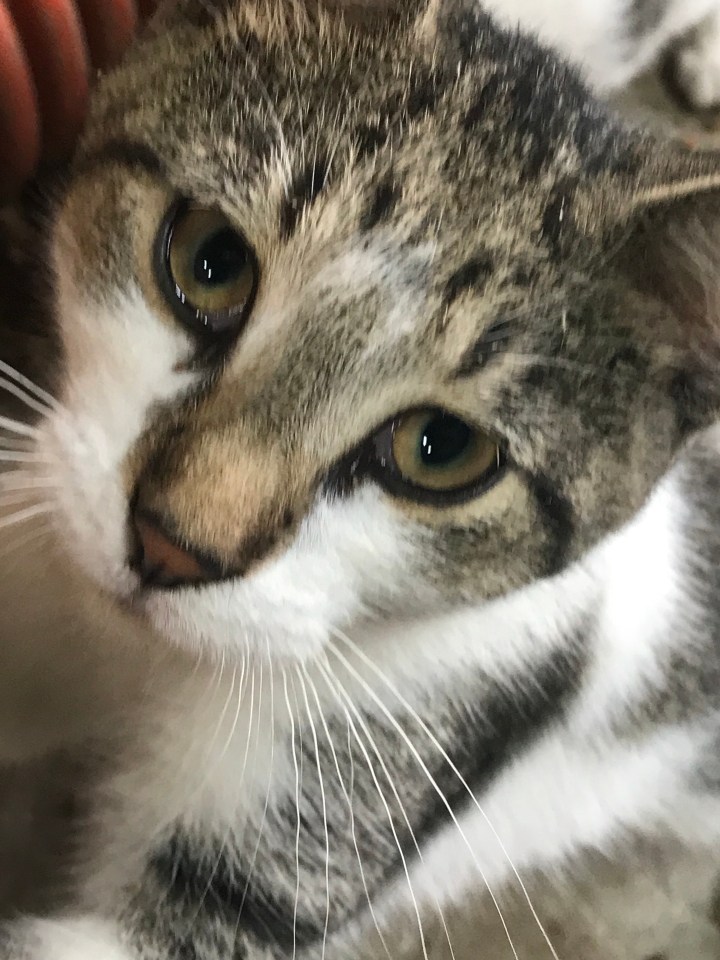
Cam
For those that are regular readers of my blog, you know that I love cats. To be clear, however, we have no cats in the house and none that curl up in my lap to watch TV. Ours are farm/barn cats that play an important role in rodent control and are free to roam the entire farm. Nonetheless, I love them and they are very well taken care of. Ours are not typical barn cats in that these are all pets and are always sitting on bales of hay or up on posts waiting to be petted. And…always lined up ready for me to feed them morning and evening. For me, they are just fun to watch.
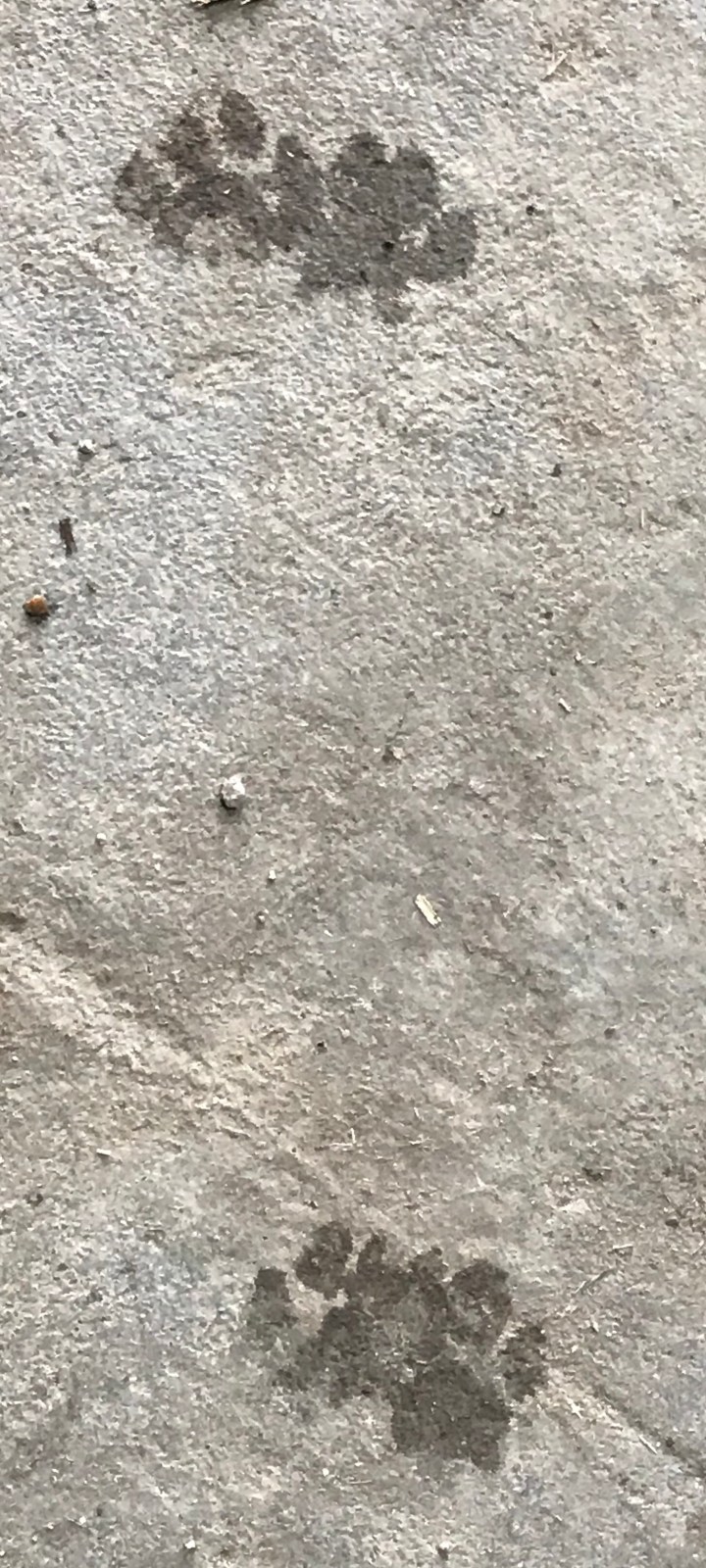 This morning it was raining and as I walked through the barn to start the morning feeding I looked down and saw the wet paw 🐾 prints, pictured here in this post, on the barn floor and I knew exactly which cat they were from – Cam. Cam is always the first cat to stir and I knew he would be up on his tower waiting for me to acknowledge him and pet him. Sure enough, there he was. This got me to thinking about what footprints we are leaving behind and what our predictability/dependability is.
As a fan of Winston Churchill, I am reminded of his saying, ‘We make a living by what we get, but we make a life by what we give.” So what are our footprints doing to make a life? We could even divide this into some of the different roles we play in life.
Think about our role as a parent. Most children imitate their parents, copying mannerisms and ways of responding to situations. As parents, we walk through life leaving footprints that express the qualities we value for our children to follow. We need to make sure we leave lasting imprints and not ones that quickly dry up and disappear like the wet cat paw 🐾 prints that inspired this post.
We all have mentors/coaches in our professional and personal lives. We need to make sure we are leaving lasting and life-giving footprints for our mentees. Also, we need to make sure to honor and follow in the footprints of our mentors/coaches. By doing so, we honor the people who invested their lives into us and our organizations. By following their footprints, we recognize that we have been given a “step up” by standing on what they have already accomplished.
Footprints clearly leave an impression. The way we lead, transact our personal business, and interact with others should leave an impression, too. We need to make sure the impression we leave has a lasting impression.
Our footprints show where we have been, what we have done, what direction we are headed, and what course corrections we have made along the way. Our footprints are the diary of what we have done. The pattern of your footprints is a testimony to the kind of person and leader we are.
Take a look over your shoulder at your footprints. Do they express the values and actions that you want others to associate with you? Have your footprints made a clear impression? Finally, are your footprints making a lasting impression?
The Great & Humble Leadership Of Calvin Coolidge
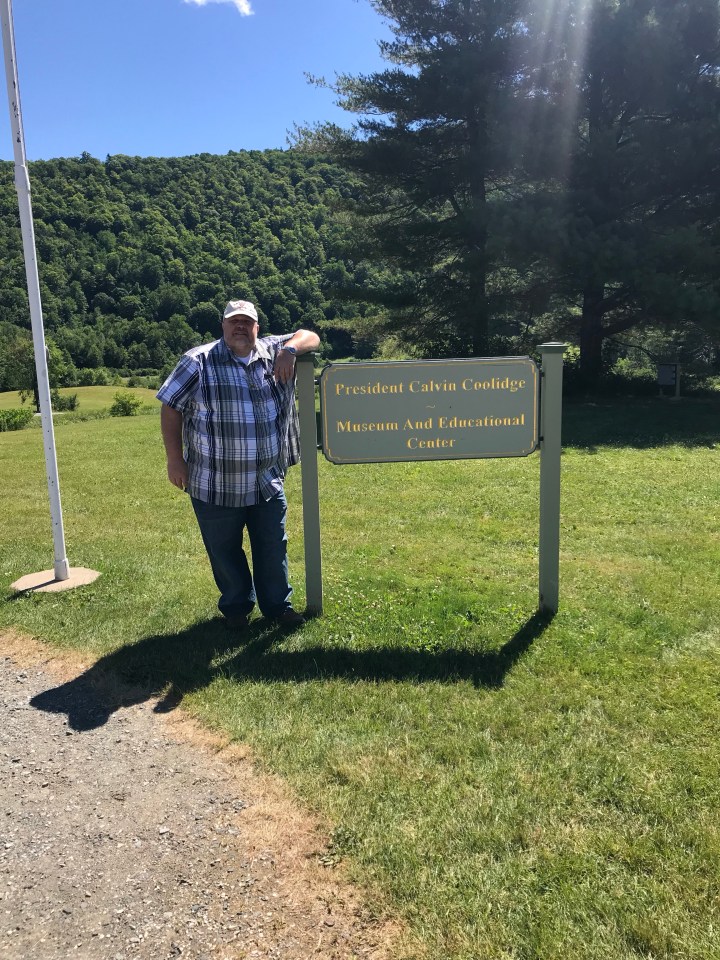 This past July my family and I spent the day in the beautiful Green Mountains of Vermont in Plymouth Notch. We went there to learn more about one of my favorite Presidents, Calvin Coolidge. I have read many books about our 30th President and studied many of the papers he wrote. I am fascinated with his leadership style, path to the Whitehouse, and his upbringing. In our quest to get my son to all 50 states before he graduates high school, we thought it fitting to spend time at the birthplace and childhood home of President Coolidge as our way of seeing Vermont.
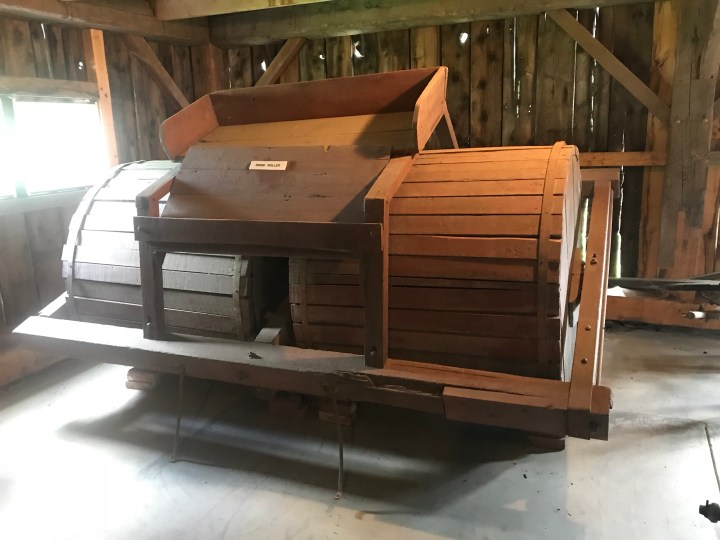
Snow Roller
As soon as we walked up to the visitors center, we understood the draw of this place known as Plymouth Notch. It was beautiful! Then as we learned about President Coolidge’s grandparents and parents, it became very evident how he could grow up to be President of the United States. His father was born in Plymouth, Vermont. John C. Coolidge was truly a servant leader. As I see it, he was the guy who held the town together. He was a farmer, store owner, and worked at a variety of other occupations. He served as the postman, snow roller (there was no way to plow snow at that time so they rolled it – see picture), town police, cheese maker, and he even made carriages. In addition, he was a veteran of the Vermont militia, and was in charge of the area militia. As you can see, he was a prominent local leader, he served in numerous Plymouth town offices, and was elected and served in both the Vermont House of Representatives and Vermont State Senate. What a role model for our 30th President.
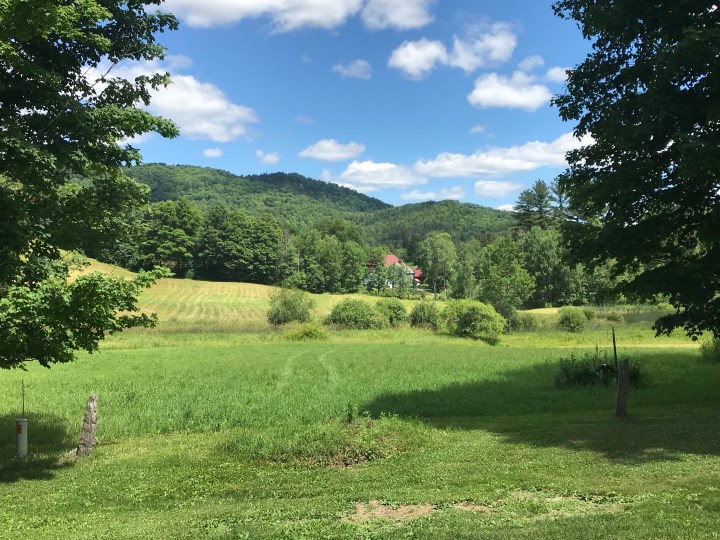 This was quite the example for the young Calvin Coolidge growing up. President Coolidge learned hard work on the farm and developed a love of agriculture and farming that never went away. I wonder if there will ever be another President of the United States who grew up on a farm or who was a farmer like Calvin Coolidge or Harry Truman? It was amazing to stand in the sitting room, known as the “Oath of Office Room.” Coolidge was back home when President Harding died, so was sworn in by his father, there in that room, to be President of the United States. The room displays the table, Bible, and kerosene lamp used in the swearing in and then his inauguration. President and Mrs. Coolidge occupied a second floor bedroom during their many visits. Here we were, standing where all this happened.
“…to walk humbly and discharge my obligations.” ~ Governor Calvin Coolidge when asked his goal as Governor Of Massachusetts
Calvin lived in Plymouth Notch until 1887, when he left for school. In 1895, he graduated from Amherst College in Massachusetts and moved to nearby Northampton to study law. Northampton, Massachusetts would be home for him for the rest of his life. After admittance to the bar in 1897, he established his law practice and soon became involved in local politics. Here are some key milestones in Coolidge’s rise to the presidency:
• Began a steady rise in the State Republican Party in 1899
• City Councilman of Northampton, Massachusetts
• Mayor of Northampton, Massachusetts
• Served in both houses of the Massachusetts State Legislator
• Served as Massachusetts’ Lieutenant Governor and Governor
• Gained national attention during the Boston police strike of 1919
• Elected as Vice President to Warren G. Harding in 1920
• Became President in 1923 upon the death of Harding
• Elected President in 1924 after gaining the faith of the American people in only 15 months
 President Coolidge was an outstanding example of a President who regarded his office, the most powerful in the world, as a stewardship–rather than as an opportunity to remake civilization. He proceeded from practical considerations of government, politics and popularity, applying his life-long experience as an elected office-holder. His decisions were usually compromises, made after long consideration of the conflicting interests involved. He announced them in as few words as possible and committed himself only so far ahead as might be necessary. During his administration the advance of the United States into the future was distinctly experimental–always in search of the sound course.
“They criticize me,” Coolidge said, “for harping on the obvious. Perhaps someday I’ll write On the Importance of the Obvious. If all the folks in the United States would do the few simple things they know they ought to do, most of our big problems would take care of themselves.” ~ President Calvin Coolidge
I am so glad we had the opportunity to walk among the houses of President Coolidge’s family and neighbors, the community church, taste cheese in the family’s cheese factory still in operation today, one-room schoolhouse, and general store which have all been carefully preserved. We also were able to pay our respects as the President is buried in the town cemetery. From walking where he walked we can understand why all during his life he would never waiver in his character or methods. He listened, he assimilated, and he waited until there appeared what seemed to be the soundest course. He did not try to make circumstances; but, when they appeared in the right configuration, he acted. By spending time there I learned where he had learned to be the principled and outstanding humble leader. I have been a student of Calvin Coolidge leadership for many years, and have now had the experience of seeing and understanding where his principled and conservative beliefs came from and were developed.
Refreshingly Organic Leadership
 Humble Leadership: The Power of Relationships, Openness, and Trust by Edgar H Schein
My rating: 5 of 5 stars
This is a refreshing change to other leadership books and theories that have multiple steps that really only work in an ideal culture or environment, or when everything is going perfect. Humble Leadership is not about doing this and then that; it is about building authentic relationships and trust, and then letting the group growth and development happen organically. This book starts out by posing the question as to whether the leader makes the culture, or the culture makes the leader. The authors also posit that leadership exists at all levels and everywhere in the organization. This helps the reader view leadership as multidimensional as opposed to a two-dimensional, top-down hierarchy. Humble Leadership is about relationship building and trust. Humble Leadership teaches the reader how to be adaptive and practice adaptive leadership while letting the individual team members and organization grow in an organic way. There were great examples of how Humble Leadership works with the Air Force Thunderbirds and David Marquet’s turning around of the Navy submarine, USS Sante Fe. This book is a must read for all leaders who want a culture where every person is empowered to be a leader and is working to make the organization great.
The Implications of What We Call “Level 2” Relationships at Work
 The following is an excerpt from Humble Leadership
The Implications of What We Call “Level 2” Relationships at Work
By Ed and Peter Schein
Organizations today are doing all kinds of experiments in how work is defined and are showing great flexibility in how roles and authority are allocated. What we see in these experiments is that they encourage relationships that are more personal. Bosses, direct reports, team members, and resources from other teams are making it a point to get to know each other at a more personal level, fostering more openness and, in time, more trust and the psychological safety to speak up and be heard.
In a Level 2 relationship, I convey that “I see you.” This is not necessarily “I like you” or “I want to be your friend,” or “Let’s get our families together,” but I let you know through my words, demeanor, and body language that I am aware of your total presence, that in this relationship we are working together and are dependent on each other, are trying to trust each other, and should each try to see the other as more than a fellow employee, or associate, or team member, but as a whole person. By conveying that “I see you”, we are also conveying that we will not allow “professional distance” to separate us; we are forming a personal-working bond that will not tolerate obfuscation or deception. Seeing each other as whole persons is primarily a choice that we can make. We already know how to be personal in our social and private lives. Humble Leadership involves making that conscious choice in our work lives.

Six Principles of Humble Leadership
- Humble Leadership builds on Level 2 personal relationships that depend on and foster openness and trust.
- If Level 2 relationships do not already exist in the workgroup, the emergent humble leader’s first job is to develop trust and openness in the workgroup.
- In a Level 2 workgroup Humble Leadership emerges by enabling whoever has pertinent information or expertise to speak up and improve whatever the group is seeking to accomplish.
- The process of creating and maintaining Level 2 relationships requires a learning mindset, cooperative attitudes, and skills in interpersonal and group dynamics.
- An effective group dealing with complex tasks in a volatile environment will need to evolve such mindsets, attitudes, and skills in all of its members.
- Therefore, Humble Leadership is as much a group phenomenon as an individual behavior.
***********************************************
About Authors
Edgar H. Schein is Professor Emeritus from the M.I.T. Sloan School of Management. He’s a pioneer in organizational studies, organizational culture and leadership, process consulting, career development. Ed’s contributions to the practice of O.D. date back to the early 1960s and continue with the recent publication of Organizational Culture and Leadership 5th edition and now Humble Leadership, co-authored with Peter A. Schein, co-founder of OCLI.org who brings 30 years of hands-on experience in large and small companies leading growth initiatives in Silicon Valley.
 Byron's Babbles
6 comments