Being Kind
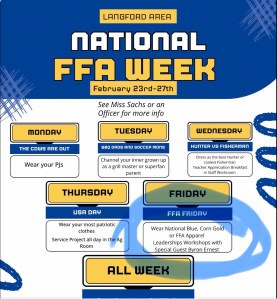
This past week I had the opportunity to be in Langford, South Dakota for National FFA Week. The Langford Area School District FFA Officers had the great idea to provide leadership workshop sessions designed for every grade level in the school. Their amazing agriculture teacher/FFA advisor and National FFA Teacher Ambassador, AnnaMarie Sachs, made the students’ idea a reality. I’m also very proud that the students requested that I be the provider of all these sessions. I’d had the opportunity to work with some of the Langford FFA members at National FFA Convention, so they had experienced my work.
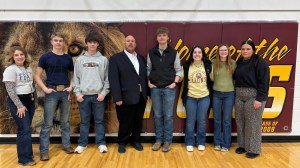
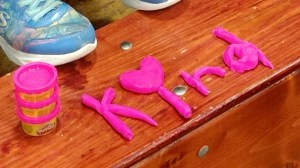
I shared on social media last week that I am always inspired by the leadership dispositions that young people always seem to have for leadership. The Langford students really inspired me. Remember the show Are You Smarter Than A Fifth Grader? Let me tell you, I met some pretty smart fifth graders last week that I wish I could have some adults I know learn from. One fifth grader really impressed me with her Play-Doh creation that was to represent her as a leader. She made the word “Kind,” using a heart to dot the “i” (see photos). Very cool!
I asked her to talk about her creation. She said that she believed she was a leader because she tried to be kind to everyone. She also stated that she believed that if everyone would just practice being kind the world would be a better place. Pretty smart fifth grader, don’t you think? Are you as smart as this fifth grader?
“Be kind whenever possible. It is always possible.” ~ Dalai Lama
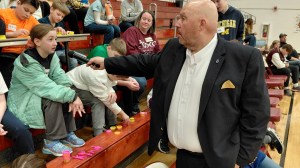
As an advocate of loving those we serve as a leadership attribute, this fifth grader made me reflect on what being kind really means. Being kind means genuinely understanding the impact our words and actions have on others. Another word that gets used a lot when defining being kind is “helpful.” I love this because providing help covers so many things. Being kind or helpful is about going that extra mile for others.
Now, taking this discussion a little deeper, I want to describe being kind as a vital leadership attribute because it fosters trust, loyalty, and a positive environment where team members feel valued and respected. Kind leaders are able to build strong relationships, which encourages open communication and collaboration. When leaders show genuine kindness, they inspire others to follow suit, creating a culture of empathy and mutual support. This not only enhances morale but also motivates individuals to perform their best, knowing they are appreciated and understood. Ultimately, kindness in leadership helps cultivate a cohesive and resilient team capable of overcoming challenges together.
Getting A Helper’s High

“People who feel good about the work they do are always looking for ways to contribute to the success of your organization.” When I read this tonight in Simple Truth #24, “People Who Produce Good Results Feel Good About Themselves” of Simple Truths of Leadership: 52 Ways To Be A Servant Leader and Build Trust, Making Common Sense Common Practice, Ken Blanchardand Randy Conley I thought to myself, “Drop the mic!” Then at about that same moment I got this text from a client I had just facilitated an important event for tonight: “That was really neat and very special tonight. Thanks for all of your intentional work and planning to make such an awesome event!” That really made me feel good. I had produced the results they wanted.
I think they call this a “helper’s high.” As a person who considers himself a helper this is awesome. The brain released those feel-good chemicals called endorphins. I also felt gratitude which makes me want to do even better work for the organization, proving Blanchard’s and Conley’s points. We human beings have a basic need to know that we contribute, create value and can make a difference and effect change in our environment.
Stop Look & Listen
I have always tried to imagine myself more as a helper instead of leader. Hopefully this keeps me grounded and lowers the power differential between myself and those I serve. We must remember that the people we serve or those seeking help are in a position in which they must be able to trust in our knowledge and guidance. Ken Blanchard told us that “When your people are your focus, they know they are part of a team and are motivated to give you their best efforts” (Blanchard & Conley, 2022, p. 41). This was a great reminder in Simple Truth #14, “The Best Use Of Power Is In Service To Others”, in Simple Truths of Leadership: 52 Ways To Be A Servant Leader and Build Trust, Making Common Sense Common Practice by Ken Blanchard and Randy Conley.
People need to feel safe and secure before they can bring their best selves to the workplace and in order to be able to do their best work. If left to itself, the power differential can get in the way of those we serve sense of safety. Building relationships is key here. I once had someone remind me that we need to lead like we are at a railroad crossing – stop, look, and listen! Which in turn enables us to learn how to be best help those we serve.
The Psychological Contract

In his great book Helping, which I end up rereading every couple of months, Edgar H. Schein told us “We have a psychological contract with those we serve.” This is so true. Living up to this contract in a positive and constructive way is part of loving those we serve. If we truly want to help someone, we need to use humble inquiry to find out what help is needed and make sure that we are not taking “face” away from the other person. Helping is about finding out what someone needs. Help can only be based on what the other person identifies as his or her problem. Therefore, the most basic form of help is to enable the other person to figure out what the real problem is. This requires us to be humble and build a relationship before proposing, suggesting, or selling anything.
I started this post on the airplane to Washington D.C. last night and shortly after I got to the hotel the perfect example of humble inquiry happened. I am on the 15th floor and needed to know where the ice machines were. When I went back down to to lobby I asked, “What floors are the ice machines on?” Rather than immediately playing expert and answering exactly what I had asked, my helper inquired, “What floor are you on?” I said, “On the 15th?” He then replied, “The closest machine to you is on the 12th floor. When you get off the elevator turn left and it is right there.” With one simple question my helper had provided more valuable information than just rattling off all the floors that had ice machines, which is what I had asked. The psychological contract had begun to be filled. I would certainly be comfortable going to him for help in the future. Being comfortable is certainly the beginning of a great client/helper relationship.
As leaders, and thus helpers, keeping our psychological contracts with others might just be the most influential thing we can do. This contract has to do with the perceptions of the relationships and the influence of our day to day actions. Trust, based on established trustworthiness of the parties, is key to the relationship. Every psychological contract we have is different for every person we interact with because every person is different. This non-tangible contract is fluid and constantly developing based on communication between the parties.
Respect, equity, compassion, trust, empathy, fairness, and objectivity are just some of the characteristics of a healthy psychological contract. When you think about, these are characteristics that when practiced and differentiated based on each person’s needs go a long way toward changing the lives of all for the better.
 Byron's Babbles
leave a comment