Leading By Being There
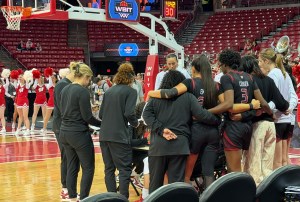
I teach all the time in my leadership development programs about how important presence and accessibility are for leaders. Last night I had the opportunity to attend the WBIT Quarterfinals Game in Madison, Wisconsin featuring Harvard vs. Wisconsin. Clearly with all my connections to Harvard University, I was going as a Harvard fan. But the trip got even more special when Harvard’s Assistant Coach Ali Sanders messaged me that she had a ticket right behind the bench for me. Priceless! I was going to be there and be present to support and root the team on. By the way: the seat was amazing. I got to sit next to and visit with parents of the team and meet Ali’s parents and family up from Illinois. Again, PRICELESS!
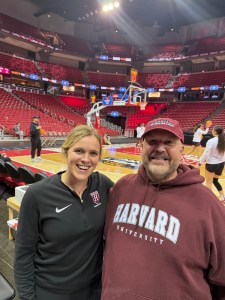
All of this really got to me to thinking about this whole presence thing and how important being there is. True presence is about availability and accessibility. It is about whether people feel they can reach you when it matters, and whether they believe you will respond with care and attention when they do. This was modeled very well from my vantage point as I watched the entire Harvard coaching staff.
As I watched Head Coach Carrie Moore interact with the team during the game I thought about what we all could take away from the continuous presence and coaching. Coach Moore was constantly communicating with team members. The question of how many miles of steps does a head coach get in on the sideline during a game?
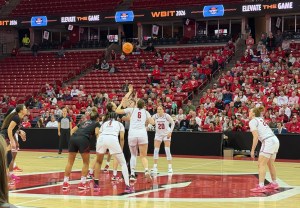
From a basketball coach constantly moving along the sideline and engaging with their team, we can learn that presence is dynamic and active. The coach’s movement and interaction demonstrate attentiveness, adaptability, and responsiveness—all key components of being truly present. This active engagement fosters a sense of focus and connection, emphasizing that presence isn’t just about physical stillness but about being fully attentive and involved in the moment. Additionally, it highlights the importance of both verbal and non-verbal cues, timing, and situational awareness in effective communication—paralleling how presence influences relationships and leadership beyond words alone.
Nostalgia: Our Kids Triggering Memories

As I sit and do my morning study and reflection time today on Thanksgiving, a great feeling rushes over me as I think about my son, Heath, being here and in his room. I have been excited about him being home for Thanksgiving ever since he told us he would be here. Keep in mind I was just with him last weekend for our trip to the Harvard/Yale football game (The Game). Those that know me know that ever since he started college I would be in a funk when he was gone. Now that Heath is an adult and out of college I’m not quite as bad, but I must admit I was in a bit of a funk after leaving him on Sunday till he got home last night. Just seeing his truck parked in the driveway this morning brings me joy. I know, it’s weird, but I love spending time with my son.
This all got me thinking about why we get that great feeling when our kids are home and under our roof visiting. There’s something incredibly comforting and fulfilling about having our adult children return home. Here are a few things that come to mind as I sit and reflect:
- Sense of Connection: Having our kids home creates a sense of closeness and connection. It’s a reminder of family bonds and shared experiences, which can bring joy and warmth.
- Nostalgia: Seeing them in their old spaces may evoke fond memories from their childhood. These memories can be bittersweet but ultimately rewarding, as they remind us of the journey we’ve all taken together.
- Safety and Comfort: Knowing that our children are safe and sound at home can alleviate worries. Home often represents a place of comfort, stability, and security.
- Pride: Watching our children grow into adults can bring a deep sense of pride. You may feel satisfaction in seeing them navigate life independently and then choose to return to their roots.
- Opportunities for Connection: Their presence offers opportunities for meaningful conversations, laughter, and the chance to reconnect. It fosters an environment for building deeper relationships.
- Fulfillment of Parenthood: For me, seeing Heath thriving and returning home affirms that we did okay raising him. It can affirm the love, support, and guidance we’ve provided over the years.
Overall, these moments can be a combination of joy, reflection, and gratitude, making their return feel especially sweet.
Focusing On Real Work

“A primary task of leadership is to direct attention.” Daniel Goleman taught us this, when referring to The Focused Leader. Last week our Head Tutor, Anne McCarthy, in the leadership program I am in right now at the University of OxfordSaïd Business School, started posing great questions for us to journal. Since my blog is my journal I posted my thoughts. You can read last week’s question and entry in To The Unknown And Beyond. This week’s question was, “Are you choosing to spend your time on the work that really matters? What changes could you make to be more focused on real work?” These questions matter because as I circle back to Goleman’s teaching, our primary task is to direct attention, including our own.
As a founder of a professional service firm who is a one person orchestra, the two questions Anne posed are very interesting. My first reaction was “yes” because I touch everything. Then as I began to reflect on the great schools and organizations I get to work and partner with it is clear that the key to Anne’s question is “focus.” Goleman argued, “a failure to focus inward leaves you rudderless, a failure to focus on others renders you clueless, and a failure to focus outward may leave you blindsided.” I have always used this statement as a guide.
While balancing a focus on self, others, and the wider world is tricky, by focusing on these areas, we can create a balanced approach that prioritizes meaningful work while addressing the needs of ourselves, those we serve, and the larger community. Here are some things that come to mind that are in alignment with the curriculum of the leadership program I am currently in:
- Vision and Goals: We must create a clear vision that encompasses both our personal and collective aspirations. Set goals that resonate on multiple levels – individual, growth, team success, and community impact, which can unify efforts toward common objectives.
- Self-Awareness: We need to develop a strong understanding of our own values, strengths, and weaknesses. Regular reflection can help us stay aligned with our core purpose and make decisions that are authentic and impactful.
- Prioritizing Well-Being: Taking care of our own well-being while also supporting the well-being of those we serve. If we engage in practices that promote mental, emotional, and physical health, our ability to focus on the work that matters.
- Encouraging Collaboration: Promoting a culture of collaboration where our team members and partners feel valued and included. This enhances teamwork, sparks innovation, and enables a broader view of the challenges we face and opportunities, ultimately leading to better decision-making.
- Feedback Loops: Establishing regular processes for timely and actionable feedback from both team members and stakeholders. This creates an environment of transparency and continuous improvement, helping to align efforts with what matters most.
It is great to have this reminder and prompt to reflect on focusing on what matters and the real work.
Educating Students To Improve The World
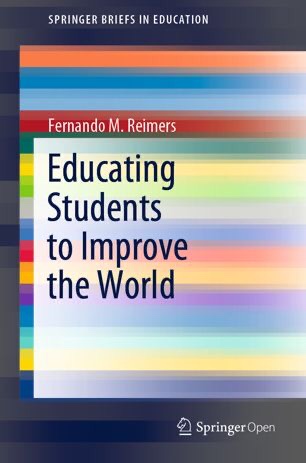 The book Educating Students to Improve the World, written by Harvard Professor Fernando M. Reimers, presents an inspiring and bold vision of how schools should be organized to cultivate a range of skills and dispositions that effectively educate students to make the world better. The book is unique in the breadth of the scholarship it integrates and in how it builds a sensible model to understand the process of educational change that honors the multidimensionality of the process. It is, at the same time, a very scholarly book, an erudite treaty of the field of global education, and a very practical book, a book that makes sense to those in the business of leading schools and school systems.
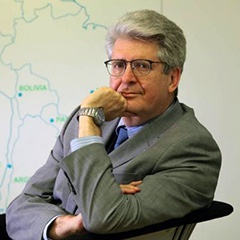
Professor Reimers
The idea that the book contains is simple, yet holds remarkable potential to transform education around the world. The big idea the book contains is that public education, as an institution of the Enlightenment, was meant to be global since its creation, but the obvious global nature of many of the challenges facing humanity requires that education becomes intentionally global. Professor Reimers argues in the book that formal education should be aligned with audacious and hopeful visions for a more inclusive world, such as those contained in the Universal Declaration of Human Rights or in the United Nations Sustainable Development Goals. Such alignment involves defining what kind of competencies would actually help students care about and have the skills to make a difference in advancing a more inclusive and sustainable world. With such clarity on the expected learning outcomes for students, the curriculum would then map backwards an instructional sequence to gradually support students in a rigorous process of development of such competencies.
But the merit of this book goes beyond articulating why education should help students develop a sense of purpose, aligned with ambitious purposes of building a better world, it then explains how structuring effective education programs requires that the process of change is advanced multidimensionally, reflecting a cultural, psychological, professional, institutional and political.
The ambitions of the book are considerable, to bridge an evident schism between the scholarship and practice of global education. The book is an intellectual tour de force tracing the history of global education to the very creation of public education systems, and integrating research reflecting a variety of disciplinary perspectives in support of a conceptual framework in service of more coherent and effective educational practice.
Enhancing the credibility of the ideas in the book is not just the fact that the book is well researched and crafted, but that it builds on a long practice of the author actually doing the very things this books recommends should be done to develop a relevant curriculum. Professor Reimers invented an approach to take bold goals, such as the United Nations Development Goals, and translate them into student learning outcomes, and then curriculum and pedagogy. It’s a simple and intuitive idea, but it had not been done before.
It is the combination of the powerful idea that education should be aligned with ambitious goals for inclusion and sustainability with a theoretical model of how to structure efforts to translate that idea into changed educational practices that makes this book unique. It is not surprising that since it was published, as an Open Access resource by Springer, a week ago, the book has already been downloaded 24,000 times.
The book can be downloaded here https://www.springer.com/gp/book/9789811538865
Scaling Partnerships In Education & Telling Our Story
 I’m so sad to be sitting at the airport because I hate leaving Harvard University. I always learn so much from my friends at the Harvard Graduate School of Education. As always, my thinking as stretched, what I thought I knew challenged, and new creative and innovative ideas developed. As Dr. Mandy Savitz-Romer said last Sunday, “You may not leave here with complete closure, but with new questions.” That is learning at its best! My description for my learning this week is that I have been “coached up!”
 Today’s learning was just as great as the rest of the week. I loved doing a case study on a partnership with the Nike Innovation Fund for improving Oregon student success. Dr. Monica Higgins did a great job of facilitating the case study and I learned a great deal about scaling the impact of public private partnerships. This learning was followed up by a great session by Dr. Irvin Scott on story telling and its importance to teaching and leadership.
As I have done all week in Thriving Students, Developing & Supporting Our Students: Future Identity Versus No Future Identity, and Changing The Narrative For Our Students, I compiled a top 20 list of the things I learned today. Here is my list:
- It’s not just if we do partnerships, it’s how we do partnerships.
- Partnerships should match the core values or mission of the partners.
- Partnerships are great ways for industry to understand education and for education to understand industry.
- It is very important to analyze both sides of all partnerships.
- Partnerships are a psychological contract.
- Everything’s not always explicit (context, risks, et cetera).
- In partnerships everything is not always spelled out.
- Move partnerships from individual to individual to organization to organization. This plays to sustainability.
- Open communication is key to partnerships, even when things go wrong.
- Agenda items versus surface level just for show.
- Eliminate hidden targets in partnerships
- Partnerships need an exit strategy so the innovation can be sustained without the partner.
- Partnerships should be mutually beneficial, with beneficial up for debate.
- In partnerships:
- Make implicit explicit
- Have clarity of roles and limitations
- Have flexibility built in
- Have mutual goals, timelines, and milestones
- Is the voice of the student heard in the partnership?
- You never want to scale until you know you have something that works.
- Need to decide to scale deep or scale out.
- Everyone has a story of how they got where they are. What is your trajectory?
- We need to be warm demanders for our students.
- We need to give an academic press to our students.
- You can’t lead if you don’t read.
- Why story/narrative in leadership?
- Stories are fundamentally human…
- Stories build connection…critical for leaders…
- Stories bring data alive…
- Stories capture what is possible…
Changing The Narrative For Our Students


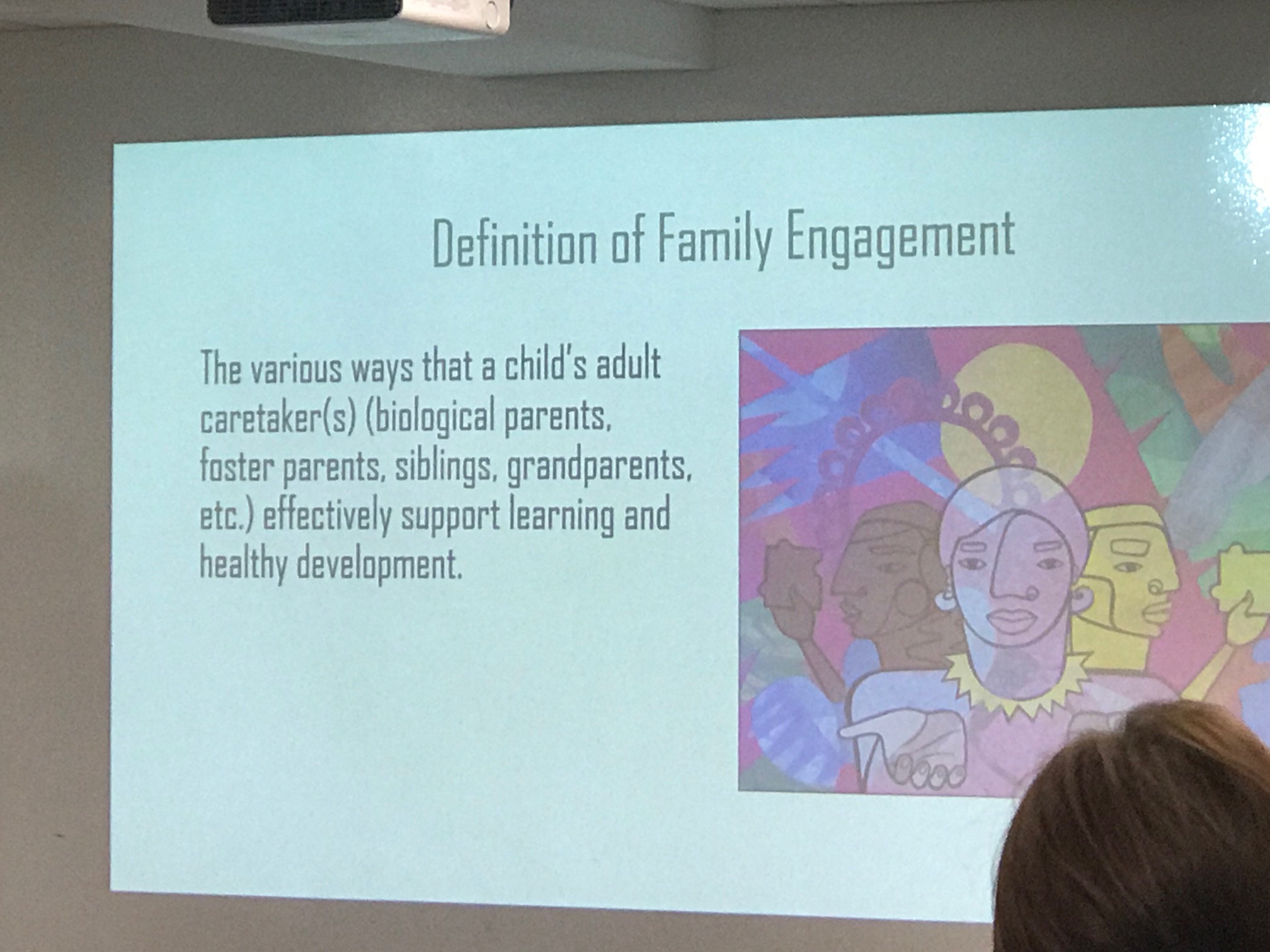
Yesterday was another powerful day of learning at Harvard University. It started out with Liya Escalera walking us through changing the narrative, valuing the cultural wealth of our underrepresented students in order to achieve equity. Additionally, she taught some great asset-based approaches to leading for student success. The best part was how she had us start this session. She had us reflect on situations in an educational setting that made us feel unwelcome and then reflect on a situation that made us feel welcome. This was a great way to get us in a mode of thinking about changing the narrative for our students. Liya also worked us through asset based communication. Below is a slide that does a great job of showing what our discussion included: 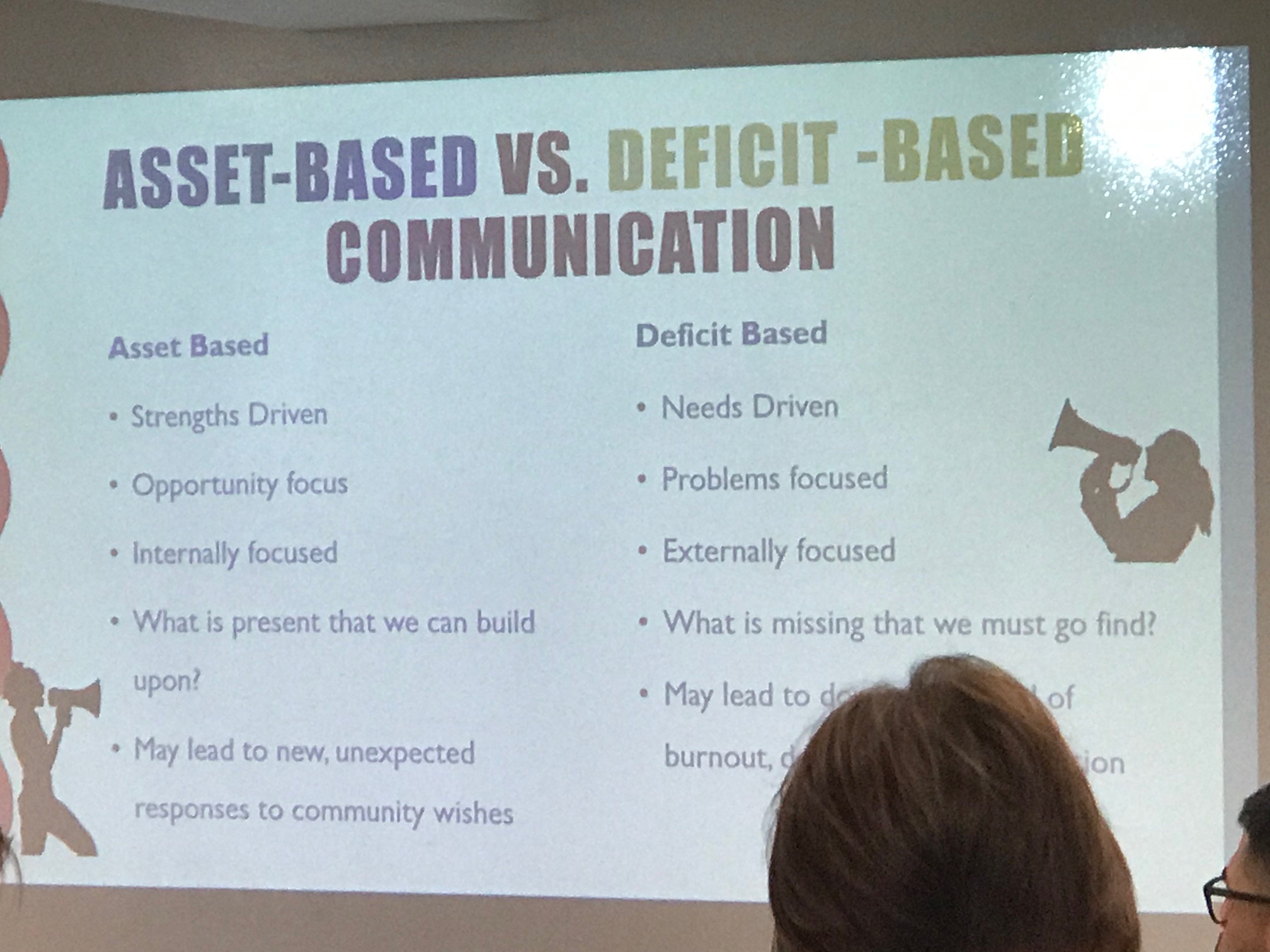 Then we spent time digging into family engagement and making families true partners with Stephany Cuevas of Harvard University. We know that students with engaged families:
- Exhibit faster rates of literacy acquisition
- Earn higher grades and test scores
- Enroll in higher level programs
- Are promoted more and earn more credits
- Adapt better to school and attend more regularly
- Have better social skills and behaviors
- Graduate and go on to higher education
 The learning did not stop here. We then spent time with Daren Graves diving into issues of race with intentionality. This was very powerful learning. We discussed how racism can happen without it being intentional. In education we must be diligent in monitoring the areas where we see disparate racial outcomes or impact:
- Curriculum
- Groupings
- Assessment
- Relationships with students and faculty
- Relationships with the community
- Recruitment/Retention
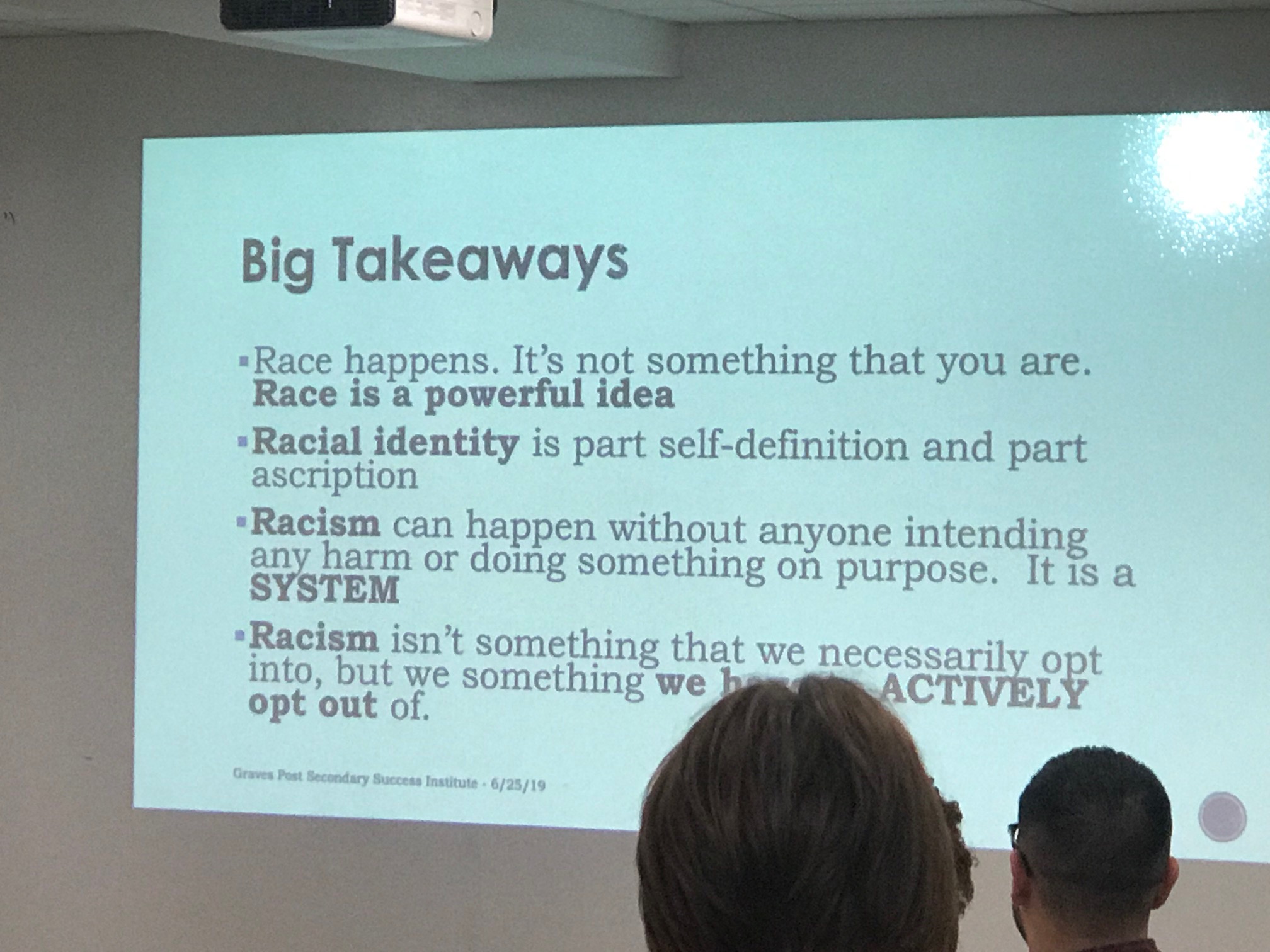 Just like in Thriving Students and Developing & Supporting Our Students: Future Identity Versus No Future Identity here is the top 30 list from our Tuesday learning:
- Reflect on a situation in an educational setting that made you feel unwelcome.
- Reflect on a situation that made you feel welcome.
- Asset-Based versus Deficit-Based Communication
- It is a bad habit to not look at all our communication through a critical lens.
- What is the problem? The problem is not our students.
- Is the problem that our students aren’t post-secondary ready, or that our education system is not student ready?
- Cultural competence will not cut it. We need to be highly skilled, not just competent.
- We need to make sure all schools are student ready.
- Google Translate™ is a good thing, but must be edited, or those reading will feel disrespected.
- We need information to go to parents as well as the students.
- We need to offer parents parents questions to ask their students.
- Our families are collaborators.
- We need to have parents presenting to parents.
- Have parents talk to each other.
- Students need to be thought of as part of a family, and then the family as part of all the practices of the school.
- Staff needs to view families as collaborators and partners.
- Staff Relationships With Parents + School Knowledge = Family Engagement As Confident Partner
- Staff needs to think of themselves as mentors to their parents.
- Family engagement is a way of thinking, not a practice.
- Family engagement is a value, not just a practice.
- There is no gene for race. Science saved the day!
- Race is an idea.
- Race is not culture.
- Race is something that happens, not something we are.
- It’s not about doing well in school, it’s about doing school well.
- Racism is usually pretty mundane.
- A system that confers privilege and produces disparate outcomes on the basis of race.
- historically-based systems
- actions/beliefs/policies/practices/conceptions
- confers visible and unacknowledged privilege
- Sometimes we set students up for failure by trying to not set them up for failure.
- Start with implicit biases, then move to structural biases.
- Racism can happen without anyone intentionally wanting it to happen.
Thriving Students
 I have been learning at Harvard University this week on post-secondary success. As an exercise to help myself digest all of the information and make some sense of the learning, I like to come up with a top list from each day. This day’s (Sunday, June 23rd) learning came from Mandy Savitz-Romer and Francesca Purcell, and included learning about post-secondary gaps and opportunities and the data and trends behind public policies to increase post-secondary success.
One of the things that really jumped out at me from the reading and learning was the introduction of the Thriving Quotient. I was very interested in the thought and reality is that we always want to measure student success primarily in terms of academic performance and persistence to graduation. I became enthralled when reading “The “Thriving Quotient”: A New Vision for Student Success” by Laurie A. Schreiner, where she introduced this assessment tool. Thriving students are academically successful and also believe themselves to be part of a community and psychological well-being. These things make it possible for the student to get the most out of their educational experience. The thing I like about Academic Thriving is that it goes beyond what I call compliance – attending class, doing homework – going through the motions. In the Thriving Quotient, Academic Thriving students are psychologically engaged in the learning process. What really resonated with me about this was that the idea of making a connection between what the student already knows or is interested in. This connection to relevant contexts helps the student be an engaged learner and THRIVE.
The Thriving Quotient also includes Intrapersonal Thriving. This thriving is about the student having a healthy attitude toward themselves and the learning process. Additionally included is Interpersonal Thriving. We can’t truly thrive without relationships. So, time spent on the Thriving Quotient and so much other discussion on Sunday led to the following top 20 list of things learned:
- Learning with and from each other from different sectors.
- Pull don the walls and step outside our lanes.
- We have to get the singular narrative out of our mind.
- Sometimes we are creating a narrative for students that does not fit their why, or what is best for them.
- Actions of students do not match their aspirations.
- Only 10% of students that drop out of college had below a “C” average.
- Student problems vs. institutional problems
- We highlight student problems, but sometimes instead of highlighting problems, we need to change the process.
- With multiple pathways available to students, we need to make sure we are sorting in a way that is about best fit, not about other factors.
- We need to get better at moving from thinking about student success in terms of just quantitative box checking like graduation rates, number of applying or accepted to college, and test scores by moving to the idea of students THRIVING!
- We can’t think of college as just one singular thing because there are many different outcomes from many different types of colleges.
- The highest stakes tests students take are the placement tests once in college. Then, in some cases, we waste the students’ time in developmental education.
- We must find a way to scale up the things that work!
- A college credential is a solid investment that will pay off over time.
- More likely to give back to the community and vote
- Higher levels of personal well-being (health, et cetera)
- Higher earnings and tax payments
- What is it that the adult wants, versus what the student wants.
- Adults always think we know best, but many times we don’t know all the options, or nor does the student know all the options.
- “College is not for everyone, but it is for everyone that looks like you when you are a school.”
- We maybe need to think about amending the 14th amendment of our constitution to include higher education.
- We are nearing universal enrollment in college. What does this mean?
- A
college goingfuture identity.
As you can see, there was a lot to digest after a single afternoon of work. If any of these statements resonated or made you think, please comment here on this post.
 Byron's Babbles
leave a comment