Global Sense Of Worth

I am an eager student of Edgar H. Schein and am reading his book, Humble Consulting: How To Provide Real Help Faster, right now. Something I just read really stuck out to me, “Treat each other as persons instead of their roles.” This is about “doing” not “espousing” (too many leaders think that doing the right thing applies to everyone, but them). Truly respecting is having admiration and esteem for others, and dignity is the belief that all humans have inherent worth and deserve basic rights and equitable treatment.
Everyone has potential and should be inherently valued regardless of title, status, or situation. This is really a global sense of worth. As humans, we are multifaceted and cannot be fit into the box that many would like to crop us into. I believe we need to have everyone showing us their potential and worth by putting it all out there like the inflatable “air dancers.” These powerful advertising tools get our attention by their free uninhibited motion. That motions causes distraction and we pay attention. We need to be watching for the potential and value in others and pay attention.
What Will Your Culture Allow?

It has been said that an organization can only do what their culture will allow. The culture, or community, as I like to call it, of an organization sets expectations for how people behave and work together, and how well they function as a team. Therefore, the culture developed can break down the boundaries between siloed teams, guide decision-making, and improve workflow overall. Conversely, a toxic organizational culture has the capacity to do just the opposite. A healthy organizational culture brings people together and keeps them aligned. When the culture is clear, different perspectives can gather behind it with common purpose.
The culture of an organization sets expectations for how people act, behave, and work together. Culture determines how well we will function as a team. Make no mistake, culture and community are created through consistent and authentic behaviors, not press releases, policy documents, or rhetoric not backed by action. A healthy culture is a group phenomenon. A healthy culture is developed during critical events during the life and learning of a team. The best leaders I’ve been associated with were very aware of the culture that operated and defined the organization’s community.
Life Is Artistic Expression
This week, Chapter 35, “Edit Your Life” in Mindset Mondays with DTK by David Taylor-Klaus (DTK) had everything needed to grab my attention. The chapter had metaphors, talked about creativity and imagination, referred to Albert Einstein, and compared our lives to artistic masterpieces. I believe this chapter resonated so much with me because I use the metaphor all the time of our lives being portraits that are never completed. Every day adds brush strokes, but we are never done. My hope and prayer is that I add brush stokes to my life’s portrait on the day I die. But, it still won’t be complete because I hope there is a legacy that continues to influence. DTK reminded us that we show up to work with our creativity and imaginations. Why don’t apply these to who we are and how we show up in the world? Our lives are our own to define and explore. Why not be imaginative with the masterpiece that is “you”?
“Edit your life frequently and ruthlessly. It’s your masterpiece, after all.”
Nathan Morris
DTK said, “I’m inspired by the idea of living a created life, a life that I chose to edit frequently and ruthlessly. I probably replace “edit” with “iterate” as I reflect on this. Edit makes me think big change and iterate makes me think about small brush strokes I’ve watched artists make that changed the entire painting. While I know some of us need big edits, iterating may be less overwhelming.
And, we haven’t even begun to think about how we have to “adapt” during our life. Think about all the adaptation strokes of the brush you’ve made to your life’s portrait in the last year, plus. A portrait is a hand crafted piece of art. We, too, are hand crafted pieces of art. Let’s all consider life as another form of artistic expression and fall in love with the possibilities.
Good Leadership Is Pragmatic
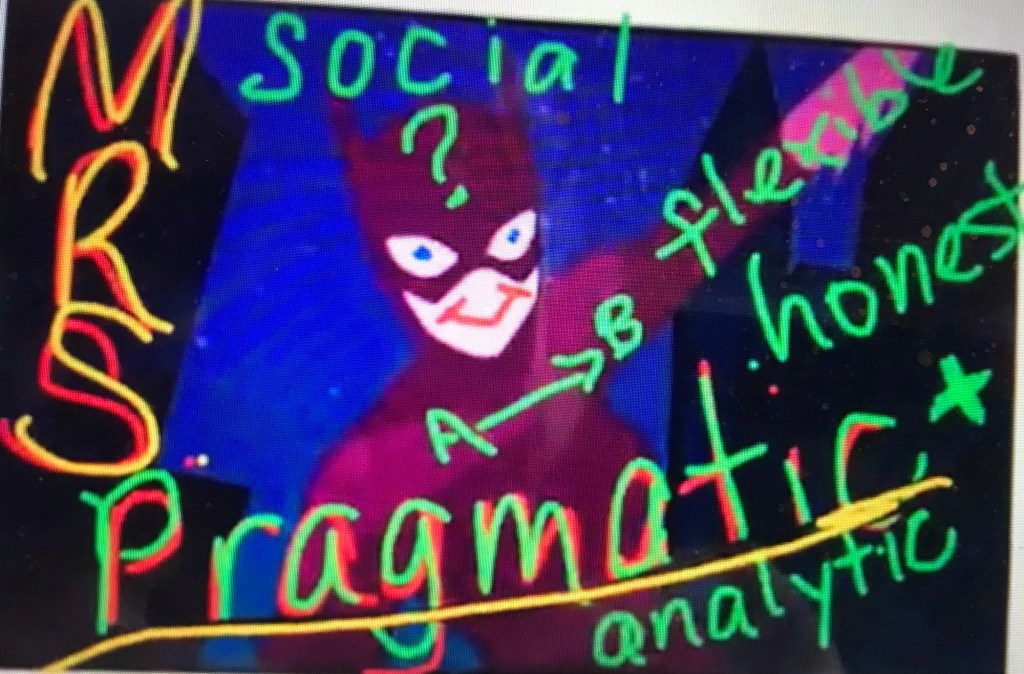
Last week I was doing leadership development facilitation for our participants from North Carolina, South Carolina, Georgia, and Tennessee. This session involved developing a top 5 list of Bad Leader traits and a top 5 list of Good Leader traits. While we were voting and tallying to get to their top 5s, I thought about how the traits are really pragmatic. Take a look at their voting tallies and their top 5s:
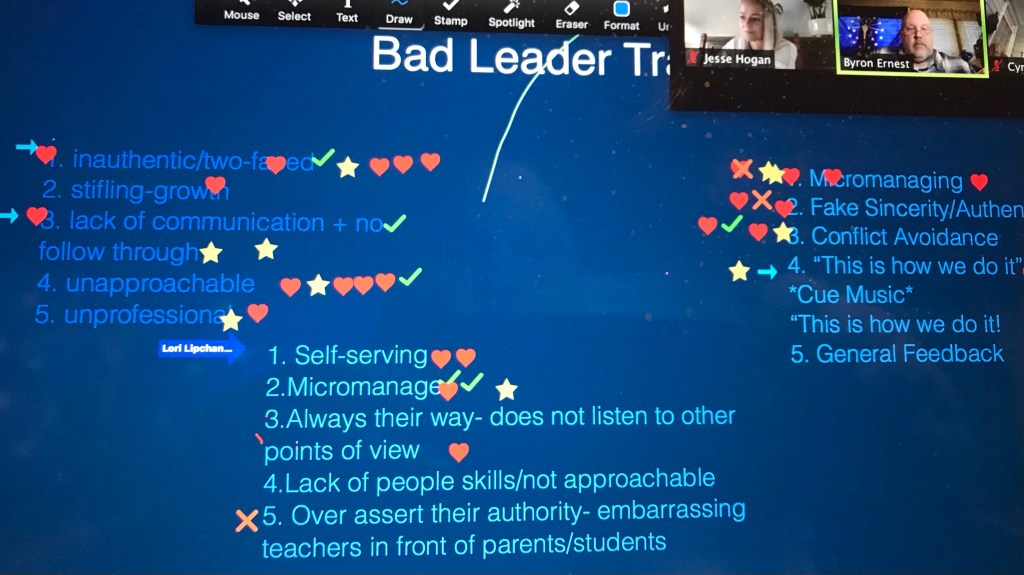


The opposite of idealistic is pragmatic, a word that describes a philosophy of “doing what works best.” From Greek pragma “deed,” the word has historically described philosophers and politicians who were concerned more with real-world application of ideas than with abstract notions. Did you catch that? Doing what works best. Being concerned with real-world application. Look at the Good Leader traits above and I think you’ll agree they involve doing what works best.
Digging Up The Past To Get Past This
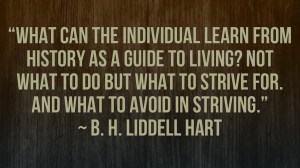
Last night I facilitated an incredible gathering of up and coming educational leaders from Georgia, North and South Carolina, and Tennessee. The title is the evening was “Do You Really Want It?” I got the inspiration for this session from my friends in the band Nothing More. A couple of years ago I had the chance to spend some time in their tour bus with them visiting and talking about inspiration behind a couple of songs. They have an incredible song “Do You Really Want It?” that I use to prompt deep thought and reflection for discussion concerning change, diversity, and overcoming our American demons (a term introduced in the song). Last night’s discussion did not disappoint.
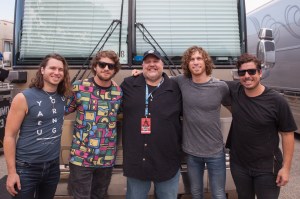
Every time I facilitate this discussion one stanza always comes up. “You gotta dig up the past to get past this.” I have been contemplating this a lot lately with all that is going on in the world. We must study the past and that sometimes involves digging up the past. But, we must get better at doing that in a productive way that allows us to actually learn from that past. I’ve been reading a lot on this and am reading Why Don’t We Learn From History by military historian B. H. Liddell Hart right now.
In the book we are told that when we’re able to learn from history, we can literally change the world. Otto von Bismarck “famously claimed that only fools learn from their own experiences. Truly visionary leaders – according to Bismarck – draw inspiration and insight from the experiences of others.” That is why we must study all leaders, even those in the background and behind the scenes, to learn from the good and the bad.
“History is the record of man’s steps and slips. It provides us with the opportunity to profit by the stumbles and tumbles of our forerunners.”
B. H. Liddell Hart
Every person needs to be studying history in order to broaden our understanding of the world. “Sure, an 80-year-old may have decades of life lessons to guide her actions, but a student of history will have hundreds or thousands of years’ worth of data to draw upon.” Hart taught us that, “Historians must pursue the truth even when it is uncomfortable.” I loved that Hart discussed that the context that the events of the past took place, the context of any documents created, and any biases must be taken into account when studying history.

We have an obligation to study history and it is critical that we provide history and civics lessons that students can apply as they become citizen leaders. In another great book I’m reading right now by Matt Haig, How To Stop Time: A Novel, Tom Hazard answered the question of how he would bring history alive for students by saying, “There was no easier question in the world. ‘History isn’t something you need to bring to life. History already is alive. We are history. History isn’t politicians or kings and queens. History is everyone. It is everything. It’s that coffee. You could explain much of the whole history of capitalism and empire and slavery just by talking about coffee. The amount of blood and misery that has taken place for us to sit here and sip coffee out of paper cups is incredible.’” This is so true and thus we must make history and civics relevant for our students. We must be infusing real world issues and problems into the instruction, so our students can apply and adapt learning.
Because our youth are our future citizen leaders, we have an obligation to make the fountain of wisdom unattainable through mere personal experience that studying history provides. Let’s all do our part to study and teach history so we have the hundreds or thousands of years’ worth of data to draw upon.
Living Every Day Like It Is Someday

Yesterday evening after the last person had logged off from a very fun and engaging leadership development I facilitated, I sat down to decompress and flipped on the television. I landed on B Positive and the scene was Drew (Thomas Middleditch) on a date and they were asking each other what they would do right now if it was someday. In other words, if you could do anything today that you have put off till someday, what would you do? Wow, what a question. I really pondered on this. What would your answer be?
We need to believe in our dreams and take action. Also, it is important to surround ourselves with beauty, with the life we aspire to have, the people we care about, the places you want to visit, and not put off the things we want to do someday. We should refuse to live in fear, refuse to not feel love, to not show tolerance, and to not help people in need. I refuse not to give and refuse to be someone other than the person I am. Let’s all work to make our dreams come true, no matter how simple they are. Live every day like it is someday.
Being The Hero Inside You

Our lives are such a dynamic experience. Sometimes we may feel like life is static and fixed, and other times we are moving and shaking. But, upon further analysis we are actually in a state of perpetual flux. I was reminded of this in Chapter 34, “Beyond The ‘Blah-teau’” in Mindset Mondays with DTK by David Taylor-Klaus (DTK). Expansion and contraction is the metaphor that comes to mind here. DTK said, “To genuinely expand what we are capable of doing, we must also expand our being” (p. 245). Back to my metaphor. When something expands it would be more spacious and able to fill up the world with its biggest and best version. On the other hand, our contracted version becomes tighter and collapses and shrinks. Thus reducing capacity.
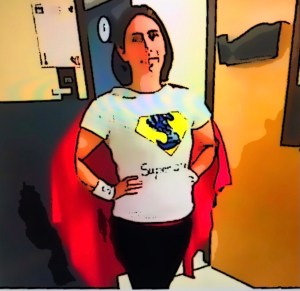
As part of the constantly expanding universe, we too are constantly being called to expand. DTK observed, “This includes recognizing our current capacity and consciously stretching it to make room for what’s next, and for who we are becoming next” (p. 245). We must know who we are to know what we want to create in the world. DTK made reference to superheroes saying, “Dropping the superhero cape and BEING the hero inside” (p. 247). I loved that because this week and last I have been doing a leadership development session using superheroes as a through line. Just like superheroes, we all have great powers, but are also vulnerable and have doubts. We must channel who we really are and our own personal superpowers to expand and evolve to make the great impact we we put on this world to create.
WAIT and Listen
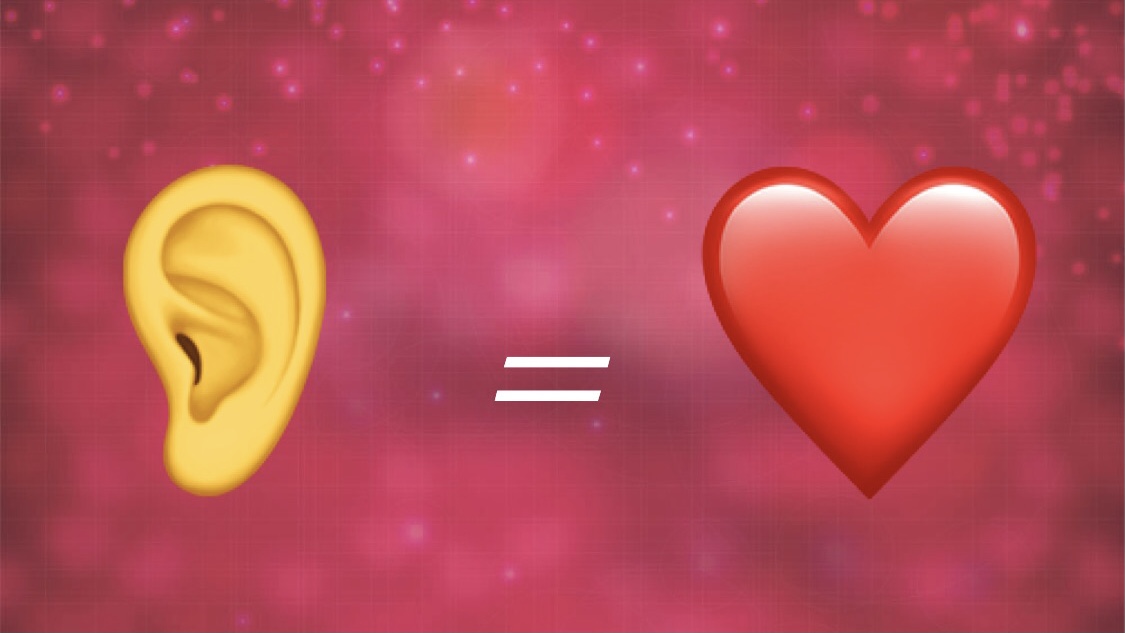
This week in Chapter 32, “Listening Is Love,” in Mindset Mondays with DTK by David Taylor-Klaus (DTK) I was reminded of two very influential books I have read this year. I wrote these notes down while reading the second revised and expanded edition of Humble Inquiry: The Gentle Art Of Asking Instead Of Telling by Edgar H. Schein and Peter A. Schein:
- We get opinionated distortions
- We value telling over listening
- We may need to know what others know in order to solve our own problems
- We need to access our ignorance
Additionally I was reminded of some notes I took while reading the sixth edition of the great book by Beverly Kaye and Sharon Jordan-Evans Love ‘Em Or Lose ‘Em. Here are a few of the many things I wrote down:
- Ask so you don’t have to guess
- Let your people mentor you
- Think “what if” before you think “no”
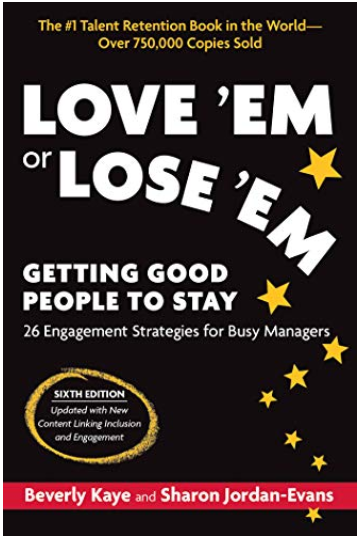
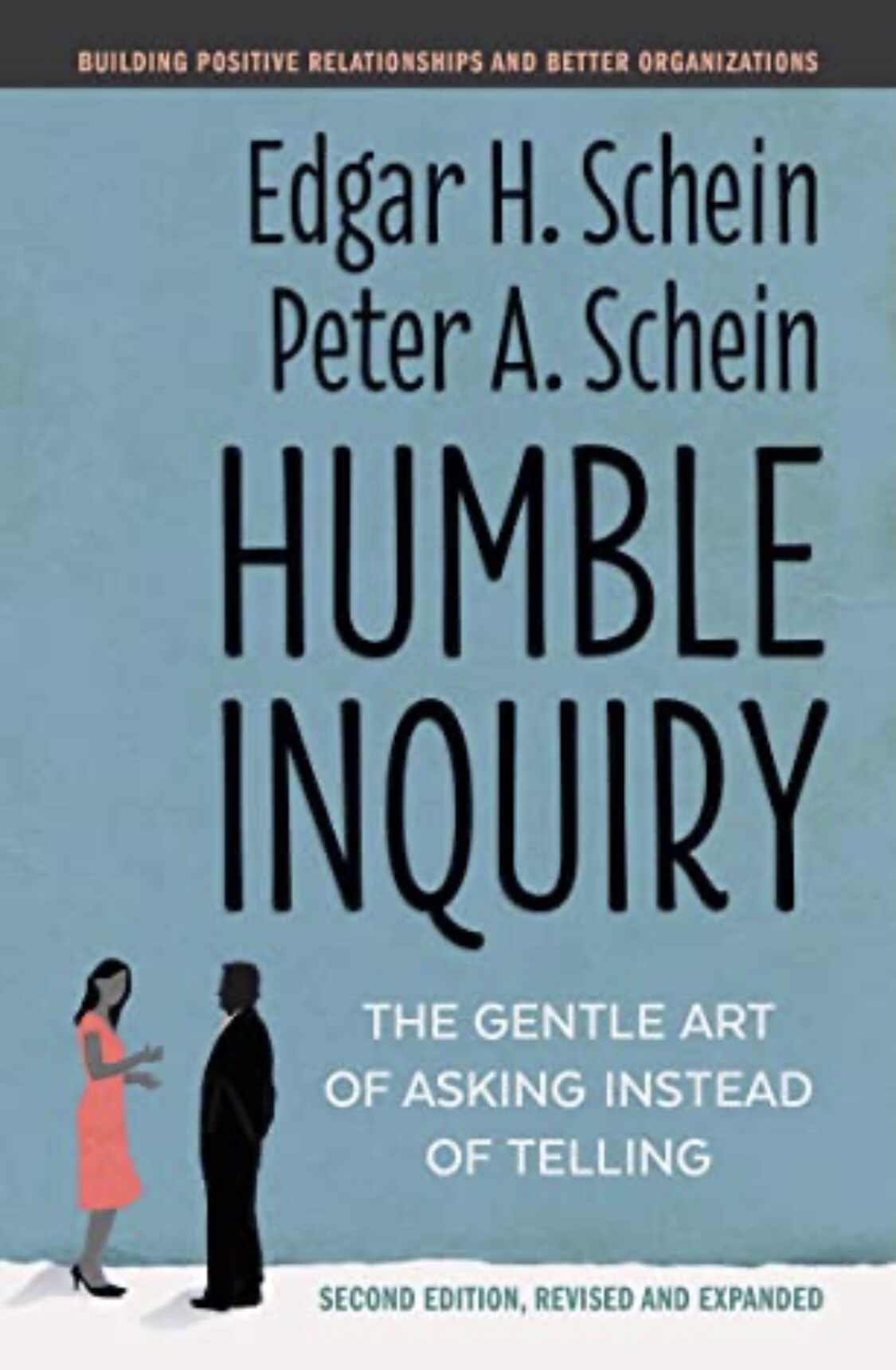
As you can see, these two books were impactful to my own development on this topic of loving others through listening. I love (pun intended) that Kaye and Jordan-Evans taught us that loving those we work with is the correct terminology. If we want to relate with others, as DTK relates, we need to form our relationships empathically, not transactionally. Here are some of my blog posts that were inspired by these books:
- The Gap Between Intent & Impact
- Do Not Forget The Small Talk
- Elegant Currency
- What if?
- Accessing Our Own Ignorance
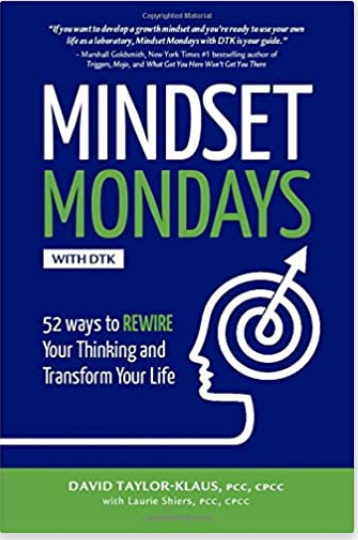
DTK said, “In coaching, our job is to put all of our attention over there (on the other person) and dance with what arises, instead of pre-planning any response or follow up” (p. 236). It was also discussed in this chapter that we need to put a focus on what we want for other individuals instead of from them. To do this we must really show our love by listening. A great tool DTK introduced was WAIT – Why Am I Talking? Many times, instead of deeply listening we start thinking about what we can ask or what we know. We start telling instead of listening. So, I love this tool of asking ourselves “Why am I talking?” In the book Working, Robert Caro discussed that when doing research interviews for his biographies, he writes “Shut Up!” in his notes to remind himself he is there to listen and not do all the talking and asking. We all need to continue to hone our skills. If you’re like me, you have gone to meetings and know that you and others won’t talk much because __________ McTalksalot (yes, I actually have nicknames for some of these people) will do all the talking. Let’s show our love by listening.
Are you showing your love for those you serve by truly hearing them?
The Centrifuge That Is Life

Rules of Civility by Amor Towles
My rating: 5 of 5 stars
Every so often a book comes along that makes me reflect on many aspects of my own life. This great book, Rules Of Civility by Amor Towles, did that for me. I had pages of notes and quotes when I was done reading. Additionally, I had blog posts that were inspired by Rules of Civility – Visions & Revisions and What Do You Look Forward To?. This book brilliantly took the reader back to Manhattan in 1938, where authentic, human characters inhabit a playground that comes alive with the manners of a society on the verge of radical upheaval. George Washington’s Rules of Civility and Descent Behavior were weaved into the book throughout and were actually all listed at the end of the book.

At the end of the book we realize we’ve had a look back from the protagonist, Katey Kontent’s, 1966 perspective and that we have experienced all the twists and turns of the characters’ lives. This made me think of all twists and turns in my own life and the non-linear nature of our lives. One of my favorite quotes in the book is, “Should old acquaintance be forgot, and never brought to mind? Sometimes, it sure seems that’s what life intends. After all, it’s basically like a centrifuge that spins every few years casting proximate bodies in disparate directions. And when the spinning stops, almost before we can catch our breath, life crowds us with a calendar of new concerns.” I thought about all the people who have come and gone in my own life and those that have come and gone and come back. This also made me think about the peoples’ live I have come and gone from. What influence were they on what the portrait, that is my life, looks like today? What influence have I had on others’ portraits?
As Shakespeare taught us, “All the world’s a stage, And all the men and women merely players; They have their exits and their entrances; And one man in his time plays many parts, His acts being seven ages.” This book was a powerful reminder that people come into our lives and we enter other peoples lives for a reason, a season, or a lifetime. Also, as a person who believes we should create space in our lives for serendipity, I think about the chance meetings of people who have then become influential in my life. What if characters in the book had shown up at a bar on a different night? Think of all the “what ifs…?” in your own life. When we treat every encounter as a chance to impact, influence, or inspire we bring purpose to our lives. Most people that enter our lives are seasonal and they’re with us for a reason. Once that reason is fulfilled life has a way of moving them on.
View all my reviews
Opening The Door To Alignment
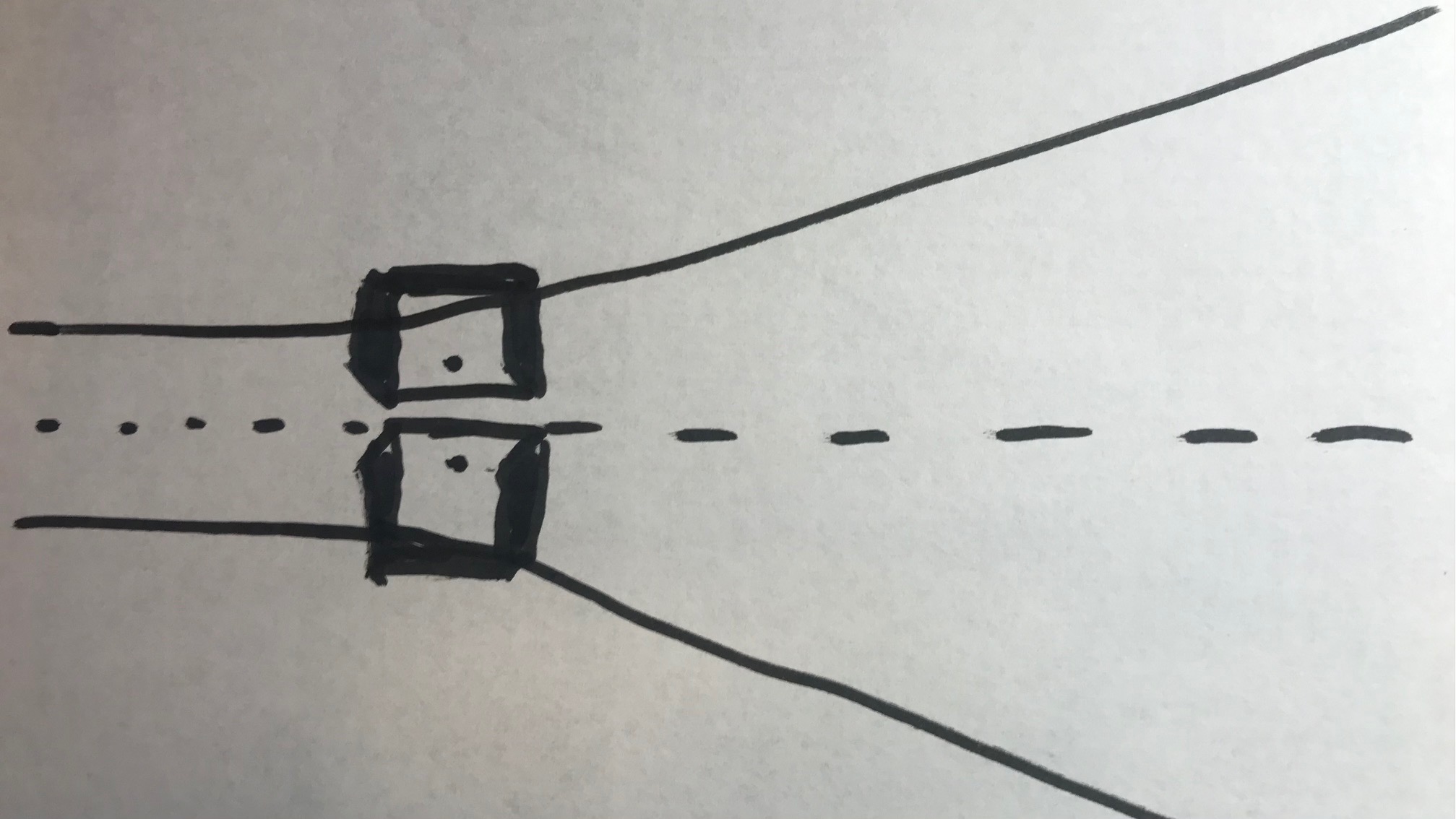
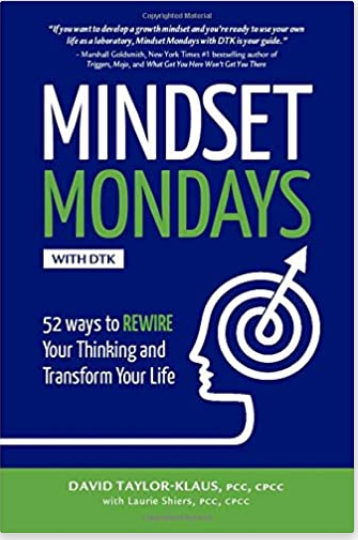
Chapter 31 entitled “Co-create Alignment” in Mindset Mondays with DTK by David Taylor-Klaus (DTK) dealt with seeking alignment when agreement is not possible. In my policymaking life I deal with this all the time. It was great to get DTK’s insight on the subject. He said, “Seeking alignment opens you onto a wide road” (p. 229). While consensus is what everyone is striving for in decision making, it is not always feasible or attainable in all situations. I would even argue it might not be the best course of action. Instead of setting consensus or full agreement as the goal, if we instead focus on finding alignment, the goal becomes finding a piece of the situation to align around as a common goal or interest. When we focus on finding alignment, conflict or disagreement can actually become a creative act that allows both parties to come to a more creative solution than either of party could come up with on their own.
We have learned much about leading through a crisis during the past year. The pandemic has challenged us to be more nimble and creative in our decision-making. When we rethink the meanings, the way we do things, philosophies, policies, and the myriad of other social issues, there’s a cascade of consequences. Therefore, alignment becomes critical. By focusing on what we and another person share in any situation, instead of what we do not, helps lead towards more creative solutions that honor both person’s ideas. By seeking alignment we can get to task-based conflict which allows us to focus on the strategies and methods for getting things done over emotions and personal dislikes. Alignment allows us to find the places we can agree and honors those disagreements we both have.
Context, as it always does, also matters here. If what we are truly seeking is collaboration then we must also have context seeking. When context is gained and clearly articulated we will be able to understand differences and account for them. This is very important and is necessary for everyone to believe they have been heard. With this clear understanding of opinions we will be able to decide whether we are or are not in alignment. Remember this, Alignment always takes precedent over the need to agree. Some of the best forms of alignment have been born out of a series of disagreements and differences. Are you opening the door to the wide road?


leave a comment