Just You Leadership

“No pretenses, no masks – just you.” ~ Randy Conley in Simple Truths of Leadership: 52 Ways To Be A Servant Leader and Build Trust, Making Common Sense Common Practice, Ken Blanchard and Randy Conley. This is the 31st week of the year and I am on Simple Truth #31: “People Admire Your Strengths, But They Respect Your Honesty Regarding Your Vulnerability.” When we allow ourselves to be seen as less than perfect, others get to really know us beyond title or position. When others see us modeling this, they are more inclined to do the same.
“I think when you’re vulnerable, people realize that you, too, are human. And, perhaps even more importantly, they love your ownership of your personal positive and negative characteristics.”
Colleen Barrett, President Emerita of Southwest Airlines
I was actually discussing this with a group of teachers last week. We were discussing how back in the day, teacher educators would tell you to never let the students know if you didn’t have/know the answer. I hope no one is still giving this terrible advice. From experience, let me assure you that showing some vulnerability with students is valuable. Some of the greatest labs we did in my agricultural science classes were ones that didn’t work. Student would say, “What happened?” I would then say, “I have no idea, but l’ll bet we can figure it out together.” We would proceed to “figuring it out” and a series of learning moments would follow. Let me tell you, Colleen Barrett, president emeritus of Southwest Airlines was right; the students loved that show of vulnerability and it made our relationship stronger. Vulnerability is very powerful when it is authentic. Are you willing to be “just you?”
Leaders Trust First
“In the workplace, it’s your job as a leader to extend trust to your people first. It’s not their job to have blind faith in you simply by virtue of your power or position of power” (p. 81). I loved this from Randy Conley in Simple Truth #30 “Someone Must Make The First Move To Extend Trust. Leaders Go First.” I’ve always said you can’t workshop or activity trust. Trust has to be earned in real time work. We must first give our trust to find out if someone is trustworthy.
I think of this being like the first time I gave my son the keys to one of our vehicles after he got his drivers license and saying have a good time and please be careful. I had to trust that he would take the examples and teachings of his mother and me and put it to use as a good driver and make good choices. By the way, he earned our trust and six years later still has it. But it started with us trusting him and giving him the keys, first. I’ve always liked how Stephen M.R. Covey put it, “The job of a leader is to go first, to extend trust first. Not a blind trust without expectations and accountability, but rather a “smart trust” with clear expectations and strong accountability built into the process. The best leaders always lead out with a decided propensity to trust, as opposed to a propensity not to trust.” How about you? Are you ready to go first?
Channeling Emotions

I’ve been contemplating getting a new carryon bag for my travels and all seem to have the ejectable battery for charging a laptop or cell phone. As I was looking at these carryons the metaphor of channeling emotions by just plugging in came to mind. The great leaders allow that channeling to flow both ways. It was said that just the presence of General Ulysses S. Grant among the troupes brought about feelings of great courage both individually and collectively. It would seem that Grant was an emotionally intelligent leader. Emotionally intelligent leaders can improve the morale of those they serve and improve the chances of organizational growth. We need emotionally intelligent leaders who is aware of their own emotions and is present to another person’s feelings. These leaders are able to plug in, just like that battery in the suitcase. The difference is that the flow of energy in the leaders case goes both ways.
This two way channeling of emotions makes the leader aware to motivate, inspire and guide their teams by creating an environment of mutual respect. To strengthen this channeling of emotions leaders demonstrate active listening skills. They interpret circumstances around them and come up with clear answers. It really is about moving from transactional relationships to transformative relationships. In transformative relationships, both are concerned with the perspective, needs, and desires of the other person. Going back to my suitcase battery metaphor; in transformational relationships, both parties get charged. Then we prize people more deeply and value the deep meaning we get from the relationship. Relationships are everything!
Simple Faith In Success

Invincible: incapable of being conquered, overcome, or subdued. I am a huge fan of the great band Skillet. They have an incredible song Feel Invincible. Here is a line from the lyrics of the song:
You make me feel invincible
Earthquake, powerful
Just like a tidal wave
You make me brave
You’re my titanium
Fight song, raising up
Like a roar of victory in a stadium
Who can touch me ’cause I’m (I’m made of fire)
Who can stop me tonight (I’m hard wired)
You make me feel invincible
One responsibility that leaders have is to instill courage in those they serve. Those we serve don’t just going to look to us for guidance – they also expect support. The way in which we present ourselves to our teams will have an impact on how they perform in the workplace and in society. Everyone is happier and more productive when we know that we are supported and valued. In Ron Chernow’s great autobiography Grant Chernow described how Grant instilled courage in everyone around him. He seemed invincible. General Sherman described him as exhibiting a “simple faith in success.” Sherman said that Grant’s faith in success was like that of a Christian’s faith in the savior. Now that is feeling invincible!
Courage is a critical quality of a leader. Courage strengthens our determination to respond to and make a change. How well we are able to help those we serve have courage will factor in to how empowered those we serve are to create the new, dismantle the old and commit to the future. Grant was authentic and was described as being simple, honest, and unpretending. So, just like Skillet tells us: “You’re making me strong, you’re making me stand.” We need to be the courageous support for all those we serve.
Critical Improvisations

As I re-read Ron Chernow’s great autobiography Grant I keep picking up things to reflect on that I didn’t catch the first time through. I already did one such reflection in Respecting and Watching With Reverence. Yesterday while reading Chernow described the campaigns of the rebellion to take control of eastern Tennessee, specifically in Chattanooga. Much credit for success was given to “critical improvisations” and “extemporaneous routing of the enemy.” As a intent-based leadership advocate, I loved these terms. The soldiers saw opportunities that would lead to success and they took them even though they were not exactly part of the original plans. The great organizations develop every person to be ready for critical improvisation and extemporaneous routes. For example, one of the skills I developed early as a teacher was the ability to improvise during lessons according to student questions and discussions. This allowed me to make extemporaneous routes for true differentiation. Did you catch that play on words I just did? I believe I still do this while facilitating to this day. I believe this is one of the most important skills we need to be developing in education. And, educators need to feel comfortable and encouraged to make critical improvisations each and every day. The data is created with the teachers and students and that is where decisions should be made.
In any organization, our environment may change hundreds of times in a single day. This improvisation and extemporaneous routing becomes understanding the nuances of each of the new or changing environments and how those changes will impact on our ability to perform optimally and effectively. Practicing improvisational techniques allow us to quickly analyze changing environmental conditions and communicate quickly and effectively within them. In improv classes we are taught the “yes and” technique. Basically, we take what we are given and develop it further. It’s about accepting a nuanced environment and changes quickly and looking for opportunities immediately. We also have to create an environment where seeking solutions is accepted.
As leaders we need to model and reward positive and risk-taking and adaptation, the faster the organization can read the nuances and improvise. After the successful Chattanooga campaign Grant asked who had ordered the charge up the mountain against soldiers who appeared to be falling back. All officers said it had not been them. Those in the field read the opportunity and acted. Grant was proud of them. Some (well actually a lot of leaders I’ve encountered would have been upset), but not Grant. He needed every soldier to be a leader. If Grant were leading today, I don’t think he would need an email asking for permission and copied to 10 other people on every issue. Unfortunately, you all reading this know the leaders I’m talking about – I hope you’ve not experienced it, but I bet you have.
Make no mistake, however, for successful critical improvisations to happen EVERYONE in the organization must have the technical skill training and development. Otherwise it will be chaos. Grant was a stickler for drilling and training. Also, there need to be clear goals with plans that allow for agility. Then, and only then, we can allow everyone to use their talent and goal focus to seize opportunities of the moment and carry out critical improvisations and extemporaneous routes.
Respecting And Watching With Reverence

I finished reading Ulysses S. Grant’s memoirs a couple of week’s ago and proceeded to immediately start re-reading Ron Chernow’s great autobiography Grant. This exercise is taking my learning deeper as Chernow uses Grant’s memoirs in the book, plus adding a great deal of research and personal accounts of people of the time. Chernow quoted a person who said that Grant “…inspired more respect than affection. They don’t salute him, they watch him with reverence.” When I reflected on that I thought about the great leaders I have encountered and respect for them is what brings them to the top of my list. They walked the walk. Chernow also stated that Grant interacted with his men as peers. With those leaders that are on my personal Mount Rushmore we did have a peer relationship, not a superior/subordinate relationship.
When a leader sees others as peers, gives of themselves, applies empathy and emotional intelligence they know they can help others. Grant was known to get off his horse and join in working right along side his men. When we take action in the face of fear, grief, or pain we are displaying courage. Actions built on courage create confidence. The great leaders I respect see others as humans and not as objects. They have empathy and compassion. The most respected leaders know that nothing great can ever be accomplished alone. The greats inspire and earn others respect by serving them first.
What Is Your Leadership Point Of View?

How do you answer the question: what is your leadership point of view? Randy Conley told us in Simple Truth #29 “Self-Trust Is The First Secret To Success” we should clearly identify our leadership point of view. To do this we need to answer these questions:
- What motivates you as a leader?
- What are your values?
- What are your beliefs about leading others?
Randy said, “If you don’t know the answers to these questions, your leadership could be drawn off course” (p. 79). Randy also asked us to contemplate what leadership legacy we want to leave. I learned from my friend and mentor, Dr. Joseph Michelli, CEO of The Michelli Experience, how important is was have a Legacy Statement. Here is mine: “Hopefully I’ll be remembered as a thoughtful leader who showed love for those I served by providing growth and development.” It is amazing how often I go to this to make sure I am serving people in a way that will carry out my legacy. Along with my core values, this serves as a compass to keep me pointed true north. Finally, as Randy reminded us, make sure and share all this with those you serve.
It’s Effectiveness Over Efficiency

If you’ve never thought about the difference between efficiency and effectiveness, you’re not alone. The fact is that most use these terms interchangeably. Yesterday, I heard it said that, “It’s effectiveness over efficiency.” Understanding the difference between these two strategies can help initiatives succeed. Peter Drucker said, “efficiency is doing things right, effectiveness is doing the right thing.” Ideally we want to be both efficient and effective—after all, everyone wants to do the right things right. Efficiency is the ability to produce an intended result in the way that results in the least waste of time, effort, and resources. Effectiveness is the ability to produce a better result, one that delivers more value or achieves a better outcome.
Effectiveness is actually more sustainable than efficiency. That might sound counterintuitive but effectiveness emphasizes getting something done well as opposed to getting a lot done. While efficiency might get more done using less resources, an organization is only sustainable if we effectively fulfill a need make an improvement, or solve a problem. It really comes down to focus. We must decide what to focus our energy and resources on.
Finding Someone A Level Better Than You

I made a new friend last evening who was telling me stories of his pool (billiards) playing days. He said, “Son, you have to play people who are a level better than you to improve in the game.” He went on to tell me that, “Watching and thinking through what the better opponent is doing gives you the model for improvement.” This was a wise man reminding me of an important lesson – there is always room for improvement. We’ll never get to the point where we’re not able to learn from someone. Everybody you meet has something to teach you if you’re willing to listen and learn. Those better than us can serve as our teachers and mentors.
This week I have been doing facilitation work in Washington D.C. for the National FFA Organization as part of the State Officer Summit. I have taken many notes and learned new facilitation strategies from watching and getting to know others. They are challenging me to get better. I love it! The biggest apology I could ever owe anyone is to myself for the times I chose not to push myself and be the best me I could be. We all need to strive to not need to make that apology. So, no matter what your doing, let’s all go find that person that is a level better.
My Experiences
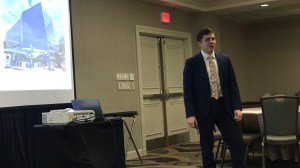
Yesterday I had the opportunity to facilitate a session during the National FFA Organization’s State Officer Summit on preparing national officer candidates by 2016-2017 National FFA President, David Townsend. He was incredible. One of his beginning slides had this disclaimer: “These perspectives are based on my experiences.” I loved this on so many levels. I believe it is an awesome way introduce space where our own opinions are being used based on our own experiences. And each of our experiences matter. Telling stories of our own experiences are important. These stories of our experiences have a way of transporting us away from our realities, and our mind opens up to new experiences and perceptions of other people and how they think, feel, and act.
“To argue with someone else’s experience of reality is futile…To add their experience to yours is possibly useful.”
Unknown
I believe we can use David’s model to understand the fact that others’ stories help us to learn to empathize with other people as we come to understand their point of view. When we hear another person’s experiences, we step out of our own reality and place ourself in someone else’s shoes, and get to experience their perspective and engage in their emotions, actions, and decisions. These experiences being shared allow us to learn from other people’s experiences.


leave a comment