Subtracting Shows Competence
Last year I read the great book Subtract: The Untapped Science Of Less by Leidy Klotz and described the book as changing my life. Learning from the book also ends up in many of my blog posts, like Don’t Always Saticfice. Last evening I had the honor of facilitating a discussion between Leidy Klotz and National Teacher Ambassadors of the National FFA Organization. As part of their training, the teacher ambassadors received a copy of the book and Leidy was gracious enough to spend time with the group. Leidy spent some time discussing what led to the research and ultimately the book, which was fascinating, and then had a very open discussion with our teachers.
One of the points Leidy made last night, that I have heard him make before is that, “Subtracting shows competence.” We all need to reflect on this. Whether as a school principal, we show competence to remove the things teachers have to do that don’t really have anything to do with student learning, or myself as a policymaker continuing to advocate for reducing the number of standards having to be taught/tested. Or, just the competence it takes to reduce that email from four paragraphs, which by the way no one reads, to a couple of sentences. I’m sure you can think of thousands of other examples.

Leidy taught us not to focus on what we can’t get done and want/need to subtract, but focus on what we will be able to do better because of eliminating those mundane tasks that create marginal value at best. Those of us in education can really relate to this. It’s not easy. As Leidy pointed out, adding more is highly visible and easy to promote and subtracting either goes unnoticed or becomes controversial. I loved this advice from Leidy: “Give yourself a definition for what you are setting out to accomplish. This will help narrow down the necessary from the unnecessary.” Dr. Klotz’s job is to create and share knowledge and he did a great job of schooling us on subtracting.
Formula For Success

Ulysses S. Grant’s first in person meeting of Abraham Lincoln was when he was raised to Lieutenant General and given command of the entire National military operation of the Civil War. According to General Ulysses S. Grant in his autobiography, Personal Memoirs of U. S. Grant, President Lincoln told him all he (Lincoln) wanted was someone to take responsibility and act. In return, Lincoln would give all the support afforded to him by his position in government. Grant said that Lincoln, as a self taught military strategist would give him his ideas, but left the use of the ideas up to Grant. This was the perfect ethos for Grant. No one wants a leader who sits back and watches as their team does all the hard work. A responsible leader rolls up their sleeves and is involved in projects. No matter the size of the project or how long it’ll take to complete, a leader should want to be a part of it to help in any way they can.
It was a liberating concept for Grant. The responsibility was his, and it started with developing a belief or habit of mind that he, as an individual, was accountable for the quality and timeliness of the outcomes of the rebellion battle campaigns. Grant owned the obligation to take action and deliver results. But he also knew that President Lincoln would support him in every way he could. This was a formula for success. Grant had a results-based view of his own leadership role. No matter how great a military strategist he was, his effectiveness was ultimately defined by the results of all military entities. The responsible leader ensures the group successfully drives for results.
In a world where everything continues to become more and more complex, determined and innovative problem-solving will need to come from those who are ready to take responsibility and act. Living with responsibility can make us stronger and more action-oriented individuals. It’s up to all of us, because everyone is a leader, to make change and take responsibility for outcomes in our personal, professional, and global lives. Are you ready to get started?
Linked Lives

You all know I am a very reflective person. Holidays always seem to become days of reflection for me. On this Fourth if July holiday I am reflecting about my son growing up, our relationship changing from dad and lad to dad and man, and whether my dad knew how great a job he did for prepping me for life and how much I appreciated it. Circumstances have allowed me to get to be at my son’s house in Madisonville, Kentucky near where he is interning for Cal-Maine Foods, every weekend for the past five weekends in a row. Dream come true, because I love spending time with the boy, now man. I make a point of saying, man now, because he is just that. And what’s more the father-son links are now converting to an adult relationship and I am loving every minute of it. Everyone who knows me knows how close Heath and I are. I’m always in a funk for a couple of days after spending time with him.
Last weekend I had the chance to meet my son’s boss and have a great conversation. In the course of the conversation he gave me one of the greatest compliments a dad could hear. He said that he could tell how close Heath and I were and that I had not left raising him and giving him the experiences necessary to succeed in life to anyone else. He said, “All the responsibility you gave him and the modeling you did for him on the farm growing up has prepared him for this moment and his life’s work (I just teared up repeating that). I quickly deferred much of the credit to Hope, my wife and Heath’s mother, but then was very thankful that he recognized that. When Heath was born, I made a commitment that I was going to spend every moment I could with him – and I did. I had watched other people leave much of this responsibility to grandparents or hired people and I just wasn’t going to do that. I know some very wealthy and allegedly successful people who never really got to know their kids. Sad! I am so blessed to have taken Heath on so many FFA trips with me and all the time we spent working side-by-side here on the farm. Some said it was too early to have him in Washington D.C. at six months old or out helping me with horses and livestock from the time he could walk, but the research would now suggest I was on to something. My goal was to have had him in all 50 states by the time he graduated high school. We did not quite make that goal but have made it to 46 and Canada twice. This year is his senior year in college, so I have a year to get him to Utah, Idaho, New Mexico, and Alaska before he graduates from college.

Please do not take this post as a criticism of others’ parenting because it is not meant to be. It is meant to highlight the concept of “linked lives” introduced in Parent Nation: Unlocking Every Child’s Potential, Fulfilling Society’s Promise by Dr. Dana Suskind. All members of the National Association of State Boards of Education (NASBE) were given the opportunity to receive a copy of the book. So glad I got my copy! I am reading the book right now and have been inspired, as a policymaker and education leader, to want to shepherd and cheerlead the concepts introduced in the book. For example, I was recently told that some schools no longer allow their agriculture teachers to take their own children on trips. This would have seriously limited my time with Heath. At a time when teachers a seriously exploring alternative career options, shouldn’t we be finding (exploring) ways to help our teachers stay linked to their own children? In the book Dr. Suskind said, “The lives of children and parents are intertwined” (p. 139). As a policy-maker I recommit to doing all I can to create environments where parents can be all they can be. I hear parents say they appreciated the extra quality time that they had during the pandemic. Let’s learn from this and find creative/flexible ways to help.
Also, we need to think both quantity and quality. More time with our kids is great, period. So that is a start, but quality of that time really thinking about brain development is also critical. I think back to my own upbringing by two of the greatest parents of all times. I was linked to their lives. Dr. Suskind also said, “The experiences we have in childhood, as mediated by our parents, will be reflected in much of what happens years later” (p. 139). At my mom’s passing I blogged about our link in Leadership Lessons From My Mom and I am reflecting on my dad this morning and all he did to prepare me for all the moments I have been blessed with; including raising an incredible lad turned man. My dad passed away when I was 25. My hope on this holiday morning is that he knew the great job he had done at linking our lives.
Counting The Wolves

“Grant, how many wolves do you think there are in that pack?” Knowing where he was from, and suspecting that he thought I would over-estimate the number, I determined to show my acquaintance with the animal by putting the estimate below what possibly could be correct, and answered: “Oh, about twenty,” very indifferently. He smiled and rode on. In a minute we were close upon them, and before they saw us. There were just TWO of them. Seated upon their haunches, with their mouths close together, they had made all the noise we had been hearing for the past ten minutes. I have often thought of this incident since when I have heard the noise of a few disappointed politicians who had deserted their associates. There are always more of them before they are counted” (chapter V). ~ General Ulysses S. Grant. I love this story from General Ulysses S. Grant in his autobiography, Personal Memoirs of U. S. Grant.
It is always interesting how someone will say there are lot of people complaining, unhappy about something, not approving of something, or not wanting a change. I always ask, “give me a list of everyone.” Nine times out of ten the many becomes one or two. Thus affirming General Grant’s point – “there are always more of them before they are counted.” This is also why I believe it is important to look at actual numbers when reviewing surveys and polls. For example: if one person out of 17 gave a ranking of “unsatisfactory” would show up as 6%. The data becomes much more useful when we know the actual numbers with the percentages. We need to count the wolves.
Seeing With Style
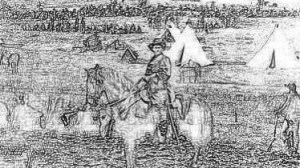
I continue to be inspired by the late General Ulysses S. Grant while reading his autobiography, Personal Memoirs of U. S. Grant. Reading this book has prompted much note taking, studying, and reflecting. Earlier in the week I wrote down comments from General Grant about the first Generals he ever served under. Speaking of Generals Zachary Taylor and Winfield Scott, he discussed how the pair had two totally different leadership styles, but were were two of the greatest leaders he had served under. He also discussed there could not of been two better leaders to learn from. General Taylor saw everything through his own eyes and General Scott saw through the eyes of his staff. The key here is that they saw. Also, that they had a style.
The best leaders see things with a clarity that brings life and the work being done into focus. Those same leaders use both eye sight and insight to influence the world and the people in it. A leader’s window into the world is their sight and insight. Both are developed through time and experience. Leaders who see things differently realize that it is possible to change the world. Great leaders see things from their own perspective, like General Taylor preferring to be in the field daily right along side of the troops. Great leaders also see the incredible value in the different vantage points of others, like General Scott used. But make no mistake, both were developing a total picture of their operating environment by seeing to it that everyone has an opportunity to participate according to their skills and abilities.
Now let’s talk style. Leadership style refers to the actions leaders take to gather input from subordinates, make decisions, solve problems and review results. In the leadership development work I do, I spend a lot of time talking about style. We all have style! That style comes from what we have observed, experienced, and emulate. And as General Grant affirmed, two different styles can be effective. Our style is an emulsification (my metaphor here) of our values, beliefs, observations, and experiences. General Grant earned respect through his leadership, and his willingness to walk among his soldiers, talk with them and listen.
Speaking of style; it isn’t the uniform that makes the general or the clothes that make the leader. When General Lee surrendered to General Grant at Appomattox Courthouse, General Lee dawned new uniform with a shining sword and polished boots while Grant famously showed up in well-worn uniform, tattered gloves and muddy boots. I don’t know about you, but I’ll take the leader whose style is based entirely on character, values and formidable skills over vanity any day.
Leading With A Constant Presence

In his memoirs, General Ulysses S. Grant told us that Civil War General William Tecumseh Sherman’s constant presence is what made his troops so successful even with troops that had no previous battle experience or even been shot at. His army was largely made of volunteers and not professional solders like himself. So he drilled, trained and led right along side them to develop them into a formidable fighting force. Notice I said develop. In doing more studying on this I found that he developed his men through challenge, and by remaining available nearby as their coach. He was using what we today would call scenario and case study facilitation.
I loved learning about this from General Grant’s own words. Additionally I found more information about General Sherman in Fierce Patriot: The Tangled Lives of William Tecumseh Sherman, by Robert O’Connell. O’Connell said, “…the variety of missions they would undertake precluded turning them into any one thing. So he became a guiding hand, presenting them with a series of challenges and basically letting them figure out how to meet them. Yet he never lost contact; he was always among them, completely approachable.” Here is the man that would perfect the “scorched earth” tactic being described as “completely approachable.” I love it!
In 1862, Sherman was modeling acting as a guide or coach to support the problem solving activities of those he served, rather than giving commands and answers. That was truly radical for the time and I have encountered or worked for very few who truly practice this. In fact during my career I have had one principal and one superintendent that I would put in the great category related to the topics being discussed here. General Sherman believed in giving respect, autonomy, and the chance to grow to all he served. Sherman said, “Every soldier of my command comes into my presence as easy as the highest officer…. They see me daily, nightly, hourly.” Wow, a constant presence – let’s all keep working on that!
Mixed Humanity
There is no ideal person or leader. Each of us has a soul, emotions, a destiny, feelings, personality, and style. We are actually very powerful algorithmic and data-fed machines. As biological humans we need to take time to think, create, and develop our mixed humanity. In Volume Two of the Autobiography of Mark Twain, Twain discussed “observing mixed humanity.” Twain observed how different each and every one of us is. Next time you are in a group take a moment and just observe each person and their interactions – it’s amazing.
This mix of humanity is such a powerful thing. Those leaders that I put in the great column learned their traits from previous leaders who modeled for them. We then continue to pass along their wisdom to the next aspiring generation of leaders, entry-level employee, apprentice, or intern. Make no mistake, someone is observing us and our role in humanity. If we humble ourselves and work by pulling each other across the finish line together, then I believe our significance will multiply tenfold.
Circumstances

It’s interesting to read about circumstances. Most that write on this subject talk about how we have unlimited ways to change our circumstances. I was inspired today by the late *General Ulysses S. Grant when in his autobiography, called Personal Memoirs of U. S. Grant, he wrote, “Circumstances always did shape my course different than my plans.” General Grant said this when speaking about how he had not planned to go to West Point or be a career service member, but circumstances shaped his life differently than he planned. Life isn’t supposed to be something we just “make it through”. Life is about progression and advancement. Our life is a journey.
Life is what we make it, so we need to make it an adventure. We so many times view circumstances as bad things to be overcome. Maybe we’ve been looking at that the wrong way. Maybe we should be paying attention to how our circumstances are shaping our plans in a way we never could have imagined. Taking that path less traveled because our circumstances are shaping our course in a certain way might just lead to greater things – like being a general who helps shape the course of history, or President of the United States. Where are circumstances taking you?
*I know your thinking that Grant was our President and I called him General. That is because I learned from Mark Twain’s autobiography (Twain and Grant were friends and Twain encouraged Grant to write his memoirs and helped him get them published) that Grant wanted to die a General and Congress reinstated him minutes before his death.
Love In Action

Today officially marks the start of the 26th week of the year. We are at the halfway point. It also means I am halfway through the great book Simple Truths of Leadership: 52 Ways To Be A Servant Leader and Build Trust, Making Common Sense Common Practice, Ken Blanchard and Randy Conley. I am reading the book one simple truth at a time and writing a reflective post each week. This week’s post reflects on Simple Truth #26: “Great Leaders SERVE.” In this simple truth the elements of the SERVE model from The Secret: What Great Leaders Know and Do, by Ken Blanchard and Mark Miller were introduced. Two things jumped out at me. First, the idea of “reinventing continuously,” and second, the statement at the end of the simple truth: “…servant leadership is love in action” (p. 69). Let’s look at reinventing continuously.
As a person who loves learning and experiencing new things, I believe In the idea that what we know today will probably not make us successful even in the near future. We must be constantly reinventing ourselves. This does not mean we are giving up or changing core values, but means we are iterating. In fact, iteration, might be a better way to look at this than reinventing. By its very nature iteration is about learning and progressing to the next level – what great leaders do. For every new iteration, feedback must occur so that the next iteration is better and moving in the right direction.
Besides the personal reinvention there are two other parts to the Blanchard and Miller model of reinventing continuously: reinventing systems and processes and structural reinvention. Now more than ever, there is rapid and continual change all around us. Just think of the supply-chain for one. There is a great need to develop an iterative mentality and create a culture of learning. Therefore, if we want to practice “love in action,” we must not wait or hope that those we serve will somehow learn all of the needed skills that make them great. We must deliberately lead and model the reinvention/iteration process for all.
The Moments That Change Our Lives

What are your life-changing moments? I think about life-changing moments a lot. These can be very small things to very big-time events. As I think about those moments that changed my life, I realized that they also changed my perspective. As my son enters his senior year in college we are experiencing the life-change of our developing an adult father-son relationship. This has caused me to reflect on changes that happened when I was younger, and made me feel like I was leaving my younger self behind. I was moving into adulthood, never to return. My son is moving into adulthood never to return to the “little man” as I always called him. The incredible Nothing More song, Fadein/Fadeout states it like this: “Son, I have watched you fade in; You will watch me fade out; I have watched you fade in; You will watch me fade out; When the grip leaves my hand; I know you won’t let me down.” I want to create as many moments possible with my son as he continues to fade-in.
We all had the chance to go to Matt Winn’s Steakhouse this weekend and our server, Brandon, who was awesome, got us to discussing life-changing events when he told us the biscuits would “change your life.” They did, by the way! What are those life-changing moments in our lives which reveal something powerful and influence our perspectives as we mature? We went on to discuss that the lobster tail “brought new meaning to life,” and the honey pie “is the answer to life.” I know these were goofy little quips to be coming up with, but they struck a deeper conversation about the fact that all the things we do in life change our life in some way. I even reflected on the times my mom and I use to spend lying on the ground looking up and clouds and imagining the shapes they made. Did this help shape the creative person I am today?
What are your life-changing moments? We all have those blips on our life’s metaphorical screen that shape our lives. We also need to consider the blips we are creating on others’ screens. Let’s make sure the life-changing events we bring to others are like the biscuits, lobster tail, and honey pie.
 Byron's Babbles
leave a comment